








-
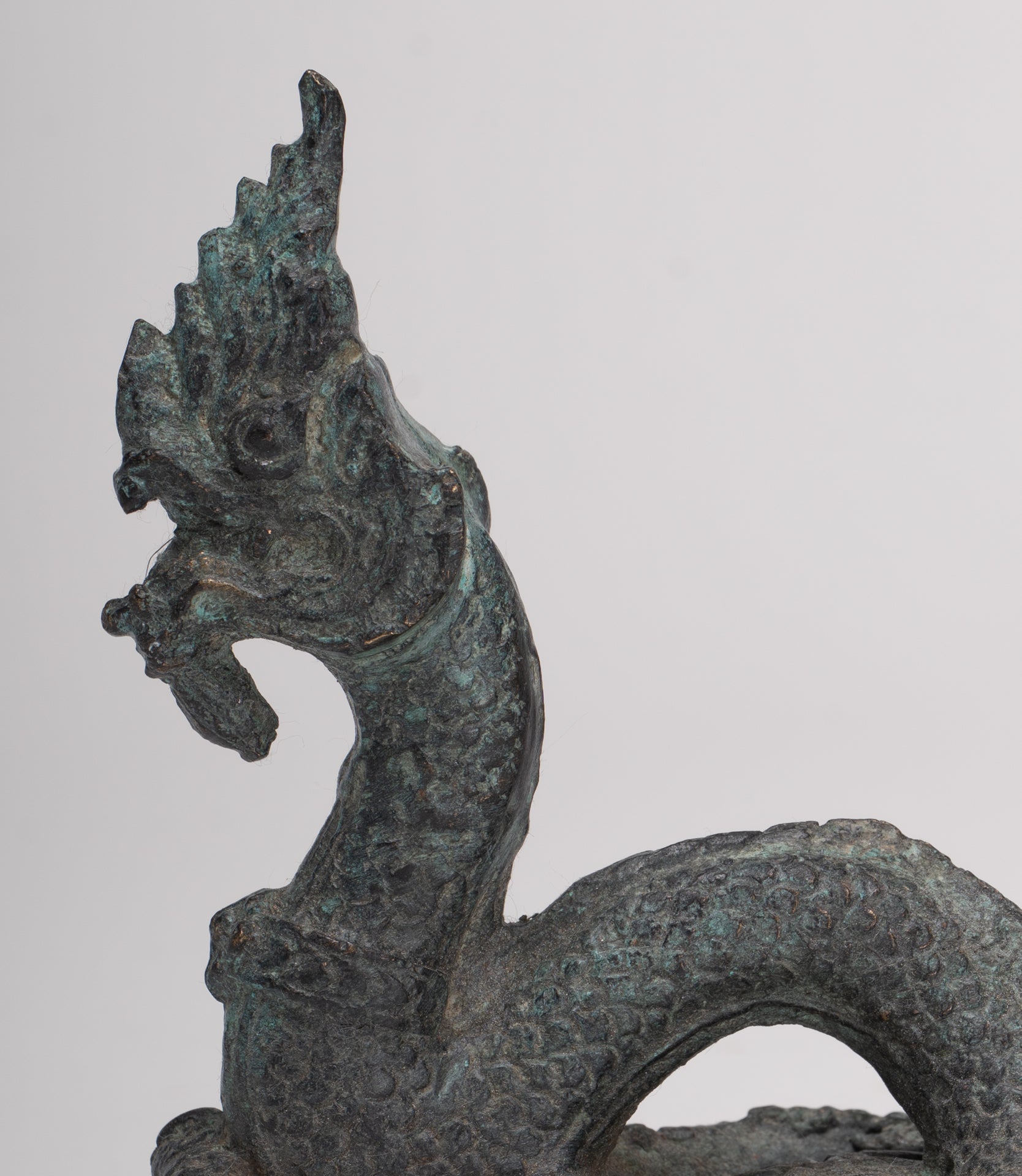
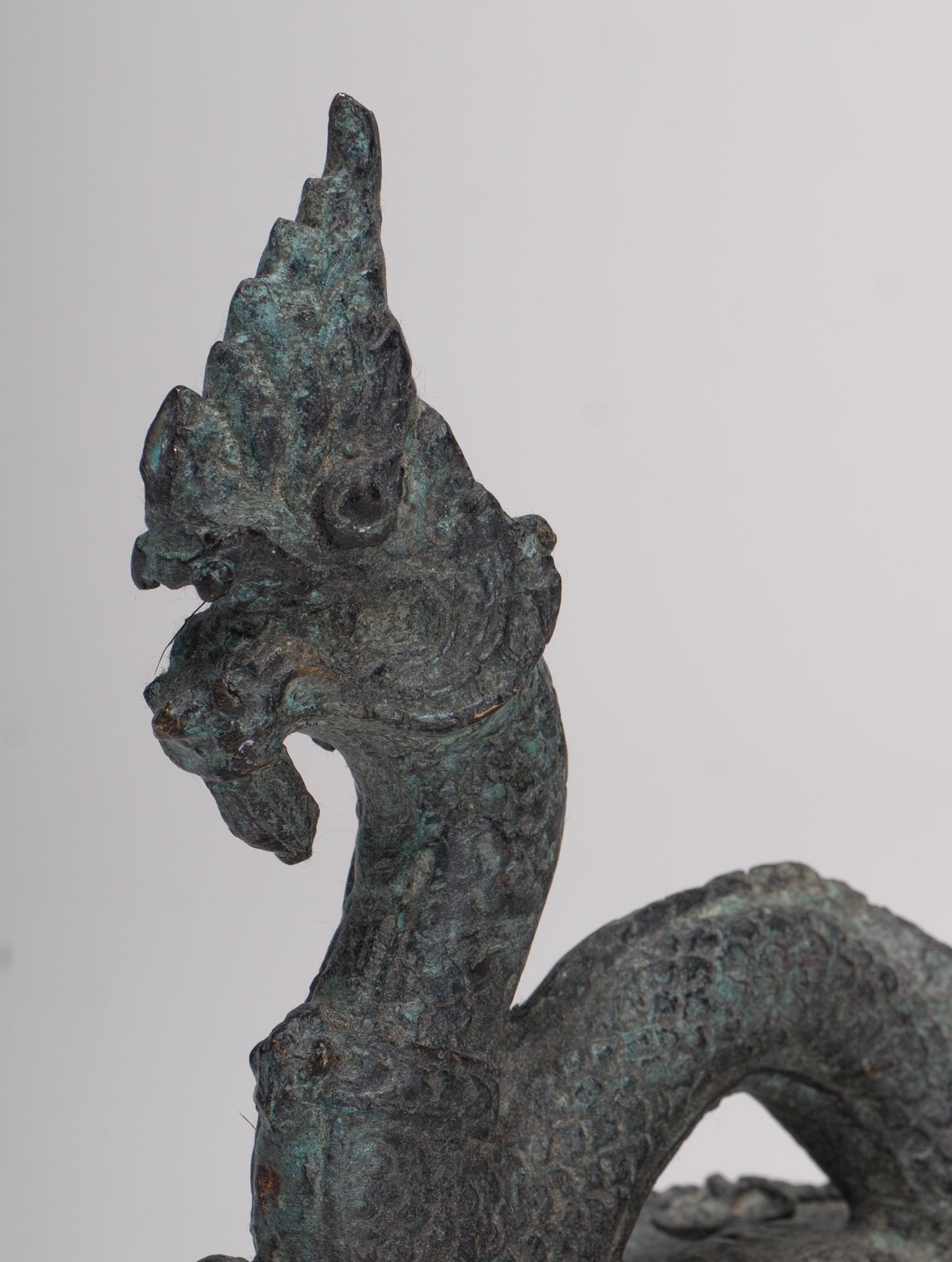
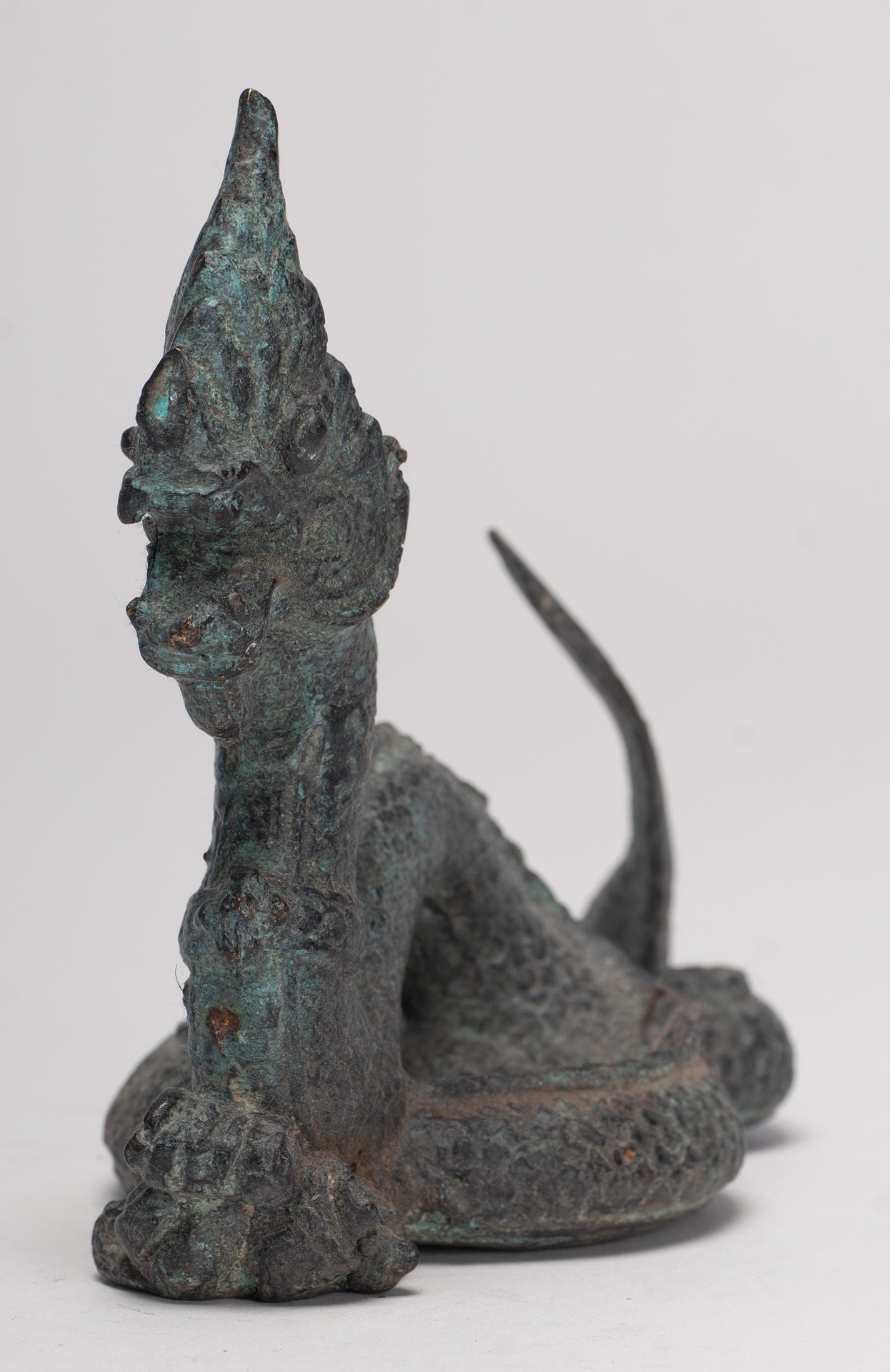
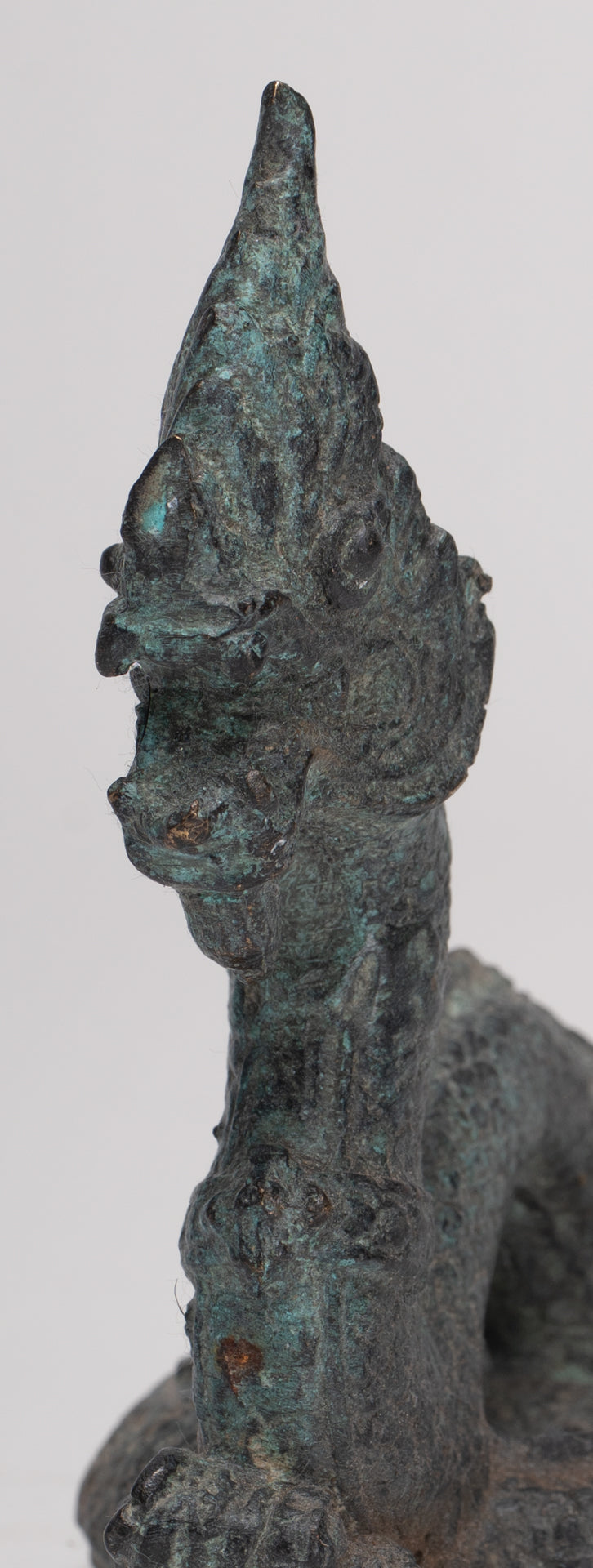
Antique Thai Style Mounted Bronze Protective Naga, Snake or Serpent Statue - 11.5cm/4.5"
Freestanding Coiled Guardian Serpent
Measures (Height) 11.5cm/4.5"
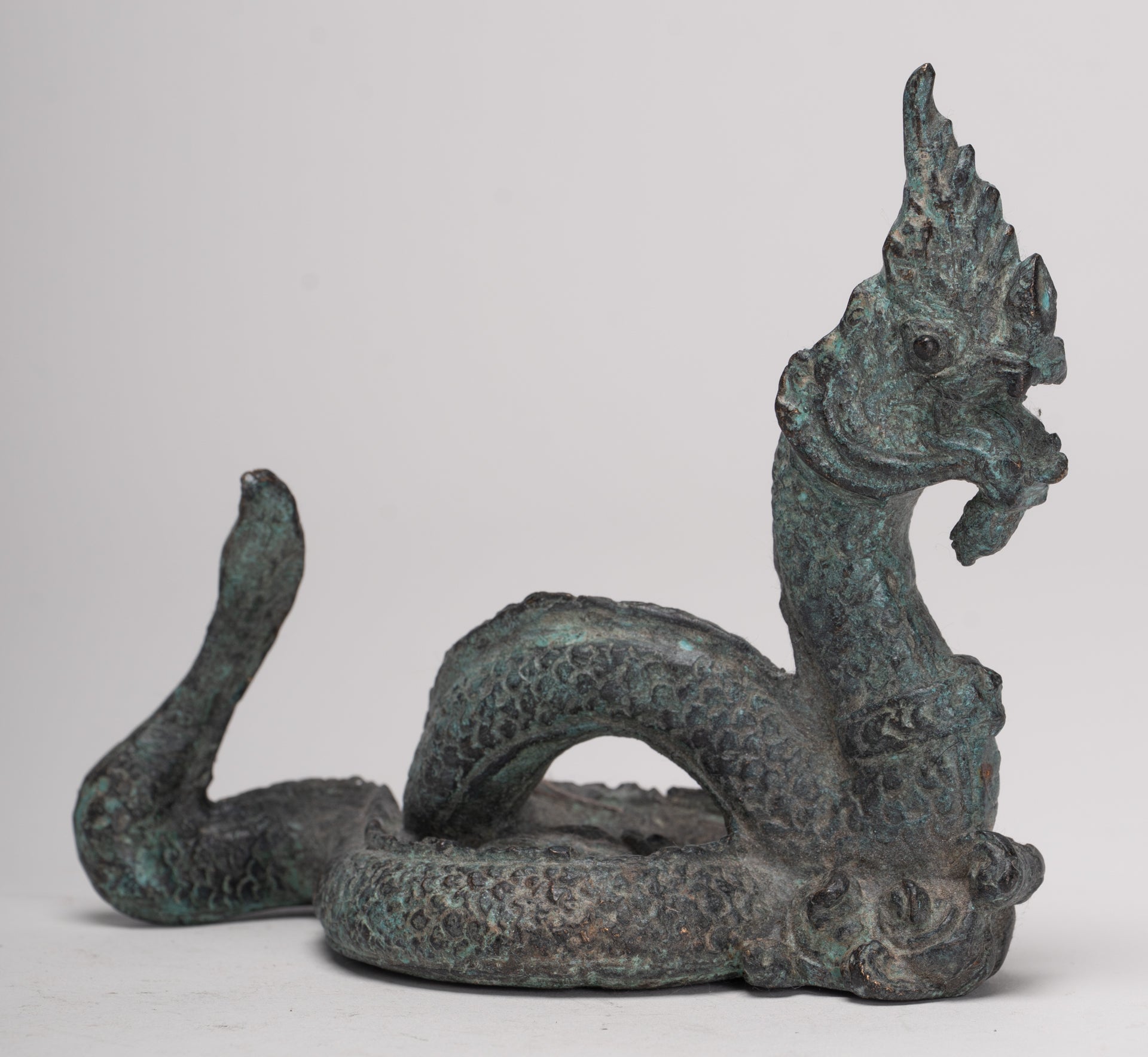
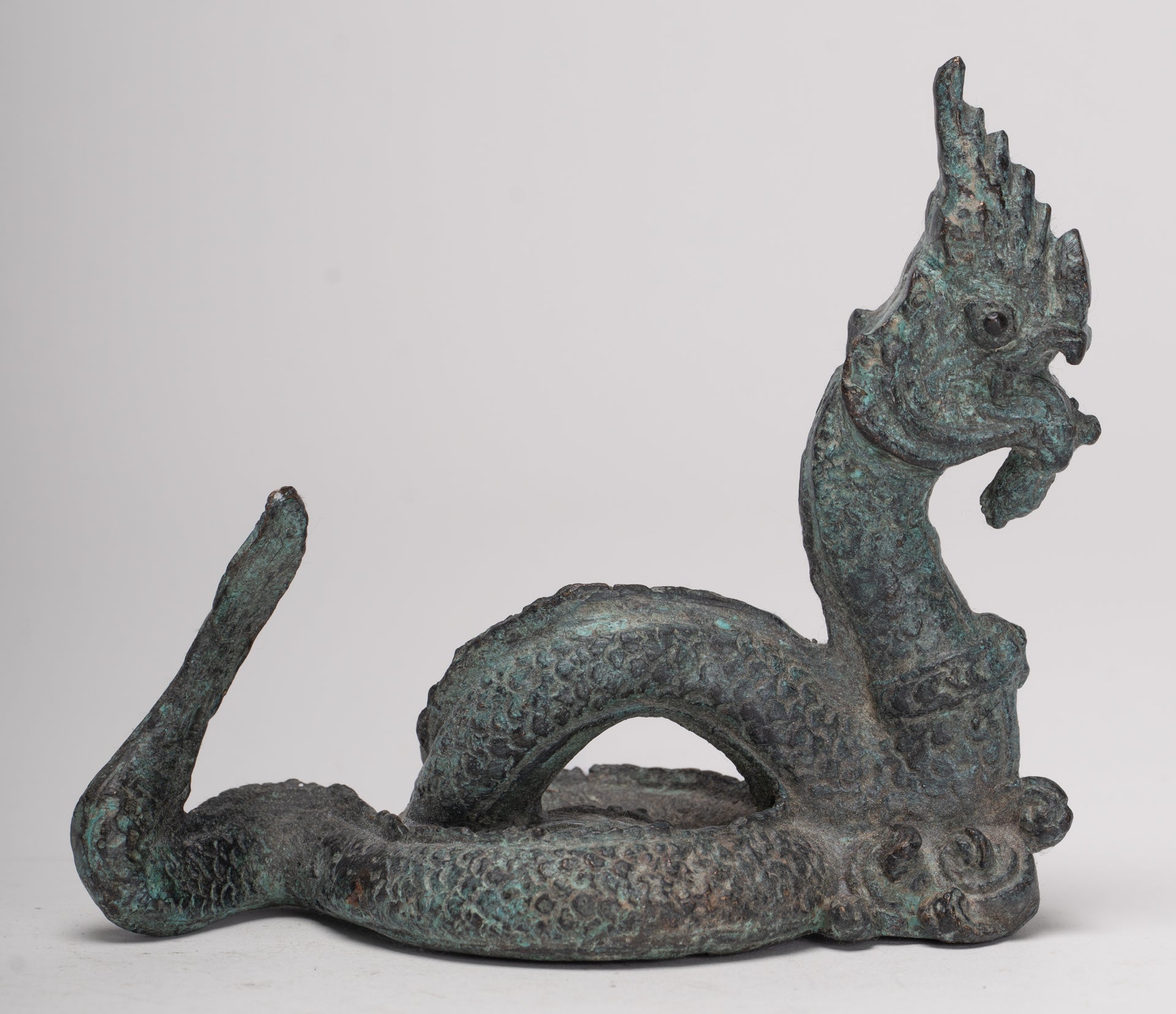
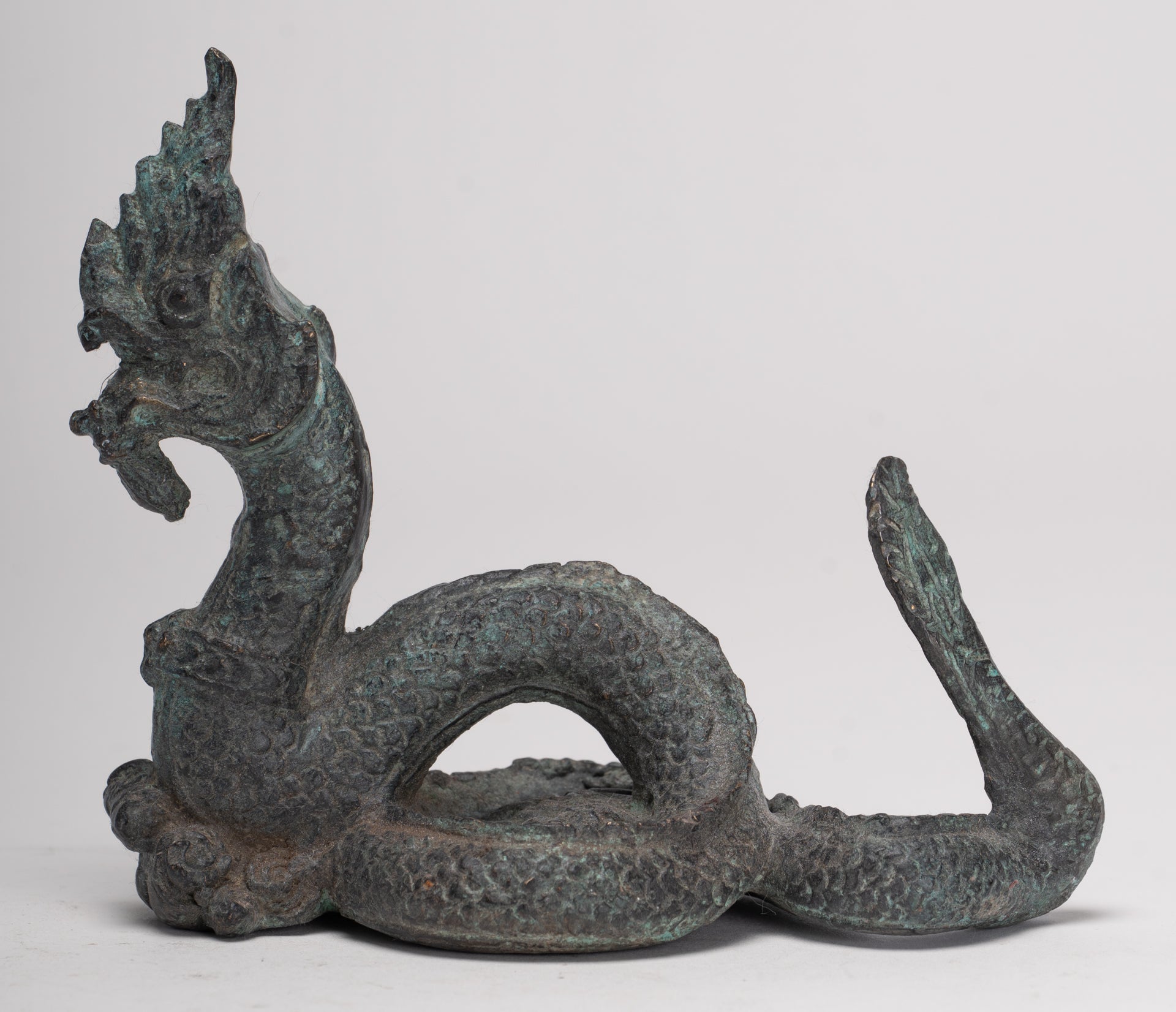
An expressive antique Thai-style Naga, the mythical serpent associated with protection, sacred waters, and Buddhist guardianship. Compact yet commanding, this freestanding sculpture combines a sweeping, coiled body with an upright neck and an elaborate crested head.
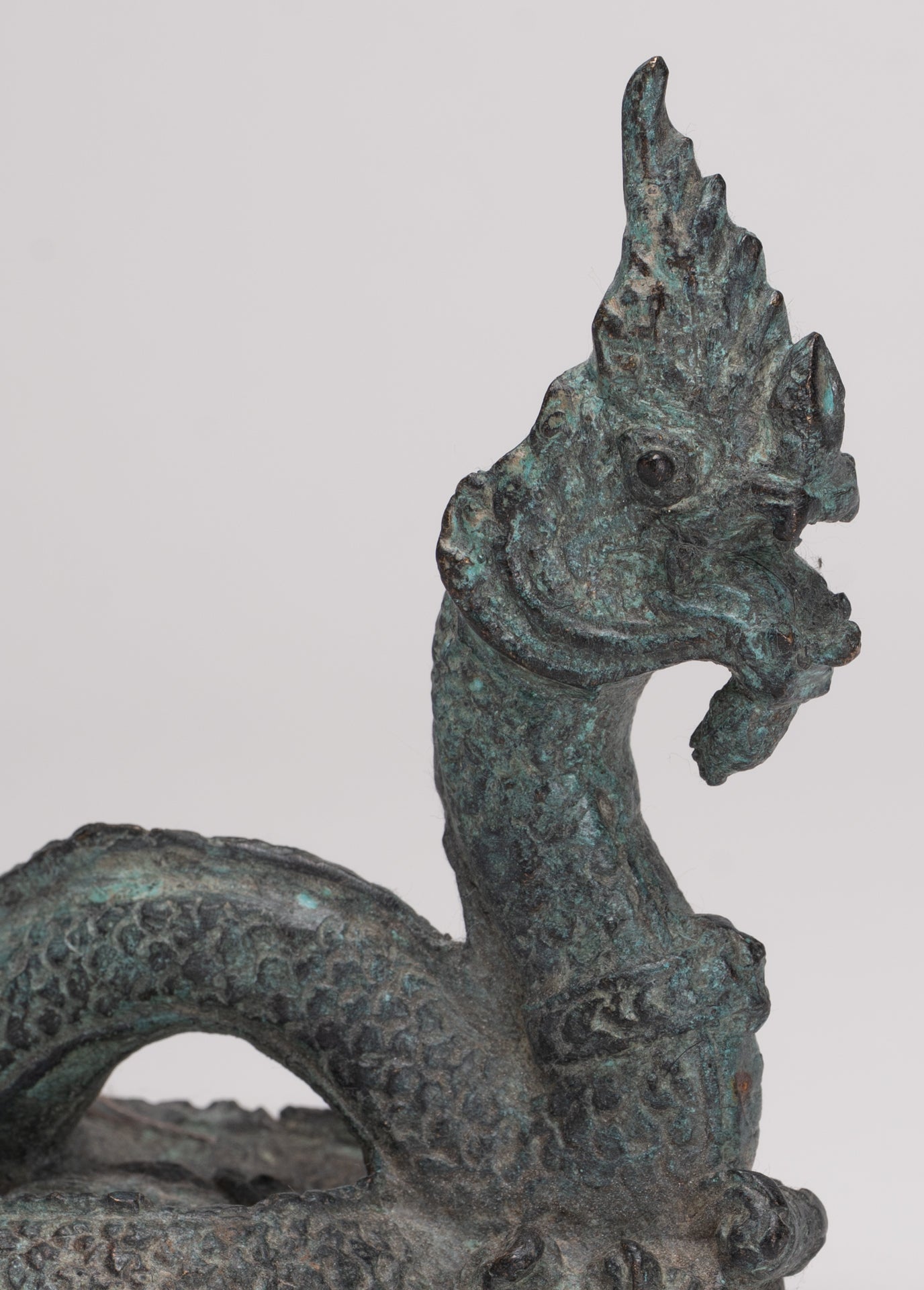
The serpent’s head rises above the coils in an alert posture, its prominent eye, open mouth, and pointed crest giving the figure a watchful presence. The neck flows into a raised arch before joining the broad coil beneath, while an upturned tail balances the composition at the opposite end.
Closely worked scale patterns cover the body, contrasting with the scrolling ornament around the head and chest. A varied dark surface, enlivened by blue-green patination and earthy brown accents, gives depth to the modelling and emphasises the creature’s sinuous form.
At approximately 11.5 cm high, the Naga is well suited to a bookshelf, desk, console, or collection of Southeast Asian sculpture. Its low, coiled form and upright head create an engaging silhouette without the need for a separate display stand.
The Naga in Thai Buddhist Tradition
Nagas are powerful serpent beings whose significance extends across South and Southeast Asian religious traditions. In Thailand, they are closely associated with water, rainfall, fertility, hidden treasure, and the protection of sacred places. Their imagery appears in temple sculpture, architectural decoration, jewellery, and other ceremonial objects.
Within Buddhist tradition, Nagas are understood as guardians of the Buddha, the Dhamma—his teachings—and the Sangha, the Buddhist community. Their presence at temple thresholds and stairways helps mark the transition into a sacred setting.
The protective role is memorably expressed in the story of Muchalinda, the serpent king who sheltered the meditating Buddha from a storm. Although this sculpture does not depict that specific episode, it evokes the same broader tradition of the serpent as a vigilant spiritual ally.
Water, Abundance and Protection
The Naga’s relationship with water gives its symbolism a particular resonance. Rivers and rainfall sustain communities and agriculture, making the serpent an image of life-giving power as well as supernatural strength. Thai beliefs also connect Nagas with treasures of the earth, including precious stones and metals.
These associations invite an appreciation of the figure as more than a decorative snake. It represents a powerful being linked with the preservation of what is valuable: sacred teachings, communal well-being, and the waters upon which life depends. Its protective significance is symbolic, rather than a guarantee of good fortune or safety.
Key Features
-
Antique Thai-style freestanding Naga sculpture.
-
Height approximately 11.5 cm / 4.5 inches.
-
Single crested head with a prominent eye and open mouth.
-
Upright neck rising above a broadly coiled body.
-
Raised arch within the body, creating an open, flowing silhouette.
-
Upturned tail balancing the composition.
-
Detailed scale patterns and scrolling ornament.
-
Varied dark surface with blue-green patination and brown accents.
-
Compact design without a separate display base.
-
Evokes Thai traditions of sacred guardianship and the protection of water and treasure.
-
A distinctive addition to a collection of Thai or Southeast Asian decorative art.
Frequently Asked Questions
What is a Naga?
A Naga is a mythical serpent being found in several Asian religious and cultural traditions. In Thailand, Nagas are especially associated with water, fertility, treasure, and the protection of Buddhism. They may appear as single-headed serpents, multi-headed beings, or figures combining human and serpent characteristics.
Is this a dragon or a serpent?
The supplied identification is a Thai-style Naga. Its crested head and elaborate features can appear dragon-like, but the long, coiled, limbless body is consistent with serpent imagery. Thai Nagas are often highly stylised rather than naturalistic snakes.
How many heads does this sculpture have?
The photograph shows one crested head. The pointed ornament above it forms part of the crest rather than a group of separate serpent heads.
Does this depict Muchalinda?
Not specifically. Muchalinda is usually identified through a narrative setting in which the serpent shelters a seated Buddha. This sculpture shows the Naga independently, so “guardian serpent” is more appropriate than assigning it a particular personal name.
What does the coiled body signify?
The coils give the sculpture its serpentine character and provide a broad supporting form. Coiling also occurs in Buddhist images where a Naga supports or shelters the Buddha, but this sculpture’s particular arrangement should not be assigned an undocumented ritual meaning.
Why are Nagas associated with water?
Thai traditions understand Nagas as guardians of waters and rain. Because water is essential to agriculture and everyday life, this association connects them with fertility, nourishment, and abundance.
Is the Naga a threatening or protective figure?
In this context, its formidable appearance is consistent with a guardian. Nagas are powerful beings rather than merely harmless decorative creatures, but their role in Thai Buddhist imagery frequently emphasises the protection of sacred teachings, places, and communities.
How should it be displayed?
Place it on a stable, level surface with space around the crest and raised tail. When moving it, support the substantial lower coils rather than lifting it by the head, neck, or tail.
SATISFACTION GUARANTEE - We have been offering SE Asian Art for many years and are proud of the reputation we have developed for fair and honest listings. However, if for any reason, whatsoever, you are unhappy with your purchase please just let us know and we will provide a full refund.
-
-
The majority of orders will be shipped with DHL. This is a secure, express and fully tracked service.
Items less than 2Kg we typically ship using Royal Mail.
Once we receive your order we try to ship all orders the same or next working day.
Large and/or fragile pieces requiring palletising, specialist crating and/or extra packaging may take a little longer. Palletised shipments will be delivered curbside.
All orders over 35 GBP will be shipped free of charge.

-
We genuinely hope that all purchases delight.
However, if they do not, regardless of reason, we will refund all orders upon receipt of the unwanted item. Just notify us within 14 days of receiving your order that you wish to make a return and send the piece back to us with 30 days of delivery.


