







-
Antique Khmer Style Angkor Wat Bronze Uma or Parvati Sculpture - 25cm/10"
Angkor Wat-Style Hindu Goddess on a Yoni Base
Measures (Height) 25cm/10"
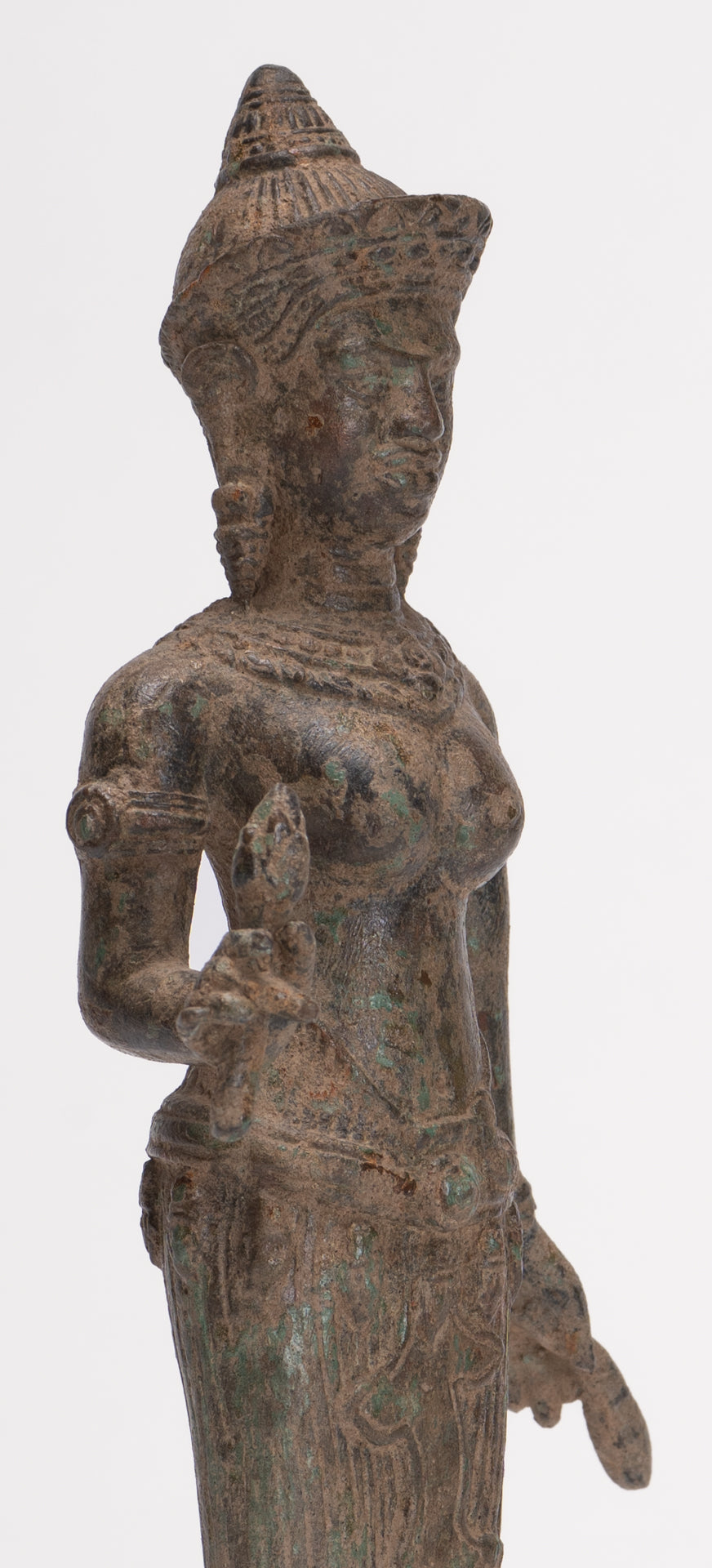
A graceful antique Khmer-style bronze of Uma, also known as Parvati, the Hindu goddess of fertility, devotion, beauty, and divine feminine power. Standing in a poised frontal stance upon a genuine yoni base, the figure is most plausibly understood as Shiva’s consort within a Shaiva devotional setting.
The goddess holds a lotus flower in her raised right hand, while her lowered left hand appears to retain or gesture towards the remains of a lotus stem. This combination is consistent with traditional images of Uma, who is often shown as a two-armed standing goddess with a lotus or blue lily held in the raised hand and the other hand lowered in an elegant, relaxed gesture.
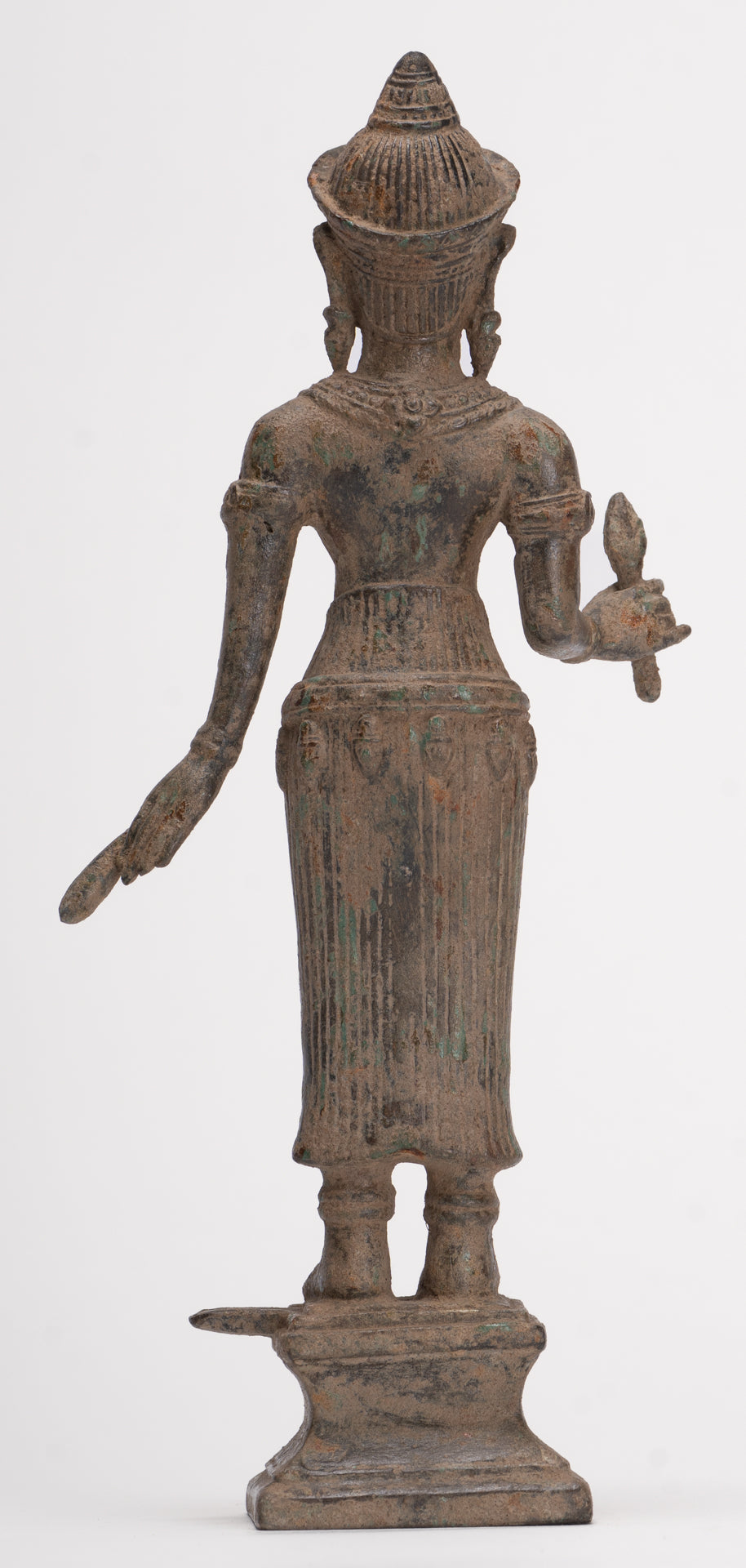
Her tall conical crown, long pendant earrings, layered necklace, armlets, fitted bodice, and richly patterned sampot reflect the royal-divine vocabulary of Khmer sculpture. The figure’s frontal poise, idealised body, carefully ordered jewellery, and formal costume are particularly compatible with an Angkor Wat-style interpretation.
Uma: Shiva’s consort
Uma is another name for Parvati, the goddess who embodies feminine divine energy, devotion, fertility, beauty, and the power of creation. As the consort of Shiva, she is central to Shaiva traditions throughout India and Southeast Asia.
In Khmer art, Uma may appear independently, beside Shiva, or within a broader Shaiva shrine setting. Her visual form is often deliberately composed: calm, self-contained, richly adorned, and regal. A standing Khmer Uma in the National Museum of Asian Art is described as facing fully forward with “regal stability,” a useful phrase for the present figure’s balanced, symmetrical stance.
The goddess’s serene authority complements Shiva’s transformative and ascetic power. Together, Shiva and Uma express the union of consciousness and creative energy: stillness and manifestation, transcendence and the living world.
The yoni base
The sculpture’s yoni base is fundamental to its interpretation.
A yoni is the sacred base traditionally associated with the linga, the aniconic emblem of Shiva. The linga represents Shiva’s generative divine presence; the yoni represents feminine creative energy, often linked to Shakti. Together, they express the unity of masculine and feminine principles, fertility, renewal, abundance, and cosmic creation.
The distinctive projecting channel visible on the base is characteristic of a yoni. In temple ritual, consecrated liquids—often water, milk, or other offerings—were poured over the linga and allowed to flow out through this spout.
Uma standing upon a yoni-form base gives the sculpture a strongly Shaiva context. It connects the figure directly to themes of divine energy, fertility, renewal, and the sacred union of Shiva and Shakti.
Lotus iconography
The lotus held in Uma’s right hand is a symbol of purity, beauty, spiritual unfolding, and divine abundance. It rises from muddy water yet opens cleanly above the surface, making it an enduring image of transformation and inner clarity.
In Hindu sculpture, the lotus is closely associated with goddesses, prosperity, fertility, and sacred grace. In the present figure, the flower softens the formal royal stance and emphasises Uma’s benevolent, life-giving nature.
The raised hand holding a lotus also finds close iconographic parallels in standing goddess sculpture. Uma is frequently represented with two arms: one hand raised to support a lotus or blue lily, while the other follows the body in an elegant lowered gesture.
Angkor Wat-style Khmer form
The sculpture draws on the classical visual language of the Angkor Wat style, generally associated with twelfth-century Khmer art. This tradition is admired for harmonious proportions, rich courtly ornament, precise garment treatment, and formal sacred presence.
Features supporting the Angkor Wat-style attribution include:
-
The strong, frontal pose.
-
Tall conical crown and ornate diadem.
-
Long pendant earrings.
-
Layered necklace and arm ornaments.
-
Fitted torso and elongated proportions.
-
Carefully patterned Khmer sampot with central decorative folds.
-
Controlled, regal facial expression.
-
Lotus attribute and Shaiva yoni base.
The Metropolitan Museum has catalogued standing Khmer female divinities as probably Uma, while other scholarly and market examples identify Khmer bronzes of Uma holding lotus flowers in a raised hand. These comparisons support the present figure’s likely identification as Uma, though a firm period attribution should remain cautious without provenance and technical study.
Surface and display
The bronze has an aged, varied surface of warm brown with areas of green patina. This contrast enhances the finely cast crown, earrings, jewellery, garments, lotus flower, and yoni base.
As with all older bronzes, handle the sculpture from the base and strongest central body area. Avoid lifting it by the crown, ears, arms, lotus, or yoni spout. Keep it indoors on a stable, level surface away from direct sun, moisture, high humidity, and heat sources.
Key Features
-
Antique Khmer-style bronze sculpture of Uma / Parvati, consort of Shiva.
-
Angkor Wat-style visual language, inspired by the classical art of twelfth-century Cambodia.
-
Standing two-armed female deity in a poised, frontal, regal stance.
-
Stands upon a genuine yoni base, giving the sculpture a strong Shaiva ritual context.
-
Holds a lotus flower in the raised right hand.
-
The lowered left hand appears to retain or indicate a lotus stem.
-
Lotus symbolises purity, divine beauty, fertility, spiritual unfolding, and abundance.
-
Yoni symbolises feminine creative energy, fertility, renewal, and Shakti.
-
Tall conical crown, pendant earrings, necklace, armlets, and intricately patterned Khmer sampot.
-
Graceful dark brown bronze surface with areas of green patina.
-
A powerful collector’s piece for Khmer, Cambodian, Hindu, Shaiva, or Southeast Asian art.
Frequently Asked Questions
Who is Uma?
Uma is another name for Parvati, the Hindu goddess who is the consort of Shiva. She represents feminine divine energy, devotion, fertility, beauty, creative power, and the sustaining force of life.
Why is this probably Uma?
The identification is supported by the figure’s royal female form, two arms, lotus flower held in the raised right hand, lowered left hand possibly associated with a lotus stem, and—most significantly—her position on a yoni base, which creates a clear Shaiva context. Khmer images of Uma commonly show a standing, richly adorned goddess in a poised frontal position.
What is a yoni base?
A yoni is the sacred base associated with the linga, the emblem of Shiva. It represents feminine creative energy, Shakti, fertility, renewal, and cosmic creation. The projecting spout was traditionally used to channel consecrated liquids poured over the linga during ritual worship.
Is the yoni base original to the statue?
The figure is shown standing on the yoni base, which strongly supports its Shaiva interpretation. The safest formulation is that the sculpture is presented on a yoni base.
What does the lotus mean?
The lotus represents purity, beauty, fertility, spiritual growth, and divine abundance. It grows from muddy water yet opens cleanly above the surface, making it a powerful symbol of transformation and sacred grace.
What is Angkor Wat style?
Angkor Wat style refers to the classical Khmer artistic tradition of the early to mid-twelfth century. It is recognised through harmonious proportions, formal frontal poses, elaborate crowns and jewellery, finely rendered garments, and a refined royal-divine presence.
How should I care for this bronze Uma?
Display the sculpture indoors on a stable, level surface. Handle it from the base and strongest central areas, never by the crown, arms, lotus, earrings, or projecting yoni spout. Dust only with a soft dry brush or microfibre cloth. Do not use metal polish, oils, waxes, abrasive products, solvents, or household cleaners, as these can damage the patina.
SATISFACTION GUARANTEE - We have been offering Asian Art for many years and are proud of the reputation we have developed for fair and honest listings. However, if for any reason, whatsoever, you are unhappy with your purchase please just let us know and we will provide a full refund. We want you to be 100% happy with your purchase.
-
-
The majority of orders will be shipped with DHL. This is a secure, express and fully tracked service.
Items less than 2Kg we typically ship using Royal Mail.
Once we receive your order we try to ship all orders the same or next working day.
Large and/or fragile pieces requiring palletising, specialist crating and/or extra packaging may take a little longer. Palletised shipments will be delivered curbside.
All orders over 35 GBP will be shipped free of charge.

-
We genuinely hope that all purchases delight.
However, if they do not, regardless of reason, we will refund all orders upon receipt of the unwanted item. Just notify us within 14 days of receiving your order that you wish to make a return and send the piece back to us with 30 days of delivery.


