



-
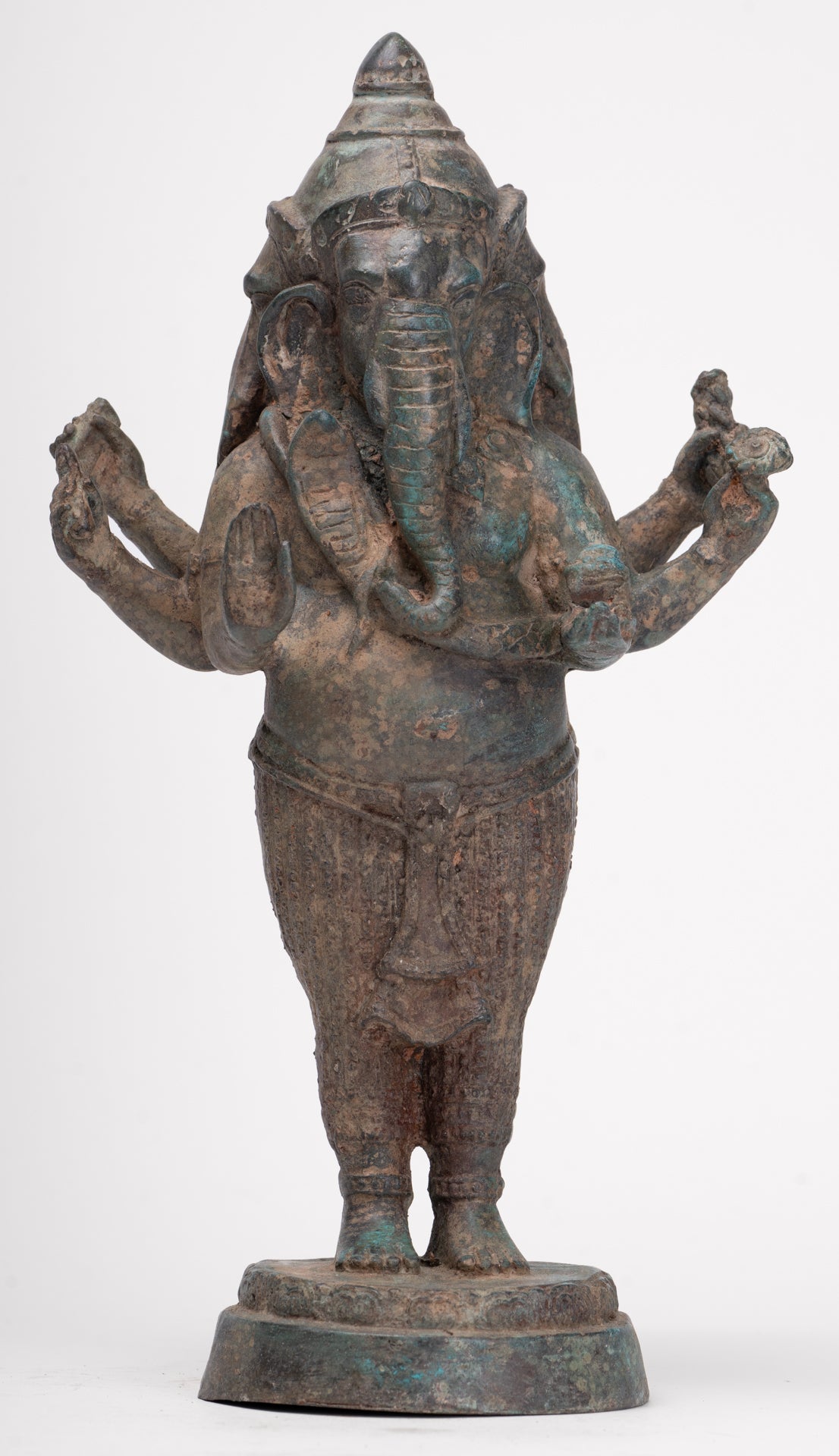
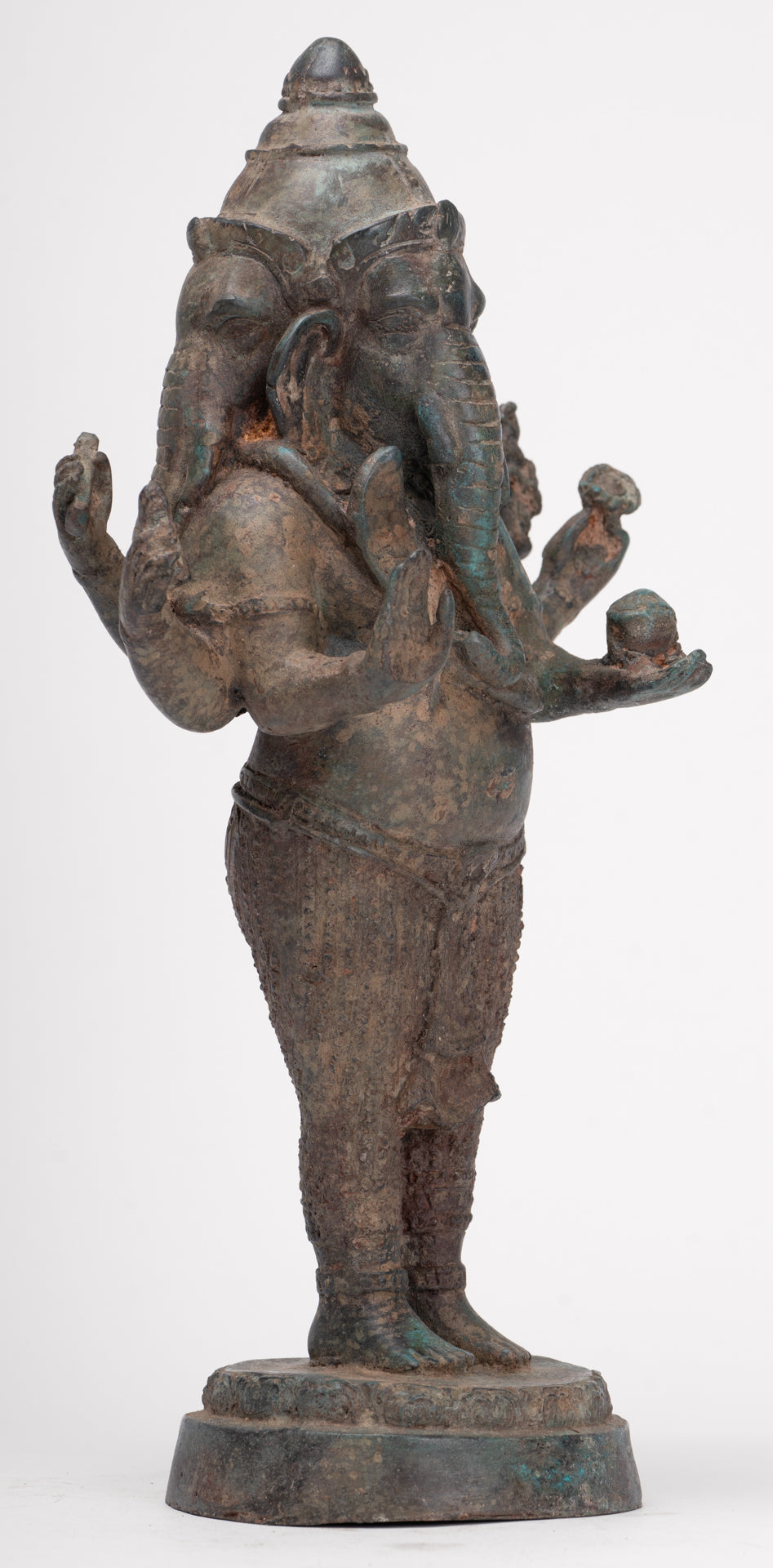
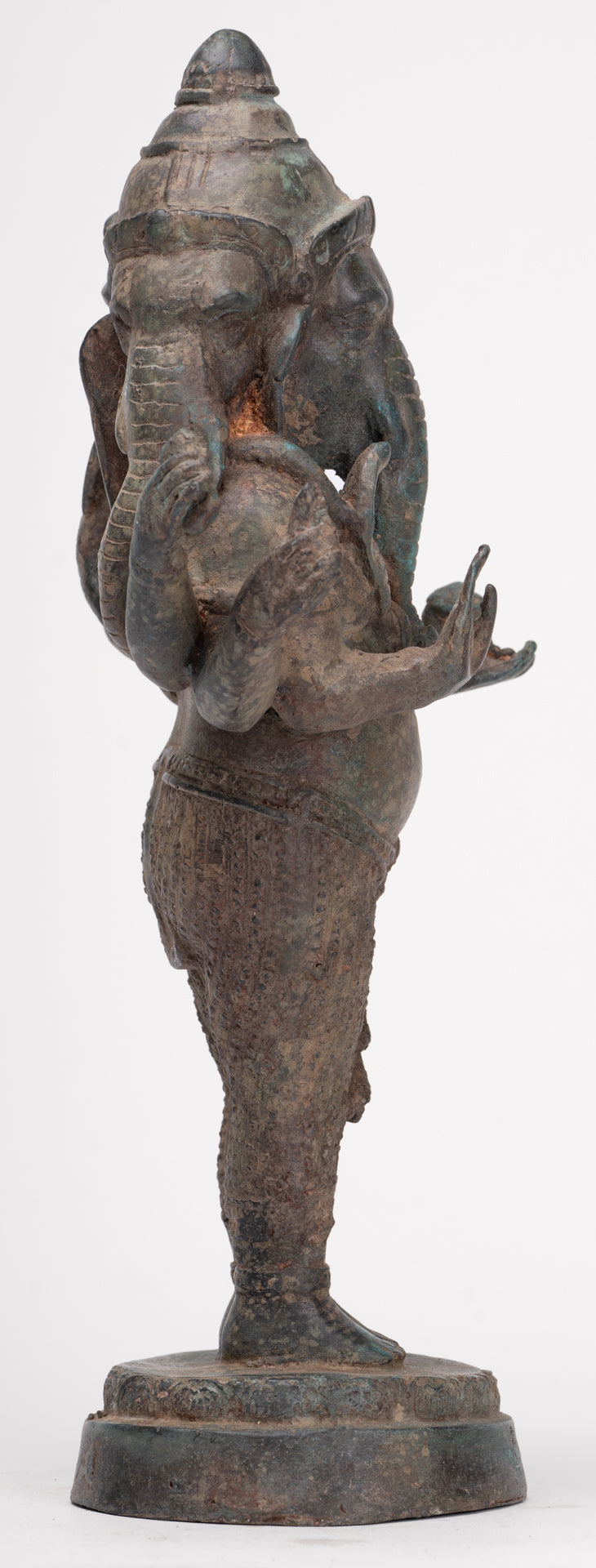
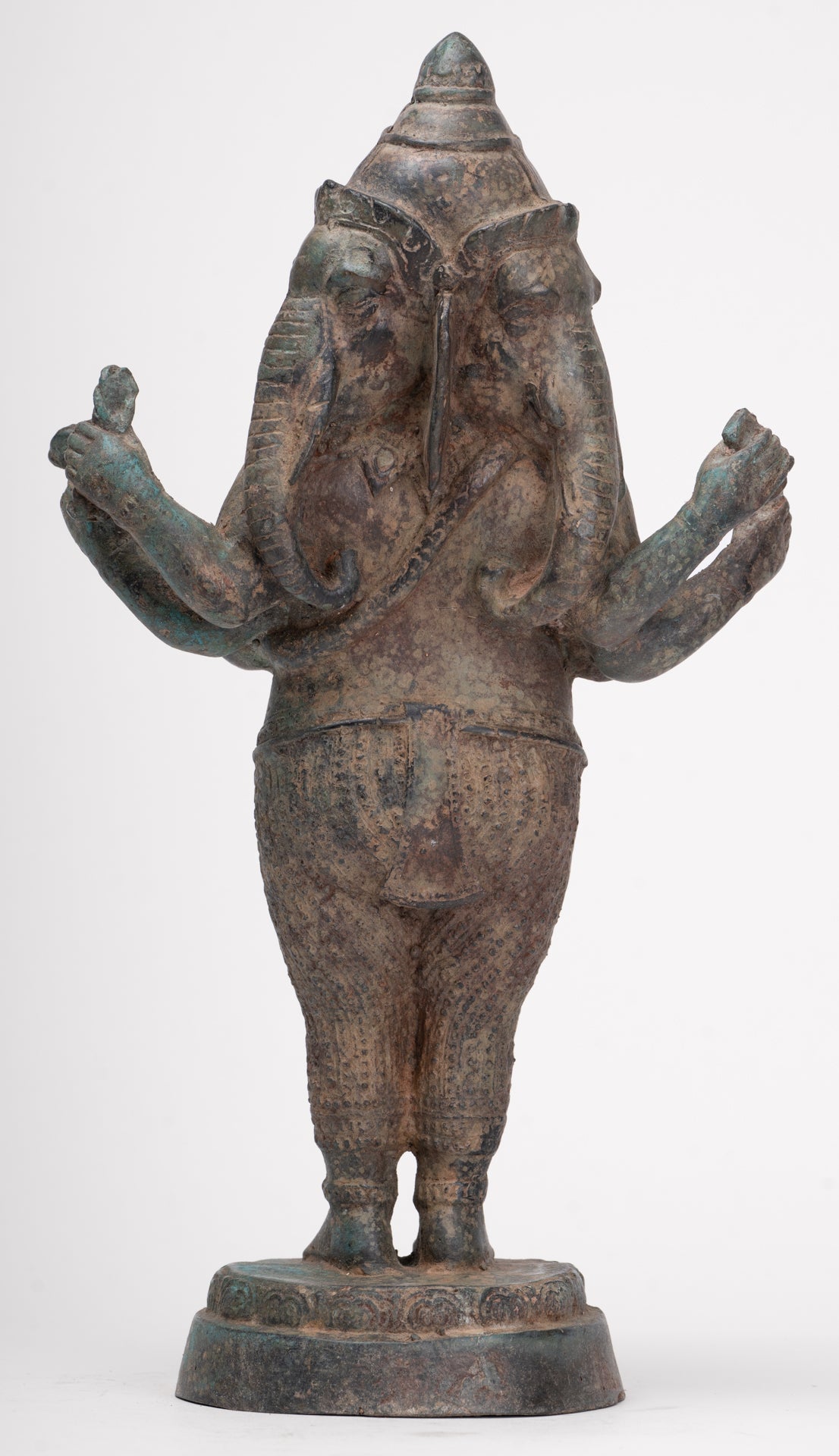
Antique Thai Style Bronze Standing 6-Arm Ganesha Statue - 33cm/13"
Measures (Height) 33cm/13" (Weight) 2.6kg/5.7lbs
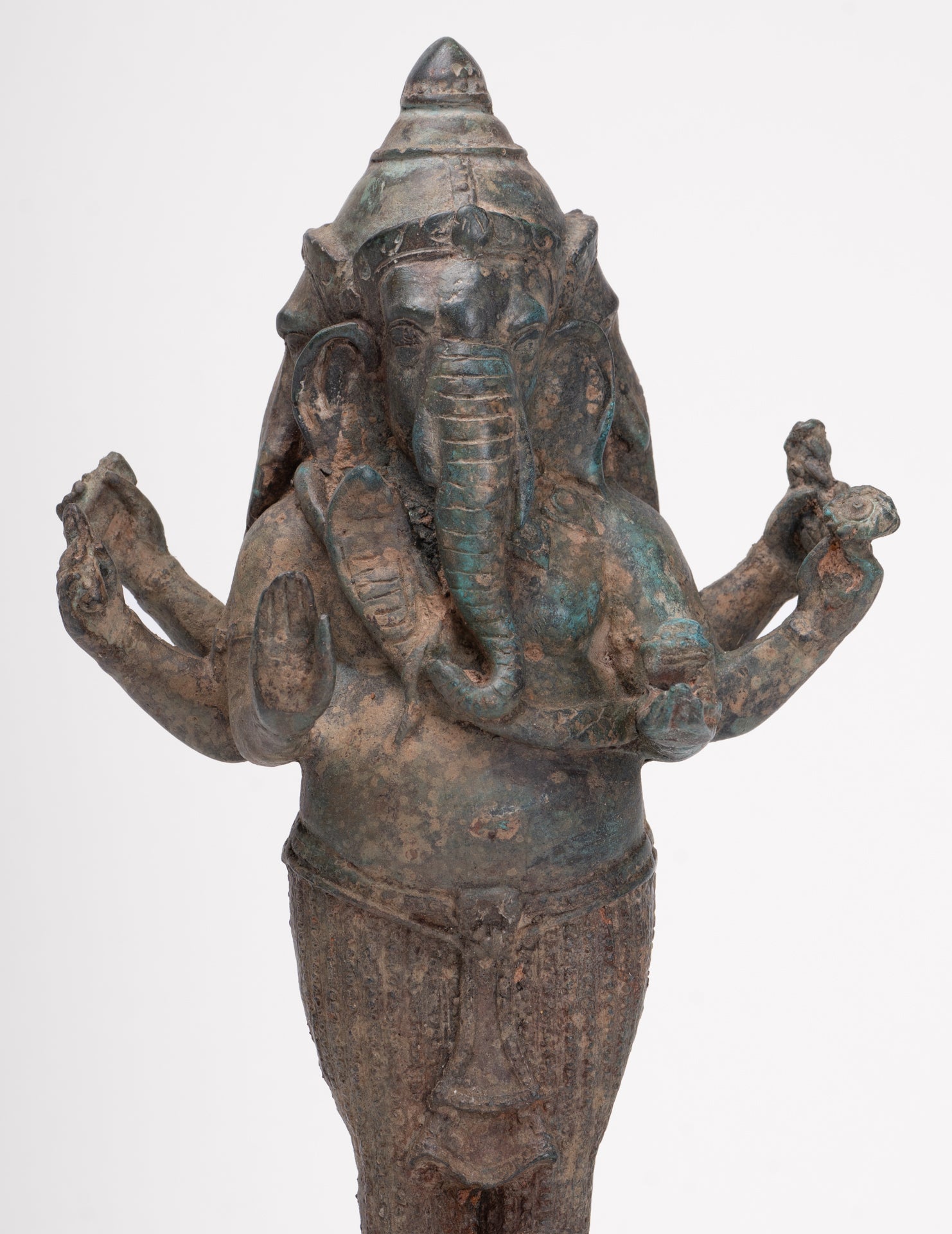
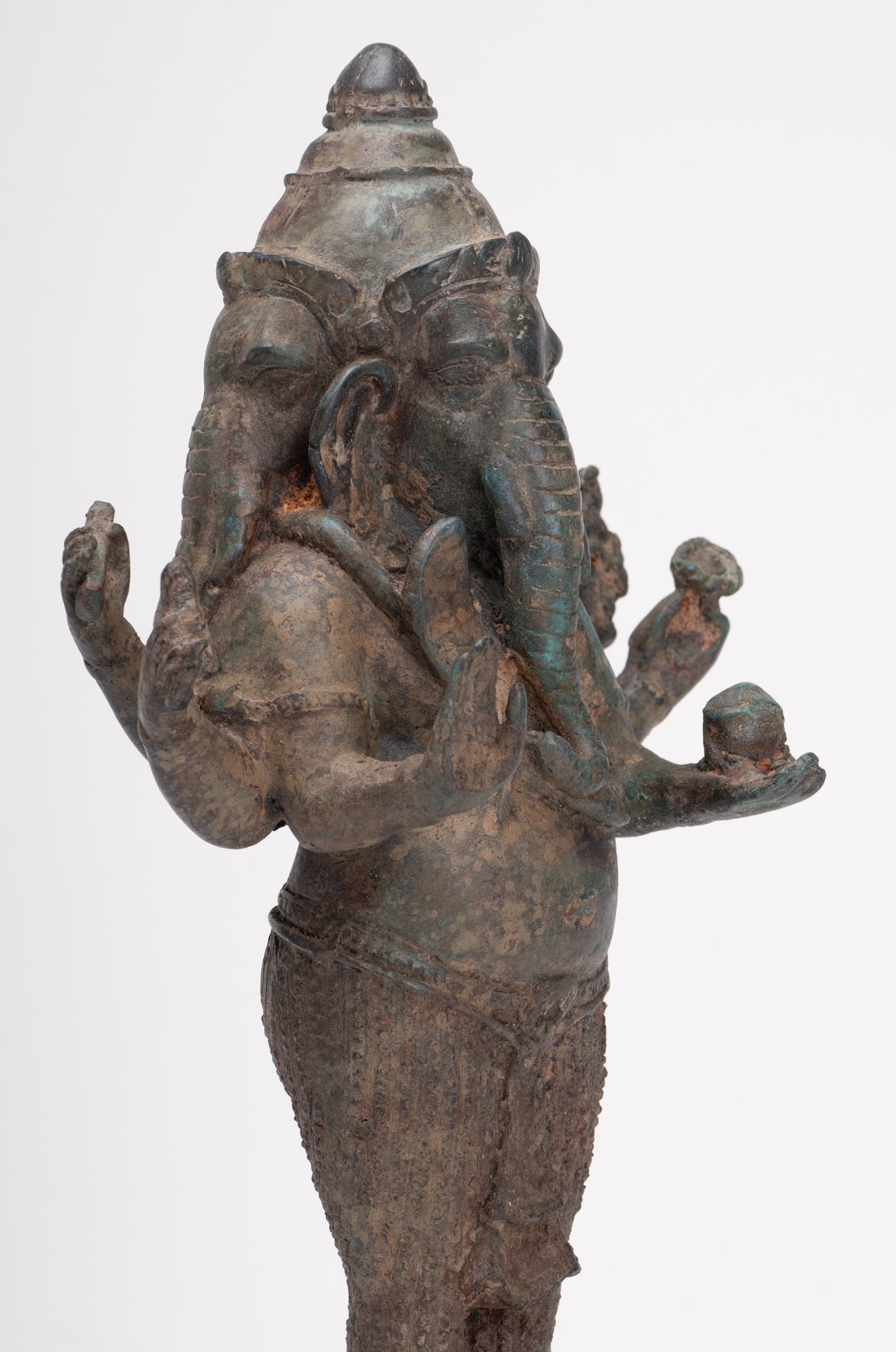
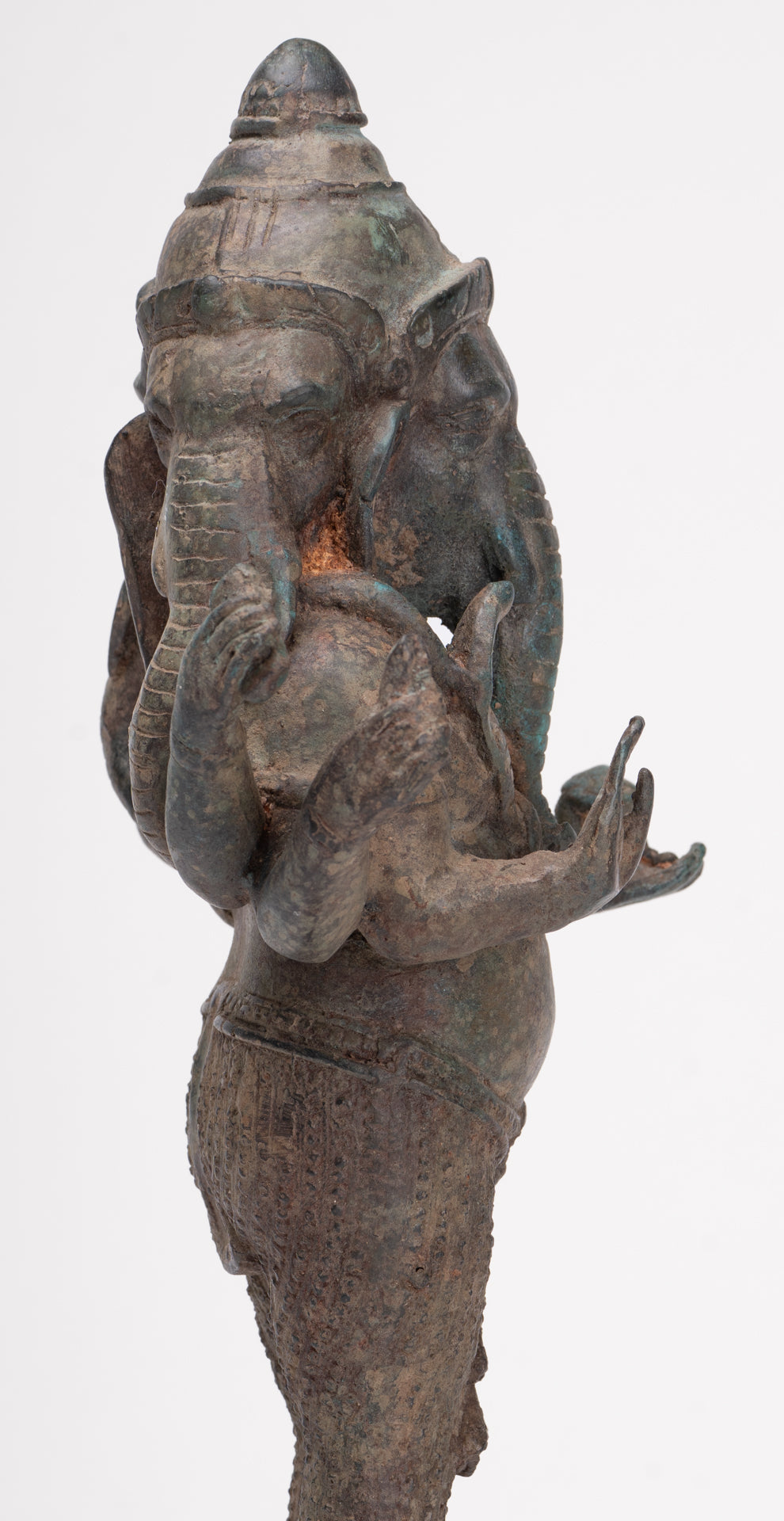
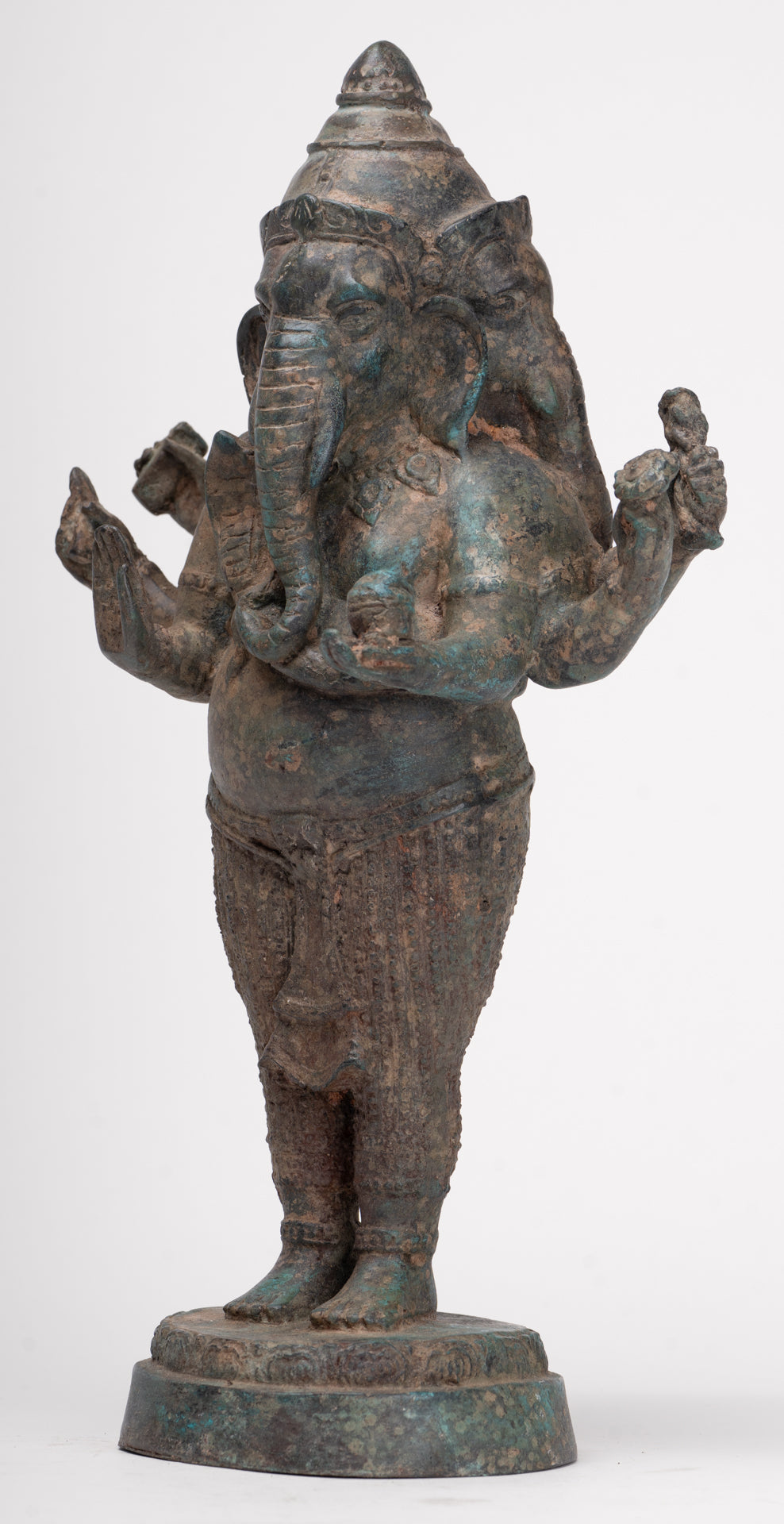
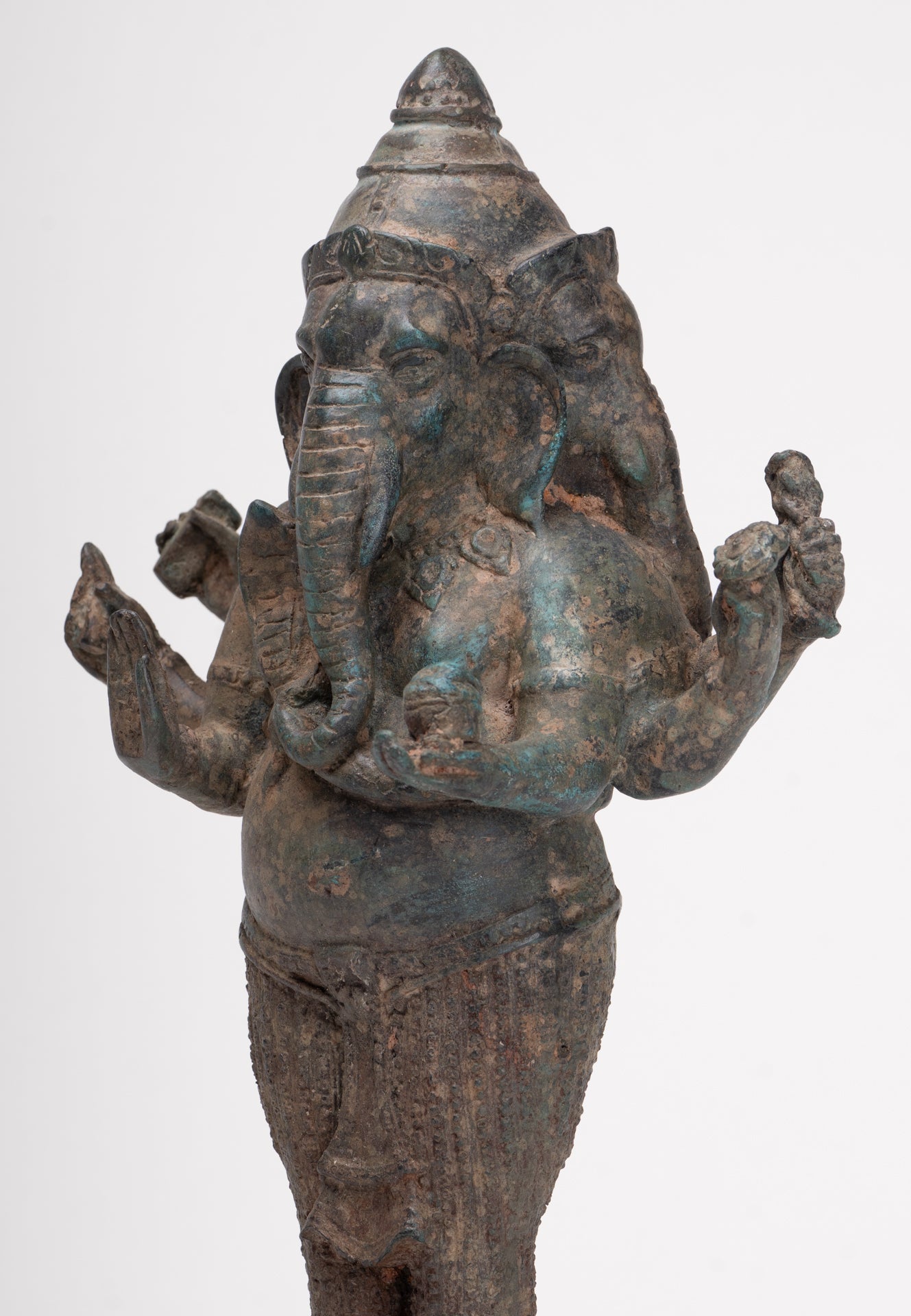
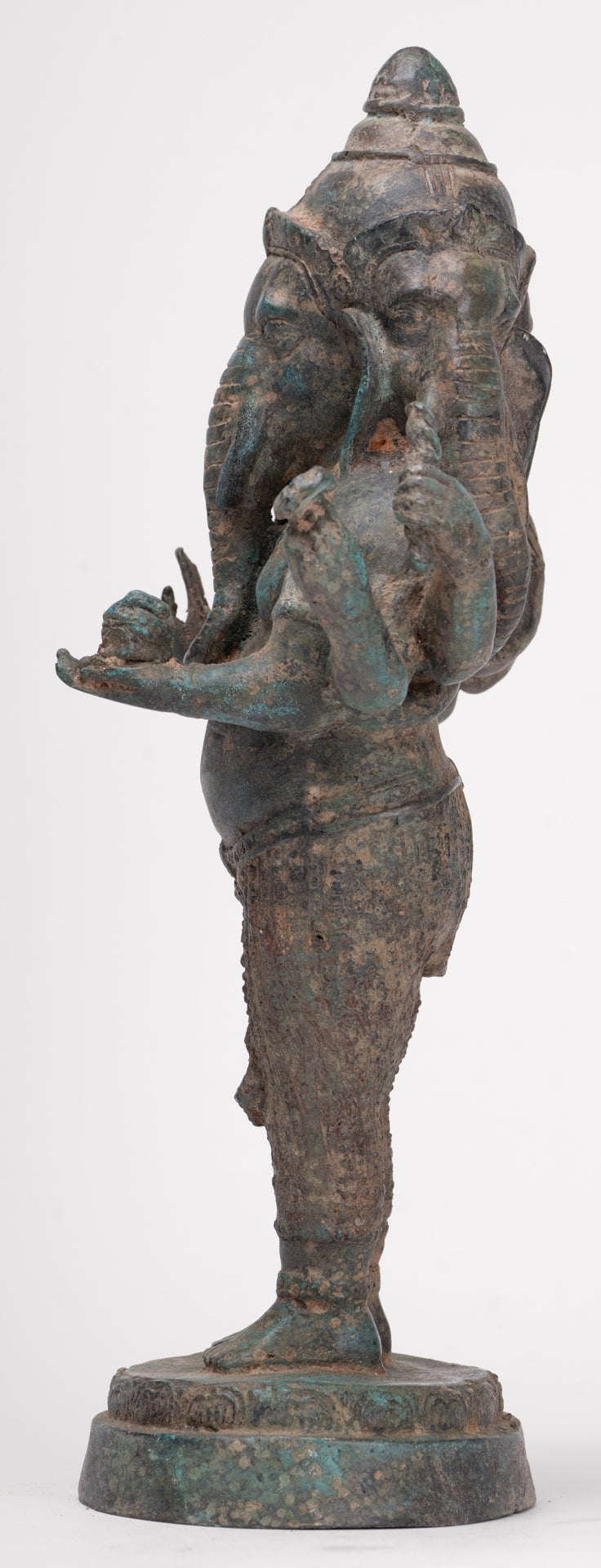
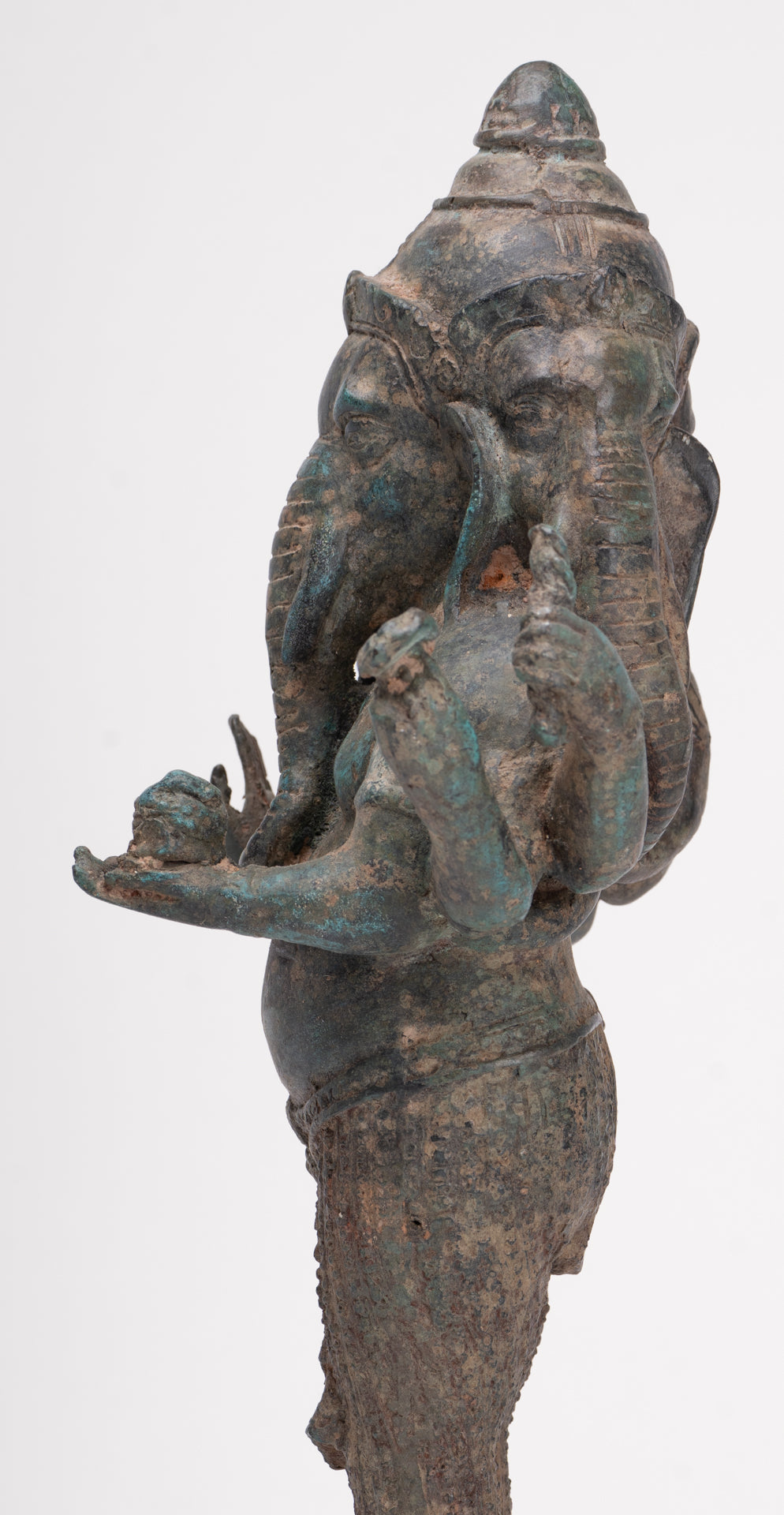
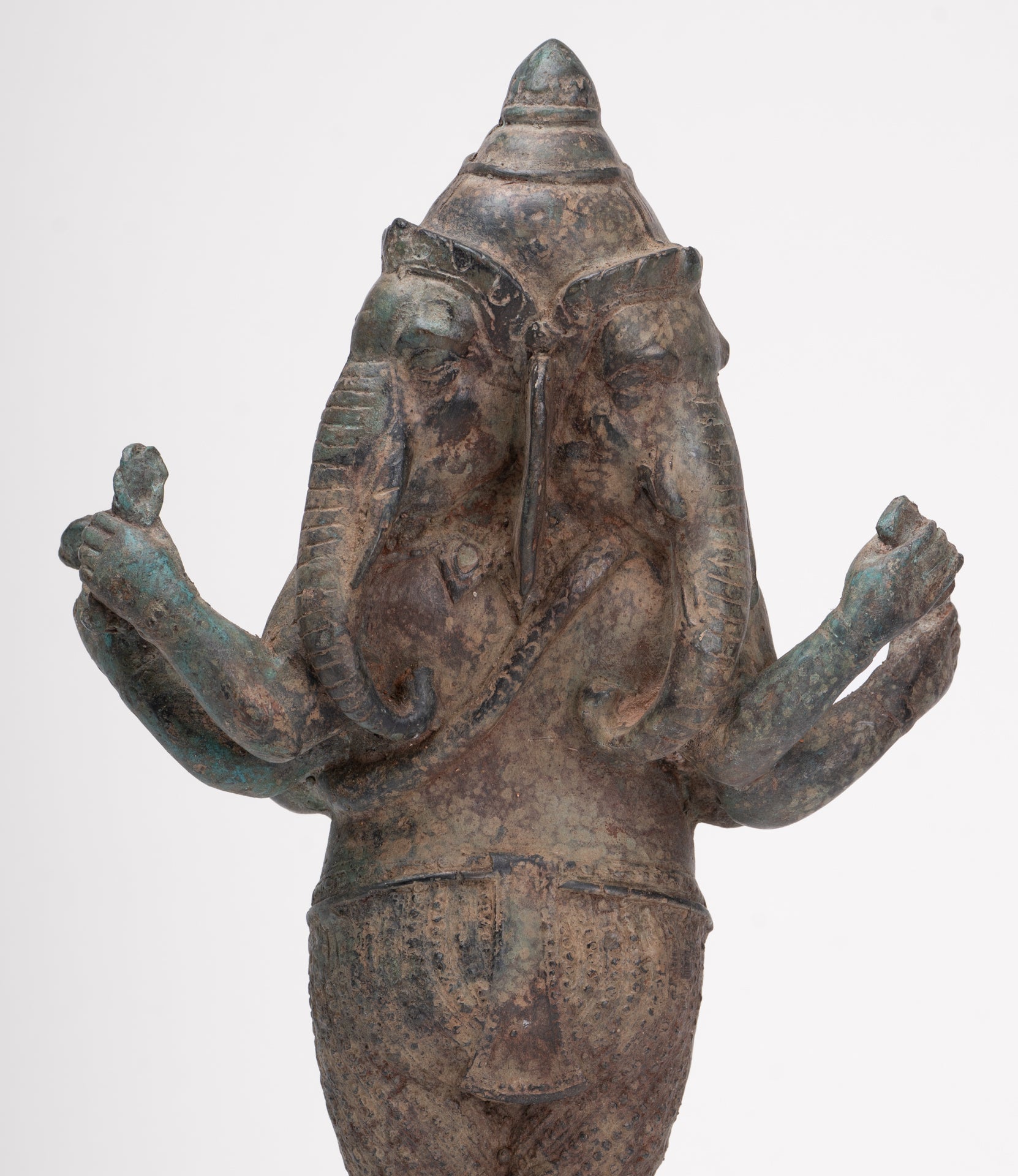
An expressively cast antique Thai‑style bronze six‑armed Ganesha, standing in regal poise upon a circular lotus‑leaf plinth.
His rounded, pot‑bellied form is wrapped in a long dhoti with crossed cloth gathered around the waist, giving the figure both grounded weight and a subtle sense of movement as the fabric appears to sway around his legs.
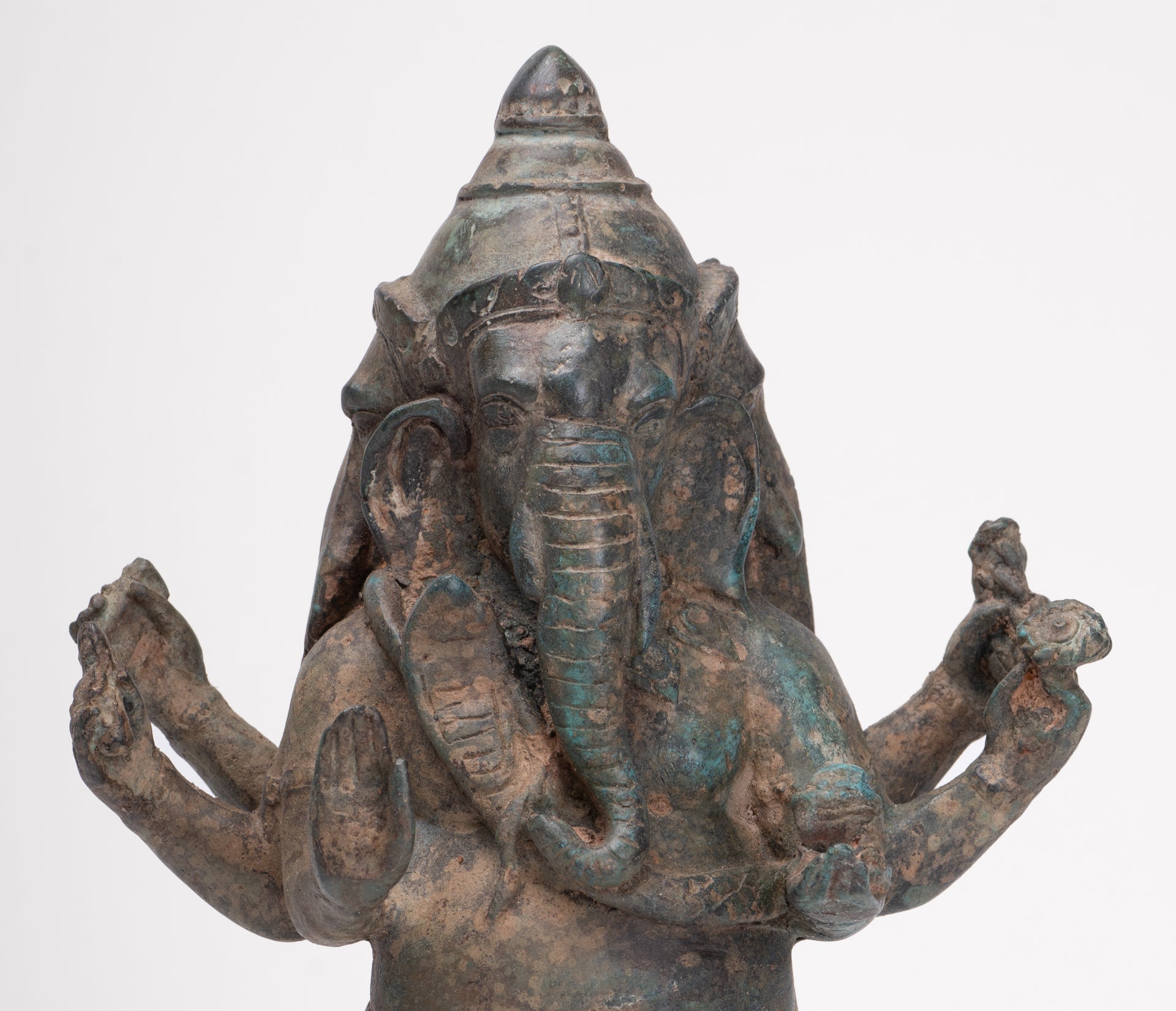
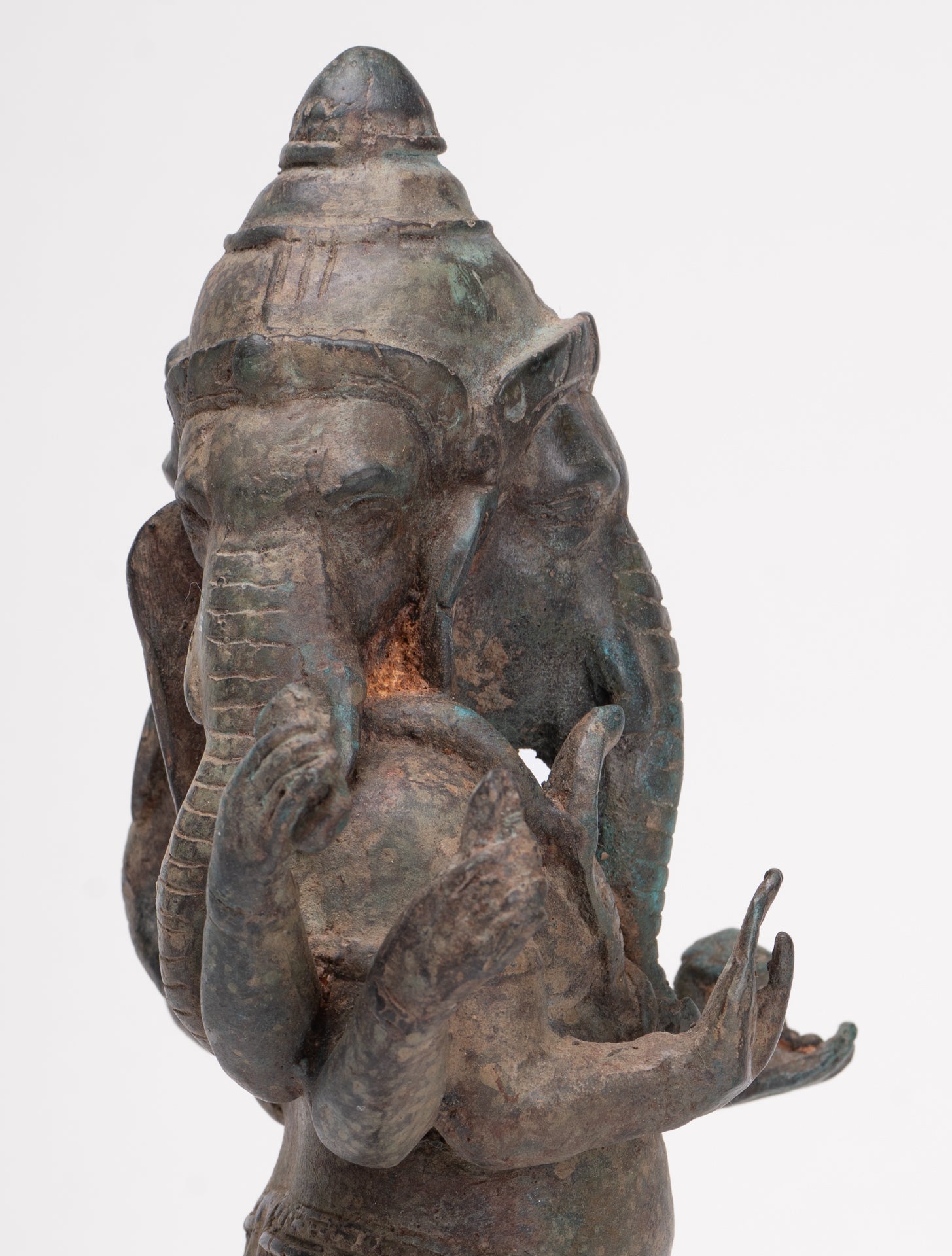
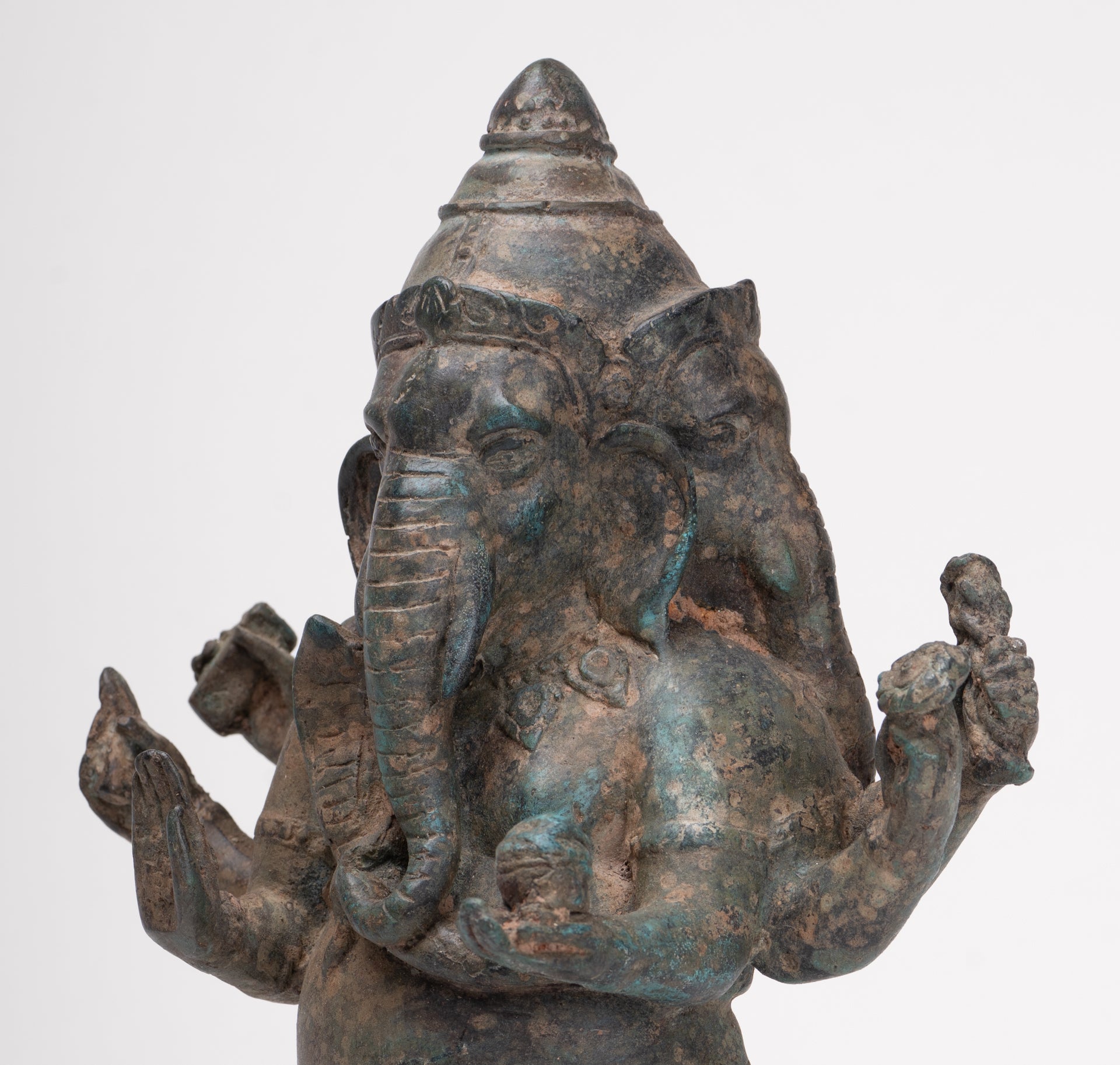
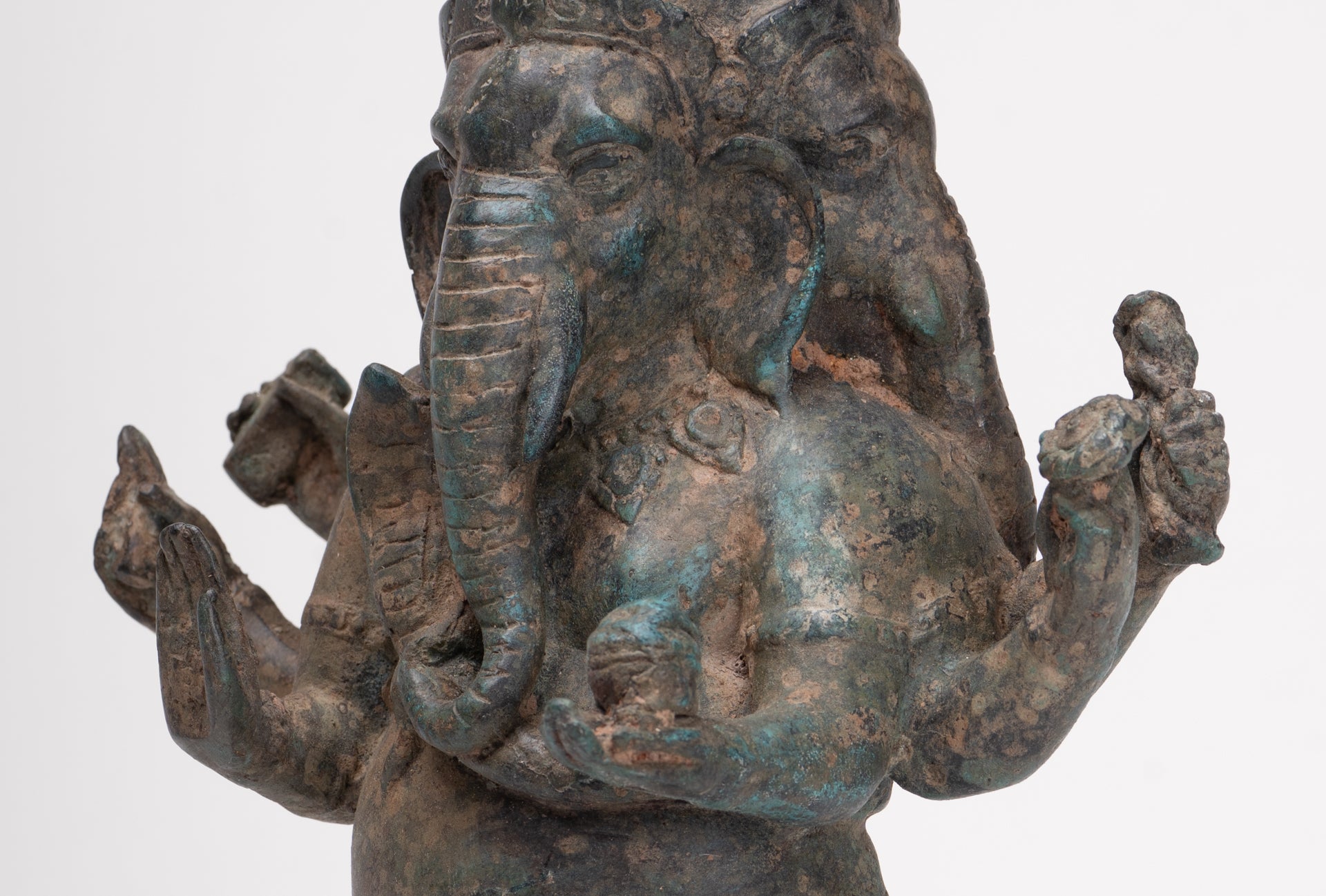
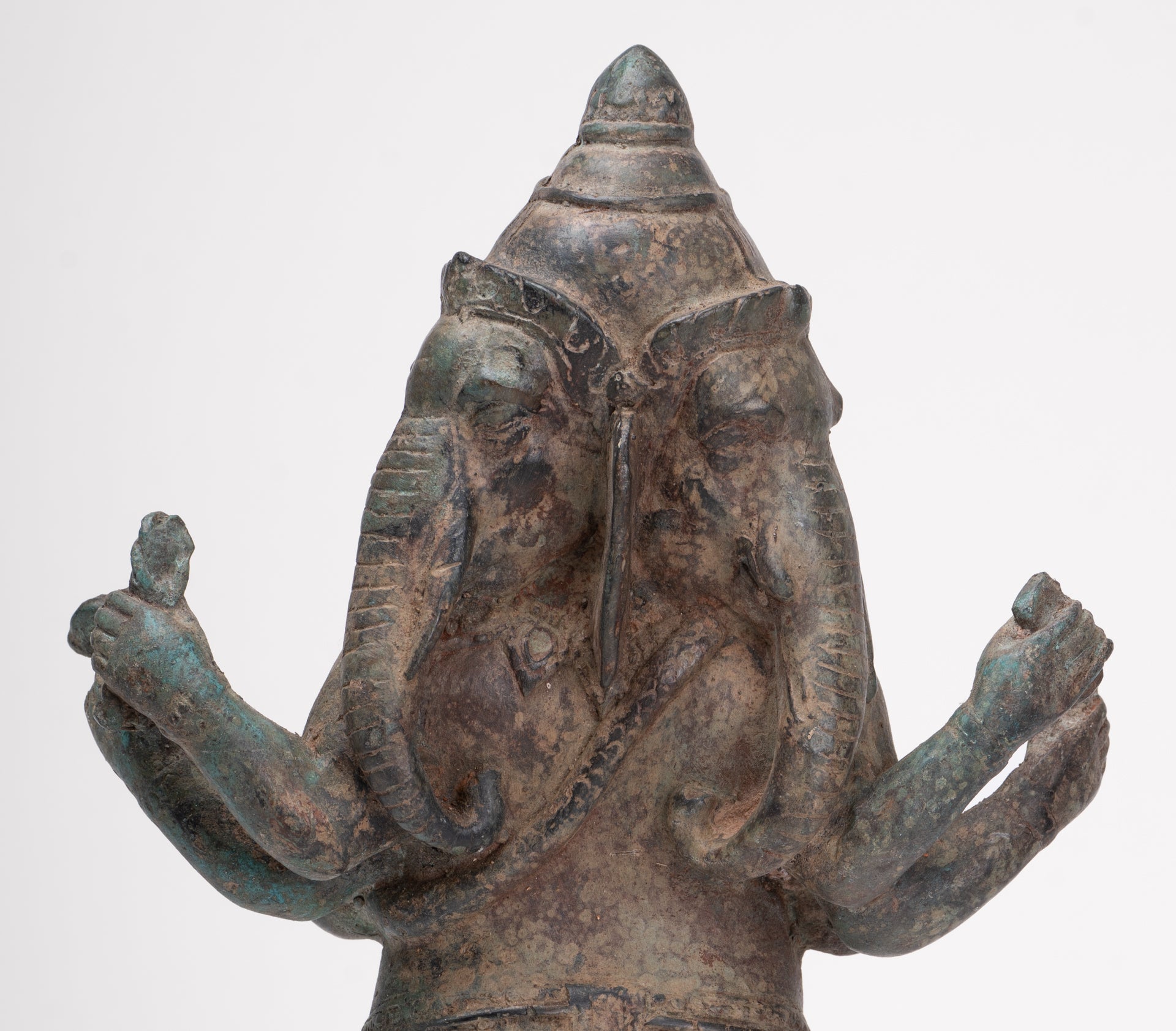
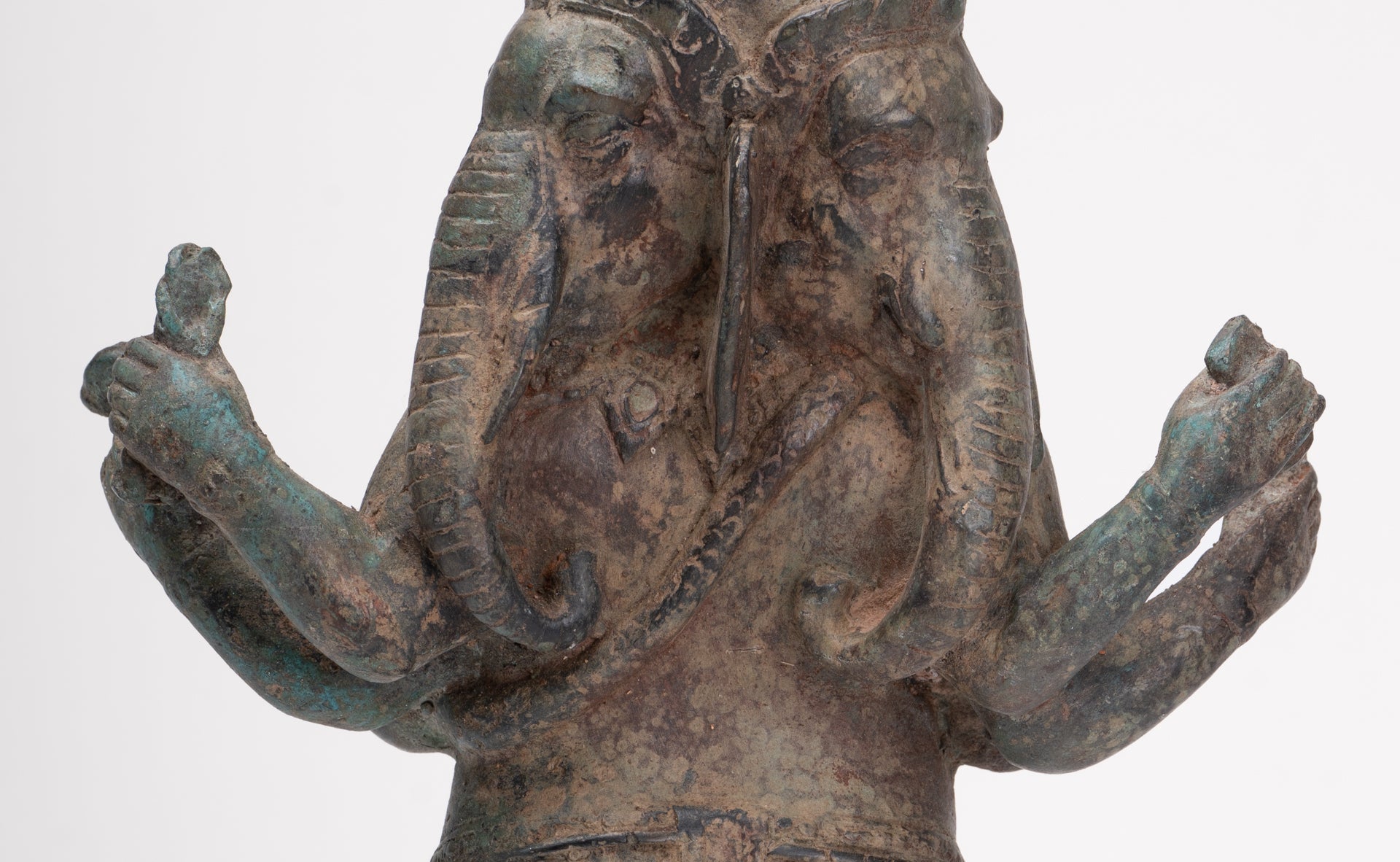
The distinctive, richly aged green‑brown patina adds warmth and character to the piece, softening the modelling and enhancing its sense of history and devotional use.
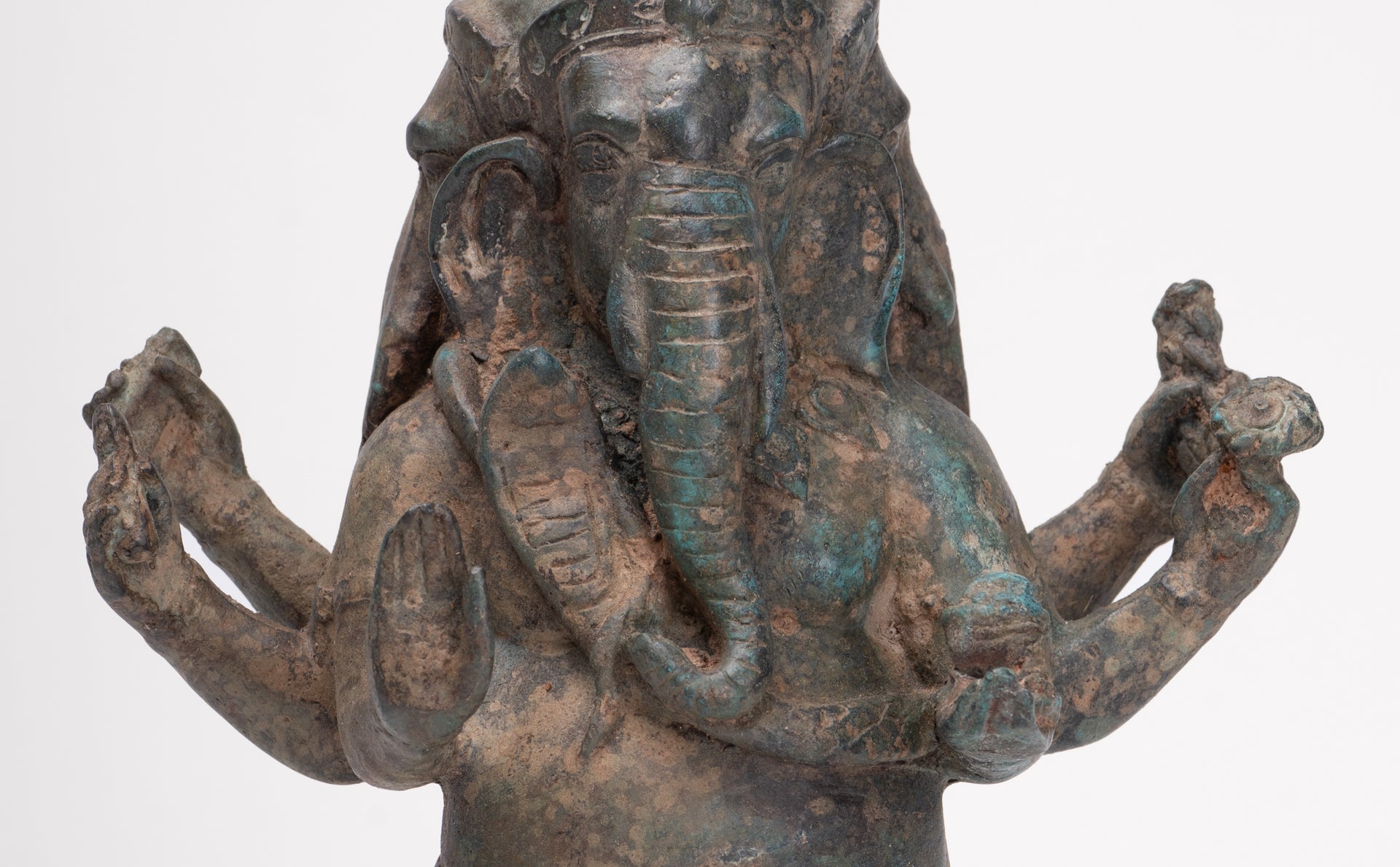
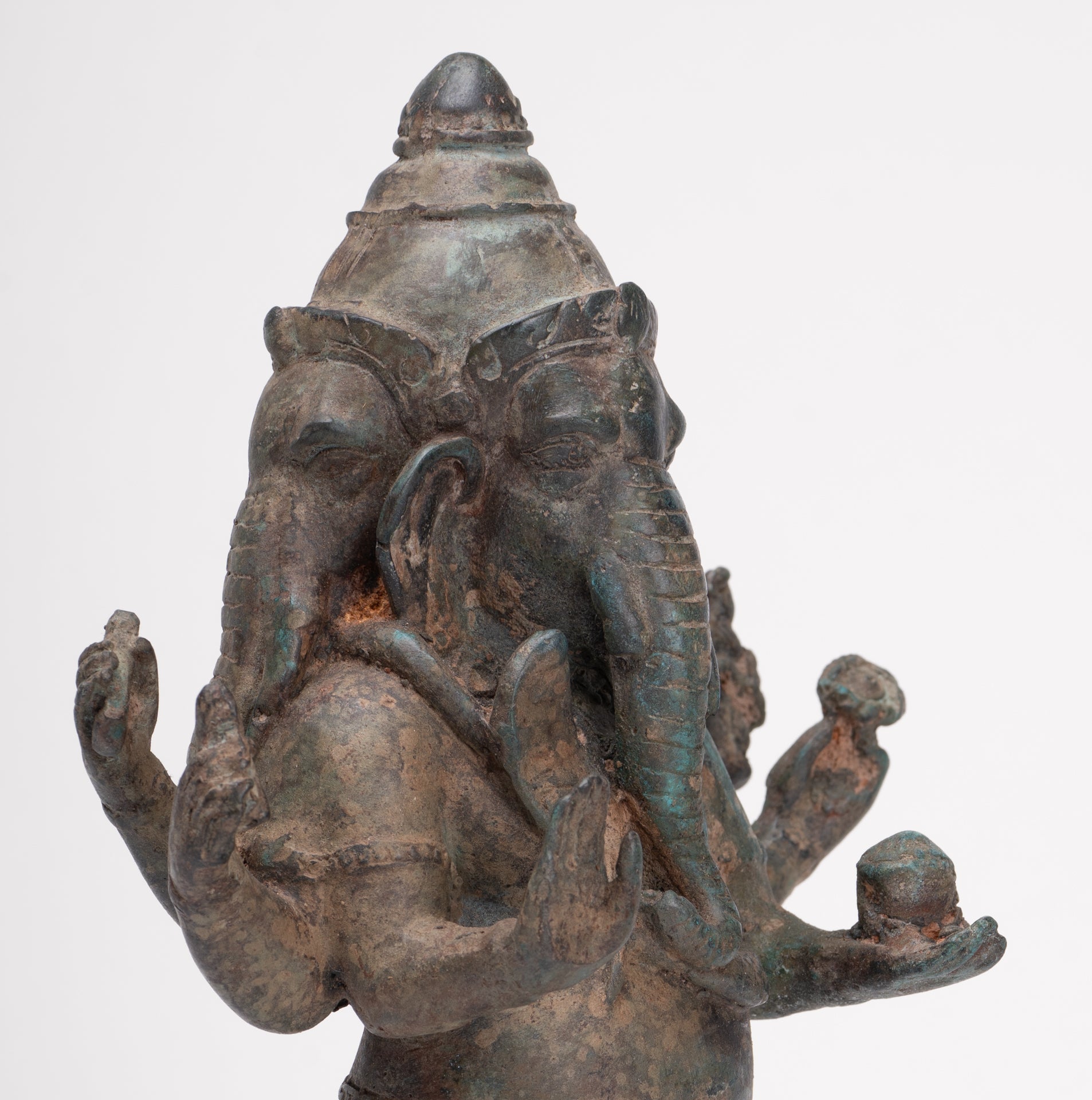
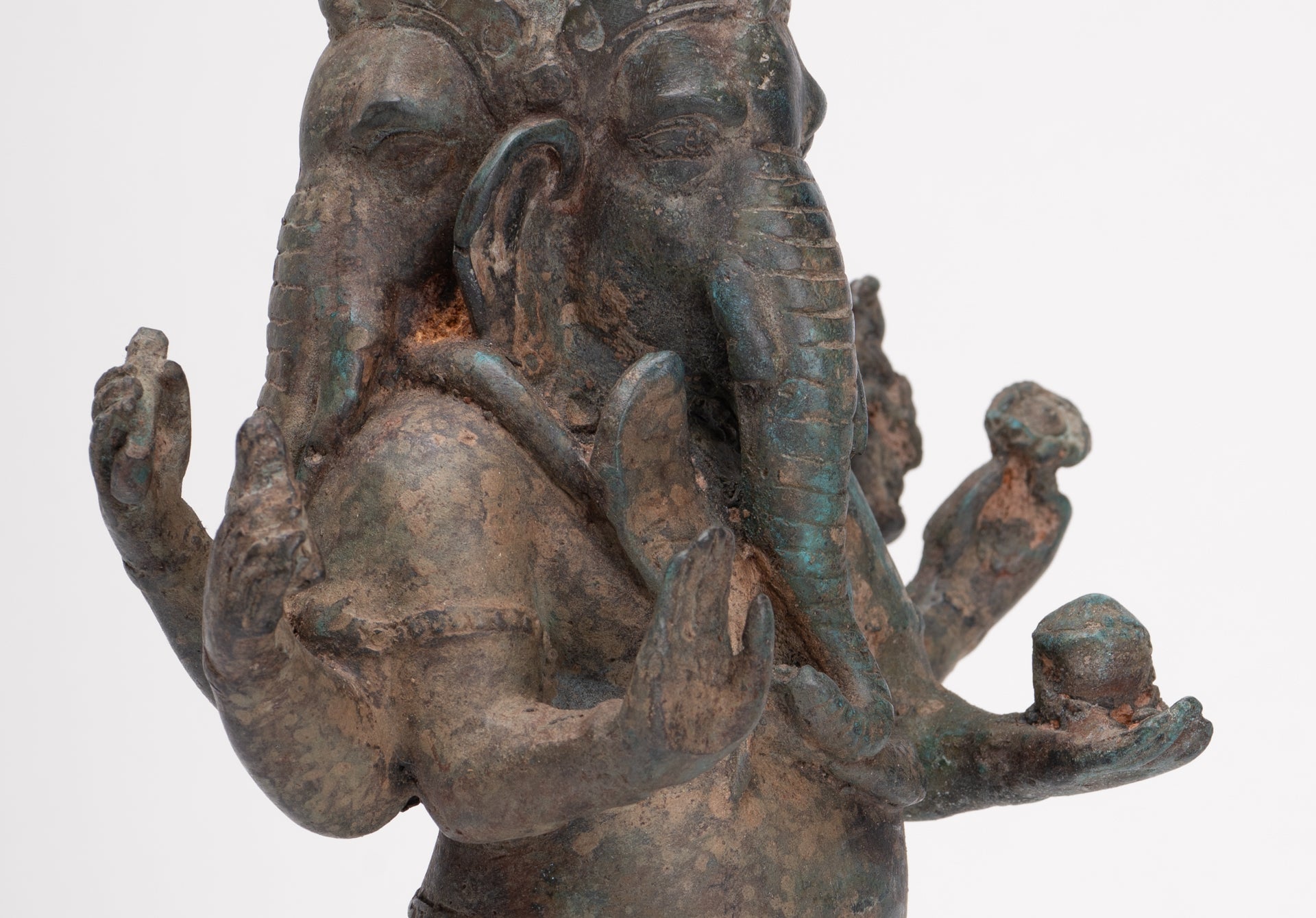
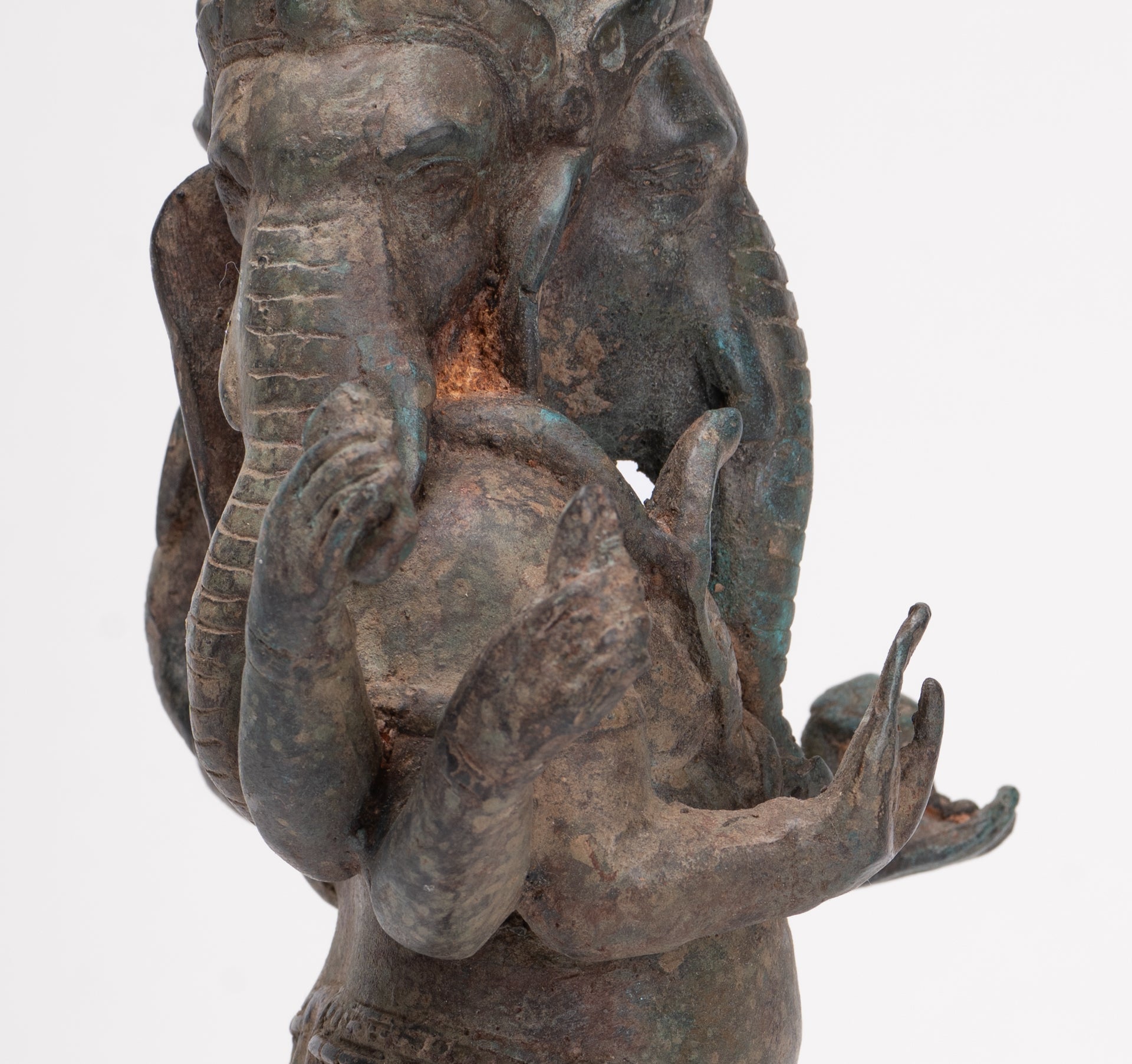
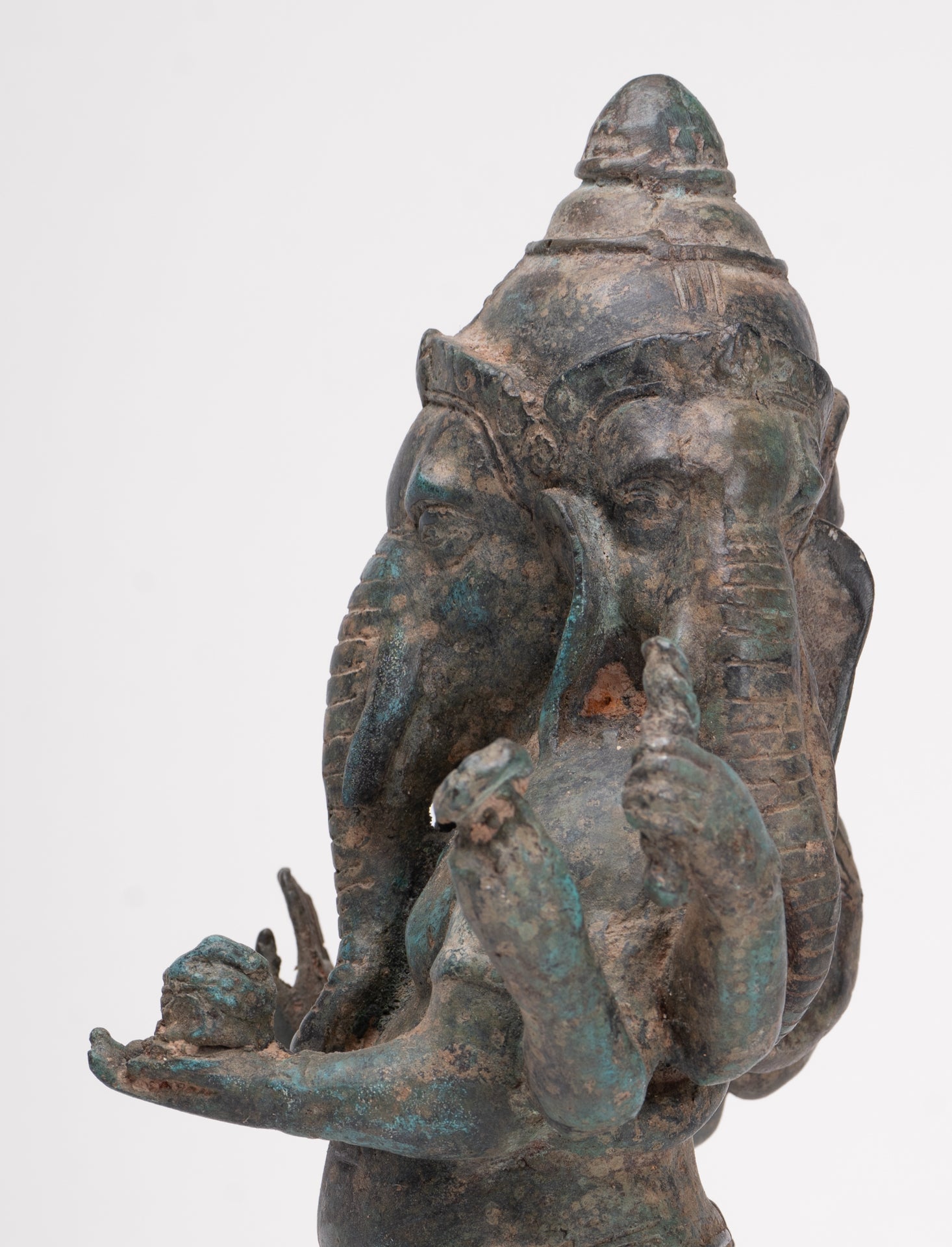
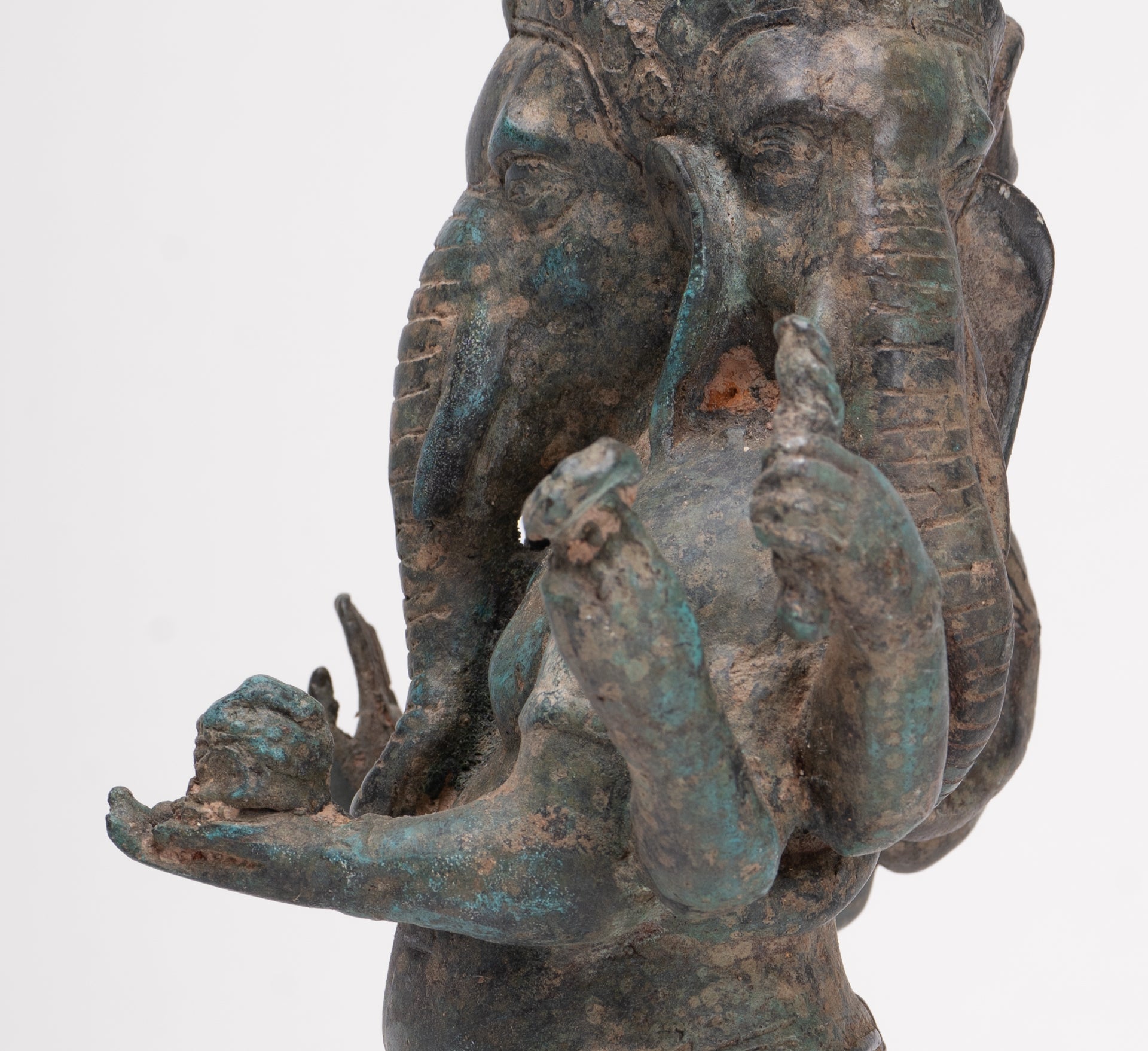
Ganesha, the elephant‑headed son of Shiva, holds his broken tusk, a bowl of sweetmeats, a noose and other ritual attributes in his six hands, each symbolising wisdom, generosity, protection and the power to draw devotees towards insight and away from obstacles.
The bowl of sweets evokes the rewards of a well‑lived life and the sweetness of spiritual attainment, while the noose gathers and guides, reminding us that challenges can be transformed into opportunities for growth.
Ganesha is often depicted enjoying music, celebration and offerings; like Krishna, he honours life’s pleasures and beauty, teaching that joy and devotion can coexist without contradiction.
The direction of his trunk is also significant: here it curves to his right, a rarer and more powerful form associated with sun‑like, disciplined energy, swift results and deeper spiritual transformation when approached with care and respect. In his earliest Indian forms Ganesha was closely linked with fertility and abundance, and over time he became universally revered as the Remover of Obstacles, Lord of Beginnings, patron of arts and sciences, and deity of intellect and wisdom.
One of the most recognisable of all Asian deities, this finely cast standing Ganesha combines Thai sculptural elegance with rich symbolic depth. It is sure to bring auspicious energy, creative inspiration and endlessly timeless style to any home, office or sacred space—an image that invites both celebration and contemplation each time you pass by.
Key Features
-
Antique Thai‑style standing Ganesha – Expressively cast bronze image of the beloved elephant‑headed Hindu deity, made in a refined Southeast Asian style.
-
Substantial yet versatile size – Measures 33cm / 13" high and weighs 2.6kg / 5.7lbs, giving the sculpture real presence while remaining easy to display.
-
Rare six‑armed form – Ganesha stands in regal poise, holding a range of meaningful ritual attributes that embody wisdom, protection, generosity and spiritual guidance.
-
Right‑curving trunk – A less common, potent form associated with disciplined, sun‑like energy, spiritual resolve and overcoming obstacles with focus and care.
-
Symbolic attributes – Includes the broken tusk, a bowl of sweetmeats, a noose and other ritual emblems, each adding depth to the sculpture’s message.
-
Finely modelled dhoti – Long pleated dhoti with crossed cloth at the waist brings rhythm, texture and a gentle impression of movement to the standing figure.
-
Lotus‑leaf plinth – The deity stands on a circular lotus base, symbolising purity, spiritual awakening and the flowering of wisdom.
-
Rich aged bronze patina – A beautifully varied green‑brown surface gives the piece warmth, texture and a time‑worn devotional character.
-
Auspicious home or office focal point – An inspiring figure for a shrine, study, creative workspace, entrance hall or living area.
-
Hindu deity of beginnings – Ganesha is widely revered as Remover of Obstacles, patron of arts and learning, and a source of wisdom, prosperity and new beginnings.
Frequently Asked Questions
Q: Who is Ganesha?
A: Ganesha, also known as Ganesh or Ganapati, is the elephant‑headed son of Shiva and one of the most beloved deities in Hindu traditions. He is especially revered as the Remover of Obstacles, Lord of Beginnings, patron of knowledge and the arts, and a source of wisdom, prosperity and good fortune.Q: What style is this Ganesha?
A: This is an antique Thai‑style bronze Ganesha. The compact standing form, expressive casting, stylised textile treatment and richly aged surface reflect the long Southeast Asian tradition of adapting Hindu iconography into local artistic languages.Q: Is this an original antique or a modern reproduction?
A: The piece is described as an antique Thai‑style bronze, with a richly developed green‑brown patina and modelling that communicate age and traditional craftsmanship. If exact dating, previous ownership or provenance is important to your purchase, it is best to request any available supporting information before buying.Q: Why does Ganesha have six arms?
A: Multiple arms allow a deity to hold several attributes at once, visually expressing his many powers and responsibilities. In this six‑armed form, Ganesha presents a fuller image of divine activity: compassionate guidance, removal of obstacles, bestowal of wisdom, protection and abundance.Q: What does the broken tusk represent?
A: Ganesha’s broken tusk is one of his most recognisable symbols. Several traditions explain its origin, including the story that he broke it to use as a writing instrument while recording the Mahabharata. It is commonly understood as a symbol of sacrifice, resilience and choosing wisdom over outer perfection.asia-archive.si+1Q: What do the sweetmeats mean?
A: The bowl of sweetmeats, often called modaks or laddus, symbolises the rewards of a well‑lived life and the sweetness of spiritual understanding. The image suggests that devotion and wisdom do not reject joy; rather, they help us recognise and enjoy life’s deeper gifts.Q: What does the noose signify?
A: The noose, or pasa, represents Ganesha’s ability to draw devotees closer to truth and gently restrain ignorance, harmful habits or distracting desires. Rather than symbolising punishment, it can be understood as an emblem of compassionate guidance and the discipline needed for growth.Q: Why does the direction of the trunk matter?
A: The orientation of Ganesha’s trunk carries symbolic meaning in many Hindu traditions. This figure’s trunk curves to the right, a less common form associated with the Pingala nadi, the solar energy channel; it is often linked with disciplined practice, strong resolve and more immediate, transformative energy.youtubeQ: Is a right‑curving trunk Ganesha suitable for a home?
A: Yes, it can be displayed respectfully in a home, office or shrine. Some traditions consider the right‑curving form especially powerful and encourage attentive, disciplined devotion around it. For collectors, it also makes the sculpture a particularly compelling representation of Ganesha’s resolute and transformative aspect.youtubeQ: What does the lotus plinth represent?
A: The lotus rises from muddy water yet opens into a clean, beautiful flower. It therefore symbolises purity, awakening and spiritual growth—the capacity to develop wisdom and compassion despite worldly difficulty. The lotus also gives the figure a sense of sacred elevation.Q: Why does Ganesha have a rounded belly?
A: Ganesha’s generous, rounded form is often associated with abundance, contentment and the ability to contain all experiences of life—pleasant and difficult alike. It is part of his approachable, benevolent character and reinforces his links with nourishment, fertility and worldly as well as spiritual prosperity.Q: What does it mean that Ganesha is the Remover of Obstacles?
A: Ganesha is traditionally invoked before new undertakings: journeys, studies, creative projects, business ventures, ceremonies and major life changes. “Removing obstacles” does not necessarily mean making life effortless; it also refers to providing the discernment, patience and courage needed to move through challenges wisely.Q: Is Ganesha only associated with wealth and good fortune?
A: No. While Ganesha is associated with prosperity and auspicious beginnings, he is equally a deity of intellect, learning, discernment, creativity and spiritual development. This is why his image is valued by students, artists, writers, entrepreneurs and meditators alike.Q: Is the sculpture suitable for non‑Hindus?
A: Yes. Ganesha is appreciated by people of many backgrounds for his welcoming character and symbolism of resilience, wisdom and creative possibility. If displayed, it is respectful to give the figure a clean, considered and elevated position.Q: Where should I place a Ganesha statue?
A: A stable shelf, console table, study, library, meditation room, entrance hall or dedicated shrine all make excellent settings. Because Ganesha is associated with beginnings and clearing paths, many people enjoy placing him near an entrance or in a work area—provided the location is clean, calm and not at floor level.Q: Can I use this Ganesha for meditation or devotional practice?
A: Yes. The sculpture may be a focus for quiet reflection, mantra practice, offerings or meditation on courage and creative clarity. A simple practice is to pause before beginning an important task and reflect on what internal or external obstacle needs patient attention.Q: How should I care for the bronze patina?
A: Dust gently with a soft, dry cloth or a natural‑bristle brush, especially around the hands, trunk and textile details. Avoid abrasive pads, chemical cleaning products, commercial metal polish and water immersion, as these can damage or remove the beautifully aged patina.Q: Can it be displayed outdoors?
A: Indoor display is recommended. Prolonged outdoor exposure to rain, frost, direct sunlight and fluctuating humidity can alter the surface and accelerate corrosion, changing the distinctive green‑brown finish.Q: Is it heavy enough to be stable?
A: At 2.6kg / 5.7lbs, the sculpture has a reassuring weight for its size. Nonetheless, position it on a stable, level surface away from an edge, in a location where the projecting arms and trunk will not be knocked.Q: Who would especially appreciate this piece?
A: This standing six‑armed Ganesha is an excellent choice for collectors of Thai and Southeast Asian art, devotees of Ganesha, yoga and meditation practitioners, creative professionals and anyone beginning a new chapter who wants a beautiful, meaningful symbol of resilience and auspicious possibility.SATISFACTION GUARANTEE - We have been offering SE Asian Art for many years and are proud of the reputation we have developed for fair and honest listings. However, if for any reason, whatsoever, you are unhappy with your purchase please just let us know and we will provide a full refund. We want you to be 100% happy with your purchase.
-
-
The majority of orders will be shipped with DHL. This is a secure, express and fully tracked service.
Items less than 2Kg we typically ship using Royal Mail.
Once we receive your order we try to ship all orders the same or next working day.
Large and/or fragile pieces requiring palletising, specialist crating and/or extra packaging may take a little longer. Palletised shipments will be delivered curbside.
All orders over 35 GBP will be shipped free of charge.

-
We genuinely hope that all purchases delight.
However, if they do not, regardless of reason, we will refund all orders upon receipt of the unwanted item. Just notify us within 14 days of receiving your order that you wish to make a return and send the piece back to us with 30 days of delivery.


