










-
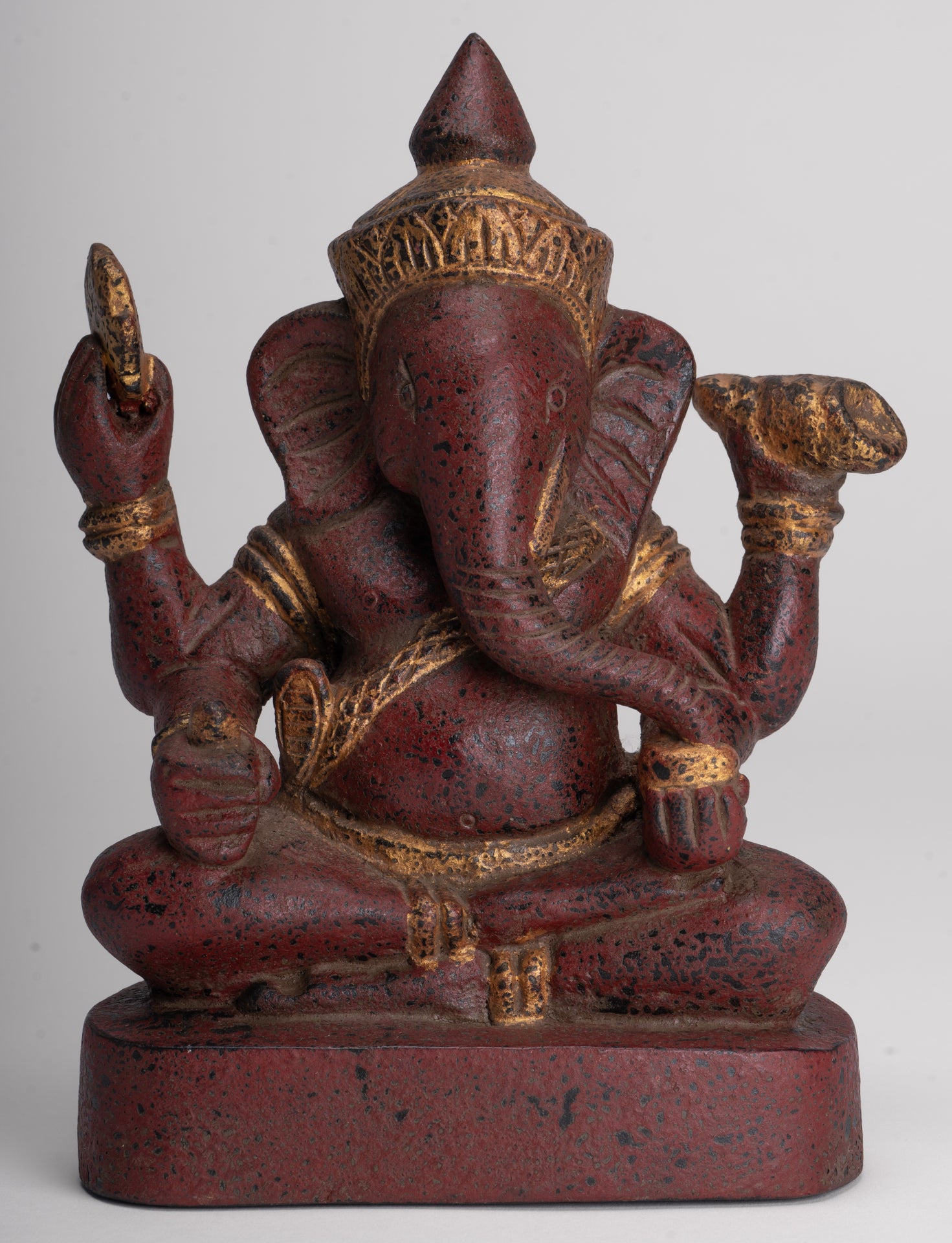
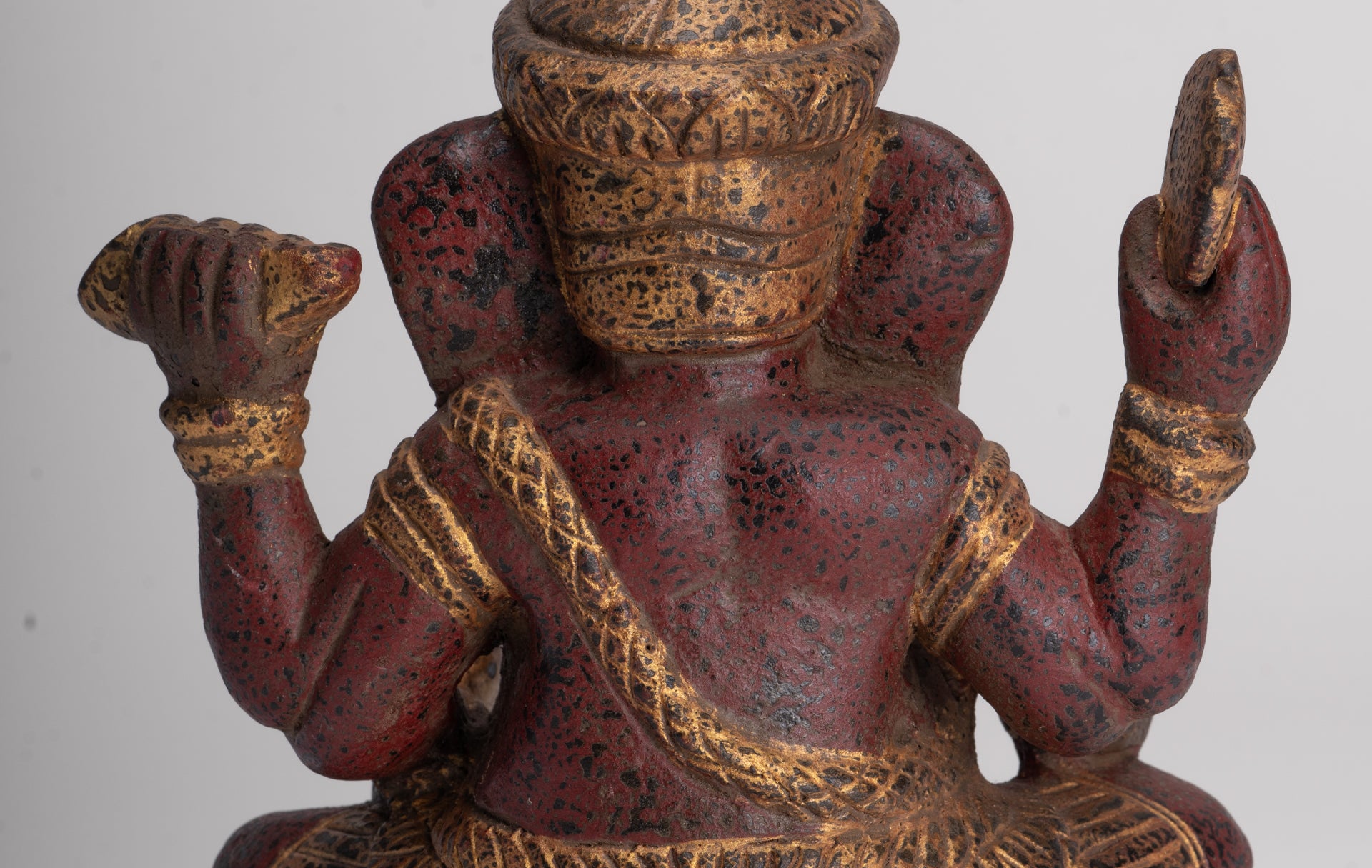
Ganesh Statue - Antique Khmer Style Seated Wood Ganesha Statue - 22cm/9"
Seated Four-Armed Deity of Wisdom and Auspicious Beginnings
Measures (Height) 22cm/9"
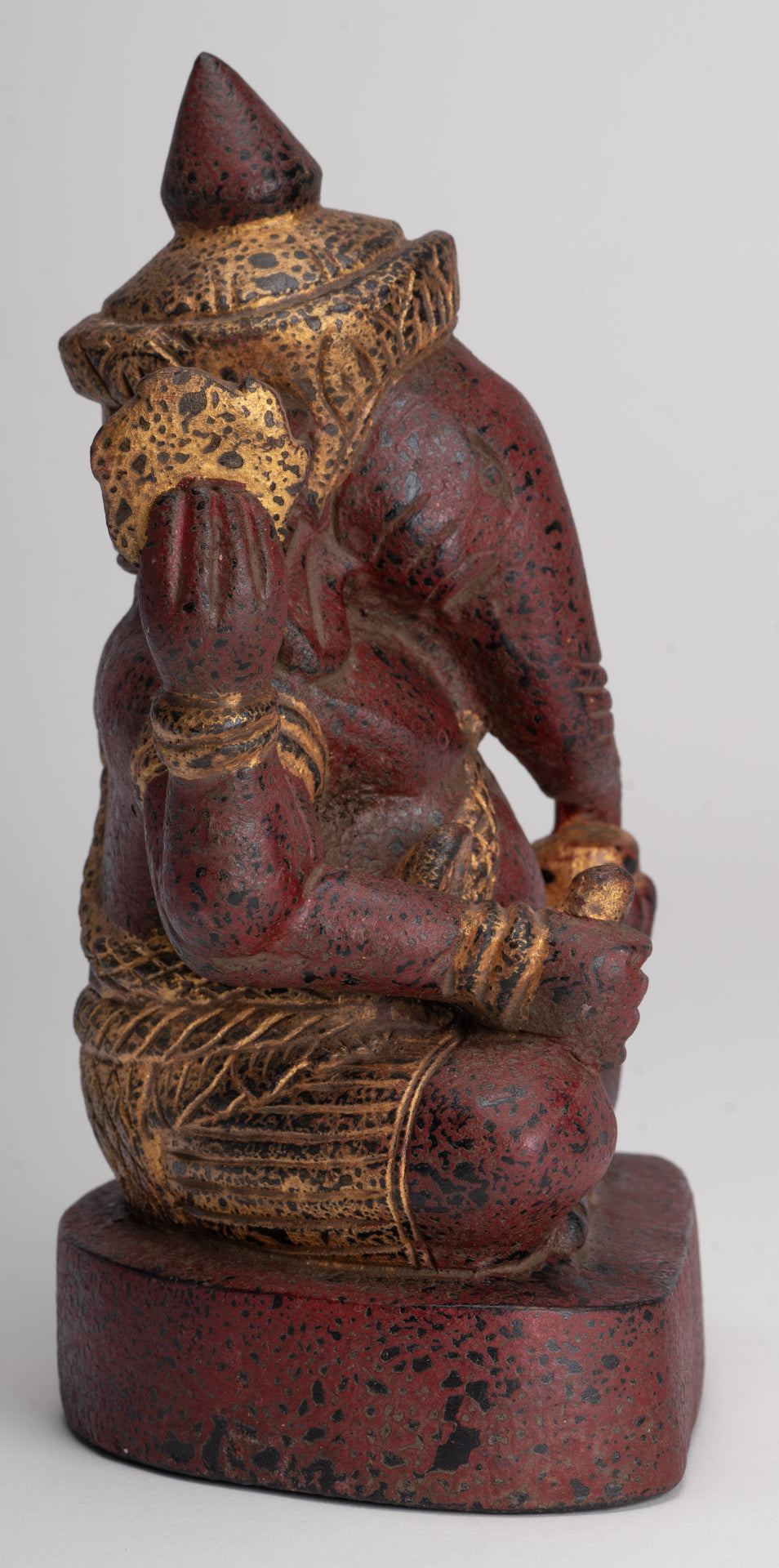
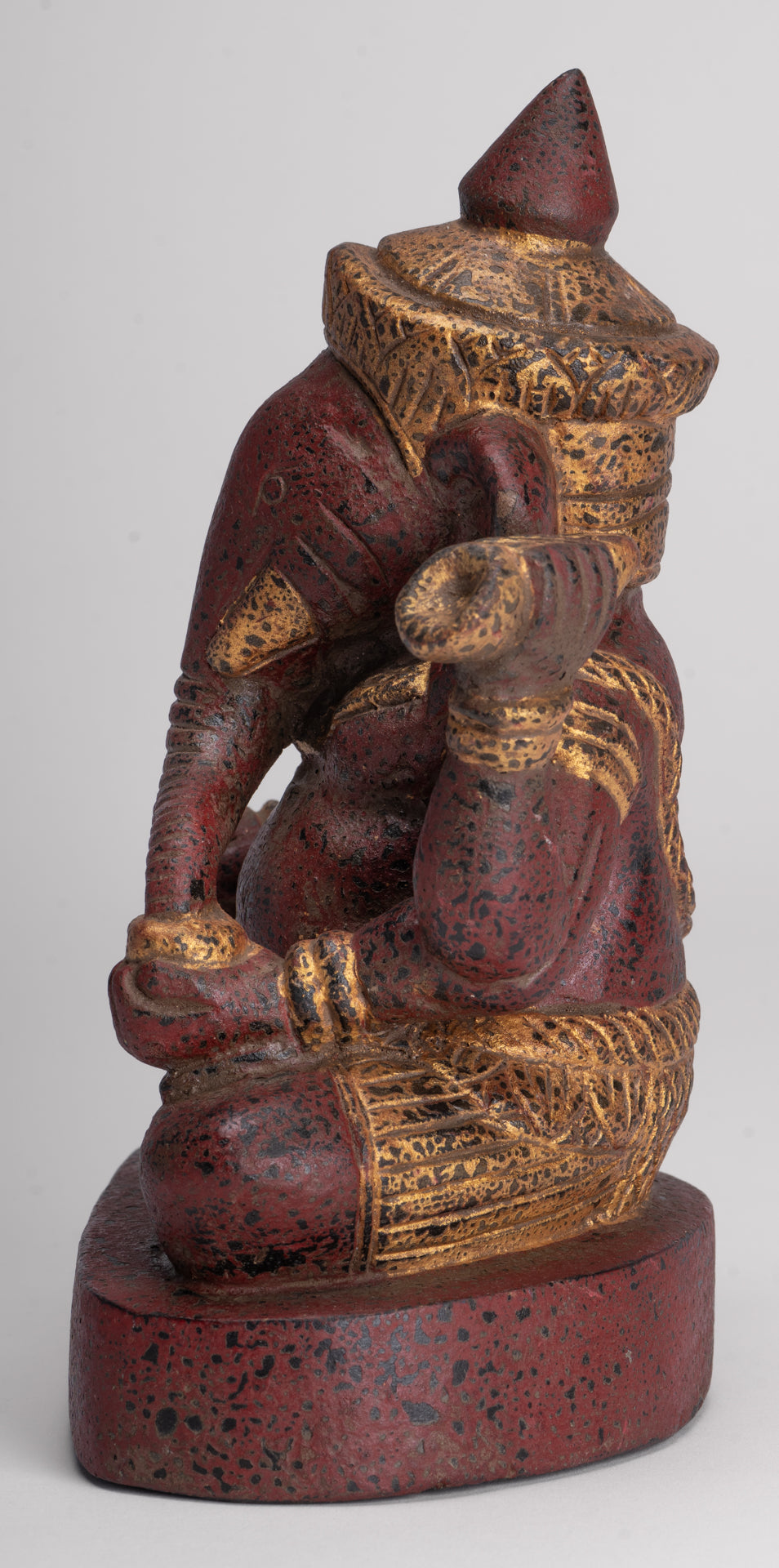
A characterful antique Khmer-style wooden sculpture of Ganesha, the elephant-headed Hindu deity associated with wisdom, auspicious beginnings, and the removal of obstacles. Described as originating from Cambodia, the figure is carved with a gently rounded body and seated in a relaxed, cross-legged posture upon a low, shaped base.
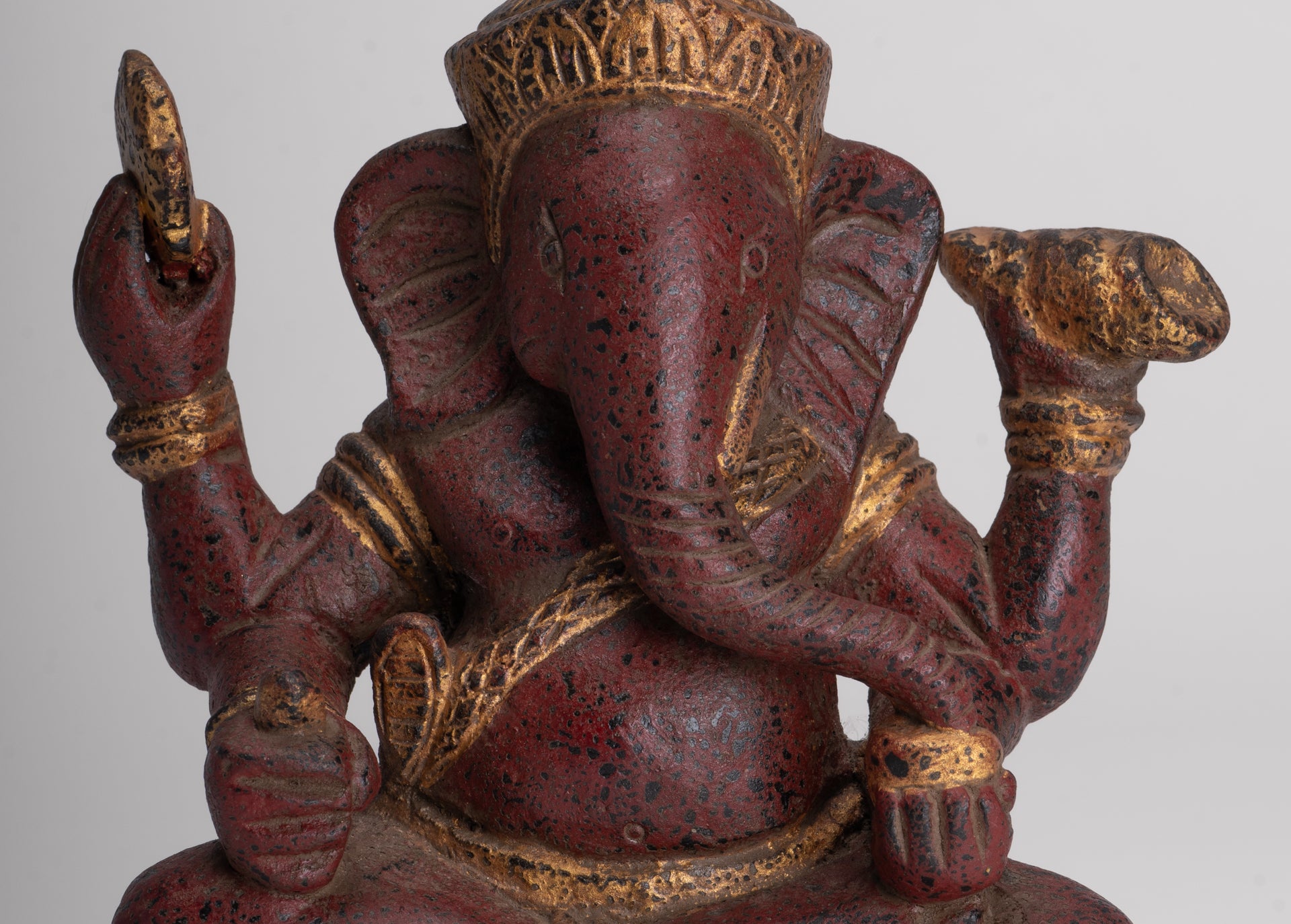
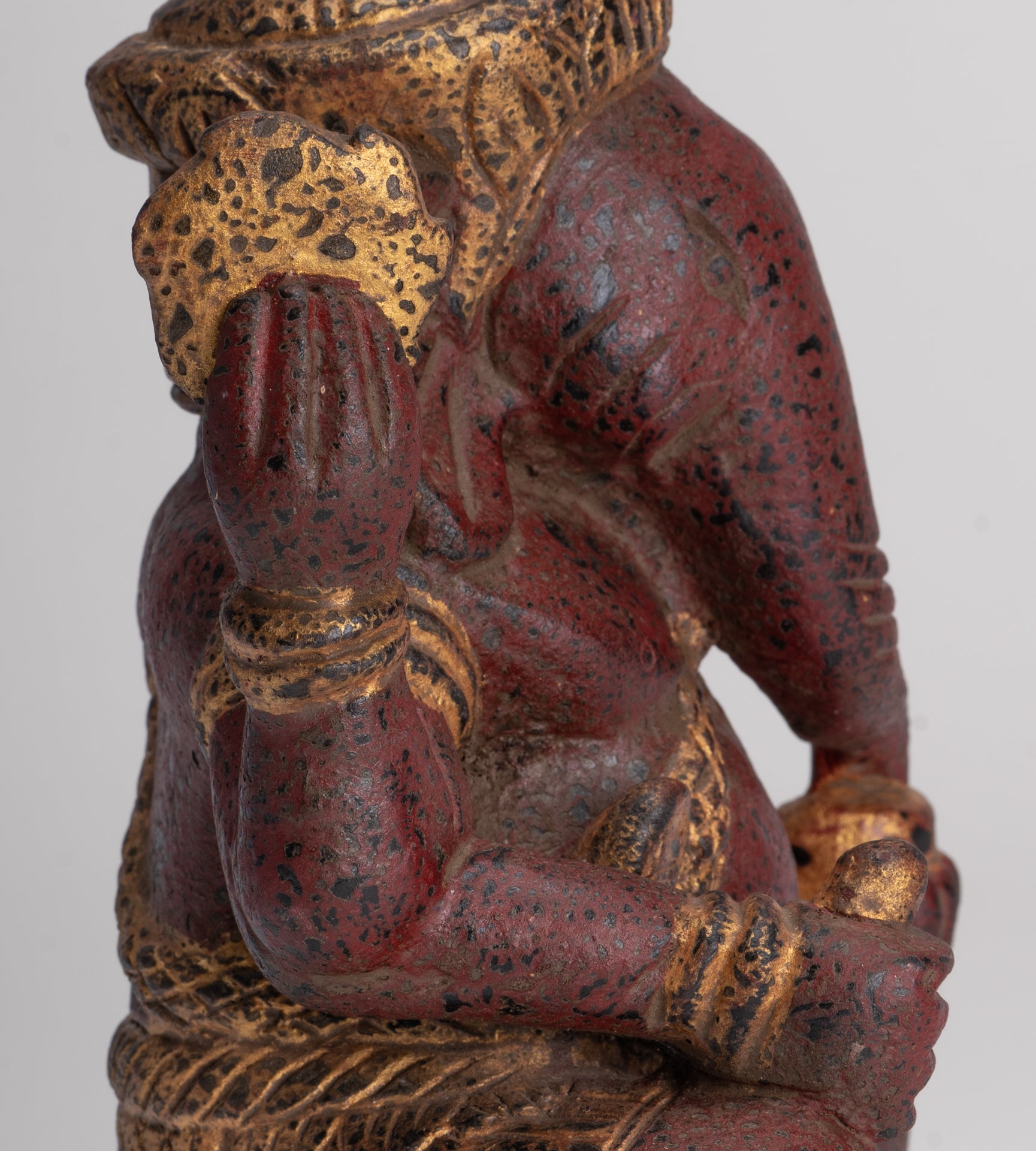
A rich burgundy-red finish gives the sculpture a warm presence, while gold-coloured highlights pick out the crown, jewellery, bracelets, garment borders, and hand-held attributes. Dark mottling and areas of surface wear create an appealing contrast with these brighter details. The result is a compact sculpture with considerable personality and decorative depth.
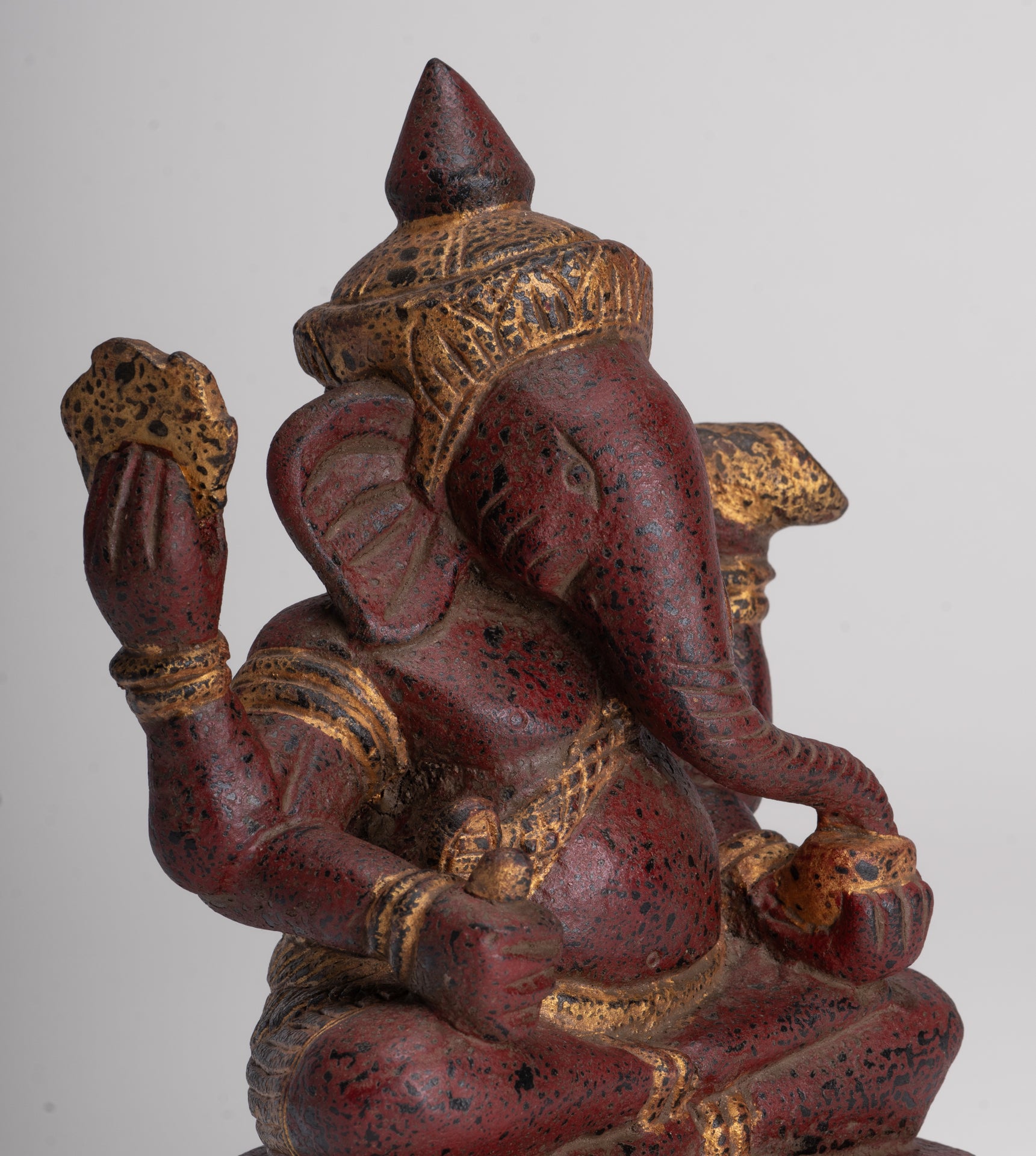
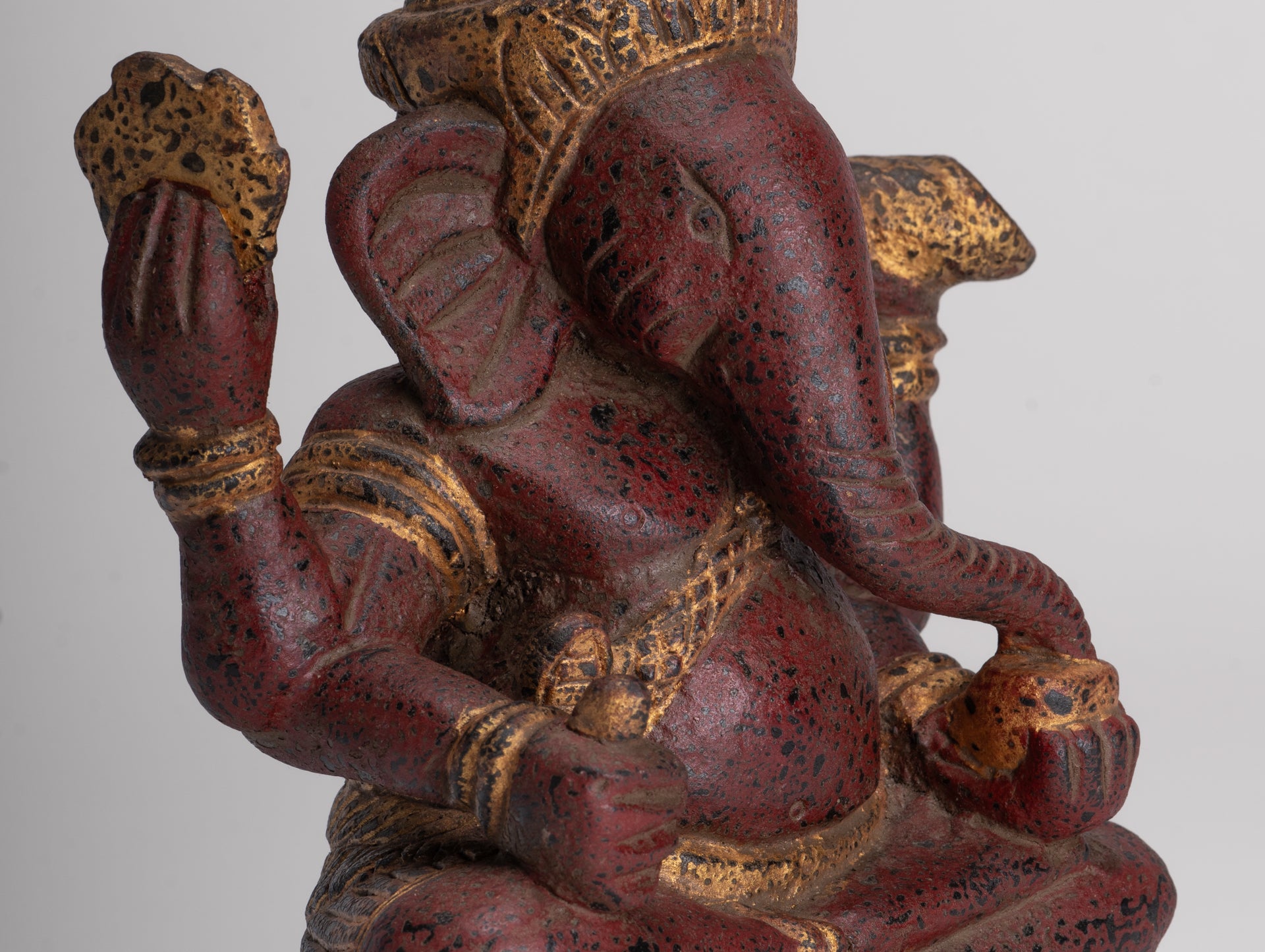
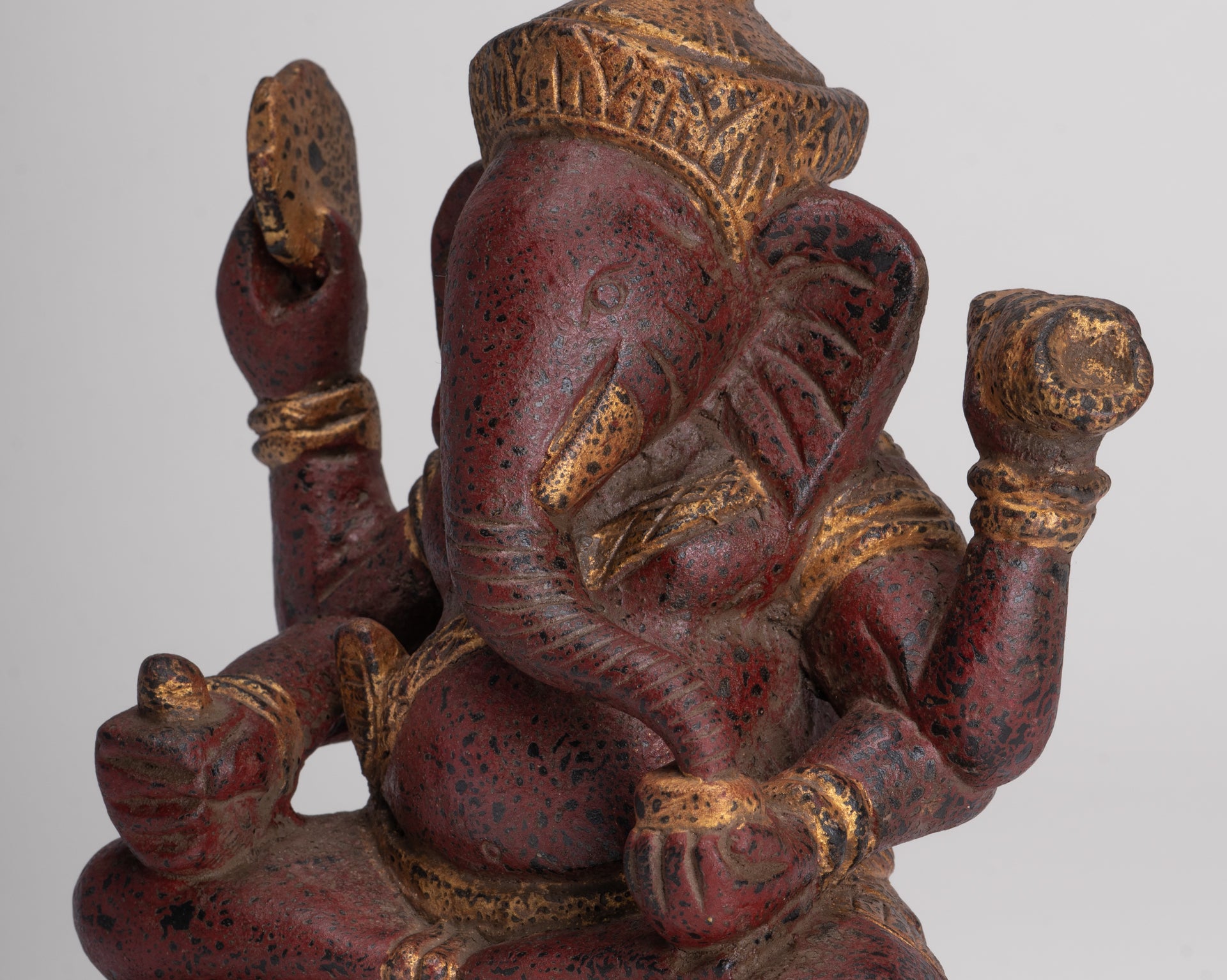
Ganesha’s broad ears frame a long trunk that descends before sweeping toward his left—the viewer’s right. His pointed crown rises above a patterned diadem, while an ornamental band crosses the torso and a decorated belt encircles the rounded waist. The four arms are arranged in a balanced composition, bringing animation to the figure without disturbing its settled, reassuring posture.
Ganesha holds a broken tusk, a chakra or discus, a conch shell, and a container of sweetmeats.
With its distinctive colouring, tactile carved surface, and benevolent expression, this Ganesha offers an engaging focal point for a home, study, or collection of Southeast Asian devotional art.
Ganesha: Wisdom, Generosity and New Beginnings
Ganesha is widely revered as the remover of obstacles and a patron of intellect, learning, and creative endeavour. His familiar elephant head and rounded human body combine formidable strength with an approachable, generous character. Four-armed representations carrying a broken tusk, bowl, and other implements are well established in Southeast Asian art.
The broken tusk evokes sacrifice, determination, and learning. One celebrated tradition associates it with Ganesha’s work as the scribe of the Mahabharata, transforming an apparent imperfection into an instrument of knowledge.
The sweetmeats introduce a gentler theme: the sweetness of spiritual understanding, contentment, and the rewards of sincere effort. They also recall Ganesha’s well-known fondness for food, an aspect of his imagery that makes him especially relatable to devotees.
The Left-Curving Trunk
Here, Ganesha’s trunk curves toward his own left. Some devotional traditions associate this orientation with Ida nadi, the cooling lunar channel, and with gentleness, receptivity, and domestic harmony. It is consequently a familiar form for household worship.
Key Features
-
Antique Khmer-style seated wooden Ganesha.
-
Supplied origin: Cambodia.
-
Height approximately 22 cm / 9 inches.
-
Four-armed figure in a relaxed, cross-legged posture.
-
Gently rounded torso and broad, expressive ears.
-
Long trunk curving toward Ganesha’s left.
-
Pointed crown above a patterned diadem.
-
Decorative jewellery, bracelets, torso band, and waist ornament.
-
Attributes described as a broken tusk, chakra, conch shell, and sweetmeats.
-
Rich burgundy-red finish with gold-coloured highlights.
-
Dark surface mottling and visible wear.
-
Low, shaped wooden base.
-
A compact decorative and devotional piece for a home, office, or collection of Asian sculpture.
Frequently Asked Questions
Who is Ganesha?
Ganesha is the elephant-headed son of Shiva and Parvati and one of Hinduism’s most familiar deities. He is associated with wisdom, learning, prosperity, and the removal of obstacles, and is often honoured at the beginning of new undertakings.
Why does Ganesha have four arms?
The additional arms allow several divine attributes to be shown simultaneously. Different representations carry different objects, expressing qualities such as guidance, generosity, learning, and protection. Historic Southeast Asian examples include combinations of the broken tusk, bowl, goad, and prayer beads.
What does the broken tusk mean?
The broken tusk has several traditional explanations. Its association with writing the Mahabharata makes it an emblem of perseverance, sacrifice, and the pursuit of knowledge. It can also invite reflection on the value of inner wisdom over outward perfection.
What do the sweetmeats represent?
Sweets are familiar offerings to Ganesha and frequently appear in his imagery. They can symbolise the sweetness of spiritual realisation, contentment, and the rewards of devoted practice. “Sweetmeats” is the safest description here, since the carving does not clearly distinguish a particular variety such as laddus or modakas.
Does Ganesha ever eat the sweets?
Yes—his enjoyment of sweets is part of his traditional character, so it would be inaccurate to say that he is never depicted eating them. In many images, the trunk reaches toward a bowl or a sweet held in the hand. His appetite helps express both abundance and his closeness to everyday human experience.
Why does he carry a conch and discus?
Although especially familiar as Vishnu’s emblems, the conch and discus can also appear in regional representations of Ganesha. They may evoke sacred sound, protection, and divine order. Their presence does not, by itself, establish a particular named form of Ganesha or an association with the enjoyment of beauty and pleasure. Comparable Cambodian-style figures use these attributes.
What is the significance of the trunk turning left?
In some devotional interpretations, a left-curving trunk expresses a gentle, cooling, and nurturing aspect of Ganesha. This form is commonly associated with household worship and domestic well-being. The direction is described from the deity’s perspective, not the viewer’s.
SATISFACTION GUARANTEE - We have been offering SE Asian Art for many years and are proud of the reputation we have developed for fair and honest listings. However, if for any reason, whatsoever, you are unhappy with your purchase please just let us know and we will provide a full refund. We want you to be 100% happy with your purchase.
-
-
The majority of orders will be shipped with DHL. This is a secure, express and fully tracked service.
Items less than 2Kg we typically ship using Royal Mail.
Once we receive your order we try to ship all orders the same or next working day.
Large and/or fragile pieces requiring palletising, specialist crating and/or extra packaging may take a little longer. Palletised shipments will be delivered curbside.
All orders over 35 GBP will be shipped free of charge.

-
We genuinely hope that all purchases delight.
However, if they do not, regardless of reason, we will refund all orders upon receipt of the unwanted item. Just notify us within 14 days of receiving your order that you wish to make a return and send the piece back to us with 30 days of delivery.


