



-
Ganesh - Antique Indonesian Style Bronze Seated Ganesha Statue - 49cm/20"
Measures - (Height) 49cm/20"
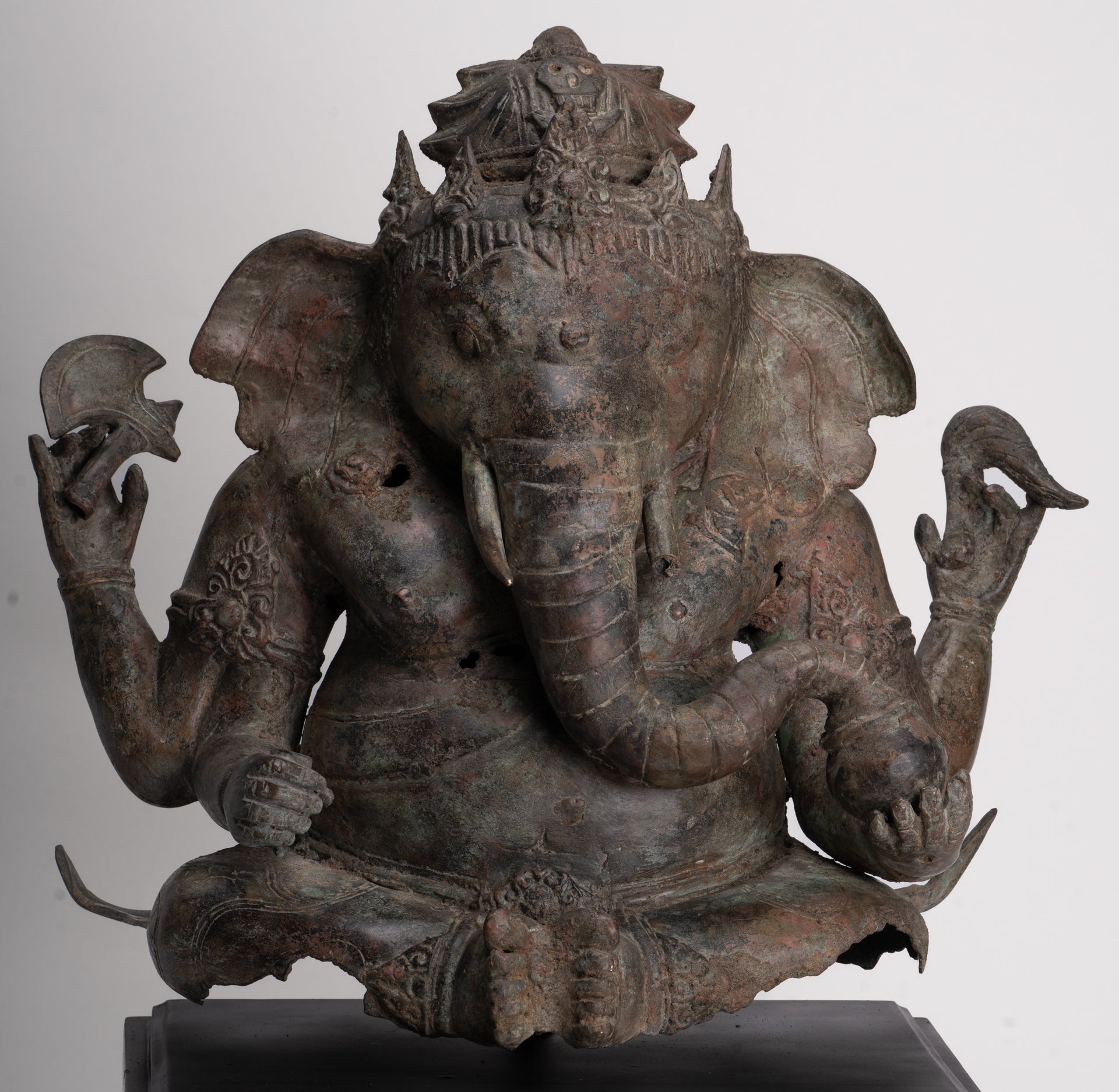
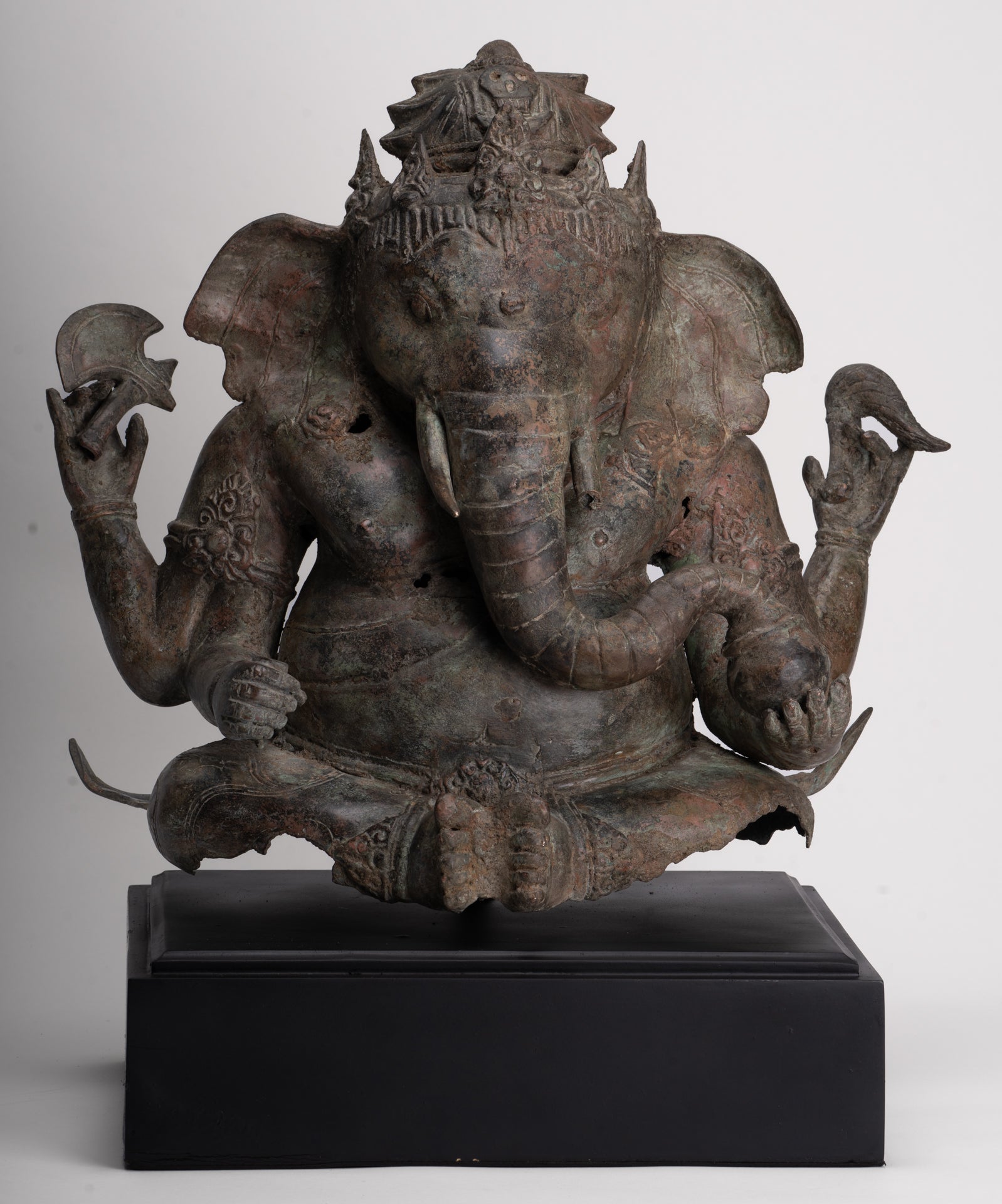
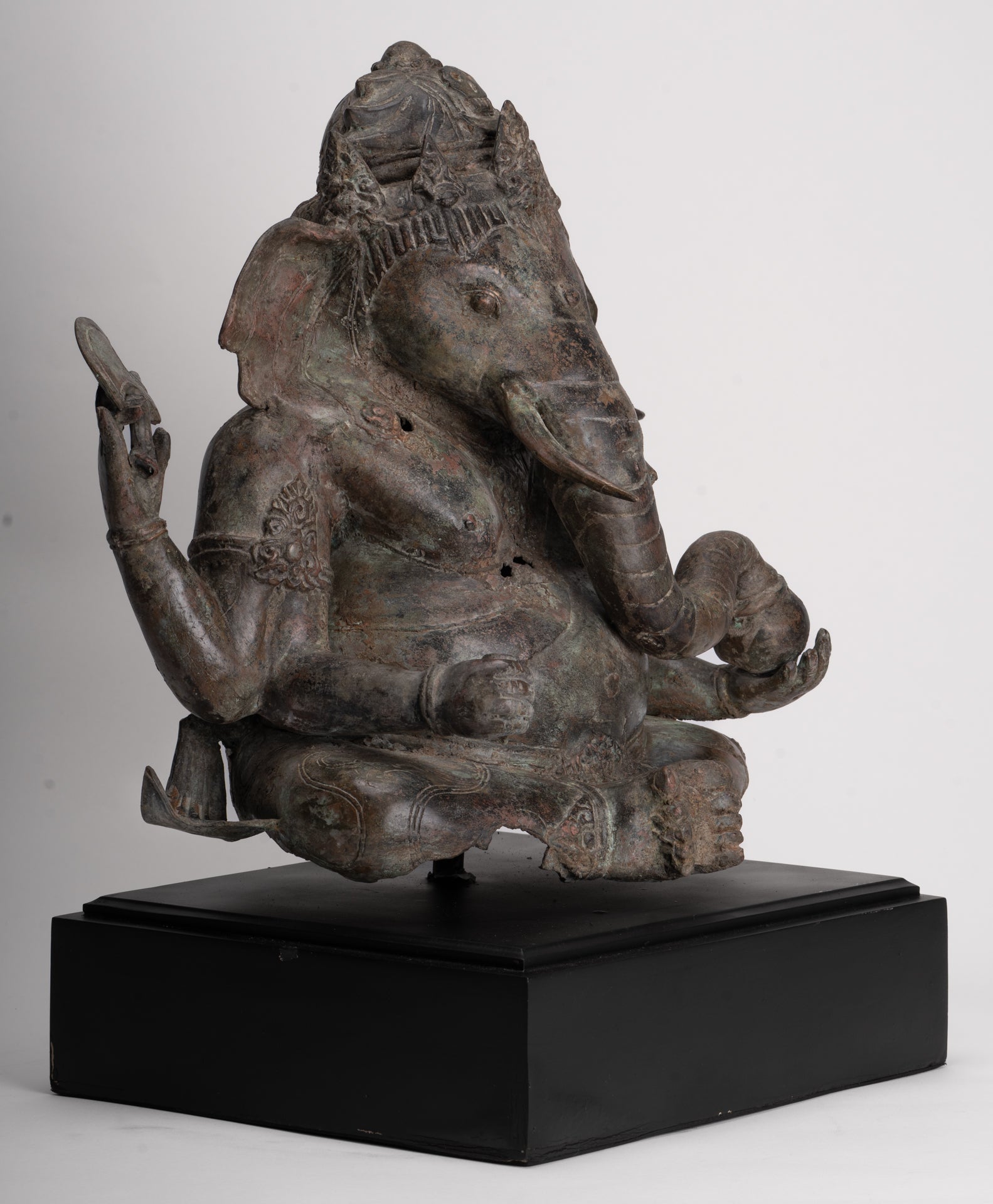
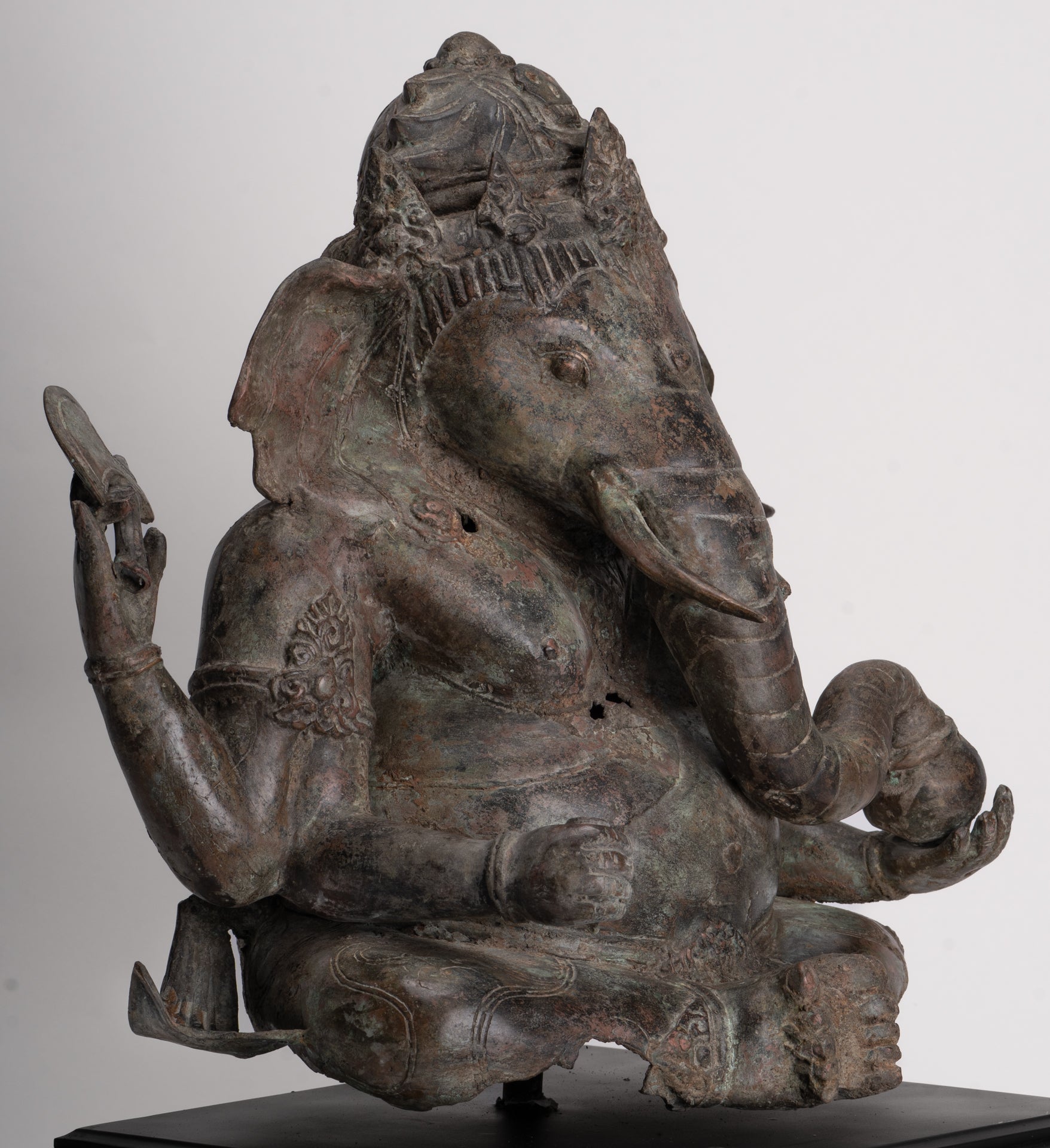
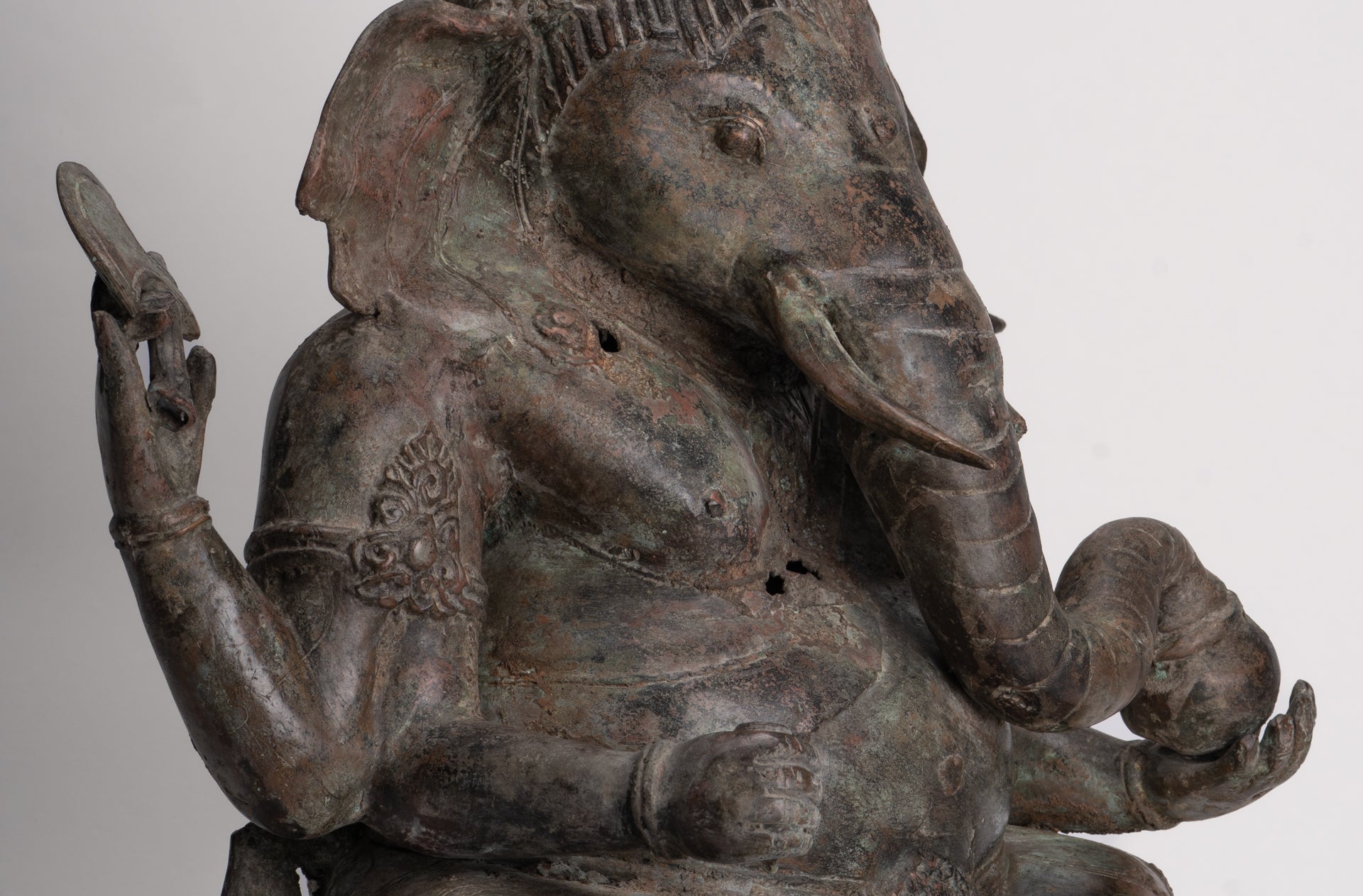
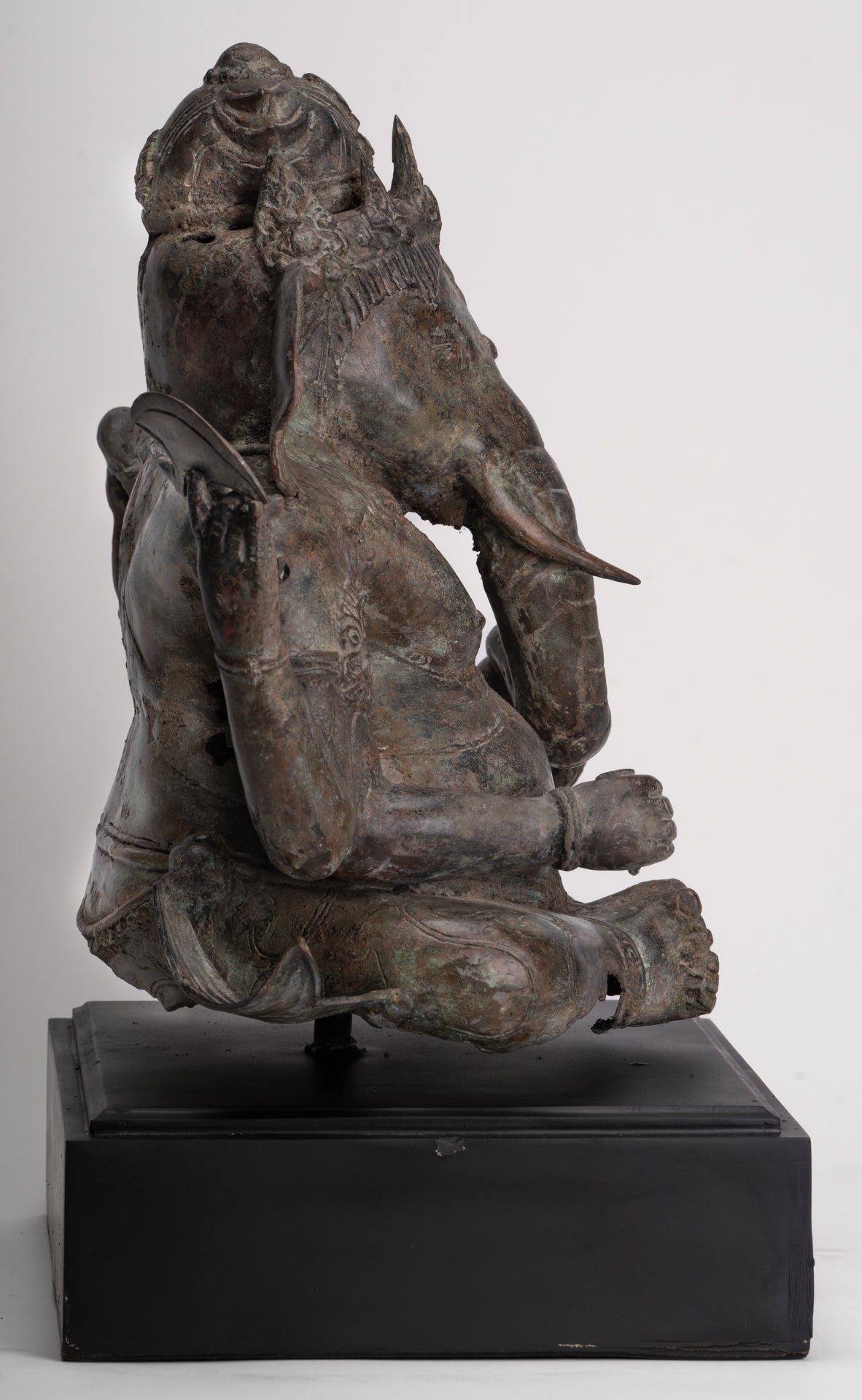
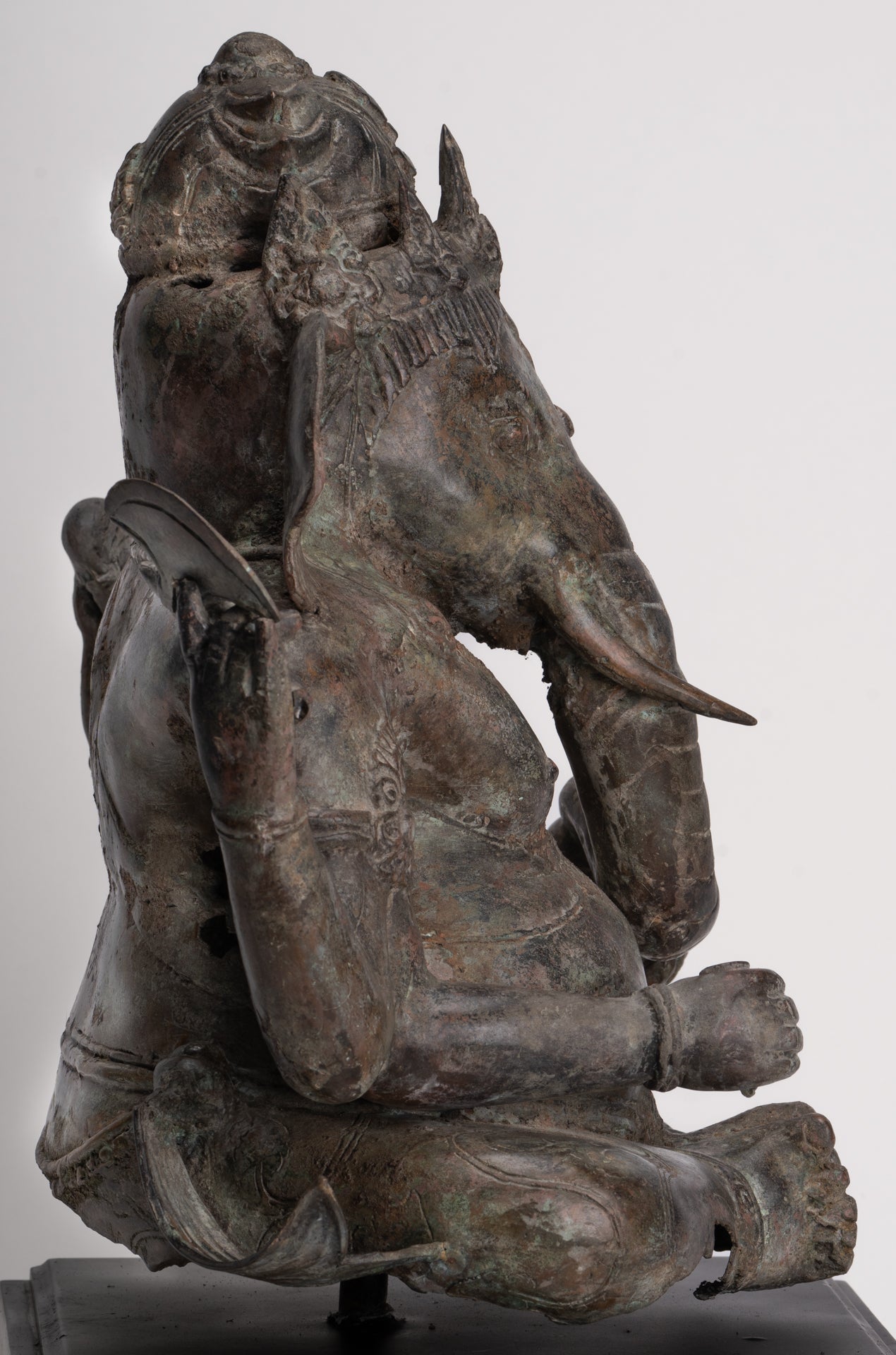
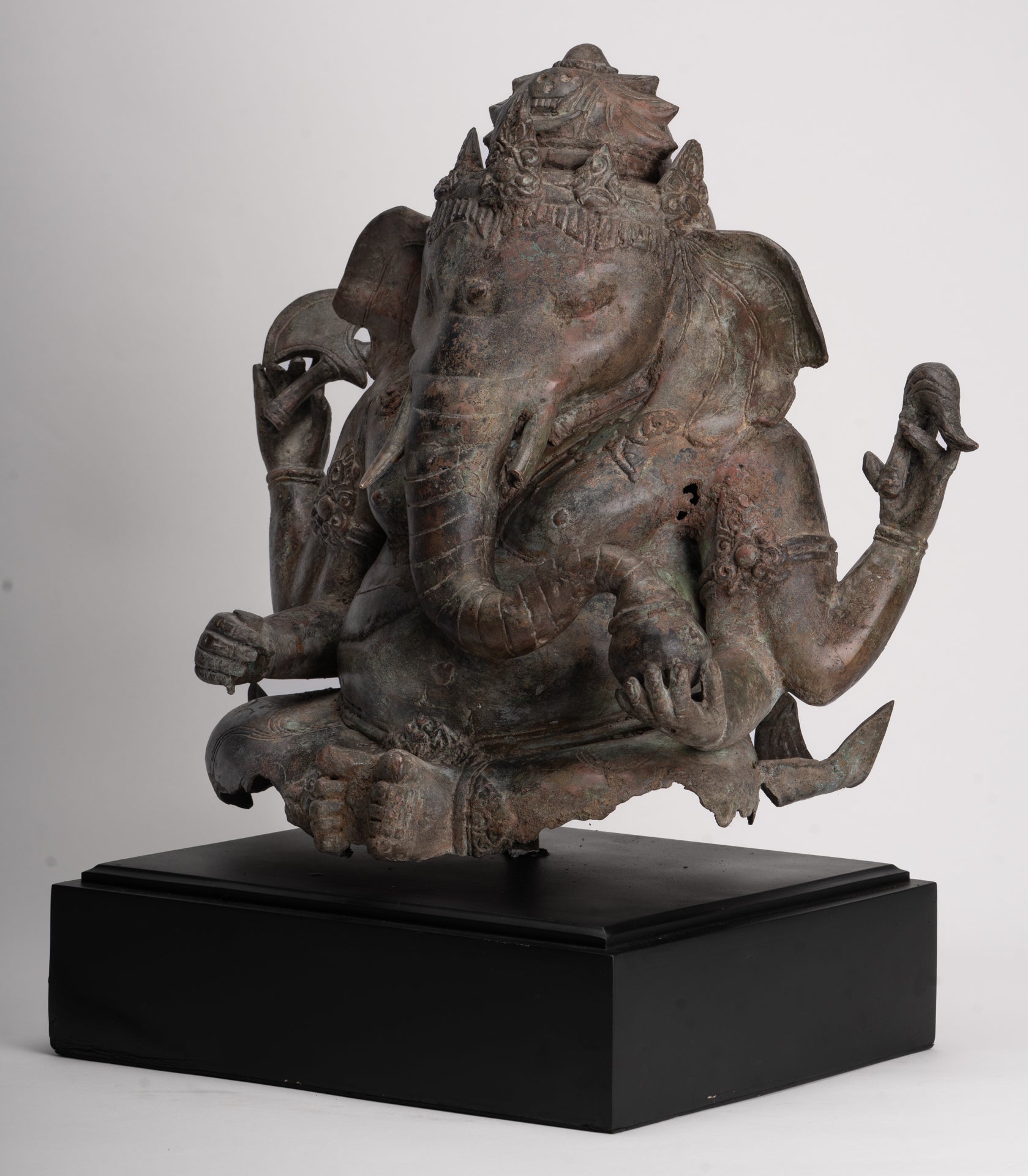
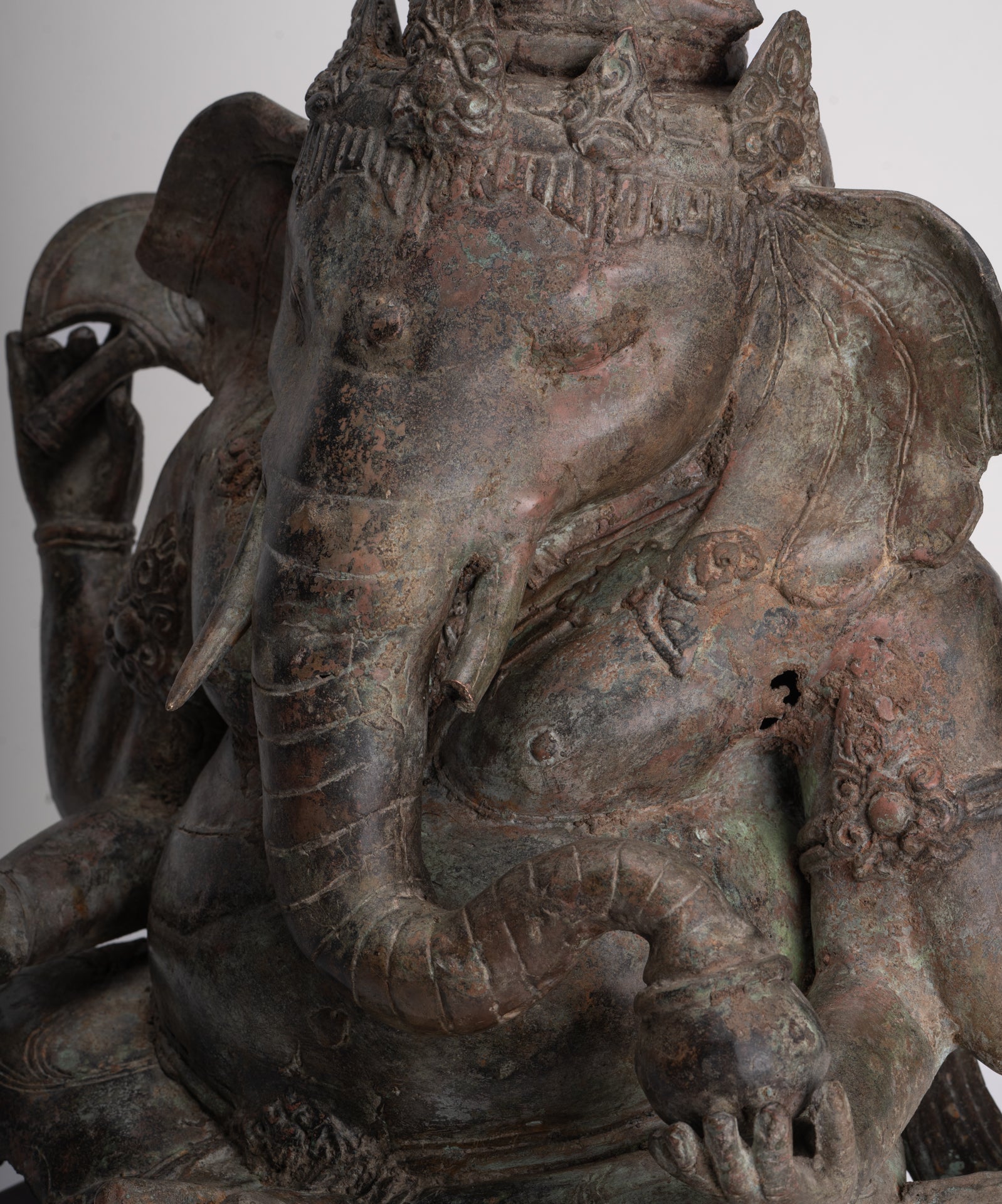
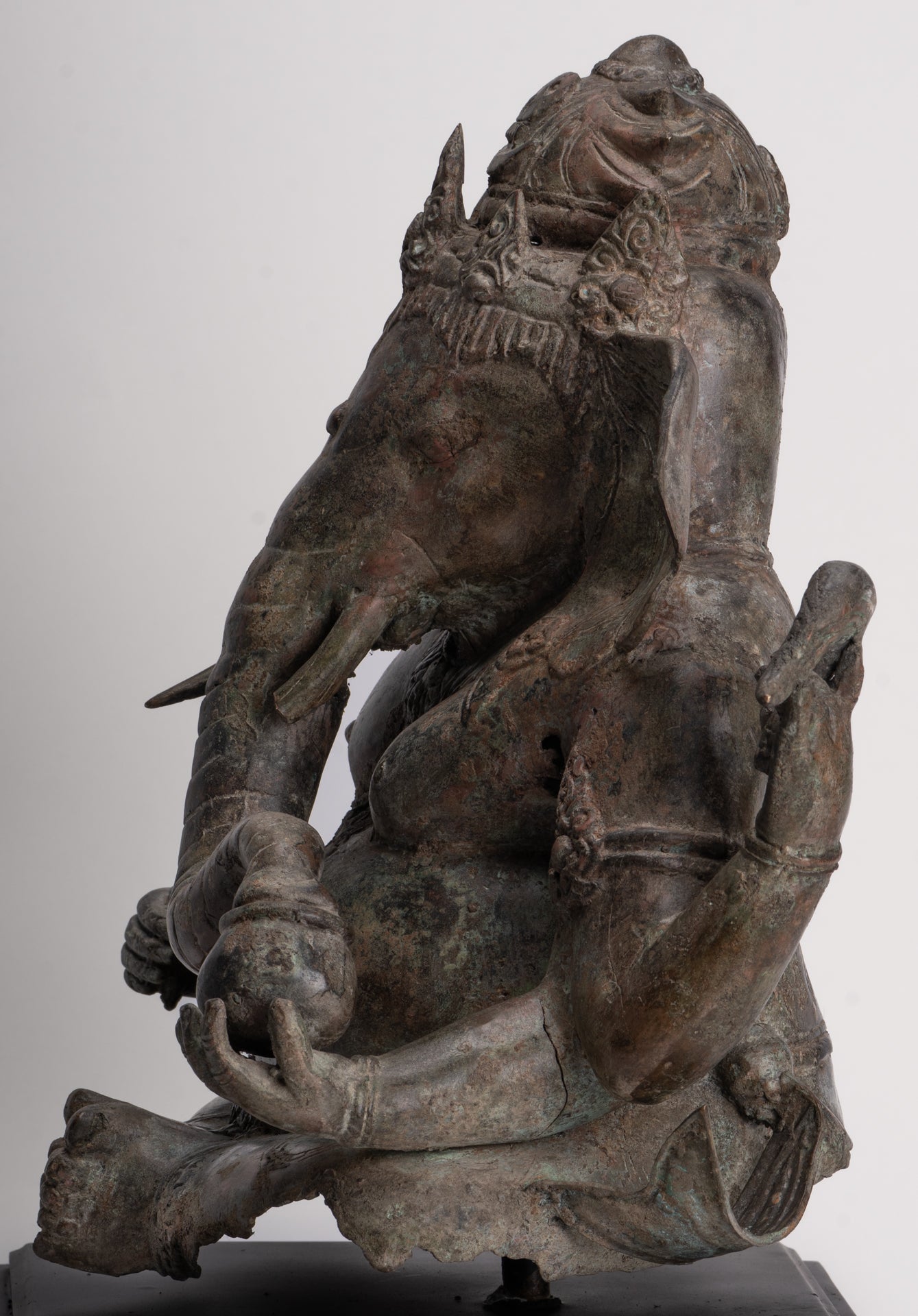
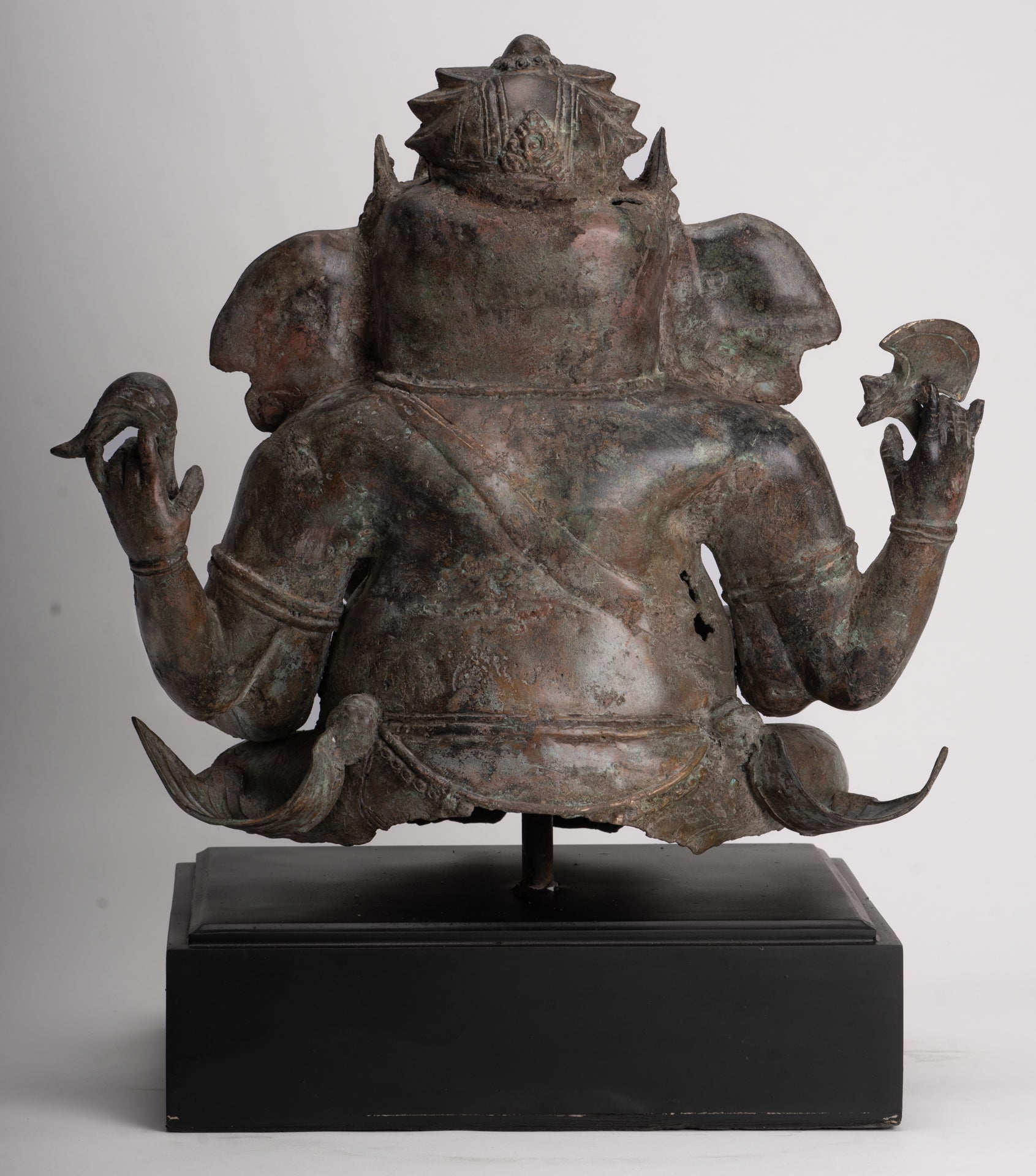
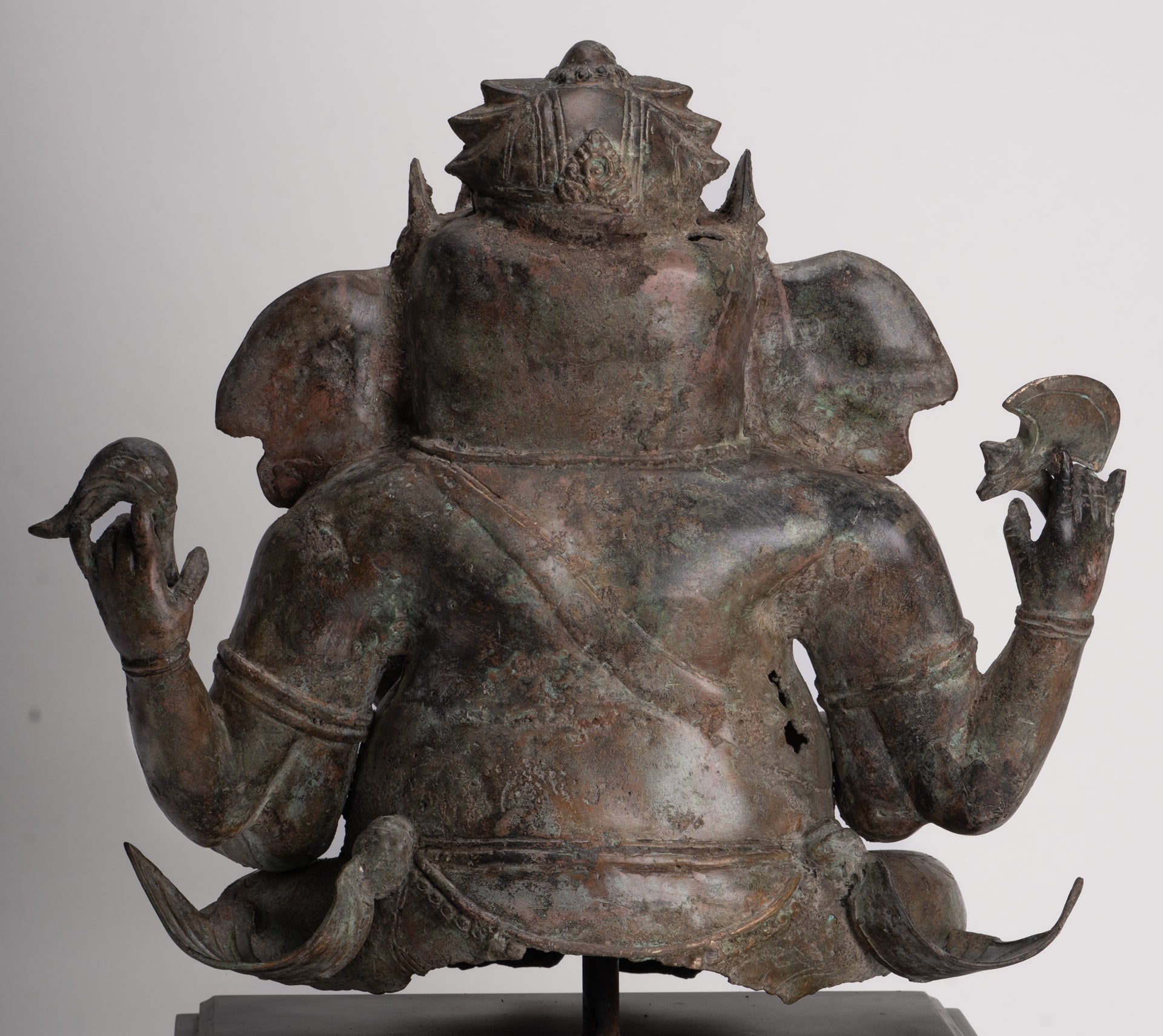
This antique Indonesian style bronze Ganesha is a powerful four‑armed image of the remover of obstacles, rich in Shaiva‑Tantric symbolism and Javanese courtly refinement. Cast in the round, designed to be seen from all angels and seated in a steady, cross‑legged pose, he radiates both benevolence and formidable protective strength—an impressive presence for any collection or shrine.
Deity and iconography
Ganesha, the elephant‑headed son of Shiva, is revered across Asia as the lord of beginnings, patron of learning and protector of travellers and households. In Indonesia, and especially Java, he was also closely associated with royal authority and esoteric Shaiva and Buddhist traditions, where he functions as a guardian who subdues demonic forces and clears obstacles on the spiritual path. This sculpture embodies that layered role: approachable and auspicious through his sweets and soft belly, yet crowned with skull imagery that hints at his cremation‑ground power.
Attributes and symbolism
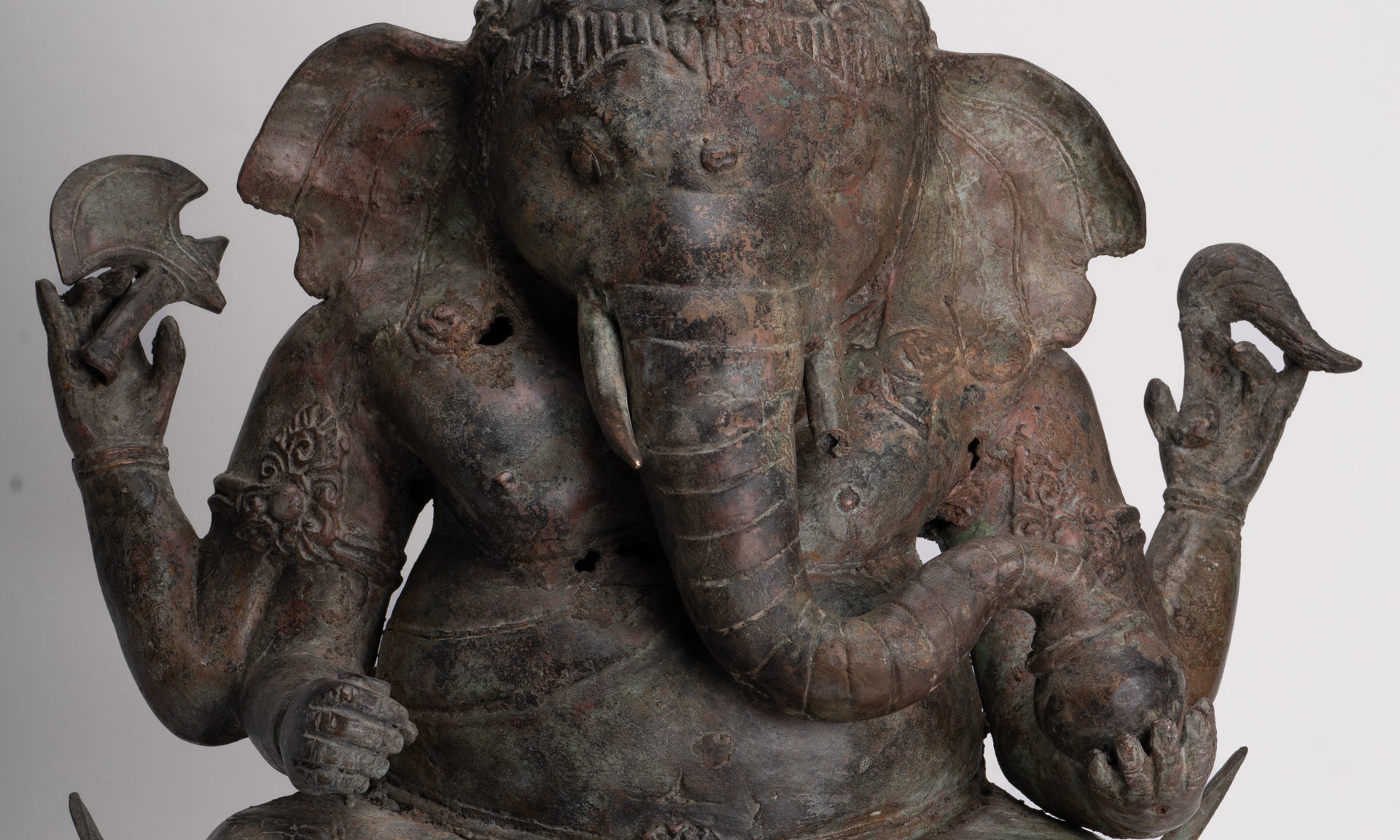
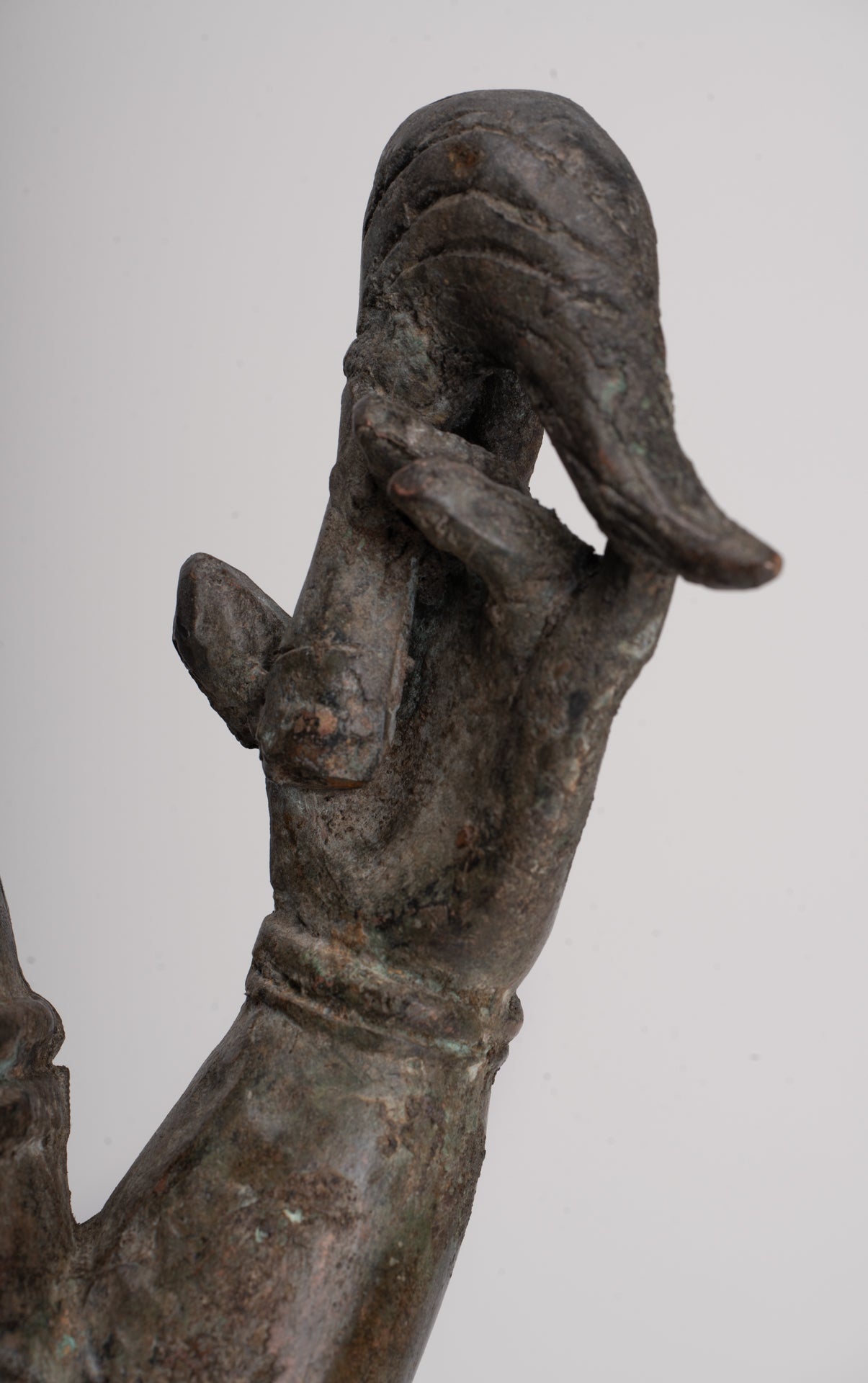
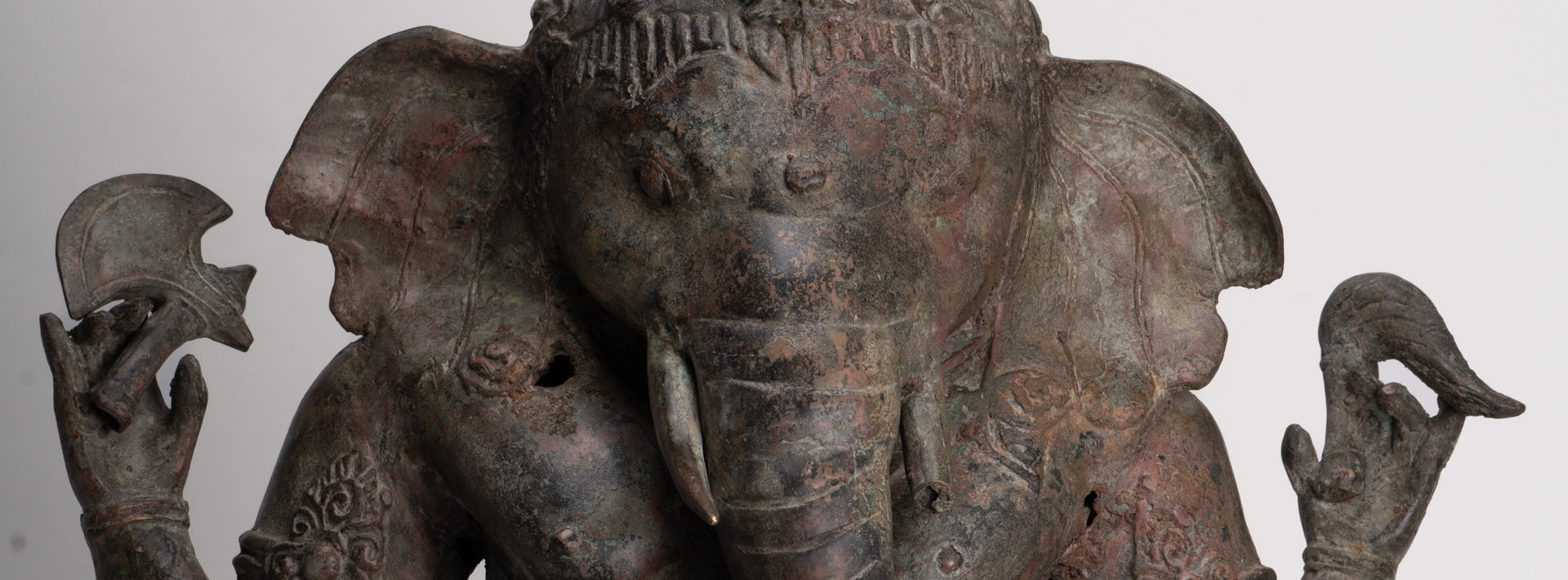
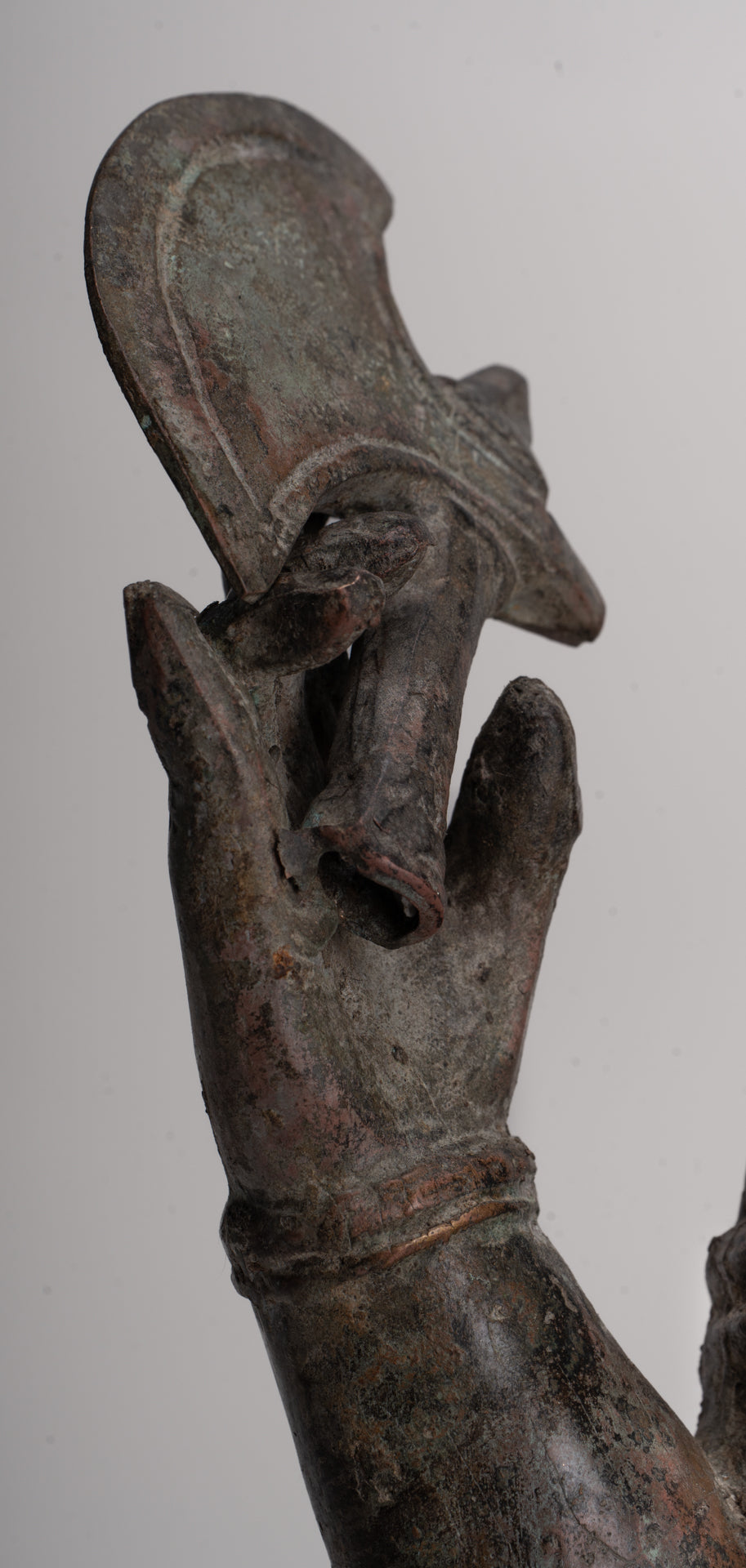
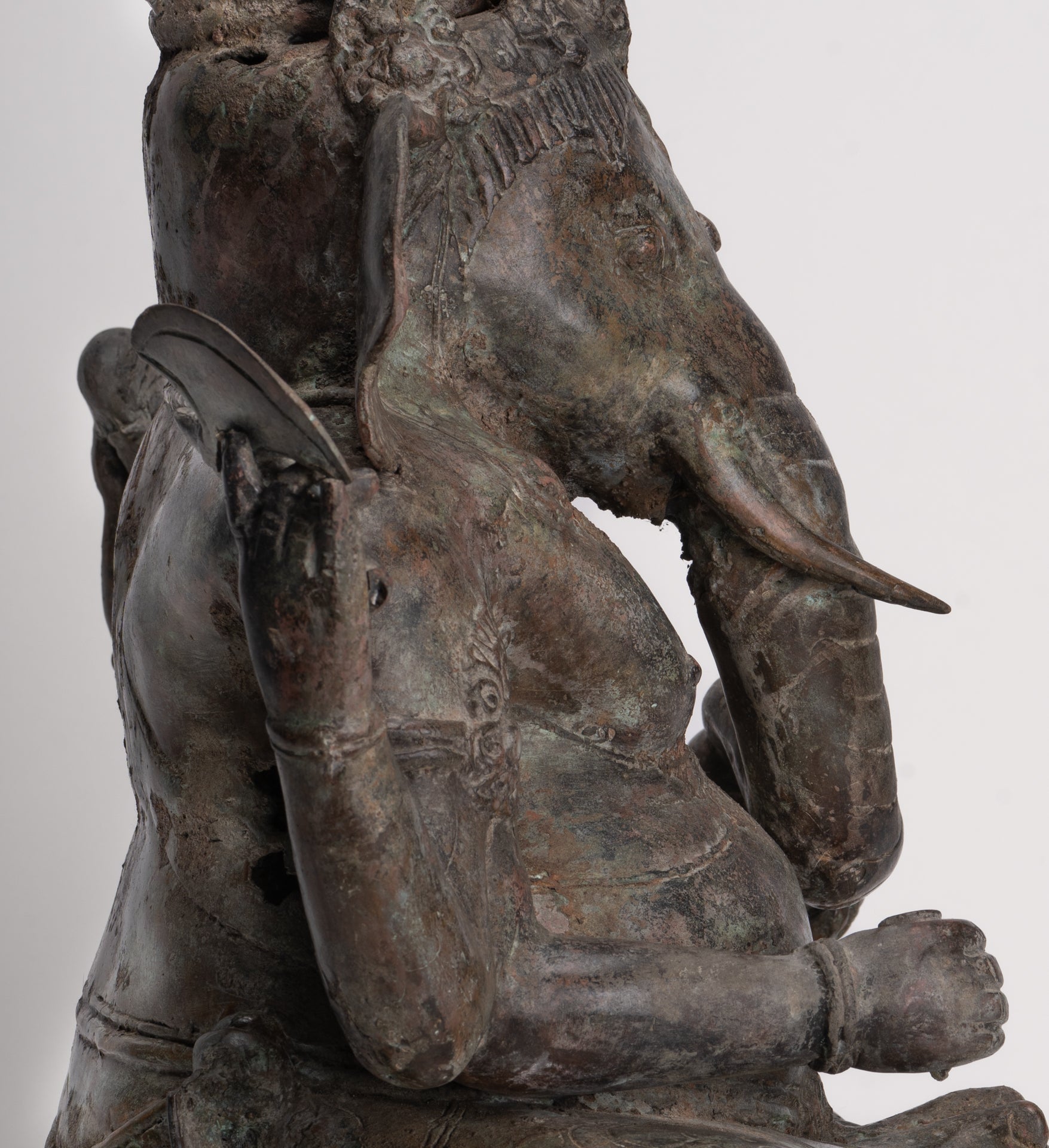
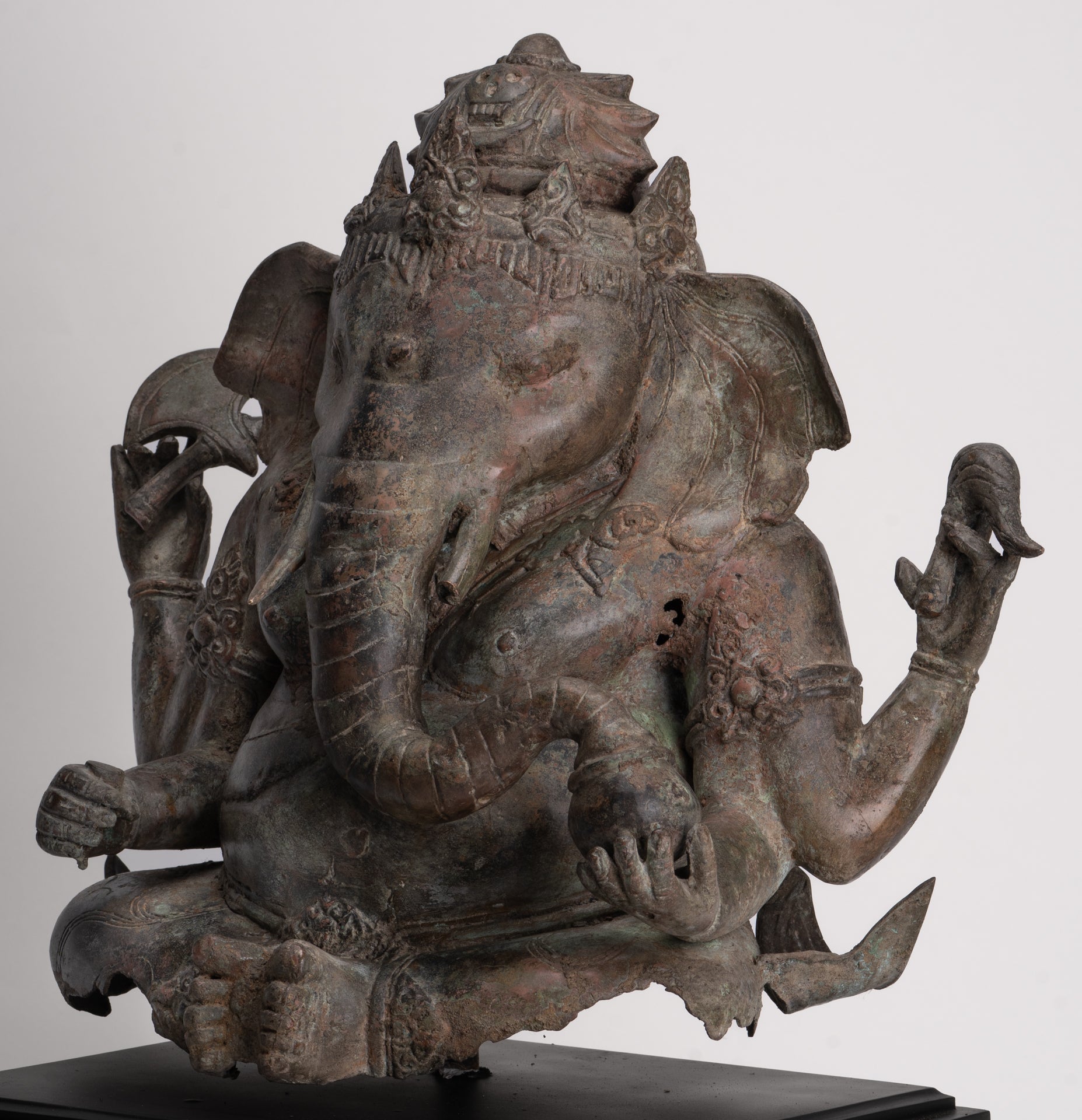
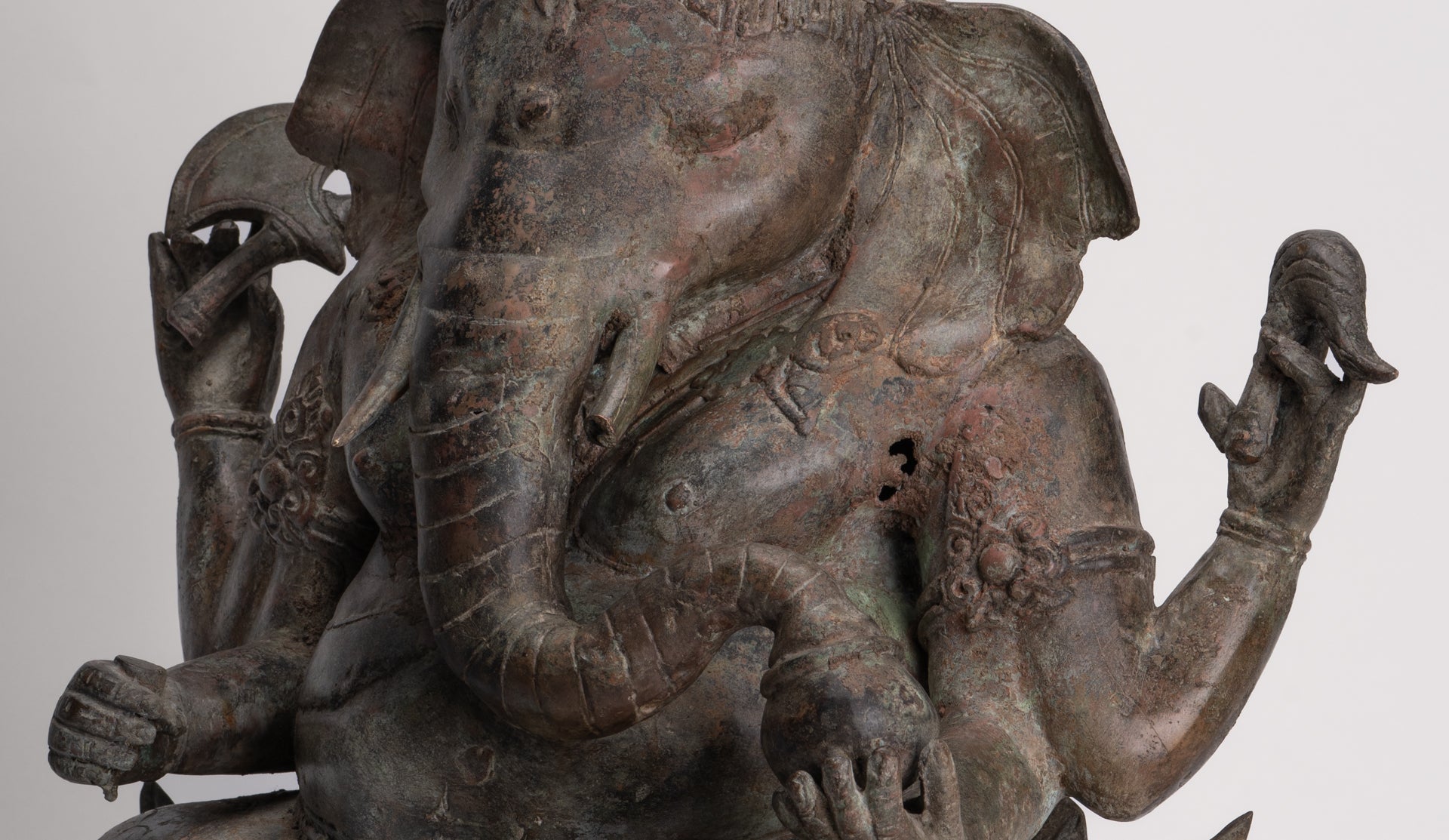
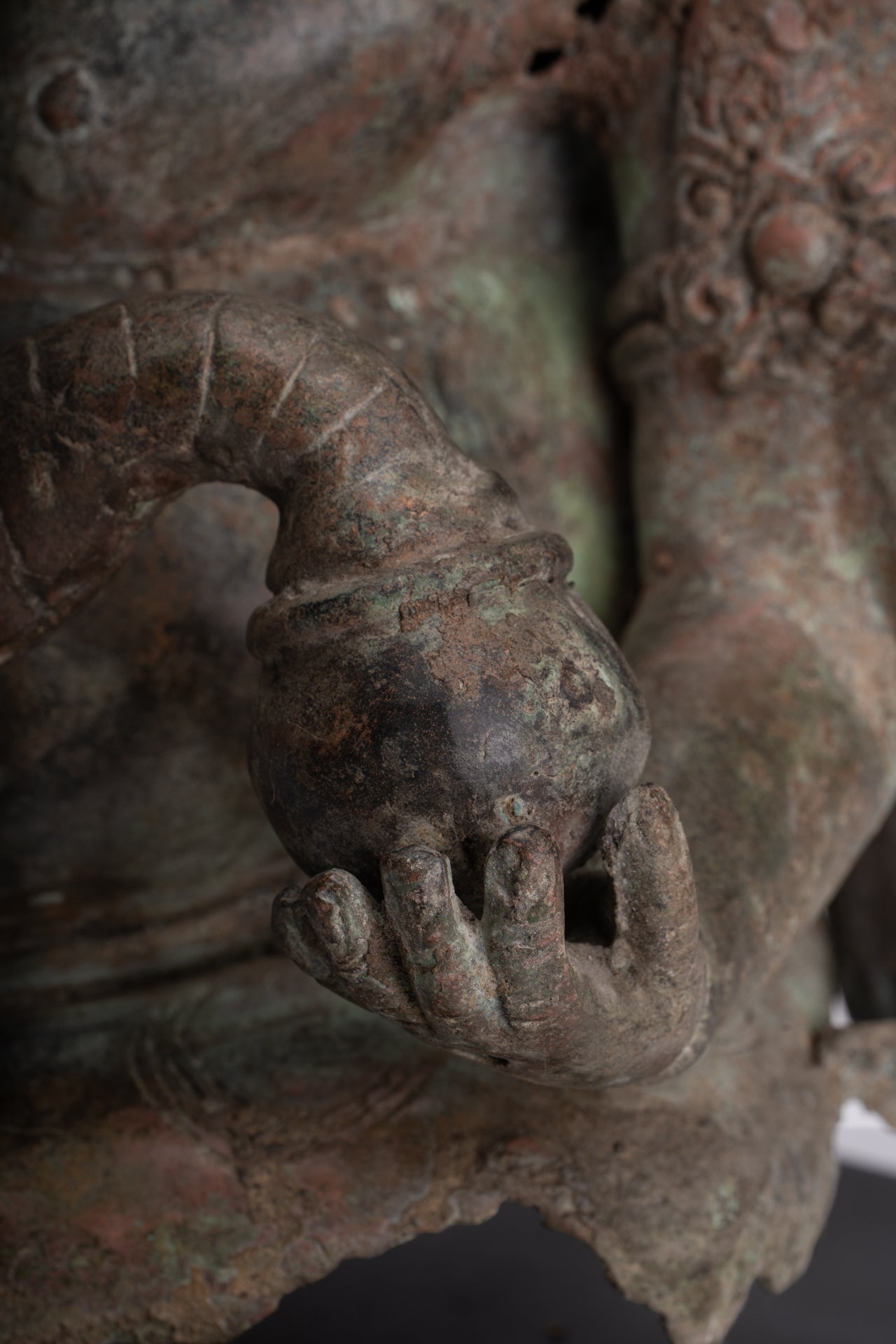
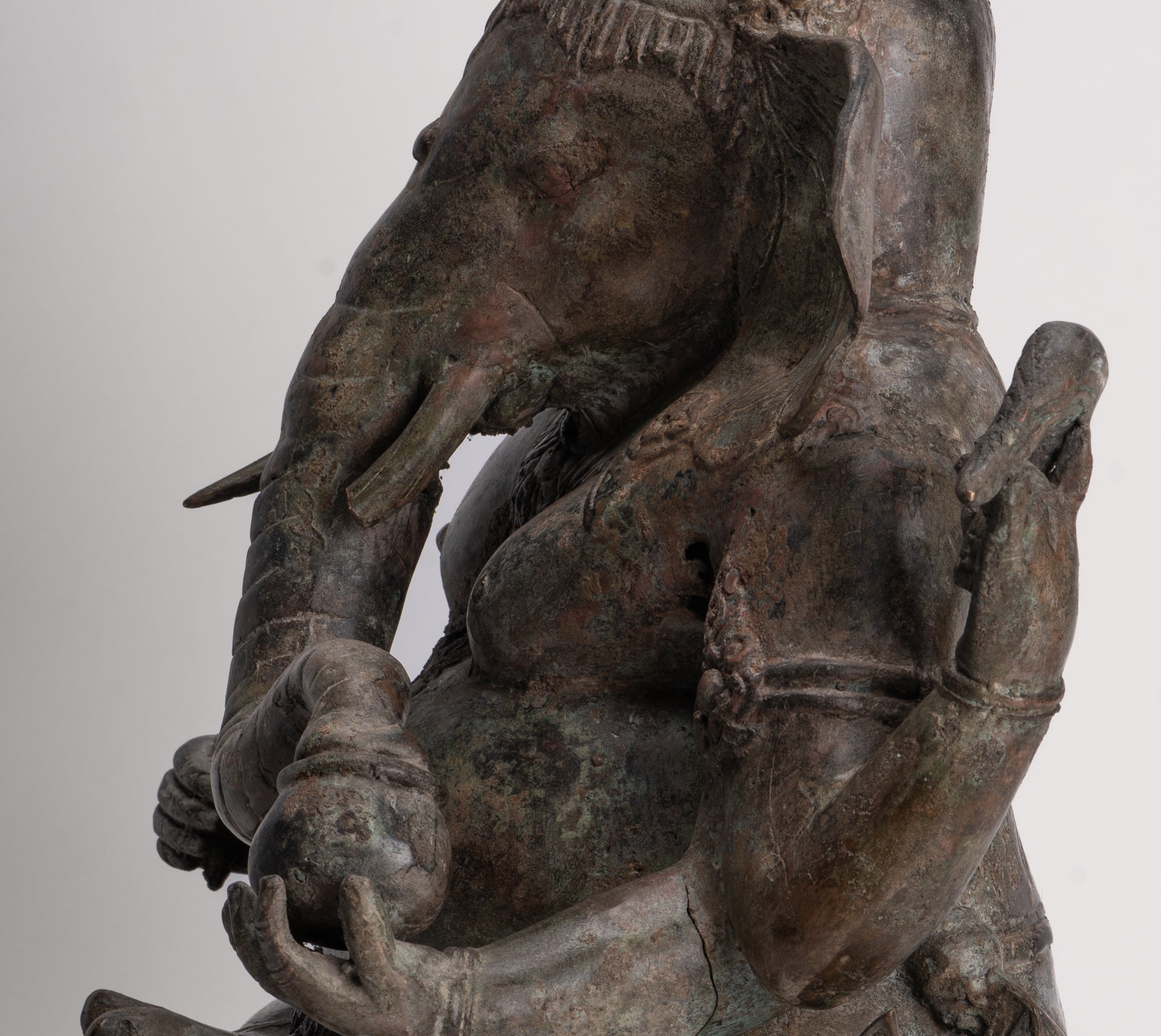
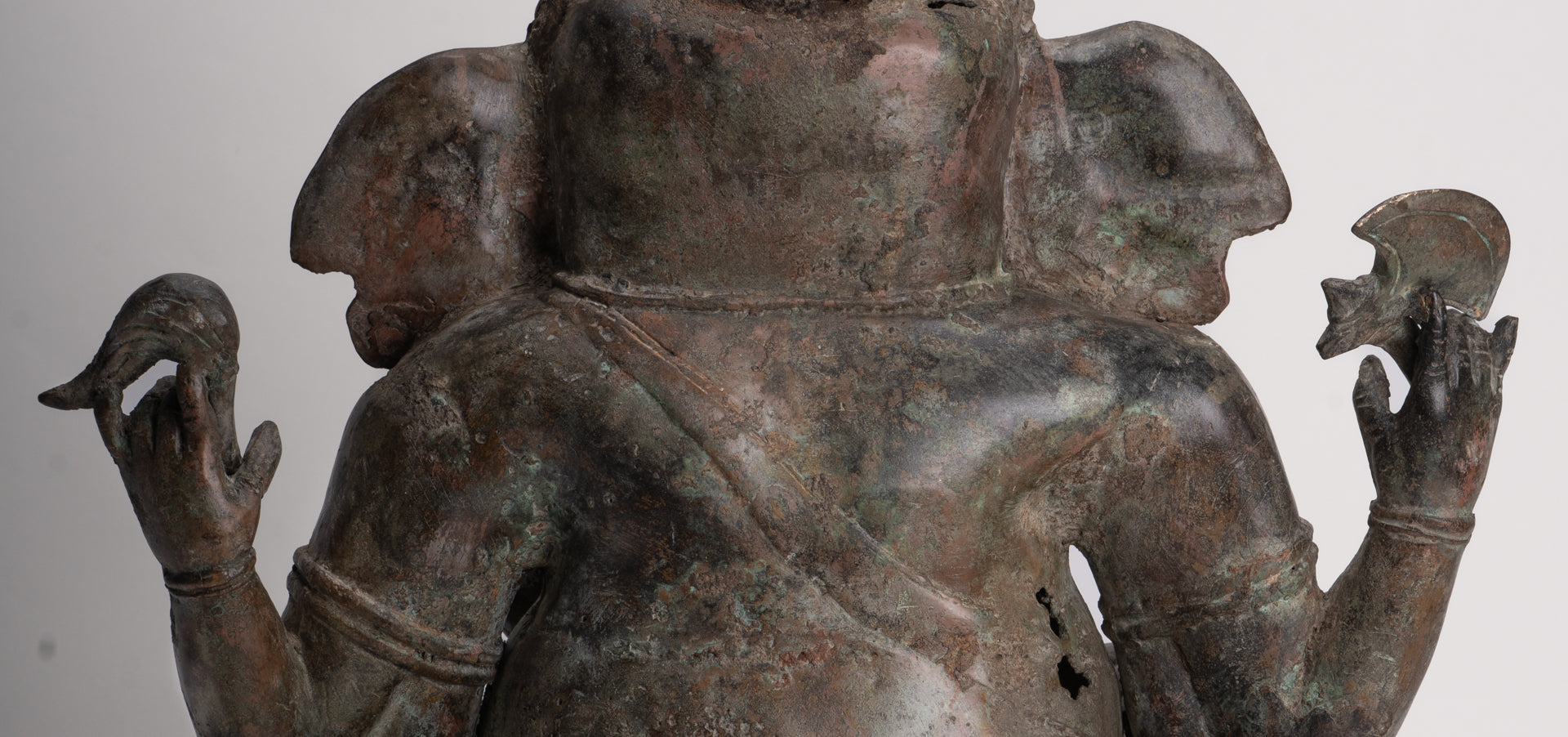
The god is shown with four arms, each holding a traditional attribute with specific meaning. In one lower hand he clutches his broken tusk, recalling the famous myth in which he sacrifices his own tusk as a writing implement, symbolizing intellectual discipline and the willingness to give up the material for higher wisdom. Another hand holds a cluster or bowl of sweetmeats, representing the rewards of spiritual practice, prosperity and the “sweetness” of a well‑lived life; his long trunk gracefully curls toward these offerings, emphasizing his role as bestower of abundance. In an upper hand he grasps an axe (loose mounted), used to cut through ignorance and sever worldly attachments, while the remaining hand holds a fly whisk, an emblem of royal dignity and ritual service that underlines his status as a divine court official and protector.
Head, urna and crown
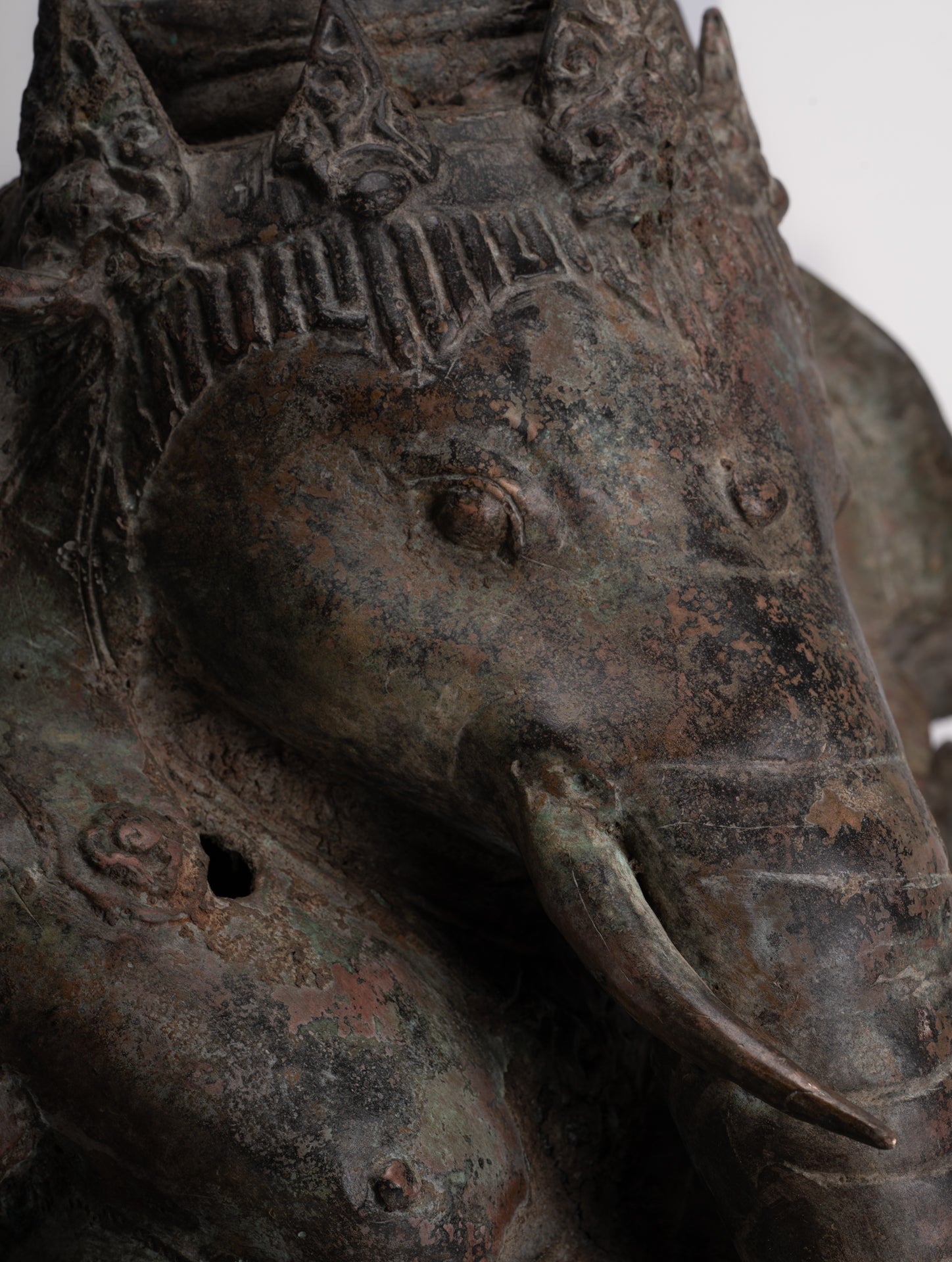
The head is modelled with particular care: large, fan‑shaped ears, a broad forehead and a gently down‑cast gaze give the deity a meditative, inward‑turned expression. Between the eyes sits a clearly defined urna, the auspicious frontal mark associated with spiritual vision and higher insight; this detail aligns Ganesha with enlightened beings in Buddhist iconography and enhances his role as patron of knowledge.
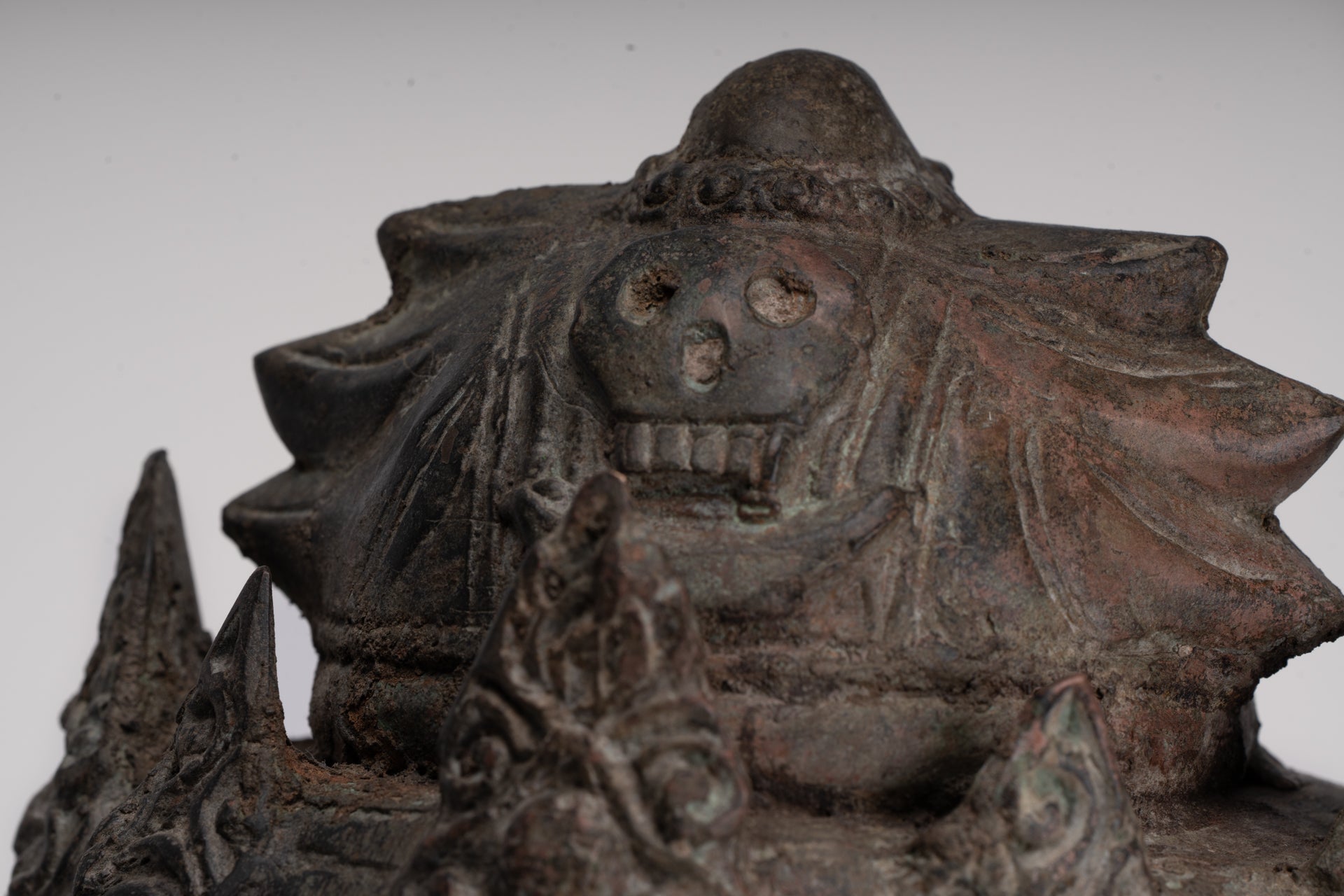
His tall, tiered Javanese crown is densely ornamented with floral and foliate motifs and is surmounted by a striking skull‑and‑cross‑bones device. This unusual emblem directly connects him to Shaiva and Tantric imagery—skulls evoking cremation grounds, impermanence and his ability to dominate death and malevolent spirits—making this piece especially resonant for collectors interested in esoteric Southeast Asian art.
Body, posture and Javanese style
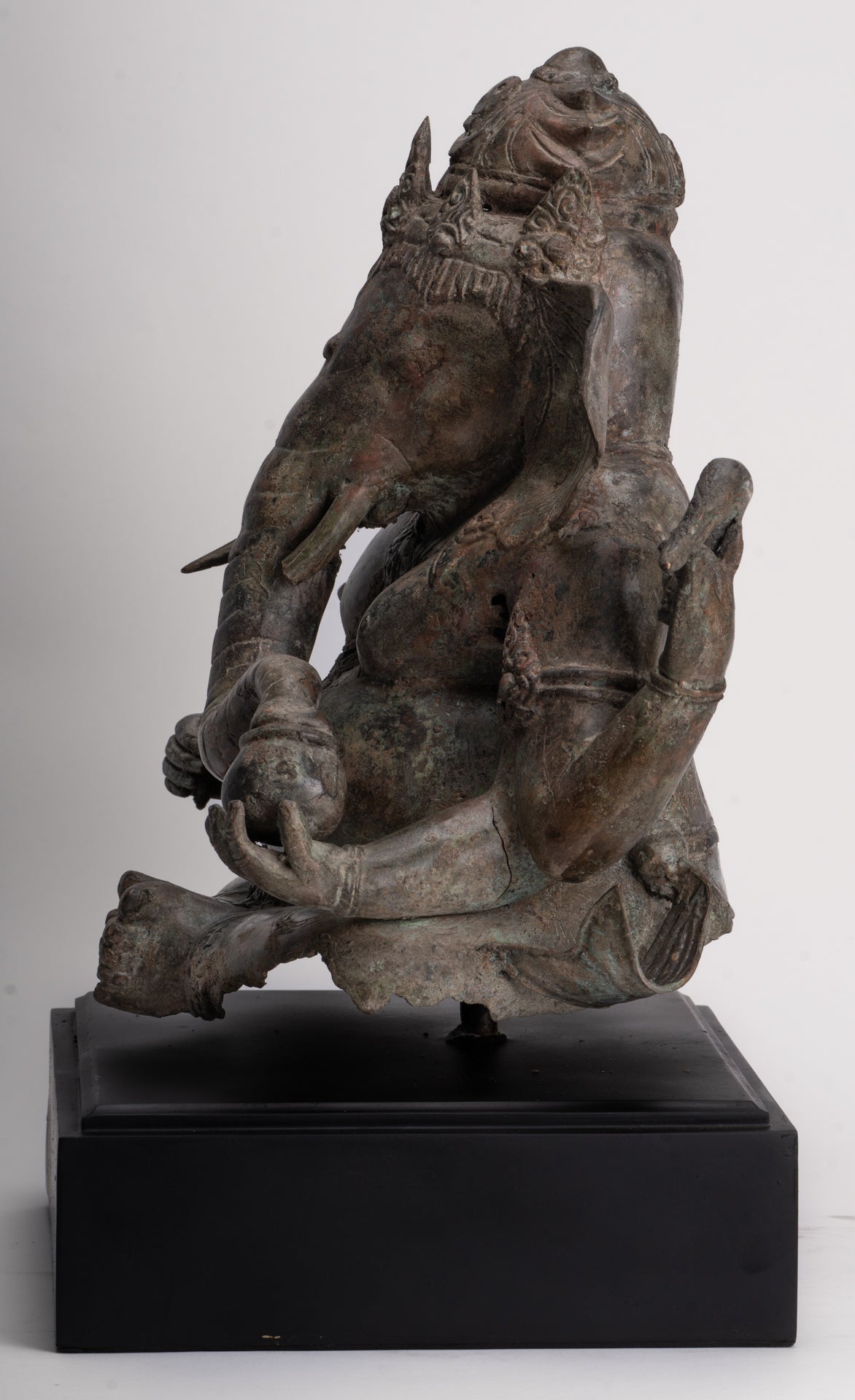
The god’s corpulent, pot‑bellied body, rounded shoulders and inward‑turned soles reflect the classical Javanese treatment of Ganesha. He sits firmly in a yogic, cross‑legged posture, balanced and symmetrical, suggesting immovability and inner stability.
The torso is adorned with finely rendered necklaces, armlets and bracelets, as well as a sacred thread that runs diagonally across the belly—possibly stylized as a serpent, a further Shaiva reference. The lower garment falls in soft, naturalistic folds across the legs, while the tail and toes are carefully articulated, retaining a sense of liveliness despite the solemn overall composition.
The trunk curves gracefully to his left, a configuration traditionally associated with a more “cool,” auspicious aspect of Ganesha, linked to household prosperity and worldly success.
Surface, condition and presence
The bronze surface displays an attractive, naturally developed patina with varied brown and green tones, attesting to age and long ritual or devotional use. Minor losses and casting flaws, as well as scattered surface pitting, do not distract from the image; instead they add to its authenticity and character, enhancing the impression of an object that has lived through centuries of worship and handling.
The modelling remains crisp in key areas—the face, urna, crown and fingers—allowing the iconography to read clearly at a distance. Mounted on a simple, modern base, the figure presents with strong verticality and excellent silhouette, making it visually powerful from both front and three‑quarter views.
Historical and collecting interest
Ganesha images of this type are strongly associated with Central and East Javanese religious culture, where the deity enjoyed a special place in royal temples and courtly ritual. Stylistically and iconographically, the combination of four arms, axe, fly whisk, sweets, broken tusk, left‑turning trunk, skull crown and urna points to a sophisticated, locally developed Javanese interpretation of the Indian god, absorbing influences from both Hindu Shaivism and Tantric Buddhism.
For collectors, this piece offers not only an aesthetically compelling sculpture but also a document of Indonesia’s syncretic religious history—a tangible embodiment of how imported Indian deities were reimagined in the Javanese world.
Key Features
-
Impressive Indonesian / Javanese style bronze Ganesha, approx. 49 cm / 20" high
-
Four‑armed image of Ganesha as remover of obstacles, rich in Shaiva–Tantric symbolism
-
Holds broken tusk, bowl/cluster of sweets, axe (loose‑mounted) and fly whisk, with trunk curving left toward the sweets
-
Tall, tiered Javanese crown surmounted by a striking skull‑and‑cross‑bones emblem linking him to cremation‑ground Shaivism and Tantric power
-
Clearly defined urna between the eyes, aligning him with enlightened beings and emphasising spiritual vision
-
Classical Javanese seated posture: pot‑bellied, cross‑legged, inward‑turned soles, with finely rendered sacred thread, jewellery and garment folds
-
Trunk curving to the left, traditionally associated with a “cool,” auspicious household aspect of Ganesha and material success
-
Beautiful, naturally developed brown‑green patina with minor casting flaws and pitting that testify to age and long devotional use
-
Mounted on a simple modern base, presenting a strong silhouette and powerful presence from front and three‑quarter view
-
Iconography strongly associated with Central/East Javanese royal and temple culture, appealing to collectors of Southeast Asian Shaiva and Tantric art
FAQs – Indonesian / Javanese Bronze Ganesha
1. What makes this Ganesha specifically Javanese or Indonesian in character?
Several stylistic and iconographic cues mark this as a Javanese interpretation of Ganesha rather than an Indian or Balinese one. The compact, pot‑bellied body with inward‑turned soles, the elongated trunk curling left, and the arrangement of attributes in four arms are all seen in Central and East Javanese stone and bronze Ganeshas. The tall, tiered crown with a skull motif and the slightly introspective facial expression also echo Majapahit‑period Shaiva images, where imported Indian forms were adapted to local courtly tastes and Tantric Shaivism.2. What is the significance of his four main attributes—tusk, sweets, axe and fly whisk?
Each object held by Ganesha communicates a facet of his power. The broken tusk refers to the story where he sacrifices his own tusk as a pen to continue writing the Mahabharata, symbolising intellectual discipline and the willingness to surrender something material in pursuit of wisdom. The sweets (modaka or laddus) represent the rewards of spiritual practice and the “sweetness” of a balanced, fulfilled life, with the trunk’s curve toward them emphasising his role as bestower of abundance. The axe cuts through ignorance and severs unhealthy attachments, clearing the path for progress. The fly whisk is an emblem of royal dignity and ritual service, marking him as a divine court official who both attends to and protects devotees.3. Why does this Ganesha have a skull‑and‑cross‑bones on his crown?
The skull motif at the top of the crown is a distinctly Shaiva–Tantric element. In Shaiva imagery, skulls recall cremation grounds, impermanence and the god’s mastery over death and fear. In the Javanese context, where Tantric Shaivism and esoteric Buddhism intersected, such skull imagery emphasises Ganesha’s role not only as a gentle remover of obstacles, but also as a powerful guardian who subdues demonic forces and karmic hindrances. The “cross‑bones” configuration amplifies the visual impact, making the crown a focal point for collectors interested in esoteric Southeast Asian iconography.4. What does the left‑curving trunk signify?
A trunk curving to Ganesha’s left is traditionally linked with a more cooling, auspicious, lunar aspect of the deity, often associated with household prosperity, harmonious family life and worldly success. In contrast, right‑curving trunks can be tied to more fiery, ascetic or demanding forms of worship. In this Indonesian example, the leftward curve toward the sweets underscores his benevolent, wealth‑giving side, even as the skull crown and Tantric references highlight his fierce protective power.5. How does the urna between his eyes change the reading of the image?
The clearly delineated urna—the auspicious mark on the forehead—aligns Ganesha with Buddhist as well as Hindu iconography, where the urna is often associated with enlightened beings and higher spiritual vision. In the syncretic religious environment of Java, where Shaiva Hinduism and Tantric Buddhism overlapped, this detail reinforces Ganesha’s role as patron of learning and remover of inner as well as outer obstacles. It suggests that his wisdom penetrates beyond surface appearances into the true nature of reality.6. What do the signs of wear and casting flaws tell us about the piece?
The varied brown‑green patina, scattered pitting and minor casting irregularities are consistent with an older bronze that has lived a ritual life rather than a purely decorative modern casting. Far from detracting, these elements add authenticity and character, softening the modelling and giving the impression of centuries of handling, oiling and exposure to incense. For serious collectors, such naturally developed surfaces are preferable to overly polished or artificially aged finishes, because they speak to the object’s history in use.7. Is this Ganesha suitable for active worship, or mainly for collection and display?
The sculpture is fully capable of serving as a devotional focal point—its iconography is complete, the posture is stable and dignified, and the attributes are clear enough for traditional worship practices. At the same time, its scale, patina and Javanese court style make it particularly appealing as a collector’s piece, functioning as a key work in a Southeast Asian Shaiva–Buddhist collection. Many buyers will choose a middle path: displaying it prominently in a home or office where it is both aesthetically appreciated and treated with quiet reverence.8. How should I place and care for this bronze Ganesha?
Given its presence and height (49 cm / 20"), this Ganesha works best as a centrepiece on a console, altar, plinth or dedicated shelf, ideally at or slightly below eye level. Ensure the base is stable and the surrounding area is uncluttered so the silhouette reads cleanly. For care, dust gently with a soft, dry cloth or brush and avoid commercial metal polishes, which can strip or flatten the patina. Normal indoor conditions—moderate humidity and temperature—are sufficient; the goal is to preserve the existing surface rather than to make the bronze look new.9. What makes this piece particularly interesting to collectors of Southeast Asian art?
Beyond its beauty, this Ganesha acts as a document of Indonesia’s syncretic religious history. The combination of Shaiva attributes, Tantric skull crown, Buddhist‑style urna and distinctly Javanese body language demonstrates how Indian deities were reimagined within the courts and temples of Central and East Java. It encapsulates the cross‑currents between Hinduism and Buddhism in the region and offers a rare, tangible example of that cultural fusion—something increasingly sought after by collectors and institutions focusing on Southeast Asia.SATISFACTION GUARANTEE - We have been offering SE Asian Art for many years and are proud of the reputation we have developed for fair and honest listings. However, if for any reason, whatsoever, you are unhappy with your purchase please just let us know and we will provide a full refund. We want you to be 100% happy with your purchase.
-
-
The majority of orders will be shipped with DHL. This is a secure, express and fully tracked service.
Items less than 2Kg we typically ship using Royal Mail.
Once we receive your order we try to ship all orders the same or next working day.
Large and/or fragile pieces requiring palletising, specialist crating and/or extra packaging may take a little longer. Palletised shipments will be delivered curbside.
All orders over 35 GBP will be shipped free of charge.

-
We genuinely hope that all purchases delight.
However, if they do not, regardless of reason, we will refund all orders upon receipt of the unwanted item. Just notify us within 14 days of receiving your order that you wish to make a return and send the piece back to us with 30 days of delivery.


