



-
Buddhist Stupa - Antique Thai Style Wood Nirvana Stupa or Chedis - 20cm/8"
Measures (Height) 20cm/8"
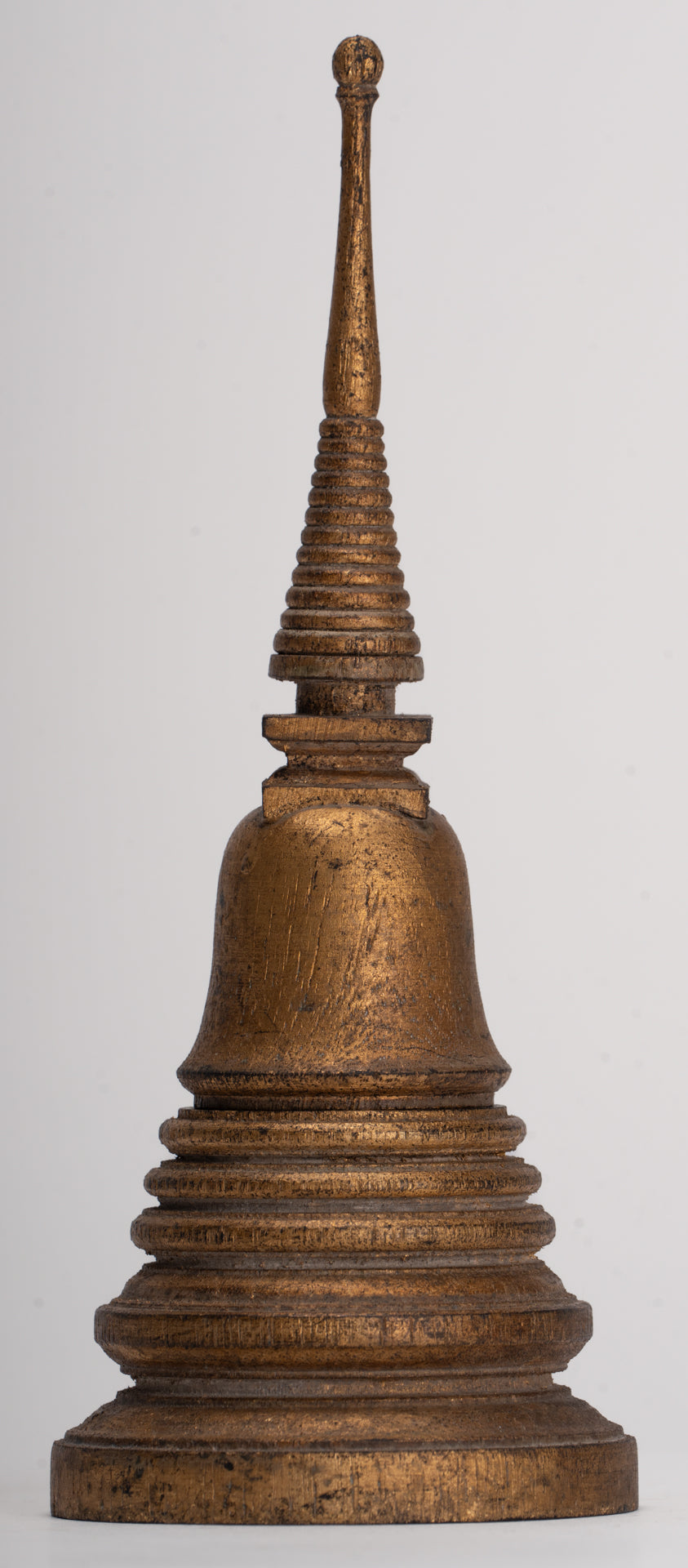
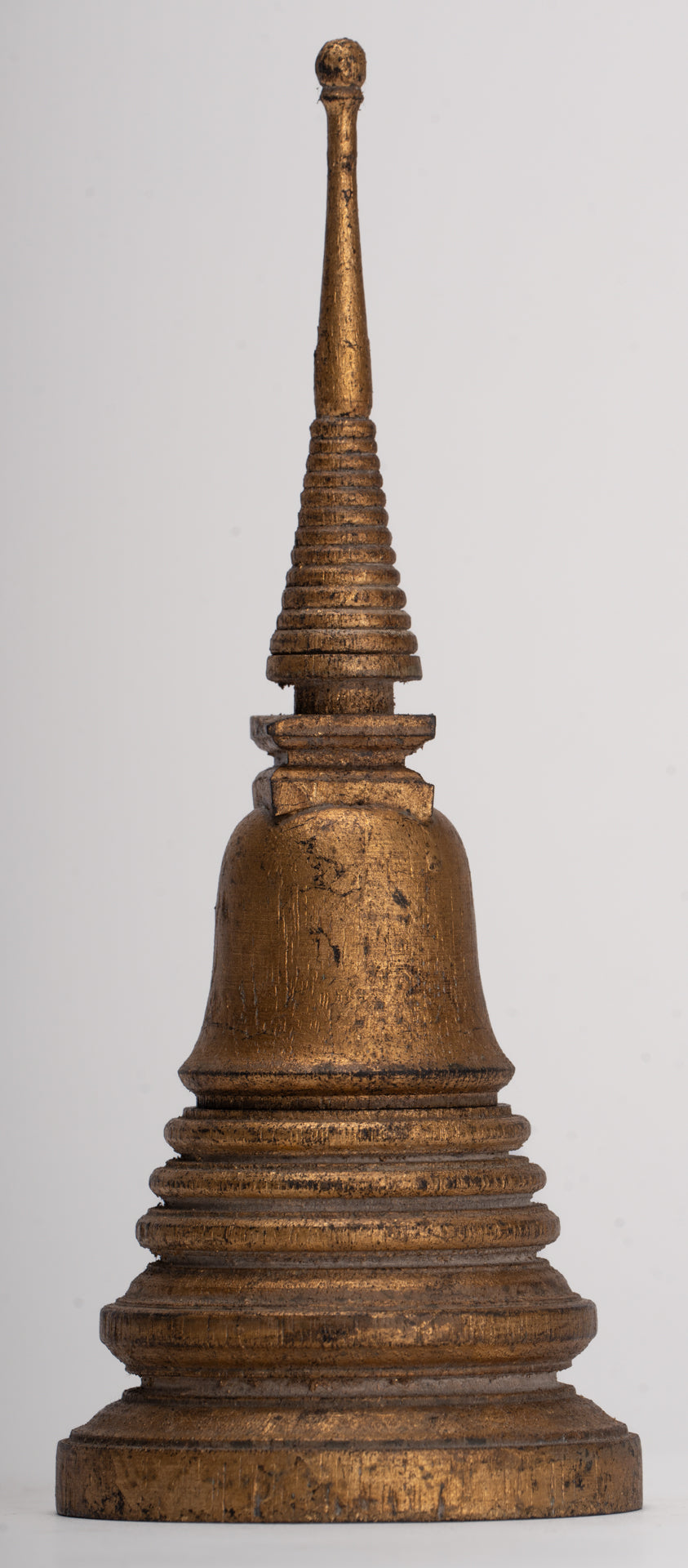
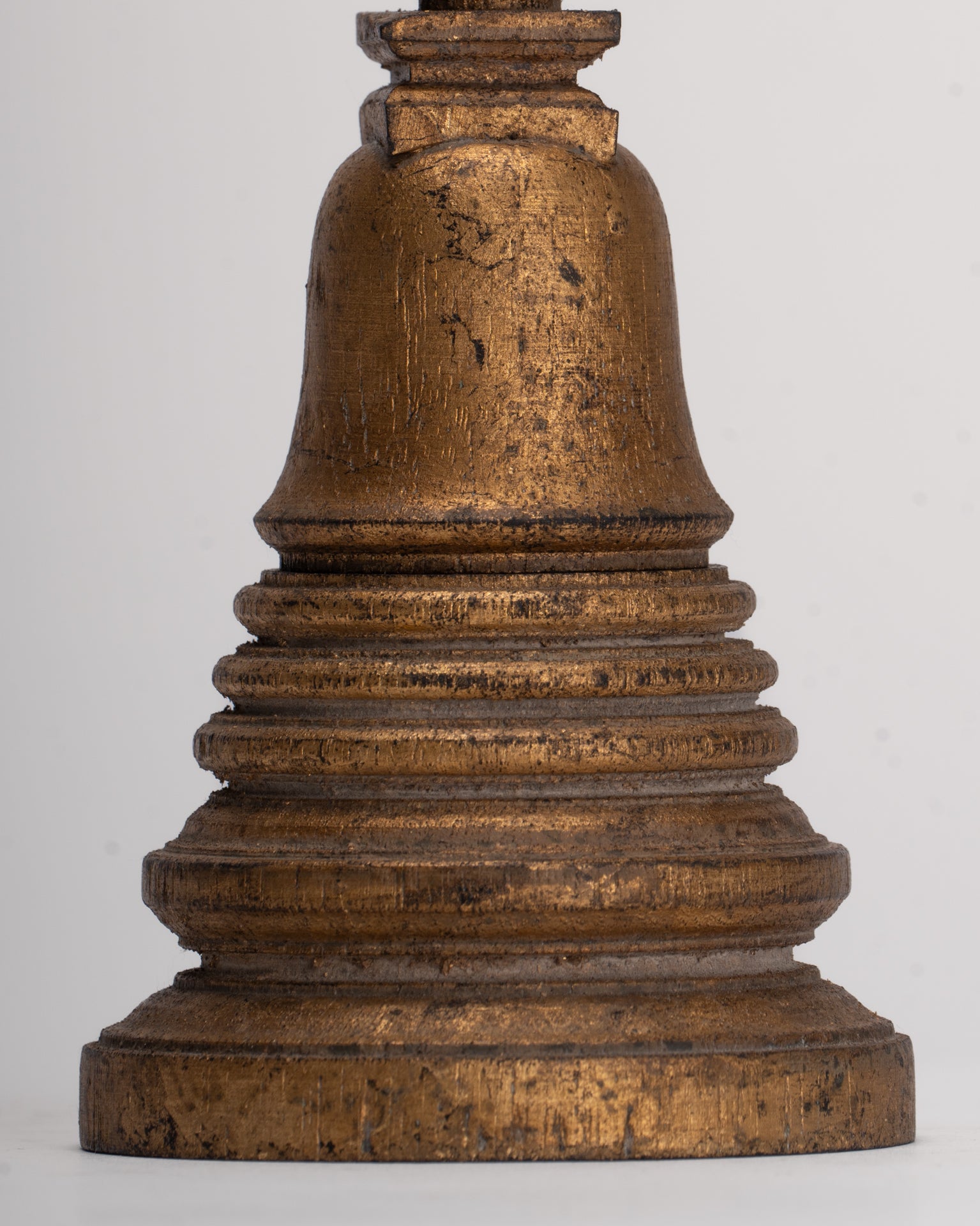
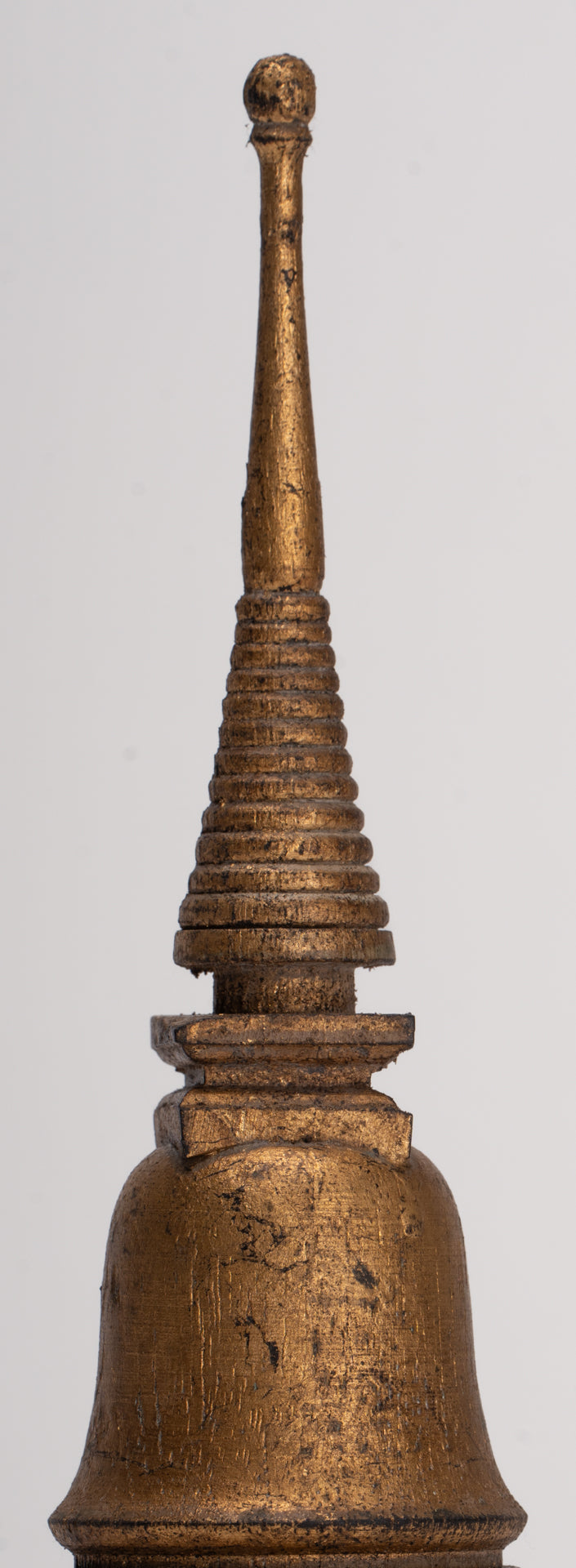
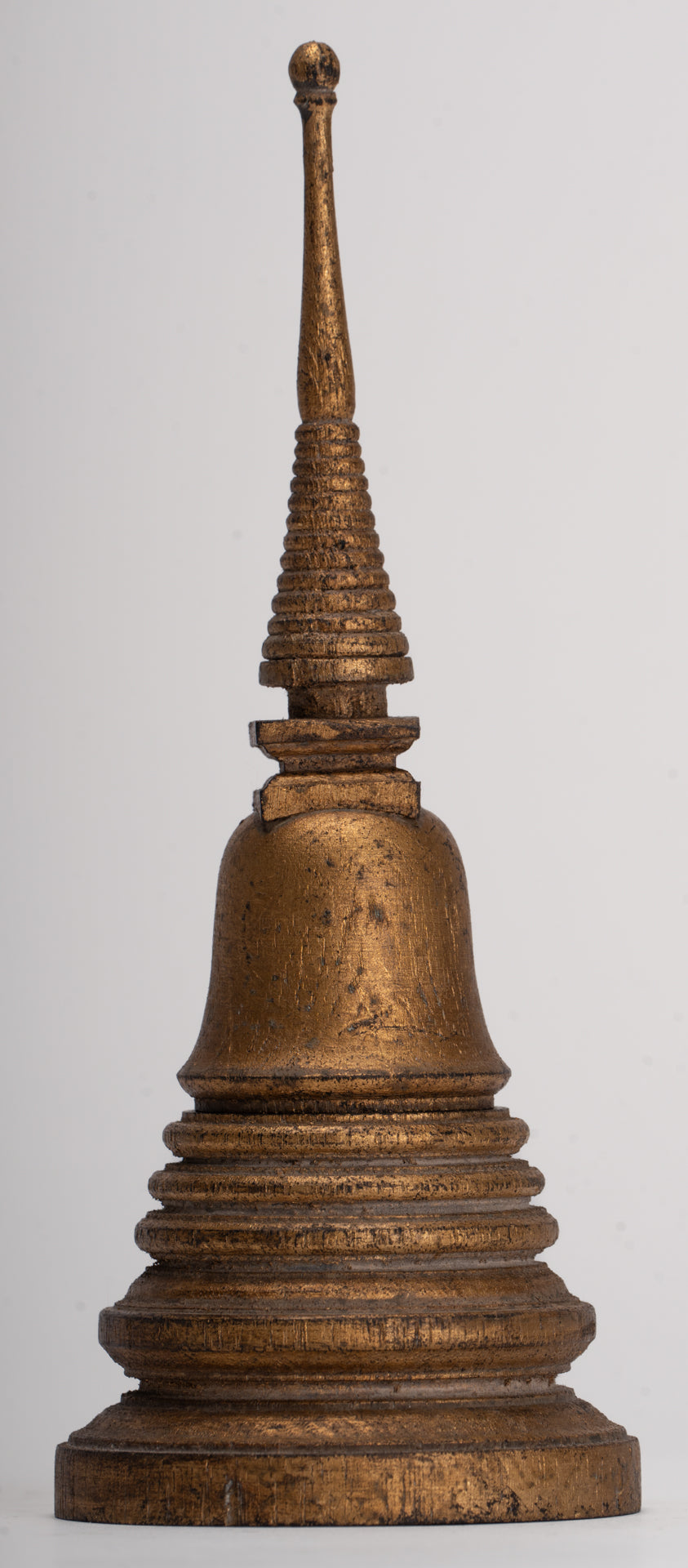
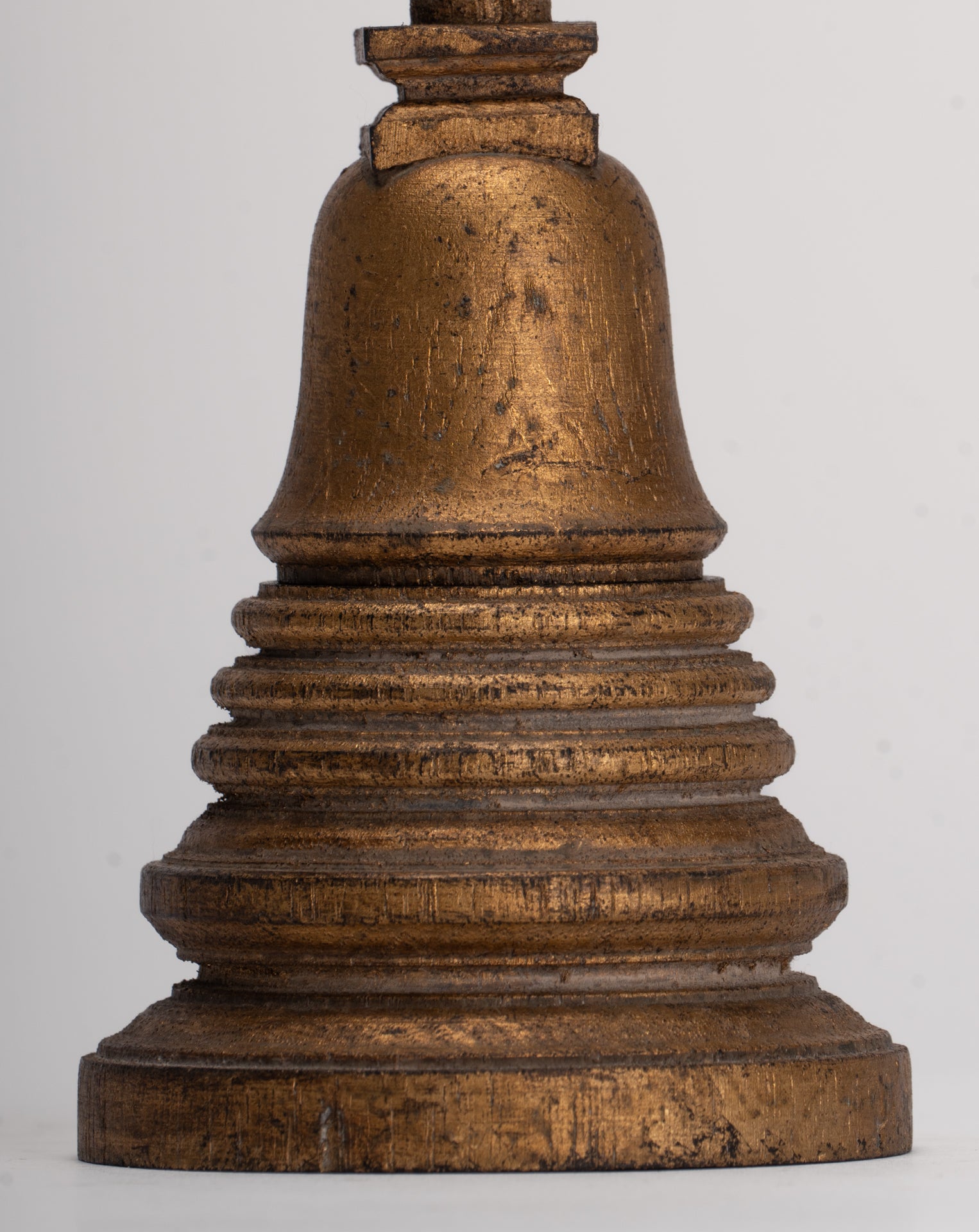
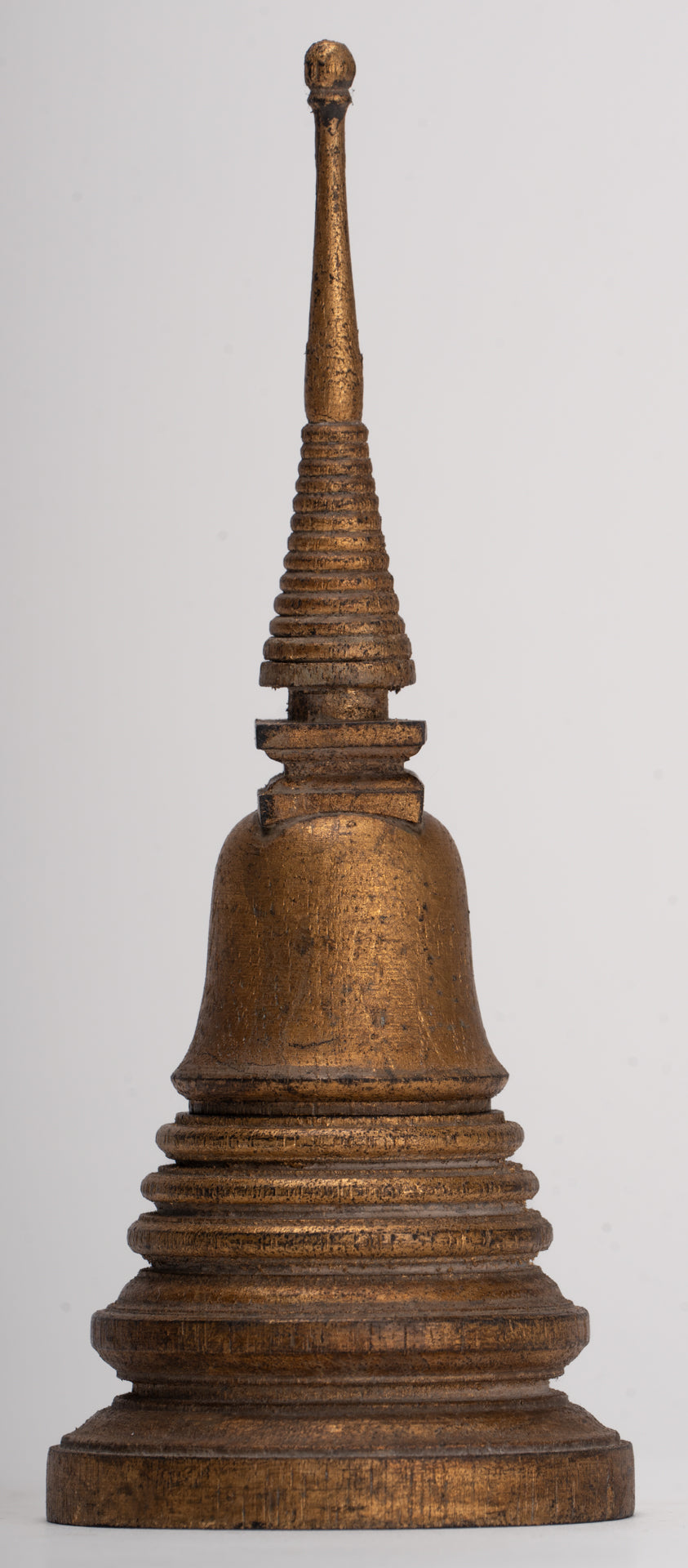
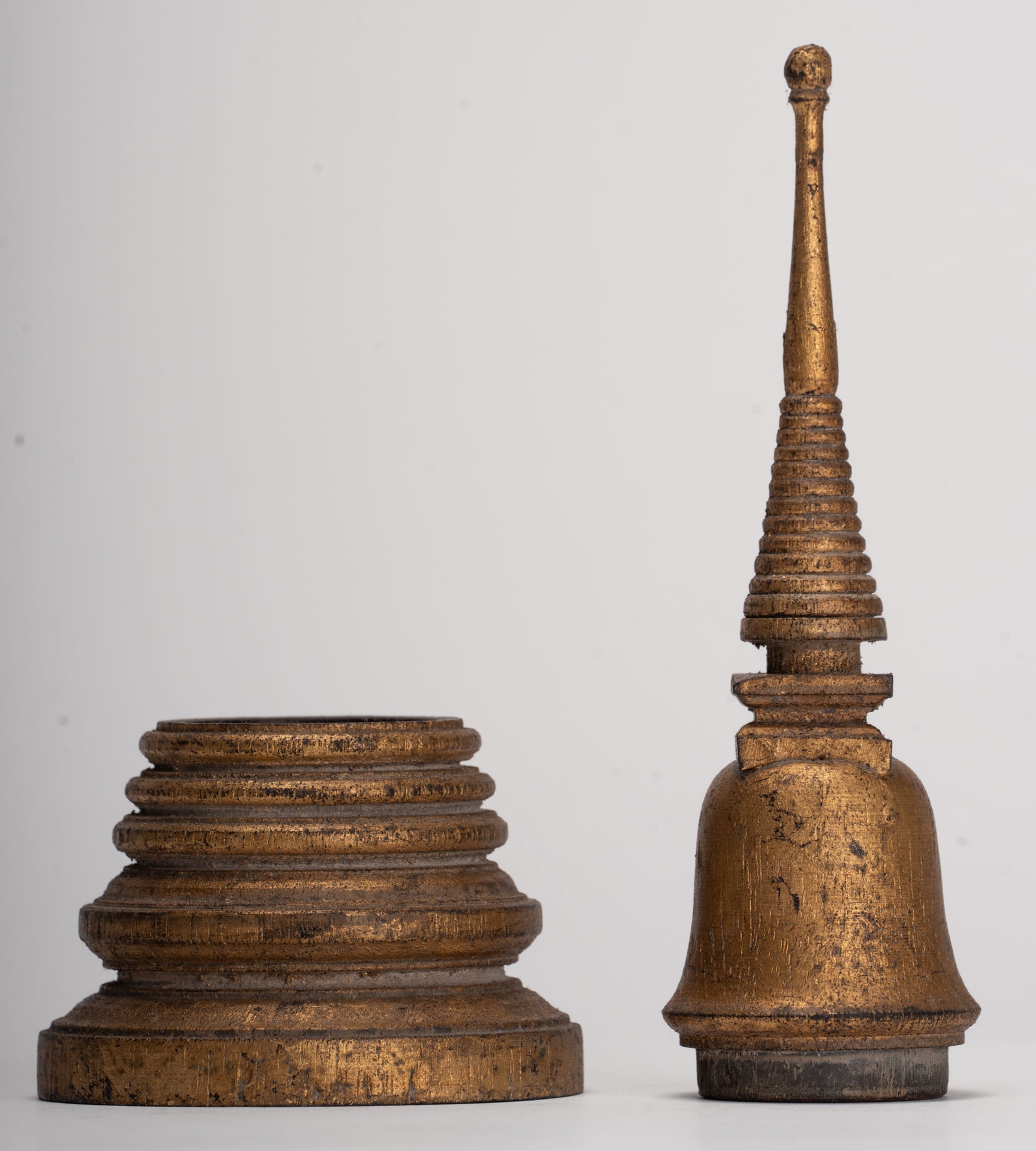
A finely carved and unusually elegant antique Thai style chedi, or reliquary stupa.
The stupa is among the most important monuments in early Buddhism, evolving from the ancient burial mound. Traditionally, the earliest stupas were raised to enshrine the Buddha’s ashes and sacred relics, and over time they were also created to hold the remains of revered disciples and holy manuscripts.
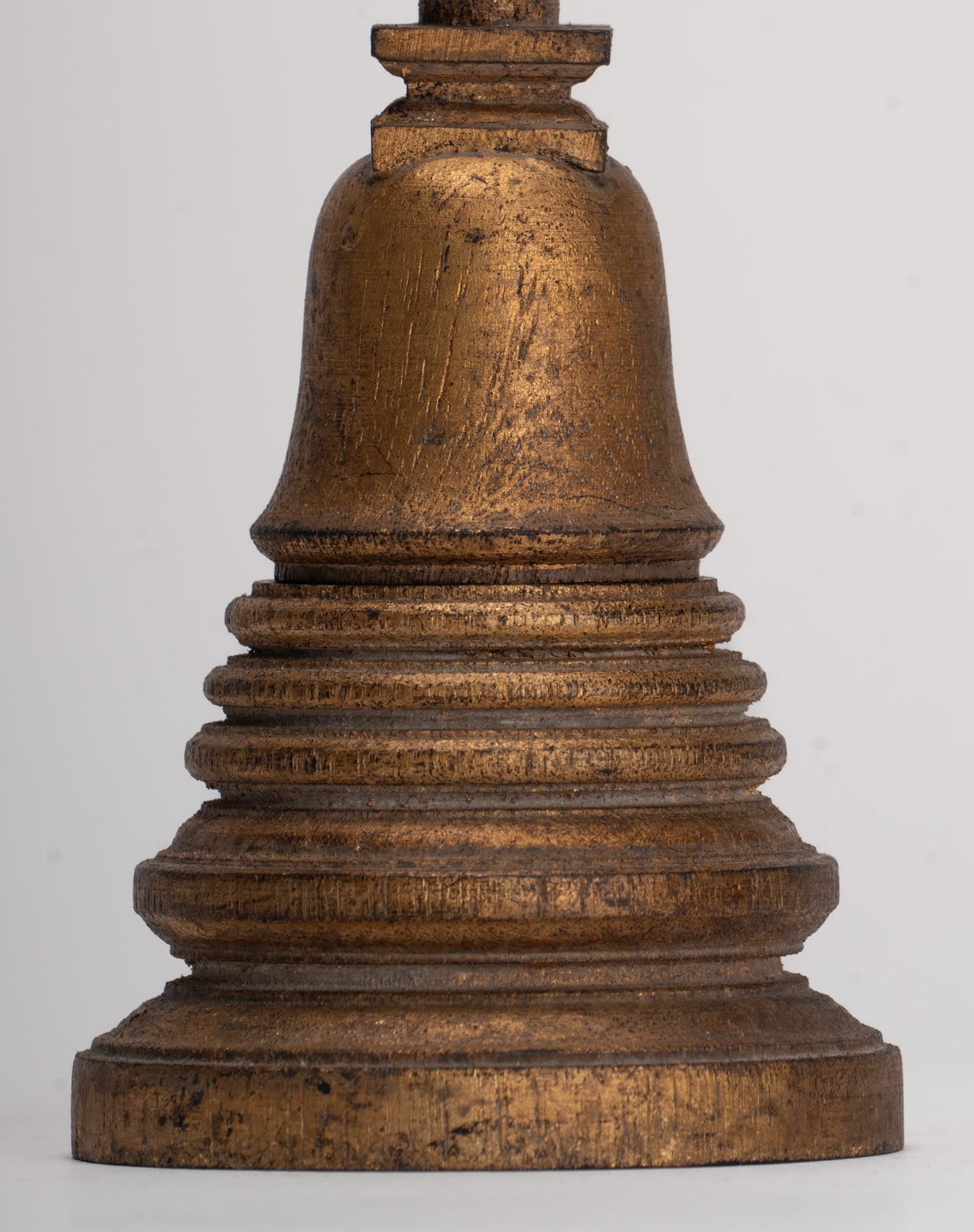
This refined stupa form is associated with the Buddha’s Nirvana or parinirvana at the age of eighty, symbolising his complete release from the cycle of birth and death and his absorption into the highest state of consciousness. The bell-shaped body is simply yet gracefully adorned with a warm gold lacquered patina, allowing the proportions and silhouette to speak for themselves.
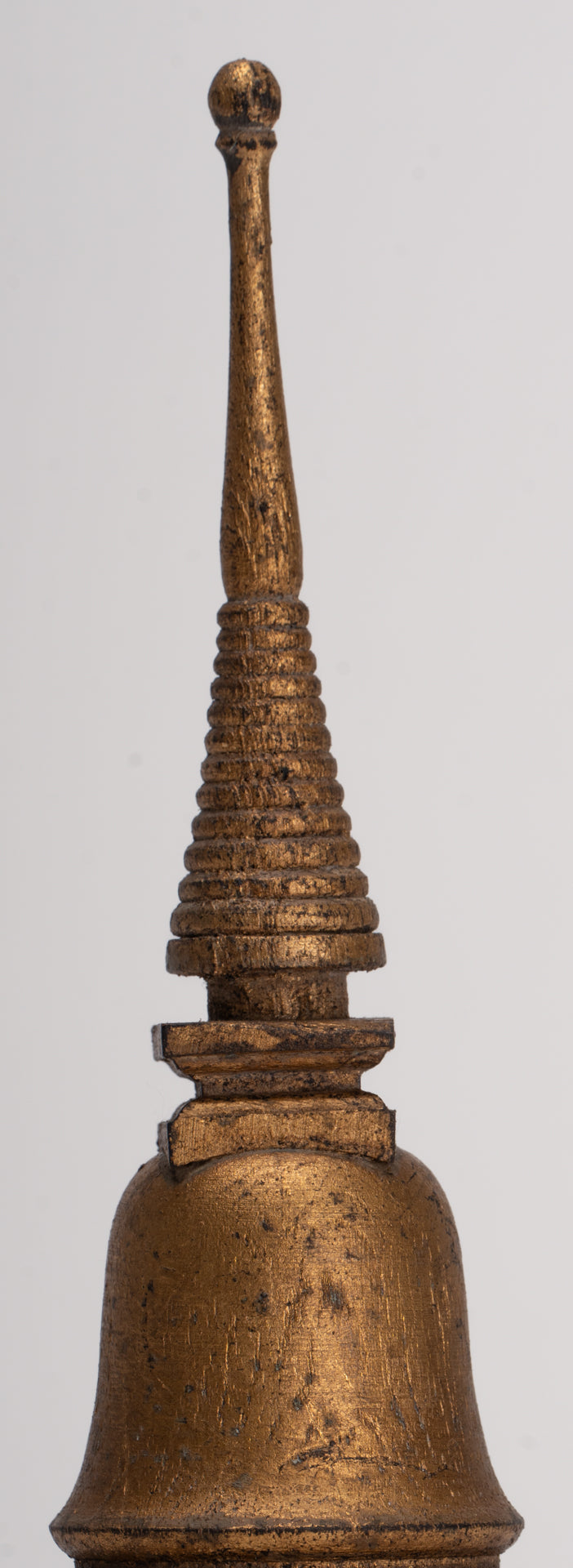
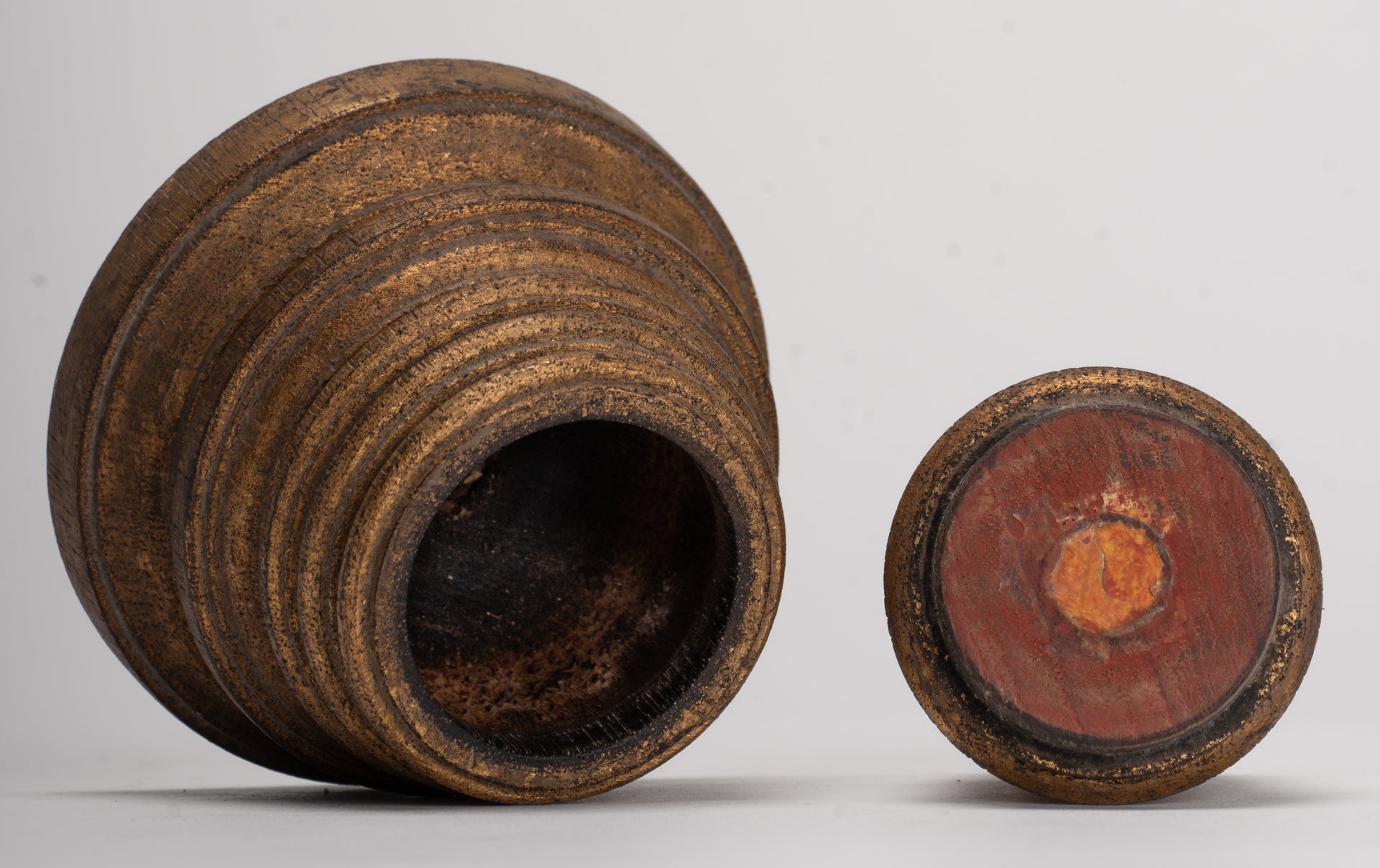
The piece is constructed in two separate but interlocking sections, surmounted by a detachable finial, echoing traditional architectural models and making it both sculptural and tactile. The patina, surface wear, and crisp detailing are particularly appealing, suggesting many years of careful handling and devotion.
Traditional in character yet quietly striking, this stupa would make a distinctive focal point in any room, bringing a subtle sense of calm and sacred presence to a home, office, or meditation space.
Key Features
-
Antique Thai‑style chedi – A finely carved wooden reliquary stupa inspired by traditional Thai Buddhist architecture.
-
Elegant display size – Measures 20cm / 8" high, ideal for a shelf, personal altar, desk, meditation space or cabinet display.
-
Nirvana stupa symbolism – The form is associated with the Buddha’s parinirvana, representing complete liberation from suffering and the cycle of birth and rebirth.
-
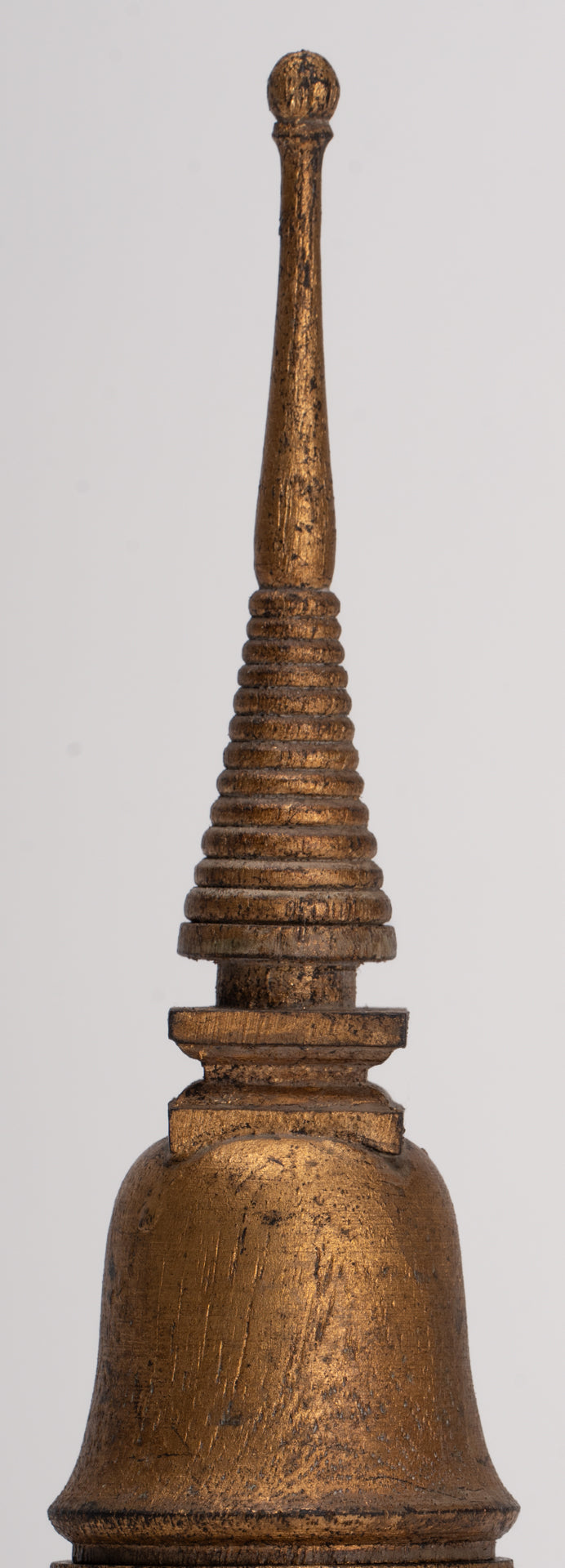
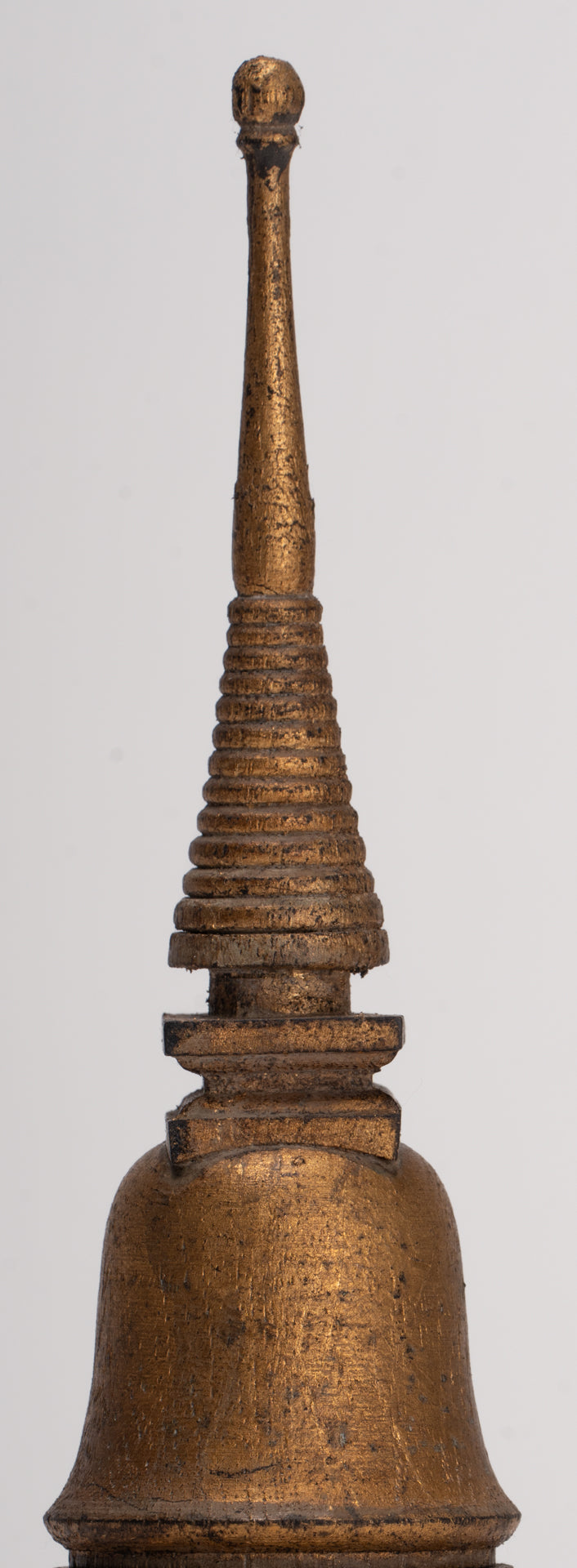
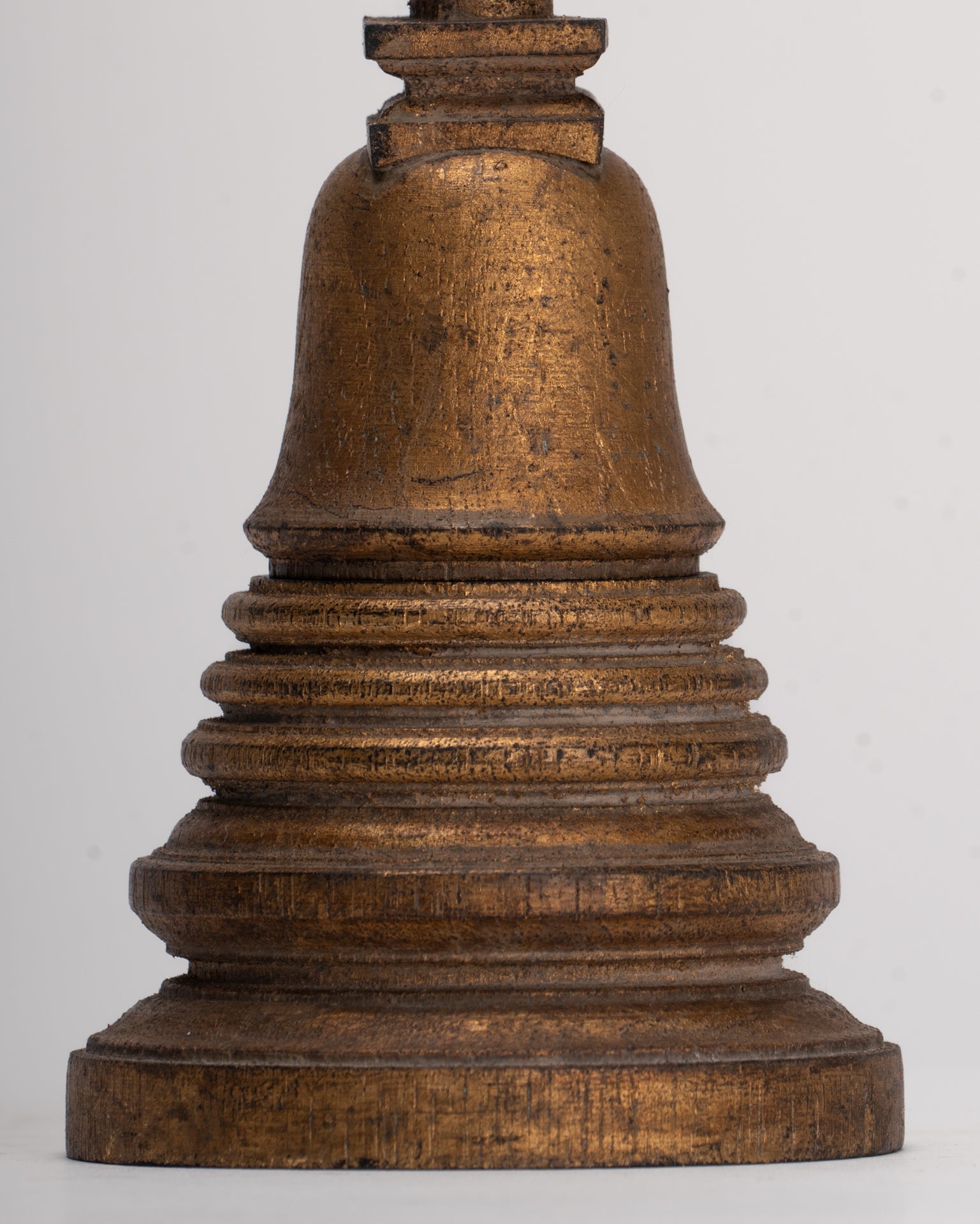
Classic bell‑shaped silhouette – A graceful bell‑form body rises from a tiered base to a tall conical spire and rounded finial.
-
Warm gold‑lacquered patina – A richly aged gold‑brown surface gives the piece warmth, texture and an appealing sense of time‑worn devotional character.
-
Traditional reliquary form – Stupas were historically made to enshrine relics of the Buddha, revered teachers, sacred objects or Buddhist texts.
-
Two‑part construction – The stupa is made in two separate, interlocking sections, with a detachable finial.
-
Tactile architectural object – Echoes the form of a miniature Thai temple monument, combining sacred meaning with elegant sculptural design.
-
Subtle, contemplative presence – A meaningful object for meditation, reflection, a home shrine, study, office or peaceful interior.
-
Fine age and surface character – Crisp turned details, gentle wear and aged finish enhance the sculpture’s individual charm.
Frequently Asked Questions
Q: What is a stupa?
A: A stupa is a Buddhist sacred monument, originally developed from ancient burial mounds in India. It often enshrines relics, sacred remains, texts or other devotional objects, and serves as a focus for reverence, meditation and pilgrimage.Q: What is a chedi?
A: Chedi is the Thai term for a Buddhist stupa. Thai chedis take many forms, but bell‑shaped bodies, tiered bases and tall conical spires are among the best‑known architectural types.Q: What is the difference between a stupa and a chedi?
A: In general, “stupa” is the broader Sanskrit term used across Buddhist traditions, while “chedi” is the Thai name for the same family of sacred reliquary monuments. In a product description, both terms are appropriate for this piece.Q: What does this particular stupa form represent?
A: This form is associated with the Buddha’s parinirvana—his complete release from the cycle of birth, death and rebirth at the end of his earthly life. It is therefore a powerful symbol of peace, completion, wisdom and ultimate liberation.Q: What is the difference between Nirvana and Parinirvana?
A: Nirvana refers to liberation from craving, suffering and ignorance. Parinirvana refers to the final passing of the Buddha, when there is no further rebirth. A Nirvana stupa commemorates this final state of complete spiritual freedom.Q: Why are stupas associated with the Buddha’s relics?
A: After the Buddha’s parinirvana, Buddhist tradition holds that his cremated remains were divided and placed beneath memorial mounds. These early reliquaries developed into stupas, which became some of the most important monuments in Buddhist practice.Q: Do all stupas contain relics?
A: No. While many ancient stupas were built to house relics, stupas may also commemorate important events in the Buddha’s life, contain sacred texts or objects, honour eminent teachers, or be built as devotional monuments.Q: What do the different sections of the stupa represent?
A: Buddhist stupa forms can be interpreted in several ways. In Thai architectural symbolism, the broad base may represent the earth or the Three Worlds; the bell‑shaped body may recall the Buddha’s alms bowl or the cosmic dome; and the spire can signify ascent towards enlightenment.Q: Why is the main body bell‑shaped?
A: The bell form is one of the most recognisable shapes in Thai Buddhist architecture. It gives the chedi a sense of grounded stillness, while the rising spire draws the eye upward, suggesting spiritual aspiration and movement towards awakening.Q: What does the tall spire signify?
A: The conical spire represents spiritual ascent and the path towards enlightenment. Its rising tiers create a visual movement from the stable base to the highest point of awareness.Q: What does the detachable finial represent?
A: The detachable finial completes the stupa’s vertical axis and can be understood as the highest point of the monument—the culmination of the spiritual path. Its removable construction also reflects the object’s carefully made, architectural quality.Q: Is the stupa made in one piece?
A: No. The chedi is constructed in two separate, interlocking sections, with a detachable finial. This traditional‑style assembly makes the piece particularly tactile and allows the viewer to appreciate its layered architectural construction.Q: Is it safe to take the stupa apart?
A: It can be separated carefully, but the pieces should be handled gently and always supported from beneath. Avoid lifting the lower section by the finial or using the finial as a handle. If moved or packed, wrap each part separately in soft protective material.Q: What does the aged gold lacquered patina add to the piece?
A: The warm gold‑brown surface gives the stupa a time‑softened, devotional character. It enhances the turned architectural details, catches light beautifully and contributes to the feeling of a miniature temple monument shaped by years of careful handling.Q: Should the surface be polished or refinished?
A: No. The existing patina and surface wear are integral to the character of the piece. Avoid furniture polish, solvents, abrasive cloths, waxes and harsh cleaning products, as these could damage or alter the lacquered finish.Q: Is this stupa suitable for a home altar?
A: Yes. A stupa is an especially appropriate object for a personal altar, meditation corner or quiet room. It can serve as a focus for reflection on impermanence, peace, the Buddha’s teachings and the possibility of liberation.Q: Is it appropriate for non‑Buddhists to display a stupa?
A: Yes. Many people appreciate stupas as symbols of stillness, sacred architecture, wisdom and contemplative balance. It is respectful to place the chedi on a clean, elevated and uncluttered surface.Q: Where should I display the chedi?
A: At 20cm / 8" high, it is ideal for a bookshelf, desk, console, sideboard, small cabinet, meditation altar or reading nook. Its vertical form looks particularly effective when given a little open space around it.Q: Can I place offerings near it?
A: Yes. Fresh flowers, a small bowl of water, a candle or LED tealight, incense or a clean cloth can create a simple devotional setting. Keep objects lower than the chedi, and avoid allowing heat, smoke, wax or water to come into direct contact with the finish.Q: How should I care for the stupa?
A: Dust gently with a soft, dry cloth or a soft natural‑bristle brush. When cleaning the tiered spire, work slowly from top to bottom. Avoid excess moisture, direct sunlight, radiators, fireplaces and high‑humidity environments.Q: Can the stupa be displayed outdoors?
A: Indoor display is recommended. Outdoor moisture, frost, direct sun and temperature changes may affect the wooden construction and aged lacquered surface.Q: Who would especially appreciate this piece?
A: This Thai‑style chedi will appeal to collectors of Buddhist and Southeast Asian art, meditation practitioners, interior designers, scholars of sacred architecture and anyone seeking a compact, meaningful object that brings calm, beauty and spiritual resonance to an interior.SATISFACTION GUARANTEE - We have been offering Asian Art for many years and are proud of the reputation we have developed for fair and honest listings. However, if for any reason, whatsoever, you are unhappy with your purchase please just let us know and we will provide a full refund. We want you to be 100% happy with your purchase.
-
-
The majority of orders will be shipped with DHL. This is a secure, express and fully tracked service.
Items less than 2Kg we typically ship using Royal Mail.
Once we receive your order we try to ship all orders the same or next working day.
Large and/or fragile pieces requiring palletising, specialist crating and/or extra packaging may take a little longer. Palletised shipments will be delivered curbside.
All orders over 35 GBP will be shipped free of charge.

-
We genuinely hope that all purchases delight.
However, if they do not, regardless of reason, we will refund all orders upon receipt of the unwanted item. Just notify us within 14 days of receiving your order that you wish to make a return and send the piece back to us with 30 days of delivery.


