


-
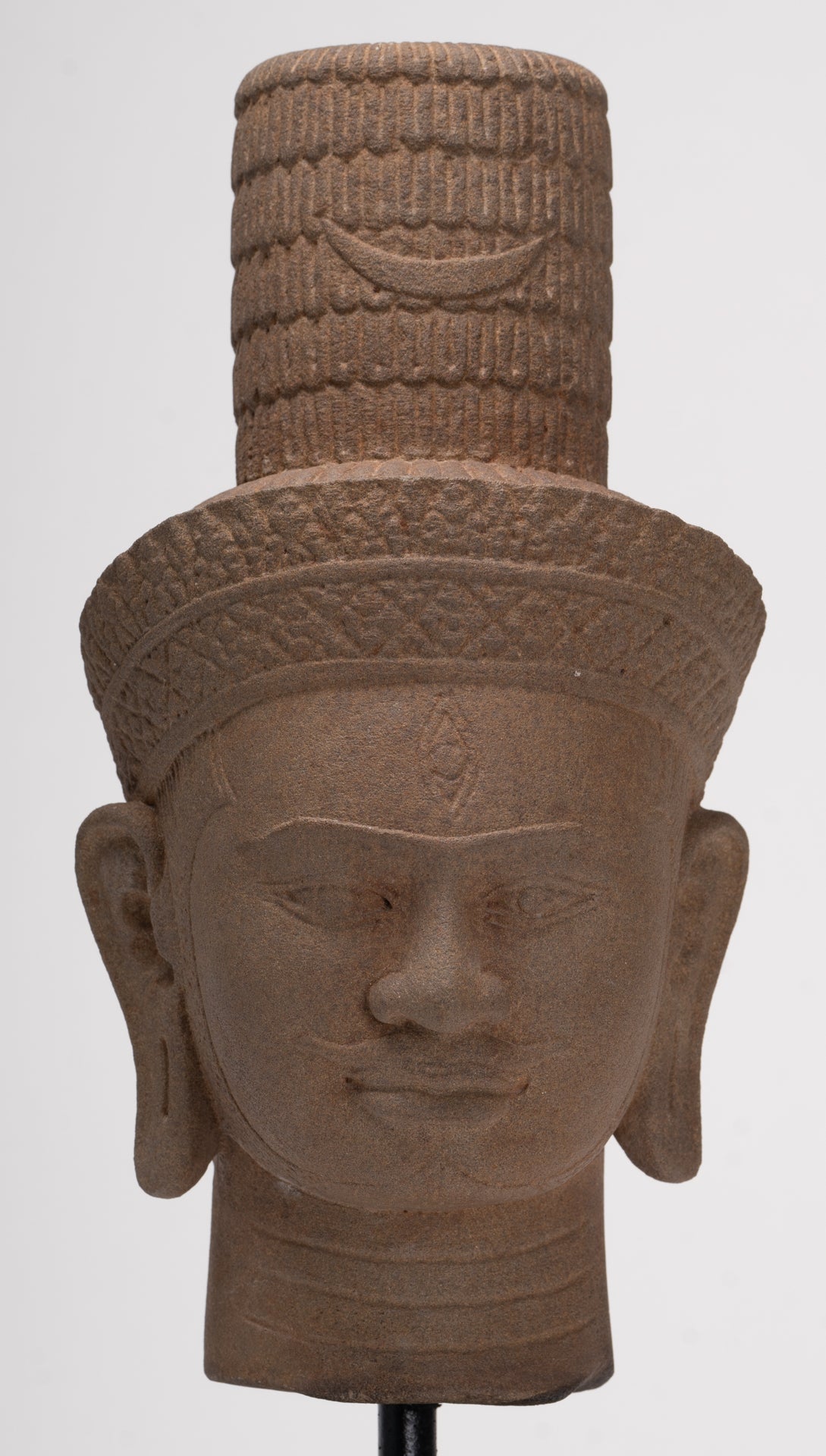
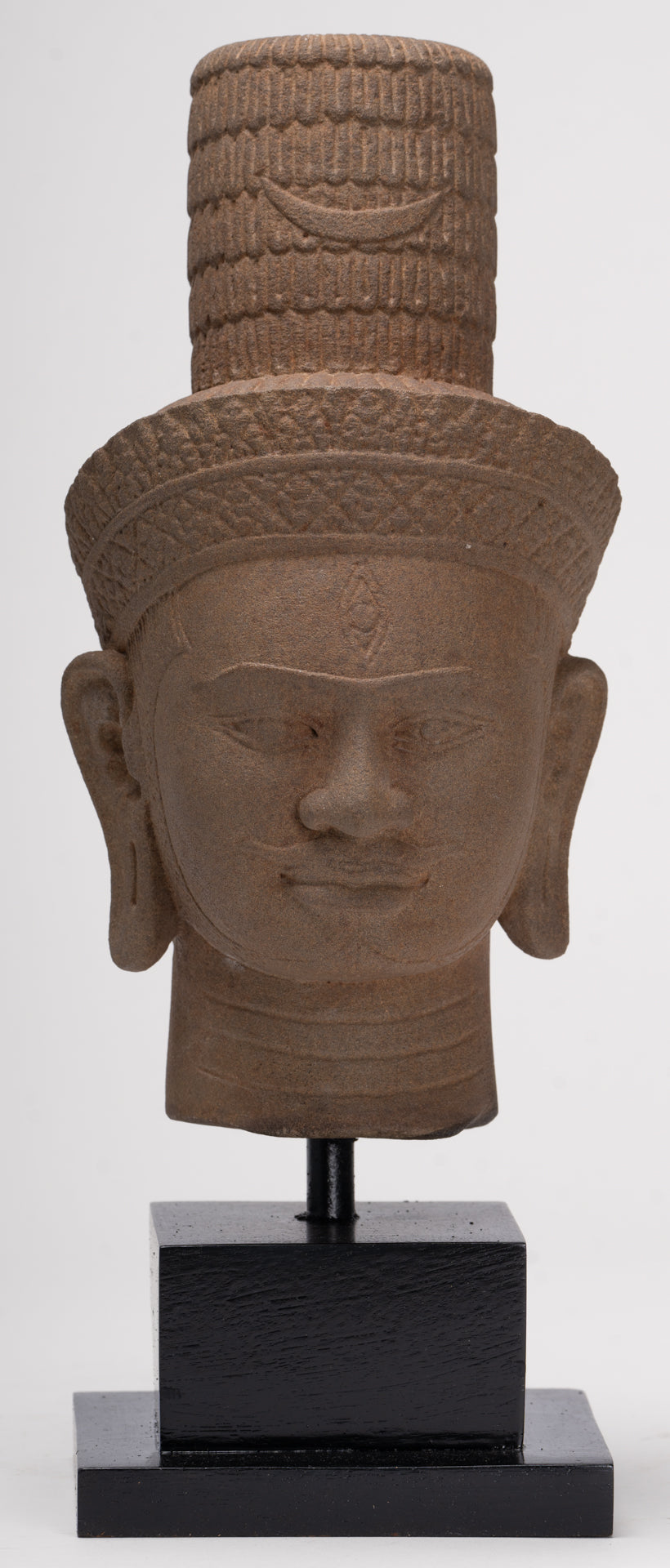
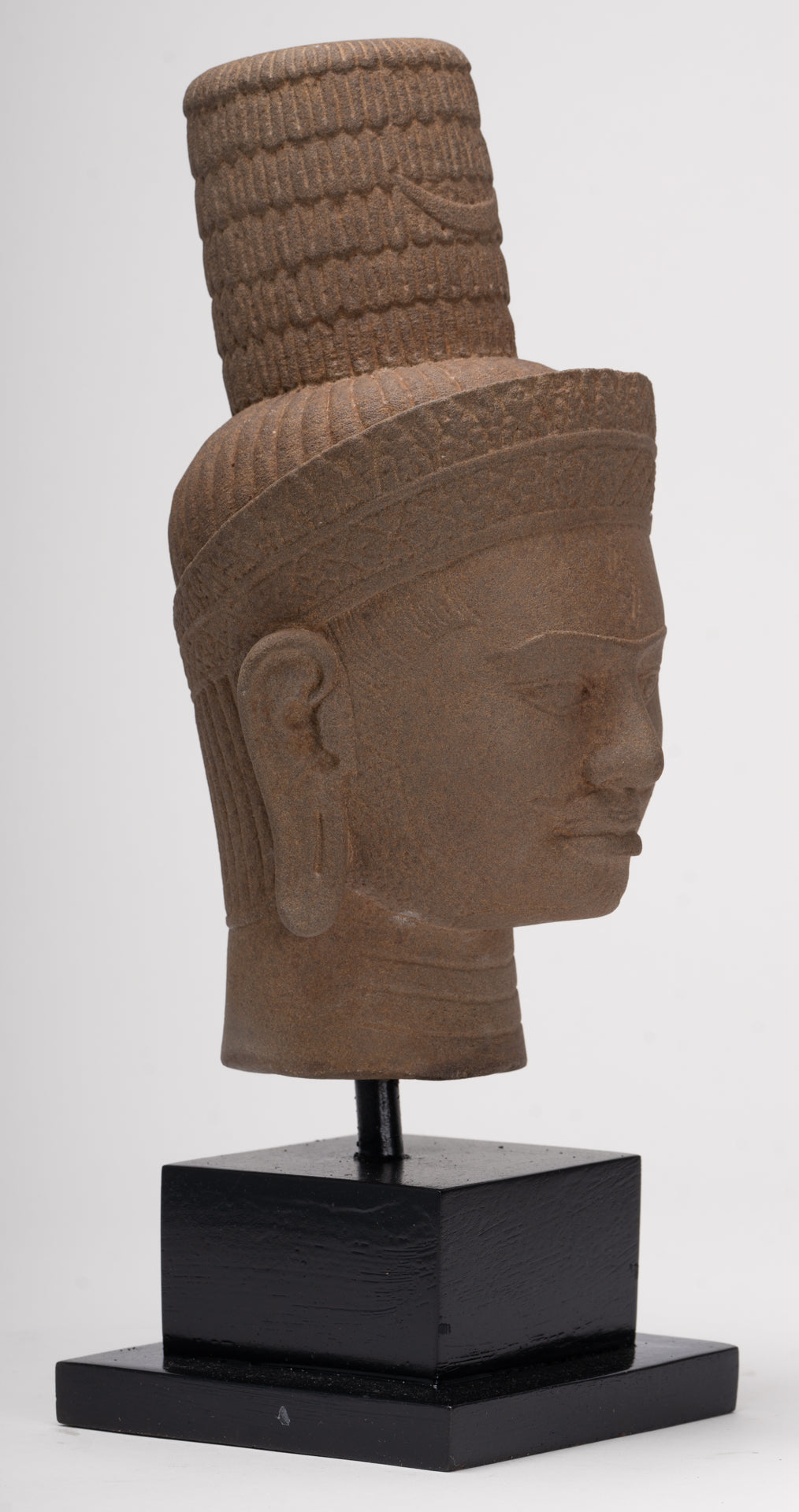
Antique Bakheng Style Khmer Stone Shiva Head Statue - The Destroyer - 35cm/14"
Cambodian Sacred Sculpture on a Later Wooden Base
Measures - (Height) 35cm/14"
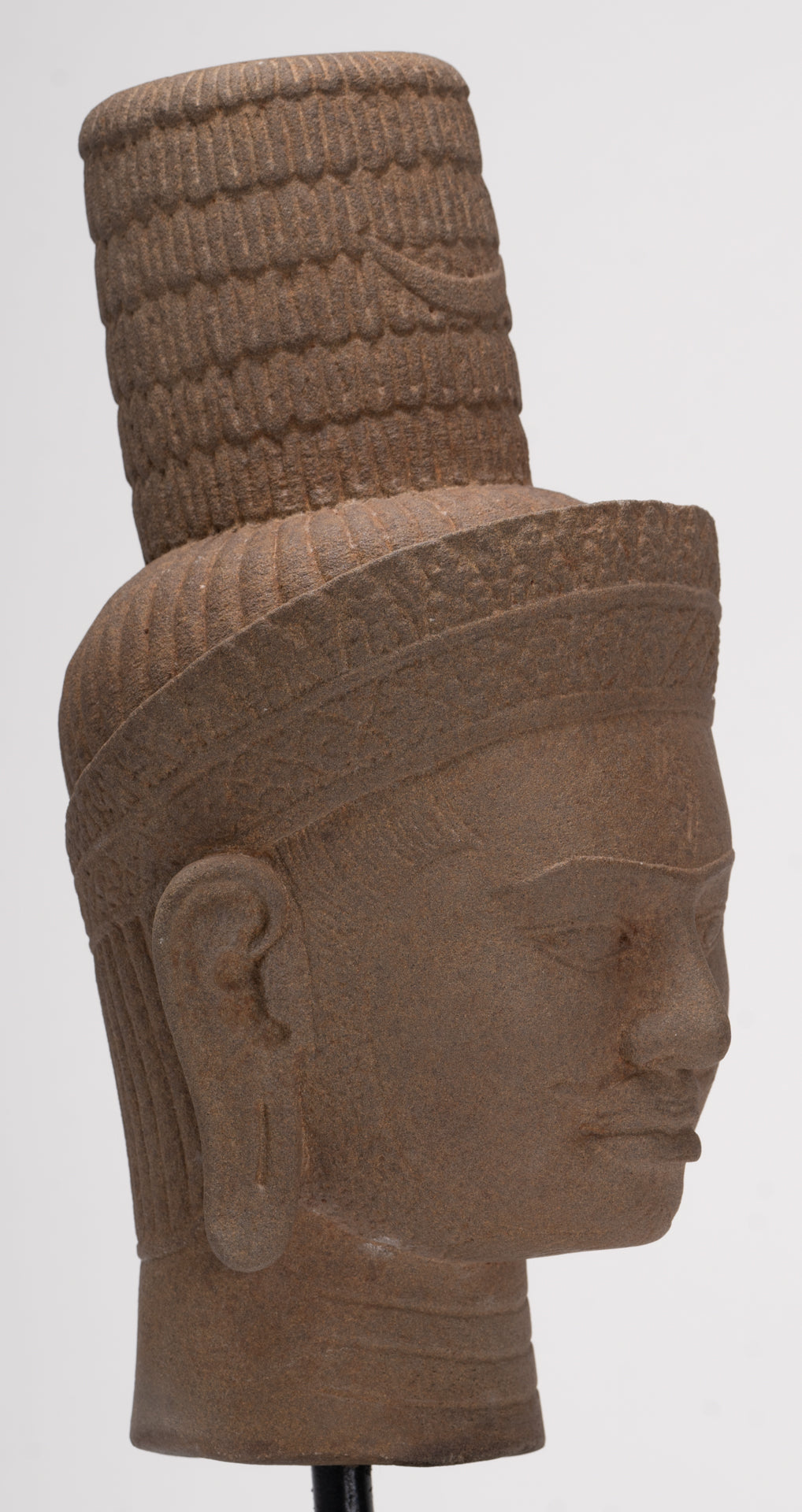
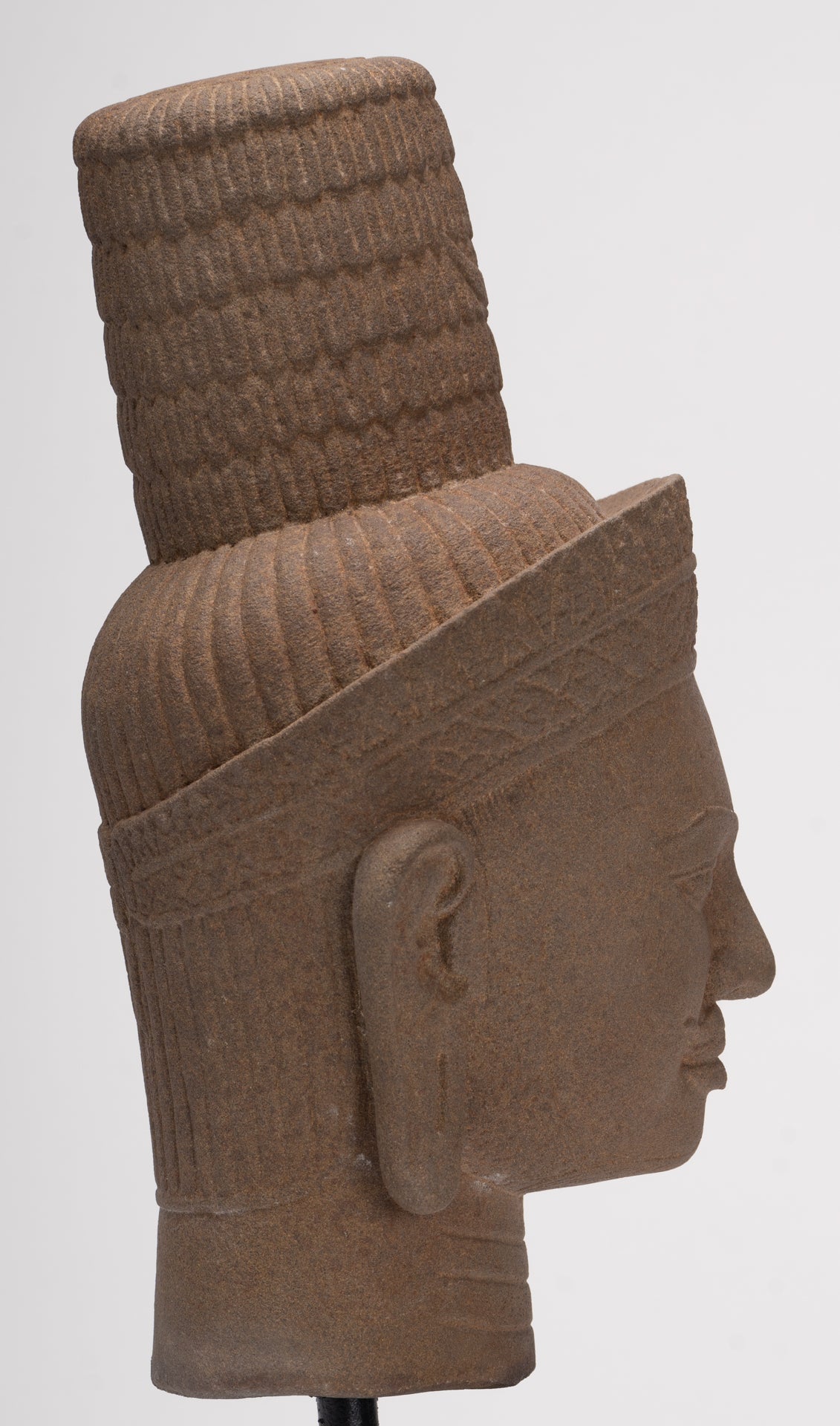
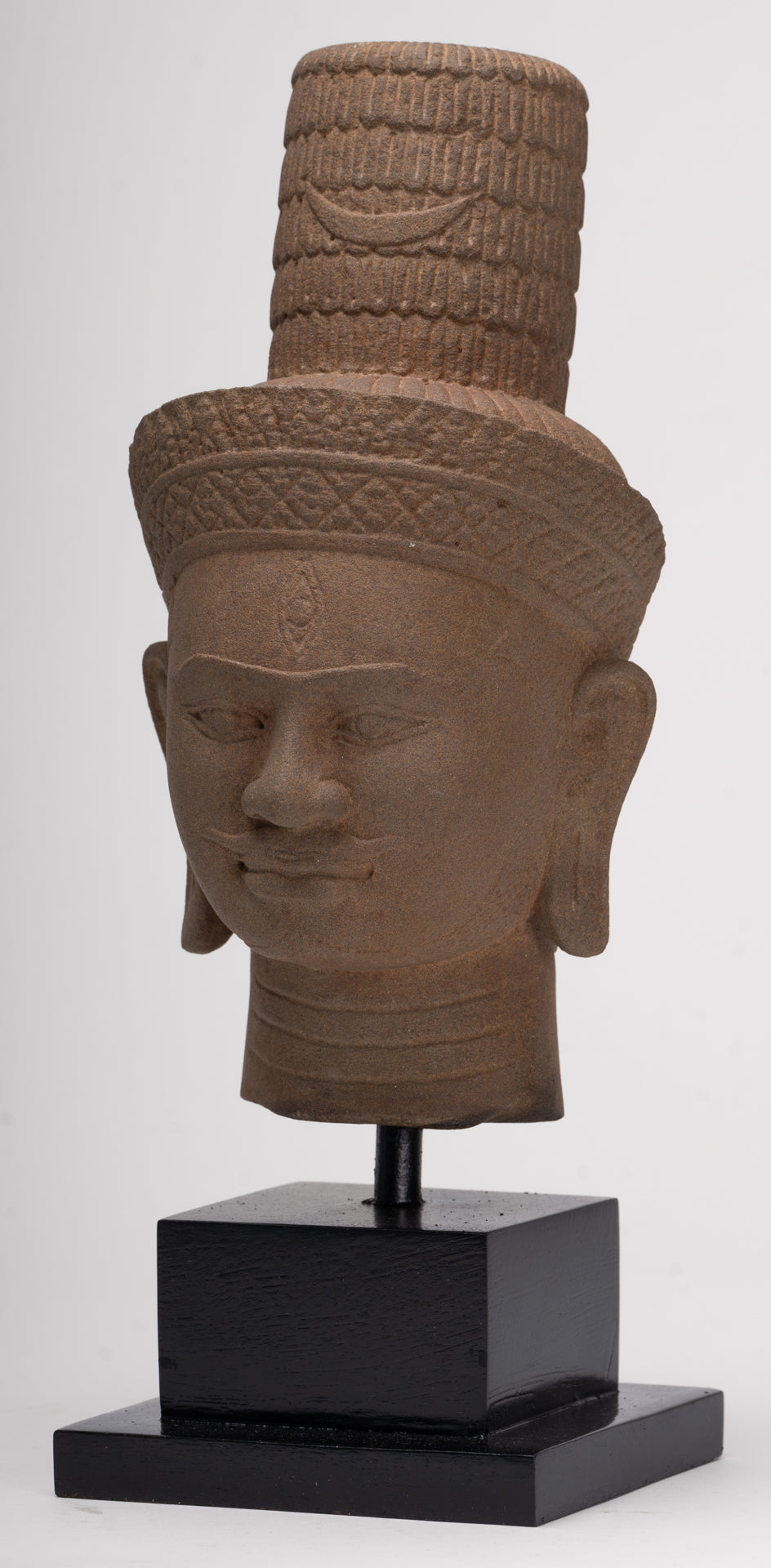
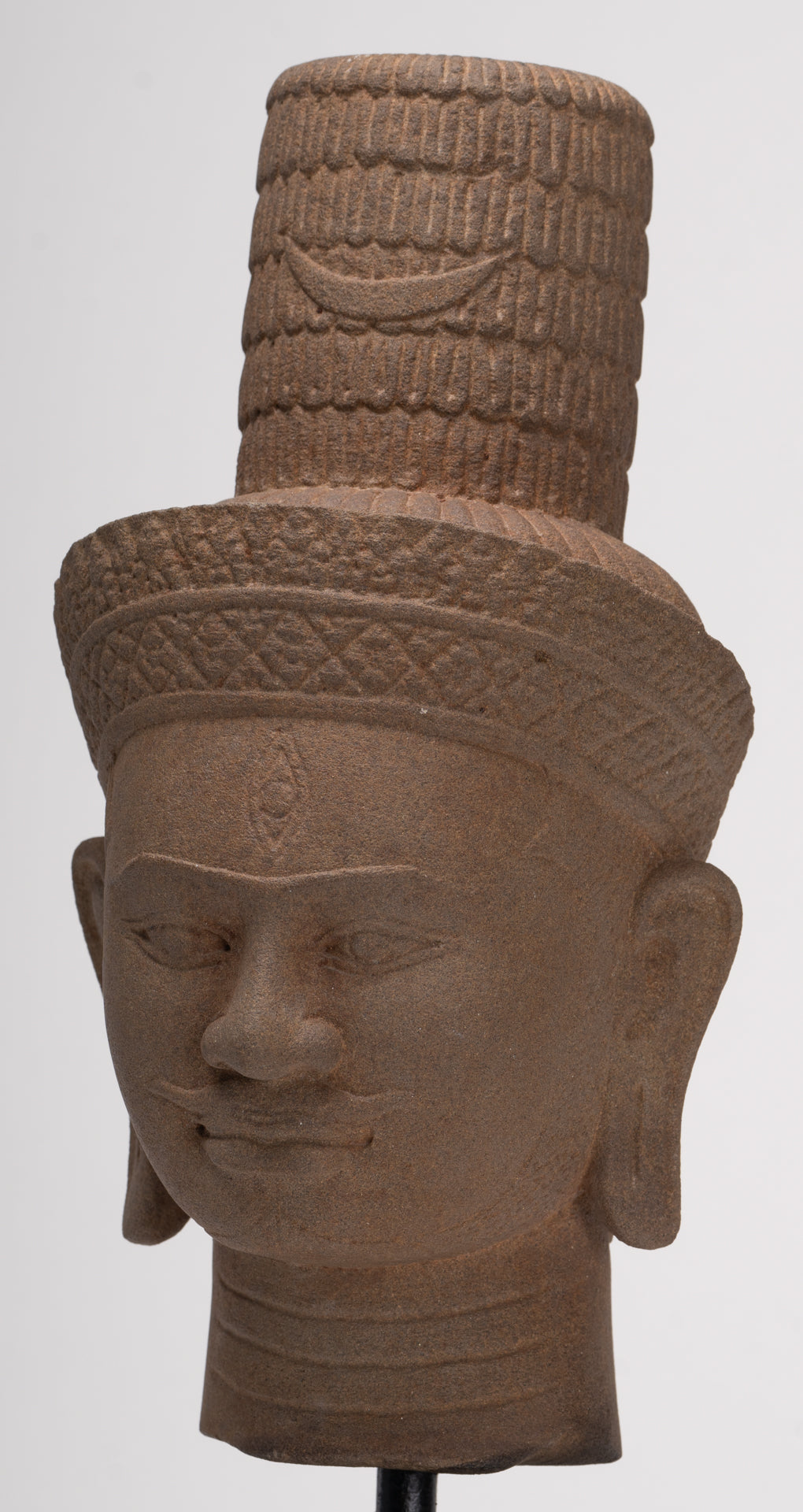
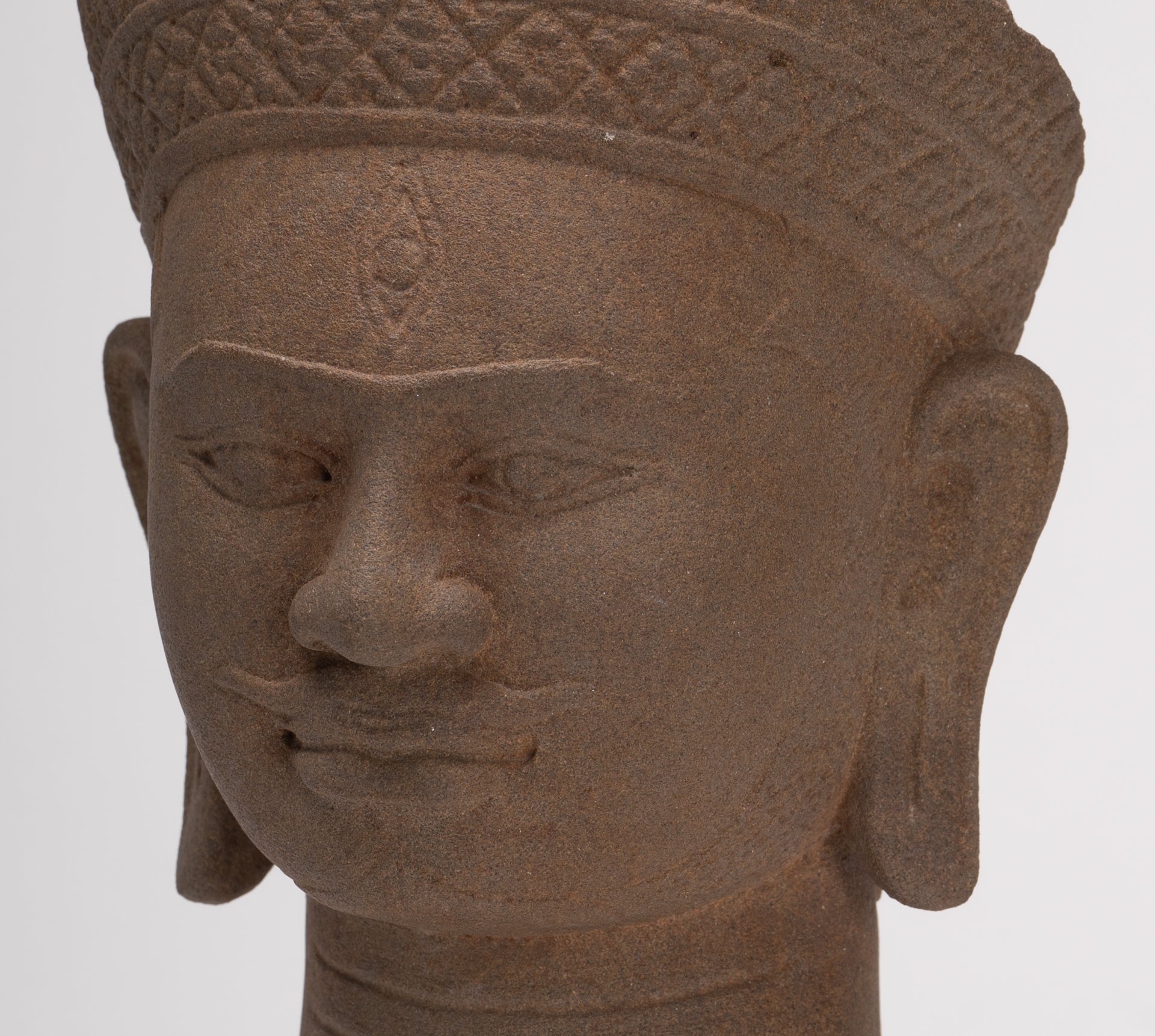
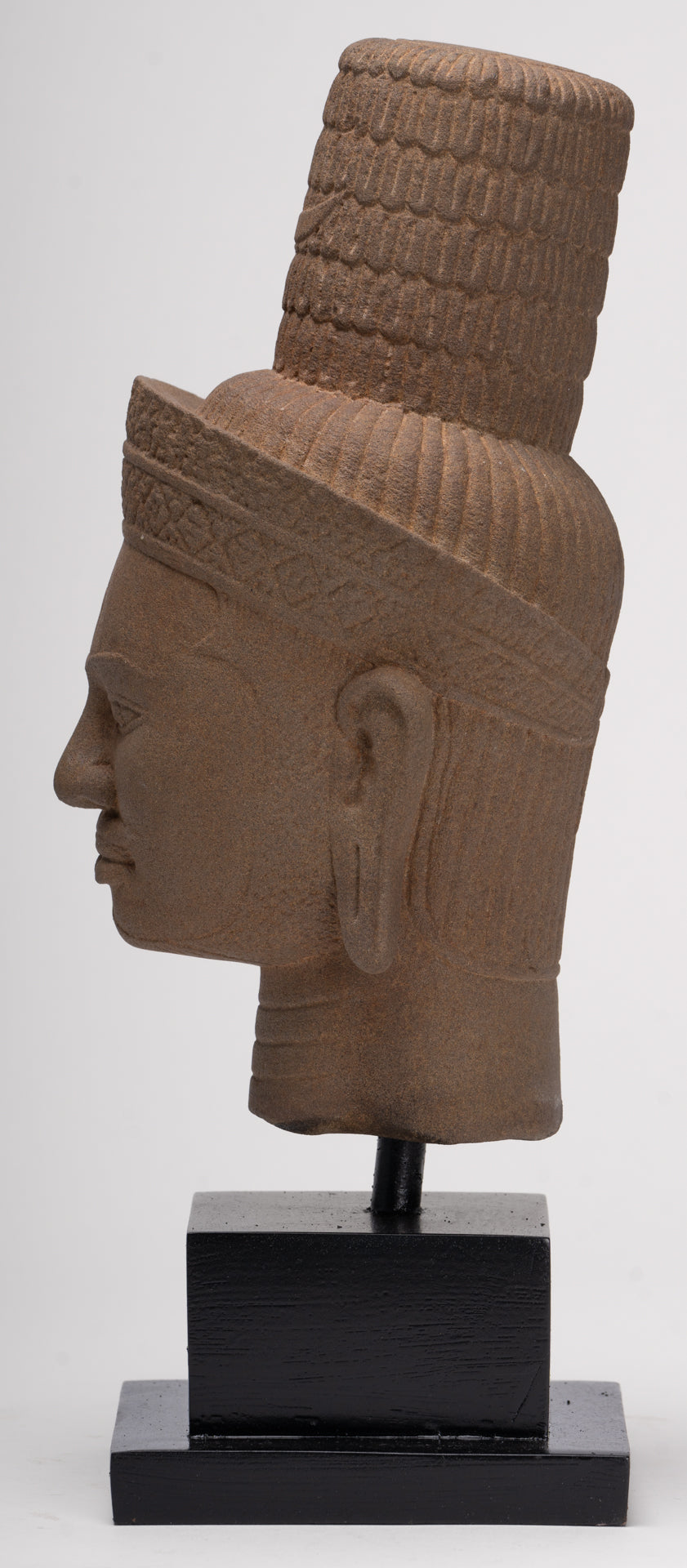
A compelling antique Cambodian stone head of Shiva, rendered in the Bakheng style and distinguished by its composed expression, finely patterned diadem, and tall cylindrical arrangement of hair. The sculpture combines architectural clarity with gently modelled facial features, conveying a sense of restrained strength and spiritual authority.
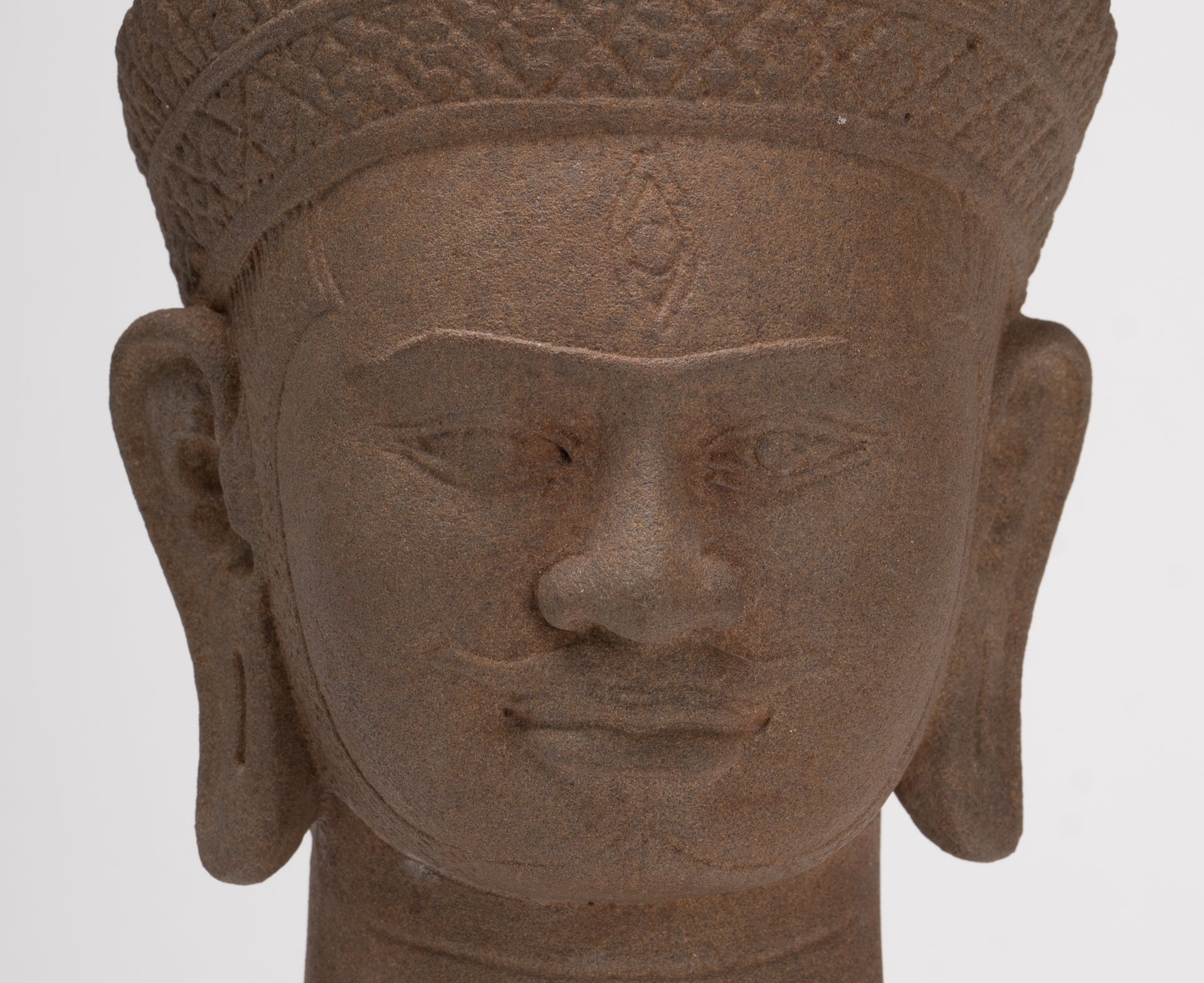
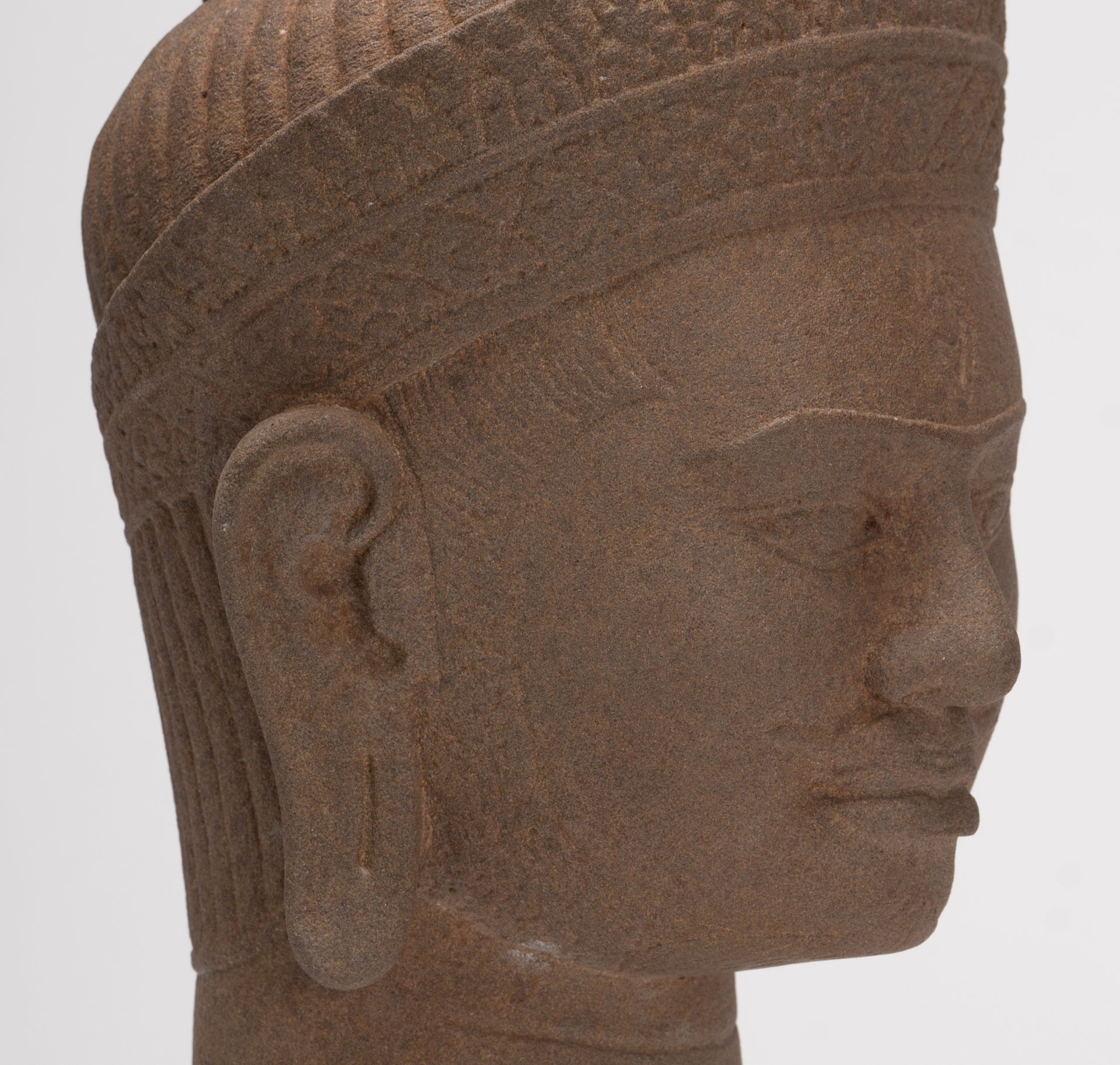
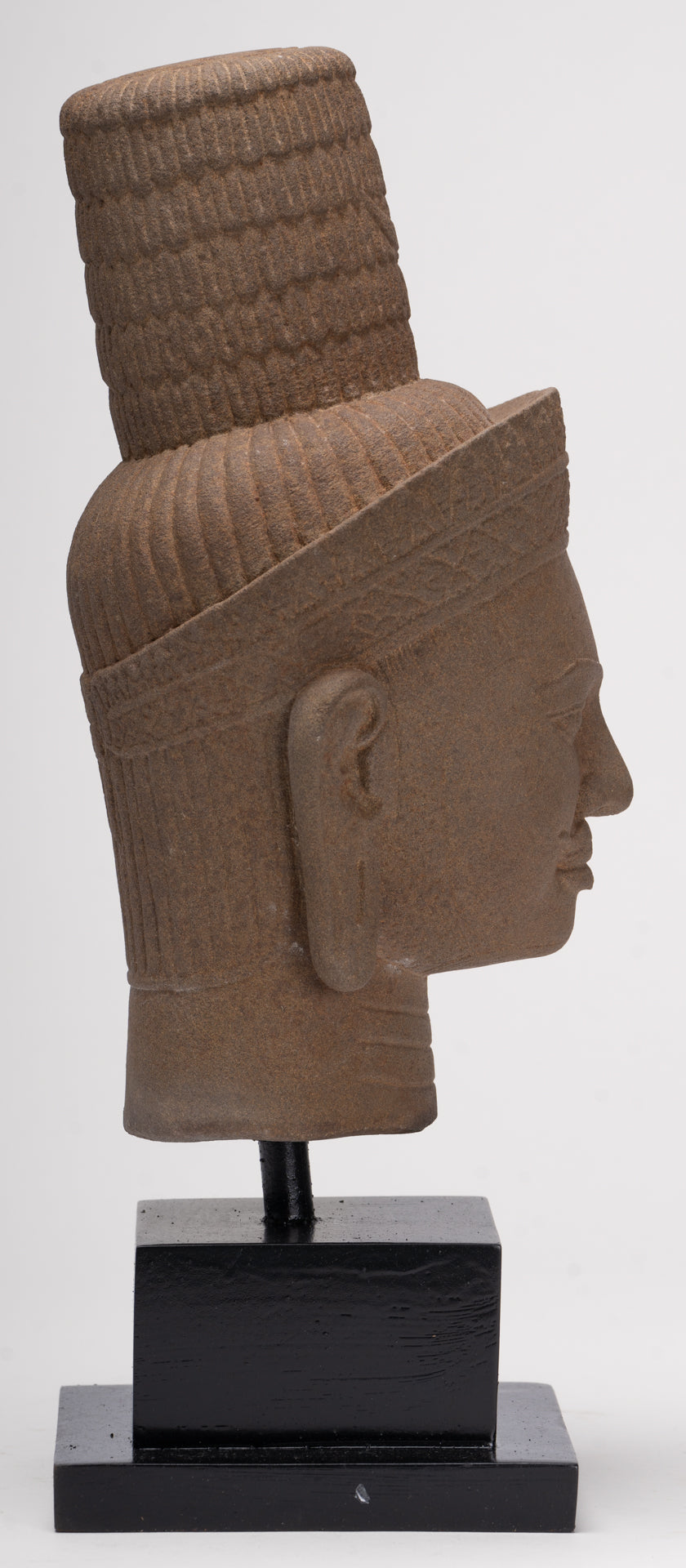
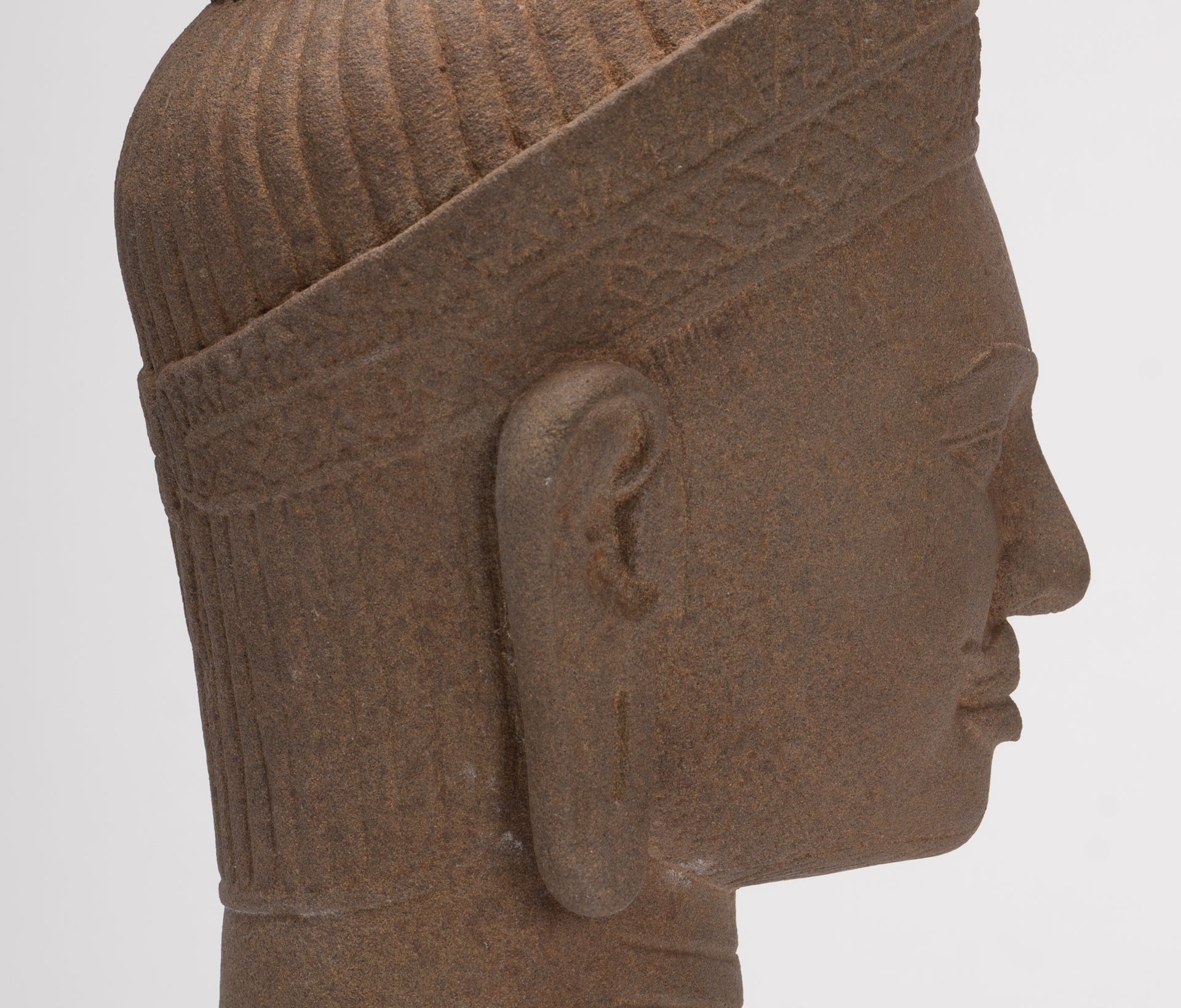
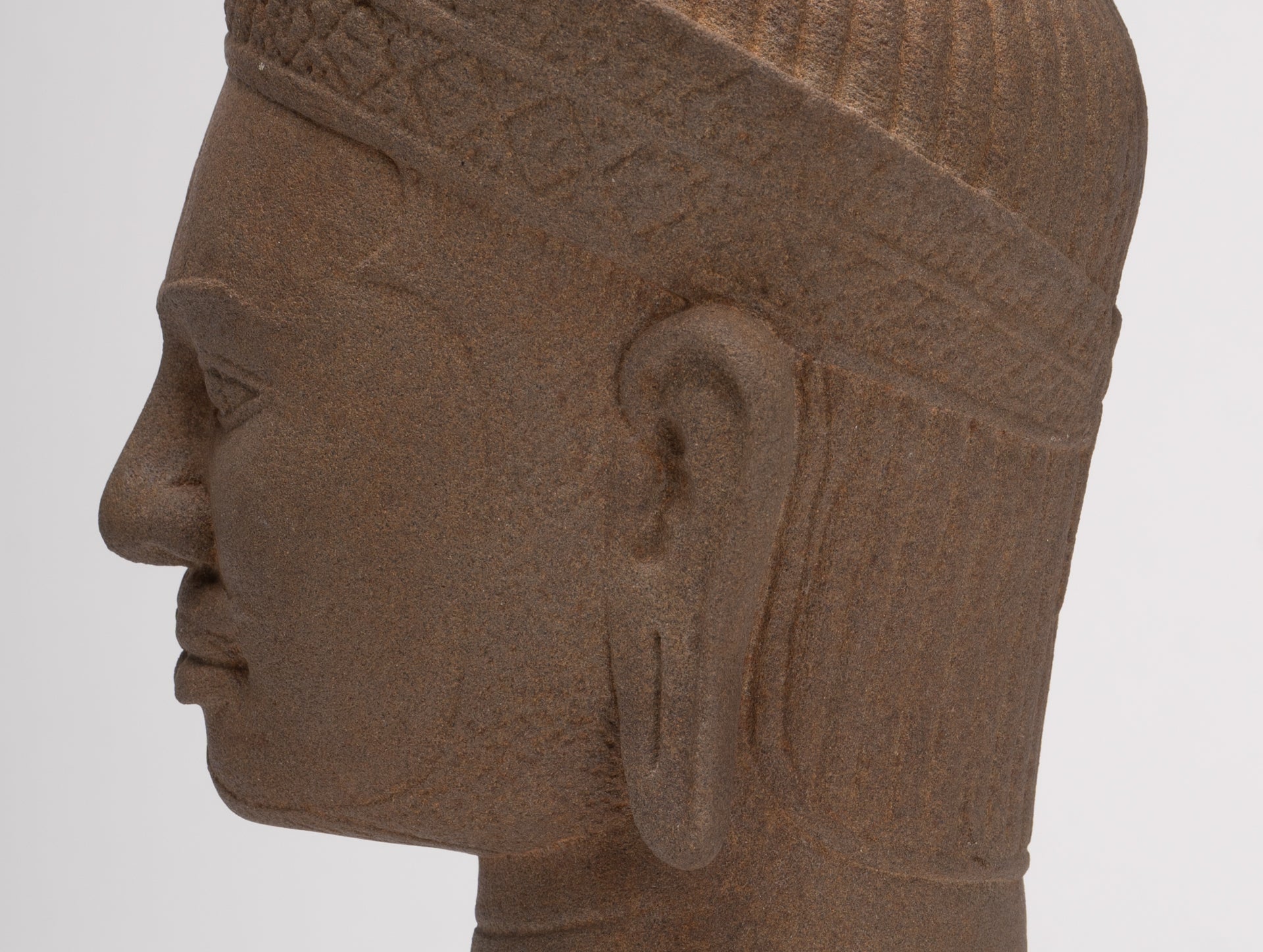
The face is carved with almond-shaped eyes beneath a continuous, sharply defined brow, a firmly modelled nose, and softly curved lips framed by a delicate moustache. Elongated ears flank the cheeks, while incised bands articulate the neck beneath the chin.
Shiva’s identity is particularly well expressed through two details: the vertical third eye on the forehead and the crescent moon carved into the front of the tall hair arrangement. These are established attributes of Shiva and occur together on documented Bakheng-style heads.
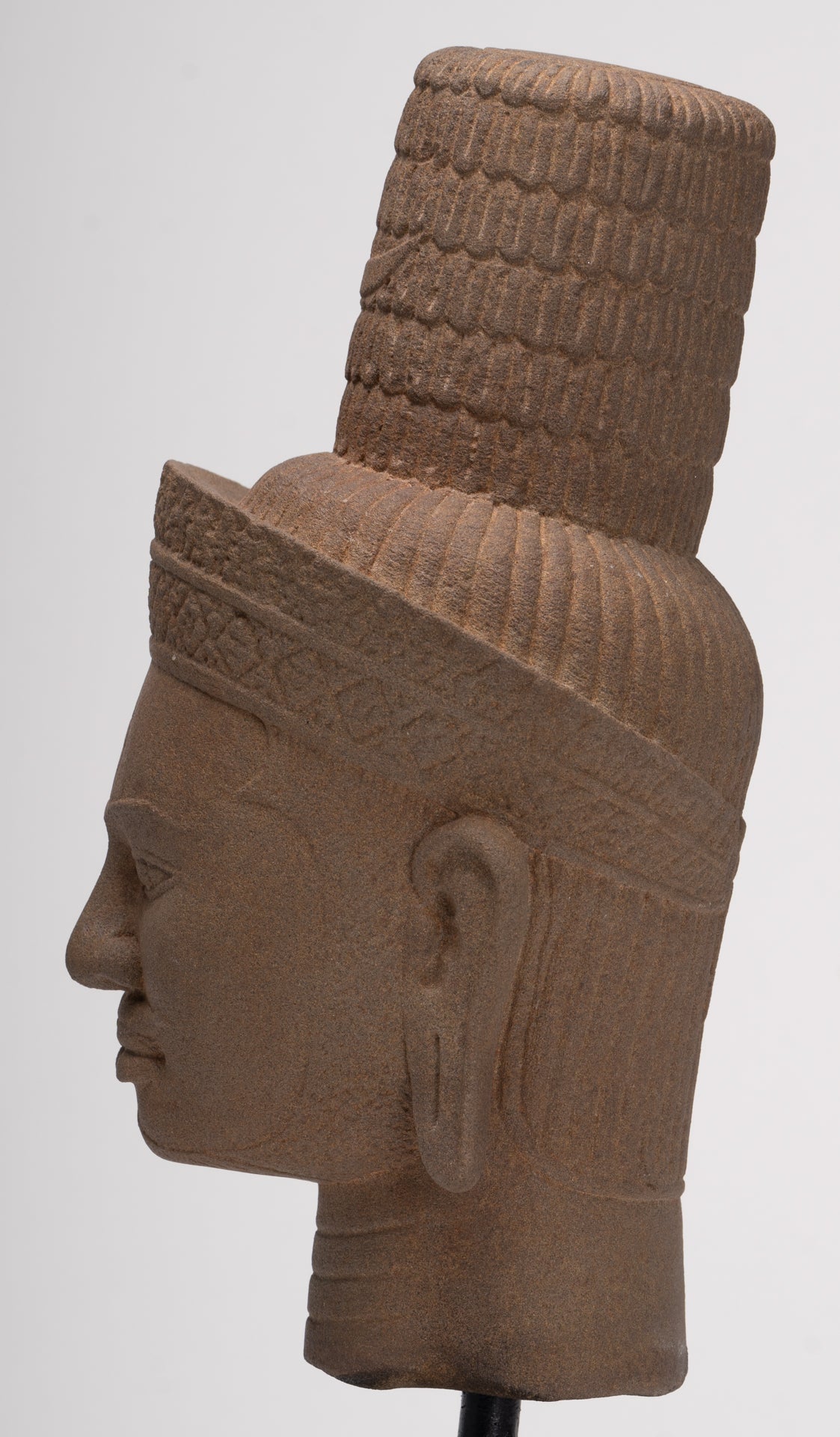
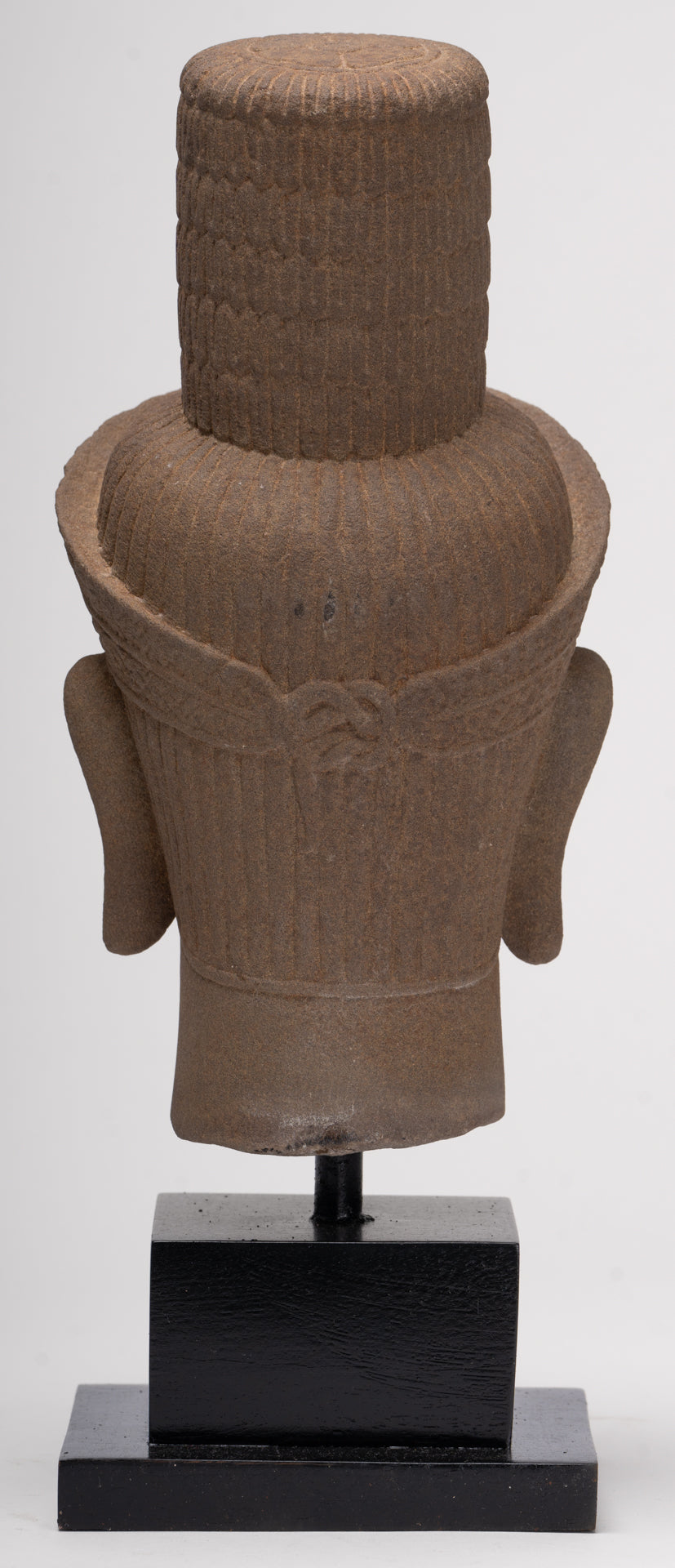
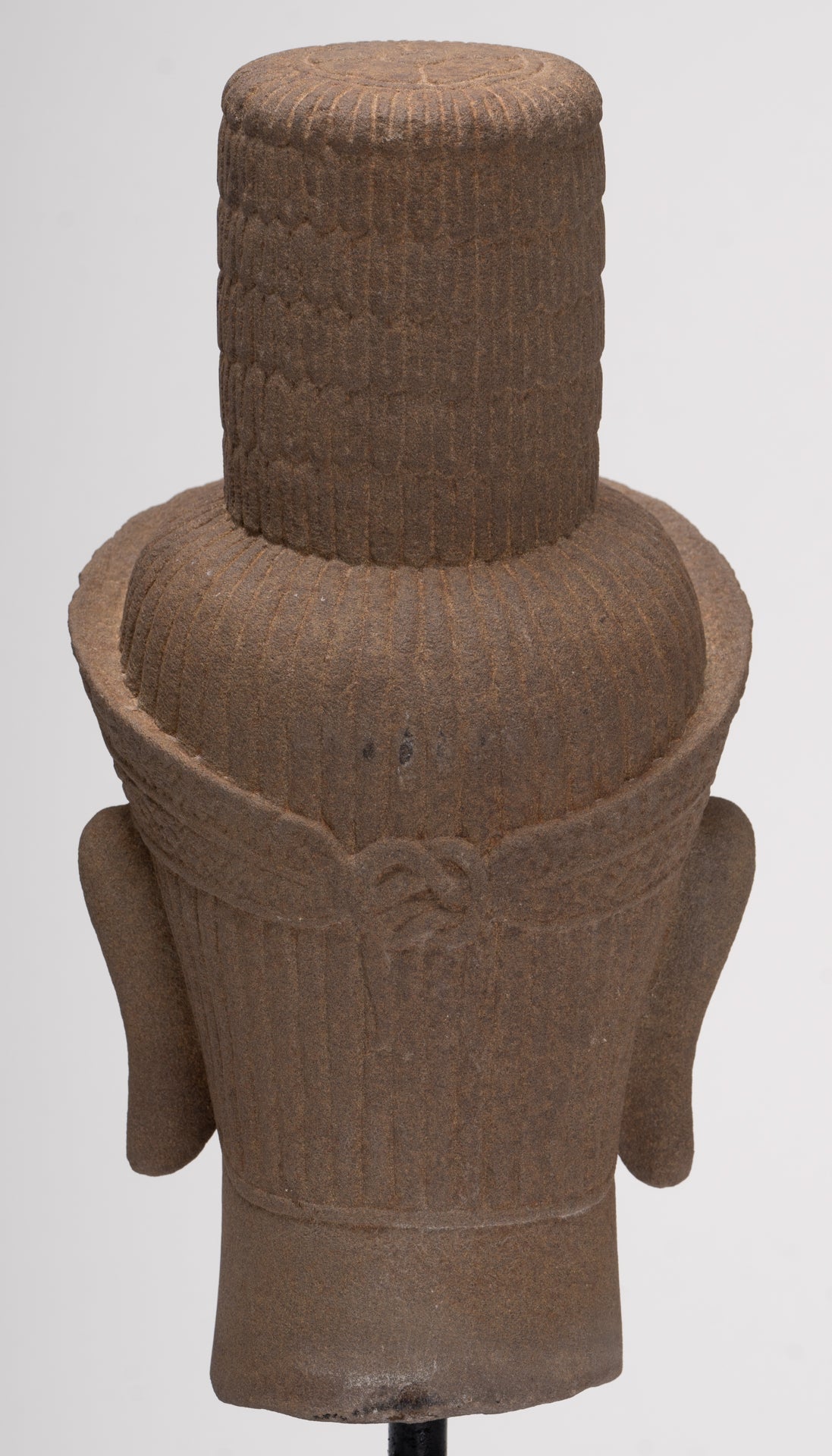
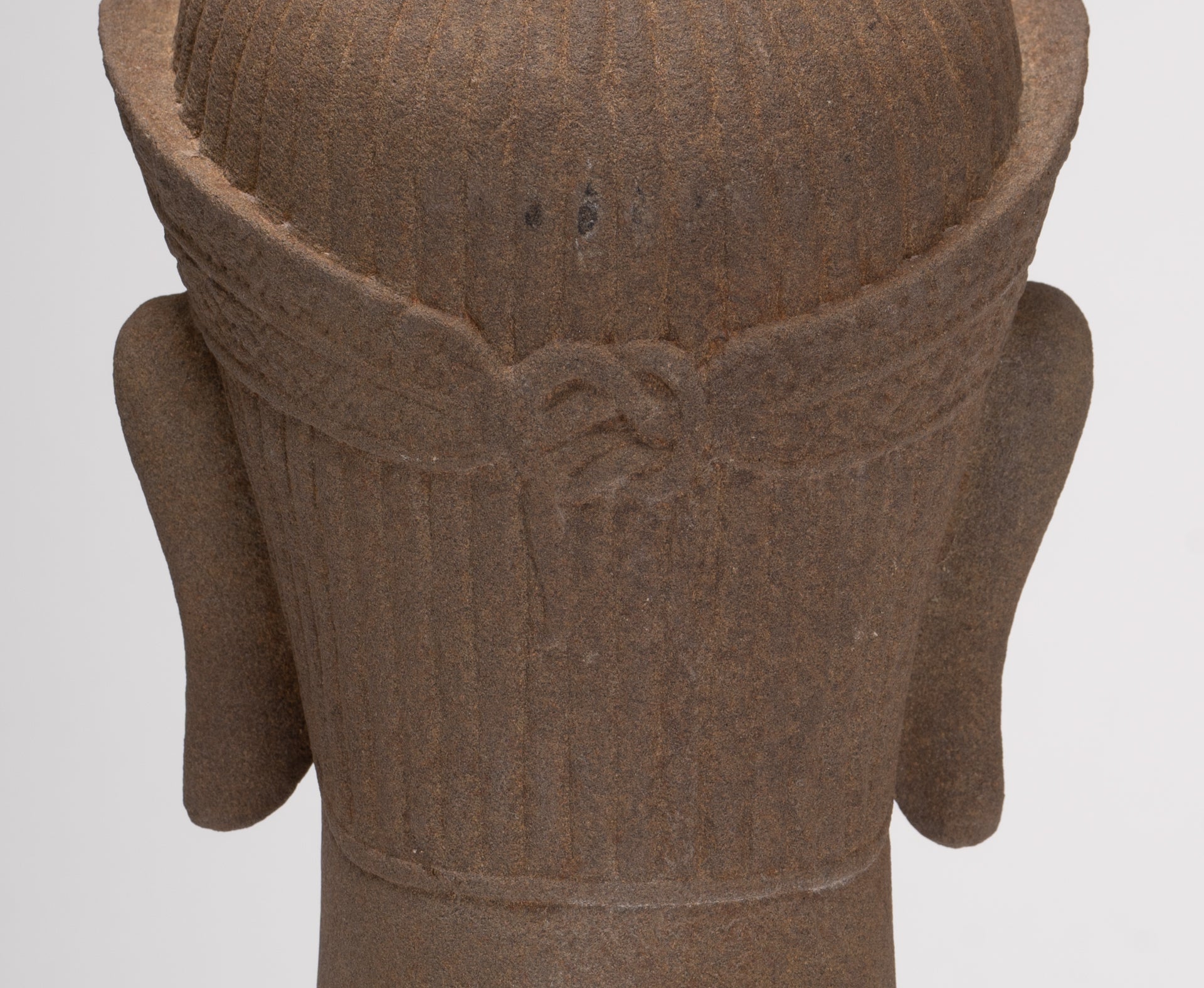
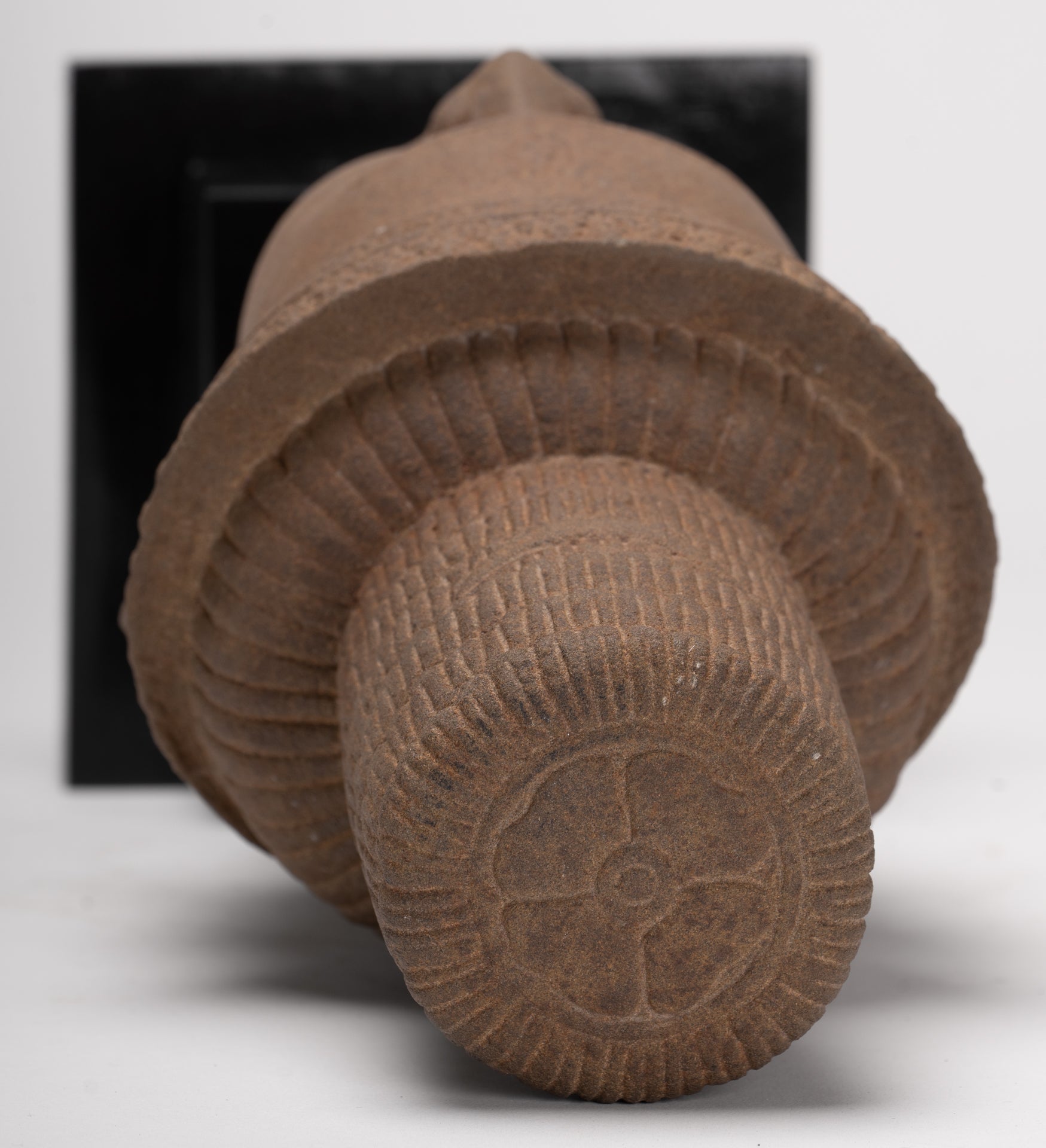
A broad ornamental diadem encircles the head, its patterned bands contrasting with the quieter modelling of the face. Above it rises a cylindrical jatamukuta, or crown of arranged hair, worked in successive rows of closely repeated strands. The reverse is also carefully articulated, showing the hair falling behind the diadem and a tied fastening at the back.
The stone’s warm brown tones and fine-grained appearance lend the carving a tactile quality. Mounted on a later wooden base with a metal support, the head can be appreciated as a distinct sculptural presence while its carved details remain the focus.
Dignified and contemplative, this Shiva head offers a striking focal point for a home, study, or collection of Khmer and Hindu sacred art.
Shiva: Stillness, Transformation and Renewal
Shiva is one of Hinduism’s principal deities, associated with asceticism, meditation, divine power, and transformation. His imagery frequently brings together apparently opposing qualities: inward stillness and dynamic energy, withdrawal from the world and the power through which it is renewed.
Here, that complexity is expressed without an elaborate narrative scene. The composed face suggests inward concentration, while the third eye and lunar emblem identify a presence extending beyond ordinary human perception. Historical Southeast Asian descriptions of Shiva similarly emphasise his three eyes and the crescent shining within his matted hair.
The Third Eye
The vertical eye at the centre of the forehead is a defining feature of Shiva. It expresses extraordinary divine vision and distinguishes the figure from an otherwise similar crowned male deity.
The Crescent Moon
The crescent carved into the hair is another important identifying emblem. Its placement within the tall jatamukuta is especially useful here, reinforcing the Shiva attribution independently of the face’s expression or moustache.
Bakheng-Style Character
The Bakheng style belongs to the early Angkorian artistic tradition, broadly associated with the late ninth and early tenth centuries. Documented examples include heads with sharply ridged brows, carefully organised facial features, ornamental diadems, and tall hair arrangements bearing Shiva’s emblems.
The present head recalls that tradition through its formal symmetry, defined brow line, cylindrical jatamukuta, and crescent moon. Its softer cheeks and gently smiling mouth temper the geometric organisation of the carving.
Key Features
-
Antique Cambodian Khmer-style stone head of Shiva.
-
Bakheng-style artistic character.
-
Height approximately 35 cm / 14 inches.
-
Vertical third eye carved into the forehead.
-
Crescent moon emblem on the front of the hair arrangement.
-
Tall cylindrical jatamukuta with repeated rows of incised strands.
-
Broad patterned diadem with a carved fastening at the reverse.
-
Almond-shaped eyes beneath a continuous, defined brow.
-
Softly shaped lips and a delicate moustache.
-
Elongated ears and incised neck bands.
-
Carefully worked reverse and upper surface.
-
Warm brown stone with a fine-grained appearance.
-
Mounted on a later wooden base with a metal support.
-
A distinctive display piece for a collection of Khmer or Hindu sculpture.
Frequently Asked Questions
What identifies this head as Shiva?
The combination of a vertical third eye and a crescent moon in the hair strongly supports the identification. Both are recognised attributes of Shiva and appear together on catalogued Bakheng-style examples.
Is the tall upper section a crown?
It is best described as a jatamukuta: a tall, crown-like arrangement of Shiva’s hair. The broad decorative band beneath it is the diadem. Distinguishing the two gives a more accurate description than calling the entire structure a tiara.
What does the crescent moon signify?
It is one of Shiva’s characteristic emblems and forms part of his traditional lunar imagery. On this head, its clearest role is iconographic: it helps identify the deity and connects the carving with established representations of Shiva wearing the moon in his hair.
Is the forehead mark a third eye or an urna?
The vertically shaped mark is consistent with Shiva’s third eye. It should not be called an urna, which is a different sacred forehead feature associated particularly with Buddhist imagery.
What does “Bakheng style” mean?
It refers to an early Angkorian artistic tradition associated broadly with the late ninth and early tenth centuries. Its sculptural language can include rigorous symmetry, sharply defined brows, formal facial modelling, and carefully ordered ornament.
Is the stone sandstone?
Its appearance is compatible with fine-grained sandstone, a material used for comparable Khmer Shiva heads.
Is the display base original?
No. The wooden base is a later presentation mount, with a metal support holding the head above it. It is separate from the stone sculpture and should not be described as part of an original temple setting.
How should the sculpture be handled?
Check how securely the head is attached to its support before moving it. Support the stone independently where necessary, and avoid lifting by the ears, diadem, or tall hair arrangement. Place the assembly on a stable surface with sufficient clearance above and around the carving.
SATISFACTION GUARANTEE - We have been offering Asian Art, through our website, for many years and are proud of the reputation we have developed for fair and honest listings. However, if for any reason, whatsoever, you are unhappy with your purchase please just let us know and we will provide a full refund. We want you to be 100% happy with your purchase.
-
-
The majority of orders will be shipped with DHL. This is a secure, express and fully tracked service.
Items less than 2Kg we typically ship using Royal Mail.
Once we receive your order we try to ship all orders the same or next working day.
Large and/or fragile pieces requiring palletising, specialist crating and/or extra packaging may take a little longer. Palletised shipments will be delivered curbside.
All orders over 35 GBP will be shipped free of charge.

-
We genuinely hope that all purchases delight.
However, if they do not, regardless of reason, we will refund all orders upon receipt of the unwanted item. Just notify us within 14 days of receiving your order that you wish to make a return and send the piece back to us with 30 days of delivery.


