



Meaningful Buddhist Statue Gift Ideas for Every Recipient
Meaningful Buddhist Statue Gift Ideas for Every Recipient
Quick Summary
A meaningful Buddhist statue gift matches the figure to the recipient and the space where it will live, not to a trend or a price tag. Choose a seated Buddha for a new meditator, a Happy Buddha for a housewarming, or Guanyin for someone in a hard season. Confirm the recipient welcomes Buddhist imagery and check the shelf space before choosing scale.
- A seated Buddha under 8 inches suits a beginner meditator's first altar or daily practice.
- Guanyin, the bodhisattva of compassion, fits get-well and condolence gifts for someone in a hard season.
- A standing Buddha reads as reassurance and approachability, making it good for an entryway.
- Ask about available shelf space first, since oversized figures often end up stored rather than displayed.
- Offer a statue with two hands and place it somewhere clean and elevated, never on the floor.
Table of Contents
- What Makes a Buddhist Statue a Meaningful Gift
- Buddha Statue Meaning: Reading the Figure Before You Give It
- Sitting Buddha Statue Meaning and Other Figure Types
- Buddhist Figurine Gift Ideas by Recipient
- Choosing a Buddha Statue for Home Placement
- Cultural Etiquette and Practical Selection Criteria
- Browse the HD Asian Art Collection for Your Gift
- Frequently Asked Questions
What Makes a Buddhist Statue a Meaningful Gift
A meaningful Buddhist statue gift works when the figure, the recipient, and the setting all line up. The pieces people treasure most are often the ones chosen for a specific person and a specific place, not picked at random from a shelf.
A statue is meaningful when the recipient will treat it as a symbol of reverence, reflection, or cultural respect rather than as a generic object. That single idea should guide every choice you make.
Below, we walk through how to read a figure, match it to a recipient, and place it well. We also cover the etiquette that separates a thoughtful gift from an awkward one.
Buddha Statue Meaning: Reading the Figure Before You Give It
Buddha statue meaning starts with the pose and the hands. A figure with one hand touching the earth signals steadfastness. Hands resting in the lap signal calm and meditation. The gesture tells you what the piece is for.
This is where most gift guides stop, and it is why so many statues end up as anonymous decor. Learn three or four gestures and you can choose a figure that says something specific to the person receiving it. For a fuller explanation of hand gestures and their symbolism, our guide to Buddhist mudras in art breaks down each one.
A common mistake is buying the largest, most ornate figure available. Size is not meaning. A modest, well-chosen piece that suits the recipient's space will be kept and displayed; an oversized one often gets stored.
Sitting Buddha Statue Meaning and Other Figure Types
Sitting Buddha statue meaning centers on meditation and inner stillness. A seated figure with crossed legs and a composed expression is the classic choice for a meditation space or a quiet corner.
Other figure types carry different associations:
- Standing Buddha: often read as reassurance and approachability, good for an entryway or a shared room
- Happy Buddha: the laughing, round-bellied figure associated with contentment and abundance, a warm gift for a new home
- Guanyin, also written Kuan Yin: the bodhisattva of compassion, a fitting choice for someone going through a hard season
- Tibetan and Zen figures: quieter, more austere pieces that suit a practitioner with an established practice
If you are weighing a seated figure against a standing one, our complete guide to sitting versus standing Buddha statue meaning goes deeper before you commit.
Buddhist Figurine Gift Ideas by Recipient
Matching the figure to the person matters more than matching it to a trend. The most useful way to organize a search is by recipient and occasion together, because the same figure can be right for one person and wrong for another. Here is how we would approach the most common gifting situations.
| Recipient | Occasion | Figure to Choose | Why It Fits |
|---|---|---|---|
| New homeowner | Housewarming | Small Happy Buddha or seated Buddha | Fits a shelf or entryway, reads as warmth and welcome |
| Beginner meditator | First altar or a new practice | Seated Buddha in meditation pose, under 8 inches | Simple to place, supports a daily sit without demanding a dedicated room |
| Established practitioner | Milestone or teacher appreciation | Tibetan or Zen figure in wood or bronze | Quieter and more austere, suits a practice that already has a shape |
| Someone in a hard season | Get-well or condolence | Guanyin | Associated with compassion and comfort |
| Collector of Asian art | Birthday or retirement | Tibetan or Southeast Asian piece | Rewards knowledge of regional style and craft |
| Buddhist friend | Any occasion | Modest figure in wood or resin | Respectful, easy to place, suits an existing altar |
| Coworker or acquaintance | Office or neutral gift | Small seated Buddha or a book on practice | Low-commitment, reads as thoughtful rather than devotional |
A few patterns are worth spelling out. For a recipient going through a difficult time, a small, simple figure in a meditation pose, in wood or resin, is often the kindest choice. It sits on a shelf without asking for space the person may not have. For a new home, a compact statue suits a shelf or a small altar; skip anything that needs a dedicated table unless you know the recipient has the room.
Budget is part of the decision. Pricing depends on the figure, its size, and its materials, so check HD Asian Art's website for current prices or a quote. A modest piece chosen for the person will usually be kept longer than an expensive one chosen for the price tag.
Best for: a meditator who keeps a small, uncluttered practice space. Skip if: the recipient has no interest in spiritual practice and would read the gift as decor alone.
Watch out: a figure that is too large for the recipient's shelf often ends up stored rather than displayed, so ask about available space before choosing scale.
Choosing a Buddha Statue for Home Placement
Choosing a Buddha statue for home placement comes down to three things: the surface, the light, and the room's purpose. A piece placed with care reads as intentional. A piece squeezed onto a crowded shelf reads as clutter.
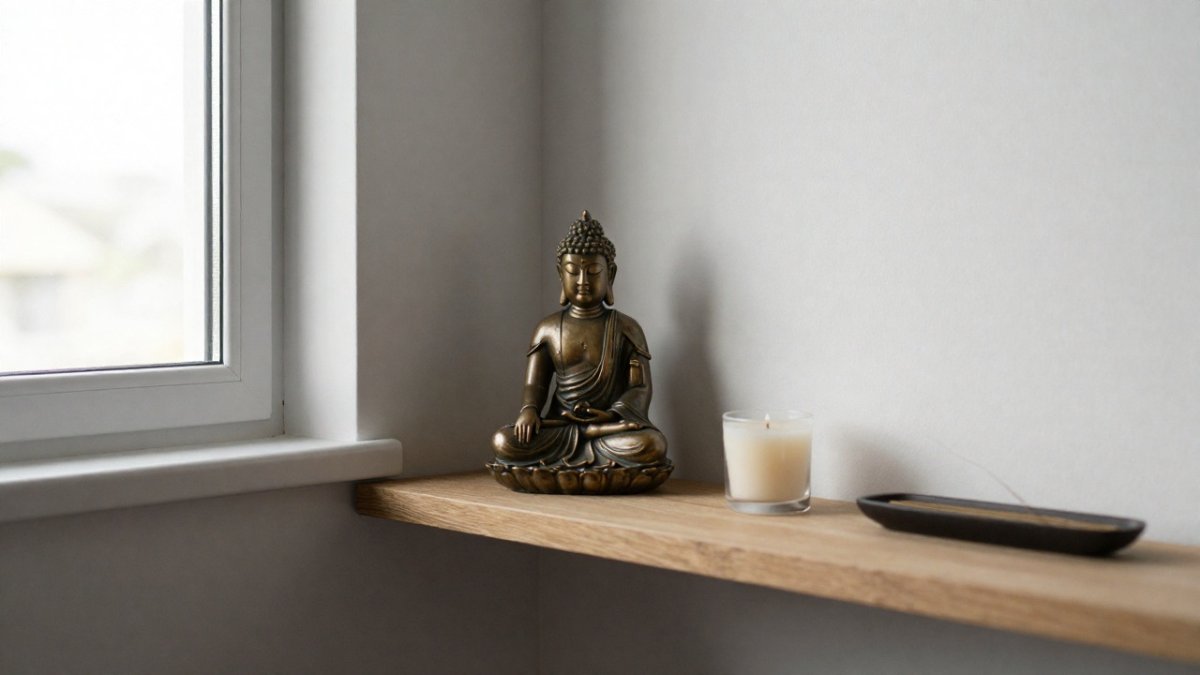
An entryway suits a standing figure, which greets visitors. A living room can carry a larger seated piece on a low console. A bedroom calls for something small and quiet. For a meditation corner in a small apartment, a compact statue works well; scale the piece to the shelf, not to the room.
If the recipient keeps a home altar, our guide to choosing a Buddha statue for your home altar covers matching figure and size to the space. Once the piece arrives, our advice on displaying Buddhist statues at home helps with placement and respect.
Watch out: placing a statue on the floor, in a bathroom, or at the foot of a bed is often read as disrespectful by practicing Buddhists. Ask before you assume.
Cultural Etiquette and Practical Selection Criteria
Gifting Buddhist imagery carries a responsibility that most gift roundups ignore. A statue may not suit every recipient, and treating a sacred figure as a novelty is the fastest way to cause offense. The two things worth getting right are cultural context and practical selection, and they reinforce each other.
Start with context. Buddhist imagery and customs vary across traditions and regions, and the same figure can carry different emphasis depending on where it comes from. A Tibetan figure, a Southeast Asian bronze, and a Japanese piece are not interchangeable, and a practitioner will often notice the difference. If you know the recipient's tradition, choose within it; if you do not, a simple seated Buddha or a Guanyin is the safer, more widely welcomed choice.
Presentation and handling matter as much as the figure. A statue is usually offered with two hands, unwrapped rather than thrust across a table, and placed somewhere clean and elevated rather than on the floor. Practicing Buddhists often prefer that a figure not be placed in a bathroom, at the foot of a bed, or in a busy thoroughfare. None of this is rigid, but following it signals respect.
On the practical side, a few criteria separate a good piece from a hollow one:
- Material and weight: a solid cast piece feels different in the hand than a thin, hollow one
- Detail in the face and hands: the expression and gesture should be crisp, not blurred
- Finish consistency: uneven patina or paint usually signals rushed work
- Proportion: a figure should look balanced from the front and the side
- Stability: the base should sit flat without rocking, especially on a narrow shelf
- Indoor versus outdoor use: confirm the material suits where it will live before you buy
- Source clarity: ask where the piece was made and by whom
On sourcing, be direct. If a seller cannot explain where a statue came from, that is your answer. Our buyer's guide to choosing authentic Buddhist statues walks through the questions worth asking before you buy.
A 2025 study on Buddhist statue modeling, published through Taylor & Francis research on Buddhist statue modeling, proposed four levels of detail for representing these figures, from simple two-dimensional symbols up to full three-dimensional form. The takeaway for a buyer is simple: detail is a choice, and a well-made piece shows deliberate care in the face and hands.
Watch out: a beautiful figure that will not sit steady on the recipient's shelf is a gift that gets moved to a closet, so check the base and the intended surface together.
Browse the HD Asian Art Collection for Your Gift
The right statue is the one chosen with the recipient in mind, and that takes a little care. We curate Buddhist and Hindu statues, including handpicked antique and contemporary pieces and a specialization in Khmer and Southeast Asian sculpture.
Every piece is chosen to enhance an altar, a meditation space, or a refined spiritual interior, and shipping is free so your gift arrives ready to place. If you are unsure which figure suits your recipient, start with the pose and work outward from there.
Browse the HD Asian Art collection and find a temple-inspired piece that brings calm and artistry to someone's home.
A meaningful gift asks you to slow down and choose well. That is exactly how we approach our collection: carefully curated Buddhist and Hindu statues, handpicked antique and contemporary pieces, and a focus on Khmer and Southeast Asian sculpture, all with free shipping. Browse HD Asian Art and choose a piece that will be kept, not stored.
Frequently Asked Questions
What makes a Buddhist statue a meaningful gift?
A Buddhist statue becomes meaningful when the recipient will treat it as a symbol of reverence, reflection, or cultural respect rather than a generic object. The figure's pose, mudra, and material all carry meaning, so matching those to the person's practice or heritage matters more than the size or finish. A small, simple meditation-pose figure in wood or resin can carry as much weight as a large bronze piece when the intention behind it is clear.
What does a sitting Buddha statue symbolize?
A sitting Buddha statue typically represents meditation, inner calm, and the moment of awakening. The specific hand gesture, or mudra, refines that meaning: hands resting in the lap suggest deep meditation, while a raised palm signals reassurance. Because the seated pose is the most recognizable form, it suits a gift for someone building a meditation practice or setting up a quiet corner at home.
Can you give a Buddha statue as a gift?
Yes, but suitability depends on the recipient. A statue is appropriate when the person will treat it as a symbol of reverence or cultural respect, not as generic decor. If you are unsure, ask whether they have a practice or an interest in Asian art. Pairing a statue with a singing bowl or mala beads shows you considered their practice rather than buying an ornament.
Which Buddha statue is suitable for a home altar?
A modest seated figure works well on most home altars, leaving room for candles and an incense holder. Choose a stable base and a material suited to the room's humidity. Place it at or slightly above eye level on a clean, uncluttered surface, and avoid the bedroom or bathroom. For small apartments, a shelf-sized figure keeps the arrangement proportionate.
What should I consider before gifting a Buddhist statue?
Check three things: the recipient's tradition, the space they have, and the figure's iconography. A Tibetan-style piece differs from a Southeast Asian Buddha or a Guanyin figure, and mixing them up can feel careless to someone raised with those images. Ask about display space so the statue fits a shelf or altar. Confirm the material and finish suit their climate, and choose a seller who can explain where the piece came from.

