



Ideen für die Dekoration von Meditationsräumen: Schaffen Sie Ihren Zufluchtsort
Ideen für die Dekoration von Meditationsräumen: Schaffen Sie Ihren persönlichen Zufluchtsort
Durch die Schaffung eines speziellen Meditationsraums wird Ihre Praxis zu einem Ritual, auf das Sie sich wirklich freuen. Untersuchungen zeigen, dass Praktiker mit speziellen Räumen 2,5-mal regelmäßiger üben als diejenigen ohne solchen. Egal, ob Sie eine Schlafzimmerecke umbauen oder ein ganzes Gästezimmer beanspruchen, die richtige Meditationsraumdekoration schafft echte Ruhe und nicht eine sterile Pinterest-Ästhetik.
Inhaltsverzeichnis
Warum Ihr Raum für die Achtsamkeitspraxis wichtig ist
Ihr Meditationsraum ist ein psychologischer Behälter, der Ihren Geist darauf vorbereitet, in einen ruhigeren Zustand zu wechseln, sobald Sie ihn betreten. Umweltpsychologische Untersuchungen zeigen, dass spezielle Räume schnellere mentale Übergänge auslösen als Mehrzweckräume. Wenn Sie täglich in derselben Ecke meditieren, verbindet Ihr Gehirn diesen Ort mit dem ruhigen Zustand, den Sie dort kultiviert haben.
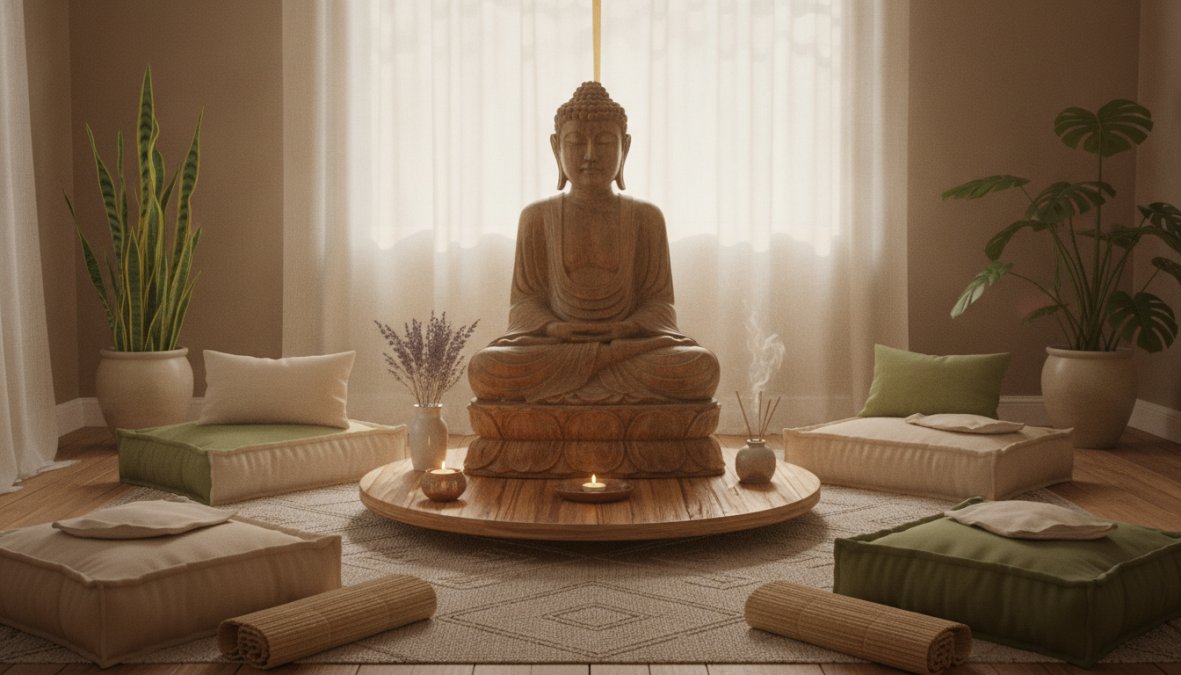
Jedes Element unterstützt Ihre Praxis oder lenkt davon ab. Ein vollgestopftes Regal stört die Konzentration. Grelles Licht erzeugt Spannung. Ein kalter Boden macht das Sitzen unangenehm. Umgekehrt verstärken sanftes Licht, bequeme Polsterung und bewusste Dekoration den Geisteszustand, den Sie pflegen.
Wählen Sie den richtigen Ort für Ihren Meditationsraum
Der von Ihnen gewählte Standort bestimmt alles Weitere über Ihr Zimmer. Ein schlechter Standort zwingt Sie dazu, gegen Ihre Umgebung zu arbeiten.
Schlafzimmerecken und Nischen
Eine Schlafzimmerecke erfordert nur minimale Einrichtung und bietet sofortige Privatsphäre. Die Herausforderung: Schlafzimmer wecken Schlafassoziationen, die Meditation eher schläfrig als aufmerksam machen können.
Schaffen Sie eine visuelle Grenze mit einem kleinen Raumteiler, einem speziellen Teppich oder einem niedrigen Bücherregal. Positionieren Sie Ihr Kissen nach Möglichkeit so, dass es vom Bett weg zeigt. Diese einfache Orientierungsänderung verhindert, dass die Meditation in die Schlafmüdigkeit abgleitet. Schlafzimmerecken eignen sich am besten für Abendmeditation oder sanfte Übungen wie Körperscans.
Spezielle Gästezimmer und Hinterhofbereiche
Ideal ist ein eigener Raum. Sie haben die vollständige Kontrolle über jedes Element und konkurrieren nicht mit Möbeln für andere Zwecke.
Gästezimmer, Arbeitszimmer oder fertige Keller werden zu kraftvollen Meditationsräumen. Hinterhofbereiche, überdachte Veranden oder Gartenstrukturen eignen sich hervorragend für die warmen Monate. Eine natürliche Umgebung vertieft die Meditation auf natürliche Weise. Planen Sie jedoch Wetter und Lärm ein, ein überdachter Bereich schützt Sie vor Regen und der Abstand zum Straßenlärm ist für die Konzentration von entscheidender Bedeutung.
Grundlagen des Meditationsraums: Möbel und Bodenaufbau
Der Komfort Ihres Körpers bestimmt, wie lange Sie sitzen können. Unwohlsein unterbricht die Meditation innerhalb von Minuten.
Meditationskissen und ergonomische Unterstützung
Ein Meditationskissen ist grundlegend. Das Sitzen auf dem Boden ohne Unterstützung rundet Ihre Wirbelsäule, drückt Ihren unteren Rücken zusammen und verursacht innerhalb von 10–15 Minuten Schmerzen.
Das Still Sitting Zafu-Kissen bietet traditionelle, hochwertige Unterstützung für eine aufrechte Haltung. Seine plissierten Seiten sorgen für einen stabilen Sitz, während die Füllung aus Bio-Buchweizenschalen festen Halt bietet, der seine Form auch nach jahrelanger täglicher Praxis behält. Mit 54 $ ist es eine Investition, die sich durch längere, schmerzfreie Sitzungen amortisiert.
Ergonomische Unterstützung ist wichtiger als Ästhetik. Ein schönes Kissen, das Ihre Wirbelsäule nicht richtig stützt, ist kontraproduktiv.
Fußmatten und Teppiche für Komfort
Eine Bodenmatte oder ein Teppich definiert Ihren Meditationsraum optisch, sorgt für Polsterung und signalisiert den Übergang in die Praxis.
Tatami-Matten schaffen eine authentische Grenze. Sie bestehen aus natürlichem Binsengras, bieten festen Halt und schaffen eine deutliche „heilige“ Grenze innerhalb eines größeren Raumes. Für kleinere Räume funktioniert eine einfache Yogamatte oder ein Meditationsteppich genauso gut. Der Schlüssel liegt in der Konsistenz: Verwenden Sie bei jeder Sitzung dieselbe Matte, damit Ihr Körper den sensorischen Hinweis erkennt.
| Kissentyp | Am besten für | Startpreis | Hauptmerkmal |
|---|---|---|---|
| Sitzt immer noch Zafu | Traditionelle Praxis | $54 | Buchweizenfüllung, langlebig |
| Manduka-Runde | Komfort + Pflegeleichtigkeit | $68 | Waschbarer Bezug |
| Lanna Passa Hanf | Umweltbewusst | $71 | Nachhaltige Materialien |
Ideen für die Beleuchtung von Meditationsräumen: Natürliche und stimmungsvolle Optionen
Die Beleuchtung ist das stärkste Gestaltungselement in Ihrem Meditationsraum. Grelle Oberlichter erzeugen Spannung. Schwaches, warmes Licht lädt zum Entspannen ein.
Himalaya-Salzlampen und warmes Leuchten
Himalaya-Salzlampen strahlen ein sanftes, orangefarbenes Leuchten aus, das auf natürliche Weise Ruhe hervorruft. Handgeschnitzt aus reinem Salz schaffen sie die ästhetischste Beleuchtung für Meditationsräume.
Eine 5–8 kg schwere Lampe passt in die meisten Schlafzimmerecken; Größere Räume profitieren von 10 kg oder mehr. Die warme Farbtemperatur (ca. 2700 K) ahmt das Licht des Sonnenuntergangs nach und signalisiert Ihrem Nervensystem, in den parasympathischen Modus herunterzuschalten. Warmes Licht reduziert die Cortisolproduktion und unterstützt den durch Meditation geförderten Geisteszustand.
Ein praktischer Hinweis: Salzlampen erfordern gelegentliches Staubwischen und eine trockene Umgebung. In feuchten Klimazonen nehmen sie Feuchtigkeit auf und verschlechtern sich.
Kerzen, Dimmer und Optimierung des natürlichen Lichts
Kerzenlicht sorgt für das wärmste und natürlichste Licht, das es gibt. Eine einzelne Kerze schafft Brennpunkte und strahlt gleichzeitig Lichtfrequenzen aus, auf die Ihr Nervensystem reagiert.
Dimmer an vorhandenen Deckenleuchten bieten eine budgetfreundliche Steuerung. Lassen Sie das Licht während des Trainings mit 20–30 % Helligkeit laufen. Natürliches Licht durch Fenster eignet sich wunderbar für die Meditation am Tag. Positionieren Sie Ihr Kissen so, dass es weiches, indirektes Sonnenlicht empfängt und nicht grelle direkte Strahlen.
Ideen für kleine Meditationsräume: Begrenzte Räume maximieren
Kleine Wohnungen und Wohngemeinschaften erfordern kreative Lösungen. Die Einschränkung ist eine Gelegenheit, mit Absicht zu entwerfen.
Akustische Überlegungen für friedlichen Klang
Lärmbelästigung ist die häufigste Beschwerde in kleinen Räumen. Der Zimmerwasserbrunnen Relaxus Ohm löst dieses Problem auf elegante Weise. Sein sanfter Wasserfluss überdeckt Hintergrundgeräusche und schafft gleichzeitig einen natürlichen Hörschwerpunkt. Für 60 US-Dollar ist es kompakt genug für kleine Ecken und wird zum Meditationsanker.
Bei anhaltendem Außenlärm sollten Sie Geräte mit weißem Rauschen oder Naturgeräusch-Apps in Betracht ziehen. Akustikpaneele oder schwere Vorhänge absorbieren den Schall effektiv. Bei starkem Lärm kann ein einzelnes Paneel den Außenlärm um 30–40 % reduzieren.
Vertikale Aufbewahrung und Wanddekoration
In kleinen Räumen werden Wände zu Ihrer Aufbewahrungs- und Designfläche. Schwebende Regale über Ihrem Meditationsbereich bieten Platz für spirituelle Statuen, Räucherstäbchen oder Pflanzen, ohne Bodenfläche zu beanspruchen.
Wandteppiche dienen einem doppelten Zweck: Sie sind schöne Blickpunkte und absorbieren Schall. Ein Mandala-Wandteppich oder einfaches Textil sorgt für visuelle Weichheit und reduziert gleichzeitig akustische Reflexionen, die den Lärm verstärken.
Spirituelle Statuen, Wandteppiche und heilige Dekorationen
Spirituelle Elemente verwandeln einen Meditationsraum in einen Zufluchtsort. Dies sind visuelle Anker, die Ihre Praxis vertiefen.
Buddhistische und hinduistische Statuen als Schwerpunkte
Ein Meditationsraum profitiert von einem klaren Schwerpunkt. Ihr Blick bleibt während der Meditation auf natürliche Weise auf einem einzelnen Objekt hängen und prägt so Ihren Geisteszustand.
A Buddha-Statue Die Meditationshaltung lädt auf natürliche Weise zur Stille ein. Eine Lakshmi- oder Ganesha-Statue bringt Erdung und Wohlstandsbewusstsein. Wählen Sie eines, das zu Ihrer Praxis passt.
Positionieren Sie Ihre Statue beim Sitzen auf Augenhöhe, direkt in Ihrer Sichtlinie. Dieser Brennpunkt wird zu einem Anker für Ihre Aufmerksamkeit, insbesondere während der frühen Übung, wenn die Gedanken abschweifen.
Wandteppiche und Mandala-Kunst
Mandala-Wandteppiche bieten visuelle Komplexität, die paradoxerweise die Konzentration unterstützt. Die komplizierte Geometrie lenkt Ihre Aufmerksamkeit nach innen und verhindert, dass Ihre Gedanken zu äußeren Ablenkungen abschweifen.
Ein Wandteppich hinter Ihrem Kissen schafft einen visuellen Rahmen, der Ihren Meditationsraum vom Rest des Raumes isoliert. Es erfüllt auch akustische Funktionen, Stoff absorbiert Schall und reduziert Echos und das Eindringen von Außenlärm.
Wählen Sie Designs, die zu Ihrer Praxis passen. Geometrische Mandalas unterstützen Konzentration und Klarheit. Von der Natur inspirierte Designs laden zur Ruhe und Verbundenheit ein.
Natur, Pflanzen und Aromatherapie für Wohlbefinden
Natürliche Elemente bilden die sensorische Grundlage für tiefe Meditation.
Topfsukkulenten und lebende Pflanzen
Lebende Pflanzen verwandeln einen Meditationsraum von statisch in vital. Sie fügen Sauerstoff hinzu, verbessern die Luftqualität und sorgen für eine visuelle Weichheit, auf der das Auge ruht.
Sukkulenten funktionieren wunderbar, weil sie nur minimale Pflege erfordern und bei verschiedenen Lichtverhältnissen gedeihen. Eine kleine Gruppe von Jadepflanzen oder Aloe sorgt für visuelles Interesse, ohne Aufmerksamkeit zu erregen. Größere Pflanzen wie Pothos oder Schlangenpflanzen wirken in Ecken und schaffen natürliche Grenzen, während sie gleichzeitig die Luft filtern.
Ihr Nervensystem erkennt den Unterschied zwischen lebenden und künstlichen Pflanzen. Echte Pflanzen tragen subtile Lebensenergie in sich, die künstlichen Pflanzen fehlt.
Diffusoren für ätherische Öle und Weihrauch
Der Duft ist der direkteste Weg zu Emotionen und Erinnerungen. Das olfaktorische System ist direkt mit dem limbischen System, dem emotionalen Zentrum des Gehirns, verbunden.
Diffusoren für ätherische Öle sorgen für einen kontrollierten, anpassbaren Duft ohne Weihrauchrauch. Lavendel, Sandelholz und Weihrauch sind traditionelle Meditationsdüfte, die das Nervensystem auf natürliche Weise beruhigen. Verwenden Sie sie regelmäßig, damit Ihr Gehirn den Duft mit Ihrem Übungszustand verknüpft.
Der Duft sollte so dezent sein, dass man ihn nach ein paar Minuten vergisst. Wenn Sie den Geruch nach 10 Minuten Meditation immer noch wahrnehmen, ist er zu stark.
Klang, Privatsphäre und die Schaffung einer ruhigen Atmosphäre
Ein Meditationsraum erfordert sowohl physische als auch psychische Privatsphäre. Externe Störungen unterbrechen den Fokus; Die Angst vor Störungen hindert Sie daran, sich vollständig in die Praxis einzuleben.
Wasserfontänen und Geräuschmaskierung
Wassergeräusche beruhigen auf natürliche Weise das Nervensystem. Die sanfte, rhythmische Qualität spiegelt den Atem wider und schafft einen Hörschwerpunkt, der die Meditation unterstützt.
Der Zimmerbrunnen Relaxus Ohm vereint Funktionalität mit Ästhetik. Positionieren Sie es so, dass Sie es deutlich hören können, aber keine visuelle Ablenkung verursachen.
Einen anderen Ansatz bieten Thomann-Kristallklangschalen. Das Anschlagen einer Klangschale zu Beginn und am Ende der Meditation schafft eine rituelle Grenze, während die Resonanz Ihr Nervensystem beruhigt.
Raumteiler und Sichtschutz
Physische Privatsphäre unterstützt psychologische Privatsphäre. Ein Raumteiler signalisiert anderen, dass Sie nicht gestört werden dürfen, und schafft gleichzeitig eine visuelle Grenze, die Ihnen hilft, zur Ruhe zu kommen.
Einfache Stoffschirme funktionieren wunderbar. Sie erfordern keine dauerhafte Installation, sind erschwinglich und schaffen eine eigene „Meditationszone“ innerhalb eines größeren Raums. Für dauerhafte Lösungen sorgen ein Bücherregal, eine Gardinenstange mit Stoff oder eine Schiebetür für eine größere Trennung.
Ein echter Meditationsraum verwandelt Ihre Praxis von etwas, das Sie tun, in etwas, das Sie bewohnen. Jedes Element, von der Kissenhöhe über die Wandfarbe bis hin zur Statue, auf die Sie sich konzentrieren, bestimmt, ob Ihre Praxis sich vertieft oder stagniert.
Häufig gestellte Fragen
Was sollte in einem Meditationsraum sein, um die richtige Atmosphäre zu schaffen?
Zur unverzichtbaren Dekoration des Meditationsraums gehören ein bequemes Kissen oder Bodenkissen zur Unterstützung der richtigen Körperhaltung, sanfte Umgebungsbeleuchtung (Salzlampen oder Kerzen), beruhigende Wandkunst oder Wandteppiche sowie spirituelle Statuen als Mittelpunkt. Fügen Sie Topfpflanzen für natürliche Energie, einen Diffusor für ätherische Öle für die Aromatherapie und Klangelemente wie eine Wasserfontäne hinzu. Überlagern Sie diese Elemente, um einen ruhigen Zufluchtsort zu schaffen, der sowohl körperliches Wohlbefinden als auch geistige Konzentration während Ihrer Achtsamkeitspraxis unterstützt.
Wie richte ich einen Meditationsraum in einem kleinen Raum oder einer Ecke ein?
Priorisieren Sie bei Ideen für kleine Meditationsräume den vertikalen Raum: Verwenden Sie wandmontierte Regale als Dekoration, hängen Sie Wandteppiche auf, um den Bereich abzugrenzen, und wählen Sie kompakte Möbel wie runde Meditationskissen. Fügen Sie eine kleine Wasserfontäne oder eine Geräuschfunktion hinzu, um Hintergrundgeräusche in engen Räumen zu überdecken. Nutzen Sie Raumteiler oder Paravents, um Privatsphäre zu schaffen, ohne Platz zu beanspruchen. Sorgen Sie für eine angemessene Akustikbehandlung mit weichen Materialien wie Teppichen und Kissen, um den Schall zu absorbieren, sodass selbst eine Schlafzimmerecke wie ein vollkommener Zufluchtsort für Ihre Praxis wirkt.
Welche Rolle spielt die Beleuchtung bei der Gestaltung von Meditationsräumen?
Ideen für die Beleuchtung von Meditationsräumen konzentrieren sich darauf, eine ruhige, gelassene Atmosphäre zu schaffen. Natürliches Licht während des Tagestrainings ist ideal, aber ergänzen Sie es mit warmen Farbtönen wie Himalaya-Salzlampen oder dimmbaren Kerzen für Abendsitzungen. Vermeiden Sie grelles Deckenlicht, das die Ruhe stört. Sanftes, warmes Licht löst Entspannungsreaktionen aus und unterstützt die Achtsamkeit, indem es visuellen Stress reduziert. Kombinieren Sie Ihre Beleuchtung mit mehreren Quellen, damit Sie die Helligkeit je nach Tageszeit und Ihren Meditationszielen anpassen können und so ein Gleichgewicht zwischen anregenden Morgenübungen und entspannenden Abendsitzungen schaffen.
Kann ich in einem kleinen Meditationsraum spirituelle Statuen und von Tempeln inspirierte Dekoration verwenden?
Ja, spirituelle Statuen dienen selbst auf engstem Raum als kraftvolle Brennpunkte. Wählen Sie ein Statement-Stück, beispielsweise eine Buddha- oder Hindu-Statue, statt mehrerer Gegenstände, um visuelle Unordnung zu vermeiden. Platzieren Sie es auf Augenhöhe, wenn Sie auf Ihrem Meditationskissen sitzen. Von Tempeln inspirierte Dekorationen wie kleine Altäre oder Statuen vermitteln ein Gefühl der Ehrfurcht und Absicht, ohne viel Platz zu beanspruchen. Kombinieren Sie es mit ergänzenden Elementen wie Räucherstäbchenhaltern oder einem kleinen Wandteppich, um die heilige Atmosphäre zu verstärken und gleichzeitig die Abmessungen Ihres Raumes zu respektieren.
