



Buddha-Statue: Ultimativer Kaufratgeber und Platzierung
Inhaltsverzeichnis
Buddha-Statue: Ultimativer Kaufratgeber und Platzierung
Eine Buddha-Statue dient weit mehr als nur dekorativer Kunst, sie ist ein spiritueller Anker, der Absicht, Symbolik und kontemplative Energie in Ihr Zuhause bringt. Das Verständnis der Ikonographie und Ihrer spezifischen Bedürfnisse hilft Ihnen bei der Auswahl eines Stücks, das wirklich zu Ihrem Raum und Ihrer Praxis passt.
Verständnis der Symbolik und Mudras der Buddha-Statue
Die in a eingebettete Symbolik Buddha-Statue beginnt mit den Händen. Mudras sind heilige Handgesten, die bestimmte spirituelle Lehren und Absichten vermitteln.
Die Dharmachakra Mudra stellt das Drehen des Rades des Dharma dar, wobei beide Hände auf Brusthöhe erhoben werden und mit Daumen und Zeigefinger Kreise bilden. Dies symbolisiert die Weitergabe von Wissen und ruft geistige Klarheit und Erleuchtung hervor.
Die Bhumisparsha Mudra zeigt den Buddha, wie er mit der rechten Hand die Erde berührt, wobei die Finger nach unten zeigen. Dies stellt den Moment des Erwachens dar und ruft die Erde auf, Zeuge der Erleuchtung zu werden. Es ist eng mit Erdung, Stabilität und spirituellem Erwachen verbunden.
Die Abhaya-Mudra zeigt die erhobene rechte Hand mit der Handfläche nach außen auf Schulterhöhe, eine Geste der Furchtlosigkeit und des Schutzes. Dieses Mudra ist ideal, wenn Sie spirituellen Schutz suchen oder einen Zufluchtsort schaffen möchten.
Die Varada-Mudra zeigt die gesenkte Hand mit der Handfläche nach oben und symbolisiert Mitgefühl, Großzügigkeit und die Gewährung von Segen. Dieses Mudra erscheint in Bodhisattva-Figuren, erleuchteten Wesen, die ihre eigene endgültige Befreiung hinauszögern, um anderen zu helfen.
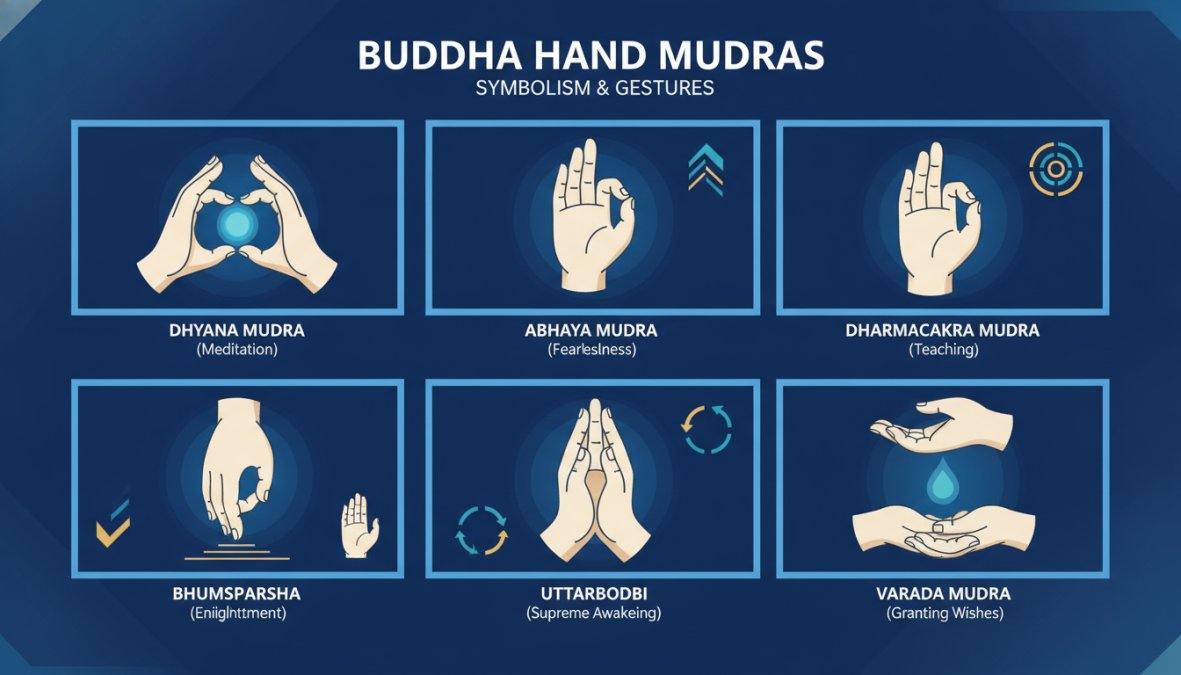
Das Verstehen dieser Gesten verändert die Art und Weise, wie Sie mit Ihrer Buddha-Statue interagieren. Anstatt es als allgemeine spirituelle Dekoration zu betrachten, beschäftigen Sie sich jedes Mal, wenn Sie es sehen, mit einer bestimmten Lehre oder Absicht.
Arten von Buddha-Statuen: Finden Sie die perfekte Ergänzung
Gautama Buddha, der historische Buddha, der vor 2.500 Jahren lebte, wird typischerweise mit gelassener Miene, verlängerten Ohrläppchen und einem sanften Lächeln dargestellt. Seine Statuen vermitteln Weisheit, Frieden und das Erreichen von Aufklärung, Damit sind sie ideal für Meditationsräume.
Bodhisattva-Figuren stellen erleuchtete Wesen dar, die sich entschieden haben, auf der Welt zu bleiben, um anderen zu helfen, Erleuchtung zu erlangen. Avalokiteshvara, der Bodhisattva des Mitgefühls, erscheint oft mit mehreren Armen, was seine Fähigkeit symbolisiert, unzähligen Wesen zu helfen. Diese Statuen rufen Mitgefühl und Verbundenheit hervor.
Die physische Form ist gleichermaßen wichtig. A sitzender Buddha steht für Meditation und Konzentration nach innen, ideal für Altäre oder Meditationsräume. A stehender Buddha vermittelt Unterricht und aktives Engagement, geeignet für Eingangsbereiche. A liegender Buddha stellt den Buddha dar, der Parinirvana betritt und Frieden und Vollendung symbolisiert, am besten in speziellen Meditationsräumen oder Gärten.
Regionale Kunststile haben einen erheblichen Einfluss auf die Authentizität. Thailändische Buddha-Statuen zeichnen sich durch längliche Proportionen und spitze Flammen auf dem Kopf aus. Kambodschanische Khmer-Statuen zeigen breitere Gesichter mit komplizierten architektonischen Details. Chinesische und japanische Statuen tendieren zu runderen Proportionen. Tibetische Statuen weisen häufig aufwändige Verzierungen auf.
Achten Sie bei der Echtheitsprüfung auf handwerkliche Details. Handgeschnitzte Statuen weisen natürliche Variationen in der Symmetrie auf; Perfekt symmetrische Stücke werden oft in Massenproduktion hergestellt. Achten Sie auf Werkzeugspuren, die mit traditionellen Schnitztechniken übereinstimmen. Authentische antike Stücke weisen Patina und altersgemäße Gebrauchsspuren auf.
Materialien, Handwerkskunst und Echtheitsprüfung
Das von Ihnen gewählte Material beeinflusst sowohl die Ästhetik als auch die Langlebigkeit, insbesondere bei Outdoor-Stücken.
Stein und Marmor sind traditionelle Optionen, die wunderschön altern und im Laufe der Jahre eine Patina entwickeln. Marmor ermöglicht feinere Detailarbeiten, erfordert jedoch eine sorgfältige Handhabung. Steinstatuen eignen sich hervorragend für Gärten, da sie der Witterung standhalten.
Bronze bietet Haltbarkeit und einen unverwechselbaren warmen Ton, der sich mit der Zeit entwickelt. Bronze entwickelt im Außenbereich eine natürliche grüne Patina und widersteht Witterungseinflüssen besser als die meisten Materialien. Hochwertiger Bronzeguss erzeugt feine Oberflächendetails, authentischer Bronzeguss ist jedoch teuer.
Holz sorgt für Wärme und natürliche Schönheit, besonders im Innenbereich. Handgeschnitzte Holzstatuen zeugen von außergewöhnlicher Kunstfertigkeit. Holz muss regelmäßig gepflegt und gelegentlich geölt werden, um Risse zu vermeiden.
Harz wird für zeitgenössische Statuen immer beliebter. Hochwertiges Harz kann zu einem Bruchteil der Kosten die Stein- oder Bronzeoptik nachbilden und ist leicht und wetterbeständig. Der Nachteil: Harz fehlt die spirituelle Anziehungskraft natürlicher Materialien.
Um die Echtheit zu überprüfen, untersuchen Sie den Sockel und die Rückseite der Statue. Diese Bereiche verraten die Herstellungsmethoden. Handgeschnitzte Stücke weisen sichtbare Meißelspuren und natürliche Unregelmäßigkeiten auf. Gussteile weisen Nahtlinien an den Stellen auf, an denen die Formen zusammengefügt wurden. Erkundigen Sie sich direkt beim Verkäufer nach Materialzusammensetzung und Herkunft.
Informieren Sie sich über den Ruf des Verkäufers. Etablierte Händler bieten detaillierte Beschreibungen, Materialzertifizierungen und zahlreiche Fotos. Vermeiden Sie Verkäufer, die vage Ausdrücke wie „inspiriert von“ oder „im Stil von“ verwenden.
Bei antiken Statuen erzählt Patina eine Geschichte. Echte Alterung zeigt gleichmäßige Abnutzungsmuster in Bereichen, die von Natur aus stärker behandelt werden müssten. Wenn Sie eine Antiquität kaufen, fordern Sie hochauflösende Fotos von etwaigen Schäden oder Reparaturen an.
Platzierungsregeln für Buddha-Statuen und Feng-Shui-Prinzipien
Wo Sie Ihre positionieren Buddha-Statue beeinflusst dramatisch seine spirituelle Wirkung und den Energiefluss in Ihrem Raum.
Platzierung des Innenaltars und des Meditationsraums sollte die Statue sowohl im wörtlichen als auch im übertragenen Sinne erhöhen. Positionieren Sie Ihre Buddha-Statue im Sitzen auf einem Regal, einem Tisch oder einem speziellen Altar auf oder leicht über Augenhöhe. Stellen Sie sicher, dass die Statue in den Raum zeigt und nicht in Richtung einer Wand. Halten Sie den Bereich davor frei von Unordnung. Vermeiden Sie es, Buddha-Statuen in Badezimmern, Schlafzimmern, Küchen oder Essbereichen aufzustellen, da diese Räume unterschiedliche Energien in sich tragen, die im Widerspruch zur spirituellen Praxis stehen.
Platzierung im Garten im Freien erfordert neben spiritueller Positionierung auch Wetterfestigkeit. Platzieren Sie Garten-Buddha-Statuen dort, wo sie das Morgenlicht empfangen. Vermeiden Sie in extrem heißen Klimazonen direkte Nachmittagssonne, da diese zu Rissen im Stein oder zum Ausbleichen des Harzes führen kann. Stellen Sie sicher, dass die Statue auf einem stabilen, ebenen Boden steht, vorzugsweise leicht erhöht, um Wasseransammlungen zu vermeiden.
In Feng ShuiDie Richtungspositionierung hat bestimmte Bedeutungen. Eine nach Osten ausgerichtete Buddha-Statue ruft Neuanfänge und Wachstum hervor und eignet sich ideal für Eingangsbereiche. Südausrichtung fördert den Wiedererkennungswert, geeignet für Wohnräume. Die Ausrichtung nach Westen fördert Entspannung und Ruhe und ist für Schlafzimmer geeignet. Die Nordausrichtung unterstützt tiefes Nachdenken und beruflichen Aufstieg und eignet sich gut für Studienbereiche.
Stellen Sie niemals eine Buddha-Statue direkt gegenüber der Eingangstür auf. Platzieren Sie es stattdessen an der Seite, wo es zum Brennpunkt wird, ohne den Energiefluss zu blockieren. Positionieren Sie die Statue in Wohnzimmern dort, wo sie auf natürliche Weise die Aufmerksamkeit auf sich zieht, ohne dass Sie den Kopf umständlich drehen müssen.
Einen heiligen Raum schaffen Die Umgebung Ihrer Buddha-Statue verstärkt deren spirituelle Präsenz. Ein kleiner Tisch oder ein Regal wird zum Altar. Fügen Sie eine Kerze hinzu, um Licht zu erzeugen und Ihre Absichten festzulegen. Frische Blumen stehen für vergängliche Schönheit. Weihrauch trägt Gebete nach oben. Eine einfache Opferschale kann Wasser, Reis oder Blumen enthalten.
Kultureller Respekt und ethische Darstellungspraktiken
Das Aufstellen einer Buddha-Statue in Ihrem Zuhause erfordert sorgfältige Überlegungen im Hinblick auf kulturelle Aneignung und respektvolle Anrufung.
Vermeidung kultureller Aneignung beginnt mit der Bildung. Eine Buddha-Statue repräsentiert 2.500 Jahre buddhistische Philosophie, Praxis und spirituelle Errungenschaften. Machen Sie sich vor dem Kauf mit den grundlegenden buddhistischen Konzepten vertraut: den Vier Edlen Wahrheiten, dem Achtfachen Pfad und dem Konzept der Erleuchtung.
Behandeln Sie Ihre Buddha-Statue mit Ehrfurcht. Stellen Sie es nicht in Badezimmern oder Schlafzimmern auf. Verwenden Sie es nicht als Ablage für andere Gegenstände und lassen Sie es nicht zu, dass Gäste es gelegentlich berühren. Bringen Sie den Kindern die Bedeutung der Statue bei, anstatt sie wie ein Spielzeug zu behandeln.
Respektvolle Anrufung bedeutet, sich Ihrer Buddha-Statue mit echter spiritueller Absicht zu nähern und nicht mit performativer Spiritualität. Sie müssen kein Buddhist sein, um eine Buddha-Statue zu schätzen und mit ihr zu arbeiten; Viele weltliche Praktizierende nutzen sie als Brennpunkte für Meditation und Achtsamkeit.
Berücksichtigen Sie die Quelle Ihrer Statue. Wenn Sie bei ethischen Händlern einkaufen, stellen Sie sicher, dass Ihr Geld Handwerker und Gemeinschaften unterstützt und nicht die ausbeuterische Massenproduktion. Fragen Sie nach fairen Arbeitspraktiken und direkten Beziehungen zu Handwerkern.
Wartung, Pflege und Langlebigkeit Ihrer Buddha-Statue
Eine gut gepflegte Buddha-Statue kann Generationen überdauern und Charakter und Patina entwickeln, die ihre spirituelle Präsenz vertieft.
Reinigung sollte sanft und absichtlich sein. Für Stein und Marmor verwenden Sie eine weiche Bürste oder ein Tuch mit lauwarmem Wasser. Vermeiden Sie scharfe Chemikalien oder Scheuermittel. Bei Bronze reicht ein weiches Tuch zum regelmäßigen Abstauben. Holzstatuen müssen gelegentlich geölt werden, um Risse zu vermeiden; Verwenden Sie leichtes Holzöl, das Sie sparsam mit einem weichen Tuch auftragen. Harzstatuen erfordern nur minimale Pflege, gelegentliches Abstauben mit einem weichen Tuch.
Wetterbeständiger Schutz ist für Statuen im Freien unerlässlich. Erwägen Sie im Winter in kalten Klimazonen, empfindliche Teile ins Haus zu bringen oder sie mit Abdeckungen zu schützen. Stein und Marmor können reißen, wenn Wasser in den Poren gefriert. Bronze und Harz vertragen das Einfrieren besser, sind aber dennoch bei extremen Wetterbedingungen geschützt.
Saisonale Pflege Hält Ihre Statue in optimalem Zustand. Frühling: Auf Winterschäden untersuchen und Schmutz entfernen. Sommer: Stellen Sie sicher, dass Holzstatuen nicht der direkten Nachmittagssonne ausgesetzt sind. Herbst: Tiefenreinigung vor dem Winter. Im Winter: Vor Schnee- und Eisbildung schützen.
Wenn Ihre Statue erhebliche Schäden aufweist, wenden Sie sich an einen professionellen Restaurator, anstatt selbst Reparaturen durchzuführen.
Wählen Sie die richtige Buddha-Statue für Ihr Zuhause
Um die perfekte Buddha-Statue auszuwählen, müssen Budget, Platz, ästhetische Vorlieben und spirituelle Absicht in Einklang gebracht werden.
Budgetbereiche variieren dramatisch. Massenproduzierte Harzstatuen kosten etwa 30–80 US-Dollar. Handgeschnitzte Holz- oder Steinstatuen von ethischen Kunsthandwerkern kosten zwischen 150 und 500 US-Dollar. Authentische Bronzegüsse beginnen bei 300 $ und können 5.000 $ übersteigen. Echte antike Statuen kosten zwischen 200 US-Dollar für kleinere Stücke und über 50.000 US-Dollar für seltene, dokumentierte Artefakte.
Qualität zählt mehr als der Preis. Eine handgeschnitzte Buddha-Statue aus Stein für 200 US-Dollar von einem ethischen Hersteller wird Ihrer Praxis weitaus besser dienen als ein massenproduziertes Stück für 50 US-Dollar.
Passende Statue zu Ihrem Raum erfordert eine ehrliche Einschätzung. Ein großer, 90 cm großer Gartenbuddha benötigt ausreichend Platz im Freien und einen stabilen Boden. Eine kleine 6-Zoll-Tischstatue passt fast überall hin. Berücksichtigen Sie die Deckenhöhe und den Verkehrsfluss.
Passende Statue zu Ihren spirituellen Zielen ist am wichtigsten. Wenn Sie Erdung und Schutz suchen, wählen Sie einen stehenden Buddha mit einem Abhaya-Mudra. Wenn man sich auf Mitgefühl konzentriert, schwingt eine Bodhisattva-Figur mit einem Varada-Mudra tiefer mit. Wenn Meditation Ihre Hauptpraxis ist, unterstützt ein sitzender Gautama-Buddha mit einem Lehr-Mudra diese Absicht.
| Absicht | Empfohlenes Formular | Empfohlenes Mudra | Bestes Material |
|---|---|---|---|
| Meditation und Frieden | Sitzender Gautama Buddha | Dhyana (Meditationshände) | Stein oder Holz |
| Spiritueller Schutz | Stehender Buddha | Abhaya (Furchtlosigkeit) | Bronze oder Stein |
| Mitgefühl und Service | Bodhisattva-Figur | Varada (Segen) | Harz oder Bronze |
| Erdung und Stabilität | Sitzender Buddha | Bhumisparsha (erdberührend) | Stein oder Marmor |
| Lehre und Weisheit | Sitzender Buddha | Dharmachakra (Raddrehen) | Holz oder Bronze |
Beginnen Sie damit, Ihre Absicht zu klären. Suchen Sie einen Meditationsschwerpunkt, eine Gartendekoration mit spiritueller Resonanz oder ein Statement-Stück, das Ihre Werte widerspiegelt? Diese einzelne Frage eliminiert die meisten Optionen und führt Sie zur richtigen Wahl.
Die Auswahl und Platzierung einer Buddha-Statue ist eine zutiefst persönliche Praxis, die weit über die Ästhetik hinausgeht. Ob Sie sich von der heiteren Weisheit Gautama Buddhas oder dem aktiven Mitgefühl einer Bodhisattva-Figur angezogen fühlen, die bedeutungsvollsten Statuen sind diejenigen, die Teil Ihres täglichen spirituellen Lebens werden. Der wichtigste Faktor ist die echte Auseinandersetzung mit dem von Ihnen gewählten Stück und die Schaffung eines heiligen Raums, der Ihre Praxis über Jahre hinaus unterstützt.
Häufig gestellte Fragen
Was symbolisiert eine Buddha-Statue in einem Zuhause?
Eine Buddha-Statue steht für Frieden, Erleuchtung und spirituelle Harmonie. Es dient als Mittelpunkt für Meditation und Achtsamkeitsübungen. In der buddhistischen Tradition verkörpert die Statue die Lehren Gautama Buddhas und dient als Aufruf zur inneren Ruhe. Viele Menschen platzieren Buddha-Statuen in ihren Häusern, um einen heiligen Raum zu schaffen, der spirituelles Wachstum und geistige Klarheit fördert, sei es auf einem Altar oder als Zen-Dekoration in Meditationsräumen.
Was bedeuten die verschiedenen Buddha-Handgesten oder Mudras?
Buddha-Mudras sind symbolische Handhaltungen, die bestimmte spirituelle Bedeutungen vermitteln. Das Dharmachakra-Mudra stellt die Drehung des Rades der buddhistischen Lehren dar. Das Meditations-Mudra (im Schoß ruhende Hände) symbolisiert inneren Frieden und Erleuchtung. Das Lehrmudra weist auf die Weitergabe buddhistischer Weisheit hin. Das Schutzmudra bietet spirituelle Verteidigung. Wenn Sie diese Mudras verstehen, können Sie eine Buddha-Statue auswählen, die Ihren spirituellen Absichten und der Energie entspricht, die Sie in Ihrem Heimheiligtum kultivieren möchten.
Wo sollte man nach Feng-Shui-Prinzipien eine Buddha-Statue platzieren?
Laut Feng Shui platzieren Sie Ihre Buddha-Statue an einer sauberen, erhöhten Position, niemals auf dem Boden. Östliche oder südöstliche Gebiete fördern die Gesundheit und einen positiven Energiefluss. Vermeiden Sie es, es in Badezimmern oder Schlafzimmern aufzustellen. Stellen Sie sicher, dass die Statue zum Hauptwohnbereich ausgerichtet ist, um in Ihrem Zuhause spirituelle Harmonie auszustrahlen. Innenaltäre funktionieren gut in ruhigen Meditationsräumen; Gartenskulpturen für den Außenbereich sollten so platziert werden, dass sie von Ihrem Zuhause aus sichtbar sind. Durch die richtige Platzierung entsteht ein heiliger Raum, der die Achtsamkeit fördert und Ihr Heiligtum schützt.
Ist es respektlos, eine Buddha-Statue in Ihrem Zuhause auszustellen?
Eine Buddha-Statue respektvoll zur Schau zu stellen, ist nicht respektlos. Allerdings ist kulturelle Sensibilität wichtig. Behandeln Sie die Statue als heiligen Gegenstand und nicht als Dekorationsgegenstand. Stellen Sie sie nicht in Badezimmern oder an niedrigen Stellen auf. Ehren Sie die buddhistische Ikonographie, indem Sie mehr über ihre Bedeutung erfahren. Stellen Sie sicher, dass Ihre Statue handgefertigt oder authentisch ist und keine massenproduzierten Neuheiten. Wenn Sie Buddhismus praktizieren oder die Statue zur Meditation und spirituellen Praxis nutzen, stellen Sie sie mit Ehrfurcht zur Schau. Wenn es rein dekorativ ist, erkennen Sie seine kulturelle Bedeutung an. Eine respektvolle Präsentation zeigt Wertschätzung für buddhistische Kunst und Traditionen.
