



Perché scegliere il bronzo per le statue da meditazione: una guida completa
Perché scegliere il bronzo per le statue da meditazione: una guida completa
Sommario
I praticanti della meditazione scelgono il bronzo da migliaia di anni. Secondo i documenti storici delle tradizioni buddista e indù, le statue di bronzo sono servite come punti focali per la pratica spirituale fin dai tempi antichi. La lega di bronzo, tipicamente rame combinato con stagno e altri metalli, crea una base incrollabile per la pratica spirituale che dura per decenni e secoli.
A differenza del legno, che si deforma e si spacca, o dell'ottone, che si ossida rapidamente, il bronzo sviluppa carattere nel tempo mantenendo l'integrità strutturale.
Il fondamento incrollabile per la pratica spirituale
Il bronzo simboleggia la permanenza e la stabilità sia nelle tradizioni spirituali greco-romane che in quelle cinesi, qualità essenziali per la pratica della meditazione. Quando ti siedi prima un bronzo Buddha o divinità, ti stai impegnando con un materiale che ha radicato i ricercatori spirituali per millenni. Un pezzo di bronzo diventa un maestro silenzioso, dimostrando con la sua stessa esistenza che alcune cose restano immutate.
Il peso del bronzo contribuisce alla sua funzione spirituale. Una statua sostanziale crea energia radicata nel tuo spazio di meditazione, ancorando la tua pratica a un luogo specifico. Questo peso fisico si traduce in stabilità psicologica.
Durabilità e resistenza alla corrosione della statua in bronzo
Come la lega di bronzo resiste al tempo e agli elementi
La reputazione di durabilità del bronzo si basa sulla solida scienza dei materiali. La composizione della lega di bronzo, tipicamente 88% rame e 12% stagno, crea un metallo molto più resistente alla corrosione rispetto al rame puro o all'ottone. Questa resistenza deriva dal modo in cui lo stagno modifica la struttura molecolare del rame, creando un reticolo più stretto che resiste all'ossidazione.
Antiche statue di bronzo sopravvivono ancora dopo 2.500 anni. La ricerca sulla conservazione dello Smithsonian sui manufatti in bronzo dimostra che i pezzi in bronzo adeguatamente mantenuti mostrano un degrado minimo anche se esposti a condizioni ambientali difficili. Quando il bronzo si ossida forma uno strato protettivo chiamato patina. A differenza della ruggine sul ferro, che distrugge il metallo sottostante, la patina del bronzo protegge l'interno da ulteriore corrosione.
Per statua di meditaziones esposta all'interno, la tua statua non svilupperà una pesante patina verde ma invecchierà con grazia con una superficie calda e oscurante che ne approfondisce il peso visivo nel tempo.
Cambiamenti di temperatura e tolleranza all'umidità
Il bronzo gestisce le fluttuazioni di temperatura meglio della maggior parte dei materiali scultorei. Il legno si espande e si contrae notevolmente con i cambiamenti di umidità, eventualmente deformandosi o fessurandosi. Il bronzo mantiene la sua integrità strutturale in ampi intervalli di temperature, rendendolo ideale per gli spazi di meditazione in cui il controllo climatico potrebbe essere incoerente.
La tolleranza all'umidità è il luogo in cui il bronzo eccelle davvero. Mentre il legno assorbe l'umidità e si deforma, il bronzo è impermeabile all'assorbimento d'acqua. Ciò rende le statue in bronzo adatte per bagni, stanze di meditazione umide o spazi vicino a giochi d'acqua, luoghi in cui il legno si deteriorerebbe rapidamente.
Significato spirituale del bronzo nella pratica della meditazione
Tradizioni greco-romane e cinesi
Il bronzo portava un profondo significato spirituale in molteplici tradizioni. Nella filosofia greco-romana il bronzo rappresentava l'eterno e l'incorruttibile. La tradizione cinese associa il bronzo all'energia e alla stabilità della terra. L'I Ching enfatizza i cinque elementi e il bronzo, come metallo terrestre lavorato, collega i praticanti al radicamento dell'energia terrestre.
Le tradizioni buddiste in tutta l'Asia hanno scelto il bronzo per le principali statue dei templi perché la permanenza del materiale rispecchia gli insegnamenti buddisti sulla natura eterna della mente illuminata. Quando mediti davanti a un Buddha di bronzo, la statua stessa insegna attraverso la sua natura materiale.
Esperienza di meditazione tattile ed energia terrestre
L'esperienza tattile della meditazione con il bronzo differisce notevolmente da altri materiali. Il bronzo ha una qualità termica specifica, si riscalda lentamente sotto le tue mani. La struttura della superficie invita al tatto in modo da supportare la meditazione. A differenza della pietra levigata, che sembra fredda e distante, o del legno, che può scheggiarsi, il bronzo offre un’esperienza tattile liscia ma sostanziale.
Questa qualità tattile è importante perché la meditazione coinvolge tutti i sensi. I tuoi occhi vedono la forma della statua, la tua mente ne contempla il significato e le tue mani sperimentano la presenza del materiale. Il bronzo integra tutti questi canali sensoriali in un'esperienza pratica unificata.
Confronto dei materiali delle statue da meditazione: bronzo e alternative
Confronto tra bronzo e legno
| Aspetto | Bronzo | Legno |
|---|---|---|
| Durabilità | Oltre 2.000 anni documentati | 50-100 anni con cura |
| Risposta all'umidità | Inalterato | Deformazioni e crepe |
| Sviluppo della patina | Protettivo, migliora con l'età | Si deteriora, necessita di rifinitura |
| Esperienza tattile | Morbido, caldo, sostanzioso | Variabile, può scheggiarsi |
| Manutenzione | Pulizie occasionali | Oliatura regolare, monitoraggio |
| Costo | Investimento iniziale più elevato | Costo iniziale inferiore |
Le statue in legno offrono un vero valore spirituale, ma il legno richiede una manutenzione attiva. Una statua da meditazione in legno prima o poi si spezzerà, si deformerà o richiederà una rifinitura. Nei climi umidi, il legno si deteriora rapidamente.
Il bronzo richiede un intervento meno attivo. Puliscilo di tanto in tanto e migliora con l'età. Una statua di bronzo acquistata oggi potrebbe servire per secoli alla tua pratica di meditazione e alla pratica dei tuoi discendenti. La scelta tra bronzo e legno spesso dipende dal fatto che si desideri un materiale che richieda cura o uno che si prenda cura di se stesso.
Confronto tra bronzo e ottone
L'ottone, una lega di rame e zinco, si ossida molto più velocemente del bronzo, sviluppando una superficie opaca in pochi mesi. Questo appannamento non è protettivo come la patina del bronzo; è un segno di corrosione attiva. Anche l'ottone richiede una pulizia più frequente per mantenerne l'aspetto.
Il bronzo, al contrario, sviluppa una patina naturale che si approfondisce e si stabilizza. Dopo il primo anno o due, una statua in bronzo richiede un intervento minimo. Invecchia magnificamente senza richiedere la tua attenzione. Se si considerano i prodotti per la pulizia, il tempo impiegato per la lucidatura e l'eventuale sostituzione, il costo iniziale più elevato del bronzo diventa economico nel corso di decenni di pratica.
Sviluppo della patina ed evoluzione estetica
Comprendere la formazione naturale della patina
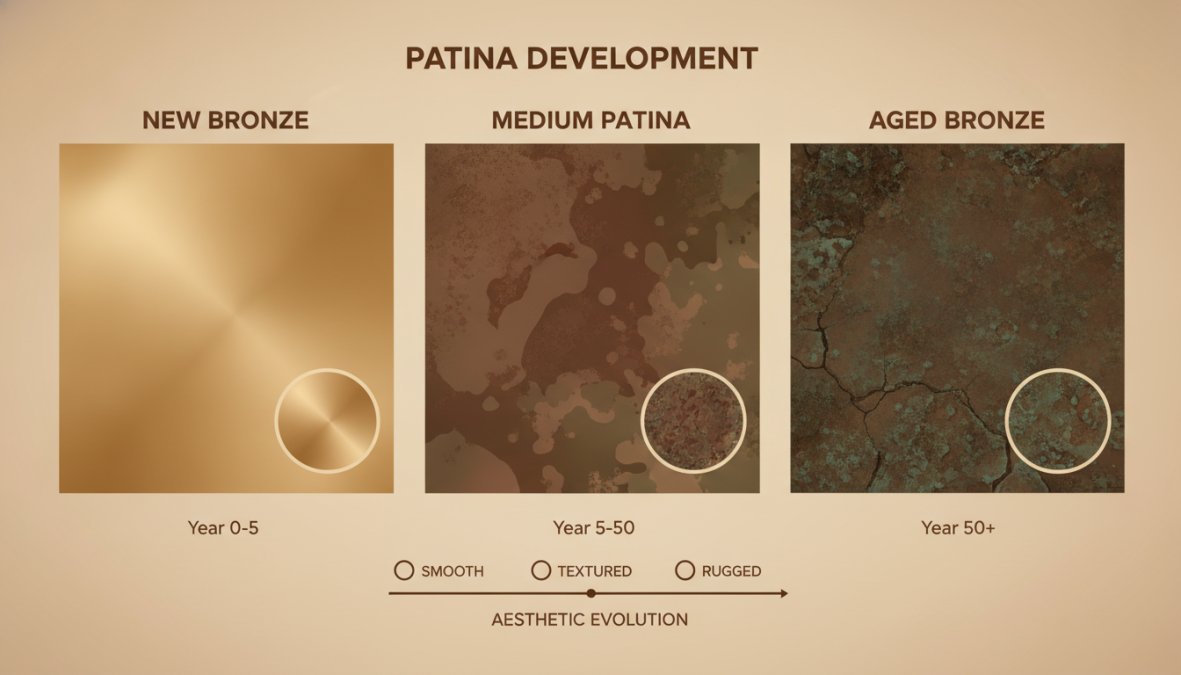
La patina sul bronzo non è decadimento, è la formazione di uno strato protettivo di ossido che anzi rinforza il materiale. Quando il bronzo è esposto all'aria e all'umidità, il rame nella lega si ossida, creando un sottile strato di ossido di rame e carbonato di rame. Questo strato si lega al metallo sottostante e previene ulteriore ossidazione.
Una nuova statua in bronzo inizia con una superficie brillante e rosata. Nel corso di settimane e mesi, si scurisce man mano che si forma lo strato di ossido. Questa trasformazione è visibile e significativa; guardi la tua statua invecchiare, sviluppando carattere e profondità. Molti praticanti ritengono che questo graduale oscuramento rispecchi la loro pratica di meditazione che si approfondisce nel tempo.
Le statue in bronzo da interni sviluppano una patina diversa rispetto a quelle da esterno. Senza una costante esposizione all’umidità e agli agenti atmosferici, i bronzi per interni sviluppano una calda patina marrone scuro anziché verde. Questa patina più scura è spesso esteticamente più gradevole negli spazi di meditazione domestici.
Fattori di peso e stabilità visiva
La densità del bronzo crea un peso visivo che i materiali più leggeri non possono eguagliare. Una statua in bronzo attira l'attenzione nel tuo spazio di meditazione semplicemente attraverso la sua presenza, ancorando la tua attenzione in modo naturale. La stabilità di un pezzo in bronzo garantisce una sicurezza pratica, non si ribalterà facilmente se nelle vicinanze si trovano bambini o animali domestici.
La percezione delle dimensioni differisce con il bronzo. Una piccola statua in bronzo spesso sembra più significativa di una più grande in legno, proprio a causa della densità del materiale. Puoi scegliere una statua da meditazione adatta alle dimensioni del tuo spazio senza sacrificare la presenza radicata che supporta la pratica.
Prendersi cura delle statue in bronzo: manutenzione e pulizia
Tecniche essenziali di pulizia e conservazione
Il bronzo richiede una manutenzione minima rispetto ad altri materiali. Per le statue da interno, spolverare regolarmente con un panno morbido e asciutto. Per una pulizia più profonda, utilizzare acqua distillata e una spazzola morbida. Evita l'acqua del rubinetto, che contiene minerali che possono influenzare lo sviluppo della patina.
Non usare mai lucidanti per metalli commerciali sulle statue in bronzo di cui vuoi mantenere la patina. Questi lucidanti rimuovono lo strato protettivo di ossido. Per le macchie ostinate, una miscela di parti uguali di aceto bianco e acqua applicata con un panno morbido funziona bene. Fai sempre una prova prima su un'area nascosta, quindi asciuga accuratamente la statua.
Se conservi la statua, avvolgila in carta velina priva di acidi e conservala in un luogo fresco e asciutto. Evitare l'involucro di plastica, che intrappola l'umidità.
Cura a lungo termine per l'esposizione all'aperto
Se esponi la tua statua in bronzo all'aperto, svilupperà la classica patina blu-verde. Questo è normale e protettivo. La patina si ispessisce con gli anni, creando una barriera sempre più forte contro la corrosione. I bronzi all'aperto dell'antica Grecia e di Roma dimostrano che questo sistema funziona attraverso i millenni.
Per le statue all'aperto è consigliabile un'ispezione annuale. Evita di posizionare le statue di bronzo dove subiranno ripetuti cicli di gelo-disgelo. La pioggia e gli agenti atmosferici naturali apportano effettivamente benefici ai bronzi per esterni accelerando lo sviluppo della patina. Dopo alcuni anni, una statua in bronzo da esterno diventa praticamente esente da manutenzione.
Autenticità, classificazione della qualità e processo di fusione
Fusione tradizionale del metallo e lavorazione artigianale
Le statue in bronzo da meditazione vengono create attraverso il processo di fusione a cera persa, che è rimasto sostanzialmente invariato per migliaia di anni. Ciò comporta la creazione di un modello in cera, il rivestimento in materiale ceramico, il riscaldamento dello stampo per sciogliere la cera e il versamento del bronzo fuso nella cavità.
L'abilità dell'artigiano determina tutto. Un maestro scultore crea il modello originale, capendo come apparirà la statua una volta fusa. Il produttore di stampi deve creare gusci di ceramica che catturino ogni dettaglio pur essendo abbastanza resistenti da contenere il bronzo fuso. Il fonditore deve scaldare il bronzo esattamente alla giusta temperatura e versarlo con tempismo preciso.
La differenza qualitativa tra le statue fuse da maestri artigiani e quelle prodotte rapidamente è immediatamente evidente. Il dettaglio è più nitido, le proporzioni più raffinate, la finitura superficiale superiore. Una statua fusa da qualcuno con 30 anni di esperienza differisce fondamentalmente da una statua fusa da qualcuno con 3 anni.
Come verificare la qualità e la provenienza
La verifica dell'autenticità richiede la comprensione di diversi indicatori. Per prima cosa, esamina le cuciture del getto. I pezzi di qualità hanno cuciture minime e ben rifinite, appena visibili. In secondo luogo, valutare la finitura superficiale: dovrebbe essere liscia e intenzionale, senza punti ruvidi o vaiolature. Terzo, controlla il peso e l'equilibrio; un bronzo adeguatamente fuso sembra sostanziale e stabile.
La provenienza è sempre più importante per i collezionisti. Rinomati rivenditori documentano l'origine delle statue, fornendo informazioni su dove sono stati fusi i pezzi, da chi e quando. Fai domande specifiche: quale fonderia ha fuso questo pezzo? Chi era lo scultore originale? Quando è stato lanciato? I rivenditori legittimi possono rispondere a queste domande.
Per pezzi costosi è disponibile l'autenticazione di terze parti. I conservatori possono esaminare i pezzi e fornire valutazioni scritte di autenticità, età e qualità.
Feng Shui, posizionamento e creazione del tuo spazio sacro
Il posizionamento della tua statua di meditazione ha un significato. Nella tradizione del Feng Shui, la direzione verso cui è rivolta una statua e la sua posizione nello spazio influenzano il flusso di energia. Un Buddha rivolto a est sostiene i nuovi inizi. Il posizionamento nell’angolo nord radica l’energia della terra.
Quando ti siedi in meditazione, il volto della statua dovrebbe essere all'altezza degli occhi o leggermente al di sopra. Questo posizionamento crea un punto focale naturale senza richiedere sforzi al collo. La maggior parte dei praticanti trova ottimale una distanza di 3-6 piedi, abbastanza vicina da poter vedere chiaramente i dettagli, abbastanza lontana da non far sì che la statua domini l'intero campo visivo.
La luce naturale è l'ideale, poiché illumina i lineamenti della statua e permette di vedere lo sviluppo della patina. Se si utilizza la luce artificiale, un'illuminazione morbida e calda (temperatura di colore di 3000 K) si abbina meglio al bronzo rispetto a una luce fredda e intensa.
Considera cosa circonda la tua statua. Il disordine ne diminuisce la presenza. Uno sfondo semplice consente alla statua di attirare l'attenzione. Un altare dedicato o una mensola per la meditazione elevano la statua, sia letteralmente che simbolicamente, segnalando che questo oggetto serve a scopi spirituali.
Scegliere il bronzo per le tue statue da meditazione significa scegliere la permanenza, un materiale che supporterà la tua pratica per decenni. Significa selezionare qualcosa che migliora con l'età, richiede un intervento minimo e porta con sé il peso spirituale accumulato in millenni di utilizzo da parte dei praticanti prima di te. L'investimento in bronzo di qualità ripaga in anni di meditazione. Ogni volta che ti siedi, sei supportato dal materiale che ha radicato i cercatori nel corso dei secoli.
Domande frequenti
Qual è il significato spirituale del bronzo nelle statue da meditazione?
Il bronzo ha un profondo significato spirituale nelle tradizioni greco-romane e cinesi, simboleggia la permanenza, la forza e una natura incrollabile essenziale per la pratica della meditazione. La durabilità della lega di bronzo rispecchia la stabilità della mente illuminata. Molti praticanti credono che l'energia terrestre e il peso del bronzo creino un effetto di radicamento che migliora la consapevolezza e la connessione spirituale durante le sessioni di meditazione.
Come si confronta il bronzo con il legno per le statue da meditazione?
Il bronzo offre durabilità e resistenza alla corrosione superiori rispetto al legno, che è vulnerabile all’umidità, ai cambiamenti di temperatura e al deterioramento nel corso di decenni. Mentre il legno fornisce calore ed estetica organica, il bronzo mantiene la sua integrità strutturale indefinitamente, rendendolo ideale per spazi di meditazione permanenti. Il peso visivo e la stabilità del bronzo creano anche una presenza energetica più forte rispetto alle alternative in legno più leggere.
Come ti prendi cura delle statue in bronzo per mantenere il loro aspetto?
La manutenzione regolare preserva la bellezza del bronzo. Spolverare delicatamente con panni morbidi ed evitare prodotti chimici aggressivi che accelerano la corrosione. Per l'esposizione all'aperto, applicare annualmente rivestimenti protettivi in cera per gestire lo sviluppo della patina. Monitora la tolleranza all'umidità e i cambiamenti di temperatura nel tuo spazio. Le autentiche statue in bronzo di abili artigiani sviluppano una patina naturale che molti praticanti vedono come parte dell'evoluzione spirituale della statua piuttosto che come un danno.
Come posso verificare l'autenticità e la qualità quando acquisto una statua in bronzo da meditazione?
Le autentiche statue in bronzo riflettono i tradizionali processi di fusione e l'artigianato artigianale. Richiedi la documentazione di provenienza e i dettagli della fusione ai venditori. Esamina il peso e la stabilità, i veri pezzi di bronzo sembrano sostanziali. Chiedi informazioni sulla composizione della lega di bronzo e se il pezzo è stato creato utilizzando metodi di fusione a cera persa o in sabbia. I rivenditori rispettabili forniscono trasparenza sull'approvvigionamento, sul background dell'artista e su qualsiasi cronologia del restauro.
