



Espositore da giardino con Buddha in pietra: vantaggi per il tuo spazio esterno
Espositore da giardino con Buddha in pietra: vantaggi per il tuo spazio esterno
Un'esposizione di Buddha in pietra da giardino è definita come una statua in pietra naturale scolpita o fusa posizionata all'aperto per fungere sia da punto focale che da simbolo di pace, consapevolezza e tradizione artistica. I vantaggi di un'esposizione di Buddha in pietra da giardino abbracciano tre categorie distinte: miglioramento estetico, benessere spirituale e durabilità a lungo termine.
I proprietari di case che scelgono la pietra naturale rispetto alla resina o al cemento ottengono un materiale che resiste con grazia, richiede una manutenzione minima e approfondisce il suo carattere nel corso di decenni. HDAsianArt cura pezzi autentici provenienti da Cambogia, Thailandia, Indonesia e oltre, ciascuno selezionato per artigianalità e integrità culturale.
1. Vantaggi degli espositori da giardino in pietra con Buddha per il design visivo
Una statua di Buddha in pietra cambia immediatamente il peso visivo e l'atmosfera di un giardino. La pietra naturale porta con sé consistenza, variazione di colore e massa che i materiali sintetici non possono replicare. Una figura in granito o arenaria posta tra bambù, erbe ornamentali o arbusti da fiore crea una composizione a strati che sembra intenzionale piuttosto che decorativa.
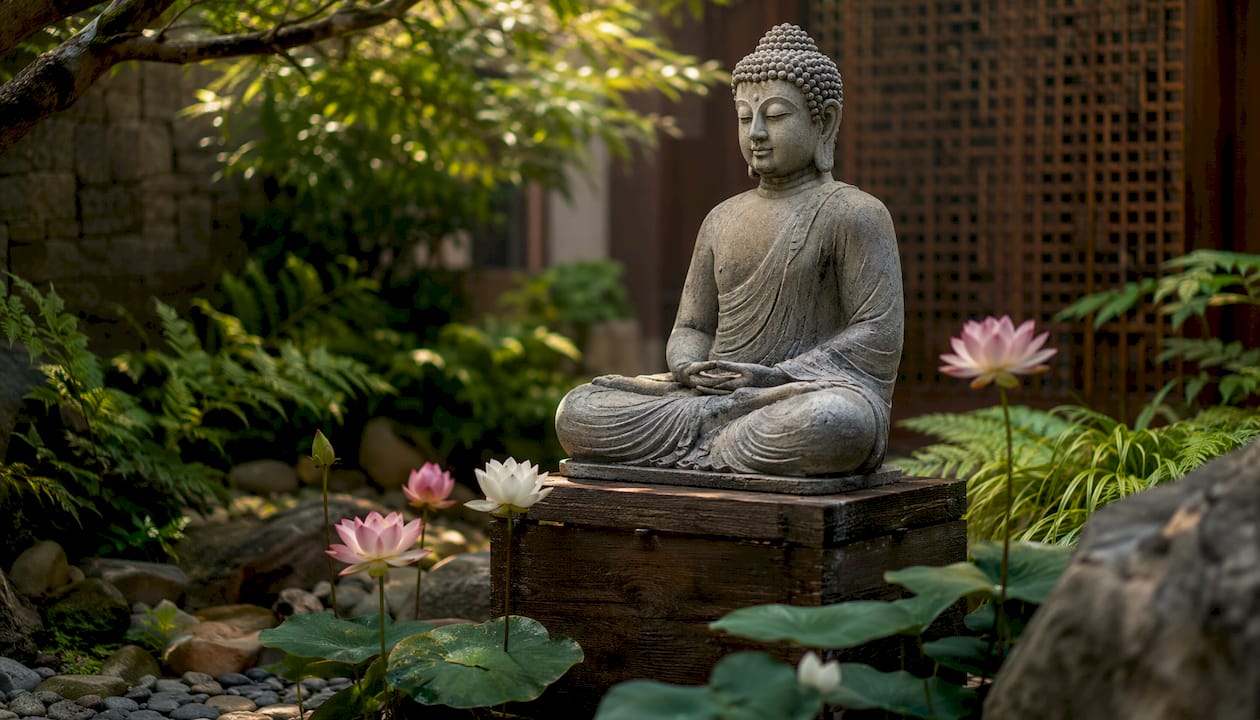
Anche statue di Buddha in pietra maturare esteticamente nel tempo, sviluppando patina e muschio che creano un'integrazione naturale nel giardino a volte chiamata effetto Wabi-Sabi. Questo graduale invecchiamento è un vantaggio, non un difetto. La statua comincia a sembrare come se appartenesse al giardino piuttosto che sedersi sopra di esso.
Principi chiave di progettazione visiva per il posizionamento:
- Scala: Abbina l'altezza della statua alle piantagioni circostanti. Una piccola figura scompare in un ampio bordo; una statua di grandi dimensioni travolge un cortile compatto.
- Armonia di stili: Abbina le forme lisce e classiche del Buddha con i layout formali del giardino. La pietra grezza si adatta ai giardini naturalistici o boschivi.
- Linee di vista: Posiziona la statua nel punto in cui termina un percorso o fissa la vista da una finestra o da un'area salotto.
- Contrasto di colore: Il calcare chiaro si legge bene contro il fogliame scuro; il granito scuro risalta sulla ghiaia chiara o sui fiori bianchi.
Suggerimento professionale: Corrispondenza dimensione della statua su scala del giardino è il fattore più trascurato nella progettazione del giardino. Una statua proporzionalmente corretta sembrerà che sia sempre stata lì.
2. Vantaggi per la salute spirituale e mentale di una statua di Buddha nel tuo giardino
Le statue di Buddha fungono da punti focali per la meditazione e la riflessione. Interesse pubblico per la consapevolezza e la consapevolezza della salute mentale è cresciuta insieme alla popolarità delle statue da giardino di Buddha. Questa correlazione non è casuale. Un oggetto fisico che incarna la calma dà alla mente un luogo dove riposare.
Il simbolismo delle statue di Buddha è incentrato sulla pace, la compassione e la consapevolezza. Queste qualità si traducono direttamente nell’atmosfera di uno spazio giardino. I giardinieri che trascorrono del tempo vicino a una figura di Buddha riferiscono un senso di intenzione più forte nel loro tempo all'aperto, sia che pratichino la meditazione formale o semplicemente si siedano in silenzio.
Una statua di Buddha in un giardino non si limita a delimitare uno spazio. Riformula l'intero giardino come un luogo di calma deliberata, cambiando il modo in cui ti muovi al suo interno e per quanto tempo rimani.
Benefici spirituali e mentali derivanti dalla posa della statua:
- Posa seduta: Incoraggia la riflessione interiore. Meglio posizionarlo in un angolo dedicato alla meditazione o alla fine di un percorso tranquillo.
- Posa in piedi: Si adatta agli spazi di transizione come gli ingressi dei giardini o lungo i vialetti, dove la figura guida il movimento.
- Posa sdraiata: Suggerisce riposo e accettazione. Funziona bene vicino a giochi d'acqua o in giardini ombreggiati.
La posa della statua è direttamente correlata all'umore e alla funzione del giardino. Scegliere la posa giusta per la posizione giusta moltiplica le caratteristiche del giardino meditativo che già possiedi.
3. Durabilità e longevità della pietra naturale all'esterno
La pietra naturale sopravvive a ogni alternativa comune per le statue da esterno. Il granito resiste alle piogge acide e agli agenti atmosferici a un livello che l’arenaria, la resina e il cemento non possono eguagliare. L'arenaria è porosa e richiede una sigillatura professionale per prevenire danni causati dall'umidità. La resina si degrada se esposta ai raggi UV nel giro di pochi anni. Il granito e la densa pietra vulcanica possono resistere all'aperto per generazioni senza alcun intervento.
I materiali lapidei naturali hanno una durata di vita che dura decenni con basse esigenze di manutenzione. Ciò rende la pietra la scelta economica migliore a lungo termine, anche quando il costo iniziale è superiore a quello della resina o del cemento.
| Materiale | Resistenza agli agenti atmosferici | Resistenza ai raggi UV | Manutenzione | Durata della vita |
|---|---|---|---|---|
| Granito | Eccellente | Eccellente | Minimo | Decenni |
| Arenaria | Moderato | Moderato | È necessaria la sigillatura | 10-20 anni |
| Resina | Povero | Povero | Trattamento regolare | 3–7 anni |
| Calcestruzzo | Moderato | Basso | Verniciatura o sigillatura | 10-15 anni |
Il peso è anche un vantaggio pratico. Una pesante statua di pietra rimane al suo posto durante le tempeste e i forti venti. Non si inclina, non si sposta e non richiede l'ancoraggio come fanno i materiali più leggeri.
Suggerimento professionale: Nei climi gelo-disgelo, scegli pietre dense con bassa porosità come granito o basalto. La pietra porosa assorbe l'acqua, che si espande quando si congela e provoca crepe.
4. Come esporre una statua di Buddha nel tuo giardino per ottenere il massimo impatto
Il posizionamento determina se l'esposizione di un giardino con statua di Buddha riesce o fallisce. I passaggi seguenti producono risultati coerenti.
- Scegli una base piana e stabile. Una base stabile previene spostamenti e fratture da stress causate dal movimento del terreno o dal gelo. Compatta il terreno o usa una piattaforma di cemento per i pezzi più pesanti.
- Eleva la statua su un piedistallo o una base. Il posizionamento elevato migliora il rispetto visivo, protegge la base dall'umidità del terreno e crea un punto focale più forte. Anche una lastra di pietra da 4 pollici fa una differenza visibile.
- Orienta la statua verso l'angolo di visione principale del giardino. La maggior parte delle figure di Buddha seduto sono rivolte verso l'esterno, verso lo spettatore. Controlla il direzione di posizionamento consigliata per lo stile specifico che scegli.
- Incornicia la statua con delle piante. La copertura del terreno bassa davanti e gli arbusti più alti dietro creano profondità e attirano l'attenzione sulla figura. Evita le piante che cresceranno troppo e oscureranno la statua entro una stagione.
- Pulisci minimamente. Eliminare i detriti con una spazzola morbida. Evitare il lavaggio a pressione, che rimuove la patina e può danneggiare i dettagli intagliati. Lascia che il muschio si sviluppi naturalmente su granito o basalto; aggiunge carattere senza causare danni.
- Adatta le cure al tuo clima. Nelle regioni con inverni rigidi, ispezionare annualmente la base per verificare la presenza di gelo. Nei climi umidi, verificare che il drenaggio intorno alla base sia libero per evitare ristagni d'acqua.
- Rivedi il flusso energetico del giardino. Il posizionamento accurato delle statue di Buddha può creare percorsi di consapevolezza che guidano i visitatori attraverso il giardino con intenzione piuttosto che per caso.
Punti chiave
Un espositore da giardino in pietra con Buddha offre un valore duraturo attraverso tre punti di forza combinati: profondità estetica, concentrazione spirituale e durabilità dei materiali che le alternative sintetiche non possono eguagliare.
| Punto | Dettagli |
|---|---|
| La scelta del materiale è decisiva | Il granito e la pietra densa sopravvivono alla resina e al cemento per decenni con una cura minima. |
| La posa influisce sulla funzione | Le statue sedute si adattano agli angoli di meditazione; le figure in piedi funzionano meglio lungo i percorsi e gli ingressi. |
| L'elevazione protegge e valorizza | Posizionare le statue su un piedistallo previene i danni causati dall'umidità e rafforza l'impatto visivo. |
| La scala deve corrispondere al giardino | Una statua dimensionata correttamente rispetto all'ambiente circostante sembra permanente piuttosto che posizionata. |
| Gli agenti atmosferici sono una risorsa | La pietra naturale sviluppa nel tempo patina e muschio, approfondendo la sua integrazione con il giardino. |
Quello che ho imparato da anni di lavoro con le statue da giardino in pietra
Lavorare a stretto contatto con le statue buddiste in pietra provenienti da Cambogia, Tailandia e Indonesia mi ha insegnato una cosa che manca alla maggior parte dei consigli sui giardini. La statua non è la decorazione. Lo spazio intorno lo è.
Quando un pezzo è ben posizionato, il giardino si riorganizza attorno ad esso. I visitatori rallentano. Prendono una strada diversa. Si siedono più a lungo. Questo cambiamento di comportamento è il vero vantaggio, e avviene solo quando la statua ha la giusta scala, il giusto materiale e la giusta posizione. Una figura in resina su una base di plastica non produce questo effetto. Un Buddha di granito ben scolpito su un piedistallo di pietra lo fa.
L’altra cosa che ho notato è che i giardinieri che scelgono la pietra per le giuste ragioni, ovvero durabilità, autenticità e profondità culturale, finiscono per essere più soddisfatti della loro scelta cinque anni dopo rispetto a quelli che l’hanno scelta esclusivamente per l’aspetto. Il ragioni culturali e spirituali dietro le esposizioni del Buddha di pietra non sono astratte. Si manifestano nel modo in cui ci si sente in giardino a trascorrere del tempo.
La mia onesta raccomandazione: non affrettare il posizionamento. Vivi con la statua in punti diversi per alcuni giorni prima di impegnarti. La posizione giusta è solitamente ovvia una volta che smetti di provare a forzarla.
— Giacomo, HDAsianArt.com
Autentiche statue di Buddha in pietra per il tuo giardino su HDAsianArt
HDAsianArt offre una selezione curata di autentiche statue buddiste in pietra e bronzo provenienti da Cambogia, Tailandia, Indonesia, Sri Lanka e Vietnam. Ogni pezzo viene ricercato, fotografato e descritto individualmente da specialisti con conoscenza diretta delle tradizioni artistiche buddiste asiatiche.

Ogni statua viene spedita in tutto il mondo con consegna DHL assicurata, quindi il pezzo arriva in modo sicuro indipendentemente dalla tua posizione. La collezione comprende pezzi adatti sia a giardini con cortile compatto che ad ambienti paesaggistici più ampi. Per un tradizionale esempio giavanese di artigianato di qualità museale, il Statua del Bodhisattva Avalokiteshvara rappresenta il tipo di pezzo autentico e durevole che definisce uno spazio giardino per decenni. Sfoglia l'intero Collezione HDAsianArt per trovare la statua giusta per il tuo spazio esterno.
Domande frequenti
Quali sono i principali vantaggi di un'esposizione di Buddha in pietra da giardino?
Gli espositori da giardino Stone Buddha offrono profondità estetica, un punto focale meditativo e una durata a lungo termine. La pietra naturale resiste bene e richiede una manutenzione minima rispetto alle alternative in resina o cemento.
Quale materiale lapideo è il migliore per una statua di Buddha all'aperto?
Il granito è la scelta più durevole per uso esterno. Resiste alle piogge acide, all'esposizione ai raggi UV e ai cicli di gelo-disgelo meglio dell'arenaria, che richiede sigillatura, o della resina, che si degrada in pochi anni.
Come dovrei esporre una statua di Buddha nel mio giardino?
Posiziona la statua su una base stabile e piana e sollevala su un piedistallo per proteggerla dall'umidità del terreno. Orientalo verso l'angolo di visione principale del giardino e inquadralo con piante basse davanti e arbusti più alti dietro.
Una statua di Buddha deve essere rivolta in una direzione specifica?
La direzione del posizionamento dipende dallo stile della statua e dalla disposizione del tuo giardino. Le figure sedute sono tipicamente rivolte verso lo spettatore o verso l’ingresso principale del giardino per ottenere il più forte effetto visivo e spirituale.
Come mantengo una statua di Buddha in pietra all'aperto?
Eliminare i detriti con una spazzola morbida e consentire al muschio e alla patina di svilupparsi naturalmente. Evitare il lavaggio a pressione, che rimuove i dettagli della superficie. Nei climi di gelo-disgelo, ispezionare annualmente la base per verificare il sollevamento del gelo e il drenaggio attorno al basamento.
Consigliato
- Perché i centrotavola da giardino con Buddha di pietra funzionano: spiegato - Arte asiatica HD
- Cosa significa un giardino di Buddha con giochi d'acqua? – Arte asiatica HD
- Abbracciare la serenità: il significato di avere una statua di Buddha - Arte asiatica HD
- Quale statua di Buddha è buona per la casa? – Arte asiatica HD
