



Come mantenere le statue da giardino in pietra: una guida completa
Come mantenere le statue da giardino in pietra: una guida completa
Sommario
Capire la tua pietra: cura specifica del materiale per le statue da giardino
Diversi tipi di pietra richiedono approcci di cura diversi a causa delle loro proprietà chimiche distinte e della vulnerabilità agli agenti atmosferici. La pietra colata è un composito poroso costituito da cemento Portland e aggregati, vulnerabile ai danni da gelo e disgelo. Il calcare, composto principalmente da carbonato di calcio, reagisce con le sostanze acide e sviluppa un'incisione superficiale. Il marmo, pietra calcarea metamorfica, è ancora più sensibile agli acidi e si graffia facilmente.
Il livello di pH delle soluzioni detergenti è estremamente importante. I detergenti acidi dissolvono il calcare e il marmo, mentre le soluzioni altamente alcaline danneggiano il legante della pietra fusa. Il sapone a pH neutro è la scelta più sicura per tutti i tipi di pietra.
Identificazione precoce del danno: segni visivi di deterioramento
Individuare precocemente il deterioramento previene costosi restauri. I segni più comuni includono efflorescenze, depositi bianchi e gessosi che indicano che l'acqua si muove attraverso la pietra porosa e lascia dietro di sé sali minerali. Le crepe che seguono la fibra sono generalmente meno gravi di quelle che la tagliano, il che suggerisce uno stress strutturale.
Licheni e muschi intrappolano l'umidità sulla superficie, accelerandone il deterioramento. Cerca le aree in cui i licheni si sono sollevati, esponendo la pietra indebolita. La scheggiatura, dove le schegge si staccano, indica cicli di gelo-disgelo o cristallizzazione del sale che rompe la pietra dall'interno.
Macchie scure lungo un lato suggeriscono il deflusso dell'acqua dall'alto, mentre un oscuramento uniforme indica acqua stagnante o terreno costantemente umido. La patina, che si scurisce naturalmente nel corso di decenni, dovrebbe essere preservata come parte di quello della statua carattere.
Strumenti e materiali essenziali per la cura degli ornamenti del giardino in pietra
Una corretta manutenzione richiede strumenti specifici che non danneggino le superfici delicate. Utilizzare una spazzola a setole morbide con fibre naturali, non sintetiche. Un tubo da giardino con impostazioni di spruzzo regolabili fornisce il controllo. Avrai bisogno di un sapone a pH neutro formulato per la pietra, non di detersivo per i piatti. L'acqua distillata è preferibile all'acqua del rubinetto, che lascia depositi minerali.
Per la crescita ostinata, un raschietto in plastica morbida funziona meglio del metallo, che sgorbia le superfici. Per protezione, utilizzare un sigillante per pietra traspirante che consenta all'umidità di fuoriuscire respingendo l'acqua. Per la protezione invernale, la tela da imballaggio o un telo antigelo specifico funziona meglio dei teli di plastica, che intrappolano l'umidità.
| Strumento | Ideale per | Perché è importante |
|---|---|---|
| Pennello a setole morbide | Pulizia delicata della superficie | Non graffierà né danneggerà la pietra |
| Tubo da giardino regolabile | Risciacquo e pulizia a bassa pressione | Il controllo previene l’erosione |
| Sapone a pH neutro | Pulizia sicura senza danni chimici | Previene l'incisione e lo scolorimento |
| Raschietto in plastica morbida | Rimozione di muschio o alghe ostinati | Strumenti metallici sgorbiano e sfregiano le superfici |
| Sigillante per pietra traspirante | Protezione a lungo termine | Permette la fuoriuscita dell'umidità bloccando l'ingresso dell'acqua |
| Tela di iuta o panno antigelo | Protezione invernale | Previene i danni da gelo e disgelo consentendo la circolazione dell'aria |
Come pulire gli ornamenti da giardino in pietra in modo sicuro ed efficace
Inizia rimuovendo i detriti sciolti con una spazzola morbida, lavorando dall'alto verso il basso. Sciacquare l'intera statua con un tubo da giardino a bassa pressione, partendo dall'alto. Lasciare asciugare per 24 ore prima della pulizia a umido.
Mescolare il sapone a pH neutro con acqua distillata secondo le indicazioni sulla confezione. Utilizzando una spazzola morbida, applicare la soluzione con delicati movimenti circolari, concentrandosi sulle aree con alghe o macchie visibili. Lasciare riposare l'acqua saponata per 10-15 minuti, quindi risciacquare abbondantemente con acqua a bassa pressione. Ripeti se necessario, ma non strofinare mai più forte, più passaggi delicati funzionano meglio di un tentativo aggressivo.
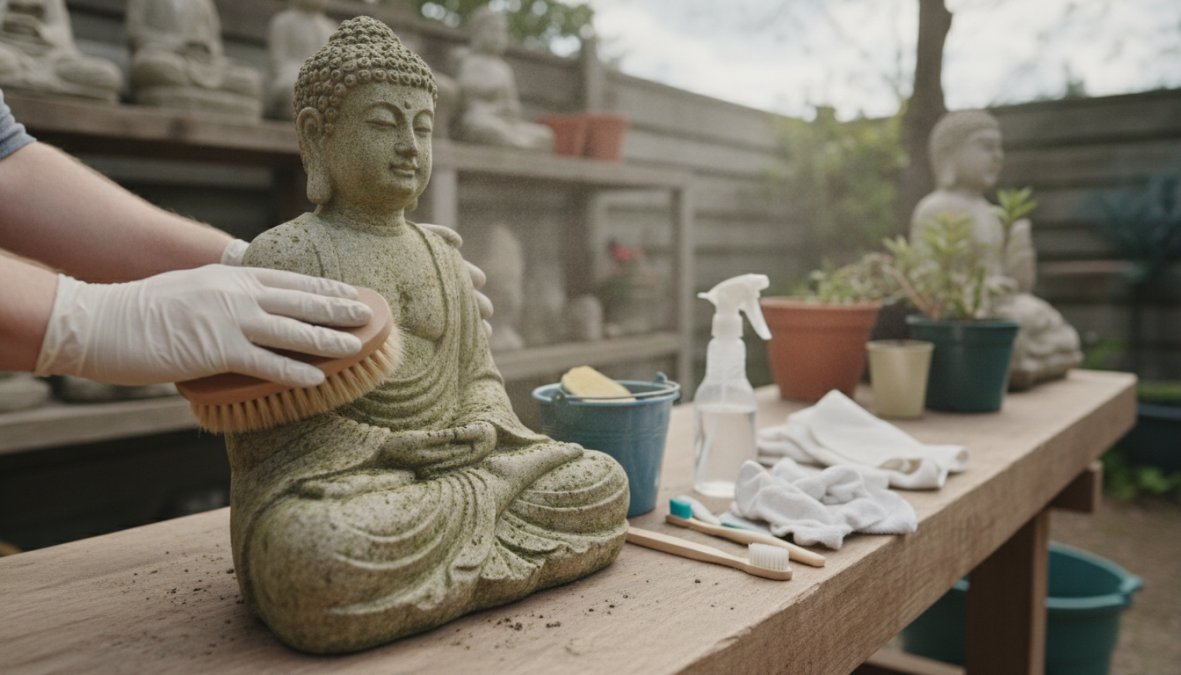
Lasciare asciugare completamente la statua all'aria prima di valutare se è necessaria un'ulteriore pulizia. Non usare mai il calore per accelerare l'asciugatura; gli sbalzi di temperatura danneggiano la pietra. L'asciugatura completa richiede in genere 48-72 ore.
Rimuove muschi, alghe e licheni senza danneggiare la superficie
Muschio, alghe e licheni hanno radici che penetrano nella superficie della pietra. Il semplice sfregamento rimuove solo la crescita visibile; uccidere prima l'organismo impedisce una rapida rigenerazione.
Per una crescita leggera è sufficiente la soluzione di sapone a pH neutro. Per la crescita ostinata, una soluzione diluita di aceto, una parte di aceto bianco e quattro parti di acqua, può essere efficace su calcare e pietra colata. Provalo prima su un'area nascosta, poiché l'aceto è leggermente acido. Evita gli antimuschio commerciali a meno che non siano specificatamente formulati per la pietra.
Una volta che gli organismi sono morti e si sono staccati, utilizzare un raschietto di plastica morbida per rimuoverli delicatamente. Lavora lentamente; se la crescita non si elimina facilmente, applica più soluzione di sapone e attendi più a lungo invece di aumentare la pressione. Alcuni licheni e muschi rimarranno come uno strato sottile, il che è accettabile e fornisce protezione.
Sicurezza delle idropulitrici: quando usarle e quando evitarle
Le idropulitrici concentrano la forza dell'acqua a 1.500-4.000 PSI, superando quella che la pietra porosa può sopportare. Anche alle impostazioni più basse, possono scavare la pietra fusa, incidere il calcare e causare scheggiature sul marmo. L'acqua forzata nelle fessure ghiaccia in inverno, espandendosi e allargando quelle fessure. I danni si sviluppano gradualmente nel corso degli anni, fino a compromettere l’integrità strutturale.
Se è necessario utilizzare un'idropulitrice, mantenerla a 500 PSI o meno, mantenere una distanza di almeno 12 pollici e non utilizzare mai acqua calda. Meglio ancora, investi più tempo nella pulizia delle mani. La tua statua guadagnerà decenni di vita aggiuntiva.
Applicazione del sigillante per statue in pietra all'aperto: protezione e conservazione
Un sigillante di qualità crea una barriera che respinge l'acqua consentendo alla pietra di respirare. Riduce l'assorbimento d'acqua del 50-80%. Scegli un sigillante formulato per il tuo tipo di pietra. I sigillanti penetranti funzionano meglio per materiali porosi come pietra colata e calcare. I sigillanti filmogeni funzionano bene sul marmo ma richiedono una riapplicazione più frequente. I sigillanti traspiranti sono essenziali; non utilizzare mai sigillanti a base di plastica che intrappolano l'umidità.
Prima della sigillatura, la statua deve essere completamente pulita e asciutta. Lasciare almeno 72 ore di clima asciutto dopo la pulizia. Applicare il sigillante secondo le indicazioni del prodotto, generalmente con un pennello o un rullo, lavorando in piccole sezioni. La maggior parte dei sigillanti richiede 2-3 mani con tempo di asciugatura tra un'applicazione e l'altra.
Il tempo di polimerizzazione varia generalmente da 48 ore a 2 settimane. Durante questo periodo evitare di esporre la statua alla pioggia o a forte umidità. Una volta indurito, riapplicare il sigillante ogni 2-3 anni per la pietra fusa, ogni 3-5 anni per il calcare e ogni 5-7 anni per il marmo.
Riparare statue da giardino in pietra scheggiate: soluzioni e limiti fai da te
Piccole scheggiature superficiali di meno di mezzo pollice di diametro possono essere riempite con mastice epossidico per pietra, che si indurisce e può essere verniciato per abbinarsi alla pietra circostante. Per le piccole crepe, il mastice flessibile per pietra funziona meglio della resina epossidica rigida, poiché si adatta alla naturale espansione e contrazione.
Scheggiature più grandi, crepe strutturali o danni ad aree critiche richiedono un restauro professionale. Tentare da soli queste riparazioni rischia di peggiorare il danno. Un restauratore di pietre professionista dispone di strumenti e tecniche specializzati che corrispondono all'originale l'aspetto e l'integrità della pietra.
I danni superficiali che non influiscono sull'integrità strutturale o sull'aspetto estetico possono spesso essere lasciati intatti; patina e piccole imperfezioni aggiungono carattere. I danni che compromettono la stabilità strutturale, creano punti di raccolta dell'acqua o influiscono in modo significativo sull'aspetto meritano attenzione professionale.
Statue da giardino per l'inverno: prevenzione dei danni da gelo e cura nella stagione fredda
I danni dovuti al gelo rappresentano la minaccia principale nei climi freddi. L'acqua entra nella pietra porosa, si congela, si espande di circa il 9% e spacca la pietra dall'interno. Prevenire l’ingresso di acqua è la difesa più efficace.
Garantire un drenaggio adeguato attorno alla base della statua. Eleva la statua su un piedistallo o un letto di ghiaia in modo che l'acqua non si accumuli. Verificare che qualsiasi lavabo decorativo abbia fori di drenaggio. Applicare un sigillante traspirante prima dell'arrivo dell'inverno, idealmente a fine settembre o inizio ottobre.
Per una protezione extra, copri le statue con tela o un panno antigelo specializzato. Evita i teloni di plastica, che intrappolano l'umidità. Nelle regioni con forti nevicate, spazzolare via delicatamente la neve accumulata anziché lasciarla sciogliere e ricongelare ripetutamente. Non utilizzare mai sale o prodotti per sciogliere il ghiaccio sulla pietra.
Dopo l'inverno, ispeziona attentamente la statua per individuare nuove crepe o danni. Affrontateli tempestivamente prima del prossimo ciclo invernale.
Programma di manutenzione: quanto spesso mantenere le statue da giardino in pietra
Un programma di manutenzione coerente impedisce che piccoli problemi diventino costosi progetti di ripristino.
Mensile (stagione di crescita): Ispezione visiva per la crescita di nuovo muschio o alghe.
Trimestrale: Spazzolatura delicata a secco per rimuovere polvere e detriti accumulati.
Due volte all'anno (primavera e autunno): Pulizia accurata con sapone a pH neutro e spazzola morbida.
Ogni anno (fine estate): Ispezionare eventuali crepe, scheggiature e problemi strutturali. Riapplicare il sigillante se sono trascorsi 2-3 anni dall'ultima applicazione.
Ogni 2-3 anni: Pulizia profonda e riapplicazione del sigillante.
Questo programma si adatta alla tua situazione. Nei climi umidi con forti precipitazioni, aumentare la frequenza della pulizia. Nei climi secchi, prolungare gli intervalli. Le statue in piena ombra rimangono umide più a lungo e potrebbero richiedere un'attenzione più frequente.
Alternative di pulizia ecologiche e non tossiche
La sola acqua distillata, applicata con una spazzolata delicata, rimuove la polvere superficiale e i detriti leggeri. Per alghe o muschio ostinati, una soluzione diluita di aceto, una parte di aceto bianco e quattro parti di acqua distillata, uccide gli organismi senza sostanze chimiche aggressive. Provalo prima su un'area nascosta.
Il bicarbonato di sodio mescolato con acqua crea una pasta leggermente abrasiva che rimuove le macchie leggere senza incidere la pietra. Il sapone di Castiglia, un sapone a base vegetale, è più delicato di molti detergenti commerciali. Il perossido di idrogeno alla concentrazione del 3% uccide alghe e muschio senza danneggiare la pietra.
Le alternative naturali non sono tossiche per le piante e il suolo circostanti. Funzionano più lentamente dei detergenti chimici ma sono più delicati sulla pietra stessa. Per la manutenzione regolare, le soluzioni naturali sono del tutto adeguate.
Errori comuni da evitare quando ci si prende cura delle sculture in pietra all'aperto
L'errore più dannoso è usare detergenti acidi su pietra calcarea o marmo. Aceto, succo di limone e detergenti acidi commerciali dissolvono la superficie della pietra, creando un'incisione permanente. Questo danno è immediato e irreversibile.
L’uso delle idropulitrici è al secondo posto in termini di danni causati. Il flusso d'acqua concentrato spinge l'umidità in profondità nei pori dove provoca danni da gelo e disgelo negli inverni successivi.
Lasciare che l'acqua si accumuli attorno alla base della statua è un disastro al rallentatore. Elevare la statua o migliorare il drenaggio lo impedisce completamente. Trascurare di sigillare lascia la statua vulnerabile agli agenti atmosferici accelerati, una statua non sigillata si deteriora 2-3 volte più velocemente di una sigillata.
L'uso di sigillanti a base plastica intrappola l'umidità all'interno della pietra, causando danni dall'interno. Utilizzare sempre sigillanti traspiranti. Tentare riparazioni importanti senza l’aiuto di un professionista spesso peggiora i danni. Infine, ignorare piccole crepe e scheggiature consente loro di espandersi in seri problemi strutturali.
Le statue da giardino in pietra sono investimenti in bellezza e spiritualità che meritano cure premurose. La pulizia regolare, la sigillatura adeguata e la protezione stagionale sono pratiche semplici che impediscono costosi restauri. Noi di HD Asian Art comprendiamo che questi pezzi spesso hanno un profondo significato personale e significato spirituale. La nostra collezione accuratamente curata di statue buddiste e indù porta la pace ispirata al tempio nei tuoi spazi di meditazione. Mantenendo correttamente la tua statua, preservi non solo un oggetto, ma una connessione con la tradizione spirituale. Sfoglia la nostra collezione per trovare il pezzo perfetto per il tuo santuario, sapendo che con la dovuta cura servirà come fonte di ispirazione per i decenni a venire.
Domande frequenti
Quanto spesso dovresti pulire le statue di pietra all'aperto?
La frequenza della pulizia dipende dal clima e dall'ambiente. Nelle aree con elevata umidità, alghe e crescita di muschio, pulire ogni 6-12 mesi. Nei climi più secchi, la pulizia annuale può essere sufficiente. Ispeziona stagionalmente le tue statue per rilevare eventuali segni di muschio, licheni o efflorescenze (depositi di calcio bianco). Una leggera pulizia della superficie con una spazzola a setole morbide e un sapone a pH neutro può essere eseguita più frequentemente senza danneggiare la patina della pietra o l'integrità strutturale.
Qual è il modo migliore per pulire le statue da giardino in pietra senza danni?
Utilizzare un detergente delicato mescolato con acqua e una spazzola a setole morbide per una pulizia delicata. In caso di alghe o muschio ostinati, applicare un detergente non tossico, a pH neutro e lasciarlo riposare brevemente prima di spazzolare. Evita strofinaggi abrasivi o prodotti chimici aggressivi, che possono danneggiare le superfici porose come il calcare e la pietra fusa. Un tubo da giardino a bassa pressione funziona bene per il risciacquo. Riservare l'idropulitrice solo a pietre colate in buone condizioni, non utilizzare mai su marmo o sculture delicate, poiché l'alta pressione può causare danni irreversibili.
Come si proteggono le statue di pietra all'aperto dai danni invernali e dal gelo?
Lo svernamento delle statue da giardino prevede diversi passaggi: sigillare le superfici porose con un sigillante di qualità prima dell'inverno per impedire la penetrazione dell'acqua che causa il gelo. Garantire un drenaggio adeguato attorno alla base per evitare ristagni d'acqua. Utilizzare una copertura protettiva per i pezzi vulnerabili, ma consentire la circolazione dell'aria per evitare l'intrappolamento di umidità. Nei climi gelidi, valuta la possibilità di spostare statue preziose o delicate all'interno. Controllare crepe e scheggiature prima dell'inverno, l'acqua che entra in queste aree si espande quando congela, causando danni strutturali. Rimuovere delicatamente eventuali accumuli di neve o ghiaccio per evitare ulteriore stress.
È possibile utilizzare un'idropulitrice sulle statue da giardino in pietra?
Le idropulitrici possono essere utilizzate su pietra fusa e pietra calcarea resistente, ma solo a bassa pressione (sotto i 1500 PSI) e da una distanza di sicurezza. Non utilizzare mai idropulitrici su marmo, pietra tenera o sculture antiche, la forza può causare scheggiature, erosione e danni irreversibili. Per la rimozione di muschio e alghe, una spazzola a setole morbide con sapone a pH neutro è più sicura ed efficace del lavaggio a pressione. Testare sempre prima qualsiasi metodo di pulizia su un'area nascosta. In caso di dubbio, la pulizia a mano è l'approccio più sicuro per preservare le condizioni a lungo termine dei tuoi ornamenti da giardino in pietra.
