



Come disporre gli idoli in un piccolo appartamento: la nostra guida
Come disporre gli idoli in un piccolo appartamento: la nostra guida
Sommario
- Inizia con Vastu: dove appartengono gli idoli in un piccolo appartamento
- Idee di design per piccole stanze Pooja che si adattano a veri appartamenti
- La migliore direzione per un tempio domestico (e cosa fare quando non puoi usarlo)
- Un allestimento minimalista dell'altare domestico: meno disordine, più devozione
- Scegliere le dimensioni dell'idolo adatte a un piccolo appartamento
- Modi adatti al noleggio e attenti al budget per organizzare gli idoli
- Conclusione
- Domande frequenti
Inizia con Vastu: dove appartengono gli idoli in un piccolo appartamento
Imparare a disporre gli idoli in un piccolo appartamento inizia con un principio: il posizionamento ha lo stesso peso dei pezzi stessi. Questa guida di HD Asian Art copre le linee guida tradizionali, le soluzioni pratiche e le scelte progettuali che mantengono un angolo sacro intenzionale piuttosto che affollato.
Vastu Shastra, il classico sistema indiano di pianificazione spaziale, tratta la casa come una mappa di energia e l'angolo nord-est detiene uno status speciale. Molti praticanti la considerano la zona più propizia per un mandir o area di preghiera, poiché è associata a chiarezza, luce e concentrazione spirituale.
Detto questo, un piccolo appartamento raramente ti offre un perfetto angolo nord-est, potresti lavorare con un appartamento in affitto, uno studio o una planimetria in cui la parete nord-est è una porta dell'armadio. Vastu offre una direzione, non un test rigido che puoi superare o fallire.
L'angolo nord-orientale e perché è importante
L'angolo nord-est è tradizionalmente preferito perché riceve la luce mattutina più morbida nella maggior parte delle case, allineando la tua pratica con l'inizio tranquillo della giornata. Se non è disponibile, le pareti est e nord sono le migliori opzioni successive. Evitare di posizionare un altare direttamente contro il muro del bagno o sotto una scala, entrambi considerati di cattivo auspicio nella pratica tradizionale.
Da che parte dovrebbero guardare gli idoli?
Gli idoli tradizionalmente sono rivolti a ovest o a est, quindi la persona che prega è rivolta nella direzione opposta. Rivolgersi a est è la raccomandazione più comune, poiché allinea il fedele con il sole nascente. In un appartamento compatto, questo spesso significa che l'altare si trova sulla parete ovest, quindi sei rivolto a est quando ti trovi davanti ad esso. Se ciò è impossibile, dai la priorità a una direzione che ti consenta di pregare senza voltare le spalle all'ingresso principale della stanza.
Idee di design per piccole stanze Pooja che si adattano a veri appartamenti
Una stanza dedicata alla pooja è un lusso nella maggior parte degli appartamenti. L'alternativa praticabile è una zona sacra definita: uno scaffale, il ripiano di un mobile o un angolo utilizzato per nient'altro. Cosa tende a funzionare in layout compatti:
- Una mensola a muro all'altezza degli occhi, abbastanza largo per due o tre idoli e una piccola diya
- Una nicchia libreria trasformata, sgombrato da tutto tranne gli oggetti di culto
- Un altare mobile ribaltabile che si chiude quando non viene utilizzato, utile negli studi
- Una consolle angolare con uno sgabello basso per sedersi durante la preghiera
Il filo conduttore è l’uso verticale. I piccoli appartamenti hanno più spazio sulle pareti che sul pavimento, quindi un altare che si alza anziché si allarga mantiene la stanza aperta.
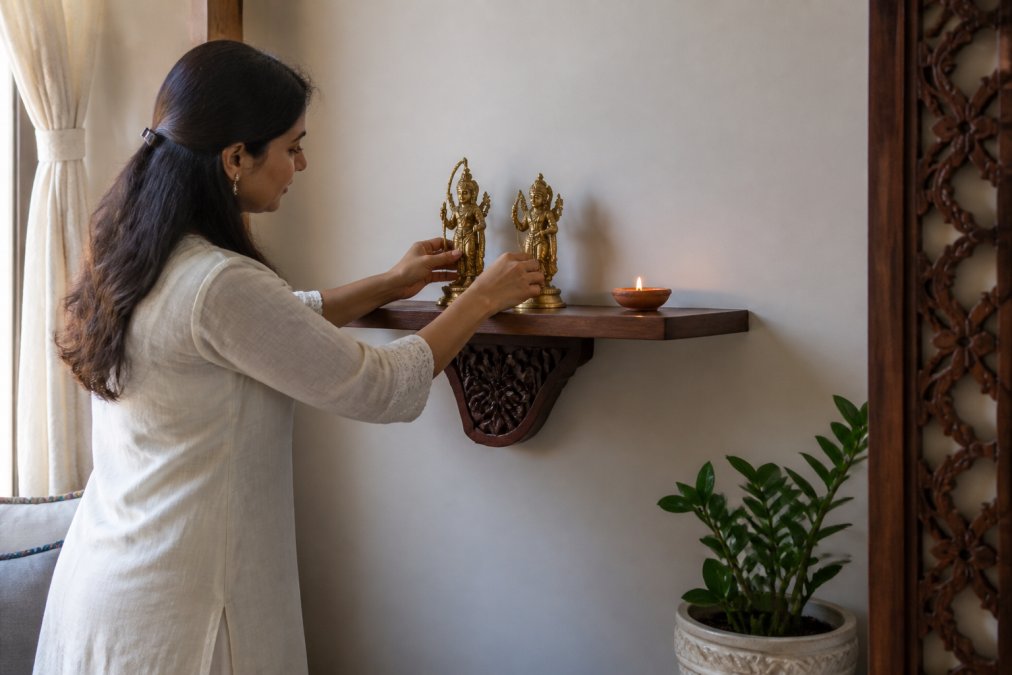
Integrare queste figure sacre nel tuo spazio vitale richiede un delicato equilibrio tra scala e peso visivo, proprio come i principi utilizzati in passato stile artistico in piccoli appartamenti per garantire che ogni elemento curato sembri intenzionale piuttosto che ingombrante.
La migliore direzione per un tempio domestico (e cosa fare quando non puoi usarlo)
La direzione migliore per un tempio domestico è l'angolo nord-est, con gli idoli rivolti a est o ovest in modo che il fedele sia rivolto nella direzione opposta durante la preghiera. Questa è la risposta da manuale e la maggior parte degli appartamenti non è in grado di accoglierla completamente. Quando la direzione ideale è bloccata, la pratica tradizionale offre soluzioni alternative piuttosto che soluzioni assolute: una parete nord o est funziona, e un armadietto dedicato in qualsiasi stanza funziona se viene mantenuto pulito e utilizzato solo per il culto. Ciò che conta di più è la costanza, un punto fisso trattato con cura batte un angolo tecnicamente perfetto risistemato ogni mese.
Un allestimento minimalista dell'altare domestico: meno disordine, più devozione
Un allestimento minimalista per l'altare domestico utilizza meno oggetti, posizionati deliberatamente, in modo che ognuno abbia un significato. L’obiettivo non è il vuoto fine a se stesso, ma la rimozione di tutto ciò che compete per l’attenzione con la divinità al centro. Inizia con un punto focale: un idolo o un'immagine incorniciata che ancori la disposizione. Spesso sono sufficienti un singolo diya in ottone, un piccolo portaincenso e un fiore fresco. Gli idoli in marmo e cristallo funzionano particolarmente bene perché le loro superfici riflettono la luce senza aggiungere rumore visivo.
Lo spazio di archiviazione conta tanto quanto la visualizzazione. Un cassetto poco profondo o un vassoio estraibile sotto l'altare tiene lontani dalla vista fiammiferi, incenso e stoppini di riserva. Le superfici prive di disordine vengono lette come riverenza; uno scaffale affollato viene interpretato come un problema di archiviazione.
Scegliere le dimensioni dell'idolo adatte a un piccolo appartamento
La dimensione dell’idolo dovrebbe seguire l’altare e non il contrario. Un errore comune è acquistare prima una statua di grandi dimensioni e poi cercare una superficie abbastanza grande da contenerla, quindi misura lo scaffale, il piano del mobile o la console prima di fare acquisti. Un'utile regola pratica: l'idolo più alto non dovrebbe occupare più di due terzi circa dello spazio verticale tra la superficie della mensola e la mensola sopra di esso, o tra la superficie e il soffitto se l'altare è aperto. Ciò lascia spazio al respiro sopra la divinità e impedisce alla disposizione di sembrare pesante in un appartamento dal soffitto basso.
Abbina la dimensione dell'idolo alla superficie che hai effettivamente
La proporzione batte la dimensione assoluta
Quando possiedi già un grande idolo
Modi adatti al noleggio e attenti al budget per organizzare gli idoli
Basi non permanenti che effettivamente sostengono il peso
Trucchi fai-da-te che non costano quasi nulla
Famiglie multireligiose e condivise
Corrispondenza della correzione con il vincolo
| Vincolo | Soluzione pratica | Compromesso |
|---|---|---|
| Nessuna perforazione consentita | Scaffale o tavolino indipendente | Utilizza circa uno o due piedi quadrati di spazio sul pavimento |
| Stanza molto piccola | Mensola a parete all'altezza degli occhi | Richiede un punto di ancoraggio o una striscia adesiva nominale |
| Casa condivisa o multireligiosa | Ripiano diviso con zone separate | Un po' meno spazio per tradizione |
| Clima umido | Armadietto sigillato con pacchetti di silice nelle vicinanze | Aerazione periodica dello spazio |
| Budget ristretto | Ripiano in legno di seconda mano, pulito e oliato | Tempo impiegato per l'approvvigionamento e la rifinitura |
| Movimenti frequenti | Scatola o paravento pieghevole rivestita in tessuto | Meno area espositiva rispetto a uno scaffale fisso |
Una nota su umidità e materiali
Domande frequenti
Quale direzione dovrebbero affrontare gli idoli in casa?
Posiziona gli idoli rivolti a ovest o est in modo da essere rivolto a est o nord mentre preghi, cosa che Vastu Shastra considera di buon auspicio. Gli idoli stessi dovrebbero sedersi contro un muro sul lato nord-est della stanza, quindi la tua linea visiva corre verso di loro da sud-ovest. In un piccolo appartamento, la prova pratica è semplice: posizionati dove pregherai e verifica che gli idoli siano all'altezza degli occhi o leggermente al di sopra e siano chiaramente visibili.
Quanti idoli posso tenere in un piccolo appartamento?
Non esiste un numero fisso, ma un altare compatto sembra migliore con da una a tre divinità primarie. Raggruppa una figura centrale con assistenti più piccoli o un singolo diya in ottone per mantenere l'equilibrio visivo. Se segui una tradizione con più divinità, disponili in fila o in un arco delicato anziché impilarli e mantieni l'idolo più alto al centro. Meno brani ben distanziati vengono letti come devozione; gli scaffali affollati vengono letti come contenitori.
Qual è la dimensione ideale dell'idolo per un piccolo appartamento?
Per la maggior parte degli appartamenti, gli idoli tra 4 e 8 pollici funzionano bene su uno scaffale o una console, mentre tra 10 e 12 pollici si adattano a un mandir a pavimento o ad un angolo dedicato. Abbina l'altezza al tuo altare: l'idolo più alto dovrebbe trovarsi sotto il livello dei tuoi occhi quando ti alzi per pregare. Una figura in marmo o ottone da 12 pollici può ancorare una piccola stanza se ha spazio per respirare attorno ad essa.
Posso montare un piccolo altare se affitto e non posso forare i muri?
SÌ. Utilizza opzioni indipendenti come una console in legno, un mandir pieghevole o una mensola appoggiata al muro che non necessita di hardware. Un vassoio estraibile all'interno di un armadietto mantiene nascosti gli elementi essenziali della pooja tra le preghiere e scompare quando gli ospiti visitano. Le strisce di comando e i pali di tensione possono sostenere ripiani leggeri e un semplice tavolino rivestito in tessuto funge da altare temporaneo in un monolocale.
HD Asian Art può aiutarti a trovare un pezzo focale che si adatti allo spazio di cui disponi, che si tratti di un altare compatto su scaffale o di un angolo dedicato alla meditazione.
La nostra collezione comprende statue buddiste e indù accuratamente curate, pezzi antichi e contemporanei selezionati con cura e una specializzazione in sculture Khmer e del sud-est asiatico, il tutto con spedizione gratuita. Sfoglia la collezione e trova il pezzo che àncora il tuo santuario.
