



Statue degli dei indù: una guida all'acquisto per i collezionisti statunitensi
Statue degli dei indù: una guida all'acquisto per i collezionisti statunitensi
Per un autentico murti indù di qualità museale per il culto o un'esposizione raffinata, scegli un pezzo in bronzo o pietra curato individualmente da HDAsianArt. Ogni statua viene ricercata, fotografata e spedita individualmente in tutto il mondo tramite corriere DHL assicurato con documentazione di provenienza completa.
Cosa aspettarsi da questa guida:
- Divinità comuni disponibili: Ganesha, Shiva, Vishnu, Lakshmi, Krishna, Durga, Hanuman, Saraswati
- Materiali del piano: bronzo a cera persa, granito, legno duro intagliato, lacca birmana
- Tempi di consegna tipici: 2–6 settimane per le importazioni standard; concedere tempo aggiuntivo per lo sdoganamento dell'antiquariato
Punti chiave
Le statue autentiche delle divinità indù per il culto o il collezionismo richiedono iconografia verificata, provenienza documentata e spedizione assicurata da una galleria che opera secondo gli standard museali.
| Punto | Dettagli |
|---|---|
| Lo scopo determina la selezione | Definisci l'intento di culto, esposizione o collezionismo prima di scegliere divinità, materiale o dimensione. |
| L'iconografia segnala qualità | I mudra, gli attributi e i vahana corretti distinguono le murti rituali dalle copie decorative. |
| La documentazione sulla provenienza è importante | Richiedi rapporti sulle condizioni, documenti di proprietà precedenti e documenti di esportazione/importazione prima dell'acquisto. |
| Pianificare i tempi di importazione | Lo sdoganamento degli oggetti d'antiquariato in genere richiede 2-4 settimane oltre il transito di spedizione standard. |
| HDAsianArt come fonte di acquisto | Ogni pezzo viene ricercato, fotografato e spedito individualmente tramite DHL assicurato con documentazione di provenienza completa. |
Sommario
Che tipo di statue di divinità indù troverai in una galleria curata?
Una galleria ben curata organizza sculture di divinità indù per tradizione, regione e destinazione d'uso. Comprendere queste categorie aiuta gli acquirenti a passare dalla navigazione all'acquisto sicuro.
Divinità comunemente disponibili e perché gli acquirenti le scelgono:
- Ganesha — la rimozione degli ostacoli; la divinità più acquistata per gli altari domestici e le benedizioni di nuove imprese
- Shiva — signore della trasformazione; ricercato nelle forme Nataraja (danza) e Lingam per uso devozionale e espositivo
- Vishnu — il conservatore; spesso raffigurato con quattro braccia che reggono una conchiglia, un disco, una mazza e un loto
- Lakshmi — dea della ricchezza e della prosperità; popolare per i santuari domestici e i regali
- Krishna - raffigurato come un giovane che suona il flauto o una figura reale; scelto per ambienti devozionali e decorativi
- Durga - la dea guerriera; forme multibracciate in bronzo o pietra
- Hanuman - il devoto servitore di Rama; scelto per protezione e forza
- Saraswati — dea della conoscenza e delle arti; favorito negli spazi educativi e creativi
Il Il pantheon indù è incentrato sulla Trimurti - Brahma, Vishnu e Shiva - con importanti consorti tra cui Saraswati, Lakshmi e Parvati insieme a figure ampiamente venerate come Ganesha e Hanuman. La scelta di una statua è spesso una decisione devozionale personale piuttosto che dottrinale.
Stili regionali e relativi casi d'uso:
- Bronzo dell'India meridionale (stile Chola): fusione a cera persa, elevata precisione iconografica; ideale per il culto murtis
- Pietra Khmer/Cambogiana: arenaria o granito, presenza monumentale; adatto per esposizione e collezionismo
- Legno giavanese: legno duro intagliato proveniente dall'Indonesia; estetica calda per ambienti interni
- Varianti dello Sri Lanka e tailandesi: scuole stilistiche distinte con convenzioni iconografiche regionali
Per uno sguardo più approfondito su come le tradizioni regionali modellano forma e significato, tipi di sculture di divinità indù variano significativamente in base all'origine e al periodo.
La categorizzazione delle gallerie tipicamente separa le murtis pronte per il culto (idonee alla consacrazione, iconograficamente complete) dalle sculture decorative (orientate all'esposizione, potrebbero mancare di attributi rituali). Questa distinzione è importante quando si sceglie un altare domestico rispetto a una vignetta interna.
Suggerimento professionale: Il la tradizione classica sostiene la scelta di un Ishta-devata - una divinità personale per una devozione mirata - piuttosto che collezionare in modo ampio. Inizia con una divinità che risuona, quindi espandi.
Quali materiali e metodi di produzione influiscono sulla qualità e sul valore?
I Murti sono prodotti intagliando la pietra, lavorando il legno, fondendo il metallo o la ceramica, con proporzioni e gesti guidati da testi antichi chiamati Shilpa Shastra. Il materiale influisce direttamente sulla durabilità, sui segnali di autenticità e sull'idoneità al culto rispetto all'esposizione.
I materiali principali in breve:
- Bronzo a cera persa: il gold standard per la murtis rituale; denso, durevole, invecchia con una patina distintiva
- Pietra (granito, steatite, arenaria): estremamente durevole; le tradizioni regionali dell'intaglio producono strutture superficiali distinte
- Legno duro intagliato: caldo e dettagliato; sensibile all'umidità e alla luce solare diretta
- Lacca birmana: lacca stratificata su un nucleo; leggero, visivamente ricco, richiede un'attenta gestione
- Riproduzioni in resina: punto di ingresso conveniente; manca della densità, della patina e della precisione iconografica degli originali fusi o intagliati
La scultura indù segue regole iconografiche di vecchia datae pezzi di qualità museale riflettono gli standard storici nell'intaglio e nella fusione. L'accuratezza iconografica - mudra corretti (gesti delle mani), attributi (armi, fiori di loto, conchiglia) e vahanas (veicoli delle divinità) - distingue una murti rituale di alta qualità da una copia decorativa.
| Materiale | Meglio per | Durata tipica | Nota del collezionista |
|---|---|---|---|
| Bronzo a cera persa | Culto, collezionismo | Secoli con la minima cura | Patina e segni di utensile sono indicatori di autenticità |
| Granito/arenaria | Mostrare, collezionare | Indefinito | Il peso richiede un montaggio sicuro |
| Legno duro intagliato | Esposizione interna | Decenni con la cura adeguata | Evitare l'umidità e il sole diretto |
| Lacca birmana | Esposizione, regalo | Di lunga durata se maneggiato con attenzione | Solo polvere; nessuna umidità |
| Riproduzione in resina | Uso decorativo | Anni | Nessun valore di provenienza; solo livello base |
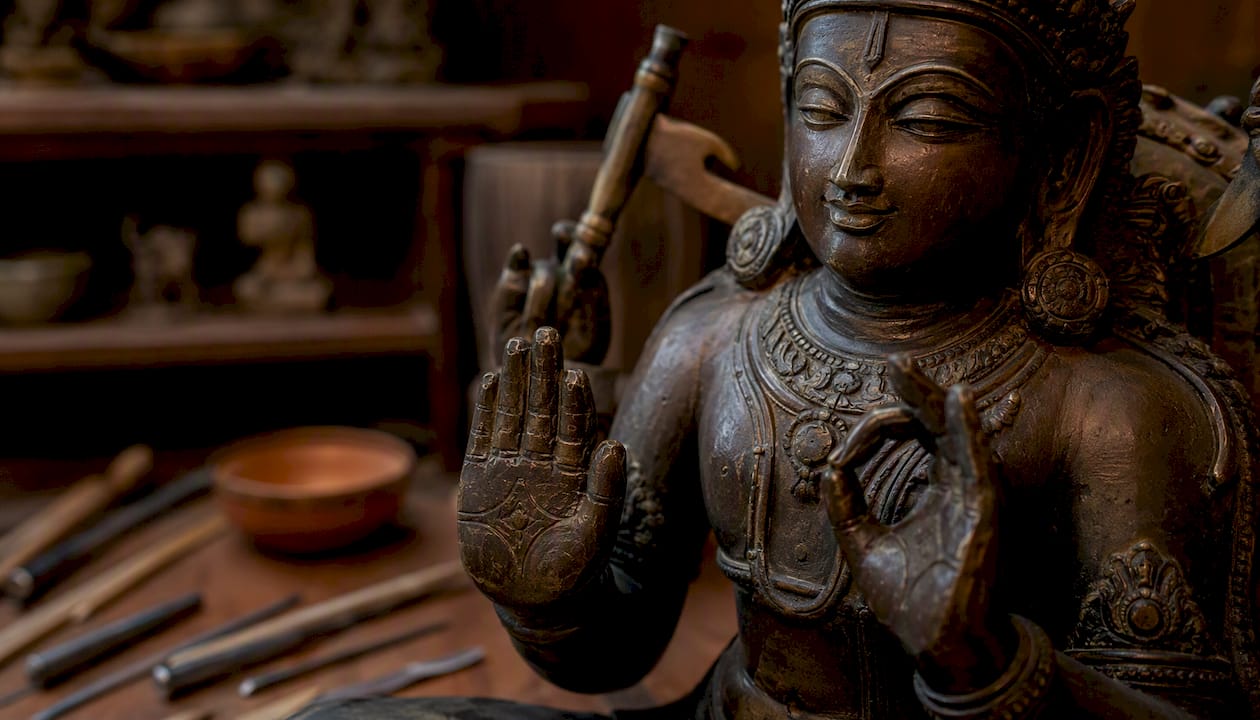
Suggerimento professionale: Richiedi fotografie ravvicinate dei mudra e degli attributi prima dell'acquisto. L’accuratezza iconografica è l’indicatore più chiaro che separa un pezzo di livello museale da una copia prodotta in serie.
Come scegli la statua indù giusta per il tuo scopo?
Lo scopo determina ogni altra decisione. Una murti di culto e una scultura da esposizione possono sembrare simili ma richiedono criteri di selezione diversi.
Lista di controllo per l'acquisto passo dopo passo:
- Definisci il tuo scopo. Il culto/puja richiede completezza iconografica e, idealmente, idoneità alla consacrazione. La meditazione o l'uso del darshan danno priorità alla presenza e alla scala. Il display interno consente una maggiore flessibilità stilistica. Richiesta di investimento e raccolta documentata provenienza e rapporti sulle condizioni.
- Scegli la tua divinità. Considera il tuo Ishta-devata o la divinità più rilevante per la tua intenzione. Per guida sul contesto teologico e sulla selezione delle divinità, rivedi gli attributi della divinità e le associazioni tradizionali prima di impegnarti.
- Conferma l'iconografia. Verifica mudra, attributi e vahana. Molte divinità portano epiteti multipli e lunghi elenchi di nomi — la ricerca di nomi alternativi (ad esempio, Vinayaka per Ganesha) può far emergere ulteriori documenti di provenienza.
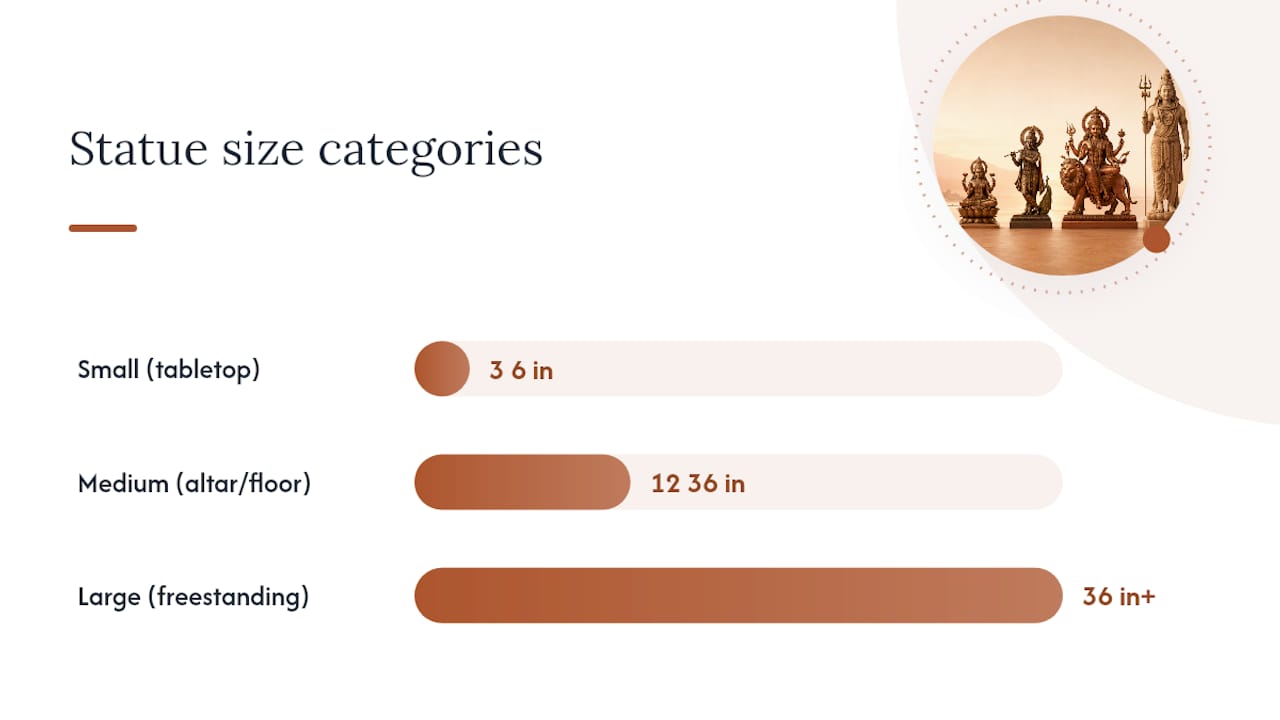
- Imposta i limiti di dimensioni e peso. Piccolo (3-12 pollici): altari da tavolo e scaffali. Medio (12–36 pollici): nicchie dedicate all'altare o posizionamento sul pavimento. Grandi (36 pollici+): installazioni indipendenti che richiedono pianificazione strutturale e tempi di importazione prolungati.
- Scegli materiale e finitura. Abbina il materiale all'ambiente: bronzo per la longevità, pietra per la permanenza, legno per il calore, lacca per la ricchezza visiva.
- Imposta il tuo budget. Riproduzioni decorative, murtis di culto e oggetti d'antiquariato di livello museale occupano fasce di prezzo distinte. I pezzi antichi comportano costi aggiuntivi per la documentazione di provenienza e lo sdoganamento.
Domande da porre al venditore prima dell'acquisto:
- Qual è la storia della provenienza e sono disponibili documenti di proprietà precedenti?
- Viene fornito un rapporto sulle condizioni e sono indicati eventuali restauri?
- Quale documentazione di esportazione e importazione accompagna il pezzo?
- Esiste una storia di consacrazione e il pezzo è idoneo al culto?
- Qual è la politica di restituzione e la spedizione include l'assicurazione e il valore dichiarato?
Per pratico guida alla scelta e al posizionamento dell'altare, le scelte di dimensione e orientamento influiscono sia sulla funzione devozionale che sull'equilibrio visivo.
Come si verifica l'autenticità e la provenienza prima dell'acquisto?
I collezionisti che trattano le sculture come investimenti spirituali e culturali dovrebbero aspettarsi gli stessi standard di documentazione applicati dai musei. Una galleria rispettabile lo fornisce senza che gli venga chiesto.
Lista di controllo della provenienza:
- Documenti di proprietà precedenti o cronologia della collezione
- Registri del museo o della mostra, ove applicabile
- Documentazione di esportazione dal paese di origine
- Documenti di sdoganamento per i pezzi che entrano negli Stati Uniti
- Note del curatore o del ricercatore che identificano periodo, regione e stile
Lista di controllo delle condizioni:
- Patina coerente con l'età dichiarata (il bronzo dovrebbe mostrare un'ossidazione naturale, un rivestimento non uniforme)
- Segni di utensili coerenti con l'intaglio manuale o la fusione a cera persa
- Restauro chiaramente notato e localizzato, che non nasconde danni importanti
- Iconografia intatta: nessun attributo mancante, mudra riparati divulgati
Collezioni museali documentare in dettaglio i materiali, l'iconografia e le condizioni; gli acquirenti dovrebbero aspettarsi lo stesso livello di documentazione da gallerie rispettabili. Per l'iconografia specifica della dea, a guida per collezionisti per identificare le statue della dea copre le principali caratteristiche distintive.
Suggerimento professionale: Chiedi al venditore una nota curatoriale scritta: la regione del pezzo, il periodo stimato, il materiale, il riepilogo delle condizioni e qualsiasi storia nota della collezione. Un venditore che non può fornirlo per iscritto non opera secondo gli standard della galleria.
Cura pratica e posizionamento dell'altare per le case degli Stati Uniti
Cura per materiale:
- Bronzo: pulire con un panno morbido e asciutto; applicare annualmente un sottile strato di cera microcristallina per stabilizzare la patina; evitare detergenti abrasivi
- Pietra: asciugare regolarmente la polvere; acqua e sapone neutro occasionali per lo sporco superficiale; evitare detergenti acidi
- Legno: tenere lontano dalla luce solare diretta e da fonti di calore; mantenere un'umidità stabile (40–55% UR); spolverare con una spazzola morbida
- Lacca birmana: spolverare solo con un panno morbido; nessun contatto con l'umidità
- Resina: acqua e sapone neutro; nessun requisito speciale
Posizionamento dell'altare:
Il Darshan – la pratica spirituale di ricevere lo sguardo di una divinità – è una delle ragioni principali per cui le famiglie mantengono le murti in posizioni dedicate. Il posizionamento dovrebbe consentire alla statua di essere rivolta direttamente al devoto, tipicamente orientata verso est o nord-est. Eleva la murti sopra il livello del pavimento su un plinto pulito o sulla superficie dell'altare. L'illuminazione morbida e calda migliora sia l'atmosfera devozionale che la presenza visiva.
Per le statue di Shiva in particolare, guida al posizionamento affronta in dettaglio l'orientamento e l'altezza dell'altare.
Sicurezza e montaggio:
I pezzi più grandi in pietra o bronzo richiedono plinti stabili e adeguati al peso. Nelle zone sismiche (California, Pacifico nord-occidentale), utilizzare cinghie sismiche di tipo museale o mastice museale antiscivolo per pezzi superiori a 10 libbre. I pezzi in legno e laccati necessitano di ambienti con umidità controllata; evitare scantinati e muri esterni.
Suggerimento professionale: Per vignette espositive che bilanciano funzioni devozionali e decorative, esempi di posizionamento di sculture drammatiche mostra come la scala, l'illuminazione e lo spazio negativo lavorano insieme.
Cosa dovrebbero aspettarsi gli acquirenti statunitensi in termini di spedizione, prezzi e resi?
Fasce di prezzo (fasce qualitative):
- Riproduzioni decorative (resina o colata di bassa qualità): entry-level; collezionabilità limitata
- Murtis di culto (bronzo o pietra di qualità, produzione moderna o recente): fascia media; adatto per uso altare
- Oggetti d'antiquariato da museo (provenienza documentata, pezzi d'epoca): premio; collezionabilità di tipo investimento
Spedizione e assicurazione:
- Le gallerie affidabili spediscono tramite corrieri assicurati (DHL o equivalenti) con un valore dichiarato corrispondente al prezzo di acquisto
- L'imballaggio e l'imballaggio protettivo sono standard per i pezzi di pietra e bronzo di grandi dimensioni
- Lo sdoganamento per le importazioni di oggetti d'antiquariato in genere richiede 2-4 settimane oltre il tempo di transito standard
- Richiedi un numero di tracciabilità, le condizioni dichiarate al momento della spedizione e un certificato assicurativo prima della spedizione del pezzo
Resi e richieste di risarcimento danni:
- Ispezionare il pezzo immediatamente alla consegna e fotografare eventuali danni prima di disimballarlo completamente.
- Segnala eventuali danni alla galleria entro il termine indicato (normalmente 48-72 ore dal ricevimento).
- Conservare tutti gli imballaggi originali; la maggior parte delle gallerie lo richiede per richieste di risarcimento danni.
- Confermare per iscritto il periodo di restituzione e i termini di rifornimento prima dell'acquisto.
- Verifica se la politica di restituzione copre le spedizioni internazionali o si applica solo alla consegna nazionale negli Stati Uniti.
Come HDAsianArt cura e documenta le sue statue indù
Il processo di curatela di HDAsianArt tratta ogni pezzo come un soggetto di ricerca individuale, non come una voce di catalogo.
Flusso di lavoro di cura e documentazione:
- Ricerca individuale sulla regione, il periodo, lo stile e la tradizione iconografica di ogni pezzo
- Fotografie di qualità museale che coprono viste complete, scatti dettagliati di mudra e attributi e primi piani delle condizioni
- Rapporti scritti sulle condizioni del materiale, stato della superficie, eventuali restauri e completezza iconografica
- Documentazione di provenienza compilata dalla cronologia della collezione disponibile, dai record di esportazione e dalla proprietà precedente
- Revisione del curatore nominato: ogni pezzo viene valutato e descritto da James, HDAsianArt.com, garantendo standard coerenti in tutta la collezione
I segnali di fiducia che gli acquirenti possono verificare:
- Autore/curatore nominato su ogni elenco
- Spedizione DHL assicurata in tutto il mondo con valore dichiarato
- Storia documentata della mostra o della collezione, ove disponibile
- Contatto diretto per documentazione aggiuntiva, valutazioni indipendenti o rapporti sulle condizioni su richiesta
HDAsianArt supporta gli acquirenti durante l'intero processo: dalla selezione di una divinità e conferma dell'iconografia alla risposta alle domande sul posizionamento dell'altare e sull'idoneità alla consacrazione. Contatta direttamente la galleria per pezzi non ancora elencati o per richieste di acquisizione su misura.
Ciò che spesso i collezionisti sottovalutano nella scelta di una murti
L’errore più comune commesso dagli acquirenti è considerare la scelta della divinità come una decisione puramente estetica. La completezza iconografica di una statua – i mudra specifici, il numero corretto di braccia, la presenza del vahana – determina se funziona come un culto murti o rimane un oggetto decorativo. Queste non sono categorie intercambiabili.
Il Darshan, la pratica di ricevere lo sguardo di una divinità, trasforma una statua ben posizionata in un punto focale vivente per la devozione. Tale funzione dipende dall'orientamento corretto, dalla scala appropriata e dall'integrità iconografica. Un Nataraja ben realizzato posizionato di fronte a un muro, o un Ganesha con attributi errati, perde il suo scopo devozionale indipendentemente dalla qualità del materiale.
L’altro fattore sottovalutato è la ricerca sulla provenienza. Molte divinità portano dozzine di epiteti: solo Ganesha è conosciuto come Vinayaka, Vighnesha e Ganapati, tra gli altri. La ricerca di un solo nome durante la verifica della mostra o della storia della collezione di un pezzo mancherà di record archiviati con epiteti alternativi. Una galleria che capisce questo e fa ricerche di conseguenza opera secondo uno standard fondamentalmente diverso da quello di una galleria che elenca semplicemente un pezzo con il suo nome più comune.
Sfoglia la collezione di statue indù curata da HDAsianArt
HDAsianArt offre agli acquirenti statunitensi l'accesso diretto a sculture di divinità indù autenticate individualmente, ciascuna documentata con ricerche sulla provenienza, fotografie di qualità museale e un rapporto scritto sulle condizioni.
Ogni pezzo viene spedito in tutto il mondo tramite corriere DHL assicurato con valore dichiarato, quindi il tuo acquisto è protetto dalla galleria alla porta di casa. La collezione comprende pezzi in bronzo, pietra e legno provenienti da Cambogia, Tailandia, Indonesia, Sri Lanka e Vietnam, coprendo l'intera gamma di divinità e tradizioni regionali descritte in questa guida.
Per sfogliare le statue indù disponibili o richiedere la documentazione sulla provenienza e i dettagli di spedizione per un pezzo specifico, visitare la galleria HDAsianArt o contattare direttamente la galleria. Per un esempio dello standard di cura applicato a ciascuna inserzione, visualizza una statua documentata individualmente dalla collezione attuale.
Fonti
Gli acquirenti che desiderano un contesto più approfondito sull'iconografia delle divinità, sui metodi dei materiali e sugli standard di provenienza possono consultare direttamente queste fonti.
- Divinità in pietra: scultura indù dalle collezioni del Museo d'arte asiatica
- Dei e dee indù: la guida completa
- Elenco delle divinità indù | Britannica
- Divinità indù
- Oltre 330 milioni di dei: come l'induismo unisce molte divinità in un'unica realtà suprema
Quando un venditore cita una fonte di provenienza specifica, chiedigli di fornire il riferimento corrispondente in modo da poter verificare l'affermazione direttamente rispetto a una di queste o a risorse accademiche equivalenti.
Consigliato
- Chi è Dio nell'induismo: una guida per l'identificazione del collezionista - Arte asiatica HD
- Caratteristiche identificative della statua della dea indù: una guida per il collezionista - Arte asiatica HD
- Scegliere il tuo Ganesha: una guida per acquistare la statua perfetta - Arte asiatica HD
- Come selezionare una statua indù per il tuo altare domestico - Arte asiatica HD
