



Posizionamento delle statue buddiste per una buona energia: una guida completa
Posizionamento delle statue buddiste per una buona energia: una guida completa
Quando collochi una statua buddista nella tua casa, crei un punto focale per la pratica spirituale e il flusso di energia. Il posizionamento corretto richiede attenzione alla direzione, all'elevazione e allo spazio sacro che circonda la statua.
Questa guida tratta i principi di posizionamento delle tradizioni Feng Shui e Vastu Shastra, soluzioni pratiche per gli spazi abitativi moderni e rituali di manutenzione che mantengono energico il tuo spazio sacro.
Sommario
Comprendere il posizionamento delle statue buddiste per una buona energia
Una statua buddista funziona come un'ancora spirituale nella tua casa, un costante promemoria di consapevolezza, compassione e illuminazione. Se posizionato correttamente, crea ciò che i praticanti chiamano "un ambiente sereno", una qualità di calma che si estende oltre l'area circostante.
Il flusso energetico negli spazi spirituali è radicato nell'osservazione pratica: gli spazi organizzati con intenzione sembrano diversi da quelli disordinati. La ricerca della psicologia ambientale mostra che gli spazi organizzati e intenzionali riducono il carico cognitivo e promuovono il rilassamento. Quando la tua statua buddista occupa una posizione scelta con cura, diventa il principio organizzativo dell'intero angolo della tua casa.
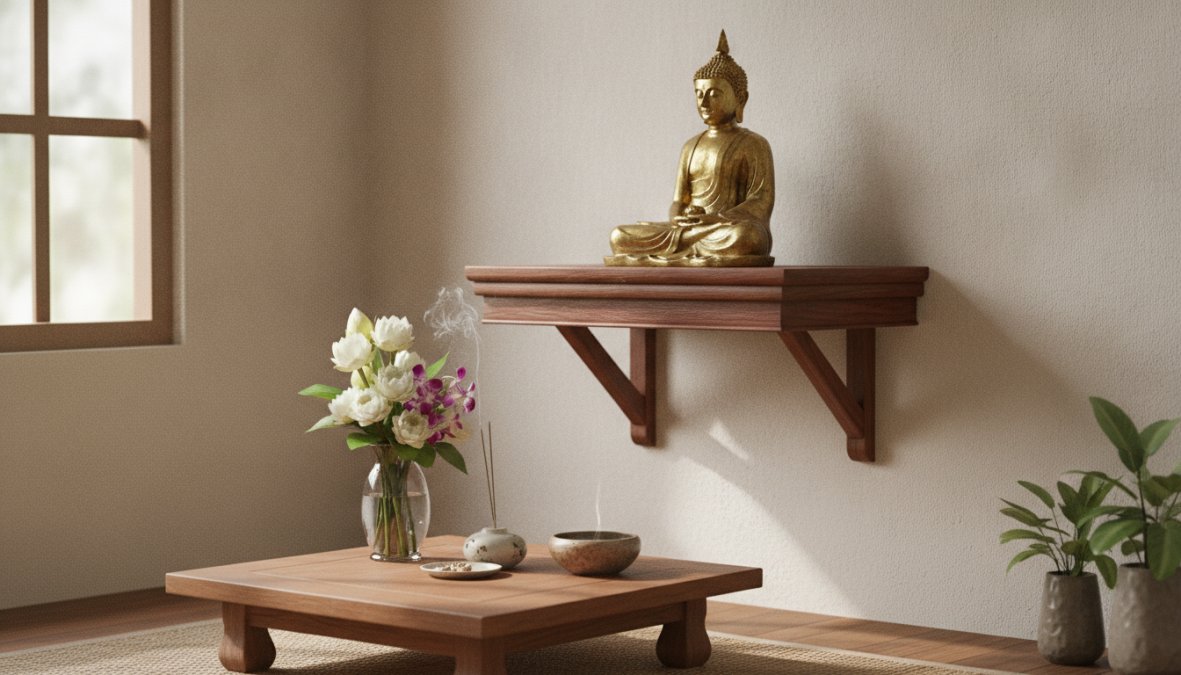
Il rispetto costituisce il fondamento di un corretto posizionamento. Le tradizioni buddiste sottolineano che la statua rappresenta gli insegnamenti del Buddha e la mente illuminata, non semplicemente un oggetto decorativo. Quando tratti la statua con reverenza, la posizioni naturalmente in un luogo d'onore, lontano dal traffico pedonale e ad un'altezza adeguata.
A altare dedicato o angolo di meditazione, anche un solo ripiano in una camera da letto, segnala alla tua mente che questo è un luogo per la pratica spirituale. La statua diventa l'ancora di quello spazio sacro, attirando la tua attenzione verso la consapevolezza ogni volta che entri nella stanza.
Principi di posizionamento delle statue del Buddha Feng Shui
Il Feng Shui fornisce una guida specifica per il posizionamento delle statue buddiste basata sulla facilitazione del flusso di energia positiva, ciò che i praticanti chiamano "chi" o "qi".
La direzione più propizia per Statua del Buddas è rivolto a est, allineato con il sole nascente. Questo orientamento simboleggia i nuovi inizi, il risveglio della coscienza e il rinnovamento quotidiano della pratica spirituale. Le posizioni rivolte a sud-est sostengono la prosperità e l’abbondanza, mentre le posizioni rivolte a sud enfatizzano il riconoscimento e la chiarezza. Scegli una direzione che sia in linea con la tua intenzione principale per la statua.
Il posizionamento all’altezza degli occhi è importante in modo significativo. Quando una statua si trova all'altezza degli occhi o leggermente al di sopra, attira l'attenzione senza dominare lo spazio. Questa elevazione crea una gerarchia visiva; il tuo occhio si sposta naturalmente verso la statua, rendendola il punto focale della stanza.
Una mensola rialzata o un basamento in pietra hanno molteplici scopi. Fisicamente, solleva la statua ad un'altezza adeguata. Simbolicamente onora la statua distinguendola dagli oggetti di uso quotidiano. Un basamento protegge inoltre la statua da danni accidentali e la tiene lontana dal disordine a livello del pavimento.
Statua del Buddha in camera da letto Feng Shui: creare tranquillità
Il posizionamento della camera da letto richiede una considerazione speciale perché la camera da letto svolge una funzione diversa rispetto a un soggiorno o a uno spazio di meditazione. Il posizionamento ideale della camera da letto è su uno scaffale o un cassettone in un angolo che non sia direttamente rivolto verso il letto. Questo posizionamento permette alla statua di irradiare energia calmante senza creare la sensazione di essere "guardati" durante il sonno.
Posiziona la statua dove la noterai durante la tua routine mattutina e serale. Una statua in camera da letto serve a ricordare di iniziare e terminare la giornata con intenzione. Se mediti nella tua camera da letto, posiziona la statua dove guardi naturalmente durante la meditazione, in genere all'altezza degli occhi, leggermente in avanti rispetto alla posizione seduta.
L’atmosfera serena in una camera da letto dipende in gran parte dalla riduzione al minimo del disordine visivo. Una singola statua di Buddha su uno scaffale pulito e organizzato crea tranquillità. Più statue, circondate da altri oggetti, diluiscono l'effetto.
Non posizionare mai una statua di Buddha direttamente sopra il letto o posizionarla in modo che la statua "guardi dall'alto" verso chi dorme. Evita di posizionare la statua in angoli che sembrano angusti o ombrosi; dovrebbe essere visibile e accessibile. Considera il clima della tua camera da letto quando selezioni sia il materiale della statua che la posizione in cui posizionarla. Le statue in pietra e metallo gestiscono i cambiamenti ambientali meglio dei pezzi in legno o dipinti.
Dove posizionare la statua del Buddha per ricchezza e prosperità
La connessione tra collocazione delle statue e prosperità materiale appare in molteplici tradizioni. Il Feng Shui affronta specificamente questo problema attraverso il concetto di "angolo della ricchezza", tradizionalmente l'angolo sud-est.
Se la disposizione del tuo soggiorno lo consente, posiziona una statua di Buddha nell'angolo sud-est su una superficie elevata. Questa posizione funziona particolarmente bene se la statua è rivolta a nord-est o a est, combinando le associazioni di prosperità del sud-est con la chiarezza spirituale dell’orientamento verso est. La statua deve occupare una posizione di rilievo, da qualche parte in cui la si possa vedere naturalmente e dove gli ospiti possano notarla.
Il Buddha che ride offre un approccio diverso al posizionamento della prosperità. A differenza del Buddha meditativo, il Buddha che ride irradia gioia, abbondanza e contentezza. Molti praticanti posizionano un Buddha che ride nel soggiorno per invitare buona fortuna ed energia sociale positiva. Il Buddha che ride funziona bene su un tavolino, una libreria o una consolle.
La buona fortuna attraverso il posizionamento delle statue non riguarda il pensiero magico. Si tratta piuttosto di creare un ambiente che supporti la consapevolezza dell’abbondanza. Quando il tuo spazio include un'area dedicata che onora i principi spirituali, prendi naturalmente decisioni più in linea con tali principi.
| Posizione del posizionamento | Ideale per | Direzione ideale | Altezza |
|---|---|---|---|
| Angolo sud-est | Ricchezza e prosperità | Esposto a nord-est | All'altezza degli occhi o sopra |
| Parete esposta a est | Risveglio spirituale | Est | Leggermente sopra il livello degli occhi |
| Punto focale del soggiorno | Armonia familiare | Sud-est o est | Livello degli occhi |
| Angolo di meditazione | Pratica profonda | Est | Leggermente in avanti rispetto alla posizione seduta |
| Mensola della camera da letto | Riposo tranquillo | Nord-est | Livello degli occhi |
Regole e linee guida rispettose per il posizionamento delle statue buddiste
Il rispetto costituisce il fondamento etico di un corretto posizionamento. La statua rappresenta la mente illuminata del Buddha e gli insegnamenti del Buddismo, non è un oggetto decorativo.
Mantieni l'area attorno alla tua statua pulita e organizzata. Spolvera la statua regolarmente e delicatamente, utilizzando panni morbidi ed evitando prodotti chimici aggressivi. Una statua pulita e uno spazio circostante pulito segnalano rispetto e mantengono l’energia positiva che lo spazio coltiva.
L'elevazione è importante come segno di rispetto. Non posizionare mai una statua di Buddha sul pavimento o all'altezza dei piedi. La statua dovrebbe essere sempre posizionata più in alto rispetto al punto in cui le persone si siedono o camminano. Se il tuo spazio non dispone di opzioni per il montaggio a parete, un tavolino robusto funziona, ma il posizionamento sul pavimento contraddice il principio dell’onore.
L'illuminazione morbida e indiretta crea un'atmosfera serena migliore delle luci abbaglianti. Molti praticanti usano piccole lampade, candele (se sicure) o posizionano la statua vicino a una finestra per catturare la luce naturale.
Non posizionare mai una statua di Buddha in un bagno, in una toilette, in una cucina, in una lavanderia o in qualsiasi altro luogo in cui si accumulano rifiuti alimentari. Questi spazi sono associati ai rifiuti e alle impurità in molteplici tradizioni. Non posizionare mai una statua in un punto in cui potrebbe essere accidentalmente rovesciata, su cui sedersi o essere calpestata. Evitare di posizionare più statue nello stesso spazio a meno che non si crei un altare dedicato. Una singola statua ben posizionata crea concentrazione e chiarezza.
Linee guida Vastu Shastra per il posizionamento delle statue buddiste
Vastu Shastra, l'antico sistema indiano di armonia spaziale, offre principi di posizionamento che completano il Feng Shui. Mentre il Feng Shui enfatizza il flusso del chi, Vastu si concentra sul bilanciamento dei cinque elementi e delle energie direzionali.
L'orientamento rivolto a est riveste un significato particolare a Vastu. L'est rappresenta il sorgere del sole, i nuovi inizi e la direzione dell'illuminazione nella cosmologia buddista. Una statua del Buddha allineata a Vastu è rivolta a est o nord-est.
Il bilancio energetico in Vastu dipende dai cinque elementi: terra, acqua, fuoco, aria e spazio. Una superficie stabile (elemento terra) sostiene la statua. La luce naturale o un'illuminazione delicata (elemento fuoco) lo illumina. La circolazione dell'aria attorno alla statua impedisce il ristagno. Lo spazio attorno alla statua (elemento spaziale) consente all'energia di fluire liberamente.
Una statua di Buddha richiede una base robusta e piana che non si sposti, si inclini o oscilli. Una solida mensola in legno, un basamento in pietra o un tavolo d'altare dedicato forniscono la stabilità richiesta dalla statua. Non posizionare mai una statua su mobili traballanti.
L'angolo nord-est, associato alla saggezza e alla crescita spirituale, è un luogo eccellente per una statua del Buddha. L'angolo sud-est, associato alla prosperità, funziona bene per un Buddha che ride o una statua destinata a invitare l'abbondanza.
Soluzioni di posizionamento per piccoli appartamenti e spazi minimalisti
La creazione di un altare in uno spazio limitato inizia con l'identificazione di un singolo ripiano o angolo che possa fungere da area sacra. Uno scaffale sospeso sopra una cassettiera, un angolo di una libreria o un tavolino può fungere da altare. Questo spazio dovrebbe esistere principalmente per la statua e la pratica spirituale.
Il posizionamento verticale diventa cruciale negli spazi piccoli. Gli scaffali a parete massimizzano lo spazio utilizzabile ed elevano naturalmente la statua ad un'altezza adeguata. Un unico ripiano, largo forse 24-36 pollici, offre spazio sufficiente per una statua e oggetti d'altare minimi.
Il design minimalista dell'altare si allinea naturalmente ai principi buddisti di semplicità. Una singola statua su uno scaffale pulito, magari con uno o due elementi di supporto, crea un potente punto focale. Ogni oggetto sul tuo altare dovrebbe avere uno scopo: la statua come centro spirituale, forse una candela per la luce e l'intenzione, forse fiori freschi come simbolo di impermanenza.
Lo spazio dell'altare dovrebbe sembrare separato dal resto della zona giorno, anche se si trova nella stessa stanza. Usa la posizione della statua, magari con un delicato trattamento dello sfondo o un'illuminazione attenta, per definire lo spazio sacro.
Una singola, bellissima statua di Buddha in un luogo scelto con cura crea più energia positiva di più statue sparse in uno spazio angusto.
Manutenzione, rituali di pulizia e risoluzione dei problemi dell'energia negativa
Una statua di Buddha richiede cure per mantenere la sua condizione fisica e la qualità energetica. Una corretta manutenzione prevede sia la pulizia pratica che rituali spirituali che onorano il significato della statua.
La cura adeguata dipende dal materiale della statua. Le statue di pietra possono essere pulite delicatamente con un panno morbido e umido. Le statue in metallo beneficiano di una lucidatura delicata occasionale. Le statue in legno richiedono un'attenta manipolazione; spolverare delicatamente con un panno morbido ed evitare l'esposizione all'acqua. Le statue dipinte o dorate necessitano di una cura particolare per proteggere la finitura.
I rituali di pulizia aggiungono una dimensione spirituale alla manutenzione pratica. Alcune tradizioni consigliano di pulire la statua in orari specifici (mattina, luna nuova o transizioni stagionali). Mentre pulisci, stabilisci un'intenzione, forse gratitudine o rinnovato impegno nella pratica. Questo trasforma un compito pratico in una pratica di consapevolezza.
I fiori freschi posti vicino alla statua simboleggiano l'impermanenza e il rinnovamento. Il fumo di incenso trasporta intenzioni e crea una dimensione sensoriale nel tuo spazio sacro.
Se il tuo spazio ti sembra pesante o la tua pratica è in fase di stallo, esamina la posizione della tua statua. È ancora ad un'altezza adeguata? Si è accumulato disordine attorno ad esso? Spesso, semplicemente pulire l'area, rimuovere il disordine nelle vicinanze e dedicarsi nuovamente al significato della statua ripristina l'energia positiva.
I fattori ambientali possono creare quella che sembra energia negativa. Una scarsa illuminazione rende lo spazio cupo. La circolazione stagnante dell’aria crea pesantezza. Affrontare questi fattori pratici spesso risolve ciò che i professionisti interpretano come problemi energetici.
Il posizionamento delle statue buddiste per ottenere una buona energia non è complicato, ma richiede intenzione e rispetto. Sia che tu stia lavorando con un piccolo appartamento o una casa spaziosa, i principi rimangono coerenti: elevare la statua, posizionarla con attenzione, mantenere lo spazio circostante pulito e organizzato e mantenere la pratica con genuino impegno spirituale. HD Asian Art offre statue buddiste e indù accuratamente curate, progettate per migliorare gli spazi di meditazione e creare raffinati interni domestici spirituali.
Domande frequenti
Qual è la direzione migliore per posizionare le statue buddiste secondo il Feng Shui?
Secondo i principi del Feng Shui, la posizione rivolta a est o a sud-est è considerata di buon auspicio per le statue buddiste, poiché si allinea con il sole nascente e promuove il flusso di energia positiva. La statua deve essere posizionata all'altezza degli occhi su una mensola rialzata o su un basamento in pietra, mai a terra. L'orientamento rivolto a est incoraggia la consapevolezza e la pratica spirituale sostenendo al tempo stesso l'energia armoniosa in tutto il tuo spazio.
Posso posizionare una statua di Buddha nella mia camera da letto e quali sono le regole del Feng Shui?
Sì, puoi posizionare una statua di Buddha nella tua camera da letto seguendo linee guida specifiche. Posizionalo su uno scaffale rialzato all'altezza degli occhi, lontano dal letto stesso, per creare un ambiente sereno senza disturbare il riposo. Assicurati che la statua sia rivolta verso la stanza e non verso il muro e mantieni un ambiente ordinato attorno ad essa. Evita di posizionarlo direttamente di fronte alla porta della camera da letto, poiché ciò potrebbe creare energia inquietante. Le luci soffuse e il posizionamento rispettoso favoriscono la tranquillità e la consapevolezza.
Dove dovrei posizionare una statua di Buddha per ricchezza e buona fortuna?
Per ricchezza e prosperità, posiziona la tua statua del Buddha nel soggiorno o nell'angolo ricchezza della tua casa, in genere l'area all'estrema sinistra del tuo spazio abitativo principale secondo il Feng Shui. Usa uno scaffale o un altare rialzato per posizionarlo all'altezza degli occhi. Un Buddha che ride è particolarmente associato alla buona fortuna e all’abbondanza. Assicurati che la statua abbia una visione chiara della stanza, sia posizionata su una superficie stabile e sia circondata da un arredamento armonioso che supporti il flusso di energia positiva e risultati di buon auspicio.
Quali sono le regole più importanti per esporre rispettosamente una statua buddista?
Le principali regole di posizionamento rispettose includono: non posizionare mai la statua a terra o sul pavimento, elevarla sempre su uno scaffale o un piedistallo; mantenere l'area circostante pulita e priva di disordine; evitare di posizionarlo nei bagni o nelle camere da letto dove è rivolto verso il letto; non voltare mai le spalle all'ingresso; mantenere luci soffuse e un'atmosfera di spazio sacro; e assicurarsi che sia protetto dagli agenti atmosferici se posizionato all'aperto. Queste linee guida onorano le tradizioni del Feng Shui e del Vastu Shastra sostenendo l'energia positiva nella tua casa.
