






Buddhist Gift Giving: What to Give and Why
Buddhist Gift Giving: What to Give and Why
You've been invited to a Vesak gathering at a local temple, a friend's housewarming, or an open morning at a meditation centre in Leeds or Bristol. Standing in front of a shop shelf, you wonder whether an expensive bronze figure looks thoughtful or over the top, and whether flowers, tea, or cash in a plain envelope would be better received.
Buddhist gift giving rarely rewards the highest price tag. Across Buddhist traditions, the most fitting offering is often non-material, modest, or directed toward a whole community rather than a single person. Testing an expensive "authentic" object, its provenance, and its packaging waste against the spirit of generosity keeps your gift grounded and genuinely welcome.
Table of Contents
- Why Generosity Sits at the Heart of Buddhist Practice
- Gift Options and What Each One Means
- How Dana Funds Temples and Gift Aid Adds Value
- How to Present a Buddha Statue Respectfully
- Gifts by Recipient and Tradition
- Temple Etiquette When Offering a Gift
- Non-Material Gifts and Missteps to Avoid
- Choose a Gift the Recipient Will Honour
Why Generosity Sits at the Heart of Buddhist Practice
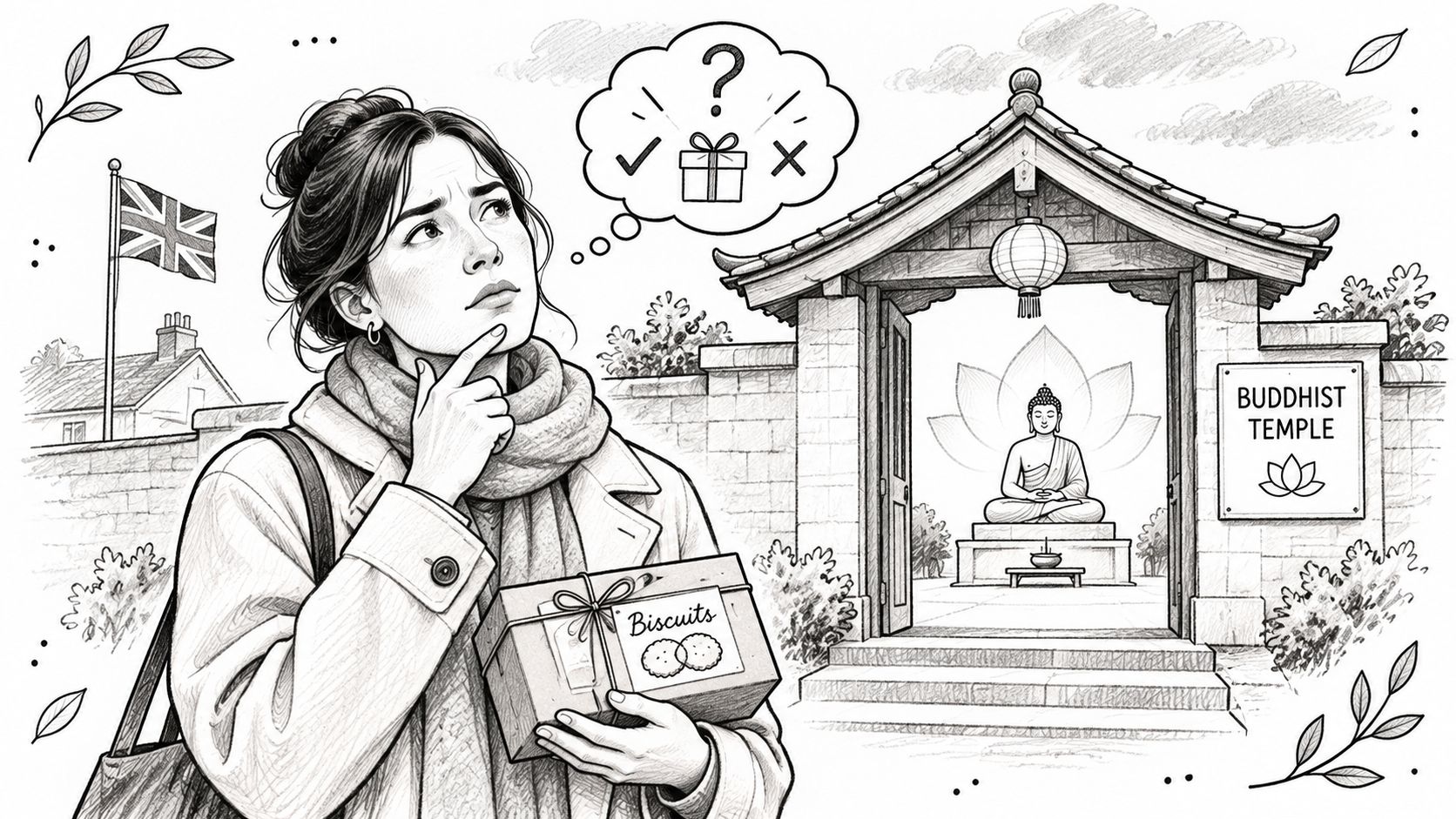
Say a first-time visitor arrives at a suburban UK temple carrying a modest box of biscuits and pauses by the porch, wondering if it looks too ordinary. In Buddhist ethics, that quiet hesitation misses what makes an offering valuable.
In Theravāda teaching, dāna (generosity) stands as the first of the perfections (pāramī), forming the practical foundation for the entire spiritual path. The value of a gift doesn't sit in its rarity or retail price. It lies in the giver's intention and willingness to let go of attachment, greed, and expectation.
Across Britain, this ethic sustains real communities of temples, meditation groups, and household altars, with the Wikipedia overview of Buddhism in the United Kingdom recording 289,551 Buddhists in the 2021 UK Census. Whether someone brings biscuits for tea after a sit or contributes to a centre's roof fund, the inner attitude counts first.
How Lay Support and Teaching Work Together
Buddhist communities run on a reciprocal relationship rather than a commercial transaction. Lay followers provide practical support for monastics and practice centres, and teachers share the Dhamma (the Buddha's teachings) freely in return. Neither side treats the exchange as a purchase, which is why asking for a receipt of spiritual merit or expecting effusive thanks misses the point.
Traditional teachings group generosity into three distinct forms:
- Material gifts (āmisadāna). Everyday essentials such as food, robes, shelter, medicines, flowers, or financial support for a temple's upkeep.
- The gift of Dhamma (dhammadāna). Sharing reliable teachings, sponsoring a Dharma book, or helping someone attend a retreat where they can learn to practise.
- The gift of fearlessness (abhayadāna). Offering safety, patience, forgiveness, and reassurance so others live with less anxiety or harm.
Start from what the recipient genuinely needs and the open-handed spirit in which you're offering it, then pick the gift that fits.
Gift Options and What Each One Means
Different settings call for different offerings. A gift that fits a monastery may sit awkwardly in a friend's home, while a beautiful object can miss the mark if it adds pressure or clutter. Use the table as a map of common choices, then adjust for the recipient, the centre, and the intention behind dāna.
| Gift | Traditional meaning | Best suited to | Watch for |
|---|---|---|---|
| Money to a temple or monastery | Support for the sangha and the centre's upkeep | Centres with a donation box or standing-order scheme | Hand over in an envelope and do not expect thanks or return |
| Food offered to monastics | Direct material support for monks and nuns | Temple lunch or a community meal | Offer before midday for Theravāda monastics and ask what is suitable |
| Flowers, candles and incense | Traditional shrine offerings | Shrine or altar in a temple or home | Check the centre's rules on candles and naked flames |
| Buddha image | A reminder of the Buddha's teaching and a focus for practice | Home altar or meditation room | Choose a serene, well-made image and follow placement etiquette |
| Book or teaching | The gift of Dhamma (dhammadāna) | Friends who are curious or already practising | Pick a text from a reputable, tradition-specific source |
| Course or retreat fee | Support for teaching and practice | Someone ready to commit time to practice | Confirm the recipient has the time and interest |
| Practical help at a centre | Service and time offered as dāna | Volunteers at events or open days | Ask the centre what help is needed before offering |
Matching the Gift to the Setting
Read that table through one rule: match the gift to the recipient's practice and setting, not to the biggest budget you can stretch to. A modest bunch of fresh chrysanthemums placed on a shared shrine often fits better than an ornate ornament nobody asked for. The gift works like a key, useful only when it suits the door it is meant to open.
Two practical temple rules trip up well-meaning UK visitors more than any others. First, Theravāda monastics traditionally take their main meal before midday and do not handle money themselves, so cash offerings go into the temple box or to a lay steward rather than into a monk's hand. Second, fire-based offerings such as tealights, pillar candles, and joss sticks must follow the centre's own safety policy, because many British temples operate inside Victorian terraces or leased community halls where naked flames and smoke are restricted. Customs vary between schools and households, so asking a steward is part of respectful giving, not an awkward interruption.
If you're shopping for someone who collects sacred sculpture or cultural objects for a personal space, forcing your own taste onto their room can backfire. Letting them select a piece that suits their altar or study keeps the gesture light; specialist platforms let you shop gift cards for collectors from Astro West so the recipient chooses what belongs in their home.
A Buddha image needs the same care in reverse. HD Asian Art explains the meaning of postures and hand gestures, or mudras, including meditation, teaching, protection, and blessing. That matters because a statue is not just decoration. A meditation Buddha suits a calm room or altar, while Ganesha is suggested for new beginnings and wisdom, Shiva for transformation, Vishnu for protection, and Lakshmi for abundance. Detailed descriptions help buyers understand what a statue represents before purchasing, which reduces the chance of giving an image whose meaning the recipient does not want.
Price and presentation also belong in the decision. HD Asian Art sells statues priced under £150 as serene gifts, so a thoughtful choice need not be lavish. If a piece is expensive, ask whether its cost serves the intention of dāna or merely makes the giver feel generous. Unclear provenance deserves the same caution. A sacred object with an uncertain story can shift attention away from practice and into ownership. Packaging matters too: customers have praised careful wrapping, including a Buddha and temple lions arriving safely, a Buddha arriving in great condition, and a small Buddha arriving perfectly dry despite a tremendous thunderstorm. Good packing protects the gift without adding needless waste.
Before you buy or pack anything, put your choice through one clear test. Could the recipient accept this gift without feeling burdened, obliged, or out of place? If the honest answer is yes, you're on solid ground.
How Dana Funds Temples and Gift Aid Adds Value
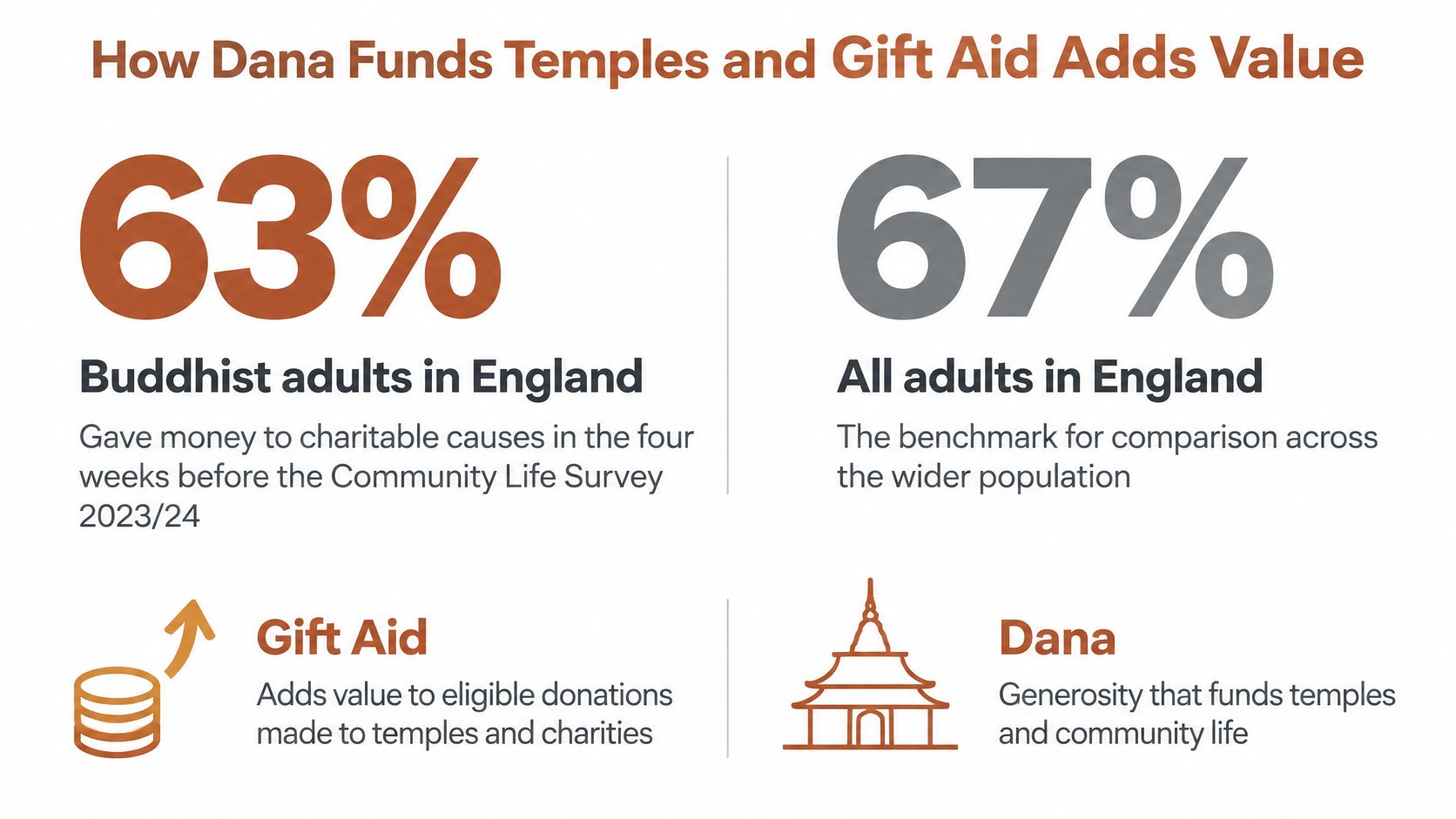
A-class fee is easy to understand. Dāna works differently: it funds the conditions for practice, then lets each person decide what they can give. That may mean a standing order, a contribution after a class, food for a retreat, or just helping a centre stay open. In the UK Government's Community Life Survey 2023/24, 63% of Buddhist adults in England reported giving money to charitable causes during the four weeks before completing the survey. That sat close to 67% for all adults in England, exceeded 59% for Hindu adults, and matched 63% for Sikh adults.
Among all adults in England who donated during that same four-week window, 21% gave more than £50, up from 19% in 2021/22. Keep the boundary of this survey clear: it measures charitable giving broadly, so it cannot tell us how much money reached Buddhist temples, teachers, or ritual projects specifically. Those percentages show that giving is a familiar habit for many people, not a price list for an offering. The intention behind the gift still matters more than its size.
How UK Buddhist Centres Run on Dana
Many Buddhist centres in Britain run on a dāna-based economy, so introductory classes, weekly meditations, and residential retreats may be offered without fixed ticket prices. Think of the centre as a shared kettle: many small contributions keep it hot, while one large donation cannot do the whole job alone. Centres rely on a steady mix of standing orders, event-linked contributions, and one-off donations.
Public charity filings show how regular giving supports that model. In its 2024 accounts lodged with the Charity Commission, Triratna Buddhist Centre York reported £14,799 from standing orders, alongside £2,540 from practice nights, £1,246 from meditations, and £566 in general donations. Another registered UK Buddhist centre filing with the Charity Commission notes that all Buddhist activities, including introductory courses and Sangha retreats, are free through dāna, sustained by 160 people giving £58,750 via standing orders while the charity commits 5% of its annual income to other charitable causes.
A common confusion is that "free" means unsupported. In practice, it means the cost is carried by the community, with giving spread across time and people. Seasonal ceremonies also bring communities together to replenish monastic supplies. During the annual Kathina ceremony celebrating generosity and community, lay supporters offer robes, food, and practical necessities to monastics after the rains retreat, reinforcing that shared upkeep is everyone's responsibility.
Stretching Your Donation With Gift Aid
When you give money to a registered UK Buddhist charity, Gift Aid increases what the temple receives without costing you more. As Samadhi's guide to dana giving explains, an eligible UK taxpayer's donation of £1 generates an extra 25p for the charity, a 25% uplift that turns a £40 gift into £50 while you still pay only £40. Gift Aid works like adding a tax receipt at the till, except the charity reclaims the tax from the government.
Follow four quick steps so the charity can reclaim that tax smoothly:
- Check your UK taxpayer status. You must have paid enough UK Income Tax or Capital Gains Tax in that tax year to cover the total Gift Aid reclaimed on all your charitable donations.
- Complete the Gift Aid declaration. Fill in the paper slip or online form the temple provides, including your full name and home address.
- Keep a clear record of each gift. Note the date, amount, and charity name for your tax records; if you also donate overseas or manage charitable paperwork for a group, reviewing charitable donation receipt requirements from Alignmint helps you keep clean documentation.
- Update the charity if your circumstances change. Let the treasurer know straight away if you stop paying enough UK tax or change your address.
One transparency rule applies whenever shopping meets charity: never treat a commercial product as a charitable donation unless the seller states the exact percentage or sum donated, the named beneficiary, the campaign period, and how funds are accounted for. That keeps the gift aligned with dāna: clear intention, clear outcome, and no quiet swap between generosity and retail.
How to Present a Buddha Statue Respectfully
A Buddha figure isn't just decorative art to a practising Buddhist. It serves as a visual anchor for stillness, ethics, and awakening, so every stage from selecting the pose to handing over the box carries quiet meaning.
Six Steps From Choosing to Handing Over
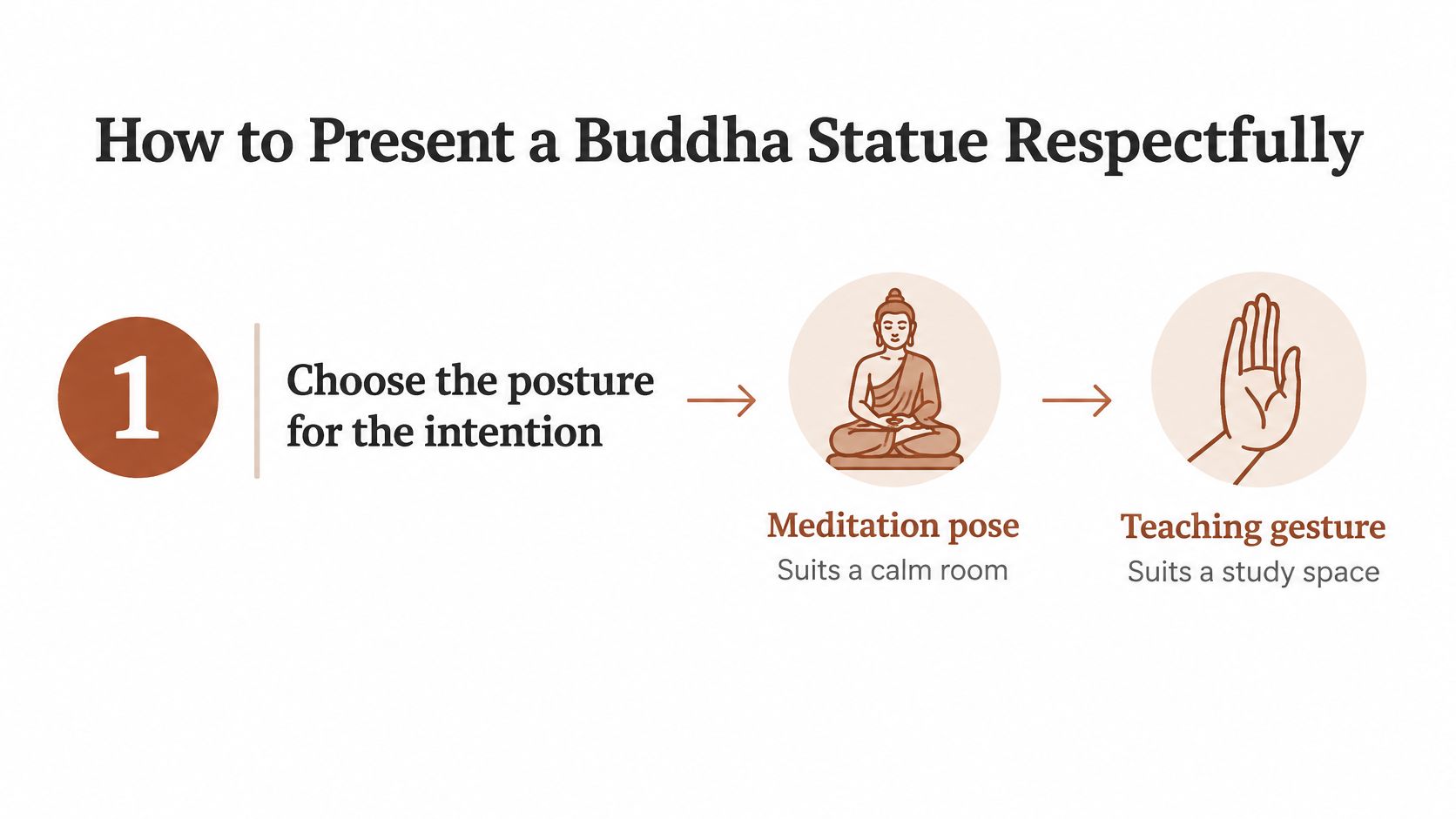
- Choose the posture for the intention. Different hand gestures (mudras) communicate specific qualities: the meditation pose (hands resting in the lap) suits a calm room, the teaching gesture fits a study space, the earth-touching gesture recalls the Buddha's enlightenment, and the protection gesture (raised open palm) suits a home where someone wants a sense of safety. Picking the pose deliberately shows you thought about the recipient's life rather than grabbing the first statue on a shelf.
- Check the craftsmanship and description. Look for a calm, balanced expression, clean casting or carving, and a seller description that states the figure's posture and regional style clearly. Knowing what the image depicts ensures you aren't accidentally gifting a different deity or a poorly finished reproduction.
- Pack it cleanly and firmly. Use sturdy padding, clean wrapping tissue, and a rigid box so slender fingers, robes, or wooden finishes arrive completely undamaged. Handing over a chipped sacred image creates avoidable awkwardness for both giver and receiver.
- Present the gift with both hands. Offer the wrapped statue steadily with two hands and without pressuring the recipient to praise it or promise a display spot on the spot. Share the meaning of the gesture only if they ask, keeping the moment unhurried and light.
- Suggest a respectful placement if asked. A clean, raised shelf, dedicated altar, or pooja corner keeps the image honoured and well clear of bathrooms, bins, household clutter, and the floor. For a deeper look at room choice, height, and orientation, see our guide on how to worship and respect a Buddha statue.
- Explain simple daily care. Gentle dusting with a soft, dry cloth keeps bronze, stone, or wood looking fresh, and other household items should never rest on the statue's head. Treating the piece with steady care rather than shifting it around casually as trendy decor protects the spirit of the gift.
Practical check: A respectful placement looks calm, clean, and deliberate, with clear space around the figure so the eye rests easily when entering the room.
Gifts by Recipient and Tradition
Because UK Buddhist communities reflect several distinct Asian lineages and modern Western groups, a gift that delights one host can feel awkward to another. Checking the recipient's background before you buy saves guesswork.
| Recipient | Tradition | Suitable gift | Avoid |
|---|---|---|---|
| Theravāda monk or nun | Theravāda | Food offered before midday, robes or toiletries, donation to the temple | Money handed directly, food after midday, alcohol |
| Tibetan lama or teacher | Vajrayāna | Khata (white scarf), donation in an envelope | Presenting with one hand, careless handling of texts or images |
| Zen priest or temple community | Japanese Zen | Incense, flowers, donation to the temple | Expensive personal gifts that seem to seek favour |
| Friend new to Buddhism | Any or unclear | A book on mindfulness, a simple candle or tea | A religious image given without asking whether they would welcome it |
| Household altar | Any | Buddha image, bowl of water, fresh flowers | Placing the image on the floor or near bins |
| Child | Any | Picture book or simple beads | Wrathful or frightening images |
Why the Tradition Changes the Right Gift
Rules around vows, ritual objects, and daily schedules vary noticeably across schools. If you aren't sure which tradition a host or temple follows, email the centre secretary or ask a lay organiser beforehand. People who run UK centres field these questions every week and much prefer a quick enquiry to an awkward surprise.
In Vajrayāna (Tibetan Buddhist) settings, presenting a khata (a lightweight white ceremonial scarf) folded neatly across both outstretched hands alongside a monetary donation in a clean envelope is a classic mark of respect for a lama or teacher. In Japanese Zen temples, simplicity takes priority: good-quality incense, seasonal blooms, or a quiet contribution to temple upkeep fits far better than a flashy personal gift that looks like an attempt to curry favour.
For a friend who is only starting to explore meditation or Buddhist philosophy, hold back on formal altar items unless they've asked for one. A clear introductory book, loose-leaf green tea, or an unscented beeswax candle offers warmth without making them feel pressured to set up a religious shrine.
Temple Etiquette When Offering a Gift
Stepping into a shrine room for the first time feels much easier when you understand why each small gesture exists. Every habit below is designed to keep the space calm, clean, and welcoming for practice.
Entering the Shrine Room
- Remove your shoes at the doorway. Shrine halls are treated as sacred, clean spaces where people sit and bow on the floor, so leaving outdoor shoes on the rack protects both hygiene and atmosphere.
- Check the centre's flame policy before approaching the shrine. Fresh flowers are almost always welcome, yet you should confirm whether candles or incense are permitted before striking a match.
- Hand over offerings with both hands and a slight bow. When a monastic or teacher is present, two-handed giving shows full attention rather than a rushed hand-off.
- Set food on the offering table. Rather than passing dishes directly to monastics unannounced, place food on the designated table or hand it to the lay volunteer coordinating the meal.
Donations, Seating, and Photography
- Place cash in the donation box without expecting thanks. Slipping money into the box or giving a plain envelope to the centre's organiser lets the gift stay quiet and unattached to praise.
- Sit lower than monastics and mind your feet. Take a lower cushion or chair than monks and nuns, and tuck your legs cross-legged or to the side so the soles of your feet never point toward the altar or Buddha image.
- Ask before taking photos or touching sacred items. Statues, ritual bowls, and Dharma books aren't props; always check with a host before lifting anything or snapping a picture. If you're also setting up a small shrine at home, our guide to daily Buddhist offerings for home worship explains how simple daily water, light, and flower offerings work.
Most UK temples welcome newcomers warmly and don't expect visitors to know every custom by heart. Moving softly, asking when unsure, and offering without fuss always matter more than a flawless performance.
Non-Material Gifts and Missteps to Avoid
It's easy to assume that thoughtful Buddhist gift giving means shopping for a physical keepsake. UK participation data tells a broader story: in the UK Government's Community Life Survey 2024/25, 20% of Buddhist adults in England volunteered formally at least once a month. Earlier Office for National Statistics data for England and Wales (covering 2016 to 2018) similarly found that 31% of Buddhist adults aged 16 and over had given unpaid help or volunteered for a local, national, or international organisation or charity in the preceding 12 months.
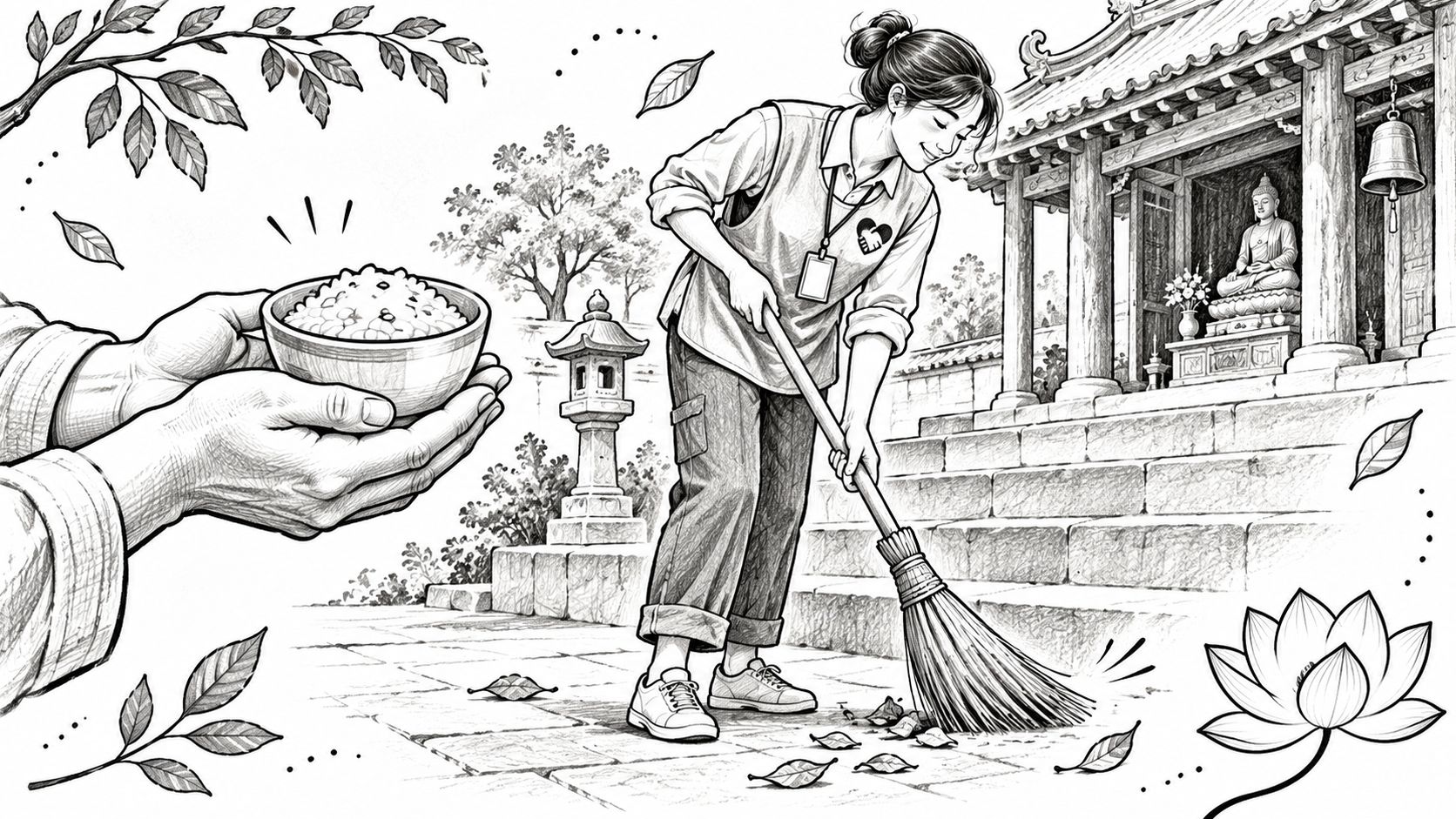
Practical service is a normal, everyday form of dāna. Often, the kindest gift isn't an object at all: cooking a vegetarian potluck dish for a weekend retreat, helping sweep a courtyard or stack chairs after an open day, covering a friend's meditation course fee, or hosting a quiet book group.
Common Missteps That Undermine Generosity
Modern UK practitioners aren't a narrow stereotype. As Remitly's UK guide to Buddha Day traditions notes from the 2021 England and Wales Census, 55.7% of Buddhists were female and 77.4% were aged 16 to 64, forming a practical adult audience that weighs ethics, space, and impact alongside symbolism. Four well-intentioned mistakes routinely clash with that outlook:
- Buying an expensive "authentic" antique with unclear provenance. Paying a premium for an undocumented old statue can unintentionally support looted or illicit antiquities trading, turning a generous gesture into a source of unease.
- Gifting a sacred object without checking consent. Someone living in a shared London flat or practising discreetly at home may have nowhere respectful to place a statue, leaving them stuck with an awkward obligation.
- Wrapping gifts in excessive packaging and single-use plastic. Thick polystyrene, plastic ribbon, and glossy non-recyclable boxes clash directly with Buddhist restraint and care for the environment.
- Selling or reselling blessed or consecrated items. Pieces consecrated through temple rituals carry specific spiritual commitments for practitioners; treating them as resale bargains strips away their meaning.
Before you wrap: Run four quick checks. Does the recipient actually want this gift? Do they have room to honour it? Where will it sit? Would a practical or non-religious gesture serve them better?
Choose a Gift the Recipient Will Honour
When you're ready to decide, work through three choices in order.
First, confirm the recipient's tradition and how they practise. If you aren't sure whether they follow a Theravāda, Tibetan, Zen, or secular mindfulness path, ask a teacher or the centre organiser what fits local custom instead of guessing.
Second, pick the gift type that matches the purpose. Whenever you're unsure, lean toward something useful or collectively directed: a temple donation, ingredients for a shared community lunch, practical help at an event, or a course fee for someone ready to commit time to practice.
Third, confirm how a physical gift will be received, placed, and cared for. If a statue suits a home altar, our catalogue at HD Asian Art provides detailed descriptions of Buddha statues, including the symbolism of each pose and mudra, so you know what the figure represents before purchasing. We suggest a meditation Buddha for a calm room or altar, alongside Ganesha for new beginnings and wisdom, Shiva for transformation, Vishnu for protection, and Lakshmi for abundance where Hindu iconography fits the household. Before you wrap any piece, make sure it's well made and undamaged on arrival, and remember our placement guidance to keep a Buddha statue clean, raised from the floor, and away from bathrooms, cluttered areas, or places where it might be treated casually.
Before you hand anything over, ask one last question: will the recipient feel truly honoured, or discreetly burdened?
If a well-made sculpture is the right fit for a home altar or meditation room, we curate antique and contemporary Buddhist and Hindu statues alongside clear guides to postures, mudras, and respectful display, plus digital gift cards when you'd rather let the recipient choose. Every order is carefully packed for safe arrival so your offering reaches its new home intact. Explore our collection and placement guides at HD Asian Art.
