



Beginner Guide to Mudras for Mental Focus
Beginner Guide to Mudras for Mental Focus
Quick Summary
Mudras for mental focus are deliberate hand gestures that give the mind a physical anchor, and beginners should start with just two: Gyan Mudra for alert attention and Dhyana Mudra for settling. Sit upright, form the thumb-to-index circle lightly, and hold it for about five minutes daily rather than cycling through many positions.
- Gyan Mudra joins the tip of each index finger to the tip of each thumb, forming a light circle with the other three fingers extended and relaxed.
- Chin Mudra uses the same finger contact as Gyan Mudra but with the palms turned down toward the knees.
- Most beginners do well holding a mudra for five minutes, while experienced practitioners often extend to fifteen or twenty.
- The most common mistake is pressing the fingertips hard enough to turn the knuckles white, which sends tension up the arm.
- A four-week plan starts at three to five minutes with Gyan Mudra and builds to ten minutes with your preferred gesture.
Table of Contents
- What Mudras Are and How Hand Gestures Shape Attention
- Mudras for Focus and Concentration: Which Hand Positions to Try First
- How to Practice Mudras: Finger Position, Posture, and Breath
- How Long to Hold a Mudra for Steady Attention
- Mudras for Meditation: Building a Focus-Specific Practice Plan
- Evidence Quality, Realistic Expectations, and Hand Comfort
- Setting Up a Quiet Corner with a Statue as a Focal Point
- Frequently Asked Questions
What Mudras Are and How Hand Gestures Shape Attention
Mudras for mental focus are deliberate hand gestures used in yoga and meditation traditions to give the mind a physical anchor.
At HD Asian Art, we spend our days around objects made for stillness: bronze Buddhas, carved bodhisattvas, temple-inspired pieces.
The meaning behind the gesture varies by tradition. Some lineages treat mudras as symbolic, encoding qualities like generosity, fearlessness, or concentration.
The Meaning Behind the Gesture
Most mudras carry a name and an intention. Gyan Mudra, the seal of knowledge, joins thumb and index finger. Chin Mudra uses the same finger position with the palm turned differently.
What matters for practice is less the symbolism than the repetition. A hand posture held for a stretch of time becomes a signal: we are sitting now, we are paying attention now.
How Hand Gestures Relate to Meditation and Yoga
Yoga traditions describe the body in layers, often distinguishing a gross body from a subtle body. Mudras sit at the meeting point, a physical action with a mental purpose. A study indexed by the PubMed Central review of mudra research describes mudras used alongside breathing exercises within a yoga health-package model, though the review does not quantify effects on mental focus.
Mudras for Focus and Concentration: Which Hand Positions to Try First
Start with two: Gyan Mudra for alert attention and Dhyana Mudra for settling. These are the most widely taught beginner positions, they require no props, and they are easy to hold for several minutes without strain.
Mudras for focus and concentration work best when you pick one and stay with it for a few weeks rather than cycling through a dozen. For a deeper how-to, see this guide to hand mudras for focus and concentration.
Gyan Mudra and Chin Mudra Instructions
Here is the sequence we would give anyone starting today:
- Sit upright, either cross-legged or on a chair with feet flat.
- Rest your hands on your knees or thighs, palms facing up.
- Bring the tip of each index finger to the tip of each thumb, forming a light circle. Keep the other three fingers extended but relaxed.
- Let the hands rest without gripping. The circle should feel closed, not pressed.
- Close your eyes or soften your gaze downward.
- Hold the position while breathing naturally.
Chin Mudra uses the same finger contact with the palms turned down toward the knees. Try both across a week and notice which one you stop fidgeting with. That is usually the one to keep.
Why the Same Mudra Can Look Different in Two Traditions
Before you compare instructions across videos and books, know that mudra names, hand positions, and stated purposes are not standardized. A gesture one teacher calls Gyan Mudra may appear under a different name elsewhere, and the same name can describe slightly different finger placements depending on the source.
A few practical consequences for a beginner:
- Trust the shape, not the label. If two sources disagree on a name but agree on a comfortable thumb-to-index contact, either version serves the same anchoring purpose.
- Pick one source and stay with it for a month. Mixing instructions mid-practice reintroduces the novelty problem you are trying to avoid.
- Treat symbolic meanings as optional. Neither reading changes what your hand does.
This variability is not a flaw to resolve before you start. It is the reason a beginner guide should send you to one clear instruction and let you build the habit first.
Adapting the Gesture to Your Hands
Hand comfort belongs in the selection step, not as an afterthought. Arthritis, old injuries, cold weather, and simple fatigue all change what a workable hand posture looks like for you. Adapt freely:
- Touch the thumb to the middle or ring finger instead of the index if the index joint is stiff.
- Rest the hands flat, palms down, and skip the finger circle entirely.
- Practice with one hand at a time and let the other rest.
No tradition requires discomfort, and a gesture you can hold without strain will do more for your attention than a textbook-perfect one you abandon after two minutes.
How to Practice Mudras: Finger Position, Posture, and Breath
The short answer: sit comfortably, form the gesture lightly, and let the breath set the pace. For a fuller walkthrough, this guide to practicing mudras for meditation covers finger position, posture, and breath in more depth.
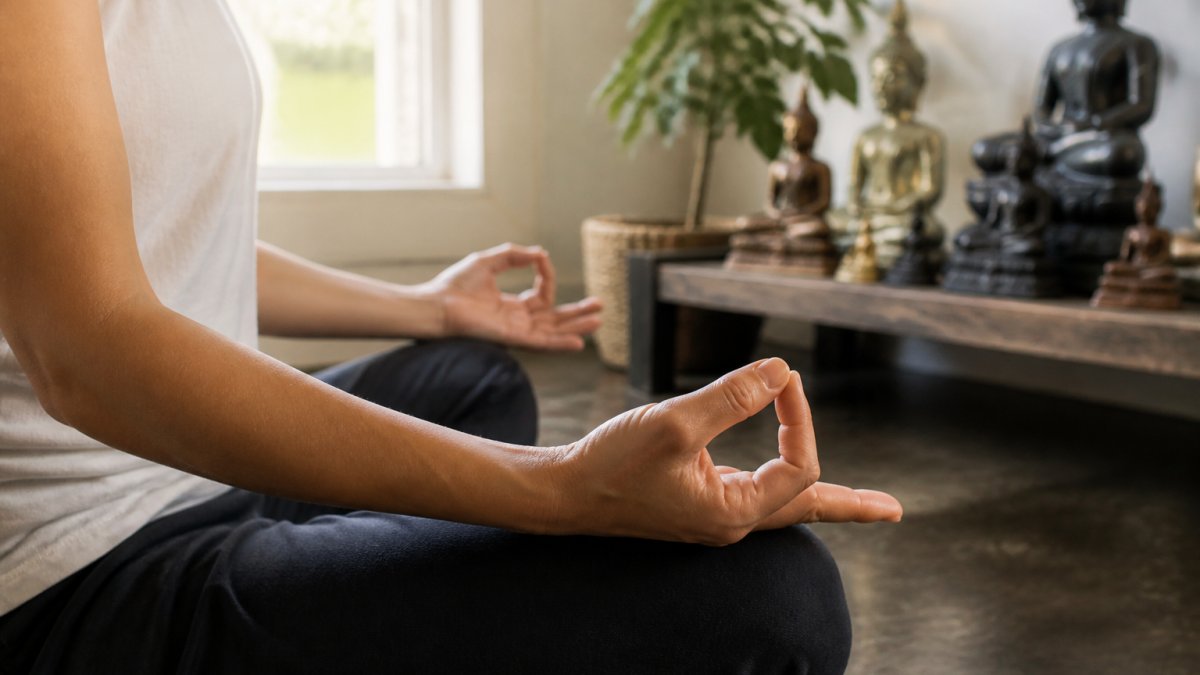
Posture comes before fingers. Establishing this physical foundation creates a steady container for the mind, much like the grounding stillness found in a mindful morning coffee ritual.
Common Mistakes and Troubleshooting
The most common mistake is pressing the fingertips together hard enough to turn the knuckles white. That tension travels up the arm and defeats the purpose. Keep the contact feather-light.
Watch out: holding a mudra with a clenched jaw and raised shoulders is the classic beginner error, and it produces the opposite of the calm you were after. If you notice either, drop the hands, roll the shoulders back, and start again.
Other fixes worth knowing:
- Cold hands? Warm them first, or practice with a blanket over your lap.
- Wandering mind? Return attention to the point where thumb meets finger, not to the breath.
- Sore wrists? Rest the hands palm-up in your lap instead of on the knees.
How Long to Hold a Mudra for Steady Attention
How long to hold a mudra depends on your starting tolerance, not a fixed rule. Most beginners do well with five minutes. Practitioners with an established sitting habit often extend to fifteen or twenty.
Set a timer so you are not checking the clock. If five minutes feels long, start at three. If your hands go numb, you are gripping; release and reset.
Mudras for Meditation: Building a Focus-Specific Practice Plan
A workable plan sequences the gesture, the breath, and a single point of attention, then repeats it until it stops feeling like effort. Mudras for meditation are scaffolding, not the building. If you want more ideas for weaving the gesture into everyday life, read about the benefits of using mudras in daily mindfulness. Once the habit holds, you can drop the gesture and keep the attention.
A Four-Week Beginner Plan
| Week | Daily Time | Gesture | Focus Cue | What to Notice |
|---|---|---|---|---|
| 1 | 3-5 minutes | Gyan Mudra | Thumb-index contact | Restlessness timing |
| 2 | 5-7 minutes | Gyan Mudra | Contact plus exhale length | Whether the breath settles |
| 3 | 7-10 minutes | Dhyana Mudra | Hands resting in lap | Body tension patterns |
| 4 | 10 minutes | Your preferred gesture | Single anchor, no switching | Drift and return count |
Track one thing only: how many times your attention wandered and came back. That number is the practice, not a failure.
A Short Routine for Starting Work or Study
Most guides describe a long sit. A focus-specific plan should also cover the two-minute version you can run before a task, because that is where beginners actually need the gesture.
- Settle (30 seconds). Sit down, feet flat, hands in Gyan Mudra on the thighs. Take three slow exhales, each slightly longer than the inhale.
- Set the cue (15 seconds). Name the one task you are about to start. The mudra is the signal that this task begins now.
- Work with the gesture (as long as it helps). Keep the hands in position while you read or type if it is comfortable; release them when it becomes a distraction rather than an anchor.
- Return after distraction (30 seconds). When you notice your attention has left the task, reform the gesture, take one slow breath, and go back to the task without commentary.
This is the same drift-and-return cycle as a seated meditation, applied to a work session. The gesture marks the return.
How to Tell Whether It Is Helping
Judge the practice by simple self-observation. A workable method:
- Before practice, rate your attention on a simple 1-to-5 scale in your own words (scattered to steady) and note how calm you feel.
- After practice, rate the same two things.
- Keep a one-line note for two weeks. Look for a pattern, not a single good or bad session.
What you are looking for is a modest, repeatable shift: you notice distraction a little sooner, or you return to the task a little more easily.
Troubleshooting a Focus Session
Most failed sessions fail for one of four reasons. Each has a practical correction:
- Excessive finger pressure. White knuckles, tingling, or numbness mean you are gripping. Release, shake out the hands, and reform the gesture with feather-light contact.
- Uncomfortable posture. Raised shoulders or a clenched jaw produce the opposite of calm. Drop the hands, roll the shoulders back, and reset the seat.
- Breath-holding. Beginners often stop breathing when they concentrate on the fingers. Let the exhale run slightly longer than the inhale.
One more caution. People sometimes report dizziness or unusual sensations during breath-focused practice. Stop, breathe normally, and sit quietly. If something persists, talk to a physician rather than pushing through.
Evidence Quality, Realistic Expectations, and Hand Comfort
One caution: people sometimes report dizziness or unusual sensations during breath-focused practice. If you want to weigh realistic expectations, this overview of scientific research on mudras and brain activity lays out what studies do and do not show. Stop, breathe normally, and sit quietly. If something persists, talk to a physician rather than pushing through.
Setting Up a Quiet Corner with a Statue as a Focal Point
A dedicated corner makes the habit easier to keep. You do not need a large room.
A statue earns its place here because it gives the gaze somewhere soft to land. For more on arranging the space, see this guide to meditation statue placement for your home office.
Keep the corner uncluttered. One statue, one cushion, nothing else competing for attention.
Frequently Asked Questions
What are mudras, and how are they used in meditation?
Mudras are hand gestures used in yoga and meditation traditions to give the hands a settled position and the mind a point of focus. In practice, you form the gesture, rest the hands on the knees or lap, and let attention stay with the breath. The gesture acts as an anchor, much like counting breaths, so a wandering mind has somewhere simple to return.
Which mudras for focus and concentration are best for beginners?
Start with Gyan Mudra or Chin Mudra. Both bring the tip of the thumb and index finger together, which is easy to hold and simple to check by feel. Gyan Mudra turns the palm down or rests it on the knee; Chin Mudra turns the palm up. Try one gesture for a week before adding another. Switching constantly scatters attention, while one steady gesture gives you a clear reference point for whether your focus is settling.
How long should you hold a mudra during meditation?
Beginners can hold a mudra for 5 to 10 minutes and build toward 15 to 20 minutes as comfort allows. The exact time matters less than consistency. If your hands ache or your fingers drift, release the gesture, shake out the hands, and return. A shorter session done daily teaches more than a long session done once. Stop entirely if you feel numbness or sharp pain, and mention recurring hand issues to a doctor.
Can you practice mudras while sitting in a chair?
Yes. Sit with both feet flat on the floor, spine upright but not rigid, and hands resting on the thighs. Chair practice works well in a small apartment or office and removes the main barrier for anyone with knee or hip discomfort. The key is a stable seated posture, not a specific cross-legged position. Keep the elbows relaxed and the shoulders down so tension does not creep into the neck during the hold.
Should you use one mudra or switch between several?
Use one mudra per session as a beginner. A single gesture keeps the practice simple and makes it easier to notice whether your attention changes. Once a gesture feels natural, you can try a second one in a separate session rather than mid-sitting. If you do switch, make the change at a clear point, such as halfway through, so the shift is deliberate and does not become a habit of restless fidgeting.
How can you combine a mudra with breathing or meditation?
Form the gesture first, then let the breath settle without forcing it. Count breaths silently, or follow the sensation of air at the nostrils. When the mind wanders, return to the breath and then to the feeling of the fingers touching. Keep sessions short at first, and end with a minute of stillness before opening the eyes.
Building a focus practice asks for two things most people skip: a small daily commitment and a space that invites you back to it. HD Asian Art curates handpicked Buddhist and Hindu statues, including Khmer and Southeast Asian pieces, for exactly that kind of corner, with free shipping on every order. Browse the collection and find the focal point that makes your practice easier to return to.

