


Iconografía budista tántrica: significados y símbolos explicados
Iconografía budista tántrica: significados y símbolos explicados
La iconografía budista tántrica es el lenguaje visual simbólico especializado utilizado en el budismo Vajrayana para representar conceptos metafísicos, cualidades iluminadas y el camino hacia la transformación espiritual. Conocido formalmente como iconografía Vajrayana, este sistema codifica enseñanzas doctrinales complejas en forma visual a través de deidades, mandalas, implementos rituales y símbolos sagrados.
el ashtamangala, las manifestaciones de Sambhogakaya y los instrumentos como el vajra y la campana no son opciones decorativas. Son herramientas precisas para la meditación, la enseñanza y la realización espiritual. Comprender qué es la iconografía budista tántrica significa aprender a leer este lenguaje visual con el mismo cuidado que pondrías a un texto sagrado.
¿Cuáles son los símbolos principales de la iconografía budista tántrica?
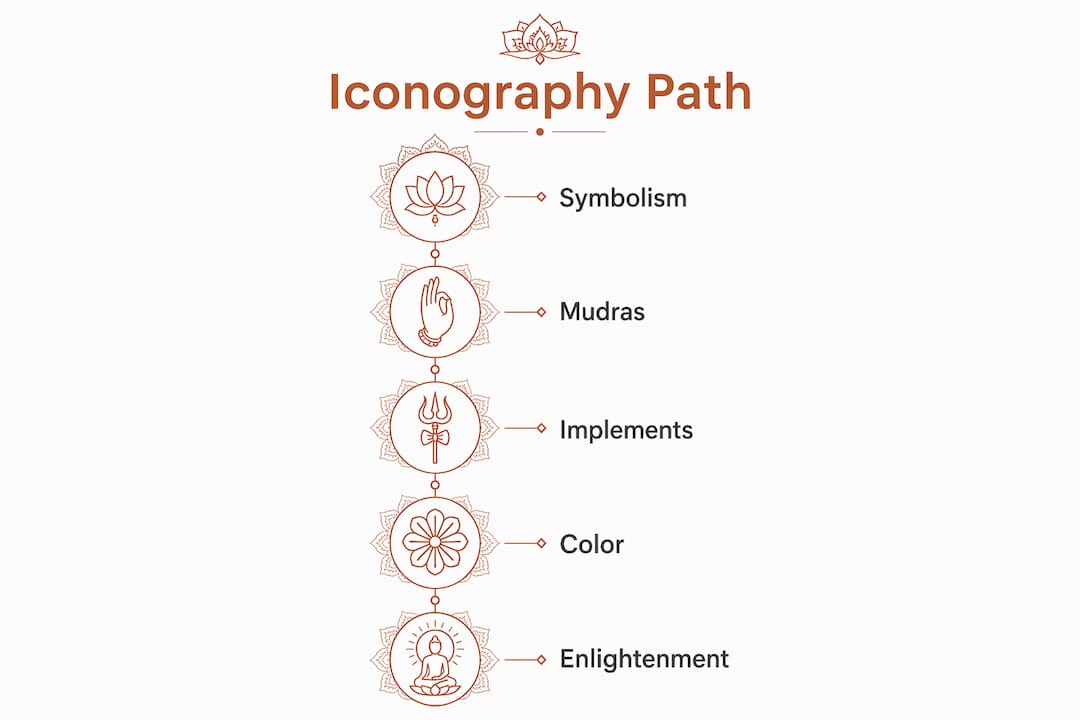
La iconografía budista tántrica organiza sus símbolos en varias categorías distintas, cada una de las cuales cumple una función doctrinal y meditativa específica. Los más reconocibles son los Ocho símbolos auspiciosos, conocido como Ashtamangala. Estos fueron ofrecidos al Buda Shakyamuni en el momento de la iluminación y representan virtudes fundamentales que incluyen la sabiduría, la compasión y la pureza. Aparecen en banderas de oración, paredes de monasterios y objetos rituales personales en todo el mundo del Himalaya.
Los ocho símbolos incluyen:
- Concha de caracola — representa el sonido de largo alcance de las enseñanzas del Dharma.
- Nudo sin fin — significa la interdependencia de todos los fenómenos
- estandarte de la victoria - marca el triunfo de la sabiduría sobre la ignorancia
- loto - encarna pureza y despertar espiritual desde dentro de la existencia ordinaria
- Rueda del Dharma (dharmachakra) - simboliza el Noble Camino Óctuple y el movimiento de la enseñanza a través del mundo
- Jarrón del tesoro — representa la abundancia y la naturaleza inagotable de las cualidades iluminadas
- Par de peces dorados — simboliza la liberación del océano del sufrimiento
- sombrilla — denota protección y soberanía de las enseñanzas del Buda.
Más allá del Ashtamangala, los mudras (gestos con las manos) forman una segunda categoría importante. Cada mudra comunica una enseñanza o cualidad específica. El gesto de tocar la tierra, llamado bhumisparsha mudra, marca el momento de la iluminación de Shakyamuni. El gesto de dar, o varada mudra, expresa generosidad y compasión.
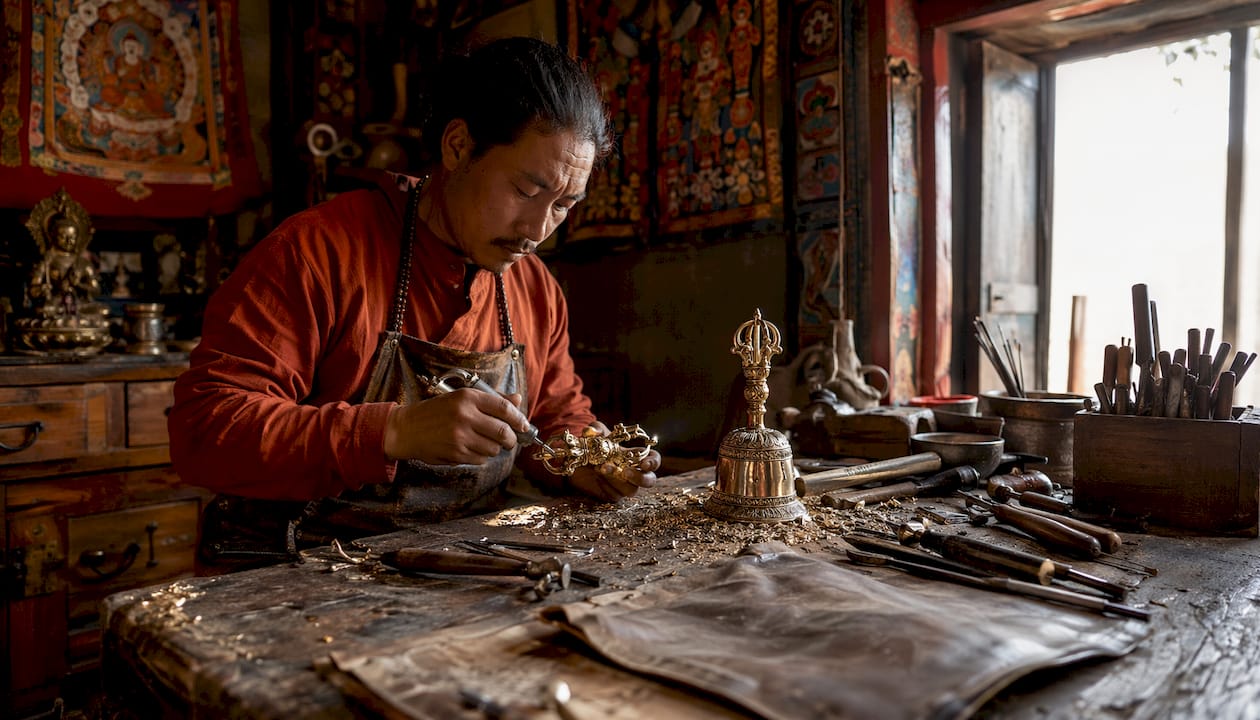
Los instrumentos rituales conllevan significados igualmente precisos. el vajra y campana Representan la unidad inseparable del método y la vacuidad, los dos pilares de la práctica tántrica. El vajra encarna la manifestación y los medios hábiles. La campana encarna la sabiduría del vacío. Mantenidos juntos en un ritual, representan la naturaleza no dual de la realidad.
Consejo profesional: Cuando estudies una estatua o pintura tántrica, identifica primero los instrumentos que sostiene cada mano. Esos objetos a menudo dicen más sobre la identidad y función de la figura que el rostro o la postura por sí solos.
¿Cómo expresa la iconografía tántrica el camino hacia la iluminación?
El arte tántrico no se limita a ilustrar la filosofía budista. Lo promulga. Cada elemento visual está diseñado para desencadenar un reconocimiento meditativo específico en el practicante capacitado.
La transformación de las pasiones en sabiduría es el tema central. La estructura del vajra ilustra esto directamente. Sus cinco ramas representan los cinco agregados de la experiencia humana y los cinco venenos (ignorancia, ira, deseo, orgullo y celos). Las mismas ramas también representan las cinco sabidurías en las que se convierten esos venenos cuando se reconocen como energía pura. La esfera central, llamada thigle, representa la potencialidad infinita. Este único objeto codifica todo el camino tántrico en forma física.
Los mandalas llevan esta lógica más allá. Un mandala no es un diseño geométrico abstracto. Funciona como un mapa de manifestación divina, con una deidad central rodeada de elementos simbólicos que representan etapas y cualidades de realización. Los practicantes utilizan mandalas en prácticas de visualización para entrar mentalmente y habitar el estado iluminado que representa el mandala.
El proceso del yoga de la deidad sigue una secuencia específica:
- Disolución — el practicante disuelve la autopercepción ordinaria en el vacío
- surgiendo — la forma de la deidad surge del vacío como una manifestación pura de cualidades iluminadas
- Estabilización — el practicante tiene en mente la forma, los atributos y el mantra de la deidad simultáneamente
- Dedicación — el mérito de la práctica está dedicado a todos los seres
Las figuras de Sambhogakaya representan el segundo de los tres cuerpos de un Buda. Estas son las formas ricamente adornadas, con múltiples miembros y a veces iracundas que aparecen en el arte tántrico. No son dioses en un sentido teológico. Son expresiones visuales de energías iluminadas específicas accesibles a través de la forma.
"Las figuras tántricas con múltiples cabezas, extremidades o rasgos animales representan manifestaciones de Sambhogakaya que encarnan cualidades iluminadas específicas, no seres literales o mitologías. Malinterpretarlas como criaturas literales pierde por completo el significado simbólico más profundo". — Enciclopedia del budismo
Los empoderamientos rituales, llamados iniciaciones, son los puntos de entrada formales a estas prácticas. La iconografía apoya este proceso dándole al practicante un ancla visual para las cualidades que se transmiten. El arte no está separado de la práctica. Es la práctica hecha visible.
Cómo interpretar esculturas y pinturas budistas tántricas
Leer con precisión el arte tántrico requiere prestar atención a varias capas visuales específicas. El color, el número de extremidades, la expresión facial, la postura y los instrumentos de mano tienen significados fijos dentro del sistema iconográfico.
La codificación de colores es consistente en todas las tradiciones. Figuras azules o azul oscuro como Akshobhya o Vajrapani encarnan la transformación de la ira en sabiduría reflejada en un espejo. Figuras rojas como Amitabha representan la transformación del deseo en sabiduría discriminatoria. Las figuras blancas encarnan la pureza y la sabiduría del Dharmadhatu. Estas no son elecciones estéticas. Son declaraciones doctrinales.
El número de caras y extremidades indica la variedad de cualidades que encarna una figura. Una deidad con cuatro brazos puede sostener simultáneamente instrumentos que representan compasión, sabiduría, método y protección. Una figura con tres caras puede representar los tres tiempos (pasado, presente y futuro) o los tres venenos transformados en las tres sabidurías.
Malas interpretaciones comunes que se deben evitar:
- Las figuras iracundas no son demoníacas. Las formas iracundas de Sambhogakaya como Mahakala o Vajrakilaya representan una compasión feroz que supera los obstáculos. Protegen a los practicantes, no los amenazan.
- Las figuras consortes no son eróticas. La unión de figuras masculinas y femeninas en las imágenes de Yab-Yum representa la unión de la sabiduría y la compasión, o el vacío y la dicha. El simbolismo es metafísico.
- Los rasgos animales no son mitológicos. Dakini Singhamukha, con su cara de león, encarna cualidades energéticas específicas. La cara del león es un atributo simbólico, no una descripción literal.
Consejo profesional: Haga una referencia cruzada de cualquier figura tántrica con la tradición de su linaje antes de sacar conclusiones. Las tradiciones vajrayana tibetana, nepalí y japonesa comparten muchas figuras, pero a menudo difieren en color, postura y convenciones de atributos.
Los coleccionistas y lectores de arte se benefician al adquirir un conocimiento práctico de la Tradición del arte budista mahayana antes de involucrarse con trabajos tántricos. La iconografía tántrica se basa en cimientos mahayana. Sin esa base, las capas simbólicas son difíciles de leer con precisión.
¿Cuál es el significado histórico del arte tántrico tibetano y del Himalaya?
Budismo Vajrayana Se originó en la India y se transmitió al Tíbet, Nepal, Bután y la región más amplia del Himalaya a través de un linaje de maestros e iniciaciones sagradas llamadas empoderamientos. La iconografía viajó con las enseñanzas. Cada transmisión trajo formas de deidades, mandalas y objetos rituales específicos que quedaron arraigados en la cultura artística regional.
| Región | Tradición iconográfica clave | Formularios de firma |
|---|---|---|
| Tíbet | Escuelas Gelug, Kagyu, Nyingma y Sakya | Pinturas Thangka, Mahakala, Tara, Vajrakilaya |
| Nepal | Tradición budista newar | Figuras de Sambhogakaya de bronce dorado, Chakrasamvara |
| Bután | Linaje Drukpa Kagyu | Protectores iracundos, Guru Rinpoche (Padmasambhava) |
| Mongolia | Vajrayana de influencia tibetana | Yamantaka, Guhyasamaja, thangkas monásticos |
| Japón | Escuelas Shingon y Tendai | Fudo Myo-o, Dainichi Nyorai, pares de mandalas |
Las thangkas (pinturas en pergamino sobre tela) se convirtieron en el principal medio para transmitir conocimiento iconográfico de generación en generación. Un solo thangka de un mandala complejo podía tardar meses en completarse y servía como herramienta de enseñanza y objeto ritual. Los monasterios utilizaban grandes thangkas en los festivales anuales, desenrollándolos en las paredes para la veneración pública.
el escultura hevajra es uno de los ejemplos más estudiados de iconografía tántrica en el arte del sudeste asiático. Hevajra es una deidad Sambhogakaya de múltiples brazos cuyos atributos codifican todo un sistema de transformación tántrica. Las esculturas de esta figura de Camboya y Java demuestran cómo la iconografía vajrayana se adaptó a las convenciones artísticas locales preservando al mismo tiempo su núcleo doctrinal.
La tradición continúa viva. Los artistas tibetanos contemporáneos formados en métodos tradicionales todavía producen thangkas y esculturas siguiendo las mismas pautas iconométricas establecidas hace siglos. Las medidas, proporciones y atributos de cada figura se especifican en textos llamados saddhanas. La desviación de estas especificaciones no es una licencia artística. Es un error doctrinal.
Conclusiones clave
La iconografía budista tántrica es un sistema simbólico preciso donde cada color, gesto, instrumento y forma codifica una enseñanza específica sobre el camino desde la experiencia ordinaria hasta la conciencia iluminada.
| punto | Detalles |
|---|---|
| La iconografía como doctrina visual. | Cada símbolo, color y atributo conlleva un significado doctrinal fijo, no una preferencia estética. |
| Ashtamangala como motivo central | Los Ocho Símbolos Auspiciosos representan las virtudes ofrecidas en la iluminación de Buda y aparecen en todo el ritual y el arte Vajrayana. |
| figuras sambhogakaya | Las deidades coléricas y de múltiples miembros representan energías iluminadas, no seres literales ni criaturas mitológicas. |
| Vajra y campana como no dualidad | Estos dos instrumentos juntos expresan la unidad inseparable de método y vacuidad central en la práctica tántrica. |
| Transmisión histórica | La iconografía vajrayana se extendió desde la India a través del Tíbet, Nepal y el Himalaya a través de empoderamientos y linajes de maestro a estudiante. |
Por qué la iconografía premia la atención del paciente
He pasado años manejando e investigando el arte budista tántrico, y el error más común que veo es tratar estas obras como decoración exótica. Un coleccionista adquirirá un impresionante Mahakala de bronce y lo describirá como “feroz y poderoso” sin darse cuenta de que está sosteniendo un argumento visual preciso sobre la naturaleza de la compasión. El rostro enojado no es ira. Es la energía necesaria para atravesar las formas más profundas de autoengaño.
El segundo error es suponer que más complejidad significa más importancia. Un simple Shakyamuni sentado con un solo mudra puede codificar tanto contenido doctrinal como un Chakrasamvara de dieciséis brazos. La diferencia es el nivel de práctica que soporta la figura. Las formas tántricas se dirigen a practicantes que ya han interiorizado las enseñanzas fundamentales. Son herramientas avanzadas, no superiores.
Lo que encuentro más gratificante de esta iconografía es su coherencia interna. Una vez que aprendes el sistema de colores, el vocabulario mudra y la lógica de la manifestación del Sambhogakaya, cada nueva figura se vuelve legible. Dejas de ver una extraña deidad de múltiples brazos y comienzas a ver una declaración estructurada sobre la naturaleza de la mente. Ese cambio de percepción es exactamente para lo que está diseñado el arte. Para cualquiera que esté creando una colección seria, recomiendo comenzar con el guía de la colección de arte budista antes de adquirir trabajos tántricos. El contexto doctrinal hace que cada pieza sea más significativa y valiosa.
-Jaime, HDAsianArt.com
Auténtico arte budista tántrico en HDAsianArt
HDAsianArt ofrece una selección curada de estatuas y esculturas budistas antiguas y tradicionales que encarnan las tradiciones iconográficas descritas a lo largo de este artículo. Cada pieza es investigada y descrita individualmente por especialistas con conocimiento directo de las convenciones artísticas y doctrinales budistas.
La colección incluye figuras de deidades Sambhogakaya, estatuas de Bodhisattvas y esculturas de templos de Camboya, Tailandia, Indonesia y más allá. el Estatua de la deidad Prajnaparamita en estilo jemer antiguo es un claro ejemplo de iconografía tántrica representada en piedra, que representa la perfección de la sabiduría en forma femenina. Todas las piezas se envían a todo el mundo con entrega asegurada por DHL. Explora el completo Colección HDAsianArt para encontrar obras que reflejen la profundidad y precisión de esta tradición.
Preguntas frecuentes
¿Qué es la iconografía budista tántrica?
La iconografía budista tántrica es el sistema visual simbólico utilizado en el budismo Vajrayana para representar cualidades iluminadas, enseñanzas doctrinales y el camino hacia la transformación espiritual a través de deidades, mandalas e instrumentos rituales.
¿Cuáles son los ocho símbolos auspiciosos en el arte tántrico?
El Ashtamangala consta de ocho símbolos, que incluyen el loto, la caracola, la rueda del dharma y el nudo sin fin, cada uno de los cuales representa una virtud específica ofrecida al Buda Shakyamuni en su iluminación.
¿Por qué las deidades tántricas tienen múltiples brazos y caras?
Múltiples brazos y rostros indican la gama de cualidades iluminadas que encarna simultáneamente una figura del Sambhogakaya. Cada miembro sostiene un instrumento o gesto específico que codifica un aspecto distinto de la función y enseñanza de la deidad.
¿Qué representan el vajra y la campana?
El vajra representa el método y la manifestación, mientras que la campana representa la sabiduría y la vacuidad. Juntos, expresan la naturaleza no dual de la realidad que es fundamental para la filosofía y la práctica budista tántrica.
¿En qué se diferencia la iconografía del budismo tibetano de otras tradiciones?
La iconografía tibetana sigue estrictas pautas iconométricas de textos llamados saddhanas, especificando proporciones, colores y atributos exactos para cada figura. Las escuelas regionales como Gelug, Kagyu y Nyingma comparten formas centrales pero mantienen convenciones estilísticas e iconográficas distintas.
Recomendado
- Escultura budista Theravada explicada para estudiosos del arte – HD Asian Art
- ¿Qué representa el Buda Amitabha en el budismo? – Arte asiático HD
- El papel del bodhisattva Avalokiteshvara en el arte budista – HD Asian Art
- La escultura meditando de Hevajra: simbolismo y significado en Buddhi – HD Asian Art
