



Estatua de Buda de pie: simbolismo, estilos y cómo elegir
Estatua de Buda de pie: simbolismo, estilos y cómo elegir
La mayoría de las personas que compran un estatua de buda de pie asumir que la postura es puramente decorativa. No lo es. La decisión entre una figura de pie, sentada o reclinada tiene un peso iconográfico real, y equivocarse significa colocar una escultura cuyo significado contradice tu intención.
Un Buda de pie no es simplemente un Buda que resulta estar erguido. La postura en sí codifica una acción espiritual específica: el don de la valentía, el acto de enseñar, el movimiento hacia la liberación. Esta guía desglosa el simbolismo detrás de la forma vertical, mapea los estilos regionales clave que definen el mercado y le brinda un marco práctico para elegir la escultura adecuada para su espacio o colección.
Tabla de contenidos
Lo que realmente significa la postura de pie
La postura de pie en la iconografía budista es una postura activa. Donde la figura sentada se retira a la meditación, el Buda de pie está comprometido con el mundo. Está presente, accesible, dispuesto a actuar. El gesto de las manos, el mudra, suele definir qué tipo de acción es esa.
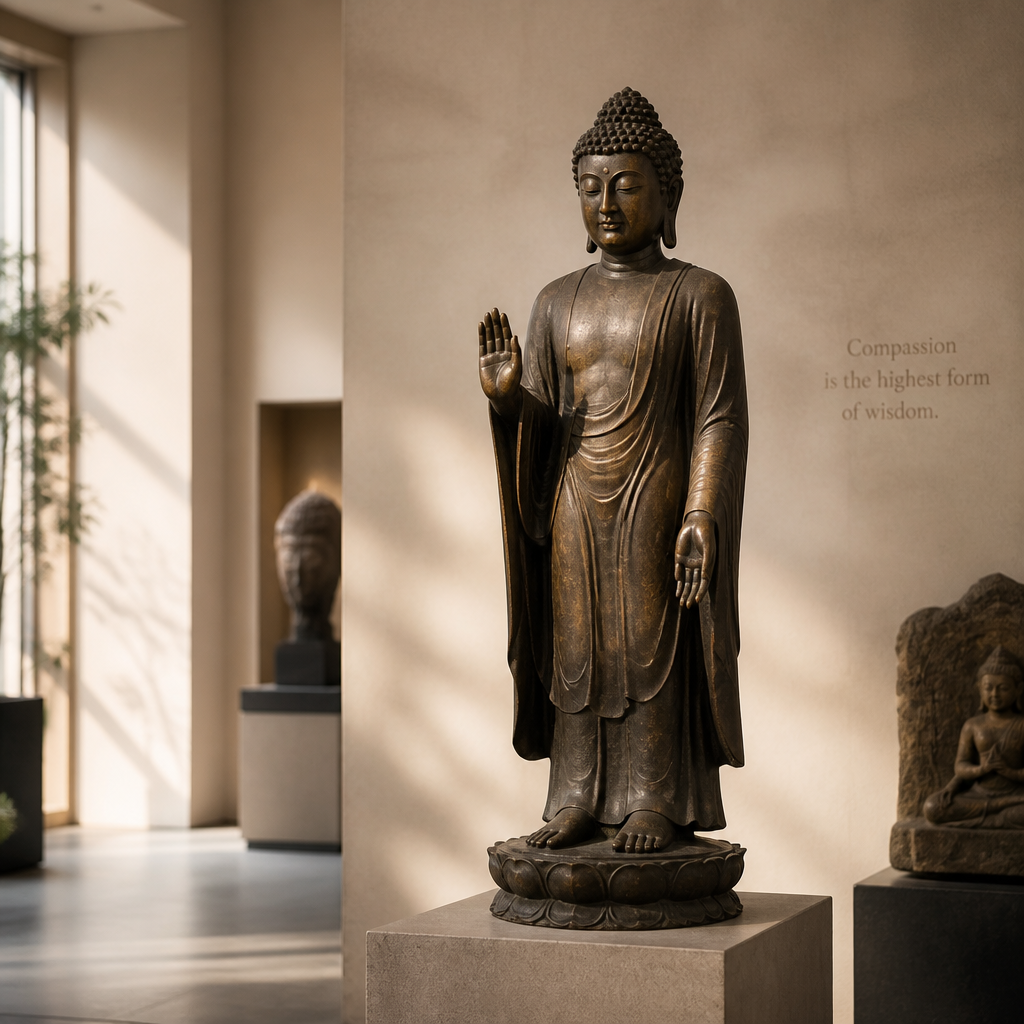
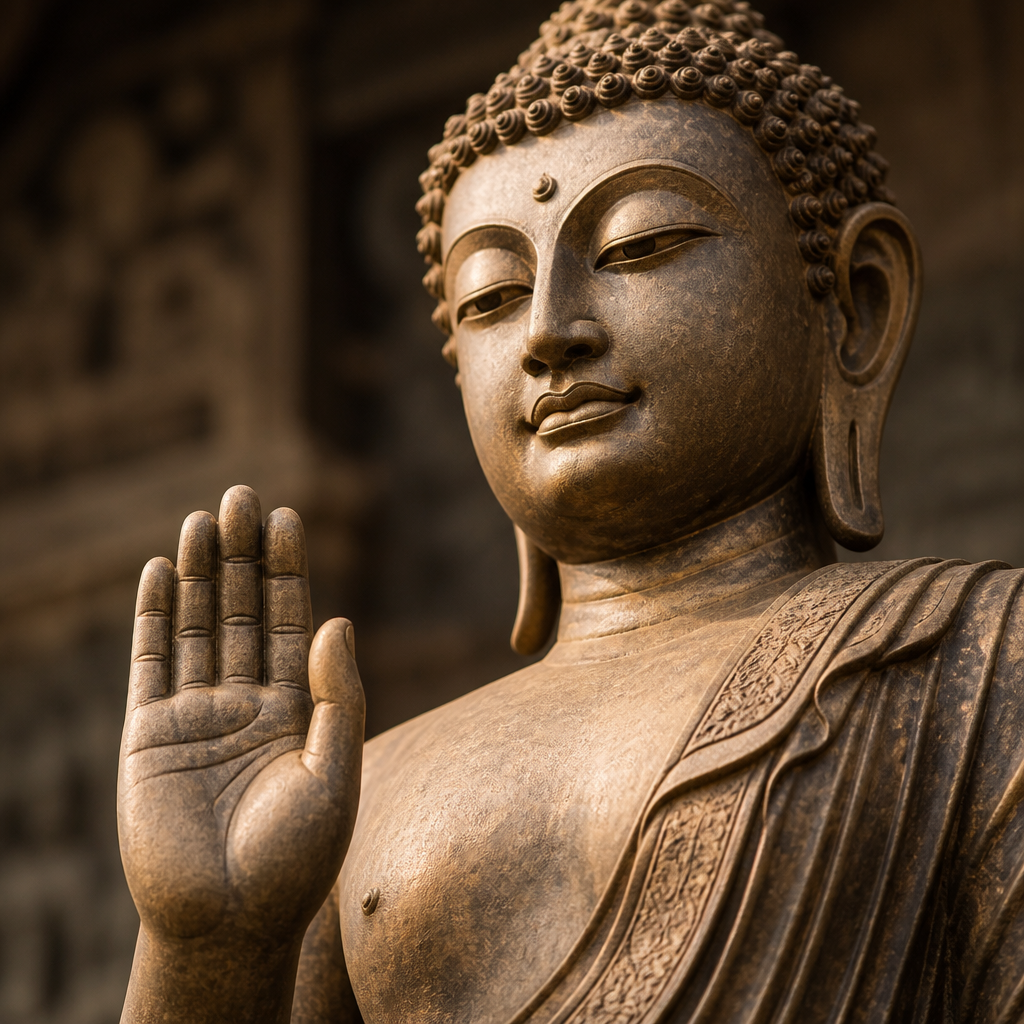
El mudra más común en la escultura de Buda de pie es el abhaya mudra: la mano derecha levantada, la palma hacia afuera y los dedos apuntando hacia arriba. Se traduce literalmente como el gesto de valentía. Cuando recibes este gesto de una figura de pie colocada en una entrada o altar, el significado iconográfico es directo: protección, tranquilidad y disipación del miedo. Esta no es una convención decorativa. Es una declaración doctrinal plasmada en bronce o piedra.
Algunas figuras de pie llevan el Varada mudra en la mano izquierda simultáneamente, con la palma hacia abajo y hacia afuera, en gesto de dar obsequio o caridad. La combinación de Abhaya a la derecha y Varada a la izquierda es una de las configuraciones más poderosas y doctrinalmente completas del arte budista. La figura da protección con una mano y regalos materiales o espirituales con la otra.
Una figura erguida parece presente y accesible, en lugar de retraída en meditación sentada. La postura en sí es una forma de comunicación entre el Buda y el espectador, activa donde la meditación sentada es interior.
Algunos budas de pie sostienen su túnica con una mano, un gesto asociado a un momento narrativo específico. Otros se paran con ambas manos delante del cuerpo en el Dharmachakra mudra, que representa el giro de la rueda del dharma, la primera enseñanza. Leer un Buda de pie significa leer primero las manos, luego el cuerpo y luego los detalles decorativos.
Estilos regionales del Buda de pie
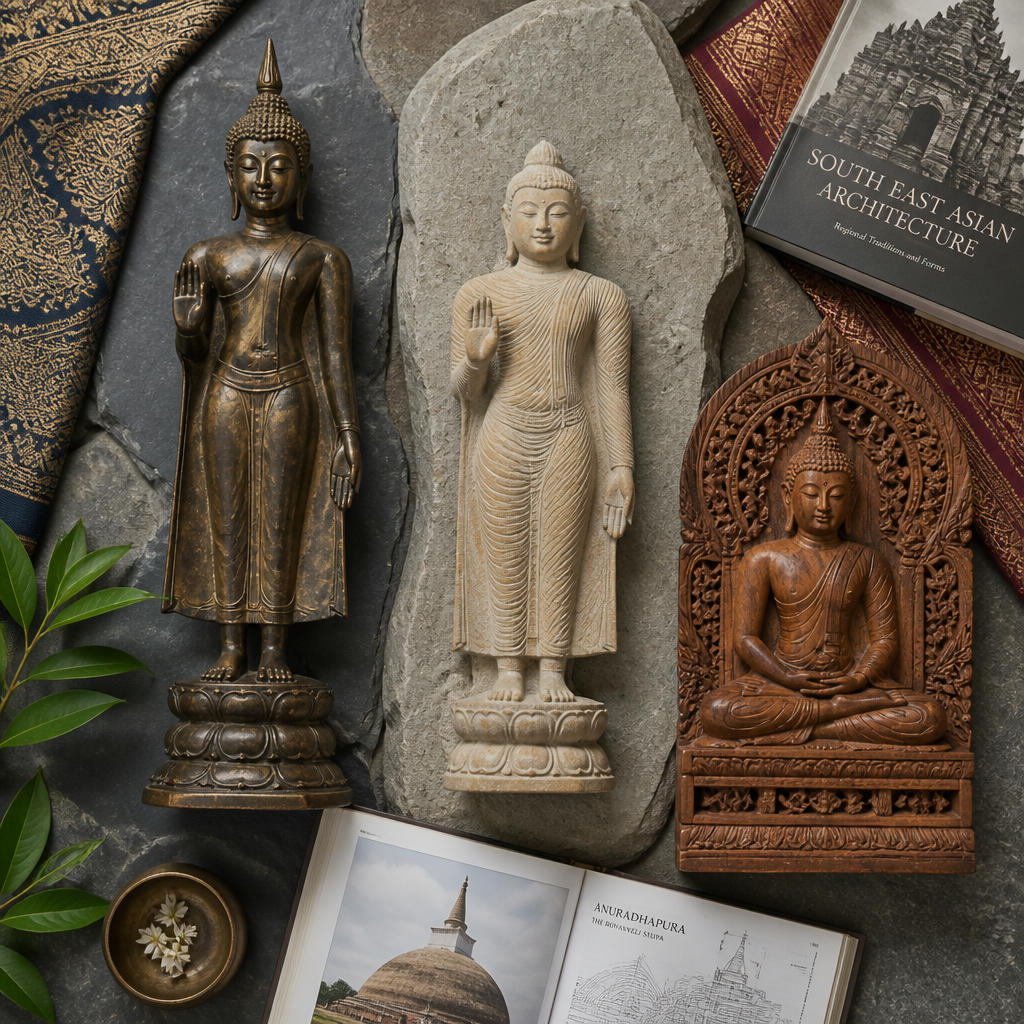
El estilo regional no es una preocupación secundaria para los coleccionistas. Le indica dónde se origina una estatua, qué tipo de tradición budista le dio forma y, a veces, aproximadamente cuándo se hizo. Coloque dos estatuas de Buda de pie una al lado de la otra, una tailandesa y otra birmana, y un ojo entrenado verá lenguajes artísticos completamente diferentes, incluso cuando ambas figuras sostengan el mismo mudra.
Budas de pie tailandeses: Sukhothai y Ayutthaya
Tailandia produjo dos tradiciones definitorias de Buda permanentes. el Período de Ayutthaya (aproximadamente entre los siglos XIV y XVIII) nos dio el Buda de pie coronado, a menudo llamado la imagen de Chakravartin. Estas figuras se encuentran en una postura frontal rígida con Abhaya o Vitarka mudra, vestidas con una diadema real y una ushnisha escalonada en forma de paraguas que representa al Buda simultáneamente como maestro iluminado y gobernante universal. La figura de pie de Ayutthaya está construida para proyectar autoridad. Funciona precisamente porque hace dos cosas a la vez: da la bienvenida y ordena.
La escuela de Sukhothai, un poco antes, produjo una figura de pie más fluida, con proporciones largas y elegantes, una cara ovalada y la distintiva ushnisha en forma de llama. Los escultores de Sukhothai fueron extraordinarios innovadores. Sus figuras parecen casi deshuesadas en su flexibilidad, un alejamiento consciente de la rígida influencia jemer que los precedió.
Budas birmanos de pie
Las figuras birmanas de pie tienden a tener rasgos faciales redondeados y formas corporales más suaves en comparación con sus homólogos tailandeses. El período Mon, una de las tradiciones artísticas más antiguas e influyentes de Myanmar, produjo budas de pie en alabastro, piedra y bronce con una gravedad y serenidad que los distingue de los estilos birmanos posteriores. Las figuras birmanas de pie con frecuencia muestran superficies muy doradas y túnicas naturalistas que se adhieren al cuerpo en lugar de caer en pliegues decorativos.
Budas de pie de Sri Lanka: influencia de Kandy y Gandharan
La tradición permanente del Buda en Sri Lanka muestra dos fases distintas. Las imágenes anteriores del período Anuradhapura muestran claramente influencia gandharana, con cortinas naturalistas y proporciones corporales clásicas de la India. el mas tarde estilo kandy, que surgió del reino de las tierras altas centrales que duró hasta 1815, es visualmente dramático e inmediatamente identificable. Su característica más distintiva es la ushnisha en forma de llama, una llama alargada y afilada que se eleva hasta una punta afilada. Esta ushnisha de llama no tiene paralelo real en las tradiciones tailandesas, camboyanas o birmanas. Es específico de Sri Lanka.
Budas de pie camboyanos y jemeres
La escultura jemer enfatizaba el poder angular: hombros anchos, rasgos faciales geométricos y un sentido de autoridad física arraigado en la síntesis hindú-budista del período Angkor. Los Budas de pie jemeres suelen tener una cualidad más arquitectónica, con tocados elaborados y una frontalidad deliberada que refuerza la naturaleza divina y real de la figura. Su influencia se extendió por todo el sudeste asiático, dando forma a las primeras tradiciones tailandesas y laosianas de imágenes de Buda antes de que las escuelas locales desarrollaran sus propios idiomas.
El Buda andante: un caso especial dentro de la tradición permanente
el escultura de Buda caminando Merece su propia sección porque representa una de las contribuciones al arte budista más originales de la historia. La mayoría de las imágenes de Buda en Asia aparecen en tres posturas: de pie, sentada o acostada. La figura andante completamente realizada, atrapada a medio paso, fue una invención de Sukhothai del siglo XIII y no tiene un verdadero precursor en el arte indio, de Sri Lanka o jemer.
El Buda andante de Sukhothai, conocido en tailandés como Phra Phut Lerla Buat o dolor lila, representa a la figura a mitad de zancada con el pie derecho hacia adelante y la mano derecha levantada en Abhaya mudra. El brazo izquierdo se curva hacia adelante para acentuar la sensación de movimiento fluido. La túnica apenas es visible excepto por finos contornos y un dobladillo fluido. La ushnisha se eleva hasta convertirse en una llama. cintamani moño.
El significado iconográfico de esta postura ha sido interpretado de varias maneras. Se asocia más comúnmente con el regreso del Buda del Cielo Tavatimsa, donde había predicado el dharma a su madre después de su muerte. La figura andante representa entonces no sólo el movimiento sino el acto de volver a enseñar, de traer la sabiduría de vuelta al mundo. Una variación en la que la mano izquierda también se levanta en Abhaya mudra se interpreta como si Buda prohibiera a una imagen de sándalo abandonar su asiento para saludarlo a su regreso.
Consejo profesional: El arte budista anterior enfatizaba los aspectos divinos y reales de Buda, y ni los dioses ni los reyes eran representados caminando como monjes comunes y corrientes. La figura andante de Sukhothai fue una elección teológica deliberada, que presentaba a Buda como un maestro errante accesible a la gente corriente, no como una divinidad entronizada. Ese cambio de significado es la razón por la que esta imagen sigue siendo tan poderosa hoy.
Comparación de los estilos regionales de Buda de pie de un vistazo
Elegir entre estilos regionales no es sólo una decisión estética. Refleja la tradición doctrinal, el período artístico y el significado iconográfico específico que deseas incorporar a tu espacio o colección. La siguiente tabla muestra las tres tradiciones de Buda en pie más buscadas y disponibles para los coleccionistas occidentales.
|
Característica |
Sukhothai / Buda de pie tailandés |
Ayutthaya Buda de pie coronado |
Buda de pie de Kandy Sri Lanka |
|---|---|---|---|
|
forma ushnisha |
Moño de llama ahusado y en forma de llama |
Corona de paraguas escalonada, diadema adornada |
Llama alargada en espiral, punta afilada. |
|
mudra primario |
Abhaya (una o ambas manos) |
Abhaya o Vitarka (frontal, rígido) |
Abhaya, Varada o ambos combinados |
|
tipo de cuerpo |
Proporciones fluidas, sinuosas y alargadas. |
Postura rígida, frontal y autoritaria. |
Túnica erguida, formal y claramente delineada. |
|
Tratamiento de bata |
Pliegues adheridos, apenas visibles |
Prendas reales con detalle decorativo. |
Claramente renderizado con influencia gandharana. |
|
Significado primario |
Enseñanza espiritual, dharma accesible. |
Protección, autoridad, gobierno universal. |
Bendiciones, protección, devoción Theravada. |
|
Más adecuado para |
Espacios de meditación, salas de estar. |
Entradas, salones formales. |
Altares personales, colecciones serias. |
Materiales y lo que te dicen sobre una escultura
El material de una estatua de Buda de pie no es sólo una cuestión de estética o presupuesto. La elección de materiales codifica tradición, período y región de maneras que a menudo son invisibles para un comprador casual pero inmediatamente legibles para un coleccionista experimentado.
Bronce
El bronce sigue siendo el material más preciado de estatuas budistas de prácticamente todas las tradiciones. Las auténticas estatuas de bronce muestran características de fundición específicas: costuras de fundición visibles a lo largo de la parte posterior o los lados, un peso sustancial para su tamaño y una pátina que se desarrolla naturalmente durante décadas. El bronce utilizado en la fundición tradicional contiene estaño y cobre en proporciones específicas que afectan el color, la durabilidad y el carácter de la pátina. Un Buda de bronce de pie con una pátina verde o marrón profunda y desigual no es señal de daño. Es una marca de edad y autenticidad.
piedra
Los Budas de piedra, tallados en granito, mármol, piedra caliza o arenisca, muestran marcas de herramientas consistentes con el tallado a mano: patrones de cincel en la piedra, desgaste natural y una superficie que ningún proceso de fundición puede replicar. La piedra se asocia particularmente con las estatuas jemeres camboyanas y ciertas figuras de Gandhara y Sri Lanka. Los auténticos budas de piedra muestran las marcas de herramientas reales y en tiempo real.
Madera y Alabastro
Las figuras birmanas de pie suelen estar talladas en alabastro, particularmente en la tradición de Mandalay, y pueden mostrar superficies doradas aplicadas sobre la piedra tallada. La madera es común en todas las tradiciones, pero particularmente en Tailandia, Laos y Birmania. Las estatuas de madera de épocas más antiguas pueden mostrar finas grietas debido al secado natural, un signo de edad más que un defecto.
Consejo profesional: Al examinar cualquier estatua de Buda de pie, mire hacia atrás. Las piezas producidas en masa tienden a ser huecas y sin rasgos distintivos en la parte posterior, con una superficie plana o con un acabado tosco. Las auténticas piezas de taller y antiguas muestran atención a la forma, incluso cuando la mayoría de los espectadores no la ven, porque los escultores estaban haciendo una ofrenda, no un producto.
Ubicación de las estatuas de Buda de pie
Un Buda de pie con el Abhaya mudra colocado cerca de la entrada de una casa o negocio es una de las ubicaciones más tradicionales e iconográficamente apropiadas en la tradición decorativa budista. La lógica es consistente en las puertas de los templos tailandeses, las entradas de las pagodas birmanas y los santuarios domésticos en todo el sudeste asiático: la figura de pie y bendiciendo saluda a los que llegan, ofrece protección a los que entran y representa el dharma como una presencia activa y acogedora.
El Buda de pie coronado de Ayutthaya, con su aire de autoridad formal, funciona particularmente bien frente a un vestíbulo de entrada, una puerta de entrada o el remate de una escalera. El Buda andante de Sukhothai, debido a que representa movimiento y progreso espiritual, se asocia tradicionalmente con espacios de meditación, pasillos y áreas de transición dentro de un hogar.
Para los altares personales, una figura de pie debe elevarse por encima del nivel del suelo e idealmente colocarse en una superficie dedicada que se mantenga limpia y respetuosa. El principio clave de la tradición budista es claro: la estatua representa la presencia de Buda, no simplemente su imagen. El espacio a su alrededor debería reflejar eso.
Cómo encontrar la escultura perfecta
El desafío práctico para la mayoría de los compradores es que la categoría de Buda permanente es amplia. Está eligiendo entre múltiples tradiciones regionales, períodos, materiales, tamaños y precios simultáneamente. La mayoría de los compradores reducen esto de manera más eficiente al decidir en este orden: primero la tradición, luego el mudra, luego el material y luego el tamaño.
Comience con tradición y significado
Si su intención principal es la protección y la bendición en la entrada, elija un Buda de pie coronado al estilo tailandés de Ayutthaya o una figura clásica de Abhaya-mudra de cualquier tradición Theravada. Si su intención es representar la práctica espiritual, la enseñanza y el movimiento hacia la liberación, la figura andante de Sukhothai es la opción doctrinalmente más específica disponible. Si está creando una colección seria con diversidad regional, una figura de pie de Kandy de Sri Lanka agrega una tradición artística que es genuinamente distinta de sus contrapartes del sudeste asiático.
Evalúe la autenticidad antes del precio
La precisión de Mudra es uno de los puntos de control de autenticación más confiables. Las estatuas budistas auténticas mantienen una estricta coherencia iconográfica en la posición de las manos porque estos gestos conllevan un significado doctrinal. Cualquier desviación de la posición tradicional del mudra, dedos doblados en ángulos incorrectos, palmas en ángulo incorrecto, posiciones de las manos combinadas de maneras que ninguna tradición regional utiliza, sugiere una producción en masa o un malentendido cultural. Un comerciante de renombre debería poder explicar la tradición iconográfica detrás de cada pieza que vende. Si no pueden, eso es información.
Solicite siempre documentación de procedencia para piezas más antiguas: certificados de autenticidad, registros de propiedad anterior, permisos de exportación o registros de adquisición. Los distribuidores legítimos mantienen registros detallados y agradecen el examen de expertos. Tenga cuidado con las afirmaciones vagas sobre el origen y la documentación creada recientemente.
Tamaño y escala
Un error común es elegir un Buda de pie que sea demasiado pequeño para la ubicación prevista. Una figura de pie, debido a que ocupa un espacio vertical en lugar de horizontal, parece más grande que una figura sentada de dimensiones equivalentes, pero aún necesita espacio para respirar. Para una entrada o un altar, una figura de al menos 30 a 50 centímetros de altura exige una presencia adecuada. Las figuras más grandes, de más de 60 centímetros, funcionan bien como puntos focales en salas de estar o santuarios dedicados.
HD Asian Art ofrece esculturas de Buda de pie y caminando procedentes de toda Asia, incluidas las tradiciones tailandesa, birmana, de Sri Lanka y camboyana, junto con descripciones detalladas del significado iconográfico, el material y la procedencia regional. Para los coleccionistas que quieran ir más allá de las piezas decorativas genéricas, la colección de hdasianart.com representa un punto de partida práctico para comprender cómo se ve la variación regional genuina en un rango seleccionado.
Preguntas frecuentes
¿Qué simboliza una estatua de Buda de pie?
Un Buda de pie representa una presencia espiritual activa y comprometida en lugar de una meditación retraída. La postura indica que Buda está presente y accesible. El significado específico depende del mudra: el Abhaya mudra (mano derecha levantada, con la palma hacia afuera) significa protección y valentía, mientras que el Varada mudra (con la palma hacia abajo, mirando hacia afuera) significa dar regalos o caridad. Muchas figuras de pie combinan ambos gestos simultáneamente.
¿Cuál es la diferencia entre una escultura de Buda de pie y una escultura de Buda andante?
Un Buda andante es técnicamente un subconjunto de la tradición de pie, pero representa la figura a medio paso en lugar de erguida e inmóvil. El Buda andante fue inventado por escultores de Sukhothai en Tailandia del siglo XIII y no tiene ningún precursor directo en el arte indio o jemer. Se interpreta más comúnmente como una representación del regreso del Buda del cielo Tavatimsa después de enseñar el dharma a su madre, representando el movimiento espiritual y la transmisión activa de la enseñanza. Un Buda de pie en el sentido convencional es erguido y estático, enfatizando la presencia y la bendición.
¿Qué estilo regional de estatua de Buda de pie debería elegir?
Elija primero según el significado y luego la estética. Si desea una figura de autoridad y protección en la entrada, un Buda de pie coronado en Ayutthaya es la opción iconográficamente más directa. Si desea representar el dharma como un viaje espiritual y una enseñanza, el Buda andante de Sukhothai es más apropiado. Si está creando una colección y desea una diversidad regional genuina, una figura de pie de Kandy de Sri Lanka ofrece una tradición artística que es visualmente distinta de cualquier estilo del sudeste asiático.
¿Qué materiales son los más auténticos para una estatua de Buda de pie?
El bronce es el material históricamente más preciado en prácticamente todas las tradiciones escultóricas budistas y el más utilizado para figuras de pie destinadas a templos o colecciones importantes. La piedra, en particular la arenisca y el granito, es auténtica para los jemeres y para ciertas tradiciones indias y de Sri Lanka. El alabastro es específico de las tradiciones birmanas, particularmente de la escuela de Mandalay. La madera es auténtica en todas las tradiciones tailandesas, laosianas y birmanas. Los marcadores clave de un material auténtico son el envejecimiento natural: pátina en bronce, marcas de herramientas y desgaste en piedra, agrietamiento natural o contracción en madera vieja.
¿Dónde debería colocar una estatua de Buda de pie en casa?
La ubicación más tradicional para una figura de Abhaya-mudra de pie es cerca de una entrada, mirando hacia adentro, hacia la habitación o el pasillo, de modo que el gesto de valentía salude a cualquiera que entre. El Buda andante de Sukhothai es especialmente adecuado para pasillos, espacios de transición o salas de meditación porque su postura representa el movimiento espiritual. En todos los casos, la figura debe elevarse por encima del nivel del suelo, mantenerse en un espacio limpio y orientarse de manera que mire hacia la habitación y no hacia la pared.
¿Cómo distingo una estatua de Buda de pie de calidad de una imitación producida en masa?
Primero revise el mudra: el gesto de la mano debe ajustarse precisamente a la convención iconográfica de la tradición regional que la estatua dice representar. Mire la parte posterior de la figura: piezas antiguas y de taller de calidad muestran atención a la forma en todos los lados. Para el bronce, busque costuras de fundición, peso sustancial y una pátina naturalmente desigual. En el caso de la piedra, busque marcas de herramientas manuales y desgaste genuino. Solicite documentación de procedencia para cualquier pieza más antigua. Un comerciante de buena reputación debería poder analizar la tradición iconográfica, el origen regional y los detalles materiales de cada pieza que vende.
Si tienes una estatua de Buda de pie o caminando en tu colección, o estás en el proceso de elegir una, comparte qué tradición te atrajo hacia ella y cómo la colocaste en tu espacio. La experiencia práctica de los coleccionistas es siempre instructiva.
Nos encantaría recibir sus comentarios y cualquier idea que pudiera compartir con otros. ¿Qué perspectiva agregarías?
Referencias
