



Pequeñas estatuas de Buda para altares de meditación
Pequeñas estatuas de Buda para altares de meditación
Tabla de contenidos
Por qué las pequeñas estatuas de Buda son importantes para tu práctica de meditación
Las pequeñas estatuas de Buda para altares de meditación sirven como poderosos anclajes visuales que fijan su atención y crean un espacio sagrado intencional dentro de su hogar. A diferencia de las grandes instalaciones de templos, estas piezas compactas encajan perfectamente en apartamentos, oficinas y dormitorios, lo que le permite establecer una práctica constante sin mucho espacio ni una configuración complicada.
Según Investigación sobre arte y simbolismo budistas de la Institución Smithsonian, Las estatuas de Buda se han utilizado como puntos focales de meditación durante más de dos mil años. Su presencia en tu espacio personal de meditación te conecta con esta antigua tradición y al mismo tiempo apoya tu práctica contemporánea.
Las pequeñas estatuas de Buda funcionan como ayudas para la meditación, dándole a tu mente algo a lo que regresar, y como señales ambientales que le indican a tu cerebro que este espacio está reservado para la contemplación. Con el tiempo, el simple hecho de ver tu estatua provoca un cambio a un estado más meditativo.
Comprensión del significado del Mudra de la estatua de Buda
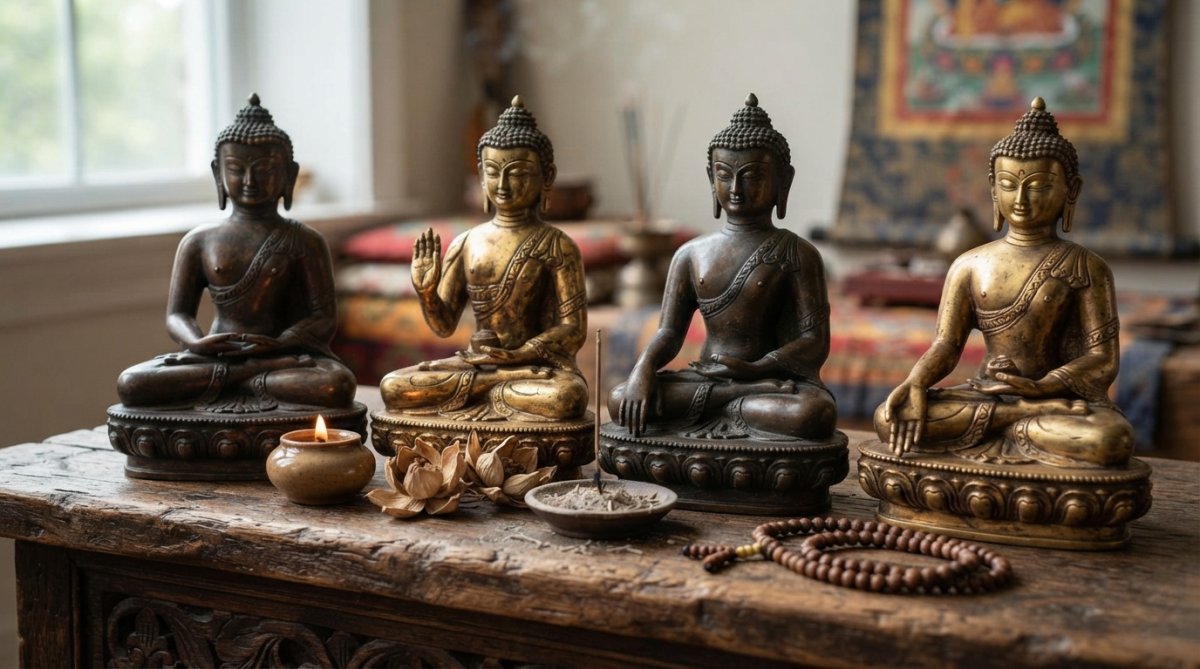
mudras de buda, Los gestos simbólicos con las manos representados en las estatuas comunican principios espirituales específicos y enfoques de meditación. Cada posición de la mano conlleva siglos de significado espiritual, lo que te ayuda a seleccionar una estatua que se alinee con tu práctica.
Dhyanamudra (gesto de meditación) muestra ambas manos descansando en el regazo, con las palmas hacia arriba y la mano derecha encima de la izquierda. Este mudra representa una concentración profunda y paz interior, lo que lo hace ideal si estás estableciendo una práctica de meditación dedicada y centrada en la tranquilidad.
Abhaya Mudra (gesto de valentía) muestra la mano derecha levantada a la altura del hombro con la palma hacia afuera. Este mudra simboliza protección y coraje, lo que lo hace significativo cuando se trabaja con la ansiedad o se cultiva la confianza interior.
Bhumisparsha Mudra (gesto de tocar la tierra) muestra la mano derecha apuntando hacia abajo con los dedos extendidos hacia la tierra. Este mudra representa la conexión a tierra y la autenticidad, particularmente significativo para la meditación de conexión a tierra o la conexión más profunda con la realidad física.
Varada Mudra (gesto de entrega de regalos) muestra la mano derecha extendida hacia abajo con la palma hacia afuera, simbolizando generosidad y compasión. Este mudra funciona maravillosamente si tu práctica enfatiza la meditación de bondad amorosa.
Cómo montar un altar de meditación en casa
La creación de un altar de meditación eficaz comienza con una evaluación honesta de su espacio real. La mayoría de los practicantes piensan demasiado en este paso cuando su realidad es un rincón de un dormitorio o un estante en una sala de estar. pequeño estatuas de buda porque los altares de meditación prosperan en estos entornos modestos cuando se aborda la ubicación estratégicamente.
Comience por identificar su lugar de meditación, un lugar donde realmente se sentará con regularidad, no un rincón de aspiraciones. Tu sistema nervioso comienza a reconocer el espacio y tu mente se asienta más rápidamente con cada visita. La proximidad a la luz natural importa más que la perfección arquitectónica.
Elegir la posición de su estatua
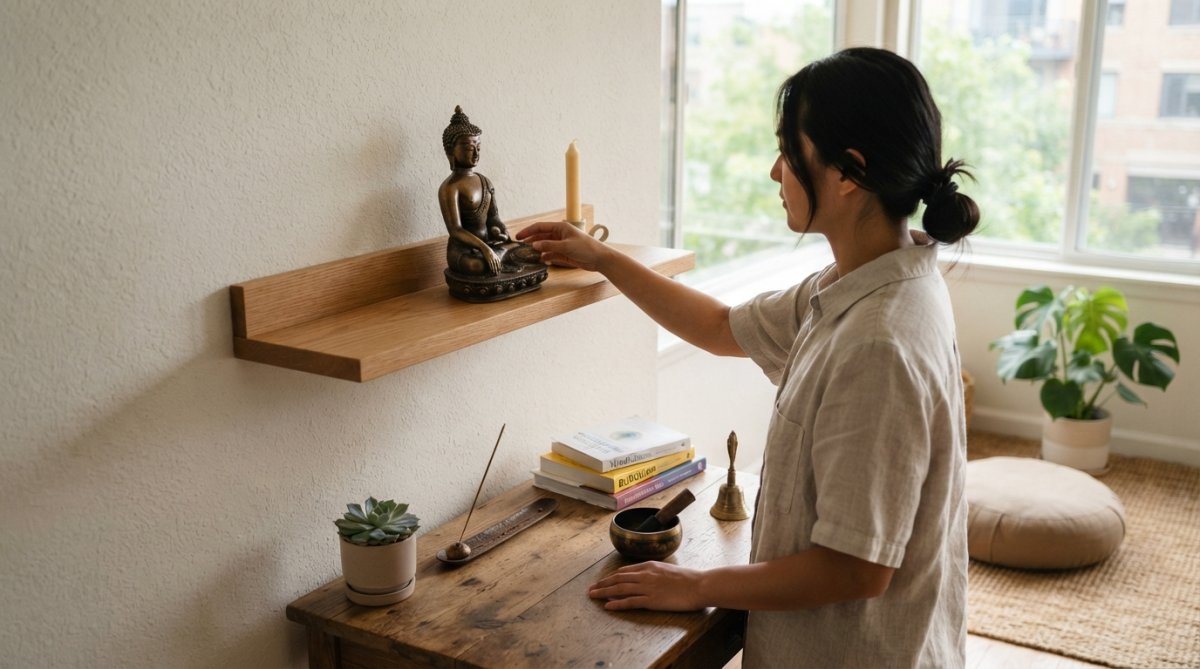
Coloque su estatua al nivel de los ojos o ligeramente por encima cuando esté sentado en su postura de meditación (investigación revisada por pares). Esto crea un punto focal natural sin necesidad de estirar el cuello. Su estatua debe descansar aproximadamente a dos o tres pies de distancia de su posición sentada, permitiendo un enfoque suave sin sentirse intrusivo (investigación revisada por pares).
Evite colocar su estatua directamente frente a una ventana o una fuente de luz brillante. En su lugar, colóquelo de modo que la luz ilumine la pieza desde un lado o desde el frente, revelando su textura y detalles.
Creando armonía visual en espacios pequeños
El área alrededor de la estatua debe parecer intencionada, no abarrotada. Las pequeñas estatuas de Buda funcionan mejor cuando están rodeadas de espacio negativo. Resiste la tentación de rodear tu estatua con múltiples objetos, cristales o elementos decorativos.
Considere un enfoque minimalista: su estatua, tal vez una sola vela o porta incienso y un espacio vacío. Esta moderación amplifica la presencia de la estatua. Si tu estética requiere elementos adicionales, limítate a dos o tres objetos complementarios como máximo.
La armonía del color apoya tu práctica. Los fondos neutros, blanco, crema, gris suave o madera natural, permiten que su estatua sea el punto focal visual. Evite patrones recargados o colores brillantes que compitan por la atención.
Estatuas de Buda antiguas versus contemporáneas
La elección entre piezas antiguas y contemporáneas implica consideraciones prácticas y filosóficas que afectan tanto a su experiencia de meditación como a su compromiso a largo plazo.
Las estatuas antiguas llevan historia y autenticidad. Estas piezas fueron creadas con métodos tradicionales por artesanos formados en técnicas centenarias. A menudo muestran una artesanía superior en detalles sutiles que las reproducciones contemporáneas luchan por replicar. Cuando meditas ante una auténtica antigüedad, estás sentado frente a un objeto que ha sido sostenido y contemplado por innumerables practicantes que te precedieron.
Sin embargo, las piezas antiguas exigen un manejo cuidadoso. Son frágiles, la restauración puede ser costosa y requieren condiciones ambientales específicas. Si tiene niños pequeños o mascotas, o si su situación de vida implica mudanzas frecuentes, una estatua antigua puede introducir un estrés innecesario en su consulta.
Consideraciones de durabilidad y longevidad
Las piezas contemporáneas ofrecen ventajas prácticas. Los artesanos modernos que trabajan en estilos tradicionales crean estatuas diseñadas específicamente para uso doméstico. Son más duraderos, se adaptan mejor a las condiciones típicas del hogar y, a menudo, más asequibles. Puedes colocar una estatua contemporánea en un estante sin preocuparte de que un pequeño golpe cause un daño irreparable.
Las estatuas contemporáneas también te permiten experimentar. Si eres nuevo en la práctica de la meditación, invierte en un contemporáneo bien elaborado La pieza le permite establecer su práctica y descubrir sus preferencias sin el peso financiero de cuidar una antigüedad costosa.
La distinción clave no es la edad, es la artesanía. Una estatua contemporánea mal hecha carece de la presencia de una bien elaborada, independientemente de su edad. Considere su estilo de vida honestamente. Si viaja con frecuencia, vive en climas fluctuantes o mantiene un hogar ocupado, una estatua contemporánea duradera de un artesano experto es mejor para su práctica que una antigüedad de la que se preocupará constantemente. decoración del hogar moderno.
Materiales y artesanía para estatuas de meditación.
El material de tu pequeña estatua de buda. afecta tanto su presencia estética como su durabilidad práctica. Los diferentes materiales encarnan diferentes cualidades energéticas y requieren distintos cuidados.
Opciones de piedra, madera, latón y cerámica
estatuas de piedra, típicamente tallados en mármol, piedra caliza o esteatita, ofrecen una solidez atemporal. La piedra se siente sólida y permanente, envejeciendo maravillosamente a lo largo de los años. La piedra funciona excepcionalmente bien para estatuas que permanecerán permanentemente en un solo lugar.
Estatuas talladas en madera trae calidez y belleza orgánica a tu altar. Las piezas de madera talladas a mano muestran el toque individual del artesano con rasgos faciales expresivos y túnicas sueltas. La madera requiere lubricación ocasional para evitar grietas y debe protegerse de la humedad excesiva.
Estatuas de latón Brilla con presencia luminosa y desarrolla una rica pátina con el tiempo. El latón es duradero y requiere relativamente poco mantenimiento, y sólo requiere un pulido suave ocasional. La calidad reflectante del latón capta la luz maravillosamente, creando un interés visual dinámico.
estatuas de ceramica Ofrecen una belleza delicada y a menudo presentan detalles pintados a mano. La cerámica es liviana y puede ser más asequible, pero también es más frágil. La cerámica funciona mejor en espacios de meditación estables y con poco tráfico.
Durabilidad del material para interiores y exteriores
Stone se desempeña excepcionalmente bien en exteriores, desarrollando carácter y pátina sin deteriorarse. La esteatita y el granito manejan admirablemente las condiciones exteriores.
La madera se deteriora al aire libre a menos que se trate y mantenga específicamente. La madera sin tratar expuesta a la lluvia, el sol y los cambios de temperatura se agrietará y deformará.
El latón desarrolla una pátina protectora en exteriores que protege el metal subyacente. Las estatuas de latón de exterior suelen verse más hermosas que las de interior.
La cerámica no es apta para uso en exteriores. Los ciclos de congelación y descongelación agrietarán las piezas de cerámica.
Cuidando tu estatua de Buda
El cuidado adecuado prolonga la vida de su estatua y mantiene su presencia meditativa.
estatuas de piedra necesita una mínima intervención. Espolvoree suavemente con un paño suave cada pocas semanas. Si se acumula suciedad, utilice agua tibia y un cepillo suave, nunca productos químicos agresivos. Evite la luz solar directa durante períodos prolongados.
estatuas de madera requieren un mantenimiento más activo. Quite el polvo con regularidad y aplique aceite de madera natural una o dos veces al año para evitar grietas. Nunca use agua directamente sobre la madera. Mantenga las estatuas de madera alejadas de fuentes de calor directas y mantenga una humedad constante.
Estatuas de latón Desarrolla una pátina natural que muchos profesionales prefieren. Si desea mantener el brillo, utilice un paño suave y un pulidor de latón de vez en cuando. Nunca utilice productos químicos agresivos o compuestos abrasivos.
estatuas de ceramica Necesita protección contra impactos y humedad. Quite el polvo con un paño suave y utilice únicamente agua tibia para limpiar. Mantenga la cerámica alejada de ambientes con mucha humedad a menos que esté vidriada específicamente para tales condiciones.
Todas las estatuas se benefician de una atención consciente y regular. Como parte de tu práctica de meditación, haz una pausa ocasional para ver realmente tu estatua, notar sus detalles y apreciar su artesanía. Este cuidado atento profundiza su relación con la pieza y apoya su práctica.
Seleccionar una estatua auténtica para su espacio sagrado
La autenticidad importa, aunque significa algo diferente para las piezas contemporáneas y antiguas. Una estatua auténtica es aquella creada con habilidad, intención y respeto genuinos por las tradiciones que representa.
Verificación de procedencia y artesanía
Para piezas antiguas, procedencia, la historia documentada del objeto, proporciona una verificación crucial. Los distribuidores acreditados mantienen registros detallados sobre el origen de las piezas y los trabajos de restauración realizados. Examina la artesanía de cerca. Las piezas auténticas talladas a mano muestran ligeras asimetrías y variaciones individuales de las que carecen las réplicas producidas en masa. Los patrones de desgaste de la superficie deben ser consistentes con la edad.
Para piezas contemporáneas, busque artesanos que trabajen dentro de tradiciones específicas. Investiga los antecedentes y la formación del creador. Artesanos contemporáneos de renombre brindan información sobre sus técnicas y obtención de materiales.
Sensibilidad cultural y exhibición respetuosa
Las pequeñas estatuas de buda para altares de meditación merecen un trato respetuoso que honre sus orígenes espirituales. Muestre su estatua en un espacio limpio e intencional. Evite colocarlo en baños, cerca de alcohol o en áreas desordenadas. Su estatua no debe colocarse más abajo que su cabeza cuando esté sentado, lo que refleja el respeto por las tradiciones budistas.
Acércate a tu estatua con reverencia. No estás adorando el objeto en sí; estás honrando las enseñanzas que representa. Muchos practicantes se inclinan levemente ante su estatua como gesto de respeto, similar a inclinarse ante un maestro.
Si finalmente decides desprenderte de tu estatua, hazlo con respeto. Dónelo a un templo budista, véndelo a alguien que lo valore o investigue métodos de eliminación adecuados en lugar de simplemente desecharlo.
Seleccionar pequeñas estatuas de Buda para los altares de meditación se trata, en última instancia, de crear un espacio sagrado personal que respalde su práctica. La estatua correcta no es necesariamente la más cara o la más históricamente significativa, es la que realmente te llama, la que se adapta a tu situación de vida real y a la que regresarás constantemente.
En HD Asian Art, entendemos que las piezas auténticas, ya sean tesoros antiguos o estatuas contemporáneas hechas a mano, merecen una cuidadosa conservación y un manejo respetuoso. Nuestra colección de estatuas budistas e hindúes, esculturas jemeres y decoración inspirada en templos está seleccionada específicamente para practicantes y coleccionistas que buscan piezas que aporten una presencia espiritual genuina a sus espacios de meditación. Cada estatua de nuestra colección se elige tanto por su artesanía como por su capacidad para apoyar una práctica significativa. Explora nuestra colección y descubre la estatua que resuena con tu viaje de meditación.
Preguntas frecuentes
¿Qué simboliza una estatua de Buda meditando?
Una estatua de Buda meditando representa la paz interior, la iluminación y el despertar espiritual. La postura serena y los ojos cerrados simbolizan la concentración profunda y el viaje hacia el interior hacia la atención plena. Para los practicantes, tener este símbolo como punto focal durante la meditación refuerza la intención de cultivar la tranquilidad y la autoconciencia. La estatua sirve como recordatorio visual del estado meditativo que estás intentando alcanzar.
¿Importa el gesto de la mano (mudra) de una estatua de Buda para la meditación?
Sí, los mudras tienen significados espirituales específicos que pueden mejorar tu práctica. El Dhyana mudra (gesto de meditación) con ambas manos apoyadas en el regazo promueve una concentración profunda, mientras que el Bhumisparsha mudra (gesto de tocar la tierra) estabiliza tu energía. Elegir un mudra alineado con tus objetivos de meditación, ya sea buscar paz, protección o curación, crea un espacio sagrado más intencional y fortalece tu conexión con el simbolismo de la estatua.
¿Cómo puedo saber si una estatua de Buda es auténtica y no una réplica?
Las piezas auténticas vienen con procedencia documentada, información clara sobre su origen, materiales e historia artesanal. Las estatuas talladas a mano muestran marcas artesanales individuales y variaciones naturales de las que carecen las réplicas producidas en masa. Los vendedores acreditados brindan descripciones detalladas de la edad de la estatua, el artesano o la región de donde proviene y los materiales utilizados. Solicite una verificación de autenticidad e inspeccione las fotografías detenidamente para detectar signos de artesanía genuina antes de comprar.
¿Cuál es el mejor tamaño para una pequeña estatua de Buda en un espacio de meditación?
Para rincones de meditación de apartamentos y altares de escritorio, las estatuas de entre 4 y 12 pulgadas de alto funcionan mejor. Son lo suficientemente sustanciales como para servir como un punto focal significativo sin abrumar los espacios pequeños. Considere las dimensiones de su altar y la distancia de visión; una estatua debe ser visible y centrada en su línea de visión durante la meditación. Las piezas más pequeñas (de 4 a 6 pulgadas) se adaptan a esquinas compactas, mientras que las estatuas de 8 a 12 pulgadas funcionan para salas de meditación dedicadas con más espacio.
