



Cómo almacenar de forma segura una escultura budista de piedra antigua
Cómo almacenar de forma segura una escultura budista de piedra antigua
Saber cómo almacenar adecuadamente las esculturas budistas de piedra antiguas es la diferencia entre preservar una obra de arte centenaria y verla deteriorarse en un estante. La piedra puede parecer indestructible, pero la piedra caliza, el mármol y la arenisca son materiales porosos que responden a la humedad, los cambios de temperatura y la manipulación inadecuada de maneras que pueden causar daños irreversibles. Esta guía cubre todo lo que los coleccionistas necesitan saber: tipos de piedras y sus vulnerabilidades, preparación y limpieza, métodos de embalaje, controles ambientales y señales de advertencia que exigen atención profesional.
Tabla de contenidos
-
Cómo conservar una escultura budista de piedra antigua: materiales y riesgos
-
Mi perspectiva sobre el cuidado de las esculturas antiguas de piedra.
-
Explora auténticas esculturas budistas antiguas en HDAsianArt
Conclusiones clave
| punto | Detalles |
|---|---|
| El tipo de cálculo determina el riesgo | La piedra caliza y la arenisca son muy porosas; cada uno requiere protocolos específicos para evitar la humedad y el ácido. |
| Documentación antes del almacenamiento. | Fotografíe e informe sobre el estado de cada escultura antes de empacarla para establecer un registro de referencia claro. |
| El embalaje en capas no es negociable. | Utilice tejido con pH neutro, espuma de polietileno y doble caja para proteger contra impactos y humedad. |
| Preservación de controles ambientales. | La humedad y la temperatura estables previenen fracturas por tensión, crecimiento de moho y deterioro de la superficie. |
| Las señales de deterioro necesitan especialistas | El polvo, la descamación o las costras blancas no son problemas de limpieza. Requieren consolidación profesional. |
Cómo conservar una escultura budista de piedra antigua: materiales y riesgos
Antes de empaquetar una sola pieza, debe comprender con qué está trabajando. Las esculturas budistas de piedra antiguas provienen de toda Asia y los tipos de piedra varían considerablemente según la región y el período. Las piezas camboyanas jemeres suelen estar talladas en piedra arenisca. Las obras de Sri Lanka y del sur de Asia suelen utilizar piedra caliza o granito. Las esculturas tailandesas pueden ser de piedra caliza, laterita o mármol. Cada material tiene un conjunto distinto de vulnerabilidades.
Tipos de piedra y sus vulnerabilidades.
piedra caliza Es uno de los materiales más habituales en las tallas de piedra antiguas, y también uno de los más frágiles. La piedra caliza es porosa y sensible. tanto a la humedad como a los ácidos, lo que significa que incluso un entorno de almacenamiento húmedo puede provocar formación de polvo, picaduras, manchas y pérdida de detalles finos tallados con el tiempo. El mármol es una forma metamórfica de piedra caliza y comparte muchas de las mismas sensibilidades, aunque generalmente es más denso. La arenisca es muy porosa y absorbe la humedad fácilmente. El granito es el más duradero de los tipos comunes, pero no es inmune a las manchas en la superficie debido al contacto inadecuado con otros materiales.
Arenisca y piedra caliza Son las piedras que la mayoría de los coleccionistas subestiman. Sus superficies pueden parecer estables mientras se deterioran activamente bajo la pátina. Esto es especialmente cierto para piezas o esculturas al aire libre que se han exhibido en ambientes húmedos antes de su adquisición.
Riesgos ambientales clave que se deben comprender antes del almacenamiento:
-
Humedad: La principal amenaza para las piedras porosas. La humedad provoca formación de polvo, descamación, costras blancas y desprendimiento de granos en piedra caliza y arenisca. Incluso la condensación atrapada debajo de una escultura durante el almacenamiento puede causar daños progresivos.
-
Fluctuaciones de temperatura: La expansión y contracción repetida de la piedra debido a los cambios de temperatura provoca microfracturas con el tiempo. La temperatura constante es más protectora que cualquier objetivo de temperatura específico.
-
Luz solar directa y exposición a los rayos UV: La exposición a los rayos UV provoca decoloración y degradación de la superficie. Las esculturas almacenadas cerca de ventanas o bajo iluminación fluorescente sin filtros UV están en riesgo.
-
Contacto ácido: El ácido de los productos de limpieza, la madera sin tratar o incluso los aceites de la piel humana pueden grabar y teñir las superficies de piedra de forma permanente.
Consejo profesional: Antes de almacenar cualquier talla de piedra antigua en un almacenamiento a largo plazo, verifique si el área de almacenamiento ha experimentado cambios estacionales de humedad. Un higrómetro cuesta muy poco y puede evitar daños por miles de dólares.
Pasos de preparación antes de empacar.
La preparación es donde la mayoría de los coleccionistas cometen sus primeros errores. Apresurarse a empaquetar una escultura sin una limpieza, documentación o selección de materiales adecuadas crea problemas que sólo se hacen visibles meses después.
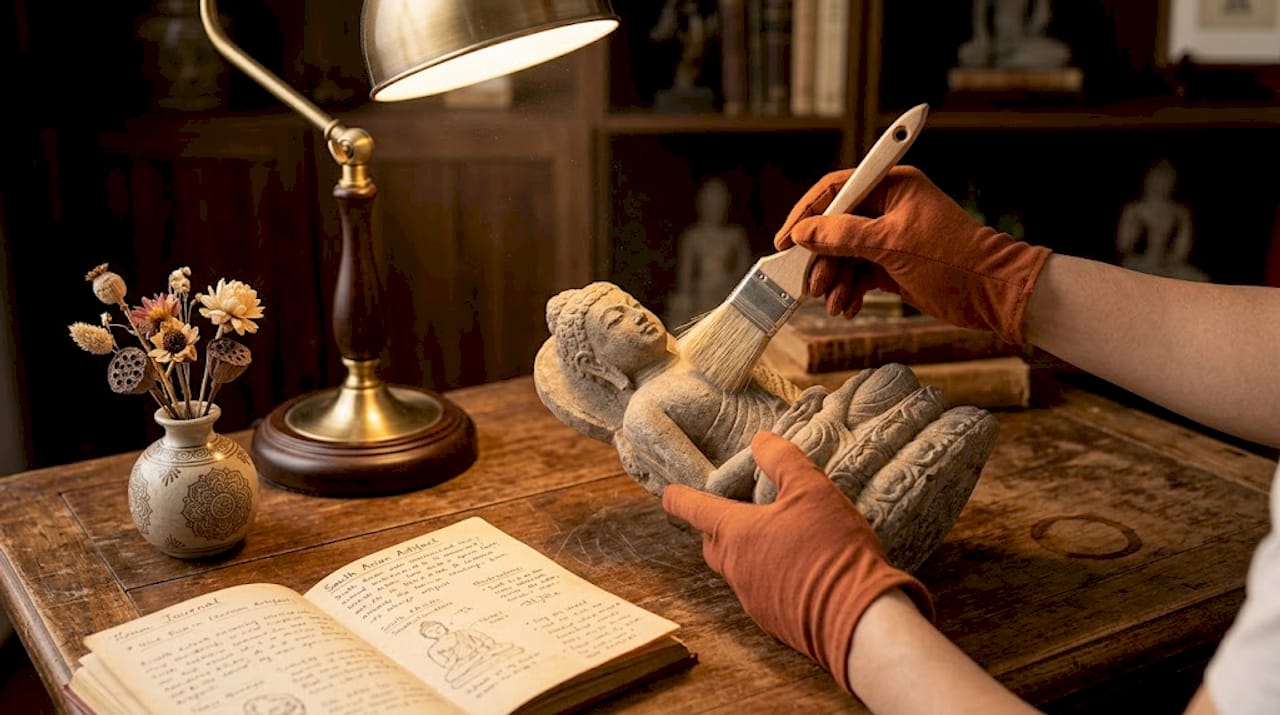
limpieza
La regla de limpieza de las esculturas antiguas de piedra es sencilla: menos es más. Utilice cepillos suaves de cerdas naturales o paños de microfibra para quitar el polvo en seco. Los plumeros y los paños abrasivos están prohibidos. Si se necesita humedad, introdúzcala con cuidado y pruebe primero cualquier agente de limpieza en un área discreta. Nunca utilice limpiadores ácidos, lejía ni detergentes domésticos sobre piedra caliza o arenisca. Para la mayor parte de la limpieza previa al almacenamiento, es suficiente un cepillado en seco.
Documentación
Fotografíe la escultura desde todos los ángulos antes de empacar. Anote cualquier grieta, astillas, manchas en la superficie o áreas de preocupación existentes en un informe de condición escrito. Esta documentación tiene dos propósitos: lo protege legal y comercialmente y le brinda una base de referencia para comparar cuando la pieza sale del almacenamiento.
| Paso de documentación | Método | Propósito |
|---|---|---|
| Fotografía de ángulo completo | Fotografías de alta resolución, todos los lados. | Registro visual de la condición previa al almacenamiento. |
| Informe de condición escrito | Describir daños existentes, pátina y reparaciones. | Línea base legal y de conservación |
| Registro de medidas | Largo, ancho, alto, peso | Apoya la valoración de seguros |
| Identificación de materiales | Tenga en cuenta el tipo de cálculo si lo conoce | Informa las elecciones de embalaje y medio ambiente. |
Materiales a reunir antes de empacar.
-
Papel tisú sin ácido y pH neutro
-
Láminas y bloques de espuma de polietileno (densidad de 35 a 50 kg/m³ para protección contra impactos)
-
Guantes de algodón o nitrilo para manipulación.
-
Caja interior a medida del tamaño de la escultura.
-
Caja exterior reforzada o caja de cartón de doble pared.
-
Película de barrera contra la humedad o láminas de polietileno.
Consejo profesional: Se requieren guantes de algodón o nitrilo cada vez que manipule la escultura. Los aceites y ácidos de la piel se transfieren fácilmente a la piedra porosa y provocan manchas que son difíciles o imposibles de revertir.
Métodos de embalaje y almacenamiento.
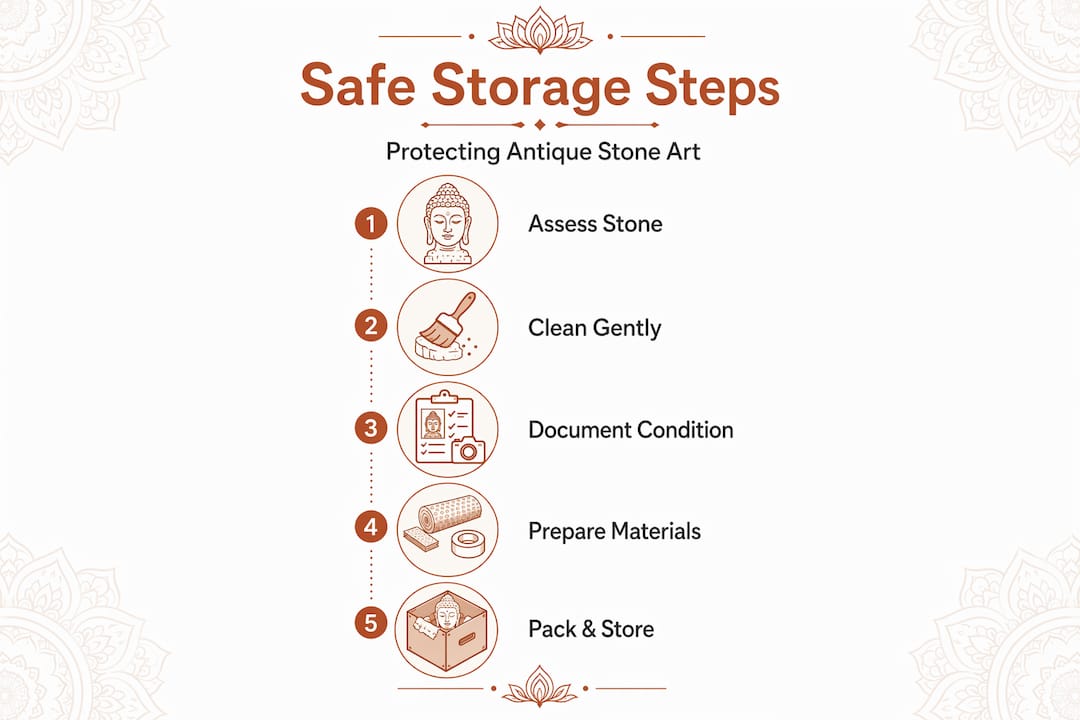
Una vez completada la preparación, el proceso de envasado real sigue un enfoque en capas. Cada capa cumple una función específica. Saltarse cualquiera de ellos aumenta el riesgo.
-
Envuelva la escultura en un tejido con pH neutro. Aplicar de dos a tres capas en toda la superficie. Esto protege la piedra del contacto directo con la espuma, que puede atrapar la humedad contra la superficie si se usa sola.
-
Crea una cuna de espuma. Corte bloques de espuma de polietileno para soportar los contornos naturales de la escultura. El objetivo es distribuir el peso de manera uniforme y evitar que un solo punto soporte tensión. Espuma de PE de grado de conservación de 35 a 50 kg/m³ proporciona el equilibrio adecuado entre amortiguación y soporte para esculturas de piedra.
-
Agregue una barrera a prueba de humedad. Envuelva el conjunto de tejido y espuma en láminas de polietileno antes de colocarlo en la caja interior. Esto evita que la condensación llegue a la piedra durante el almacenamiento. La humedad atrapada debajo de las esculturas durante el almacenamiento es un riesgo oculto importante que el diseño de barrera adecuado elimina.
-
Colóquelo en una caja interior hecha a medida. La caja interior debe tener un espacio vacío mínimo alrededor del soporte de espuma. El exceso de espacio permite el movimiento durante la manipulación, lo que provoca microabrasión y tensión en proyecciones frágiles como manos, coronas o pétalos de loto.
-
Caja doble con contenedor exterior reforzado. Coloque la caja interior dentro de una caja exterior más grande o una caja de madera, con espuma adicional llenando el espacio entre ellas. Esta capa exterior absorbe el impacto de caídas accidentales o presión de apilamiento.
-
Etiquete claramente y oriente correctamente. Marque el contenedor exterior con la orientación de la escultura (superior, frágil), la descripción del contenido y la ubicación de almacenamiento.
Para el entorno de almacenamiento en sí, la temperatura y la humedad estables son dos requisitos no negociables. Evite garajes, sótanos y áticos donde fluctúan según la temporada. Una sala interior con clima controlado o una instalación de almacenamiento de arte profesional es la opción adecuada para esculturas de piedra coleccionables de gran valor. Mantenga las esculturas alejadas del piso para evitar la humedad del suelo y alejadas de las paredes exteriores donde las diferencias de temperatura son mayores.
Consejo profesional: Cuando almacene varias esculturas, nunca apile cajas directamente una encima de otra a menos que las cajas exteriores estén diseñadas específicamente para apilar cargas. El peso de las cajas superiores puede comprimir la espuma y transferir tensión a la escultura de abajo.
Errores comunes y señales de advertencia
Incluso los coleccionistas experimentados cometen errores de almacenamiento. Los más frecuentes son también los más dañinos.
-
Usar plástico de burbujas directamente contra la piedra. El plástico de burbujas atrapa la humedad y puede dejar huellas en superficies de piedra blanda. Utilice siempre un tejido con pH neutro como primera capa de contacto.
-
Almacenamiento en ambientes no controlados. Los garajes y cobertizos exponen las esculturas a picos de humedad, temperaturas extremas y actividad de plagas. Estos no son lugares de almacenamiento apropiados para el arte budista de piedra antiguo.
-
Limpieza con agua o productos domésticos. La limpieza a base de agua antes del almacenamiento introduce humedad que queda atrapada en el embalaje. Los limpiadores domésticos ácidos o alcalinos graban las superficies de piedra.
-
Saltarse documentación. Sin un registro de las condiciones previas al almacenamiento, cualquier daño descubierto posteriormente no puede atribuirse definitivamente al almacenamiento versus las condiciones anteriores.
-
Ignorando pequeñas grietas. Una pequeña grieta en una pieza de piedra caliza o arenisca puede expandirse significativamente si entra humedad y la temperatura fluctúa.
Cuando revise las esculturas almacenadas, busque estas señales de advertencia:
La formación de polvo, descamación, formación de costras blancas o desprendimiento de granos en la superficie de una escultura de piedra porosa no son problemas estéticos. Estos signos indican un deterioro activo que requiere consolidación profesional, no una limpieza de rutina. Intentar limpiar o estabilizar estas superficies sin formación especializada puede acelerar el daño.
Si observa alguno de estos signos, retire la escultura del almacenamiento, documente el cambio con su informe de condición original y consulte a un conservador antes de hacer cualquier otra cosa. Para orientación sobre mover la escultura de forma segura a un conservador o a una nueva ubicación de almacenamiento, se aplican los estándares profesionales de manipulación de arte.
Mi perspectiva sobre el cuidado de las esculturas antiguas de piedra.
He manipulado suficientes esculturas budistas de piedra antiguas para saber que el error más común que cometen los coleccionistas es tratar la piedra como si fuera inerte. No lo es. La piedra respira, absorbe y responde a su entorno de formas que se acumulan silenciosamente a lo largo de los años.
Lo que he aprendido al trabajar con colecciones reales es que el paso del empaque que la mayoría de la gente comete mal es la barrera contra la humedad. Los coleccionistas invierten en buena espuma y en la caja adecuada, y luego se saltan las láminas de polietileno porque les parece excesivo. Seis meses después, abren la caja y encuentran una eflorescencia blanca sobre una superficie de piedra caliza que no estaba allí antes. El tejido y la espuma absorbieron la humedad ambiental, la mantuvieron contra la piedra y la piedra respondió. Es completamente prevenible.
Mi otra observación es sobre la pátina. Muchos coleccionistas quieren limpiar una pieza antes de guardarla para que luzca lo mejor posible. Ese instinto es comprensible pero a menudo contraproducente. La pátina de una antigua talla de piedra forma parte de su registro histórico y de su valor. Una limpieza agresiva antes del almacenamiento, incluso con buenas intenciones, puede dañar los detalles de la superficie y reducir tanto el valor estético como de mercado de la pieza. En caso de duda, déjelo en paz.
La paciencia es la herramienta de preservación más subestimada. Verifique las piezas almacenadas según un cronograma, documente cualquier cambio y resista la tentación de intervenir sin orientación profesional. Las esculturas que sobreviven a siglos lo hacen porque se dejan intactas en condiciones estables, no porque alguien las limpie con regularidad.
-Jaime, HDAsianArt.com
Explora auténticas esculturas budistas antiguas en HDAsianArt
HDAsianArt ofrece una selección cuidadosamente seleccionada de auténticas esculturas de piedra antiguas procedente de Camboya, Tailandia, Sri Lanka, Indonesia, Vietnam y más allá. Cada pieza de la colección es investigada y documentada individualmente por especialistas, con información detallada sobre su estado y fotografías de alta resolución. Para los coleccionistas que crean una colección seria de estatuas budistas o que buscan arte religioso en piedra único con procedencia verificada, Hdasianart ofrece envío DHL asegurado a todo el mundo y orientación experta. Explore la gama completa de arte budista en piedra a la venta y encuentre piezas que cumplan con los estándares de calidad de museo tanto para exhibición como para preservación a largo plazo.
Preguntas frecuentes
¿Cuál es la mejor forma de almacenar esculturas budistas de piedra antiguas?
Guarde la escultura en un ambiente climatizado con humedad y temperatura estables, envuelta en tejido de pH neutro y espuma de polietileno dentro de un contenedor de doble caja. Manténgalo alejado de la luz solar directa, fuentes de humedad y paredes exteriores.
¿Puedo utilizar plástico de burbujas para proteger la escultura budista de piedra exterior?
El plástico de burbujas no se debe utilizar directamente sobre superficies de piedra. Atrapa la humedad y puede dejar huellas en la piedra blanda. Utilice un tejido con pH neutro como primera capa de contacto, seguido de espuma de polietileno de grado de conservación.
¿Cómo puedo saber si mi talla de piedra antigua se está deteriorando durante el almacenamiento?
La formación de polvo, la descamación, las costras blancas o el desprendimiento de granos en la superficie indican un deterioro activo. Estos letreros requieren una evaluación de conservación profesional, no una limpieza de rutina.
¿Dónde puedo comprar estatuas budistas antiguas de procedencia verificada?
Galerías especializadas como Hdasianart ofrecen esculturas budistas de piedra antiguas autenticadas con documentación detallada, descripciones de expertos y envío internacional asegurado. Busque vendedores que proporcionen informes de estado e investigaciones de procedencia.
¿Con qué frecuencia debo revisar las esculturas almacenadas a largo plazo?
Inspeccione las esculturas almacenadas cada tres a seis meses. Compare la condición actual con su documentación original y busque cualquier cambio en la textura, el color o la integridad estructural de la superficie.
