



How to Display Buddhist Statues in Your Home
How to Display Buddhist Statues in Your Home
Table of Contents
- Why Elevation and Placement Matter for Buddhist Statues
- Buddha Statue Placement Rules: Do's and Don'ts
- Buddhist Altar Setup Guide for Your Home
- Meditation Space Decor Ideas That Honor Tradition
- Directional Alignment and Feng Shui Considerations
- Small-Space Solutions for Apartments and Condos
- Cultural Appreciation vs. Appropriation: Getting It Right
- Conclusion
- Frequently Asked Questions
Why Elevation and Placement Matter for Buddhist Statues
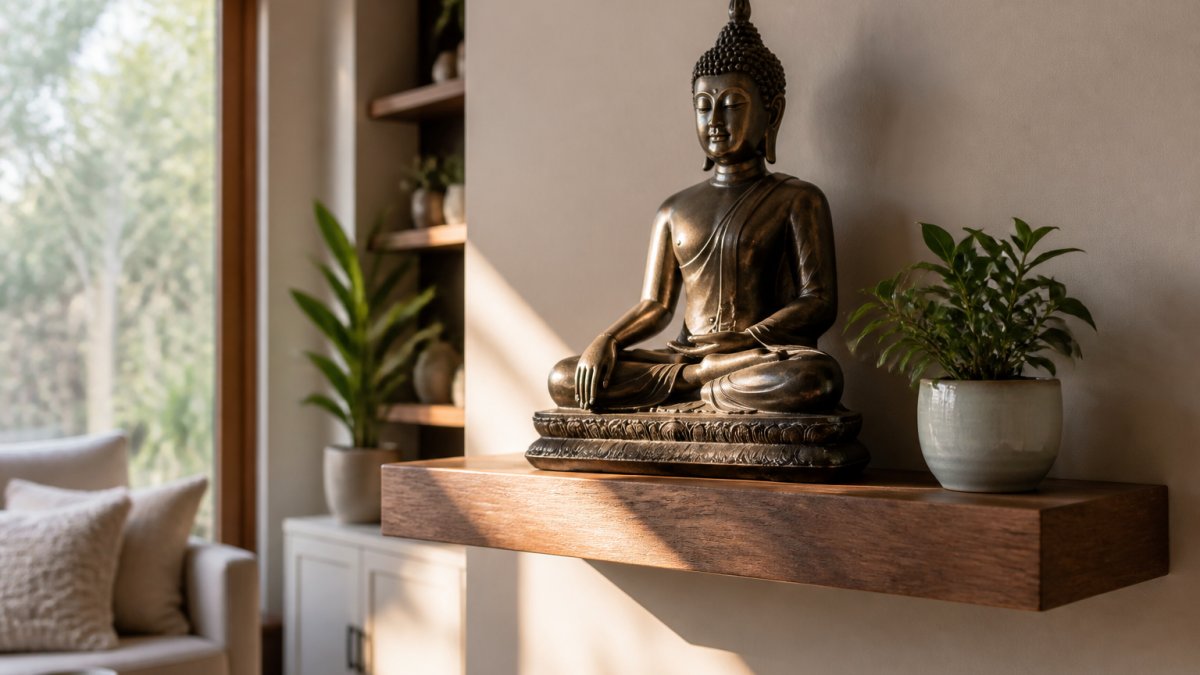
Learning how to display Buddhist statues in your home starts with one principle: elevation, and the same care applies when you display Buddhist statues on a shelf or altar. In Buddhist tradition, a statue never sits on the floor, raising a figure above waist level signals respect rather than decoration. This guide from HD Asian Art covers placement rules, altar basics, and small-space fixes.
The Spiritual Significance of Height
Height separates the sacred from the everyday. Many practitioners keep the figure's head above their standing eye line, or at least above a seated eye line during meditation.
Choosing a Stable Surface
Pick a surface that does not wobble, a heavy wooden shelf, stone plinth, or solid console table. Press down with one hand; if it shifts, it is too light for a stone or bronze piece.
Keep three things in mind:
- The surface should hold the full base, with no overhang
- The spot should stay out of direct sun, which fades finishes over time
- The area should be easy to dust without lifting the statue often
Buddha Statue Placement Rules: Do's and Don'ts
Buddha statue placement rules come down to respect and stability: a raised, stable surface in a quiet part of the room, facing a calm, uncluttered direction. Avoid the floor, the bathroom, and spots where feet point at the figure.
| Decision | Do This | Avoid This |
|---|---|---|
| Height | Place above waist level | Resting on the floor |
| Surface | Solid shelf or plinth | Wobbly, narrow ledges |
| Room | Living room, study, meditation corner | Bathroom, kitchen, hallway traffic |
| Light | Soft, indirect light | Harsh direct sun |
| Company | A few quiet objects | Clutter and loud colors |
Common Placement Mistakes to Avoid
The biggest mistake is treating the statue as shelf filler. Tucking a Buddha between books and a remote control undercuts its purpose. Give it space on all sides.
Other missteps to skip:
- Placing the statue below a television or screen
- Setting it where feet point toward it from a couch or bed
- Grouping it with unrelated decor that clashes in tone
- Leaving it in a damp spot where metal can spot and wood can warp
Buddhist Altar Setup Guide for Your Home
A home altar does not require a dedicated room or formal commitment, just a raised surface, one central figure, and a small set of offerings you actually maintain. The setup below scales from a studio shelf to a full table.
The Core Elements and What They Mean
Traditional altars use a few offerings, each with a purpose. You do not need all of them to start.
- A central figure. One Buddha or bodhisattva statue, raised slightly on a stand so it sits above the offerings. This is the focal point.
- Water. A small bowl, refreshed daily, the simplest offering and the most common starting point.
- A candle or light. A butter lamp, plain candle, or small electric lamp if open flame is a concern with pets or children.
- Flowers or botanicals. Fresh, single-stem, or dried in a simple vase. These represent impermanence.
- Incense (optional). A single stick, kept low and away from the statue's face so smoke does not discolor the finish.
- A cushion or low seat. Placed facing the altar, so the setup is oriented toward practice rather than display.
Scaling the Setup: Beginner vs. Established Practice
If you are new, start with three items: the statue, a water bowl, and a candle. That is a complete altar; adding more before you have a daily habit usually leads to clutter, not devotion.
Maintaining the Altar
Dust with a soft, dry cloth, refresh the water daily, and replace flowers when they fade. A neglected altar reads as abandoned rather than sacred. Keep flames away from the statue and never leave them unattended.
What to Do When You Move or No Longer Want the Statue
A Buddha statue is not meant to be thrown in the trash, but you are not obligated to keep a piece that no longer fits your home or practice.
A few respectful options:
- Gift it to a practitioner or friend who will display it with care, the simplest and most common solution.
- Offer it to a local Buddhist center, temple, or meditation group. Many accept statues for their shrine room or to pass on to members.
- Donate it to a charity shop or resale outlet that handles religious objects, if no temple is nearby. Wrap it carefully and place it upright in the box.
- If the piece is damaged beyond display, wrap it in cloth and place it in a clean, out-of-the-way spot rather than the trash. Some practitioners prefer to bury or cremate a damaged statue; wrapping and setting it aside is a widely accepted middle ground.
Meditation Space Decor Ideas That Honor Tradition
Meditation space decor ideas should serve calm, not show. Start with a clutter-free corner and build outward, earthy tones, natural materials, and soft light do more than any busy arrangement.
Try these touches:
- A low wooden stool or cushion for seated practice
- A single candle holder with a plain, understated design
- One or two botanicals, real or dried, in a simple vase
- A soft rug to define the space
- Warm, dimmable lighting instead of overhead bulbs
Directional Alignment and Feng Shui Considerations
Direction trips people up most because two traditions give two answers. Neither is wrong, pick a rationale and follow it consistently rather than moving the statue every time you rearrange furniture.
What the Buddhist Traditions Actually Say
In many East Asian Buddhist homes, the statue faces east, the direction of the sunrise and the traditional hour of the Buddha's awakening. Facing east also means you sit facing west, your back to the morning light.
What Feng Shui Adds
Feng shui treats a Buddha statue as a stabilizing, grounding object rather than an activating one:
- Place the figure in a quiet, settled zone, traditionally the area associated with family, health, or contemplation, rather than the busy entry or active career corner.
- Avoid placing it directly opposite a bathroom door, a mirror that reflects it, or the foot of a bed.
- Keep it off the floor and out of direct line with a doorway, so foot traffic does not rush past it.
- Do not tuck it under a staircase, sloped ceiling, or overhead beam, which feng shui reads as pressure on the figure.
How to Decide in a Real Room
Most people cannot satisfy every guideline, so work in this order:
- Height first. Get the figure above waist level, ideally with the head near or above your standing eye line.
- Then sight line. The statue should face open space where you can sit and look at it without turning your neck.
- Then direction. If east is available and does not put the figure in a window or traffic path, take it. If not, choose the calmest wall.
- Then avoid the hard no's. No bathroom door, no mirror reflection, no foot-of-bed placement, no floor.
A Note on Mixing Traditions
If you follow feng shui at home but keep a Buddhist shrine, you do not have to choose one system. A common pattern is to use feng shui to pick the room and wall, then Buddhist convention to set height and facing. The two rarely conflict once height is settled.
Small-Space Solutions for Apartments and Condos
Small-space solutions matter more than ever, since many people set up a meditation corner in a studio or shared apartment. You do not need a full room, a single shelf can hold a complete altar.
Options that work well in tight spaces:
- A wall-mounted shelf at eye level
- A narrow console table behind a sofa
- The top of a low bookcase, cleared of other items
- A folding tray table that tucks away after practice
Cultural Appreciation vs. Appropriation: Getting It Right
Cultural appreciation vs. appropriation deserves a direct answer. Appreciation means learning the meaning behind a figure and displaying it with care; appropriation means treating a sacred image as a trend or a prop. Respectful placement requires a thoughtful approach to context, much like the intentionality required when displaying vintage collections in a way that honors their history and aesthetic integrity.
- Learn what the figure represents before you buy
- Display it with the respect the tradition asks for
- Avoid mixing it into themes that mock or cheapen it
- Support sellers who can speak to a piece's origin and craft
Conclusion
Displaying a Buddhist statue well takes more thought than finding a shelf. Height, stability, direction, and a clutter-free setting all shape how a piece feels in a room. Get those right, and a statue becomes a true focal point for calm.
Frequently Asked Questions
Is it good or bad to keep a Buddha statue at home?
Keeping a Buddha statue at home is considered positive when done with respect and intentionality. In Buddhist tradition, the statue serves as a focal point for mindfulness and meditation, not as a decorative object. Place it in a clean, elevated spot, avoid locations like bathrooms or floors, and maintain a clutter-free environment. Many practitioners find that a properly displayed statue brings tranquility and supports their spiritual practice, regardless of whether they follow Buddhism.
Should a Buddha statue face east or west?
East is the most common direction for a Buddha statue, as it symbolizes enlightenment and the rising sun. Some traditions also accept north or south. West is less typical but not forbidden. The key is that the statue should face the room's center or your meditation area, allowing you to look toward it. Avoid placing it with its back to a window or facing a wall. Directional alignment should support your practice, not create stress.
Can I place a Buddha statue on the floor?
Placing a Buddha statue directly on the floor is generally discouraged in Buddhist tradition because it can be seen as disrespectful. The statue should be elevated on a stable surface like a shelf, table, or altar, ideally at or above eye level when seated. For small spaces, a wall-mounted shelf or a low but clean platform works well. The goal is to show reverence while keeping the statue stable and safe from accidental kicks or clutter.
How do I create a meditation altar for my statue?
Start with a clean, stable surface in a quiet corner. Elevate the statue on a shelf or small table. Add a candle holder, a small vase with fresh botanicals, and a bowl for offerings like water or incense. Keep the space clutter-free and use earthy tones for a calming aesthetic. If you have limited room, a single shelf or a windowsill can serve as a meditation corner. The altar should feel peaceful and intentional, reflecting your personal practice.
