



How to Care for Bronze and Stone Asian Sculptures
How to Care for Bronze and Stone Asian Sculptures
Most collectors damage their pieces in the first year of ownership, not through neglect, but through the wrong kind of attention. A well-meaning wipe-down with the wrong cloth, a household cleaner that "cut grease" on the label, or a display position that looked perfect but trapped humidity, and a piece that survived centuries in a temple loses its patina in an afternoon.
Knowing how to care for bronze statue surfaces, and how to preserve stone sculpture alongside them, is the baseline skill every serious collector needs to develop before they acquire the next piece, not after something goes wrong.
Table of Contents
- Quick Takeaways
- Understanding Your Materials: Bronze and Stone Are Not Interchangeable
- Routine Cleaning for Bronze Sculptures
- Cleaning and Preserving Stone Sculptures
- Display and Environment: The Variables Most Collectors Underestimate
- Waxing Bronze and Sealing Stone: What to Use and When
- Bronze Disease, Efflorescence, and Damage You Should Not Ignore
- Comparison of Care Methods by Material and Setting
- Frequently Asked Questions
- References
Quick Takeaways
|
Key Insight |
Explanation |
|---|---|
|
Never use household cleaners on bronze patina |
Products that cut grease or remove tarnish strip the protective patina that took decades or centuries to develop, exposing raw metal to accelerated corrosion. |
|
Target 45 to 55 percent relative humidity for mixed collections |
Above 60 percent, bronze disease becomes an active risk. Below 40 percent, porous stone such as sandstone is vulnerable to desiccation cracking. |
|
Identify your stone before you clean it |
Marble and limestone are calcite-based and react to acids. Sandstone is porous and loses surface detail if scrubbed. Granite tolerates cleaning far better than any of these. |
|
Microcrystalline wax is the correct finish for indoor bronze |
Apply a thin coat once or twice a year, buff gently with a soft cloth. It stabilises the surface without altering the intended finish. |
|
Dust weekly with a natural-bristle brush, not a cloth |
Brushes lift dust from carved detail, folds, jewellery, and inscriptions without dragging grit across the surface and creating micro-scratches. |
|
Powdery bright-green spots on bronze require immediate isolation |
Active bronze disease is caused by cuprous chloride reacting with moisture. It spreads and must be addressed before it undermines the metal structure. |
|
Stone sculptures need felt pads and a stable base |
Direct contact with bare wood or metal surfaces can trap moisture, stain the base, and cause uneven stress that cracks porous stone over time. |
Understanding Your Materials: Bronze and Stone Are Not Interchangeable
Asian religious sculptures are not decorative objects in the conventional sense. A Burmese Mandalay-style bronze Buddha or a Khmer sandstone Vishnu represents centuries of metallurgical and sculptural tradition, and the materials used reflect the regional geology and casting techniques of their origin countries. Treating a Thai bronze the same way you would treat a Victorian brass candlestick is a fundamental error that many new collectors make.
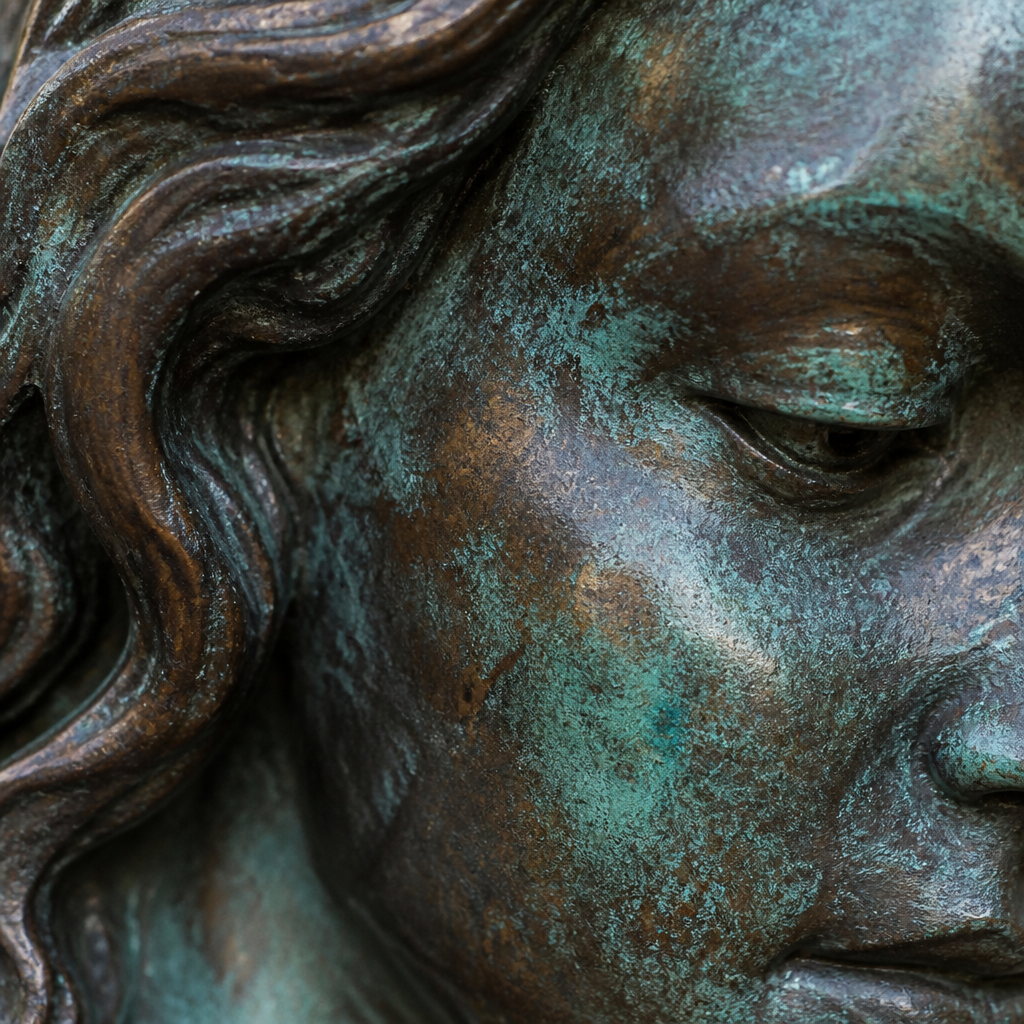
The bronzes sourced from Burma, Thailand, Cambodia, and India are typically copper-tin alloys, with varying proportions depending on the period and workshop. Some pieces incorporate small amounts of lead or zinc, which affects how the surface oxidises and how it should be handled. The patina on these pieces, that layered brown, green, or dark amber surface, is not dirt. It is the record of the piece's age, environment, and history, and it also acts as a physical barrier against further corrosion.
Stone sculptures from across Asia present a different set of variables. Common stones include red sandstone used for Rajasthani and Cambodian pieces, limestone found in Chinese Buddhist sculpture, black granite favoured in South Indian temple carving, and white marble from Central Indian workshops. Each stone type has distinct porosity, hardness, and chemical sensitivity. Knowing which stone you are looking at before you touch it with anything is the non-negotiable first step of Asian art maintenance.
Routine Cleaning for Bronze Sculptures
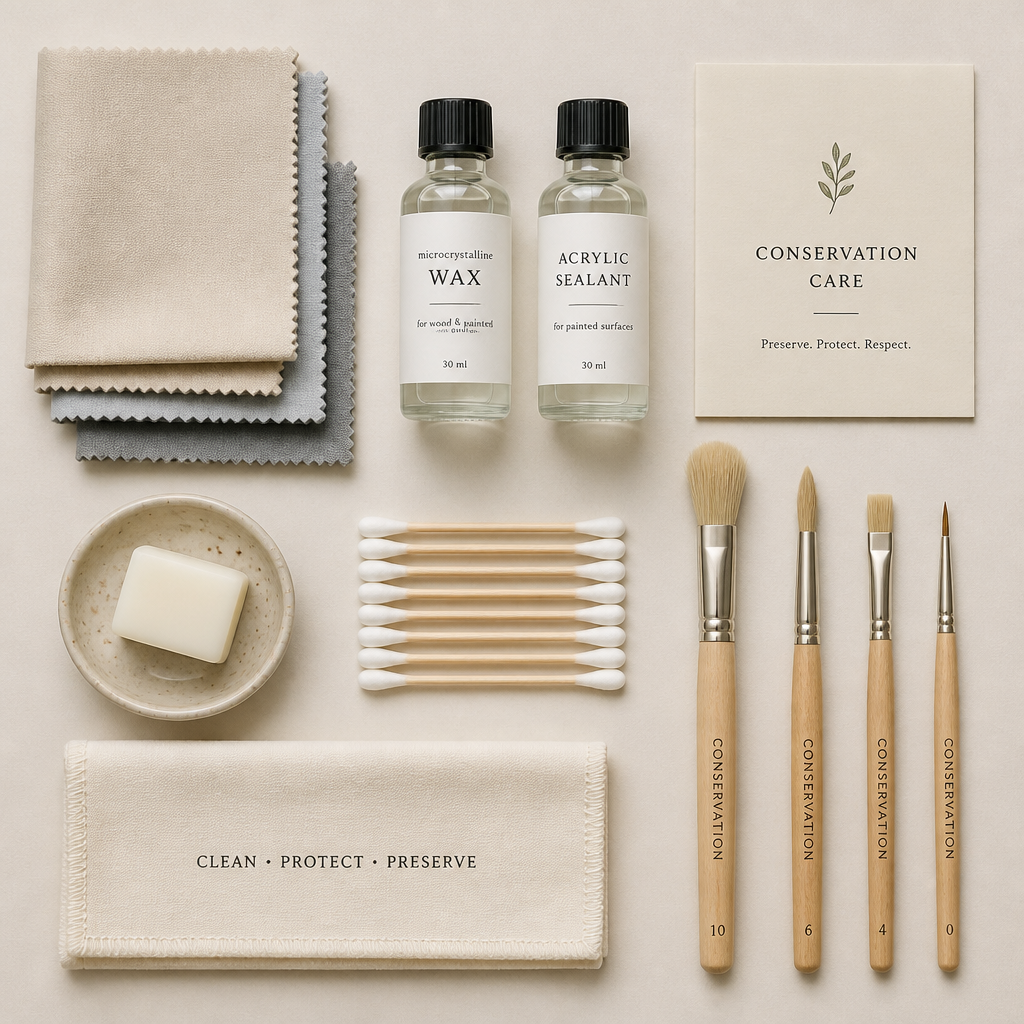
The right approach to routine bronze cleaning is deliberately modest. Most of what a collector calls "cleaning" should actually be dusting, and most dusting should involve a brush rather than a cloth. A soft natural-bristle brush or a clean, dry microfibre cloth removes surface dust without dragging particles across the textured surface. Pay particular attention to undercuts, drapery folds, hair details, and the negative space around figures where dust settles and traps humidity against the metal.
The Annual Deep Clean
Once or twice a year, bronze sculptures benefit from a light wash. Professional conservation methodology for indoor statues starts with dry dust removal, then a gentle wash using distilled water and a neutral soap. A reliable ratio is one part mild dish soap to ten parts distilled water. Dampen a soft cloth, wring it out thoroughly so it is barely moist rather than wet, and wipe the surface carefully. Dry it immediately with a second clean cloth, paying close attention to crevices where moisture can sit and trigger oxidation.
Scented detergents, household cleaning sprays, and anything marketed as a metal polish must stay away from sculpture surfaces. These products are formulated to cut oxidation, which means they cut patina. The distinction matters enormously on a piece where the patina is part of the object's value and identity.
Pro tip: Always use distilled or de-ionised water rather than tap water for cleaning both bronze and stone sculptures. Tap water contains minerals and chlorine that leave residue on the surface and can accelerate corrosion in bronze over time.
Incense Residue and Candle Wax on Religious Statues
Buddhist and Hindu statues used in active worship accumulate incense residue, candle wax, and oils from repeated anointing. These deposits require a slightly more targeted approach. For incense residue, a cotton swab dampened very lightly with distilled water is often enough. Hardened candle wax can be carefully softened with a hairdryer on the lowest setting held at a distance, then lifted with a wooden or soft plastic tool that will not scratch the metal beneath. Never use a metal implement to scrape wax from a bronze surface.
Cleaning and Preserving Stone Sculptures
The guiding principle for stone cleaning is this: use the least intervention that achieves a clean result. The worst outcomes in stone conservation come from collectors who applied too much, scrubbed too hard, or used the wrong liquid, not from those who cleaned too infrequently. When in doubt, dry cleaning is safer than wet cleaning, and wet cleaning with plain distilled water is safer than any cleaning solution.
Identifying Your Stone First
Granite is hard, dense, and speckled, and it tolerates cleaning fairly well. Marble and limestone are softer, calcite-based stones that react to acids and can etch or dull quickly if you use anything with even a mildly acidic pH. Sandstone is porous and grainy, prone to surface loss if scrubbed. Alabaster is soft enough to scratch with a fingernail. Marble and limestone statues, along with the sandstone often seen in Cambodian and Indian figures, demand considerably more caution than granite pieces.
"Successful cleaning depends on using the right tools and solutions. You need a soft-bristled brush with natural horsehair or soft synthetic bristles. Avoid wire brushes or anything abrasive that can scratch the surface."
The Correct Cleaning Sequence for Stone
Begin with a dry, soft brush to lift loose surface dust. If the piece needs more, proceed to a barely damp cloth using distilled water only. For accumulated grime, a very dilute solution of neutral pH soap in distilled water, applied with a soft brush and rinsed off immediately, is appropriate for granite and some harder stones. For marble, limestone, and sandstone, plain distilled water remains the safest option for anything beyond dry dusting.
Never use pressure washers, abrasive pads, wire brushes, or acidic cleaners such as vinegar or bathroom tile products on stone sculpture. These cause irreversible surface loss. Similarly, avoid commercial stone cleaners marketed for floors and kitchen surfaces; these are formulated for large, sealed areas, not for carved surfaces with fine detail that can be lost in a single aggressive cleaning session.
Pro tip: Before applying any cleaning solution to a stone sculpture, test it on a hidden area such as the underside of the base. Wait a full 24 hours and check for colour change, etching, or any surface change before proceeding on visible surfaces.
Display and Environment: The Variables Most Collectors Underestimate
Where you place a sculpture determines how frequently it needs cleaning and how well it survives long-term. Many collectors focus entirely on cleaning technique while ignoring the environmental conditions that are doing the most damage between cleaning sessions. Getting the display environment right reduces maintenance demands dramatically.
Humidity and Temperature Control
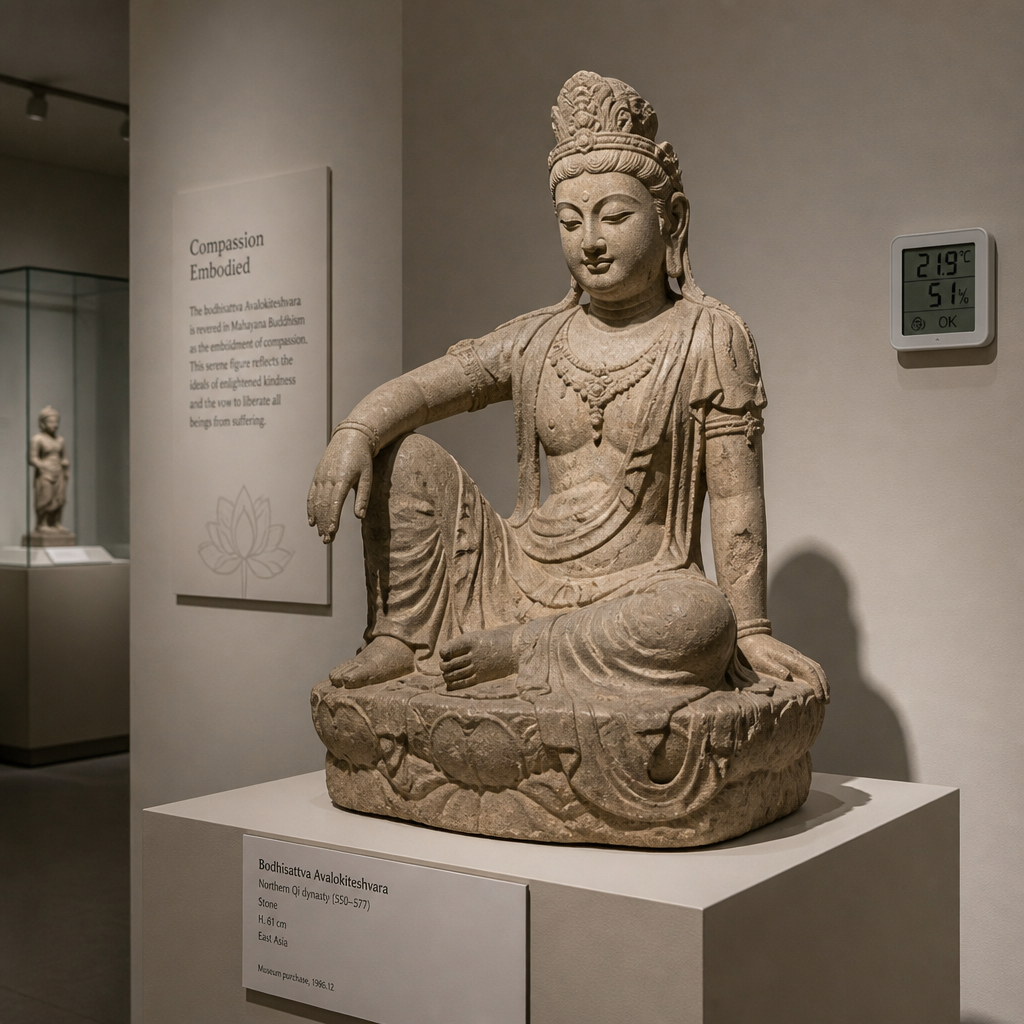
For a mixed collection of bronze and stone pieces, target a relative humidity of 45 to 55 percent. Above 60 percent, bronze disease becomes an active risk as moisture reacts with chloride compounds in the metal. Below 40 percent, porous stone such as sandstone becomes vulnerable to desiccation cracking, particularly in pieces that were carved in humid tropical environments and have not fully acclimatised. Basements and attics are generally unsuitable for displaying quality sculpture because temperature and humidity in those spaces are difficult to stabilise. Any room with climate control is a far better choice.
Light and UV Exposure
Direct sunlight causes fading and discoloration, particularly in sculptures with original painted or gilded finishes. UV radiation degrades organic materials including lacquer, pigment, and the wax coatings applied to bronze. Position pieces away from south-facing windows, or use UV-filtering window film if repositioning is not practical. Indirect natural light or properly positioned artificial lighting is far kinder to sculpture surfaces over years of display.
Bases, Pedestals, and Physical Stability
Stone sculptures should never sit directly on bare wood or metal surfaces without a buffer. Felt pads protect both the base of the sculpture and the display surface. For tall pieces or sculptures in areas with foot traffic, a conservation-grade museum gel or non-slip mat significantly reduces the risk of vibration damage. The physical stability of a display is not an aesthetic consideration; it is a conservation one. A piece that has survived centuries should not be lost to a knocked shelf.
Waxing Bronze and Sealing Stone: What to Use and When
Waxing bronze and sealing stone serve the same purpose: creating a protective barrier between the surface and the elements. The products and methods differ considerably, and using the wrong product on the wrong material causes more harm than using nothing at all.
Waxing Indoor Bronze
A high-quality microcrystalline wax, sometimes described as museum-grade wax, is the appropriate choice for indoor bronze sculpture. Apply it sparingly, allow it to dry briefly, and buff gently with a soft cloth. One or two thin coats per year is sufficient for pieces displayed indoors in stable conditions. The wax layer stabilises the surface and preserves the clarity of the patina without altering the intended finish. Avoid automotive waxes, carnauba waxes formulated for furniture, and any wax product containing silicone, which leaves a residue that interferes with future conservation work.
Sealing Stone Sculptures
Whether to seal a stone sculpture depends on its setting. An indoor piece in a stable, climate-controlled environment gains relatively little from sealing and risks having its surface slightly altered in appearance by a sealer film. An outdoor stone piece or one in a humid environment benefits from a penetrating stone sealant applied every few years. Choose a breathable, penetrating sealant rather than a surface-film product. Surface films trap moisture behind them, which is the opposite of the intended effect. A sealant should allow vapour to escape while blocking liquid water and airborne pollutants from penetrating the stone.
Bronze Disease, Efflorescence, and Damage You Should Not Ignore
Two specific conditions require immediate attention rather than routine care. Identifying them correctly is important because the wrong response makes both significantly worse.
Recognising and Responding to Bronze Disease
Bronze disease appears as powdery, bright blue-green spots on the metal surface. It is distinct from the stable, dark green or brown-green patina that is a normal and desirable feature of aged bronze. Bronze disease is caused by cuprous chloride reacting with moisture and oxygen, producing a cycle of corrosion that actively eats into the metal if left unchecked. It spreads, and it does not stop on its own as long as moisture is present.
If you identify active bronze disease, isolate the piece from others in your collection and reduce humidity around it immediately. Do not attempt to scrub the spots away with water; adding moisture feeds the reaction. Professional conservation treatment is the correct response for valuable or antique pieces. For less significant pieces, drying the surface thoroughly and then applying a consolidant followed by wax is a holding measure, but it is not a permanent fix without addressing the chloride source.
Efflorescence and Salt Migration in Stone
White, powdery deposits appearing on the surface of stone sculptures, particularly sandstone and limestone pieces, indicate efflorescence, which is salt migrating from within the stone as moisture moves through it. This is often a sign that the piece is absorbing water from below, from a damp base, or from the display surface. The salt deposits themselves are not structurally damaging if brushed away dry, but the water movement causing them is. Address the moisture source first. Do not wash the deposits away with water, as this drives the salt back into the stone and the problem returns with the next drying cycle.
Comparison of Care Methods by Material and Setting
|
Approach |
Best For |
Key Limitations |
|---|---|---|
|
Dry dusting with a natural-bristle brush (weekly) |
All materials, all settings. The baseline routine for every bronze and stone piece in a collection. |
Does not remove adhered grime, incense residue, or wax deposits. Use as a first step only. |
|
Distilled water wash with neutral soap (annual) |
Harder stones (granite, dense basalt) and stable indoor bronze with no active corrosion. Ideal for statues from Burma, Thailand, China. |
Inappropriate for active bronze disease, marble, limestone, soft sandstone, or gilded surfaces. Requires thorough drying immediately after. |
|
Microcrystalline wax application (one to two times per year) |
Indoor bronze sculptures of all origins. Particularly useful for pieces displayed near windows or in rooms with variable humidity. |
Not suitable for stone sculpture surfaces. Does not substitute for addressing active corrosion. Requires removal and reapplication if old wax yellows. |
Frequently Asked Questions
How often should I clean a bronze Buddha statue kept indoors?
For a bronze Buddha displayed indoors in a climate-controlled room, weekly dry dusting with a soft brush and an annual light wash with distilled water and neutral soap is sufficient. Over-cleaning is genuinely more damaging than under-cleaning for bronze surfaces. If the statue is used in active worship and accumulates incense residue or oil, spot-clean those areas with a lightly dampened cotton swab as needed rather than washing the entire piece.
Can I use olive oil or coconut oil to polish a stone or bronze sculpture?
No. Oils of any kind attract dust, go rancid over time, penetrate porous stone surfaces, and create a layer that is very difficult to remove without damaging what lies beneath. This is a common suggestion in some online guides, but it is not supported by conservation practice. The correct finish for bronze is microcrystalline wax. The correct approach for most stone sculptures is no finish at all beyond a breathable sealant in appropriate settings.
What is the white powdery residue appearing on my sandstone Ganesh statue?
That white deposit is almost certainly efflorescence: mineral salts moving to the surface as moisture within the stone evaporates. Brush it away with a dry soft brush rather than wiping it with water, which reintroduces moisture and drives the salts back in. Then investigate the moisture source. Is the statue sitting on a damp surface? Is the room humidity elevated? Resolving the moisture issue stops the cycle. If the deposits return repeatedly, the piece may need professional assessment to determine whether there is structural moisture damage occurring within the stone.
Is the green colour on my bronze sculpture a problem?
Not necessarily. A stable, even, dark brown-green or dark green patina is normal and desirable on aged bronze. It is a sign of long, stable oxidation and it protects the metal beneath. What requires attention is a powdery, bright turquoise or blue-green spot that appears suddenly, feels unstable if touched, and seems to be actively spreading. That is bronze disease and it requires immediate action. If the green on your sculpture is even, settled, and has been there as long as you have owned the piece, it is almost certainly the stable patina and not a cause for concern.
How should I display multiple Buddhist and Hindu sculptures together without causing damage between pieces?
Maintain adequate spacing between pieces so they cannot contact each other if one shifts. Different stone types placed touching each other can cause staining as minerals leach between them. Bronze pieces should not touch stone pieces directly, as the metal can leave marks on porous stone. Use individual felt pads under each base, ensure the display surface is stable and level, and keep pieces away from heating vents or radiators that create localised hot, dry zones. A mixed collection of bronze and stone displayed together benefits most from stable room humidity in the 45 to 55 percent range.
When should I consult a professional conservator rather than cleaning a sculpture myself?
Seek professional conservation advice for any piece with active bronze disease, visible structural cracks in stone, flaking or powdering paint or gilding, unknown surface treatments such as lacquer or wax that may be original to the piece, or for any antique of significant monetary or historical value. The threshold for professional intervention should be lower, not higher, with important pieces. A conservator's assessment costs far less than attempting to reverse damage caused by well-intentioned but incorrect home cleaning.
Have you found a particular care routine that works well for your collection, or encountered a preservation challenge that took you by surprise? Share your experience in the comments so other collectors can learn from what you have discovered.
References
