



Los mejores materiales para estatuas de salas de meditación: una guía completa
Los mejores materiales para estatuas de salas de meditación: una guía completa
Al seleccionar estatuas para salas de meditación, la elección del material da forma fundamental a su práctica espiritual. Según una investigación sobre Mindfulness del Greater Good Science Center de UC Berkeley, el entorno físico, incluidos los elementos visuales como las estatuas, influye directamente en la profundidad de la meditación y la regulación emocional. Esta guía explora los mejores materiales para las estatuas de las salas de meditación, examinando cómo el bronce, el mármol, la cerámica, la resina, la madera y la piedra contribuyen de manera única a su entorno de meditación.
El material que elijas afecta la forma en que interactúas con tu espacio diariamente, cómo envejece la estatua con el tiempo y si apoya tu práctica. A continuación, le mostraremos cómo evaluar los materiales según su espacio, presupuesto e intenciones espirituales específicos.
Tabla de contenidos
Descripción general de los materiales de estatuas populares para espacios de meditación
Por qué es importante la elección de materiales
Los diferentes materiales tienen distintas propiedades energéticas y características prácticas. La piedra y el mármol ofrecen energía de conexión a tierra y una presencia refrescante que muchos practicantes encuentran central. El bronce desarrolla una pátina natural durante décadas, creando una obra de arte viva que evoluciona con su práctica. La cerámica aporta pureza y artesanía refinada, mientras que la resina ofrece versatilidad y accesibilidad para quienes comienzan su viaje.
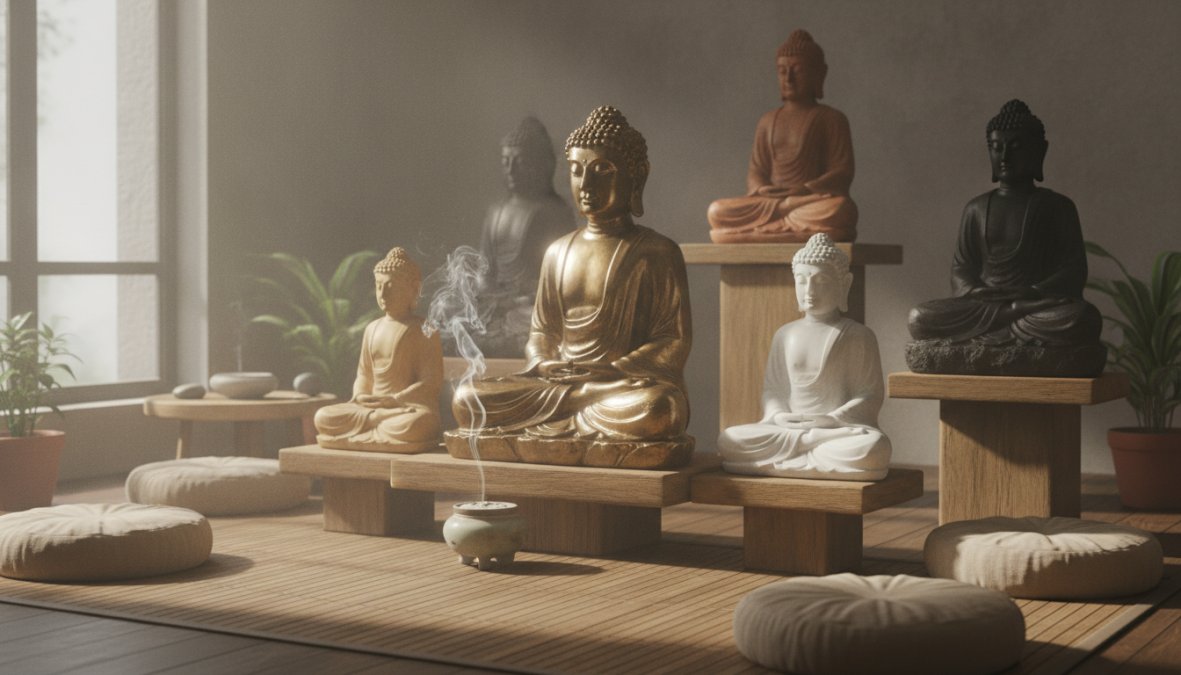
El material que seleccione también determina los requisitos de mantenimiento, las consideraciones de peso y cómo responde la estatua a la humedad y temperatura de su habitación. Una estatua de mármol exige cuidados diferentes que una de bronce. La resina soporta mejor la humedad fluctuante que la madera.
Estatuas de bronce: durabilidad y belleza atemporal
Durabilidad y mantenimiento de las estatuas de bronce.
Las estatuas de bronce representan el estándar de oro para los profesionales serios que buscan piezas que duren generaciones. Fundidas en bronce duradero, estas estatuas capturan intrincadas expresiones faciales y gestos de las manos con una precisión que otros materiales luchan por igualar. La base pesada y estable del bronce se adapta a la colocación permanente del altar, y la resistencia inherente del material significa que resiste golpes accidentales que dañarían la cerámica o la resina.
El mantenimiento es sencillo. El bronce se oxida naturalmente con el tiempo y desarrolla una pátina oscura si no se toca. Si prefiere un acabado pulido, un ligero pulido con un paño suave mantiene la superficie brillante. Para piezas de exterior, el encerado ocasional evita la intemperie. El bronce para interiores requiere una intervención mínima más allá de quitar el polvo ocasionalmente.
La verdadera ventaja surge a lo largo de años y décadas. Mientras que otros materiales muestran desgaste, el bronce desarrolla carácter. La pátina se profundiza y la superficie cuenta la historia de su práctica. Los coleccionistas aprecian las estatuas de bronce precisamente porque envejecen maravillosamente.
Desarrollo de pátina y atractivo estético.
La formación de pátina distingue al bronce de otros materiales. La capa verdosa o marrón oscura que se desarrolla no es deterioro, es la respuesta natural del material al oxígeno y la humedad. Este proceso ocurre lentamente, a veces durante años, creando un envejecimiento auténtico que se siente ganado en lugar de artificial.
Tú controlas el proceso de pátina. Sella el bronce con laca transparente para detener la oxidación en tu etapa preferida, o déjalo expuesto para desarrollar un color más intenso. Algunos profesionales prefieren el acabado brillante como un espejo del bronce pulido; otros adoptan la estética desgastada. Esta flexibilidad hace que el bronce se adapte a diferentes estilos de salas de meditación.
Mármol y piedra: la energía fundamental de los materiales naturales
Propiedades espirituales y presencia refrescante
Las estatuas de mármol y piedra ofrecen una conexión tangible con la tierra. La piedra natural transporta energía fundamental que muchos profesionales describen como estabilizadora y clarificadora. La frescura del mármol, tanto literal como metafórica, crea una presencia calmante que apoya la concentración en la meditación.
El peso de la piedra la ancla literal y energéticamente. Un Buda de mármol no se caerá durante los movimientos de meditación. La densidad del material sugiere permanencia y estabilidad, cualidades que respaldan la práctica constante. Las estatuas de mármol talladas a mano simbolizan pureza y claridad, propiedades espirituales alineadas con los objetivos de la meditación.
Sin embargo, el mármol exige respeto. Es extremadamente pesado y difícil de reubicar una vez colocado. Esta permanencia es adecuada para los practicantes comprometidos con un lugar fijo de meditación, pero crea desafíos para quienes reorganizan los espacios con frecuencia. Dejar caer una estatua de mármol corre el riesgo de agrietarse o astillarse.
Cerámica y resina: beneficios para las salas de meditación modernas
Artesanía Cerámica y Refinamiento Estético
Las estatuas de cerámica trasladan las técnicas tradicionales de alfarería a espacios contemporáneos. La construcción de cerámica terminada a mano crea piezas que se sienten delicadas e intencionadas. La estética suave y limpia se adapta a los rincones de meditación modernos y a los altares más pequeños donde el espacio es limitado.
La ventaja de la cerámica radica en su apariencia refinada y su accesibilidad. Un hermoso Buda de cerámica cuesta mucho menos que piezas comparables de mármol o bronce. El material permite a los artesanos capturar detalles finos y posiciones de las manos con una precisión sorprendente. Para los profesionales que buscan artesanía tradicional sin el precio del mármol, la cerámica ofrece un valor genuino.
La limitación es la fragilidad. La cerámica se rompe si se cae y requiere una colocación cuidadosa lejos de áreas de mucho tráfico. En hogares con niños o mascotas, las estatuas de cerámica exigen una ubicación protectora.
Versatilidad y asequibilidad de la resina
Las estatuas de resina han transformado la accesibilidad a la decoración de las salas de meditación. La versatilidad del material permite realizar moldes muy detallados de formas y mudras complejos. La resina acepta prácticamente cualquier acabado de color, desde efectos de imitación piedra y bronce hasta tonos vibrantes.
Destaca la asequibilidad. Las estatuas de resina cuestan una fracción de las piezas comparables de bronce o mármol, lo que las hace ideales para principiantes que exploran la práctica de la meditación sin un gran compromiso financiero. El material es liviano y fácil de colocar en estantes, escritorios o altares pequeños.
La compensación implica longevidad y resonancia espiritual. La resina no desarrolla pátina ni envejece con gracia como el bronce. Algunos profesionales consideran que el material carece de la "nobleza" de la piedra natural o del metal fundido. La resina puede degradarse bajo la luz solar directa y el acabado puede desgastarse durante décadas.
Cómo elegir una estatua de meditación: un marco de decisión
Evaluación de su espacio y presupuesto
Comience evaluando tres factores: la permanencia de su sala de meditación, las condiciones ambientales y los recursos financieros.
La permanencia importa primero. ¿Es este un espacio dedicado a la meditación que mantendrás durante años o un rincón flexible que podría transformarse? Los espacios permanentes justifican la inversión en bronce o mármol. Los espacios temporales son adecuados para resina o cerámica.
Las condiciones ambientales determinan qué materiales prosperan. Los baños o sótanos húmedos exigen resina o cerámica sellada. Las salas de estar secas albergan piedra y mármol. Los espacios con fluctuaciones de temperatura son adecuados para el bronce, que soporta los cambios estacionales sin agrietarse.
El presupuesto da forma a la decisión final. Las piezas de bronce y mármol cuestan entre 150 y 250 dólares para un trabajo de calidad. La cerámica cuesta entre 30 y 80 dólares. La resina cuesta entre 20 y 60 dólares.
Peso, requisitos estructurales y ubicación
El peso físico determina dónde y cómo puedes colocar tu estatua. Las piezas de mármol y piedra pesan significativamente, a veces más de 50 libras para piezas importantes. Verifique que el estante o mesa de su altar pueda soportar la carga.
Las estatuas de bronce son pesadas pero manejables, normalmente entre 10 y 30 libras. La cerámica y la resina son livianas, pesan menos de 5 libras y ofrecen flexibilidad para la colocación en estantes o altares pequeños.
Considere la frecuencia del movimiento. Si reorganiza su espacio según la temporada o se muda de casa con regularidad, la resina y la cerámica tienen sentido. Si estás construyendo un altar permanente, el peso del bronce y el mármol se convierte en una ventaja.
Beneficios de las estatuas de meditación de madera frente a las de piedra
Las estatuas de piedra, incluidas las de mármol, granito y arenisca, proporcionan una energía de conexión a tierra inigualable. La presencia refrescante de la piedra natural apoya el enfoque de la meditación y crea un ancla estable para la práctica. Sin embargo, la piedra es pesada, cara y sensible a la humedad.
Las estatuas de madera ofrecen calidez y belleza orgánica. Los budas de madera tallados a mano capturan detalles finos y desarrollan una rica pátina a medida que envejecen. La madera se siente accesible y menos formal que la piedra, lo que se adapta a los practicantes que prefieren espacios íntimos en el altar.
Las limitaciones de Wood son significativas. El material es vulnerable a la humedad, las fluctuaciones de temperatura y los daños causados por insectos. La madera requiere un acondicionamiento regular con aceites adecuados para evitar que se agriete. En climas húmedos, las estatuas de madera pueden desarrollar moho o deformarse. Para los practicantes de climas secos con temperaturas interiores estables, la madera es viable. Para la mayoría de los hogares modernos con humedad variable, la piedra o los materiales sellados son opciones más seguras.
Dónde colocar estatuas en una sala de meditación
Posicionamiento del altar y flujo de energía
Colocación de la estatua Da forma a cómo la energía se mueve a través de tu espacio de meditación. La posición tradicional del altar coloca la estatua al nivel de los ojos o ligeramente por encima cuando está sentado, creando un punto focal natural para la meditación. Esta posición evita la tensión en el cuello durante sesiones largas y establece la estatua como el ancla de su práctica.
La ubicación direccional es importante en algunas tradiciones. Los Budas orientados hacia el este se alinean con el amanecer y los nuevos comienzos. Las estatuas orientadas al oeste conectan con la plenitud y el descanso. Las posiciones orientadas al norte favorecen la estabilidad. Las ubicaciones orientadas al sur energizan y activan.
La distancia desde su asiento de meditación afecta la concentración. Las estatuas colocadas a entre 3 y 6 pies de distancia brindan enfoque visual sin una proximidad abrumadora. Evite colocar estatuas en áreas de mucho tráfico donde el movimiento constante interrumpe la energía establecida que está cultivando.
Consideraciones ambientales: humedad y ubicación interior
Evite la luz solar directa, que decolora los acabados de resina y puede dañar ciertos materiales con el tiempo. Coloque las estatuas alejadas de las rejillas de calefacción y del aire acondicionado, ya que las fluctuaciones de temperatura estresan los materiales.
El control de la humedad es fundamental. Los baños y sótanos fluctúan entre condiciones húmedas y secas que dañan la madera, la cerámica y algunas piedras. Los dormitorios y salones con control climático se adaptan a todos los materiales. Si su único espacio disponible es húmedo, seleccione resina sellada o bronce.
La circulación del aire afecta la longevidad. Las bolsas de aire estancada promueven el crecimiento de moho en materiales vulnerables. Coloque las estatuas donde el aire se mueva suavemente a través de la habitación, no en rincones sellados donde la humedad queda atrapada.
Mantenimiento de estatuas de salas de meditación: cuidados específicos del material
Limpieza, pulido y prevención de la intemperie
estatuas de bronce necesita cuidados mínimos. Quite el polvo regularmente con un paño suave y seco. Para acabados pulidos, utilice un paño de microfibra ejerciendo una ligera presión. Selle el bronce pulido con laca transparente para evitar la oxidación si prefiere una apariencia estable.
Mármol y piedra requieren un manejo suave. Quite el polvo únicamente con paños suaves. Para una limpieza más profunda, utilice agua destilada y jabón de pH neutro. Evite los limpiadores ácidos que graban el mármol. Selle el mármol anualmente con un sellador para piedras adecuado.
estatuas de ceramica Necesita protección contra la humedad y el impacto. Espolvoree suavemente con cepillos suaves. Limpiar únicamente con agua destilada. Nunca sumerja la cerámica en agua.
estatuas de resina son notablemente de bajo mantenimiento. Espolvoree con paños suaves. Limpiar con agua y jabón suave si es necesario. Evite la luz solar directa, que desvanece los colores con el tiempo.
estatuas de madera exigen la mayor atención. Saque el polvo con regularidad. Acondicione la madera anualmente con aceites apropiados. Evite la exposición al agua. En climas secos, la madera prospera con una mínima intervención.
Preocupaciones sobre toxicidad y alergias por material
El bronce no es tóxico e hipoalergénico. El material no libera gases ni compuestos nocivos.
La piedra natural es inerte y segura. Sin embargo, asegúrese de que las estatuas tengan el acabado y sellado adecuado para minimizar el polvo.
La cerámica depende de los procesos de esmaltado y cocción. La cerámica de calidad procedente de artesanos establecidos es segura. Compre de fuentes acreditadas que utilicen esmaltes no tóxicos y aptos para alimentos.
La resina requiere atención a la calidad de fabricación. La resina de baja calidad puede desprender compuestos orgánicos volátiles que causan dolores de cabeza o irritación respiratoria. Cómprelo a fabricantes que utilicen resinas no tóxicas y con bajo contenido de COV.
La toxicidad de la madera depende de la especie de madera y de los acabados aplicados. Verifique que los acabados sean aceites no tóxicos en lugar de recubrimientos químicos.
| Materiales | Durabilidad | Mantenimiento | Costo | Mejor para | Sensibilidad ambiental |
|---|---|---|---|---|---|
| Bronce | Excelente (décadas+) | Mínimo (polvo ocasional) | $200+ | Espacios de altar permanentes | Ninguno |
| mármol | Excelente (décadas+) | Moderado (sellado anual) | $150+ | Salas de meditación dedicadas | Bajo (si está sellado correctamente) |
| Cerámica | Bueno (años-décadas) | Mínimo (polvo suave) | $30-80 | Altares pequeños, principiantes. | Bajo (si está correctamente vidriado) |
| resina | Bueno (años) | Mínimo (polvo ligero) | $20-60 | Espacios flexibles, apartamentos. | Moderado (verifique bajo VOC) |
| madera | Regular-Bueno (años) | Moderado (acondicionamiento anual) | $50-150 | Climas secos | Bajo (si el acabado no es tóxico) |
La selección de los mejores materiales para las estatuas de las salas de meditación refleja en última instancia su compromiso con su práctica y las condiciones específicas de su espacio. El bronce ofrece una durabilidad eterna a los practicantes que construyen altares permanentes. El mármol y la piedra proporcionan energía fundamental para los profesionales serios. La cerámica y la resina son adecuadas para principiantes y espacios flexibles. La madera aporta calidez a los ambientes secos.
En HD Asian Art, seleccionamos cuidadosamente estatuas budistas e hindúes en todos estos materiales, obteniendo piezas antiguas y contemporáneas cuidadosamente seleccionadas que mejoran los espacios de meditación. Nuestra especialización en esculturas jemeres y del sudeste asiático garantiza que invierta en piezas auténticas y refinadas diseñadas para respaldar su práctica espiritual. Explora nuestra colección y descubre una decoración inspirada en los templos que aporta paz y arte a tu santuario personal.
Preguntas frecuentes
¿Cuál es el mejor material para una estatua de sala de meditación?
El mejor material depende de tu espacio, presupuesto y práctica espiritual. El bronce ofrece durabilidad y belleza atemporal con una artesanía auténtica. El mármol y la piedra proporcionan energía de conexión a tierra y una presencia refrescante, ideal para espacios de meditación. La cerámica aporta pureza y elegancia tradicionales, mientras que la resina ofrece asequibilidad y versatilidad. Considere la humedad de su habitación, el espacio disponible y si prioriza la longevidad o el atractivo estético al seleccionar entre estos materiales para las estatuas de la sala de meditación.
¿Son mejores las estatuas de piedra que las de madera para las salas de meditación?
La piedra y la madera ofrecen distintos beneficios para los espacios de meditación. La piedra, incluidos el mármol y la arenisca, proporciona una energía refrescante y de conexión a tierra que muchos profesionales encuentran central, además de una durabilidad y estabilidad superiores. La madera ofrece calidez, textura natural y propiedades acústicas que pueden suavizar el sonido en las salas de meditación. La piedra es mejor para la colocación de altares permanentes y ambientes húmedos, mientras que la madera se adapta a espacios íntimos y más pequeños. Su elección depende de si prioriza la estabilidad de la conexión a tierra o una estética cálida y natural.
¿Cómo mantengo y limpio los diferentes materiales de las estatuas de meditación?
Cada material requiere unos cuidados específicos. Las estatuas de bronce desarrollan una pátina protectora y necesitan una limpieza suave ocasional; Evite los productos químicos agresivos. El mármol y la piedra se benefician de paños suaves y limpiadores con pH neutro; Evite las sustancias ácidas. Las estatuas de cerámica requieren un manejo cuidadoso debido a su fragilidad; espolvoree suavemente con cepillos suaves. Las estatuas de resina se pueden limpiar con agua y jabón suave. Fiberclay resiste la intemperie y se limpia fácilmente. Siempre consulte las instrucciones del fabricante para su pieza específica, ya que las estatuas antiguas y talladas a mano pueden necesitar atención especializada para preservar su acabado e integridad espiritual.
¿Cuáles son los materiales más duraderos para las estatuas de meditación de interior?
El bronce es excepcionalmente duradero, dura generaciones con un mantenimiento mínimo y desarrolla una hermosa pátina con el tiempo. El mármol y la piedra de alta calidad también son muy duraderos y resistentes al desgaste, aunque requieren una colocación cuidadosa debido al peso. La cerámica es duradera si se manipula con cuidado, pero puede romperse si se cae. La resina y la fibra de arcilla ofrecen una durabilidad moderada para uso en interiores. El bronce y el mármol son los mejores para instalaciones de altares permanentes donde la longevidad y el valor de la inversión son importantes; simbolizan el compromiso con su práctica espiritual y sirven como reliquias.
