


-
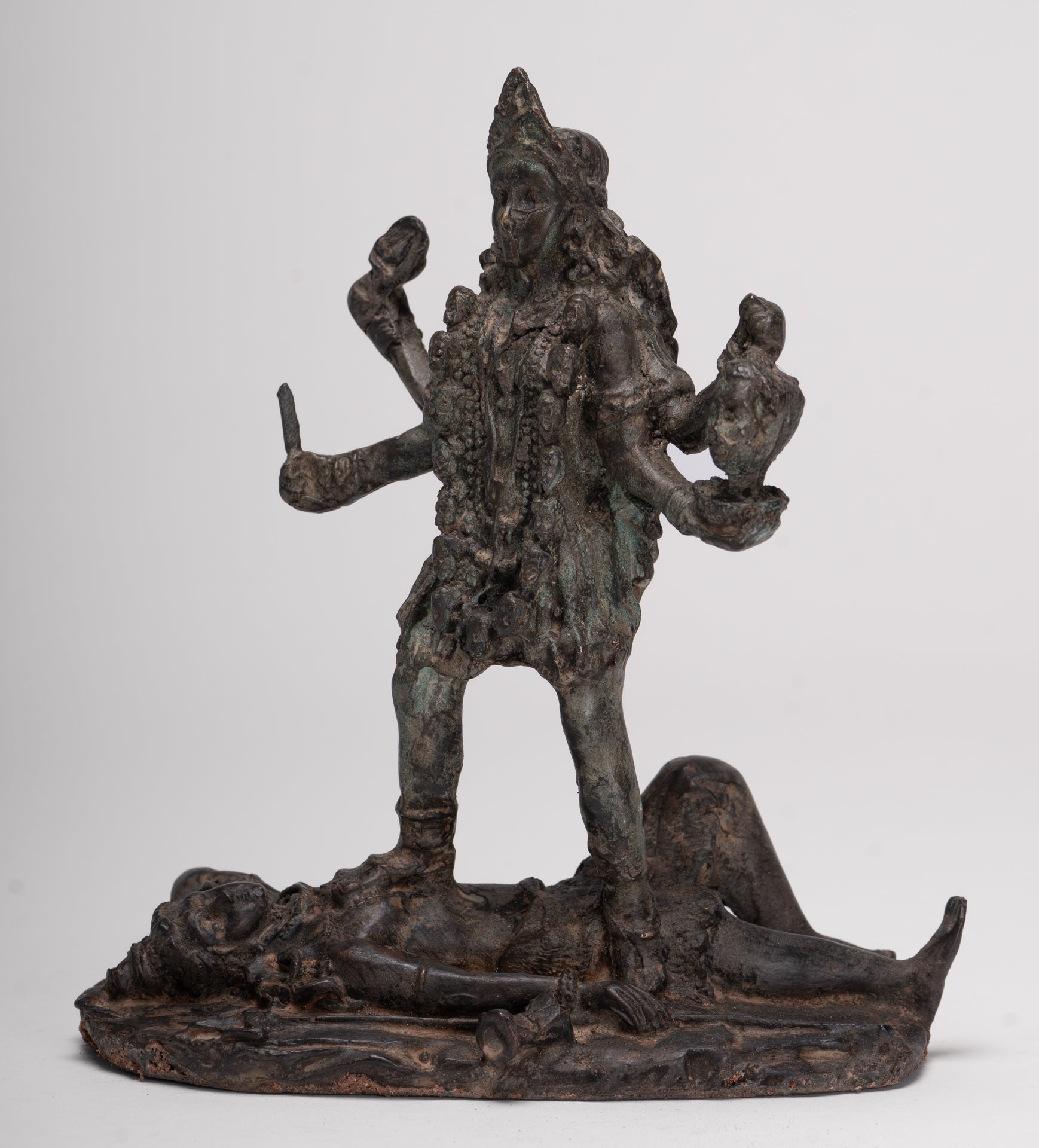
Antique Indian Style Standing Bronze Kali or Mahakali Statue - 19cm/8"
Four-Armed Goddess of Transformation and Liberation
Measurements Height 19cm/7.5"
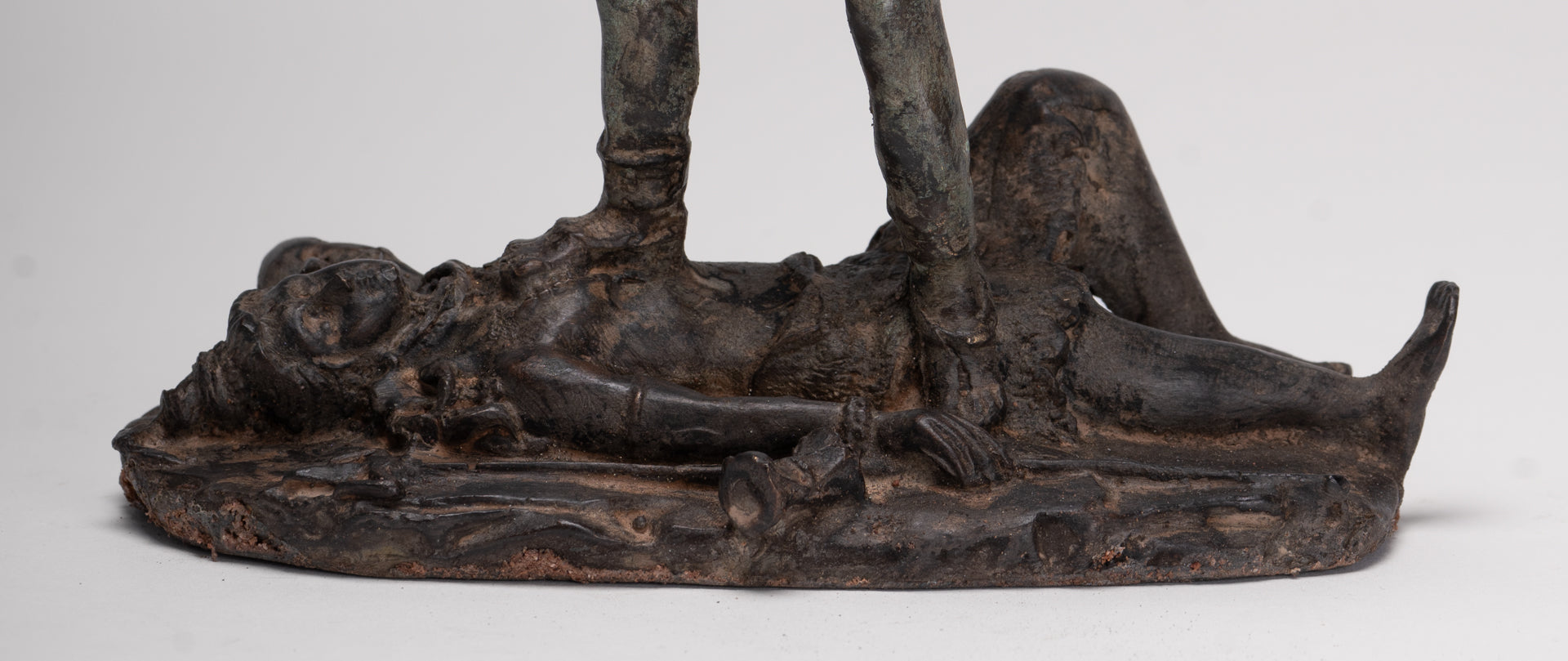
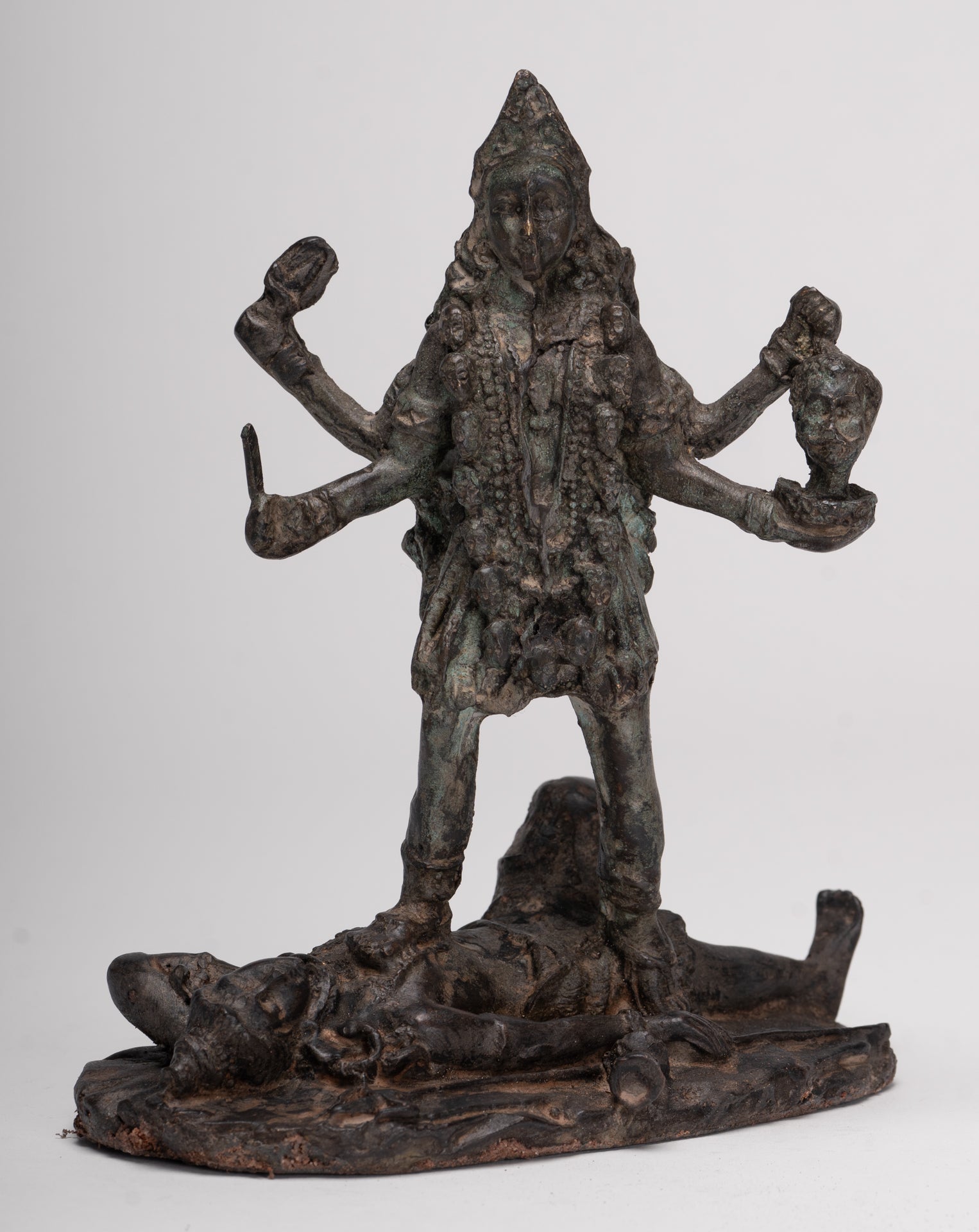
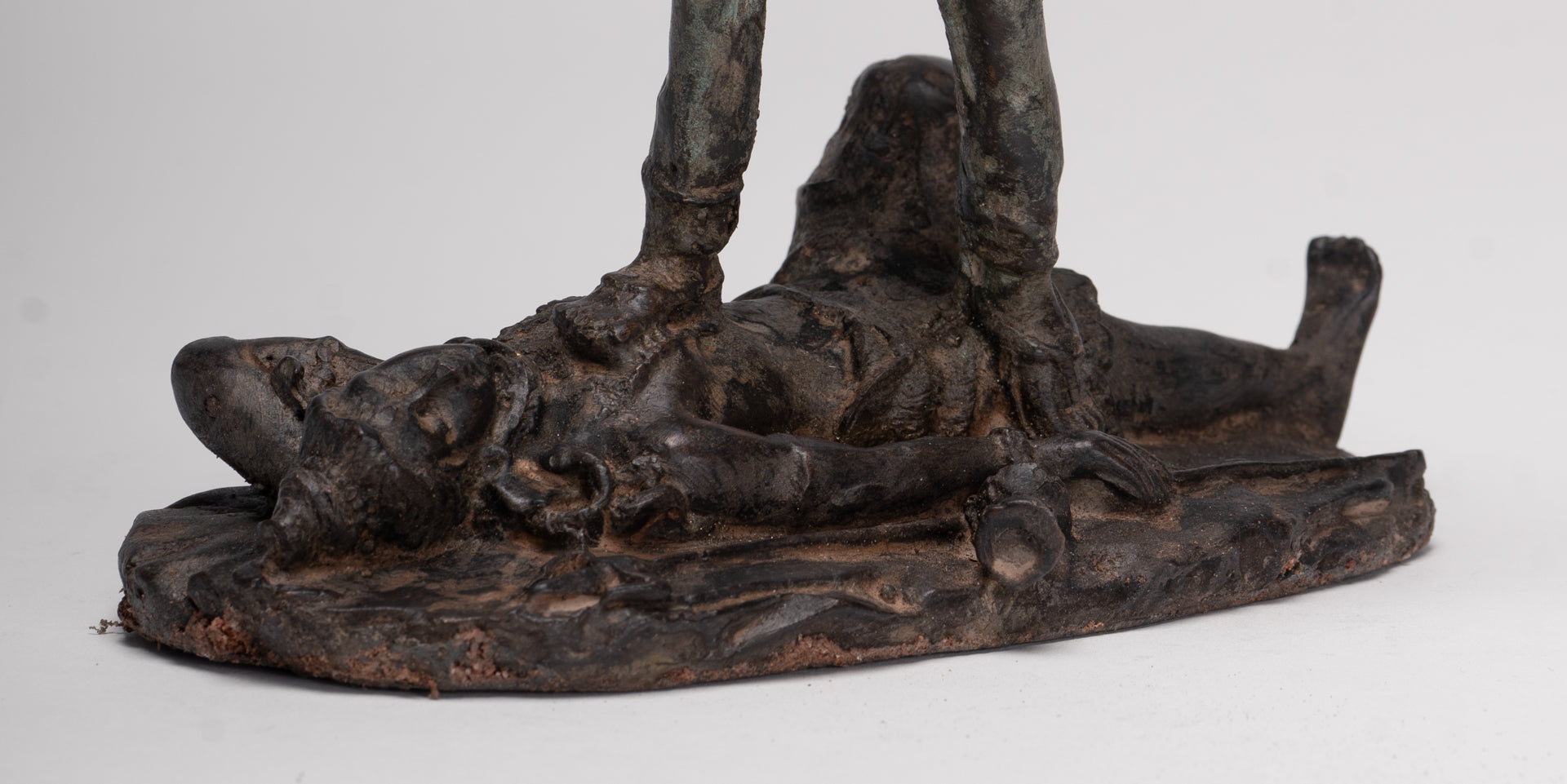
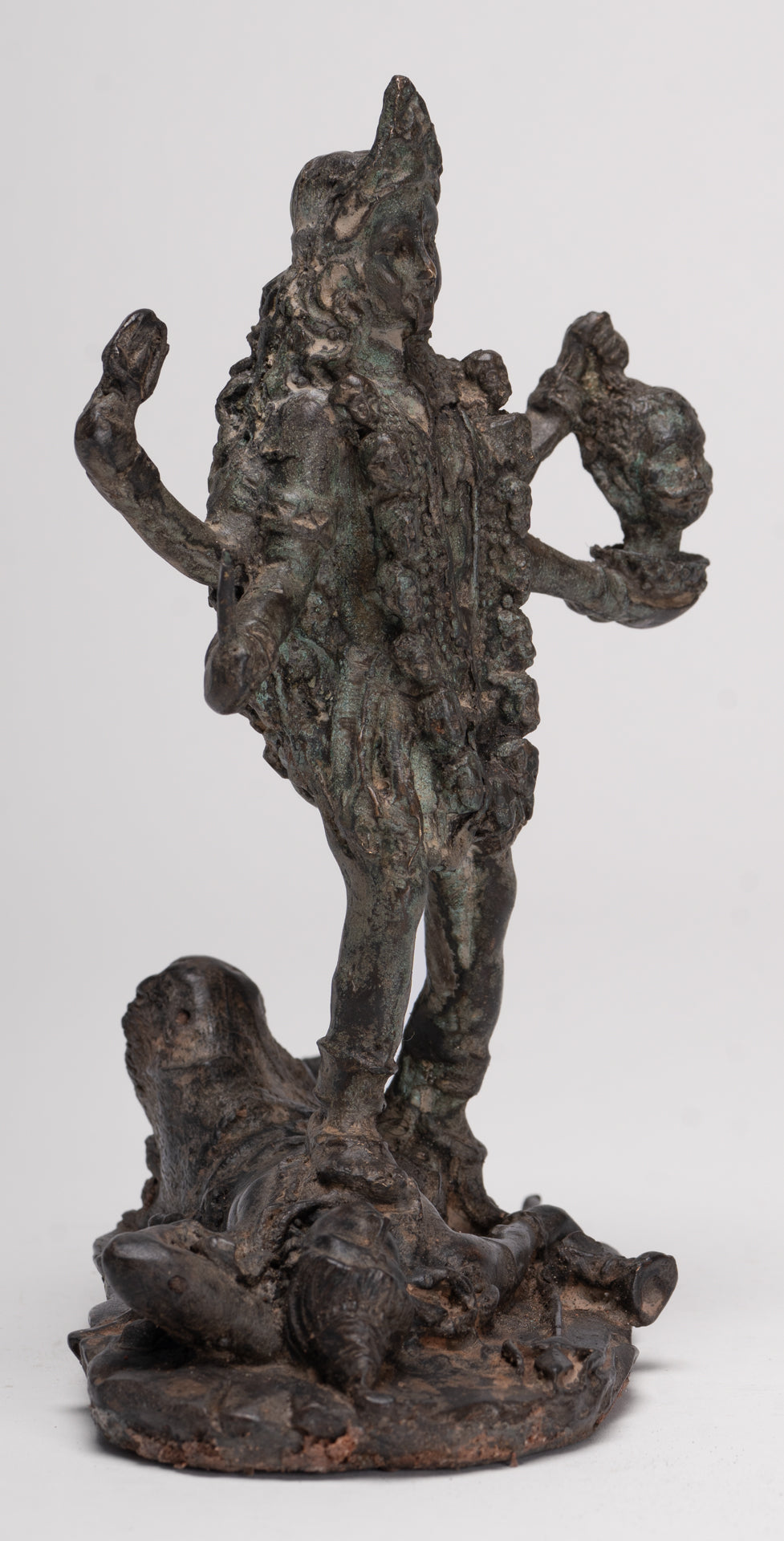
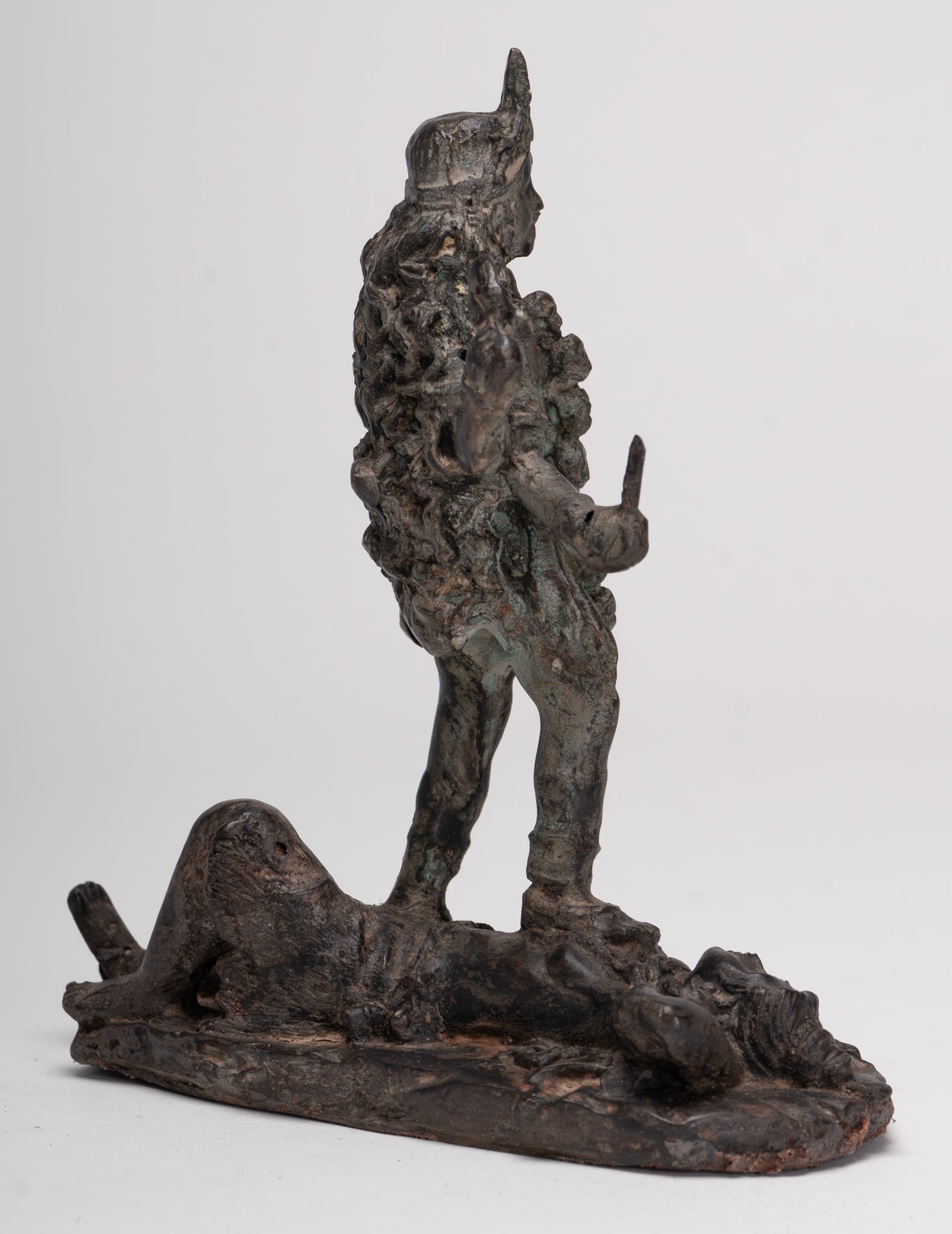
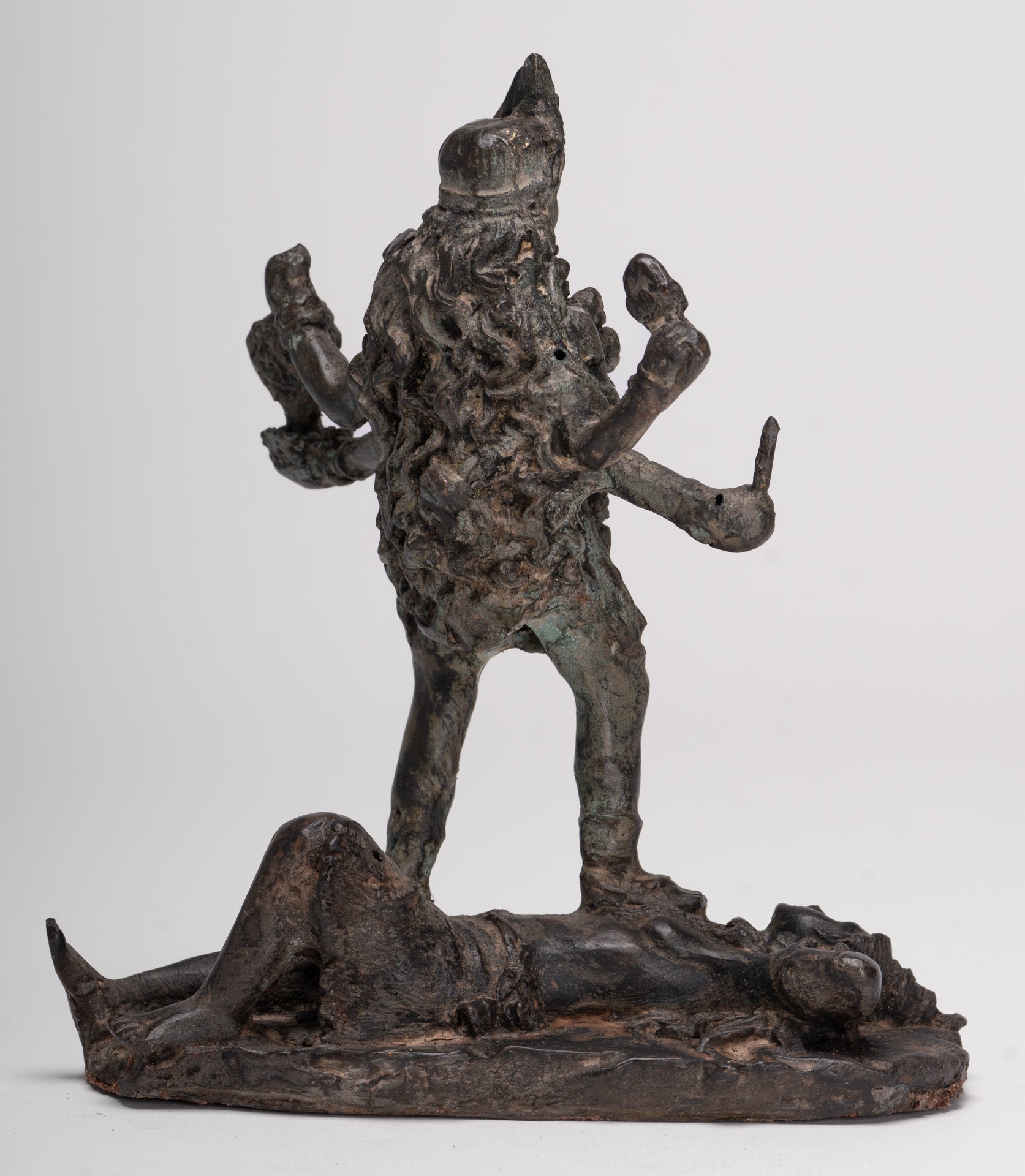
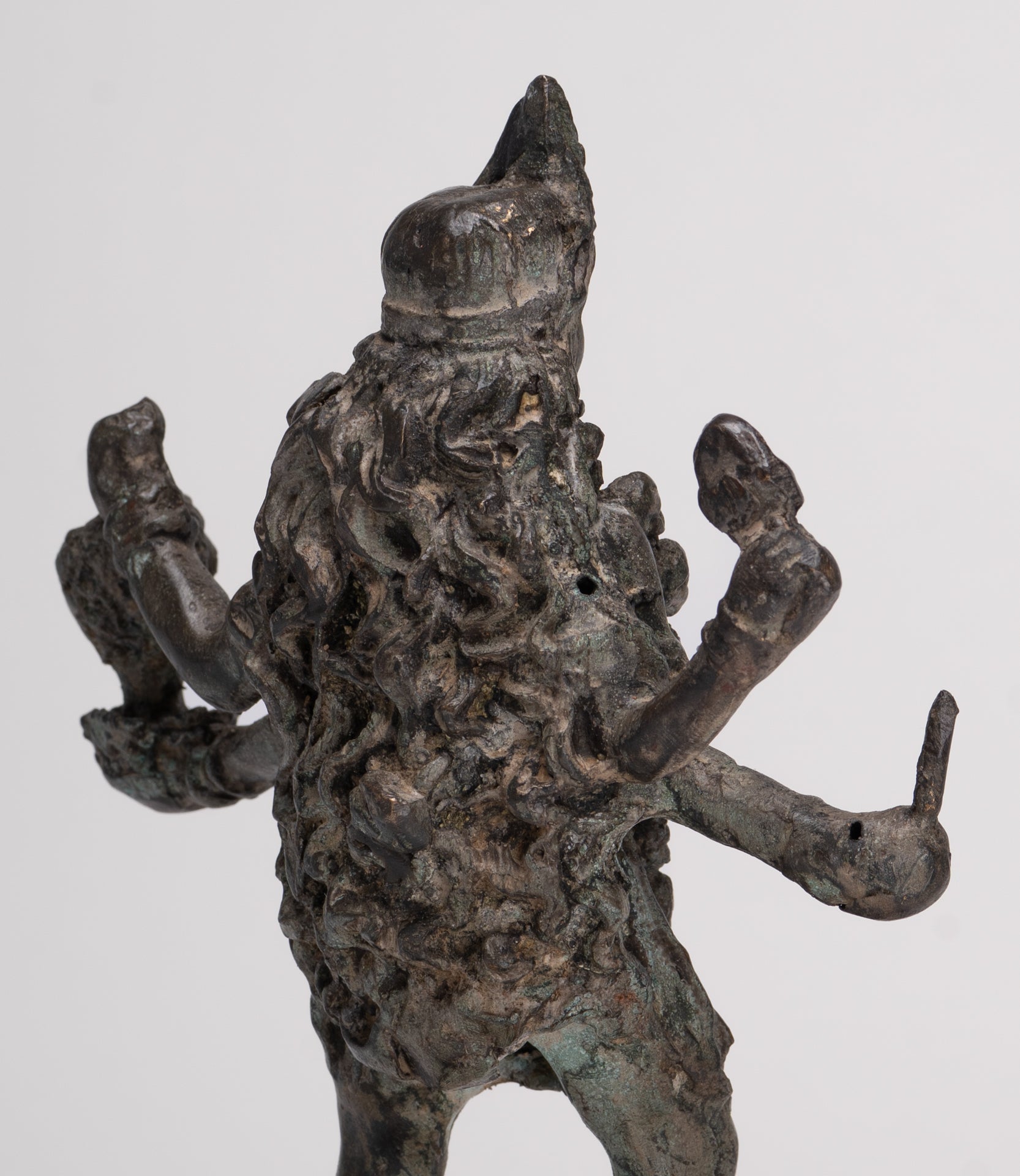
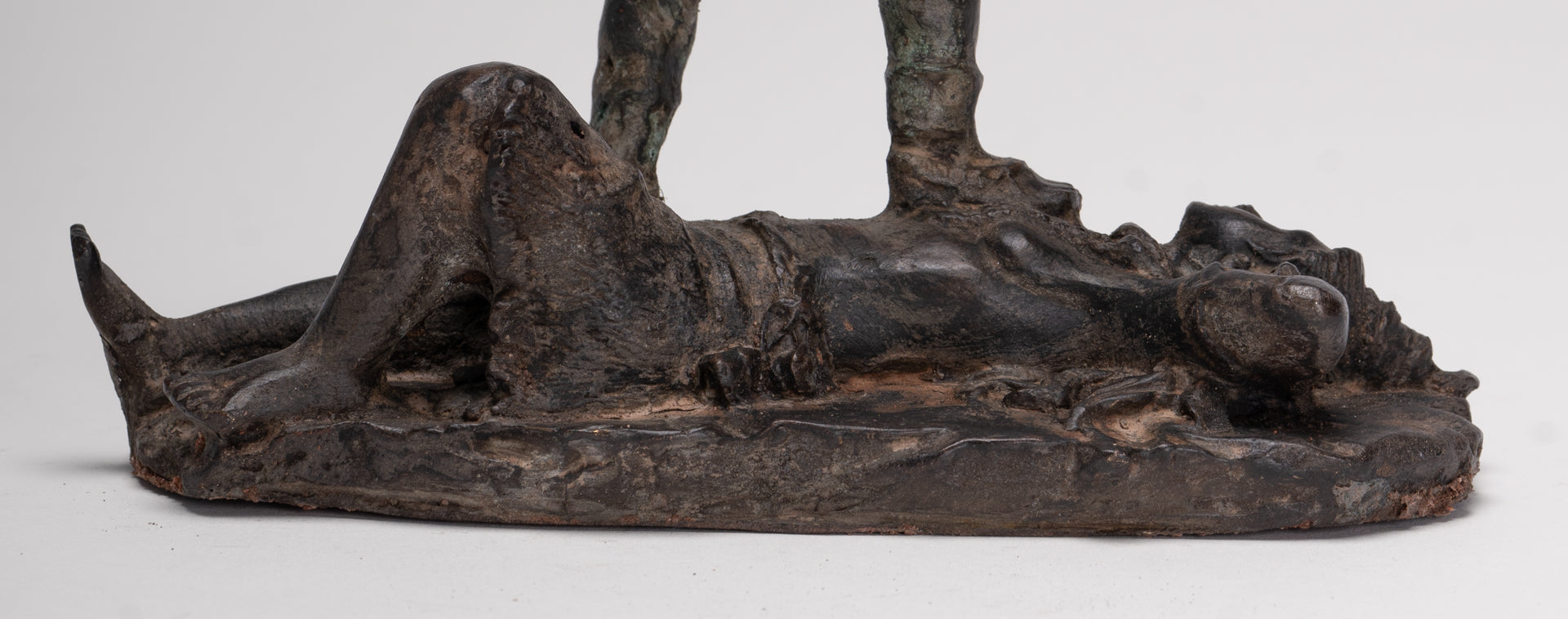
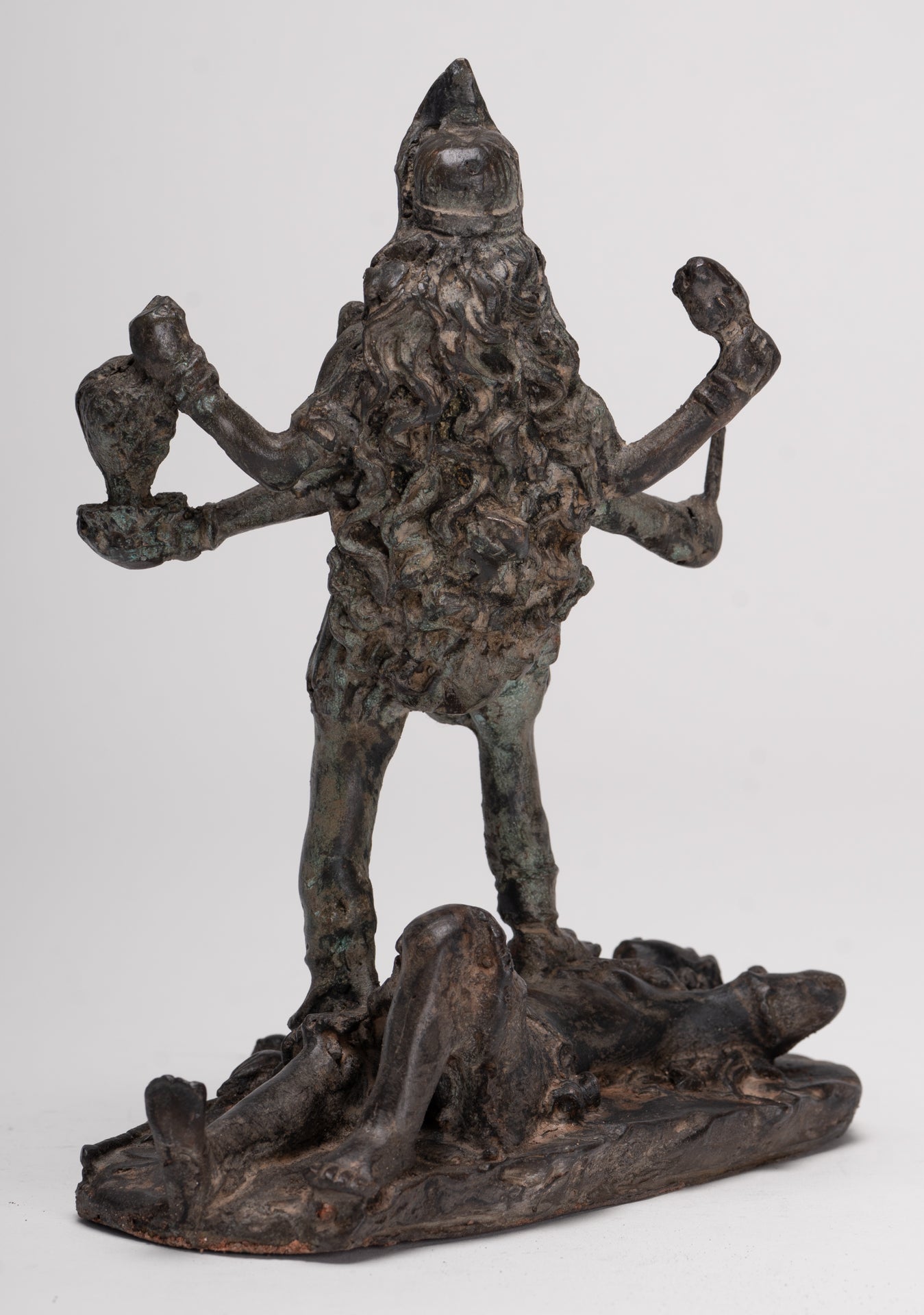
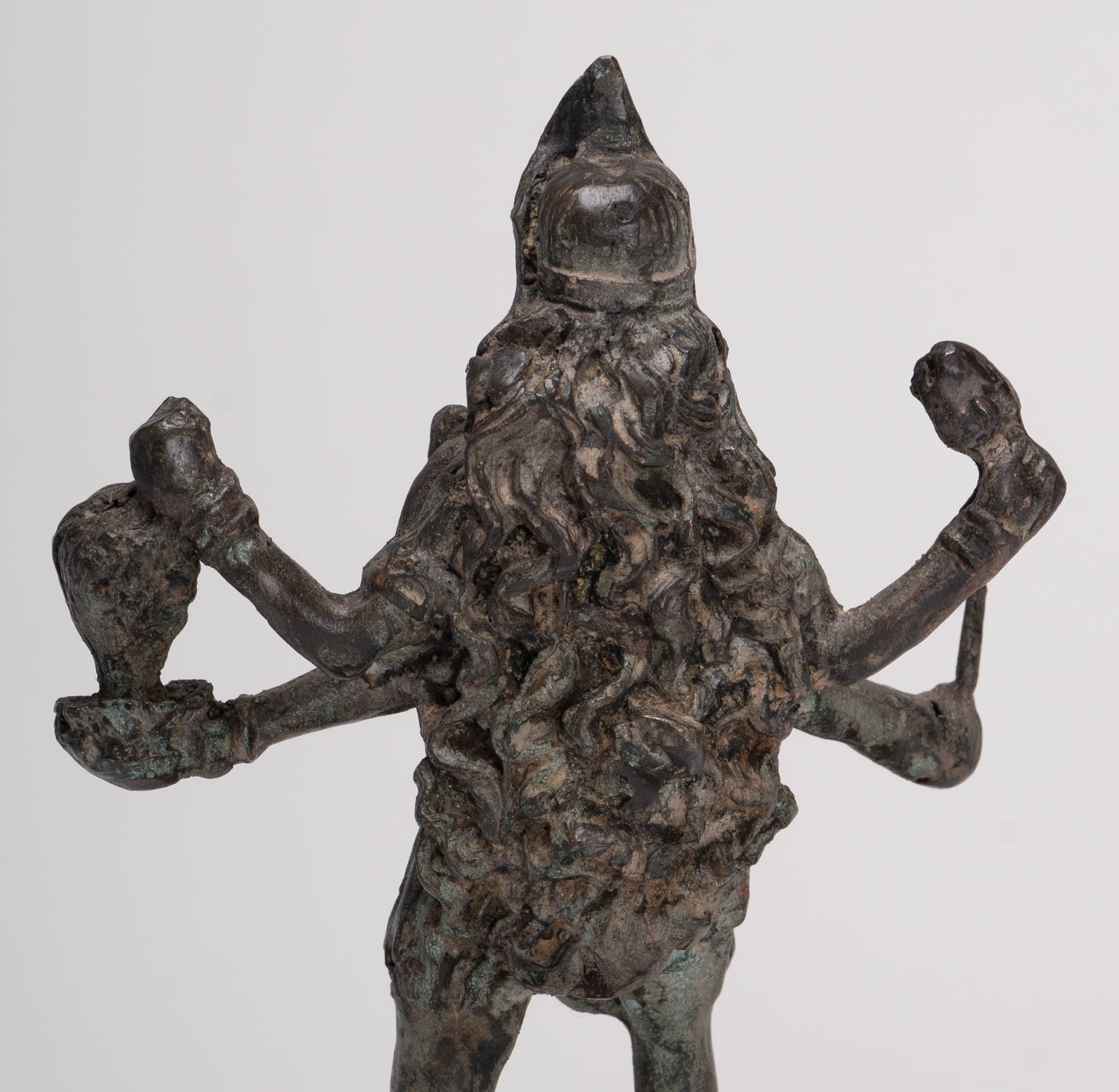
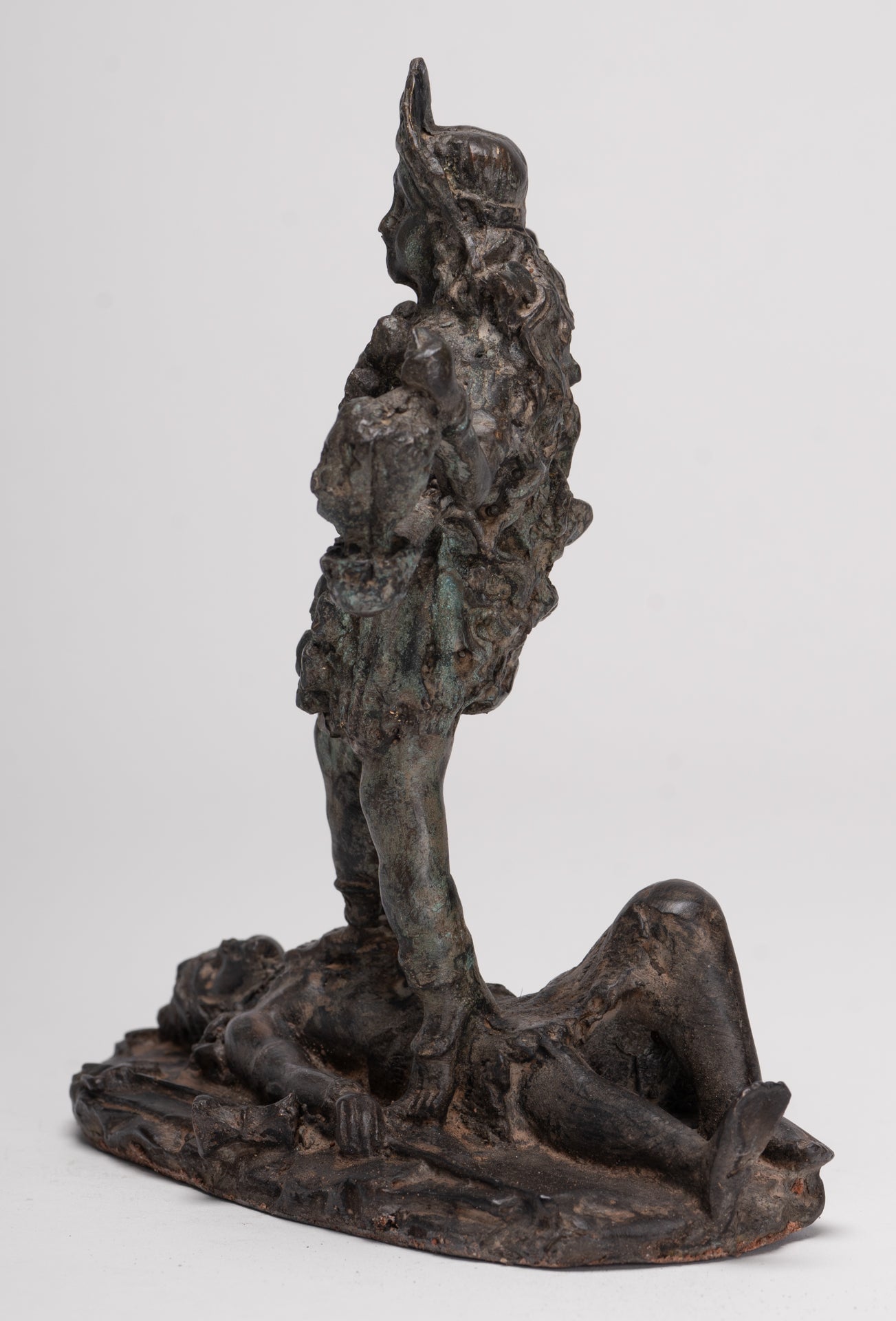
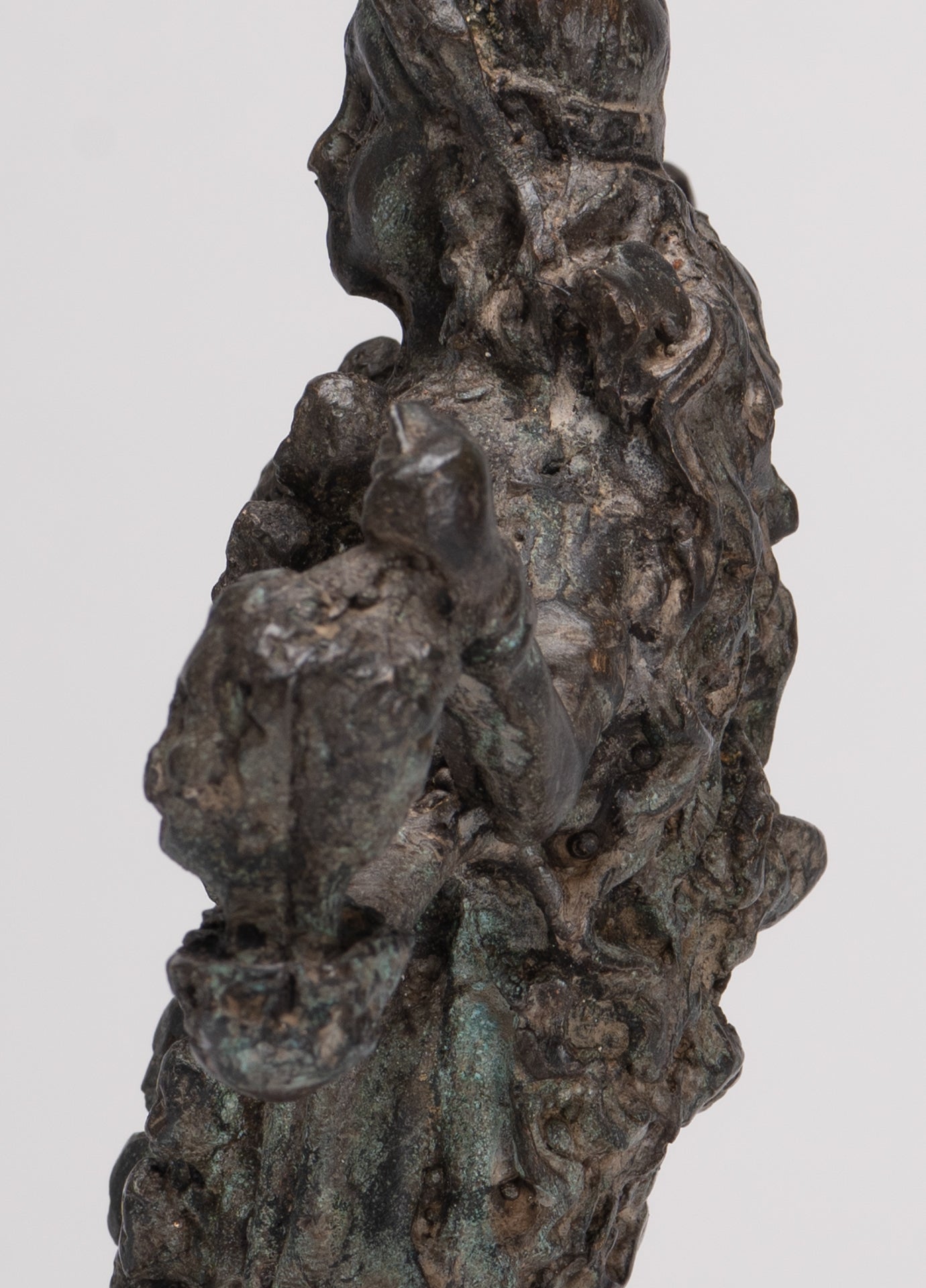
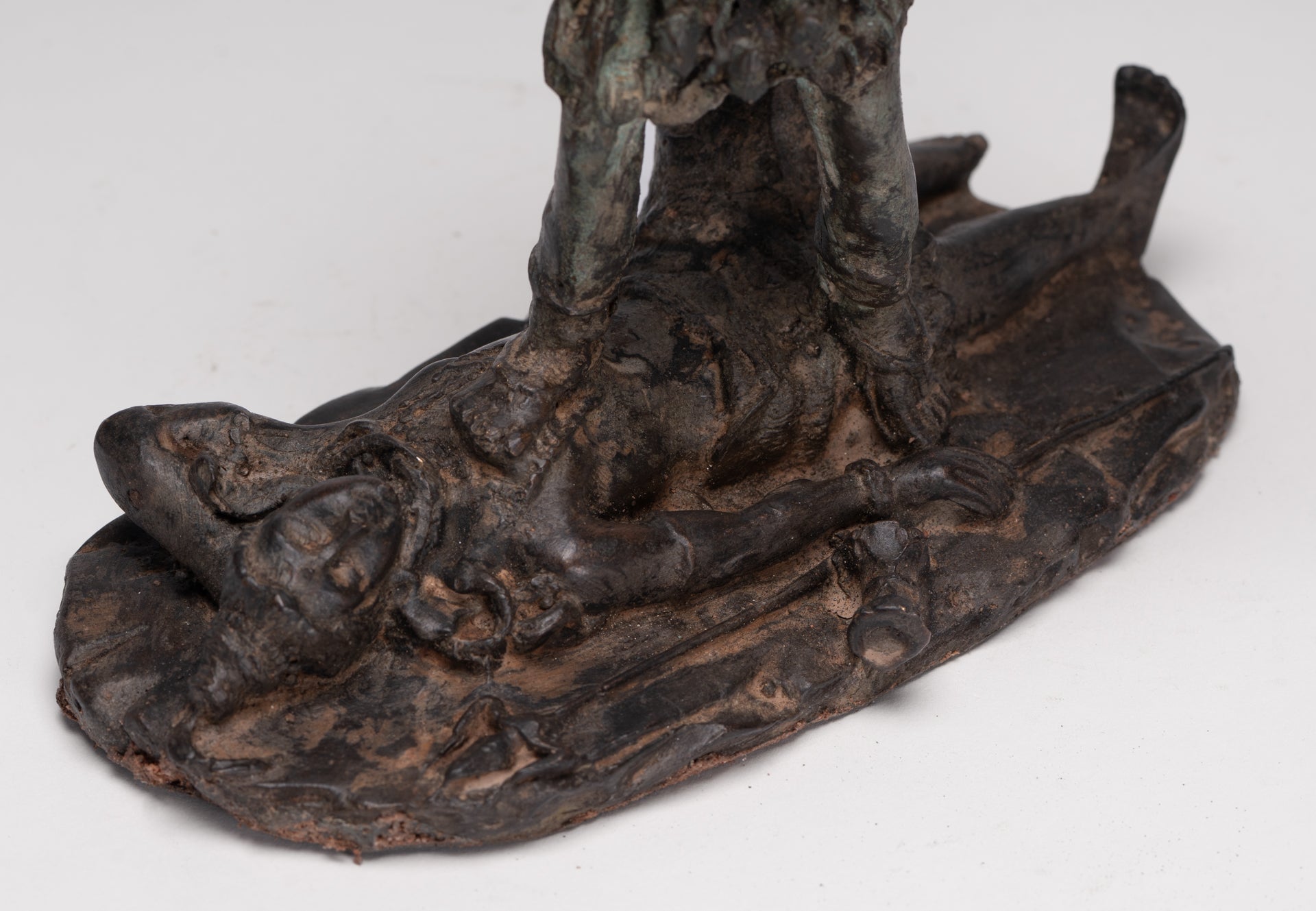
A compelling antique Indian-style bronze depicting Kali, the formidable yet protective Hindu goddess associated with time, transformation, and liberation. Standing above the reclining figure of Shiva, the four-armed goddess is presented in a dynamic composition that contrasts her active presence with the stillness of the figure beneath her.
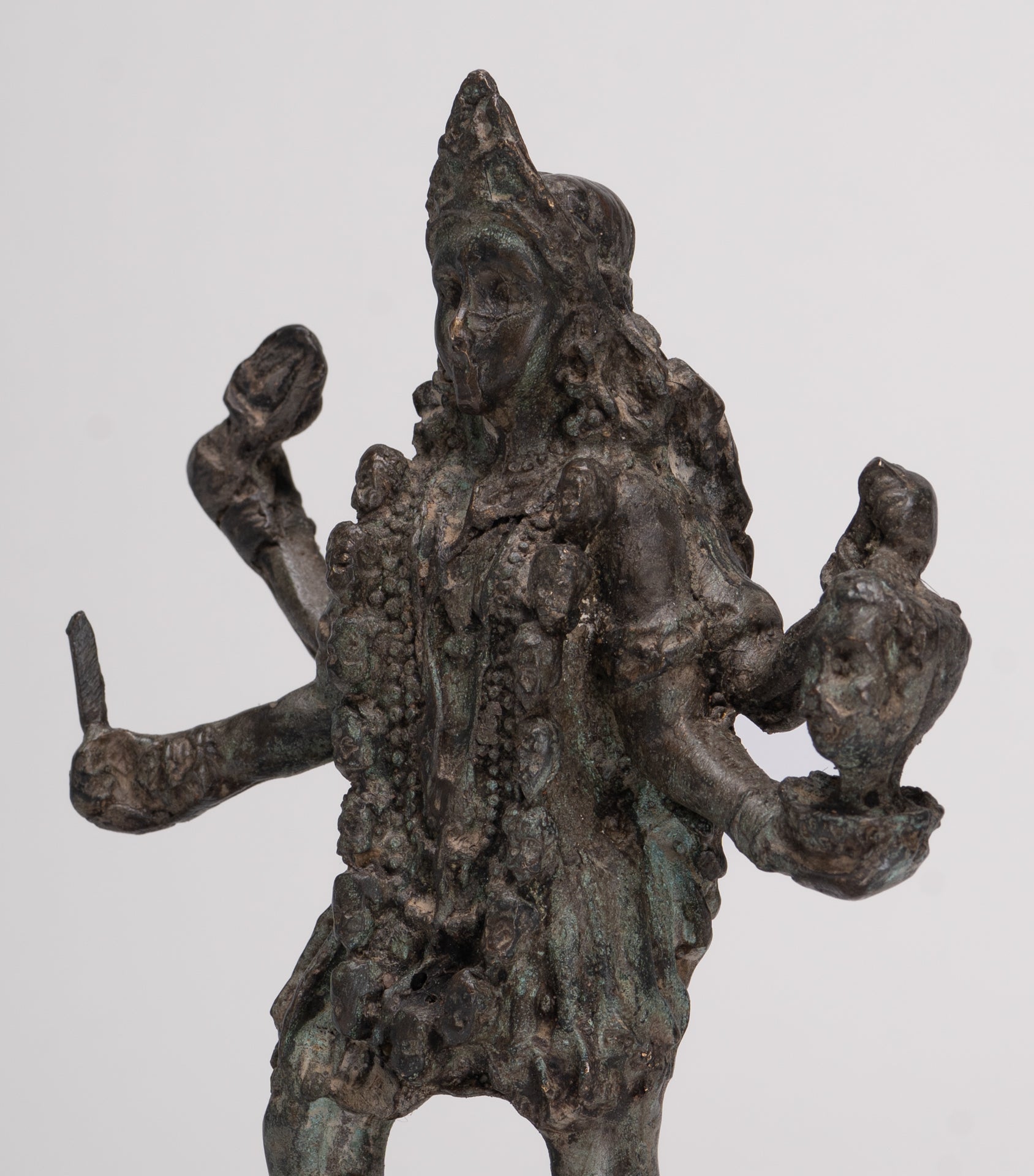
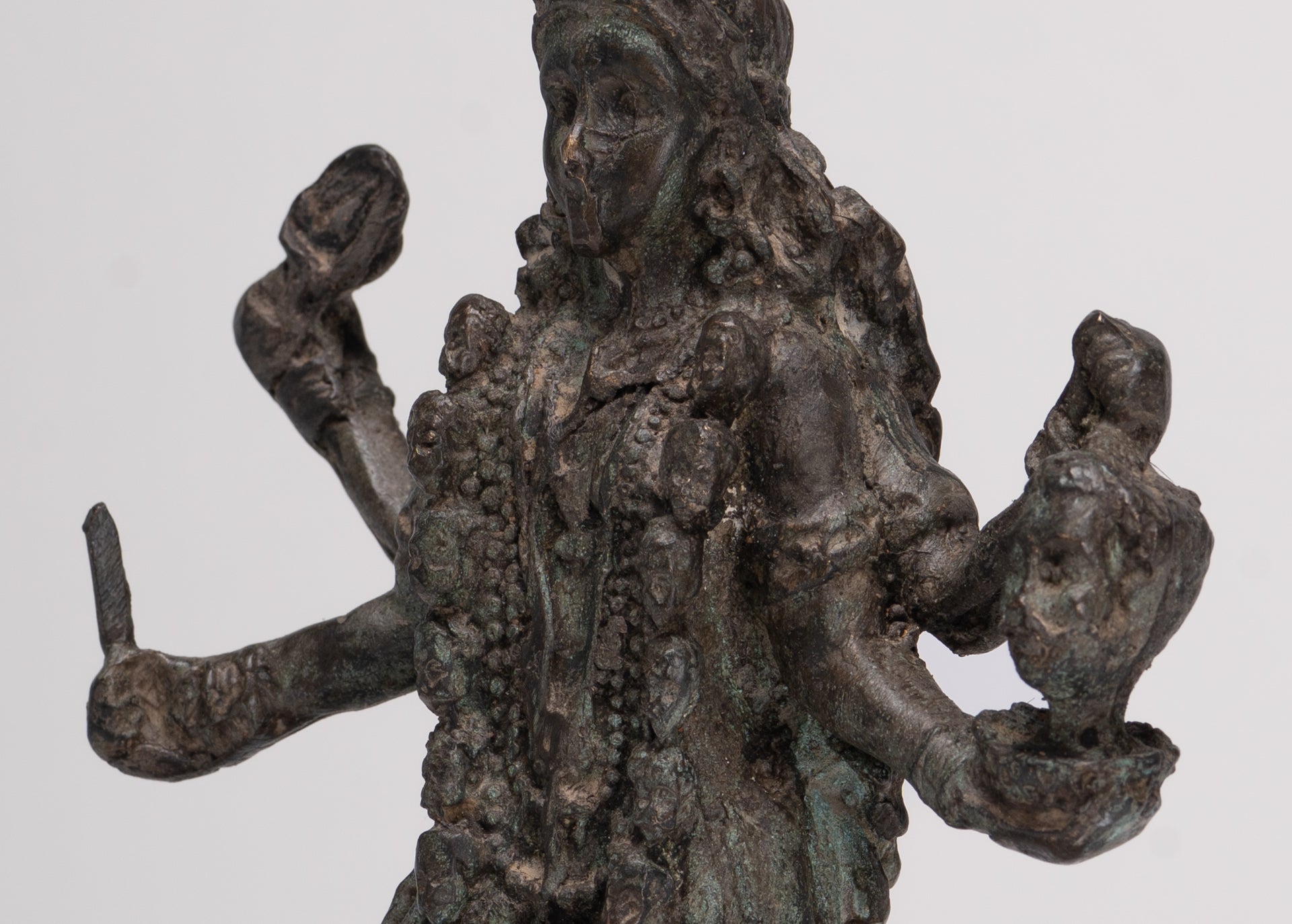
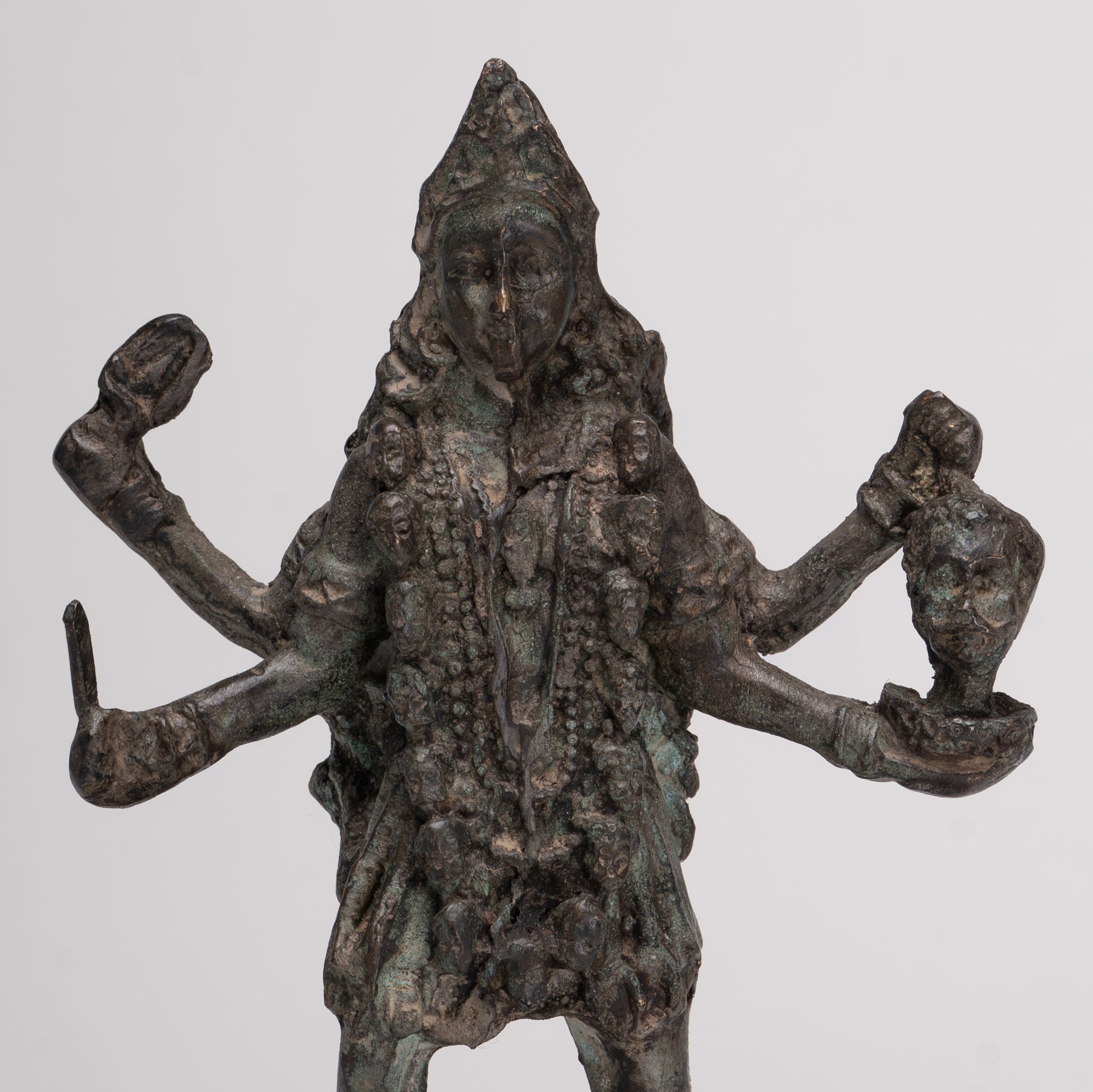
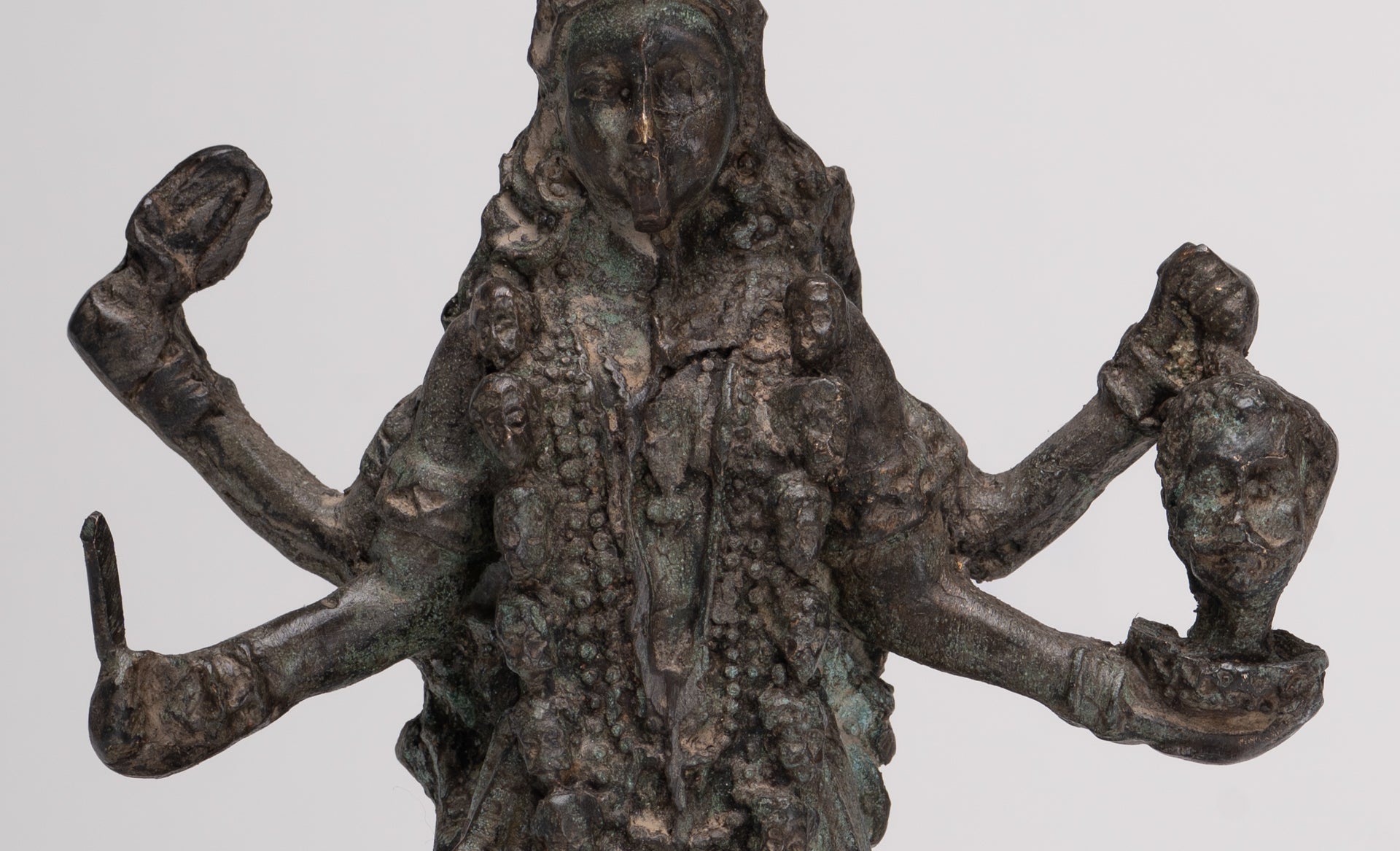
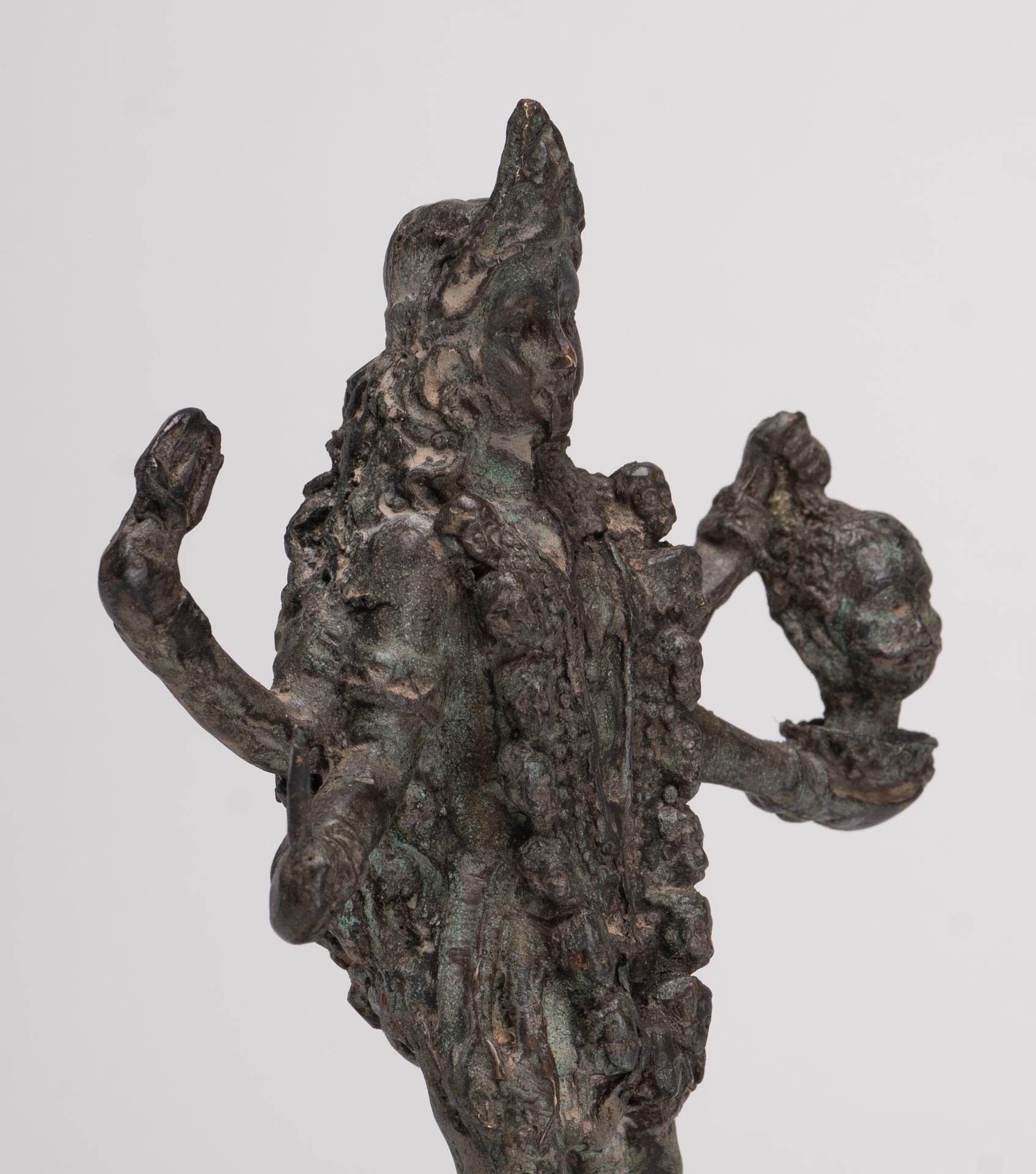
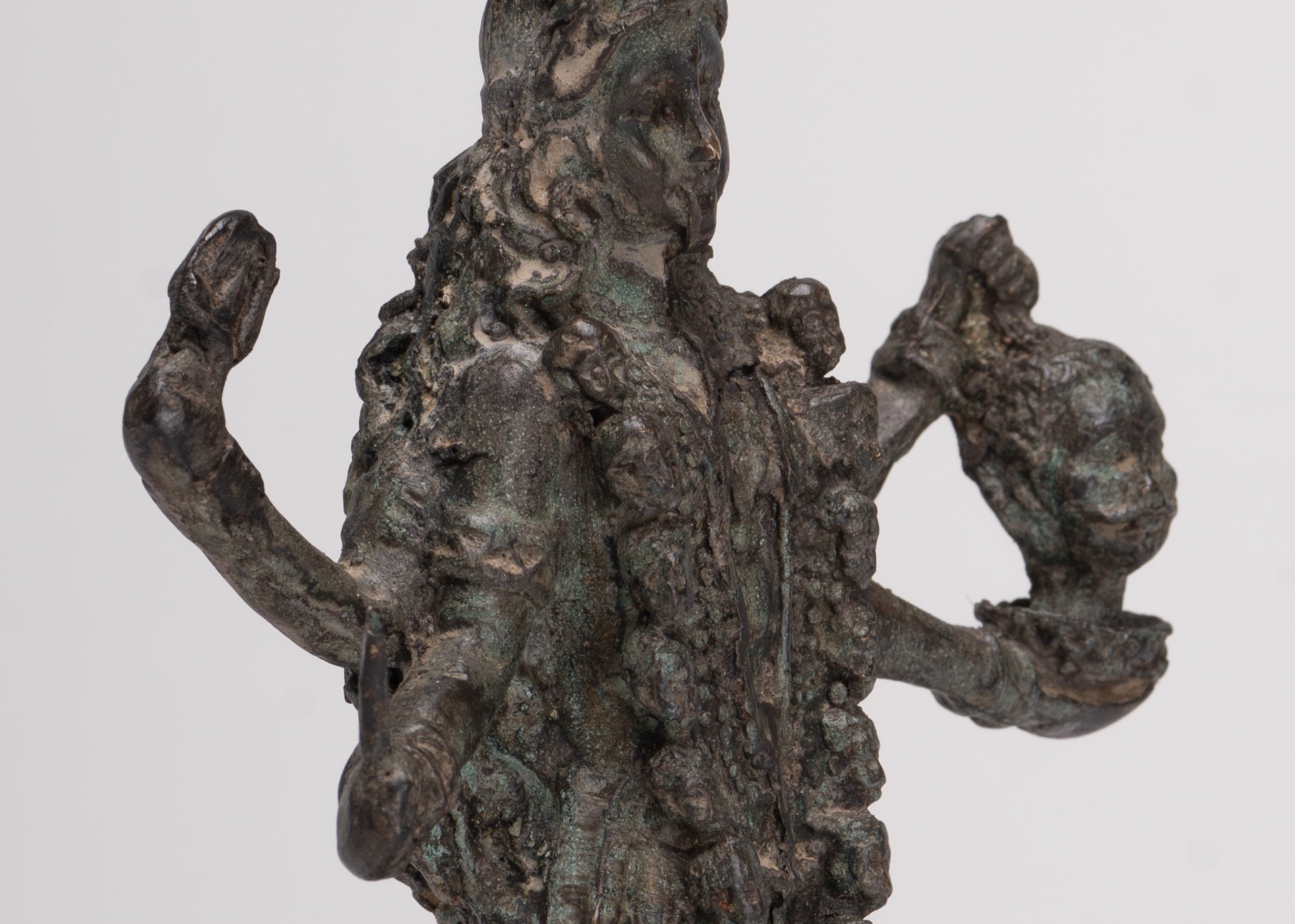
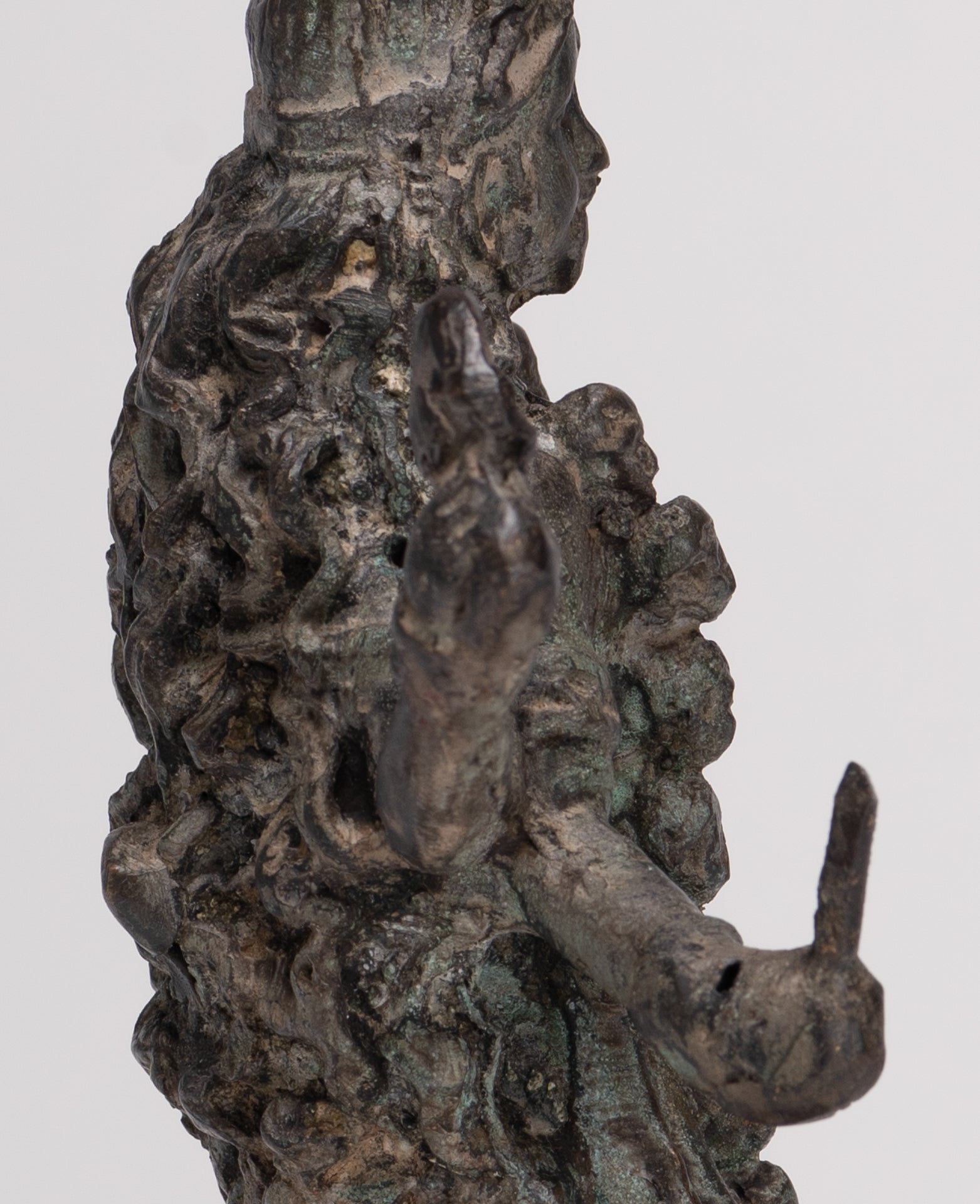
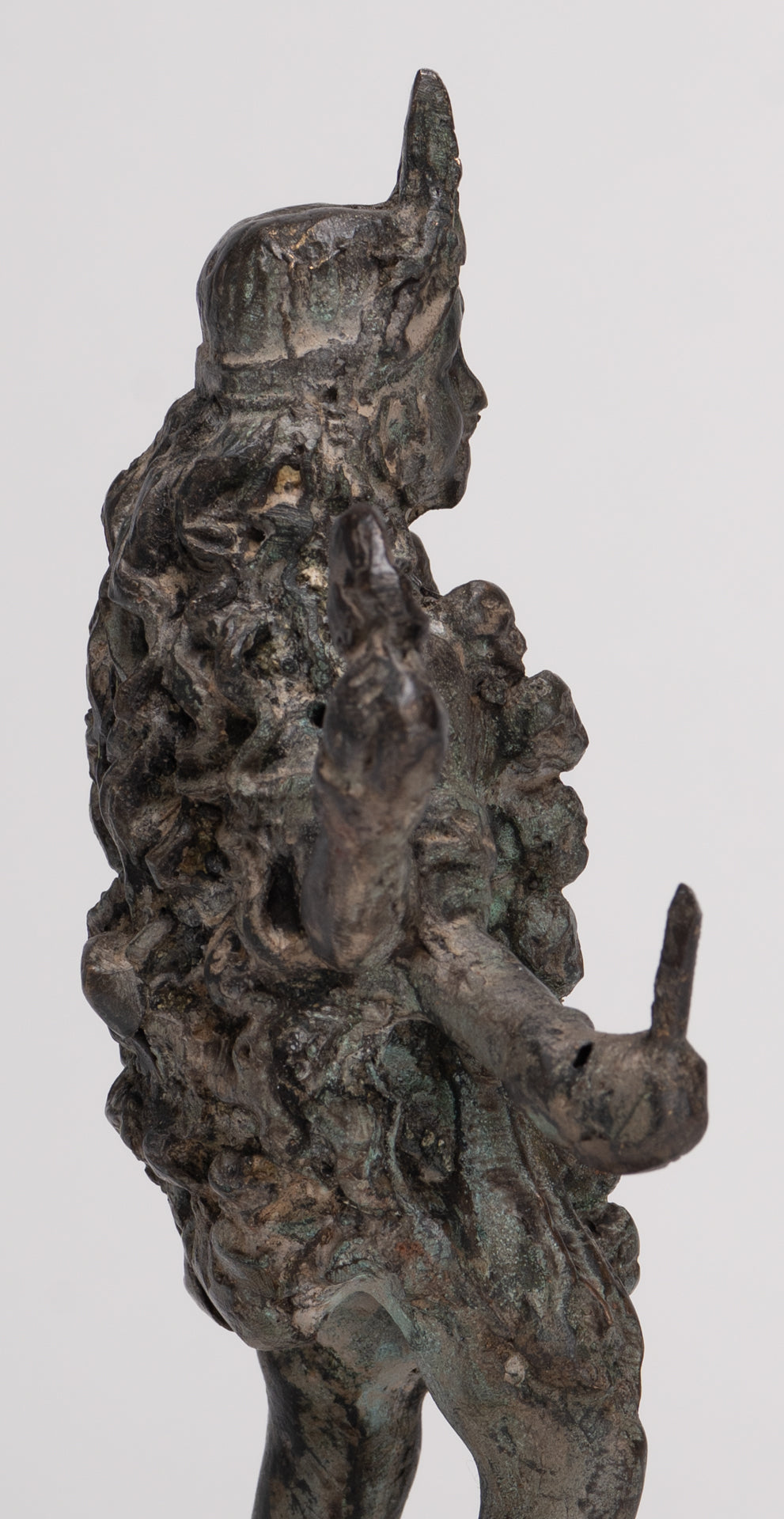
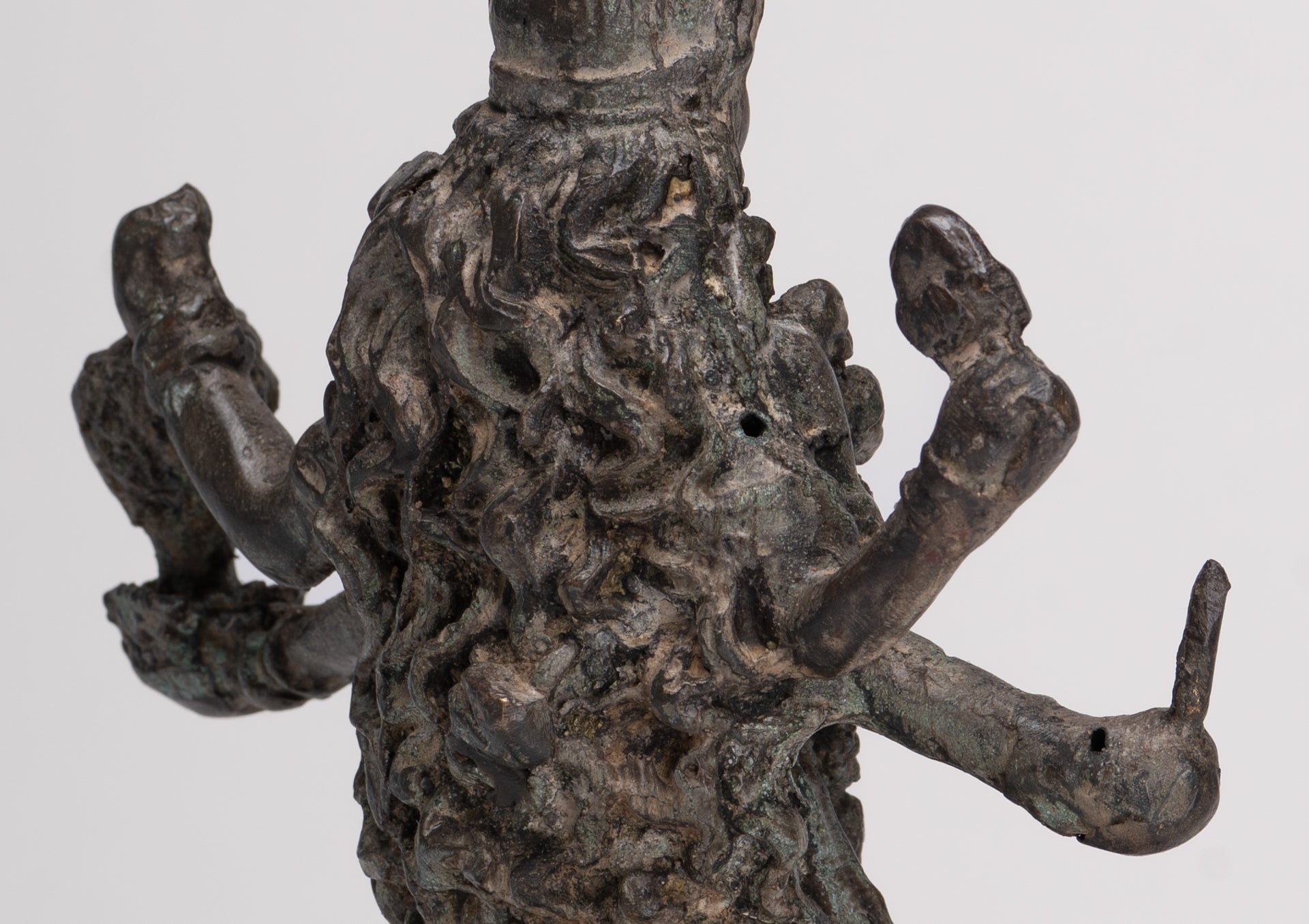
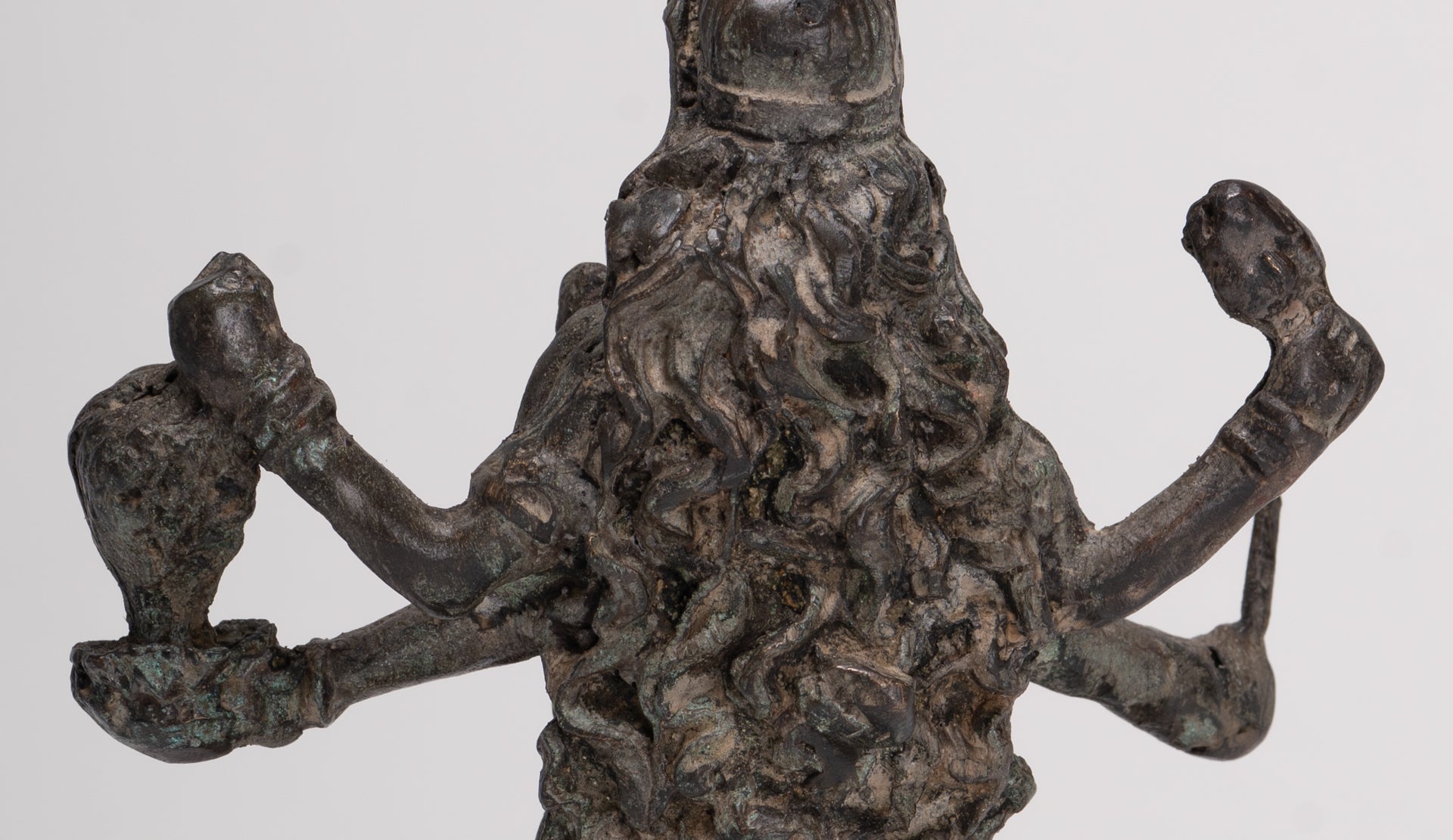
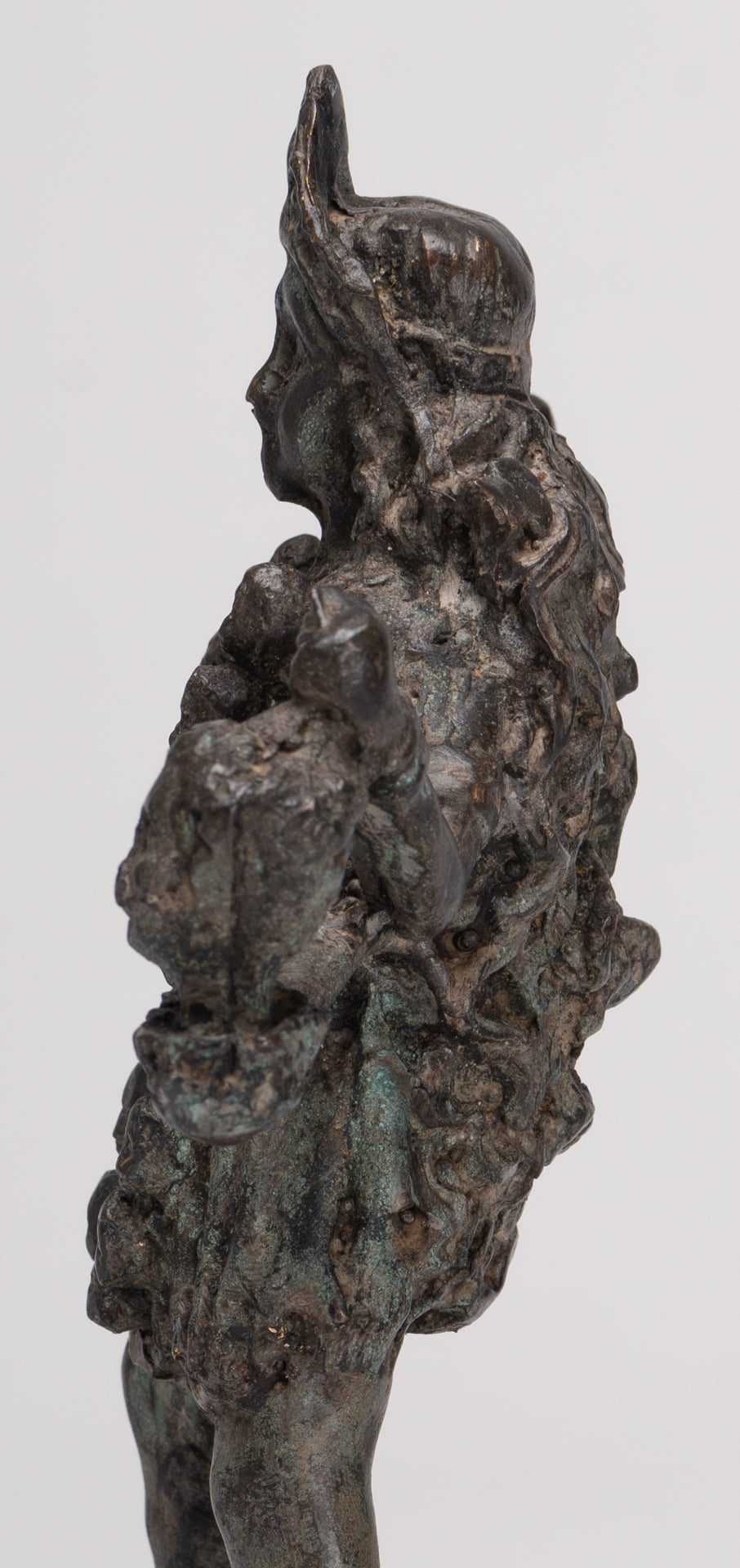
Kali wears a pointed, ornamented crown, large earrings, and elaborate garlands descending across the torso. Her long hair falls around the shoulders, framing a concentrated face. The arms extend outward in contrasting directions, creating an animated silhouette that gives the sculpture considerable presence despite its compact dimensions.
Her attributes include a dagger and a severed head, together with a bowl-like vessel. The richly textured surface brings out the strands of the garlands, the contours of the garments, and the details of the reclining Shiva. A dark grey patina, interspersed with green accents and warmer surface highlights, lends depth to the modelling.
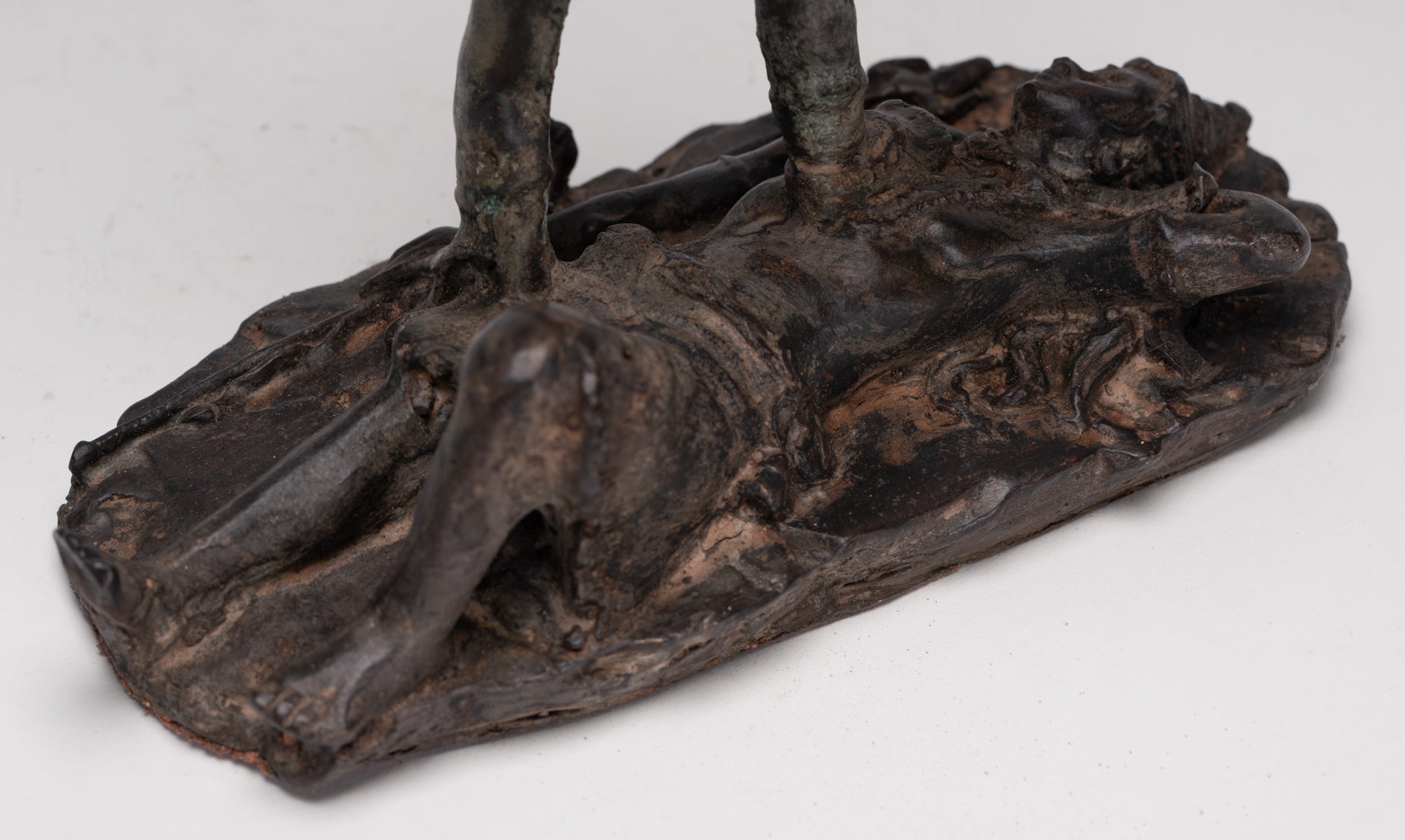
Kali rests upon an oval base, uniting the standing goddess and reclining god within a single sculptural composition. Expressive and symbolically layered, it offers a striking focal point for a collection of Hindu or tantric-inspired art.
Kali and Shiva: Energy and Consciousness
Kali standing upon Shiva should not be understood simply as a goddess defeating a vanquished enemy. Shiva is her consort, and their relationship carries several complementary meanings.
In a familiar narrative, Kali’s destructive dance threatens the world until Shiva lies in her path. Recognising him beneath her feet, she halts her frenzy. The image therefore brings together overwhelming divine power and its pacification.
In tantric interpretation, Kali embodies Shakti, the active power through which creation unfolds, while Shiva represents still consciousness. Their union expresses the interdependence of energy and awareness, rather than the triumph of one unrelated deity over another.
This tension between movement and stillness is central to the sculpture’s visual appeal: Kali’s radiating arms and upright stance rise above Shiva’s extended, reclining form.
Sacred Attributes and Symbolism
The blade and severed head
Kali’s sword, or khadga, has a martial role in her mythology. In spiritual interpretation, it also signifies discriminating knowledge that cuts through ignorance and attachment. The severed head may represent the ego or delusion that must be overcome in the pursuit of liberation. These symbolic readings complement, rather than erase, the goddess’s fierce mythological character.
The garland
The garland of heads is a distinctive element of Kali’s imagery. In some tantric interpretations, it corresponds to the letters or sounds of the Sanskrit alphabet, linking the goddess with language, mantra, and creative power. Other readings emphasise impermanence and her power over death. The precise number and form of heads vary between representations.
The protective goddess
Kali’s formidable appearance is inseparable from her protective role. She confronts destructive forces with the power required to overcome them, while also receiving devotion as a compassionate mother. Her imagery brings destruction and renewal into a single divine presence.
Key Features
-
Antique Indian-style bronze Kali sculpture.
-
Height approximately 19 cm / 7.5 inches.
-
Single-headed, four-armed goddess in an animated standing pose.
-
Reclining Shiva beneath the goddess’s feet.
-
Attributes include a blade, severed head, and bowl-like vessel.
-
Pointed ornamental crown and substantial earrings.
-
Long hair framing the head and shoulders.
-
Elaborate garlands descending across the torso.
-
Detailed treatment of Shiva’s reclining body and ornaments.
-
Oval base integrating the two figures.
-
Dark grey surface with green patination and warmer highlights.
-
A compact, expressive work for a collection of Hindu or tantric-inspired sculpture.
Frequently Asked Questions
Who is Kali?
Kali is a major form of the Hindu Great Goddess, associated with time, transformative power, destruction, and renewal. Although fierce in appearance, she is also revered as a protective mother who confronts danger and guides devotees beyond fear and attachment.
Why is she standing on Shiva?
The scene can recall the story in which Shiva lies beneath Kali to arrest her overwhelming dance. It also expresses a tantric relationship between Shakti, or active divine energy, and Shiva as consciousness. Shiva is not simply a defeated opponent.
What does the severed head represent?
Within Kali’s battle narratives, it can be the head of a slain adversary. In symbolic interpretation, it represents ego, ignorance, or delusion overcome through divine knowledge. The meaning depends upon the devotional or philosophical tradition through which the image is understood.
What is a khadga?
Khadga is a term for a sword. In Kali’s imagery, the blade serves as a weapon and as a symbol of knowledge that severs the bonds of ignorance. The surviving implement here is relatively small, so its exact original blade form should not be overstated.
Is this Kali or Mahakali?
“Kali” is the most straightforward identification. “Mahakali,” meaning Great Kali, may be used as an honorific or for particular manifestations whose appearances vary across traditions. A four-armed figure does not, by itself, establish a narrowly defined Mahakali form.
Does the garland literally depict Sanskrit letters?
No. It depicts heads or head-like ornaments. Their interpretation as the Sanskrit alphabet is a theological association found in certain tantric traditions, not a claim that written letters are carved into the necklace.
Does Kali have a third eye?
A third eye occurs in many representations of Kali and signifies divine vision. However, the forehead detail is not sufficiently clear here to confirm one. A third eye should also not be called an urna, which is a different type of sacred forehead mark.
How should it be handled?
Support the base when moving the sculpture. Avoid pressure on the arms, blade, head-held attributes, crown, or Shiva’s projecting limbs. These small details are vulnerable to accidental bending or breakage.
SATISFACTION GUARANTEE - We have been offering SE Asian Art for many years and are proud of the reputation we have developed for fair and honest listings. However, if for any reason, whatsoever, you are unhappy with your purchase please just let us know and we will provide a full refund. We want you to be 100% happy with your purchase.
-
-
The majority of orders will be shipped with DHL. This is a secure, express and fully tracked service.
Items less than 2Kg we typically ship using Royal Mail.
Once we receive your order we try to ship all orders the same or next working day.
Large and/or fragile pieces requiring palletising, specialist crating and/or extra packaging may take a little longer. Palletised shipments will be delivered curbside.
All orders over 35 GBP will be shipped free of charge.

-
We genuinely hope that all purchases delight.
However, if they do not, regardless of reason, we will refund all orders upon receipt of the unwanted item. Just notify us within 14 days of receiving your order that you wish to make a return and send the piece back to us with 30 days of delivery.


