



How to Verify Provenance for Buddhist Antiquities
How to Verify Provenance for Buddhist Antiquities
Table of Contents
- Why Provenance Verification Matters Before You Buy Buddhist Antiquities
- Antiquity Provenance Documents: What to Request and What They Prove
- How to Research Art Provenance Using Museum, Auction, and Archival Records
- Your Art Provenance Checklist: A Step-by-Step Verification Workflow
- Red Flags in Provenance Documents and Seller Claims
- Export Permits, Ownership Laws, and Repatriation Checks
- When to Consult Conservators, Scholars, or Provenance Researchers
- Frequently Asked Questions
Why Provenance Verification Matters Before You Buy Buddhist Antiquities
Provenance is the documented ownership history of an object, and for Buddhist antiquities it is the single most important record you can review before buying.
A statue without a paper trail carries real risk. The UNESCO 1970 Convention on cultural property sets the international framework most countries use to return illegally exported cultural property, and the U.S.
So how do you verify provenance for Buddhist antiquities without a research team? You ask for the right documents, search public records, and read the paperwork for gaps.
Antiquity Provenance Documents: What to Request and What They Prove
Ask for documents in writing, and ask for copies, not summaries. A seller's verbal history is not provenance. Paper is.
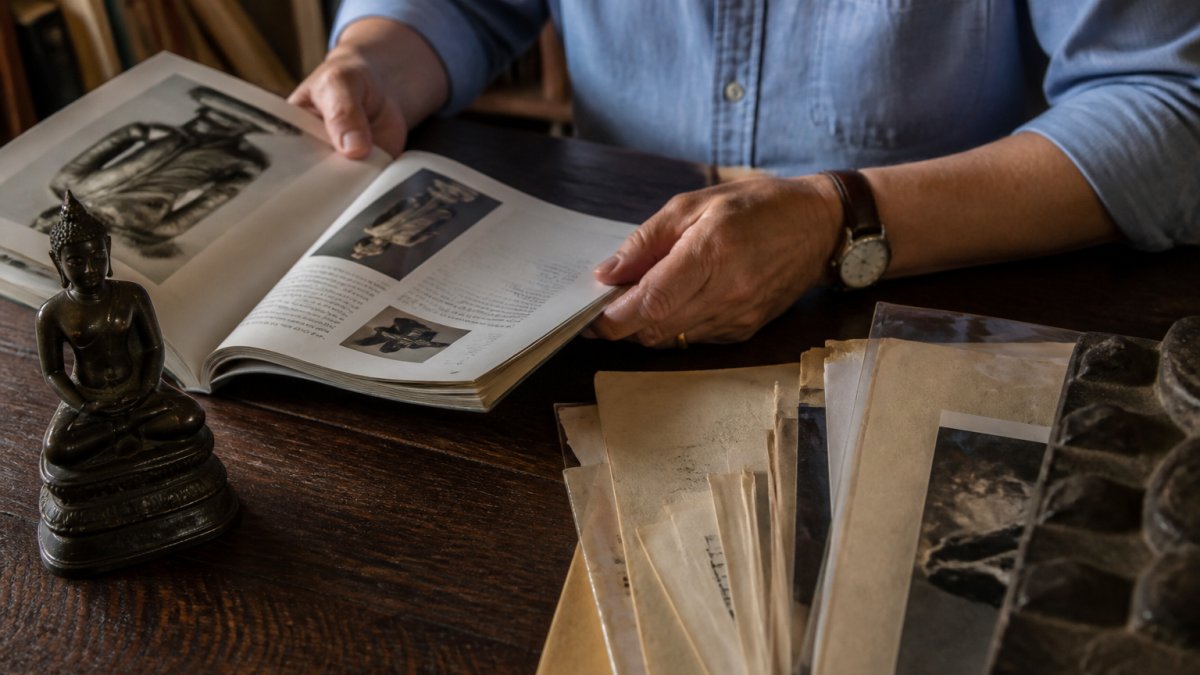
Primary Documents vs. Secondary Documents
Primary documents are records created at the time of a transaction or event. They carry the most weight.
- Bills of sale and invoices with dates and names
- Export permits and customs declarations
- Auction house invoices and lot receipts
Secondary documents describe an object after the fact. They support a claim but do not prove it.
- Appraisals and condition reports
- Dealer catalogs and exhibition booklets
- Photographs without dates or context
What a Complete Ownership History Looks Like
A complete ownership history names each owner, the date of each transfer, and the location of the object at each step. Gaps of a few years are common and often explainable. Gaps of decades, especially across a border, need a clear answer.
| Document Type | What It Proves | Weight |
|---|---|---|
| Export permit | Legal departure from origin country | Strong |
| Auction invoice | Sale date, buyer, seller | Strong |
| Museum accession record | Institutional ownership | Strong |
| Customs entry summary (CBP Form 7501) | Legal import into the United States | Strong |
| Dealer inventory card | Dealer's stock history | Moderate |
| Appraisal | Value and condition only | Weak |
| Undated photo | Object existed at some point | Weak |
How to Request Documents from a Seller
Send a written request that asks for specific records, not a general "provenance." A useful request template covers:
- A copy of every bill of sale, invoice, or receipt in the chain of ownership.
- Any export permit or customs declaration associated with the object's movement across a border.
- The name and contact information of each prior owner, or a statement of why that information is withheld.
- Any auction lot number, sale date, and catalog page where the object appeared.
- Any museum accession or deaccession number, if the object was ever institutional property.
- A written statement of how and when the seller acquired the object.
Ask for legible scans or photographs of the full document, including any stamps, signatures, and reference numbers. A summary prepared by the seller is not a substitute for the underlying record.
Reading Documents for Consistency
Once you have the documents, compare them against each other and against the object:
- Dates must be sequential. An export permit cannot predate the bill of sale that transferred the object to the exporter.
- Names must match. The buyer on one invoice should be the seller on the next.
- Descriptions must match. Height, material, base type, and inscriptions should be consistent across records. A statue described as "bronze, 34 cm, lotus base" in one document and "gilt copper, 28 cm, rectangular base" in another needs an explanation.
What to Do When Documents Are Missing
Missing documents are common, especially for objects that changed hands before the 1970s. The question is not whether documents are missing, but whether the gaps are explained and whether the explanations are consistent with what you can verify independently. If a seller cannot explain a gap in writing, treat the provenance as unproven for that period.
How to Research Art Provenance Using Museum, Auction, and Archival Records
Public records let you confirm or challenge what a seller tells you. Learning how to research art provenance starts with three sources: auction archives, museum databases, and customs records.
Searching Auction Catalogs and Museum Databases
Major auction houses keep searchable archives of past sales. Search the object type, not just the exact piece. Look for the same statue, or a close match, appearing in an earlier sale.
Museum databases are free and open. Search by culture, material, and period to find comparable pieces and confirm whether a claimed style fits a known group.
Customs and Import Records for Buddhist Antiquities
Import records show when an object entered a country and under what declaration. In the United States, U.S. Customs and Border Protection handles these declarations. Ask the seller for the entry number or a copy of the declaration. If they cannot produce it, treat the import date as unconfirmed.
Your Art Provenance Checklist: A Step-by-Step Verification Workflow
Use this art provenance checklist on every piece before you commit. Work through it in order.
- Request the full document set in writing, including copies of every record.
- Build a timeline of owners, dates, and locations on one page.
- Mark every gap longer than five years and every border crossing.
- Search auction archives for the piece and for close matches.
- Search museum databases for the same style, material, and period.
- Confirm the import record and entry date where one exists.
- Compare the object's style, material, and inscriptions against the records.
- Ask the seller to explain each gap in writing.
- Consult a conservator or scholar if the piece is high value.
- Walk away if the story changes between conversations.
Red Flags in Provenance Documents and Seller Claims
Most problems show up in the paperwork, not the object. Watch for these signals.
- Ownership gaps that cross a border with no export permit
- Documents dated after the object supposedly left its country
- Names that never appear in any public record
- Appraisals used as proof of ownership
One weak document is not fatal. A pattern of them is. If three or more of these appear together, treat the provenance as unproven.
Export Permits, Ownership Laws, and Repatriation Checks
Export permits and ownership laws decide whether a piece can legally be sold and moved. Repatriation checks tell you whether a country has an active claim on similar material.
Each country sets its own rules on what may leave and what must stay. The U.S. State Department cultural heritage guidance lists current import restrictions on protected cultural material from specific countries.
The U.S. Legal Framework You Need to Know
Three U.S. legal mechanisms govern most Buddhist antiquities entering the country:
- The 1970 UNESCO Convention, implemented in the United States through the Convention on Cultural Property Implementation Act (CPIA). This law allows the U.S. to enter bilateral agreements with other countries restricting the import of certain archaeological and ethnological material. The State Department's Cultural Property Advisory Committee reviews and recommends these agreements.
- The National Stolen Property Act, which makes it a federal crime to transport stolen property across state or U.S. borders. Courts have applied this to cultural objects taken in violation of another country's ownership laws in some cases.
- Customs and Border Protection (CBP) import restrictions, which enforce the bilateral agreements at the port of entry. CBP can seize material that lacks proper documentation or that falls under an active restriction.
How to Check for Active Import Restrictions
The State Department maintains a public list of countries with which the U.S. has cultural property agreements. Before buying, check whether the object's country of origin appears on that list and whether the object type is covered.
A common pattern is a seller who claims an object left its country "decades ago" but cannot produce an export permit or a customs entry record.
Repatriation Claims and Red Flags
Repatriation claims can arise years after a purchase. Watch for these signals that a piece may be subject to a claim:
- The object matches a type covered by an active U.S. bilateral agreement with its origin country.
- The object appears in a published museum catalog, excavation report, or auction archive from a period when export was restricted.
- The seller cannot name the exporter or provide a customs entry number.
- The object's style and material match a known group that has been the subject of repatriation requests.
Three Questions to Ask Before You Buy
- Did the object leave its country legally, with a permit?
- Does the current owner hold clear legal title?
- Is there an active repatriation claim on this type of object?
If you cannot answer all three, get advice before you buy. A qualified attorney or provenance researcher can review the documents and the applicable law.
Where to Verify Import Records
In the United States, U.S. Customs and Border Protection handles import declarations. Ask the seller for the entry number or a copy of the entry summary (CBP Form 7501). If they cannot produce it, treat the import date as unconfirmed. You can also request records through CBP's Freedom of Information Act process, though this takes time and may not return results for older entries.
When to Consult Conservators, Scholars, or Provenance Researchers
Bring in an expert when the value is high, the paperwork is thin, or the piece does not match its records. Conservators examine material and construction.
A short consultation often costs far less than a disputed purchase.
At HD Asian Art, we curate Buddhist and Hindu statues, from Khmer and Southeast Asian sculptures to contemporary pieces for altars and home sanctuaries.
Frequently Asked Questions
What does provenance mean for a Buddhist antiquity?
Provenance is the documented record of an object's ownership history, from its creation to the present. For Buddhist antiquities, it includes the chain of ownership, export and import documentation, auction or dealer records, and any museum or archival references. A clear provenance record helps establish legal title and cultural context, and it gives you confidence that the piece was acquired ethically and can be legally owned and transferred.
What documents can help establish an antiquity's provenance?
Request original purchase receipts, auction lot records, dealer invoices, export permits, customs declarations, insurance appraisals, and any museum or gallery exhibition records. Letters of attribution from recognized scholars also carry weight. Primary documents created at the time of a transaction are more reliable than later summaries. Keep copies of everything, and verify that names, dates, and object descriptions match across all documents.
How can I check whether an ownership record is credible?
Cross-reference the seller's claims against independent sources. Search auction databases, museum collection catalogs, and archival records for the object's description and any prior sale dates. Contact the auction house or gallery named in the documents to confirm the transaction. Look for consistency in measurements, material descriptions, and photographs. If a document cannot be independently verified, treat it as unconfirmed and factor that into your decision.
What should I do if an antiquity has gaps in its ownership history?
Gaps are common, especially for objects that left their country of origin decades ago. Document what is known and note what is missing. Consult a provenance researcher or an art law attorney to assess whether the gaps create legal risk. Ask the seller for any additional records they can provide. If the gap period overlaps with known periods of looting or conflict, proceed with extra caution and seek expert guidance before purchasing.
Verifying provenance takes patience, and the paperwork rarely looks perfect. The work is worth it when a piece carries real history into your home.
HD Asian Art offers carefully curated Buddhist and Hindu statues with handpicked antique and contemporary pieces, free shipping, and a collection built for altars, meditation spaces, and refined spiritual interiors. Browse our collection and find a statue whose story you can trust.
