



How to Choose Meaningful Ganesh Statue Placement
How to Choose Meaningful Ganesh Statue Placement
Meaningful Ganesh statue placement is defined as the deliberate positioning of a Ganesha idol in your home according to Vastu Shastra principles, directional symbolism, and cultural tradition to maximize the flow of blessings, prosperity, and harmony. The practice goes far beyond finding a decorative spot on a shelf.
Direction, posture, trunk orientation, and room selection each carry specific spiritual weight. Get these right, and your Ganesh idol becomes a genuine focal point for positive energy. Get them wrong, and even the most beautifully crafted statue loses its intended purpose.
How to choose meaningful Ganesh statue placement by direction
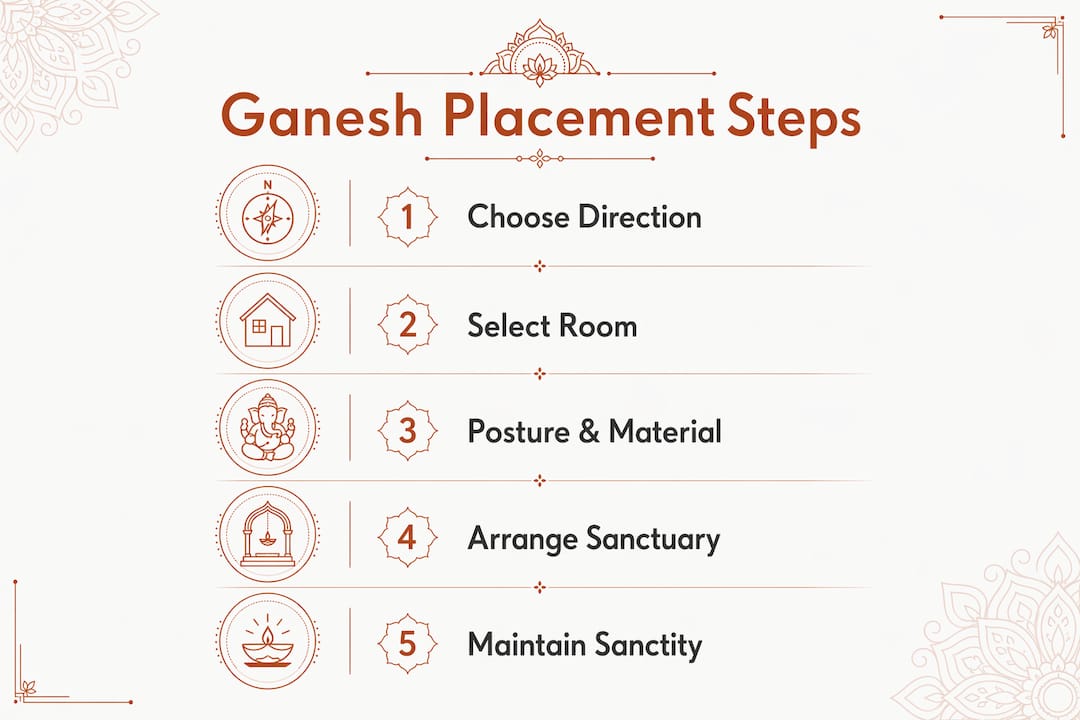
Direction is the single most consequential variable in Ganesh idol positioning. Vastu Shastra designates north and east as the most auspicious facing directions for a Ganesh statue. North is governed by Mercury, the planet associated with intellect and prosperity. East aligns with the rising sun, representing fresh energy and new beginnings. These associations are not arbitrary. They reflect centuries of observation about how light, movement, and human attention interact with a dedicated worship space.
The northeast corner, known in Sanskrit as Ishan Kona, carries the strongest combined energy of both directions. Northeast placement in the living or pooja area is consistently recommended across 2026 Vastu guides as the prime location for any Ganesh idol. South-facing placement is actively discouraged because it is associated with the direction of Yama, the deity of death, which conflicts with Ganesha’s role as a remover of obstacles and a harbinger of auspicious beginnings.
Entrance placement follows a specific rule that surprises many first-time buyers. A Ganesh idol at the main entrance must always face inward toward the home, never outward toward the street. An outward-facing statue is interpreted as turning its back on the household, which negates the protective and welcoming symbolism entirely.
Key directional rules to follow:
- North or east facing: Most auspicious for daily worship and prosperity
- Northeast corner (Ishan Kona): Strongest combined directional energy for a pooja space
- Inward-facing at entrance: Welcomes guests and positive energy into the home
- South facing: Avoid entirely to prevent negative energy associations
- Outward-facing at entrance: Never position the idol with its back to the interior
Pro Tip: If your home layout makes a true north or east orientation difficult, prioritize the northeast corner over strict compass alignment. The corner itself carries more Vastu weight than a precise degree reading.
Which rooms work best for Ganesh idol positioning
Room selection determines how consistently the idol’s energy integrates with daily life. The northeast pooja room or dedicated altar space remains the gold standard for Ganesh statue placement. This room receives the most spiritually favorable light and directional energy, and it keeps the idol in a space reserved specifically for worship rather than general household activity.
The living room is the second-best option for most households. Position the idol on the northeast or east wall at approximately eye level when seated. This placement keeps Ganesha visible during family gatherings and daily movement through the home, reinforcing its presence as a protective and auspicious figure.
 For professionals and students, a dedicated desk placement carries real practical value. A small Ganesh idol on a study or work desk facing east is considered most auspicious for focus, intelligence, and success in new ventures. This is especially relevant for anyone starting a business, preparing for examinations, or working in a creative field.
Rooms and locations to avoid, in order of importance:
- Bathrooms: Considered impure spaces that disrespect the deity
- Bedrooms: Mixing worship space with sleep space dilutes both functions and is considered spiritually inappropriate
- Kitchen stove areas: Heat and cooking activity create an unstable, impure environment near the idol
- Under staircases: This location is considered inauspicious and symbolically subordinate
- Directly opposite the entrance door: Creates a confrontational energy dynamic rather than a welcoming one
For apartments or homes with limited space, wall-mounted mandirs or dedicated shelves in the northeast or east zone serve as practical fallback placements. These preserve Vastu alignment without requiring a dedicated room. The principle is to create a defined, clean, elevated space rather than forcing placement into an inappropriate location.
How posture and material affect placement and meaning
The posture of a Ganesh statue directly communicates the type of energy it brings into a space. Understanding these distinctions helps you match the idol to the specific intention behind your placement.
| Posture | Symbolic Meaning | Best Placement Context |
|---|---|---|
| Sitting (Lalitasana) | Calm, stability, peace | Home worship, living room, pooja room |
| Reclining | Prosperity, luxury, abundance | Wealth corner, living room display |
| Standing | Protection, active energy | Entrance, threshold areas |
| Dancing (Nritya) | Joy, celebration | Festive or creative spaces |
Sitting Ganesha in Lalitasana is the most widely recommended posture for home decor and daily worship. It embodies calm and grounded energy, which suits the steady, long-term spiritual atmosphere most households want to cultivate. Reclining postures signal prosperity and luxury, making them a strong choice for a dedicated wealth corner or a prominent living room display.
Trunk direction is equally significant. A left-curving trunk symbolizes peace and is suited for daily home worship without demanding strict ritual observance. Right-curving trunks, associated with temples like Siddhivinayak in Mumbai, carry more intense energy and traditionally require more rigorous devotional practice. For most home settings, a left-curving trunk is the practical and spiritually appropriate choice.
Material choice affects both durability and contextual suitability. Brass and bronze statues carry historical weight and are traditional choices for consecrated worship spaces. Marble works well in formal pooja rooms or living room displays where permanence and visual weight are priorities. Polyresin and wood pieces suit decorative or secondary placements. HDAsianArt specializes in authentic bronze and stone pieces that function equally well as spiritually significant sculptures and as museum-quality art objects.
What practical steps maintain sanctity and aesthetic appeal
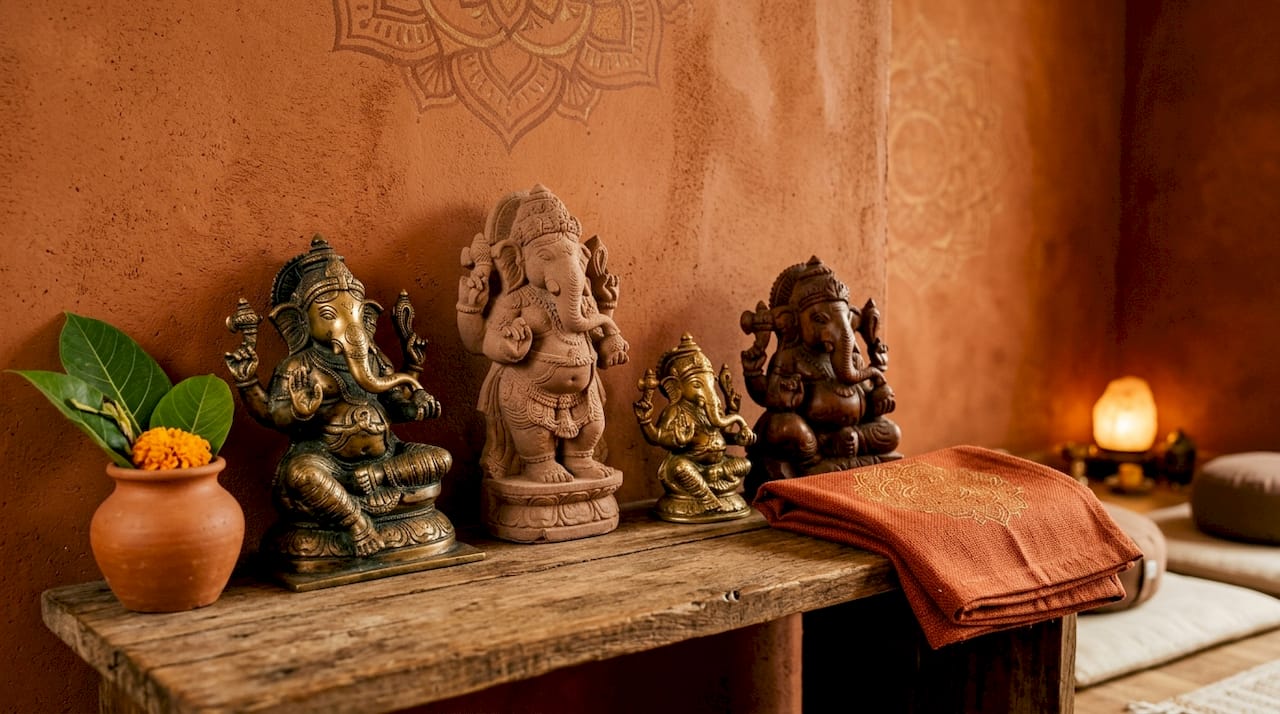
Physical setup details determine whether a well-chosen location actually functions as intended. The platform beneath the idol is not optional. Ganesh idols placed directly on the floor violate a core principle of respect and sanctity. Use a wooden chowki, marble shelf, or dedicated altar platform positioned at or slightly below eye level when seated in worship.
The surrounding space communicates as much as the idol itself. A cluttered, poorly lit shelf undermines the spiritual atmosphere regardless of how carefully you selected the statue’s direction. Keep the area clean, unobstructed, and well-lit. Natural light during morning hours is ideal. Warm artificial lighting in the evening maintains the atmosphere after sunset.
Wall color behind the idol influences both the visual and energetic quality of the space:
- Saffron and turmeric yellow: Traditional, auspicious, and visually warm
- Off-white and ivory: Clean, neutral, and respectful without overpowering the idol
- Terracotta tones: Grounded and earthy, complement bronze and stone statues well
- Avoid dark or cool colors: These visually suppress the idol and conflict with the warm, welcoming energy Ganesha represents
Warm wall colors like saffron, yellow, or off-white are specifically referenced in Vastu guides as enhancing positive energy around the idol. Regular cleaning with a soft cloth, fresh flowers, and incense maintain the space’s spiritual quality over time. Auspicious days for initial placement include Monday, Thursday, and Friday in morning hours, particularly during Griha Pravesh or new home setup ceremonies.
Pro Tip: Treat the area around your Ganesh idol as a defined zone, not just a surface. Even a small dedicated shelf with a clean cloth, a single oil lamp, and one fresh flower creates a complete worship environment in minimal space.
Common mistakes to avoid with Ganesh statue placement
Errors in placement are more common than most guides acknowledge, and several of them directly contradict popular decorating instincts.
- Multiple Ganesh idols in one space: A single idol is preferred to avoid conflicting energy fields. If you want a secondary Ganesh presence, use a wall relief or framed image rather than a second three-dimensional idol.
- South-facing orientation: This is the most frequently made directional error and one of the most significant to correct.
- Placement in bathrooms, bedrooms, or kitchen stove areas: These locations are considered impure or spiritually incompatible with a consecrated idol.
- Floor-level placement: Placing the idol on the floor, even temporarily, is considered disrespectful and disrupts the energy hierarchy of the space.
- Under staircases: This location is symbolically subordinate and structurally unstable, both of which conflict with Ganesha’s role as a stable, elevated presence.
- Outward-facing entrance placement: As noted earlier, the idol must face inward. An outward-facing statue at the entrance is one of the most common and most consequential errors in Ganesh idol positioning.
One distinction worth noting: decorative Ganesh statues and consecrated worship idols follow different rules. Some households maintain decorative pieces in living spaces for aesthetic purposes while keeping a separate consecrated idol in the pooja room. This is a legitimate and practical approach, provided the decorative piece is still treated with basic respect and not placed in prohibited locations.
Key takeaways
Correct Ganesh statue placement combines directional alignment, posture selection, and physical setup to create a space where spiritual intention and aesthetic quality reinforce each other.
| Point | Details |
|---|---|
| Direction determines energy flow | Face the idol north or east; northeast corner is the strongest combined placement. |
| Room selection matters | Pooja room or northeast living room wall is ideal; avoid bathrooms, bedrooms, and kitchens. |
| Posture communicates intention | Sitting Lalitasana suits daily home worship; reclining signals prosperity. |
| Trunk direction guides ritual intensity | Left-curving trunk is best for routine home worship; right-curving requires stricter devotion. |
| Platform and cleanliness are non-negotiable | Always use an elevated, clean platform and maintain the surrounding space consistently. |
Why placement intention matters more than perfection
I have handled and studied hundreds of Ganesh statues across bronze, stone, and wood traditions from Cambodia, Thailand, and South Asia. The one thing that separates a genuinely powerful placement from a decorative afterthought is not compass precision. It is intention.
Most people focus on getting the direction exactly right and then neglect the quality of the space around the idol entirely. A beautifully cast bronze Ganesha on a dusty shelf behind a stack of mail communicates nothing. A modest polyresin piece on a clean, lit, dedicated surface communicates everything. The rules of Vastu Shastra exist to structure intention, not replace it.
The other thing I consistently observe is that people treat the choice between a decorative piece and a worship idol as binary. It is not. Many of the finest antique Ganesh statues I have worked with serve both functions simultaneously. A 19th-century Cambodian bronze Ganesha placed in the northeast corner of a living room is both a museum-quality art object and a spiritually significant presence. You do not have to choose between aesthetic quality and spiritual meaning. The best pieces carry both.
For anyone working within a modern apartment or a space that does not accommodate a traditional pooja room, the principles of statue placement apply just as directly. A dedicated shelf, correct orientation, and consistent care are sufficient. The tradition is adaptable. What it is not is optional.
— James, HDAsianArt.com
Explore authentic Ganesh statues at HDAsianArt

HDAsianArt offers a curated selection of antique and traditional Ganesh statues in bronze, stone, and wood, sourced from Cambodia, Thailand, Indonesia, and beyond. Each piece is individually researched and described by specialists, with full attention to posture, trunk orientation, and iconographic detail. Whether you are setting up a dedicated pooja space or integrating a Ganesh idol into a living room display, the HDAsianArt collection includes pieces suited to every scale and intention. Worldwide insured DHL shipping and museum-quality craftsmanship make each statue a long-term investment in both spiritual and aesthetic value.
FAQ
What is the best direction to face a Ganesh statue?
North or east facing is most auspicious per Vastu Shastra, with the northeast corner considered the strongest combined placement. South-facing orientation is actively discouraged.
Can I place a Ganesh idol in my bedroom?
Bedrooms are not recommended for Ganesh idol placement. Mixing worship space with sleep space is considered spiritually inappropriate and dilutes the sanctity of both functions.
What does trunk direction mean on a Ganesh statue?
A left-curving trunk symbolizes peace and suits daily home worship without strict ritual requirements. A right-curving trunk carries more intense energy and traditionally demands more rigorous devotional practice.
How many Ganesh idols can I keep at home?
One three-dimensional idol is preferred to avoid conflicting energy fields. For a secondary Ganesh presence, use a wall relief or framed image rather than a second freestanding statue.
Should a Ganesh idol be placed on the floor?
No. The idol must always rest on an elevated, clean platform such as a wooden chowki or marble shelf. Floor-level placement is considered disrespectful and disrupts the intended spiritual hierarchy of the space.
