



How to Choose a Buddha Statue for Your Yoga Studio
How to Choose a Buddha Statue for Your Yoga Studio
Selecting the right Buddha statue for your practice space is one of the most consequential design decisions a yoga studio owner makes. Get it right, and the statue becomes a silent anchor for every class. Get it wrong, and it reads as an afterthought. When you choose a buddha statue for your yoga studio, you are not just picking decor. You are choosing a focal point that shapes the mood, signals your studio’s values, and supports the meditative experience of every student who walks through the door. This guide covers exactly how to make that choice well.
Table of Contents
-
How to choose a buddha statue for your yoga studio: start with intention
-
Placement and display: where the statue goes matters as much as which one you choose
Key takeaways
| Point | Details |
|---|---|
| Clarify your intention first | Decide whether the statue serves devotional practice, aesthetic anchoring, or both before selecting material or pose. |
| Match size to location | Use 6 to 12 inch statues for side areas and 2 to 3 foot pieces as front room centerpieces. |
| Pose and mudra carry meaning | The Dhyana Mudra, hands resting in the lap, is the most recognized meditation pose for calming studio spaces. |
| Elevation is non-negotiable | Statues should sit above waist height on a plinth or shelf, never directly on the floor. |
| Craftsmanship signals authenticity | Weight, finish consistency, and correct iconographic proportions separate quality pieces from mass-produced copies. |
How to choose a buddha statue for your yoga studio: start with intention
Before you look at a single product listing, you need to answer one question: what is this statue for? The answer shapes every decision that follows, from material to price point to where you source it.
There are three broad categories to consider:
-
Purely decorative. The statue is a design element. It creates visual calm and signals a meditative environment without any formal devotional function. Resin or composite pieces work well here, and budget flexibility is greatest.
-
Semi-authentic. The statue blends aesthetic presence with genuine spiritual resonance. Studio owners in this category want a piece with real cultural weight, not just a prop. This typically means bronze, stone, or carved wood from a recognized tradition.
-
Fully authentic. The statue is a devotional or collectible object with documented provenance, traditional iconography, and museum-grade craftsmanship. This is the right choice for dedicated meditation studios or owners who view the piece as a long-term investment.
A practical decision framework matches statue type to purpose: decorative for ambiance, semi-authentic for practice plus decor, and fully authentic for dedicated practice or collection. The level of authenticity should correspond to your current practice priorities rather than an abstract ideal.
Pro Tip: Write down your studio’s core mission in one sentence before shopping. If your studio emphasizes mindfulness and Buddhist-informed practice, a mass-produced resin piece will feel out of alignment with that message over time.
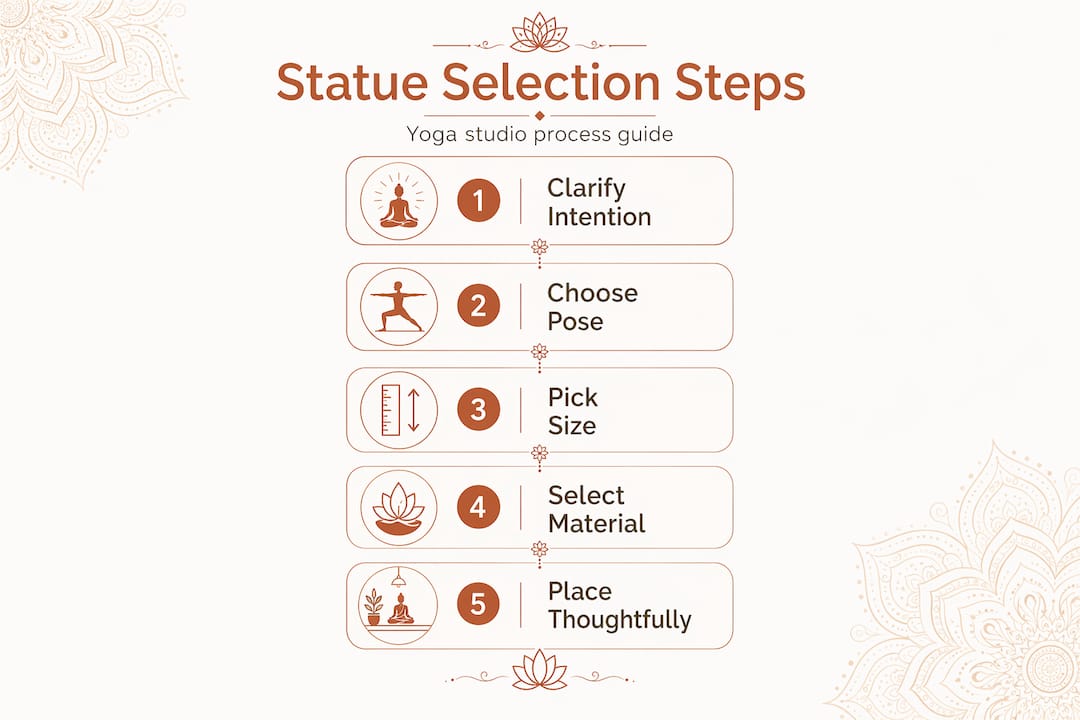
Intention also governs finish and pose. A studio focused on restorative yoga and nervous system regulation benefits from a seated, eyes-closed figure in muted earth tones. A more dynamic vinyasa space might use a standing or walking Buddha as a subtle counterpoint to stillness.
Size, pose, and mudra: matching the statue to the space
Scale is the most common mistake studio owners make. A statue that is too small disappears. One that is too large overwhelms the room and competes with the practice itself.
The practical size ranges that work in real studio environments are well established. Statue size guidance recommends 6 to 12 inches for side areas and meditation corners, and 2 to 3 feet for front room centerpieces that need to anchor the full space visually. A 10-inch figure on a side shelf creates a quiet focal point for individual practitioners. A 30-inch bronze at the front of a 1,200-square-foot studio holds the room.
Mudra selection
The pose and hand gesture, called the mudra, communicate specific qualities to the space. Here is a comparison of the most commonly used options for yoga studios:
| Mudra / Pose | Meaning | Best use in studio |
|---|---|---|
| Dhyana Mudra (hands in lap) | Meditation, inward focus, collectedness | Meditation rooms, restorative yoga, front altar |
| Abhaya Mudra (right hand raised) | Protection, fearlessness, reassurance | Entrance areas, reception, welcoming zones |
| Bhumisparsha Mudra (touching earth) | Groundedness, awakening, stability | Grounding-focused practices, Yin yoga spaces |
| Vitarka Mudra (teaching gesture) | Wisdom, transmission, guidance | Teacher training rooms, study areas |
The Dhyana Mudra is the most recognized meditation mudra for calming yoga and meditation spaces. It signals collectedness and inward focus, which is exactly what most studio environments want to reinforce.
Pro Tip: If you run multiple class formats in one space, choose a pose that reads as neutral and calming rather than one tied to a specific practice style. The Dhyana Mudra works across restorative, yin, and mindfulness-based formats without visual contradiction.
Placement and display: where the statue goes matters as much as which one you choose
A well-chosen statue placed poorly loses most of its impact. Placement is both a design decision and, for many traditions, a matter of respect.
Front placement as visual drishti
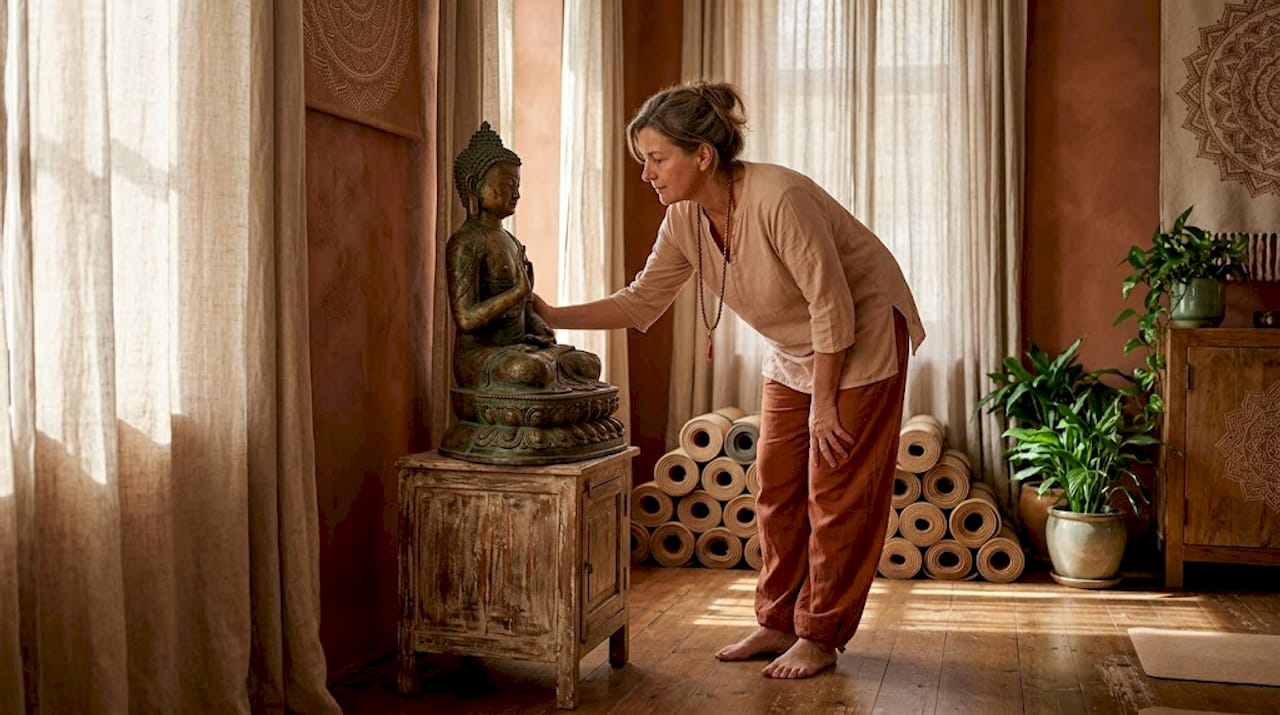
Front-of-studio placement functions as a drishti, a focal point for seated meditation, with the statue oriented toward the practice area rather than facing a wall. Students entering the room see it immediately. During seated practice, it gives the eye a natural resting point that supports concentration.
Elevation requirements
-
Place the statue on a dedicated plinth, altar table, or elevated shelf.
-
Keep the base of the statue at or above waist height for any standing adult.
-
Never place a Buddha statue directly on the floor. Thai cultural norms and general Buddhist practice both treat floor placement as disrespectful.
-
If using a low altar, raise it on a platform so the statue clears floor level by a meaningful margin.
Symmetry and supporting elements
Symmetry reinforces a sense of order and calm in the studio. When you position the statue centrally, flanking it with matching elements, whether candles, plants, or smaller objects, creates visual balance. Symmetry and balanced supporting elements prevent the statue from feeling isolated or decoratively random.
Additional placement considerations:
-
Face the statue toward the main practice area, not toward a storage room or secondary exit.
-
Avoid placing the statue directly beneath air conditioning vents, which creates a visual distraction and can damage certain materials.
-
Keep the area immediately around the statue clear. Clutter undermines the focal-point effect entirely.
-
Use directional lighting, such as a small uplight or warm-toned spotlight, to draw attention to the piece without harsh shadows.
Materials, finishes, and craftsmanship quality
Material choice affects durability, visual weight, and how the piece interacts with your studio’s lighting and color palette.
-
Bronze. Dense, durable, and carries genuine historical weight. Develops a natural patina over time. Works in virtually any studio environment. Higher cost but long-term value.
-
Stone (sandstone, granite, limestone). Substantial visual presence. Best for larger, permanent installations. Heavy to move and requires a stable surface.
-
Wood (teak, rosewood, carved hardwoods). Warm tonal quality. Works well in studios with natural material palettes. Requires climate-controlled environments to prevent cracking.
-
Resin or composite. Affordable and widely available. Suitable for decorative use. Does not carry the material authenticity of bronze or stone.
Finish selection is a design decision focused on optical effects and harmony with ambient light. White statues glow against dark, jewel-toned walls, while earthy tones suit warm palette studios with natural wood and linen textures. A dark bronze reads as grounded and serious. A gilt finish reads as ceremonial and traditional.
Quality evaluation is where many buyers go wrong. Signs of low-quality mass production include light weight relative to size, a tinny sound when tapped, peeling or inconsistent finishes, and incorrect iconographic proportions. A well-made bronze Buddha has heft. The face, hands, and robes follow established proportional conventions from the tradition it represents. When you pick it up, it feels like it was made to last centuries, not seasons.
Statistic callout: Evaluating craftsmanship by weight, sound, and finish quality is the most reliable method for identifying authentic pieces versus mass-produced replicas, regardless of price point.
Maintaining and integrating the statue into your studio
Once the statue is in place, the work is not finished. How you maintain it and integrate it with the broader studio environment determines whether it retains its impact over time.
Routine care depends on material:
-
Bronze and metal: Wipe with a dry or slightly damp cloth. Avoid chemical cleaners that strip patina.
-
Stone: Dust regularly. Seal porous stone annually if the studio environment is humid.
-
Wood: Keep away from direct sunlight and heating vents. Apply appropriate wood oil seasonally.
-
Resin: Dust and wipe clean. Avoid abrasive materials that scratch the finish.
Pro Tip: Introduce the statue to new students with a brief, non-religious explanation of its role in the space. Something as simple as “this piece serves as a focal point for meditation” removes ambiguity and builds a shared sense of respect without requiring any particular belief.
Beyond maintenance, the statue benefits from thoughtful integration with other studio elements. Plants positioned nearby add organic texture without competing for attention. Candles or incense placed symmetrically reinforce the altar quality of the display. Artwork on the surrounding walls should complement rather than crowd the statue’s visual field.
Avoid the most common integration mistake: treating the statue as a permanent fixture that never gets attention. Refresh the surrounding elements seasonally, keep the area clean, and make sure nothing accumulates around the base that was not intentionally placed there.
My perspective on what actually changes a studio’s energy
I’ve visited and consulted with dozens of yoga studios over the years, and the ones where the Buddha statue genuinely shifts the room’s energy share one quality: the owner chose it with a specific intention in mind, not just a general sense that it would look good.
What I’ve found is that the statue’s material and origin matter far more than most studio owners expect. A hand-cast bronze piece from Cambodia or Thailand carries a different presence than a resin copy of the same form. Students may not be able to articulate why, but they feel it. The weight, the finish, the slight irregularities of handwork all communicate authenticity at a level below conscious thought.
I’ve also seen studios make the mistake of choosing a statue that is too conceptually busy for the space. Multiple figures, elaborate bases, complex iconography. What actually works is simplicity. A single seated figure in Dhyana Mudra, well-proportioned, well-placed, and well-lit, does more for a studio’s atmosphere than three elaborate pieces competing for attention.
The cultural and spiritual context behind these objects is worth understanding before you buy. You do not need to be a Buddhist practitioner to use a Buddha statue respectfully in a yoga space. You do need to treat it as more than furniture.
— James, HDAsianArt.com
Find the right statue for your studio at Hdasianart
HDAsianArt specializes in exactly the kind of pieces that work in serious yoga and meditation spaces. The collection at HDAsianArt includes authentic bronze, stone, and wood Buddha statues sourced from Cambodia, Thailand, Indonesia, Sri Lanka, and Vietnam. Each piece is individually researched, photographed, and described by experts, so you know precisely what you are buying before it arrives. Sizes range from compact meditation corner figures to substantial studio centerpieces. Worldwide insured DHL shipping is standard. Browse the full collection to find a piece that fits your studio’s scale, palette, and practice focus.
FAQ
What size Buddha statue works best for a yoga studio?
Size depends on placement: 6 to 12 inches for side areas or meditation corners, and 2 to 3 feet for front room centerpieces that anchor the full studio space.
Which Buddha pose is most suitable for a meditation or yoga space?
The Dhyana Mudra, with hands resting in the lap, is the most recognized meditation pose for yoga studios. It symbolizes collectedness and inward focus, making it appropriate for nearly all practice formats.
Where should a Buddha statue be placed in a yoga studio?
Front placement facing the practice area is standard, elevated above waist height on a plinth or altar table, never on the floor.
How do I tell if a Buddha statue is good quality?
Check weight relative to size, tap the piece and listen for a solid rather than tinny sound, and examine the finish for consistency. Correct iconographic proportions in the face, hands, and robes are the clearest sign of quality craftsmanship.
Do I need to be Buddhist to use a Buddha statue in my yoga studio?
No. Buddha statues function as meditative focal points in yoga studios regardless of the owner’s or students’ religious background. Respectful placement, proper elevation, and mindful integration are what matter most.
