



Hindu Statues: A Complete Guide to Deities, Materials & Care
Hindu Statues: A Complete Guide to Deities, Materials & Care
When you bring a murti into your home, you're inviting a spiritual presence into your personal sanctuary. Hindu statues embody centuries of devotional practice, iconographic tradition, and sacred craftsmanship. At HD Asian Art, we understand that selecting the right hindu statues requires knowledge of their spiritual significance, material quality, and proper placement.
This guide covers everything from understanding murti iconography to maintaining your sacred pieces with reverence and care.
Table of Contents
Understanding Hindu Statues and Murti Iconography
A murti is far more than a statue; it represents the tangible form through which devotees connect with the divine. In Hindu philosophy, the murti serves as a focal point for meditation, prayer, and veneration, transforming abstract spiritual concepts into objects of worship.
The creation of a murti follows strict iconographic principles developed over thousands of years. Each deity has prescribed proportions, gestures, and symbolic elements. A skilled artisan follows established traditions that ensure the murti embodies the deity's essential characteristics, distinguishing authentic hindu statues from generic sculptures.
What Makes a Murti Sacred
The sacredness of a murti depends on material quality, artisan skill, and the intention behind its creation. Many practitioners believe that an unconsecrated murti, no matter how beautifully crafted, remains spiritually incomplete. The artisan's devotion during creation, the choice of auspicious materials, and the final blessing ritual all contribute to the murti's spiritual potency. This is why handcrafted pieces from dedicated artisans command both higher prices and deeper reverence than mass-produced alternatives.
The Role of Puja and Devotional Worship
Puja represents the formal ritual of worship and prayer performed before a murti. During puja, devotees offer flowers, incense, food, and prayers to the deity. The murti becomes the physical anchor for this devotional practice.
Daily puja practice creates a living relationship between the worshipper and the divine. Lighting incense, ringing bells, and chanting mantras in front of your murti activates its spiritual purpose. This is why placement and care matter deeply. A murti honored in a clean, dedicated space becomes a powerful spiritual tool.
Popular Hindu Deities and Their Symbolism
Hindu tradition encompasses hundreds of deities, each with distinct characteristics and spiritual significance. Understanding these major figures helps you select statues aligned with your spiritual needs.
Ganesha, Shiva, Vishnu, Lakshmi, and Hanuman
Ganesha, the elephant-headed deity, represents wisdom, prosperity, and the removal of obstacles. His trunk symbolizes adaptability and strength. Ganesha statues often appear at home entrances, serving as welcoming guardians.
Shiva, the cosmic dancer, embodies transformation, meditation, and the cycles of creation and destruction. Depicted in his Nataraja form dancing within a ring of fire, Shiva represents the eternal rhythm of the universe. His association with yoga and meditation makes him popular among spiritual practitioners.
Vishnu, the preserver, maintains cosmic order and dharma. Often shown reclining on a cosmic serpent or standing with four arms, Vishnu represents stability, protection, and divine grace.
Lakshmi, the goddess of wealth and abundance, embodies prosperity in all its forms. Depicted seated on a lotus flower with coins flowing from her hands, Lakshmi statues commonly appear in homes and businesses.
Hanuman, the devoted follower of Rama, represents courage, loyalty, and unwavering faith. His muscular form conveys strength, while his devotion exemplifies complete surrender to the divine.
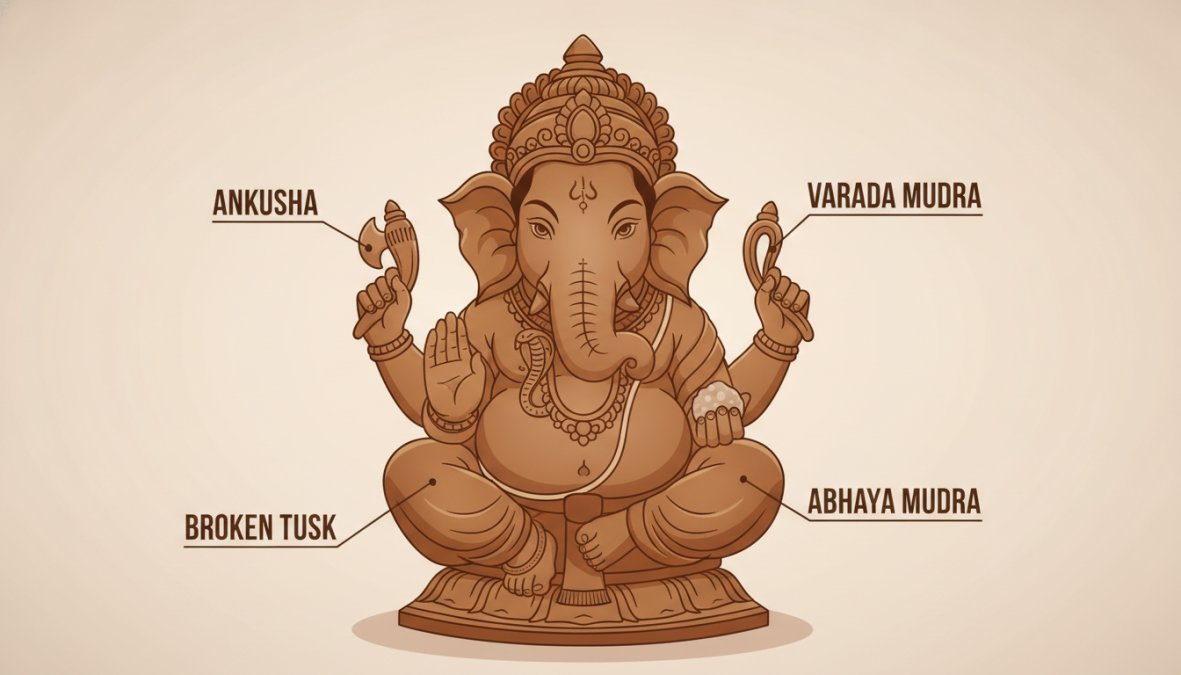
Mudras and Postures: Reading Sacred Gestures
Mudras are symbolic hand gestures that communicate spiritual meaning and invoke specific energies. The Abhaya mudra (gesture of protection) shows an open palm raised at chest height, signifying fearlessness and reassurance. The Varada mudra (gesture of blessing) shows the palm open and facing outward at waist level, bestowing blessings and fulfilling wishes.
The Dhyana mudra (meditation gesture) shows both hands resting in the lap, palms facing upward, symbolizing deep contemplation. The Gyan mudra (gesture of knowledge) joins the thumb and forefinger while other fingers extend, representing the union of individual soul with universal consciousness.
Understanding these gestures transforms how you experience your murti. When you see a statue's mudra, you're reading the deity's message directly.
Types of Hindu God Statues: Materials and Craftsmanship
The material of your murti significantly affects its durability, aesthetic qualities, and spiritual resonance.
Bronze, Stone, Wood, and Brass Idols
Bronze represents the gold standard for serious collectors and devoted practitioners. Bronze statues can last centuries, developing a beautiful patina over time. The material allows for fine detail work and intricate mudras. However, bronze pieces command premium prices due to material cost and specialized casting techniques.
Stone, particularly granite and marble, offers permanence and gravitas. Stone statues feel grounded and stable, ideal for outdoor altars or meditation gardens. Stone carving requires tremendous skill, as mistakes cannot be corrected. Antique stone pieces often carry the patina of centuries, adding spiritual depth.
Wood provides warmth and organic beauty. Wooden statues feel alive in ways other materials sometimes don't. However, wood requires careful maintenance in humid climates and can be damaged by insects or moisture.
Brass offers an affordable middle ground between budget options and premium materials. Brass statues develop a warm golden patina and conduct energy similarly to bronze, while remaining more accessible than bronze.
Handcrafted vs. Mass-Produced: Quality and Authenticity
Handcrafted statues are created by individual artisans who may spend weeks or months on a single piece. Each statue is unique, with subtle variations reflecting the artisan's individual skill and interpretation. The artisan's devotion during creation infuses the piece with intentional energy.
Mass-produced statues are manufactured using molds and machinery. While some achieve acceptable quality, they typically lack the spiritual intentionality of handcrafted work. The emotional connection between maker and object, central to spiritual practice, disappears entirely.
| Characteristic | Handcrafted | Mass-Produced |
|---|---|---|
| Production time | Weeks to months per piece | Hours per piece |
| Detail quality | Individually refined | Standardized from molds |
| Price range | $300-5,000+ | $30-300 |
| Spiritual intentionality | High (artisan devotion) | Low to absent |
| Long-term durability | Excellent (quality materials) | Variable (often cheap alloys) |
Vastu Shastra Tips for God Idols and Murti Placement Rules
Vastu Shastra, the ancient Indian system of spatial harmony, provides specific guidance for murti placement. While not universally binding, many practitioners find that following vastu guidelines enhances the spiritual efficacy of their altar spaces.
Proper Altar Direction and Home Placement
The northeastern direction holds special significance in vastu for spiritual and devotional spaces. If possible, establish your altar in the northeast corner of your home or meditation room. If your layout doesn't permit this, the north or east directions serve as acceptable alternatives.
Avoid placing murti in bathrooms, bedrooms, or kitchens. The altar should occupy a clean, dedicated space, not a shelf where secular items also rest. Elevate your murti slightly above ground level. Ensure your murti faces into the room rather than toward a wall. Natural light enhances the altar space, though direct sunlight can damage certain materials over time.
How to Clean Brass Idols and Maintain Your Sacred Statues
Regular maintenance preserves both the physical integrity and spiritual vitality of your hindu statues. Cleaning methods vary depending on material and oxidation level.
Care Routines for Different Materials
For brass idols, mix equal parts white vinegar and water, then dip a soft cloth in the solution. Gently wipe the statue, working in the direction of the grain. For stubborn tarnish, make a paste of baking soda and lemon juice, apply carefully, and let sit for 15 minutes before gentle rubbing. Rinse thoroughly with distilled water and dry completely. Never use abrasive scrubbers or harsh chemicals.
For bronze pieces, the patina that develops over time is often considered beautiful and spiritually significant. Use only distilled water and very soft cloths. Avoid chemical cleaners, as bronze can react unpredictably.
For stone statues, dust regularly with a soft brush. For deeper cleaning, use distilled water and a soft cloth. Stone is porous and can absorb liquids, so avoid soaking or excessive water exposure.
For wooden pieces, dust with a soft cloth regularly. Avoid water exposure; wood swells and warps when wet. In very dry climates, apply a thin coat of linseed oil every few years to prevent cracking.
Preserving Antique and Contemporary Pieces
Antique hindu statues require special consideration. Avoid aggressive restoration attempts. The patina and accumulated spiritual energy of centuries create irreplaceable character. Light dusting is appropriate; aggressive cleaning can destroy historical integrity.
Contemporary pieces benefit from regular, gentle maintenance. Establish a monthly cleaning schedule for pieces in active altar use, quarterly for display pieces. Store pieces you're not actively displaying in clean, dry spaces protected from dust. Wrap them in soft cloth if stacking is necessary. Avoid plastic bags, which trap moisture.
Ethical Sourcing and Consecration of Hindu Statues
The ethics of how your hindu statues are created and sourced matter deeply. Purchasing from ethical artisans supports traditional craftsmanship and ensures fair compensation for skilled work.
Fair Trade Artisans and Authentic Sourcing
Fair trade sourcing ensures that artisans receive appropriate payment for their skill and labor. Authentic sourcing means purchasing from dealers with direct relationships to artisan communities. These relationships ensure that pieces are genuinely handcrafted, not mass-produced and misrepresented.
Ask your dealer about the origin of each piece. Who created it? In what region? Using what materials and techniques? A reputable seller can answer these questions with specificity.
Prana Pratishtha: The Consecration Ritual
Prana Pratishtha represents the ritual that breathes life force (prana) into a murti, transforming it from a carved object into a sacred vessel. This ceremony, traditionally performed by a priest or qualified spiritual practitioner, invokes the deity's presence within the statue.
The consecration ritual typically involves chanting specific mantras, offering flowers and sacred substances, and performing symbolic gestures. Many believe that a murti without consecration remains spiritually incomplete. However, the power of your intention and devotion also matters. A murti approached with sincere reverence and regular puja practice becomes sacred through use, even without formal consecration.
If you wish to have a murti formally consecrated, consult with a Hindu priest or spiritual teacher familiar with your particular tradition.
Budget vs. Investment: Choosing the Right Hindu Statues for Your Home
Selecting hindu statues involves balancing your budget with quality considerations.
Quality Indicators and Long-Term Value
A quality murti demonstrates proportions that follow traditional iconographic standards, balanced facial features, appropriately sized hands, and harmonious overall composition. Details are refined, mudras are precise, and the finish is smooth and consistent.
Material quality matters profoundly for long-term value. Authentic bronze contains specific alloy ratios that ensure durability and patina development. Cheap brass or zinc alloys tarnish unpredictably and deteriorate quickly.
The artisan's reputation affects value. Pieces created by known master craftspeople command higher prices because their quality is documented and their work is sought by serious collectors. A quality murti retains or appreciates in value over time. Handcrafted pieces by skilled artisans become more valuable as they age, especially if well-maintained.
Consider your intended use. If you're establishing an active altar for daily puja, a mid-range handcrafted piece serves better than either a cheap mass-produced statue or an expensive collector's piece you're afraid to use.
Selecting the right hindu statues transforms your home into a sacred space and deepens your spiritual practice. The choice between materials, understanding of iconographic symbolism, and commitment to ethical sourcing all matter. HD Asian Art offers carefully curated handcrafted pieces from skilled artisans, featuring authentic bronze, stone, and wood statues that embody traditional iconographic principles.
Frequently Asked Questions
What is the difference between a murti and a decorative Hindu statue?
A murti is a sacred representation of a deity intended for devotional worship and veneration through puja rituals, often consecrated through Prana Pratishtha ceremonies. A decorative statue lacks this spiritual intention and ritual significance. Murtis are treated as living presences in Hindu practice, while decorative pieces serve aesthetic purposes only. The distinction matters for placement, care, and respectful handling in your home.
How should you place Hindu statues in your home according to Vastu Shastra?
Hindu statues are traditionally placed in the northeast or north-facing direction of your home altar, elevated on a clean pedestal. Avoid placing murtis in bedrooms, bathrooms, or below eye level. The altar should face east or north for optimal spiritual energy. Keep statues away from clutter and ensure the space remains clean and dedicated. Consult Vastu principles specific to your deity for precise murti placement rules in your home sanctuary.
What materials are best for long-lasting Hindu statues?
Bronze and stone are considered the most durable materials for Hindu statues, often lasting centuries with proper care. Bronze idols develop a natural patina and improve with age, while stone carvings maintain their detail through generations. Brass offers affordability with reasonable longevity. Handcrafted pieces from skilled artisans typically outlast mass-produced alternatives. Choose materials based on your climate, budget, and whether you prefer antique or contemporary aesthetics for your collection.
How do you properly clean brass idols and maintain different types of Hindu statues?
For brass idols, use a soft cloth with mild soap and warm water, then dry thoroughly to prevent tarnishing. Polish occasionally with brass cleaner to restore shine. Stone statues require gentle dusting and occasional mild cleaning with soft brushes. Bronze pieces benefit from minimal cleaning to preserve their patina. Avoid harsh chemicals or abrasive materials. Store statues in dry environments away from direct sunlight. Regular gentle maintenance preserves the spiritual and aesthetic integrity of your murtis.
