



Which Ganesha Idol Material Is Right for Your Home?
Which Ganesha Idol Material Is Right for Your Home?
Quick Summary
Choose your ganesha idol material by matching it to where the idol will sit and how you will use it. Clay suits festival use and immersion, stone and marble anchor a permanent altar, and brass is our pick for daily worship because it balances durability, tradition, and reasonable upkeep.
- Measure the width, depth, and height of the space before comparing any materials.
- Clay chips and cracks easily, so plan for it as a seasonal piece rather than a permanent one.
- Stone is very heavy, and moving a set piece is a two-person job.
- Brass holds a presentable finish for a quarter or more between polishes.
- Many households keep one permanent brass murti and a smaller clay one for the festival.
Table of Contents
- Start With the Space, Not the Statue
- Ganesha Idol Materials: A Side-by-Side Comparison
- Why a Brass Ganesha Idol Suits Daily Worship
- Choosing a Ganesha Idol for Home Altar Placement
- What Each Material Symbolizes
- Indoor Worship vs. Immersion: Matching Material to Use
- Care, Cleaning, and Long-Term Maintenance
- Authenticity, Workmanship, and Buying Online
- Frequently Asked Questions
Start With the Space, Not the Statue
Most buyers start with the figure and then discover it doesn't fit anywhere. Reverse that order. Before you compare Ganesha idol materials, measure the shelf, niche, or table where the idol will actually sit. For tight spaces, see this guide to Ganesha statue size for small spaces.
A home altar in a small apartment has different demands than a mandir room with a dedicated cabinet. If your interiors are pared back, these rules for balancing Ganesha statues in minimalist rooms will help. Height clearance matters. So does the surface underneath.
Here is a sequence to consider:
- Measure the width, depth, and height of the space.
- Note what the surface is made of and how much weight it can hold.
- Decide whether the idol stays in one place or moves for festivals.
- Only then compare materials.
Ganesha Idol Materials: A Side-by-Side Comparison
| Material | Best For | Relative Weight | Durability | Upkeep Cadence | Immersion-Safe |
|---|---|---|---|---|---|
| Clay and earth | Festival use, eco-friendly immersion | Light | Fragile | Dust only; replace seasonally | Yes |
| Stone and marble | Permanent altar, heavy anchor piece | Very heavy | Very high | Dust weekly; reseal stone every 1-2 years | No |
| Wood | Warm, lightweight altars | Light to moderate | Moderate | Dust weekly; oil 1-2 times a year | No |
| Natural cloth and papier-mache | Lightweight, temporary setups | Very light | Low | Dust; dry storage between festivals | Some types |
| Brass | Daily worship, heirloom pieces | Moderate to heavy (solid cast) | Very high | Wipe weekly; polish 2-4 times a year | No |
| Copper and silver | Smaller altar pieces, gifting | Moderate | High | Polish monthly; silver tarnishes fastest | No |
Clay and Earth
The trade-off is fragility. Clay chips, cracks, and doesn't survive a knock off the shelf. Keep it low, keep it stable, and plan for it to be a seasonal piece rather than a permanent one. If you want a clay figure to last more than one festival, choose an unpainted or naturally finished piece, heavy enamel and synthetic paints are what make many commercial clay idols non-biodegradable and unsuitable for immersion.
Stone and Marble
The catch is weight and placement. You need a surface that can hold it, and once it's set, moving it is a two-person job. Stone also doesn't belong near water or direct sun over long periods. Many softer stones are porous and will stain from oil, vermilion, and water rings, so a sealed stone or a marble piece with a polished finish is easier to live with than a raw, matte carving.
Wood and Natural Cloth
Wood needs a dry spot. Humidity warps it, and direct sun fades the finish. Cloth and papier-mache need dusting and careful storage between festivals. Neither material is a good candidate for daily handling, the finish wears at the contact points first.
Brass, Copper, and Silver
The practical difference between the three is maintenance cadence. Silver can need polishing monthly; brass often holds a presentable finish for a quarter or more between polishes. If you want a low-fuss metal piece, brass wins on upkeep; if you want the brightest finish, silver demands the most attention.
Why a Brass Ganesha Idol Suits Daily Worship
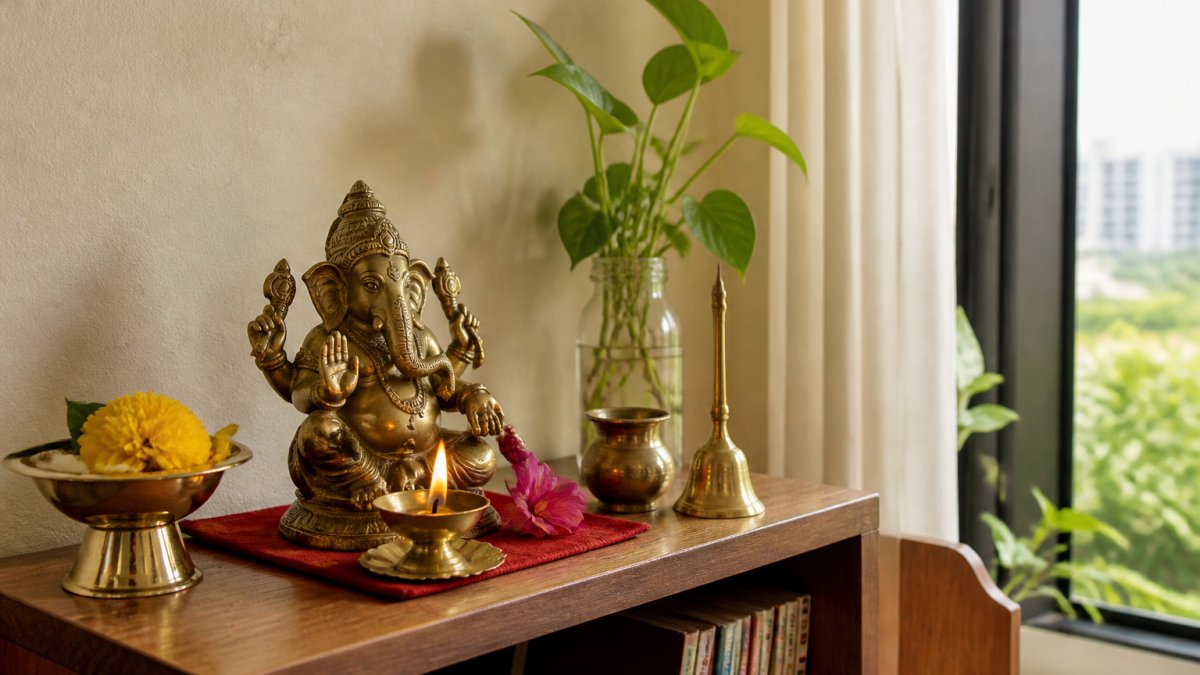
For a home altar that sees daily puja, brass is our pick. It balances durability, tradition, and reasonable upkeep better than any other metal.
Choosing a Ganesha Idol for Home Altar Placement
Once you've settled placement, the styling questions follow. Our guides on how to position a Ganesh idol for good luck at home and how to style a minimalist pooja corner cover the arrangement details. If you're in a tight apartment, the guide to arranging idols in a small apartment handles the space problem directly.
What Each Material Symbolizes
Panchaloha, the traditional five-metal alloy used in South Indian temple sculpture, carries strong associations with ritual balance. It's worth knowing about even if you never buy a piece, because it explains why so many temple bronzes look and feel different from commercial brass.
Indoor Worship vs. Immersion: Matching Material to Use
For readers thinking about environmental impact, clay remains the cleanest option for visarjan. Many households now keep one permanent brass murti for daily worship and a smaller clay one for the festival.
Care, Cleaning, and Long-Term Maintenance
Every material needs some upkeep. None of it is difficult, but skipping it shows within a season.
Authenticity, Workmanship, and Buying Online
Workmanship separates a piece you keep for decades from one you replace in a year. The problem is that most listings show a single flattering front photo, so you have to know what to ask for and what to look at when the piece arrives.
Solid Metal vs. Plated or Hollow Castings
When the piece arrives, turn it over. A clean, even underside with visible casting seams that have been filed smooth usually signals a better casting. A base that looks painted over, or that shows a different color at a chip or scratch, is a warning sign. Tap it lightly with a fingernail: solid metal gives a dull, consistent ring; a hollow shell sounds thinner and higher.
Natural Stone vs. Composite
Composite stone, crushed stone mixed with resin, is common in larger pieces because it's lighter and cheaper to ship. It isn't necessarily bad, but it should be disclosed. Look for a uniform, plasticky sheen, mold seams in recessed areas, and a weight that feels light for the size. Natural stone varies in color and veining from piece to piece; a listing that shows several units with identical veining is likely selling a composite or a cast reproduction.
Hand-Finished vs. Mass-Produced
Hand-finished pieces show small asymmetries: the trunk curve varies slightly, the fingers of the modak hand are individually defined, and the base may carry tool marks. Mass-produced castings tend to have softer, rounded detail and identical faces across units. Neither is automatically wrong, but the price and the description should match the method.
What to Ask Before You Buy Online
At HD Asian Art, our collection of Buddhist and Hindu statues is handpicked, with antique and contemporary pieces alongside Khmer and Southeast Asian sculpture. We ship free.
Frequently Asked Questions
What materials are commonly used to make Ganesha idols?
Materials used for Ganesha idols include brass, copper, silver, and mixed alloys such as Panchaloha; clay and earth; stone and marble; wood; and natural cloth or papier-mache. The right Ganesha idol material depends on where the piece will sit and how often you will touch it.
Is a brass or stone Ganesha idol better for a home altar?
Brass and stone or marble are among the materials to consider for a home altar. The choice depends on your preferences and the space where the idol will sit.
Does the material affect how a Ganesha idol looks?
Different materials can give Ganesha idols different appearances. Consider the look you prefer when choosing a piece.
What should I check before buying a Ganesha idol online?
Consider the space where you plan to place the idol and review the information available about the piece before buying.

