



Caring for Buddha Statues: Display & Preservation
Caring for Buddha Statues: Display & Preservation
A hairline crack along the grain of a wooden Burmese Buddha, a patch of lifted gold leaf on a Cambodian Bodhisattva, a bronze patina dissolved by the wrong cleaning cloth - these are the kinds of damage that happen quietly, often during a well-intentioned cleaning session.
Caring for Buddha statues and other Asian sculptures is less about aggressive maintenance and more about consistent, restrained attention. The collections at HD Asian Art span materials from gilded lacquerware to stone, bronze, and carved wood, and each one demands a different approach. This guide gives you the specific knowledge to preserve them properly, for decades.
Table of Contents
Quick Takeaways
|
Key Insight |
Explanation |
|---|---|
|
Identify the material before touching anything |
Wood, bronze, stone, lacquer, gilded surfaces, and resin each require different cleaning methods. Using the wrong one causes irreversible damage. |
|
Dry cleaning is almost always the right first step |
A soft brush or microfiber cloth removes the majority of surface dust without introducing moisture risk. Most statues need nothing more. |
|
Patina is not the same as dirt |
The darkened surface of aged bronze or wood reflects decades of incense, handling, and natural oxidation. Polishing it away destroys both aesthetic and collector value. |
|
Water is a risk on wood and gilded surfaces |
Even a damp cloth can swell wood grain, open micro-cracks, or loosen sizing layers under gold leaf. Reserve water-based cleaning for stone and sealed resin only. |
|
Light and humidity are the biggest long-term threats |
Direct sunlight fades pigments and warps wood. Humidity fluctuations cause expansion and contraction that crack and split over time. |
|
Handle from the base, never by protruding details |
Outstretched hands, lotus stems, and halos are structurally weak attachment points. Gripping them causes breaks that are difficult to restore invisibly. |
|
Consult a conservator for antique or flaking pieces |
If a statue is actively flaking, gilding is lifting, or the piece has significant age and value, professional conservation is the only responsible choice. |
Understanding Your Sculpture's Material
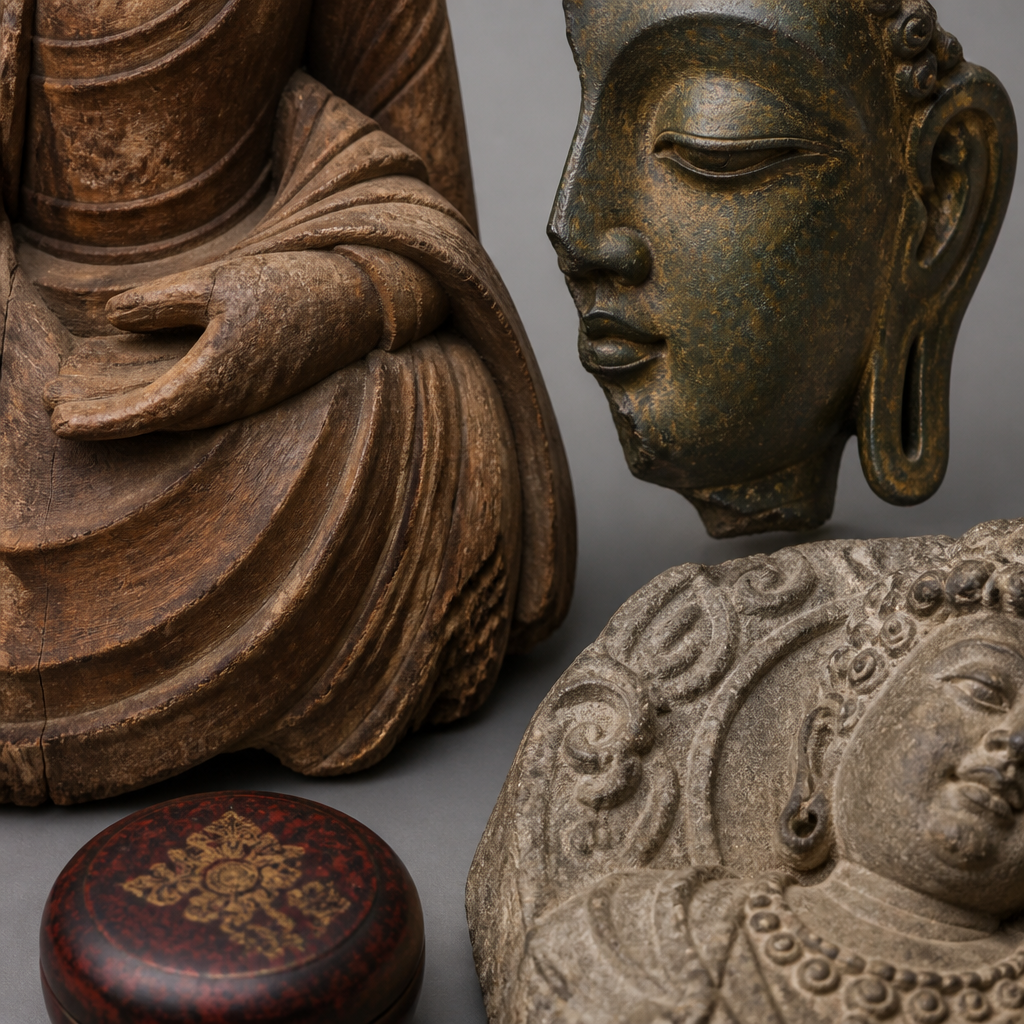
Before you pick up a cloth, you need to know what you are actually touching. This sounds obvious, but it is the step most collectors skip, and it is where the majority of cleaning damage begins. A Burmese gilded lacquerware figure, a Thai cast bronze Buddha, a Chinese carved wood Guanyin, and an Indian stone Ganesh each require a completely different protocol. Treating them identically is how collections get damaged.
The main material categories you will encounter in a collection sourced across Burma, Cambodia, China, India, Indonesia, Japan, Sri Lanka, and Thailand are: carved wood (often painted or gilded), cast or hammered metal (bronze, brass, copper), stone (granite, marble, sandstone, schist), lacquerware (layered lacquer over a core, sometimes with inlay or gilding), and resin (modern reproductions and some contemporary pieces). Each has a different relationship with moisture, heat, light, and mechanical abrasion.
Wood: The Most Vulnerable Common Material
Carved wooden statues, particularly those from Burma and Thailand, are frequently painted, lacquered, or gilded. The wood itself is sensitive to moisture and temperature change, and the surface coatings are often far more fragile than they appear. Direct sunlight causes warping and fading. Humidity fluctuations open and close the grain, eventually cracking both the wood and any coating on top.
Metal: Patina Is an Asset, Not a Problem
Bronze and brass statues develop a natural patina over time. This surface change, whether green, brown, or black, reflects genuine age and adds to both the object's character and its market value. The instinct to polish metal back to brightness is understandable but usually wrong for any piece with meaningful age. Clean gently, preserve the patina.
Stone: Sturdy but Porous
Stone figures from India, Cambodia, or Sri Lanka are structurally robust, but sandstone and schist are porous and can absorb cleaning chemicals. Even granite and marble are susceptible to chemical etching from acid-based cleaners. Stone tolerates moisture better than wood but still requires caution with anything beyond water and mild soap.

How to Clean a Buddhist Statue by Material
The question of how to clean a Buddhist statue has one universal starting point: start dry, go slow, and stop before you think you need to. The surface dirt that actually matters is almost always loose dust, and loose dust responds to a soft brush or microfiber cloth without any liquid involved. Liquid cleaning, when it is genuinely necessary, is always a secondary step applied with restraint.
Respectful cleaning means prioritizing preservation over brightness. A statue's darkened surface often reflects age, incense, and handling over time. That change is not automatically "dirt"; it can be part of the object's history.
Cleaning Wooden and Lacquered Statues
Use a soft natural-bristle brush, the type sold for watercolor painting or fine detail work, to lift dust from carved crevices. Follow with a dry microfiber cloth on smooth surfaces. Avoid water entirely on raw or unfinished wood. Avoid water on lacquered or gilded surfaces as well: even a lightly damp cloth can introduce enough moisture to lift gilding or cause lacquer to blister. Alcohol, solvents, and household cleaning sprays will dissolve lacquer on contact.
Pro tip: For gilded Burmese lacquerware or gilded wood statues, a clean, dry, very soft makeup brush (not previously used with any product) is one of the safest tools available. Work with the brush angled to sweep dust away rather than pressing it into the surface.
Cleaning Bronze and Brass Statues
For routine maintenance, a dry microfiber cloth is sufficient. If the surface has genuine grime that dry brushing will not shift, a cloth dampened with plain warm water, thoroughly wrung out, can be used on ungilded metal surfaces, followed immediately by drying with a clean dry cloth. Avoid abrasive materials that scratch. Avoid polishing compounds unless you are working with a modern piece where patina preservation is not a concern. For antique bronzes, leave the patina entirely alone.
Cleaning Stone Statues
Stone handles moisture better than most other materials in a typical collection. Dust with a soft brush first. For stubborn surface dirt, a soft cloth dampened with a solution of a few drops of mild dish soap in warm water works well. Wring the cloth thoroughly so it is damp, not wet. Wipe gently, then follow with a clean damp cloth to remove soap residue, and dry with a soft cloth. Never use bleach, acid-based cleaners, or anything abrasive on stone surfaces.
Cleaning Resin Statues
Resin is the most forgiving material to clean. A soft cloth or sponge with mild soapy water handles most cleaning tasks. Rinse with a clean damp cloth and dry thoroughly. The main caution with resin is prolonged sunlight exposure, which causes fading, rather than the cleaning process itself.
Pro tip: Low-suction vacuuming through a fine mesh screen held just above the surface is a technique used in professional object conservation for removing loose dust from textured or fragile surfaces. It is particularly useful for complex lacquerware pieces with inlay or raised decoration.
Display, Placement, and Environmental Control
Where and how you display Asian sculptures determines more about their long-term condition than any cleaning routine you adopt. Environmental control is the most powerful preservation tool available to a collector, and it costs very little beyond attention and intention.
The two primary enemies of any organic material, including wood, lacquer, and painted surfaces, are direct sunlight and humidity fluctuation. Ultraviolet light degrades pigments, bleaches gilding, and dries out wood. A statue positioned in a sunny window will show visible fading within a few years. This applies equally to wooden Thai Buddhas, Japanese painted carvings, and even certain stone pieces where surface pigments remain.
Humidity and Temperature Stability
Rapid changes in relative humidity cause wood to expand and contract. Over time this mechanical stress opens cracks along the grain, separates joints, and eventually causes structural failure. The same cycling effect lifts lacquer layers and causes gold leaf to flake. A stable indoor environment, not necessarily climate-controlled but away from heating vents, exterior walls, and open windows, is the practical goal for most collectors.
Appropriate Positioning and Supports
Statues should be displayed on stable, level surfaces with enough clearance that they cannot be knocked by passing traffic. Felt pads or purpose-made display bases protect the underside of sculptures and prevent micro-scratching on fine furniture surfaces. For tall or top-heavy pieces, particularly standing figures, consider museum-grade earthquake putty or a custom base with a recessed socket for security.
Avoid displaying sculptures directly above functioning fireplaces, radiators, or air conditioning vents. Temperature and moisture extremes from these sources accelerate deterioration faster than almost any other indoor factor.
Lighting for Display Without Damage
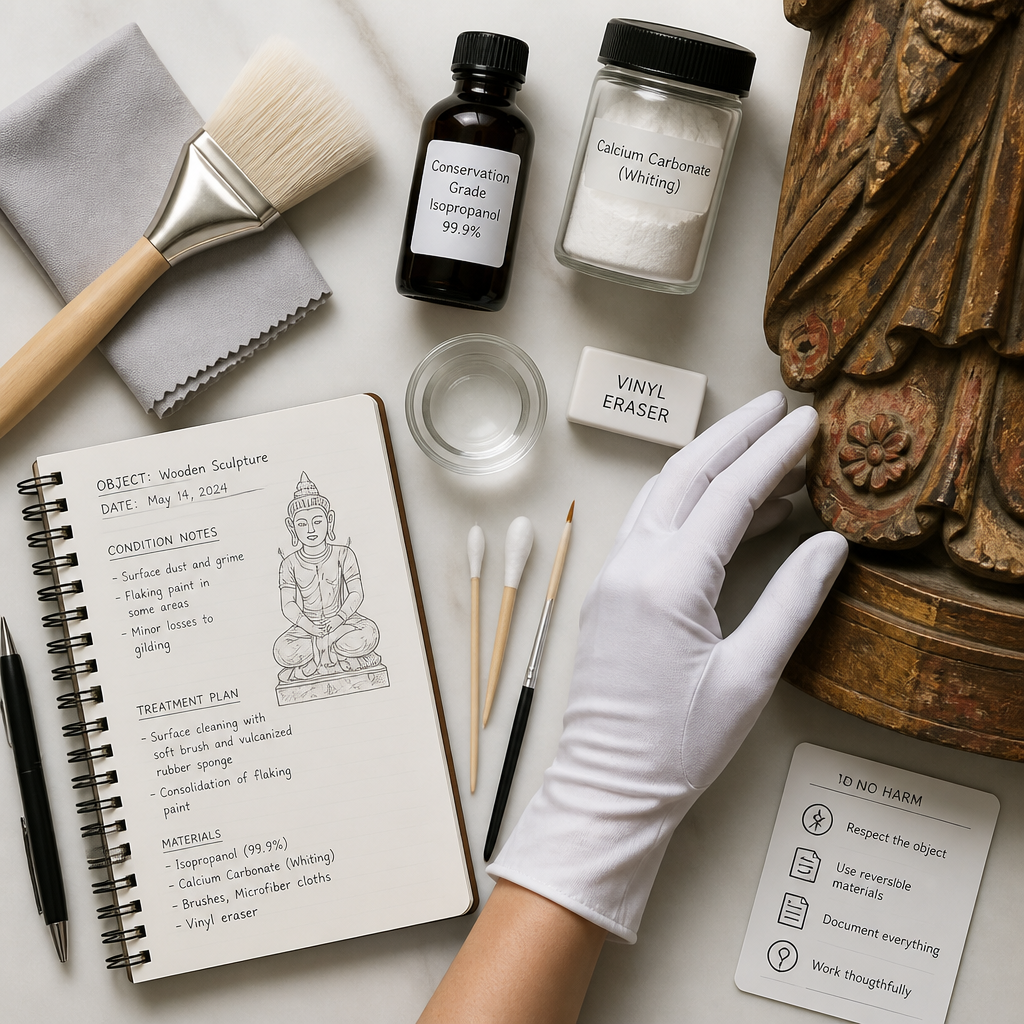
LED lighting with low ultraviolet output is the correct choice for illuminating a sculpture collection. Halogen and incandescent bulbs produce heat and UV radiation that damage organic materials over time. Position lights so they are not close enough to create localized heat on the sculpture's surface. Indirect or ambient lighting not only protects the piece but often produces a more flattering result aesthetically.
Asian Sculpture Preservation: Long-Term Habits
Asian sculpture preservation is fundamentally a discipline of consistent small actions rather than occasional intensive interventions. The collector who dusts lightly every two to three weeks and never exposes their pieces to direct sun will have better outcomes than someone who ignores their collection for months and then attempts a thorough cleaning session.
Handling Protocols That Prevent Damage
Always handle sculptures from the most structurally sound point, which is almost always the base or the main body. Extended hands, lotus flower stems, thin crowns, halos, and weapon attributes on Hindu deity statues are points of visual and symbolic importance but structural weakness. They are almost always the first things to break, and breaks in complex carved detail are extremely difficult to restore invisibly.
Wear clean cotton gloves when handling metal or stone pieces. Skin oils accelerate oxidation on bronze and brass, and fingerprints on stone are difficult to remove without moisture. For lacquerware and gilded wood, bare clean dry hands are actually preferable to gloves, since gloves reduce tactile sensitivity and increase the risk of dropping or gripping incorrectly.
Storage When Not on Display
If a sculpture needs to be stored, wrap it in acid-free tissue paper rather than newspaper (newsprint acids transfer to porous surfaces over time) and place it in a padded, rigid container. Do not store sculptures in exterior sheds, attics with temperature extremes, or basements prone to damp. Climate-stable indoor storage, ideally in a cupboard away from exterior walls, is the correct environment.
When to Consult a Professional Conservator
There are clear situations where attempting home care is the wrong decision. If a statue is actively losing material, with flaking paint, lifting gold leaf, or crumbling stone, any further cleaning risks accelerating the loss. If the piece is antique, signed, or represents significant financial or emotional value, a professional conservator with experience in Asian religious art is the appropriate resource. A conservator will stabilize actively flaking surfaces using consolidants appropriate to the specific material, something no home cleaning method can address.
Cleaning Method Comparison
There is no single correct approach to cleaning Asian sculptures because the right method depends on material, surface condition, and the age and value of the piece. The table below compares three practical approaches across the main criteria a collector needs to consider.
|
Cleaning Method |
Best Suited For |
Key Risks and Limitations |
|---|---|---|
|
Dry brushing and microfiber (soft natural-bristle brush, dry microfiber cloth) |
All materials for routine dust removal. The correct first step for every statue regardless of material. |
Does not address ingrained grime or sticky residue. Vigorous rubbing on gold leaf or lacquer causes abrasion even with soft tools. |
|
Damp cloth with mild soap solution (a few drops of mild dish soap in warm water, cloth wrung thoroughly) |
Stone statues, sealed resin, and ungilded metal where dry methods are insufficient. |
Should never be used on wood, lacquer, gilded surfaces, or painted decoration. Risk of moisture damage if cloth is too wet or drying is incomplete. |
|
Professional conservation treatment (by a trained conservator using appropriate consolidants, solvents, and techniques) |
Antique and high-value pieces, actively flaking surfaces, gilding in poor condition, any piece where home methods carry unacceptable risk. |
Higher cost and requires finding a conservator with relevant Asian art experience. Not practical for routine maintenance. |
Frequently Asked Questions
Can I use furniture polish or wood oil on a wooden Buddha statue?
No. Commercial furniture polishes, oils, and waxes are formulated for sealed modern wood furniture and are not appropriate for carved religious sculptures, which often have paint, lacquer, or gilding on the surface. Oils can penetrate into unfinished wood and alter its colour permanently, and they can soften or dissolve sizing layers under gilding. The safest approach for carved wood is dry brushing only, with no product applied to the surface.
My bronze Buddha has turned green in places. Should I clean it off?
It depends on the nature of the surface change. A stable, even green or brown patina on an aged bronze is part of the piece's character and value - do not attempt to remove it. However, if you see a powdery, bright green substance that looks actively unstable or is spreading, this can indicate a corrosion process sometimes called "bronze disease," and the piece should be examined by a conservator rather than treated at home.
Is it disrespectful to clean a Buddha statue?
Cleaning is itself considered an act of respect in many Buddhist traditions, provided it is done with care and mindfulness. The concern is not whether to clean but how. Approaching the task with attention, using gentle methods, and prioritising the preservation of the object's original craftsmanship are all aligned with how these objects have traditionally been maintained in temples and homes across Asia. What is considered disrespectful is careless handling or damage through inappropriate methods.
How often should I dust my Asian sculpture collection?
For most home environments, a light dusting every two to three weeks is sufficient for pieces on open display. Statues displayed in glass cabinets accumulate dust more slowly and may need attention only monthly. The goal is to prevent dust from building up into a layer that bonds to the surface, which makes removal harder and increases the risk of abrasion during cleaning. Frequent, very light dusting is always better than infrequent heavy cleaning.
Can I display a stone or bronze Buddha statue outdoors?
Some stone and bronze pieces are suitable for sheltered outdoor display, but exposure to rain, frost, and sustained UV light accelerates deterioration significantly. Porous stone absorbs water, which then expands during freezing and causes cracking. Bronze develops a more aggressive outdoor patina and can corrode faster in polluted urban environments. Pieces purchased from a specialist collection at the quality level of HD Asian Art are best kept indoors where environmental conditions can be managed. If outdoor placement is desired, choose a fully sheltered position and bring pieces indoors during winter.
What is the best way to handle a statue with fine carved details, such as a multi-armed Hindu deity figure?
Always lift and support the main body or base of the figure, never the extended arms, weapons, or attributes. Have a clear, padded surface ready to place the piece on before you move it, and move slowly. If the piece is large, use two hands with one supporting the base and one steadying the body. Avoid carrying any sculpture with fragile protruding details across uneven surfaces or through doorways without clearing the path first. A moment of preparation before handling prevents the kind of damage that cannot be undone.
If you have personal experience caring for Buddhist statues, Hindu deity figures, or Asian lacquerware, share what has worked for you - your approach may help other collectors make better decisions for their own pieces.
