



Bronze vs. Stone: Buying Asian Sculptures With Confidence
Bronze vs. Stone: Buying Asian Sculptures With Confidence
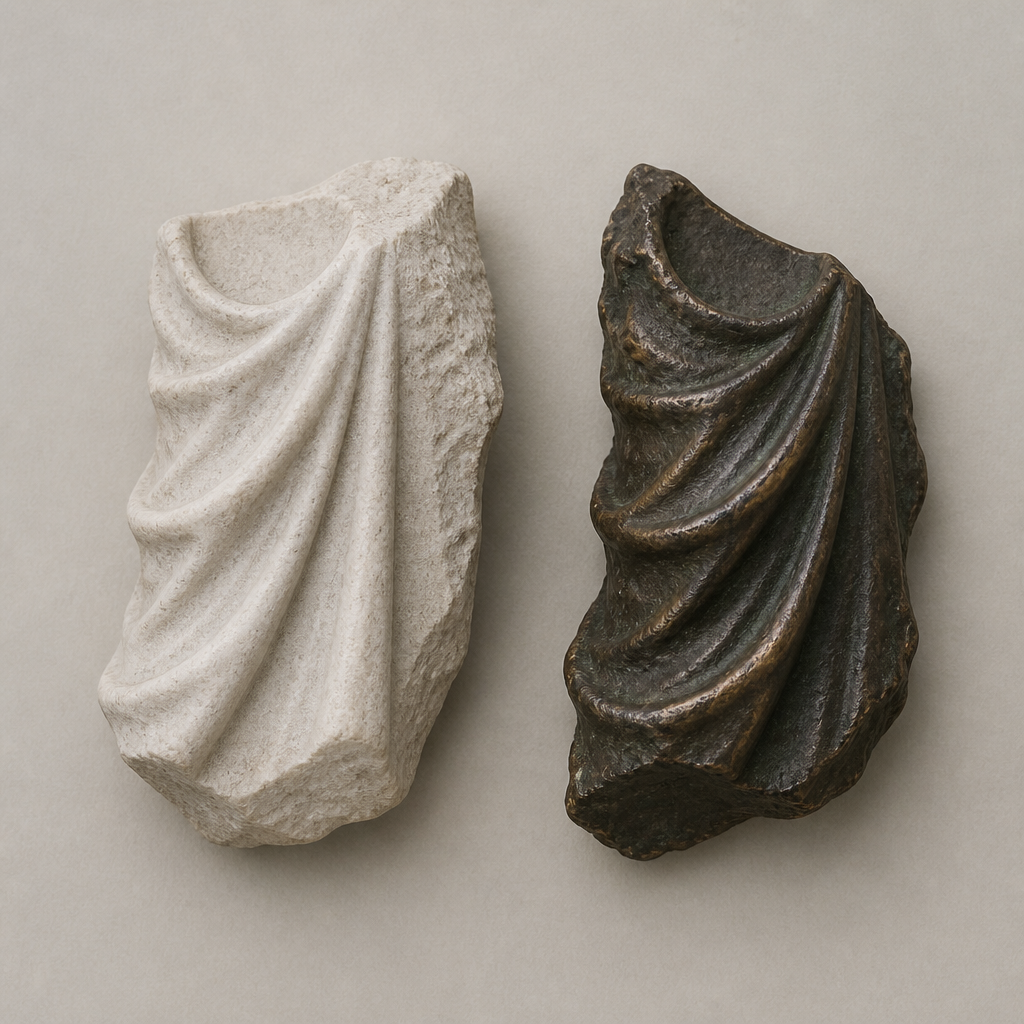
Choosing between a bronze Buddha statue and a stone Buddhist sculpture is one of the first real decisions collectors face, and it trips up even experienced buyers. The materials behave differently across centuries, carry different spiritual associations, and hold value in ways that are not interchangeable.
This guide cuts through the noise and gives you a practical, material-by-material comparison so that you spend your money on a piece that matches your space, your practice, and your long-term collecting goals.
Table of Contents
Quick Takeaways
|
Key Insight |
Explanation |
|---|---|
|
Bronze ages gracefully; stone ages monumentally |
Bronze develops a patina that signals age and care, while stone weathers into surface erosion. Neither is better, but they tell different stories over time. |
|
Lost-wax casting quality is the single best bronze indicator |
Authentic high-quality bronze Buddha statues are cast using the lost-wax (cire-perdue) method. Machine-cast reproductions show seam lines and uniform surface texture that skilled foundry work never produces. |
|
Stone type dramatically affects price and longevity |
Granite and basalt last millennia with minimal care. Sandstone, used extensively in Khmer and Indian traditions, is more porous and requires more protection from moisture. |
|
Regional origin shapes the correct material expectation |
Thai and Burmese traditions favour bronze heavily. Cambodian and Indian sculptural traditions rely more on stone. Buying against type is a red flag for inauthenticity. |
|
Weight is a fast authentication shortcut |
Solid bronze is dense and heavy for its size. Resin or cold-cast reproductions masquerading as stone or bronze feel suspiciously light. Heft is not definitive proof, but lightness is a warning sign. |
|
Patina colour on bronze is not cosmetic, it is structural |
Natural patina forms a protective oxide layer. Artificially applied patinas chip and flake within years. Knowing the difference protects your investment. |
|
Indoor versus outdoor placement changes everything |
Stone handles outdoor environments in temperate climates better than most bronzes, which require periodic waxing outdoors. For indoor altars and display shelves, both materials perform equally well. |
Why Material Matters More Than Most Buyers Realise
Most buyers arrive at a sculpture purchase focused on iconography: which mudra the hands form, which deity is depicted, which regional style appeals to them. Material is treated as secondary. In practice, this ordering is backwards. The material determines how the piece interacts with light, how it feels to the touch during a ritual, how it responds to your climate, and what conservation effort it will demand over decades.
Asian sculpture materials are not neutral. Bronze carries associations with royal patronage and monastery commissions across Burma, Thailand, and Japan. Stone connects directly to temple architecture, to pieces carved in situ or in dedicated royal workshops, in traditions stretching from Angkor Wat to the cave temples of Ajanta. When you understand what each material signals culturally, you stop treating the choice as purely aesthetic.
A common mistake is assuming that older automatically means stone and newer automatically means bronze. This is false. Bronze casting in Asia dates back more than 3,000 years, and stone carving continued actively into the twentieth century across multiple traditions. Age and material are independent variables.
Bronze Buddha Statue: Properties, History, and What to Look For
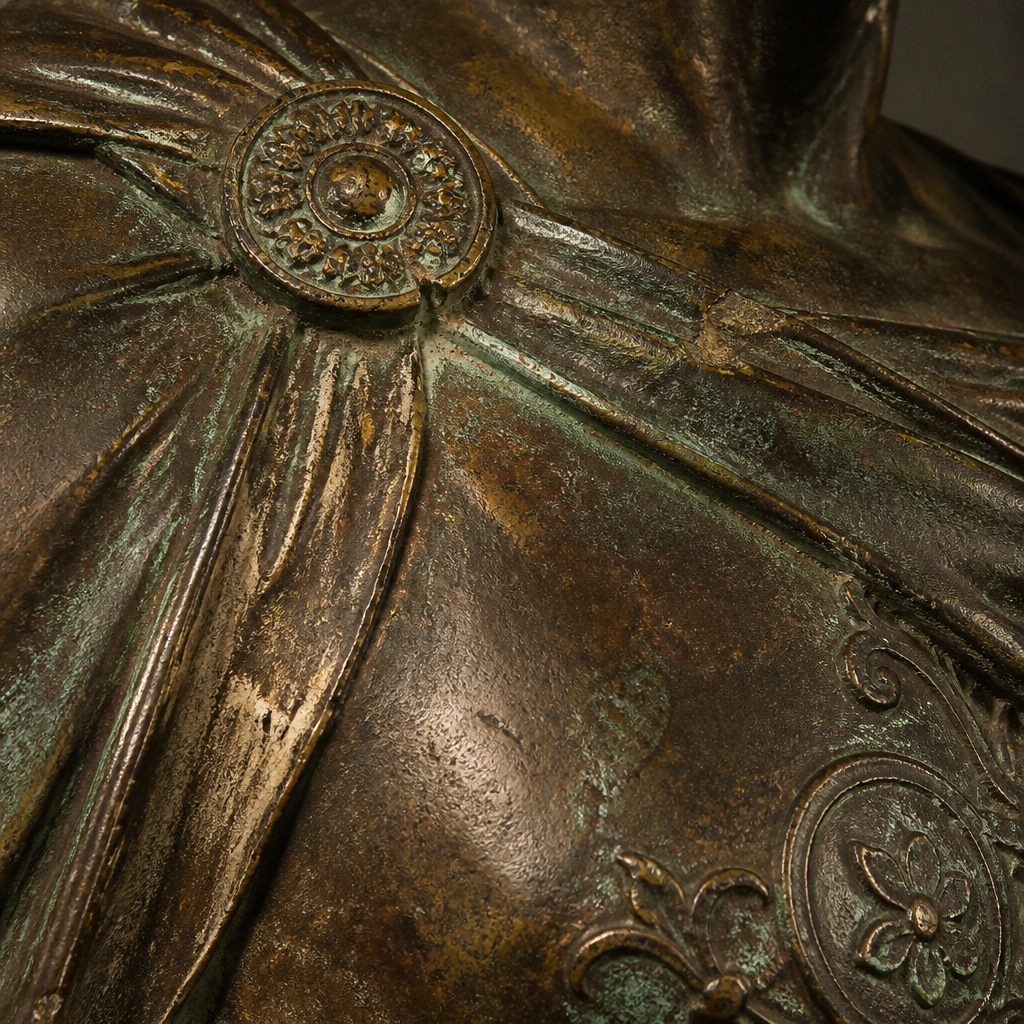
A genuine bronze Buddha statue is an alloy, typically 80 to 90 percent copper mixed with tin and sometimes small amounts of lead or zinc. The specific alloy composition varies by region and period. Thai bronzes from the Sukhothai period tend to be high-tin alloys that produce a warm, golden tone. Burmese bronzes often have a higher copper content, producing a redder base metal beneath the gilding that was frequently applied over them.
Lost-Wax Casting and What It Tells You About Quality
The lost-wax method, known in Sanskrit as madhucchishta vidhana, involves sculpting a wax model, investing it in clay, burning out the wax, and pouring molten bronze into the resulting mould. Each piece is unique. The surface shows organic tool marks and slight asymmetries that machine casting cannot replicate.
When examining a bronze, look at the inside of hollow figures. Traditional lost-wax bronzes have irregular interior surfaces. Machine-spun or die-cast reproductions have smooth, uniform interiors with consistent wall thickness throughout. This is the fastest non-destructive test available to a non-specialist buyer.
Natural Patina Versus Applied Patina
Natural bronze patina forms through oxidation over decades or centuries. It presents as a stable, matte surface that adheres firmly and cannot be scratched off cleanly with a fingernail. Colours range from green (malachite), blue-green (azurite), to reddish-brown (cuprite). An artificially applied chemical patina looks uniform, sits on top of the surface rather than within it, and often shows inconsistencies under raking light.
Pro tip: Run your thumbnail along a recessed area of the bronze surface. Natural patina resists this test firmly. Applied patina often lifts or smears slightly, even on pieces sold as antique.
Bronze is also more sensitive to salt air than stone, making it a less ideal choice for coastal properties unless you are committed to regular light waxing with microcrystalline wax. For inland homes and altar spaces, bronze requires almost no maintenance beyond occasional dry dusting.
Stone Buddhist Sculpture: Properties, Regional Traditions, and Durability
The term stone Buddhist sculpture covers a wide range of actual materials, and conflating them is a mistake with real financial consequences. The three most common stones in Asian religious sculpture are sandstone, limestone, and schist, with granite and basalt appearing in certain South and Southeast Asian traditions.
Sandstone: The Material of Khmer and Early Indian Sculpture
Cambodian sculptural traditions, particularly the Khmer work produced from the ninth through thirteenth centuries, relied overwhelmingly on a distinctive reddish-brown sandstone quarried from Phnom Kulen. This sandstone is relatively soft (Mohs hardness 6 to 7), porous, and highly susceptible to salt crystallisation damage when placed outdoors in humid environments. Indoor display extends the life of sandstone pieces dramatically.
Indian sandstone sculpture spans an enormous geographic and chronological range. Mathura red sandstone, Chunar sandstone, and the buff sandstone of Rajasthan each have different porosity and hardness profiles. A piece described simply as Indian sandstone deserves further provenance questioning.
Schist and Limestone in Gandharan and Chinese Traditions
Gandharan sculpture from the ancient northwestern frontier of the Indian subcontinent (present-day Pakistan and Afghanistan) used grey-blue phyllite schist almost exclusively. This material carves with exceptional precision, enabling the detailed Hellenistic-influenced drapery that defines Gandharan style. Chinese Buddhist sculpture frequently used limestone for cave temple carvings (Longmen, Yungang) and smaller portable altarpieces.
Pro tip: Limestone is soluble in weak acids, including acid rain. Any stone Buddhist sculpture described as limestone should be kept indoors unless you are in a very low-pollution, low-rainfall environment. Schist is significantly more durable in outdoor settings.
Side-by-Side Material Comparison
The table below compares the three primary material categories across the factors that matter most to collectors, spiritual practitioners, and home decorators choosing between Asian sculpture materials.
|
Factor |
Bronze Buddha Statue |
Stone Buddhist Sculpture |
|---|---|---|
|
Primary regions of use |
Thailand, Burma, Japan, China, Sri Lanka, Indonesia |
Cambodia, India, China (cave temples), Pakistan (Gandhara) |
|
Typical weight (medium figure, 30cm) |
3 to 6 kg (solid casting); 1 to 2 kg (hollow) |
4 to 12 kg depending on stone density |
|
Surface detail capability |
Extremely high; lost-wax allows fine filigree and textile details |
High for schist and fine limestone; limited for coarse sandstone |
|
Indoor maintenance requirement |
Low; occasional dry dusting |
Very low; dry cloth cleaning only |
|
Outdoor durability |
Moderate; requires annual waxing, avoidance of salt air |
Variable; granite and basalt are excellent, limestone and sandstone are poor |
|
Authentication markers |
Patina consistency, casting seam quality, alloy density |
Tool mark patterns, surface wear consistency, stone grain authenticity |
|
Typical price range (museum-quality pieces) |
Wide range; gilded Thai bronzes command premiums |
Wide range; Khmer sandstone and Gandharan schist attract strong collector interest |
Spiritual and Aesthetic Considerations for Each Material
For collectors who are also practitioners, material choice carries meaning that goes beyond conservation science. In Theravada Buddhist traditions of Thailand and Burma, bronze figures are often gilded because gold represents the body of the Buddha and the light of enlightenment. The material beneath the gold is secondary to the ritual transformation performed during consecration ceremonies. A gilded bronze Buddha statue that has been consecrated in a monastery carries a spiritual biography that a decorative reproduction never can.
Stone figures in the Hindu and Buddhist traditions of South Asia are understood differently. The stone is not merely a support for the image; in certain Shaiva traditions, the stone itself is understood as the physical body of the deity. This is why Shiva lingas are typically stone rather than metal, and why moving a consecrated stone image requires specific ritual protocols.
"The image is not worshipped as a symbol. It is worshipped as a presence. The material from which it is made is part of that presence." - Stella Kramrisch, art historian and curator, writing on Hindu iconography in The Hindu Temple (1946).
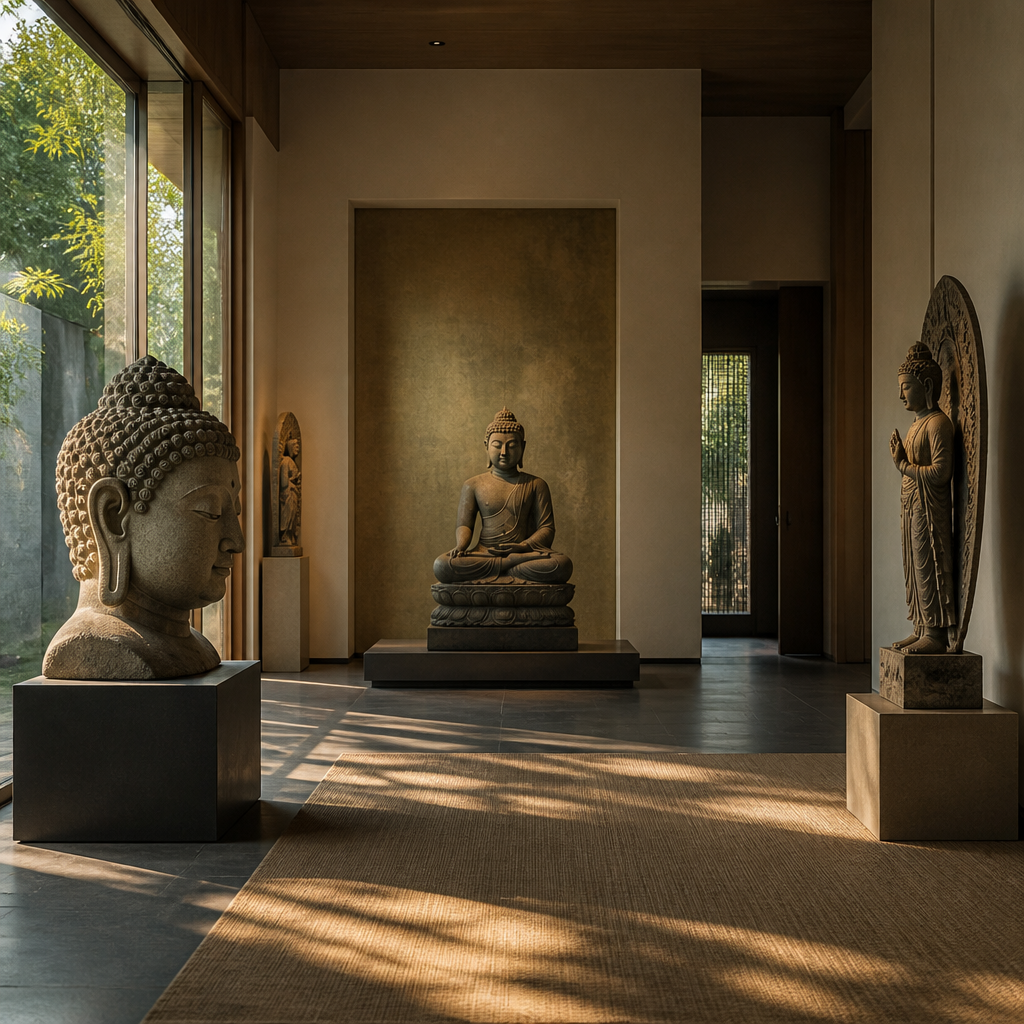
For home altar use, bronze figures generally integrate more flexibly into modern interior spaces. Their reflective surfaces respond to candlelight in ways that stone does not. Stone figures carry a quieter, more grounded visual weight, which many practitioners find more conducive to sustained meditation. Neither is objectively superior. The question is what quality of attention you want the piece to hold in your space.
How to Assess Quality and Authenticity Before You Buy
The Asian antiques market has a well-documented problem with high-quality reproductions sold as older or more significant pieces than they are. This is not unique to any single retailer category; it affects auction houses, gallery dealers, and online marketplaces alike. The practical defence is knowing what to look for before your money changes hands.
Five Physical Checks for Bronze
First, examine the casting seam. High-quality lost-wax bronzes show minimal seam lines that were carefully chased (worked with metal tools) after casting. Obvious, raised, unworked seam lines indicate sand casting or die casting, both of which are modern industrial methods. Second, check the hollow interior if accessible. Third, assess patina adhesion as described earlier. Fourth, look at the base. Traditional Thai and Burmese bronzes were often left open at the base with a rough, fire-scale interior visible. Filled, smooth bases on allegedly old pieces invite scepticism. Fifth, examine the eyes. On quality Thai and Burmese bronzes, the eyes were often inlaid separately in silver or shell and show fine bevelling at the inlay edge.
Five Physical Checks for Stone
For Asian sculpture materials in stone, start with the tool marks. Pre-modern stone carving used iron or steel chisels that leave specific mark patterns. Machine routing leaves perfectly uniform channel widths and depths that no hand tool can reproduce consistently. Second, look at the differential weathering: genuine aged stone shows deeper weathering in exposed areas and less in recessed areas. Uniform weathering across the entire surface is a red flag. Third, check for reapplied dirt in recesses, a practice used to simulate age. Real accumulated grime bonds differently to stone than applied material. Fourth, assess the stone grain under magnification. Resin composite reproductions, increasingly common in the market, show air bubbles and uniform grain patterns that natural stone never produces. Fifth, weight the piece against your expectation. Resin-stone composites are noticeably lighter than the genuine article.
Buying from a retailer with clear provenance documentation, regional sourcing transparency, and a specific collection focus, such as the range offered at HD Asian Art spanning Burma, Cambodia, Thailand, India, and beyond, provides a layer of accountability that general marketplace listings cannot match. A specialist retailer's reputation depends on material accuracy in a way a generalist platform's does not.
Frequently Asked Questions
Is a bronze Buddha statue more expensive than a stone one?
Not categorically. Price is driven by age, regional origin, iconographic rarity, condition, and provenance documentation more than material alone. A fine Khmer sandstone head fragment commands prices that most bronze figures cannot approach. Conversely, a large gilded Thai bronze from the Ayutthaya period will far exceed the price of a small Indian sandstone figure. Treat material as one price factor among several, not the primary one.
Can I place a bronze Buddha statue outdoors?
Yes, but with specific caveats. Bronze oxidises in outdoor environments and develops a green or brown patina that, while natural, accelerates if the piece is exposed to salt air, acid rain, or prolonged moisture pooling at the base. Annual application of microcrystalline wax significantly slows this process. In a sheltered outdoor position away from coastal environments, a quality bronze performs well for decades without structural damage.
Which stone is best for a Buddhist sculpture intended for daily use on an altar?
For an indoor home altar, the stone type matters less than for outdoor display. Schist, limestone, and sandstone all perform well in stable indoor environments. If your altar space experiences humidity fluctuations (near a bathroom or in a basement), avoid sandstone specifically, as it absorbs moisture and can develop surface salt crystallisation. Schist or a dense limestone is the more forgiving choice in variable indoor humidity.
How do I tell if my bronze figure is solid or hollow?
Weight is your first indicator. Solid bronze is extremely heavy for its size. A 30cm solid bronze figure can weigh 5 to 8 kg. A hollow bronze of the same height might weigh 1.5 to 3 kg. If the base is open, you can see or feel the hollow interior directly. If the base is sealed, a gentle tap produces a dull, dense thud from solid bronze and a slightly more resonant tone from hollow casting. Neither hollow nor solid is inherently superior; both have long traditions in Asian bronze production.
Do stone Buddhist sculptures require any ongoing maintenance?
Indoors, almost none. Dry dusting with a soft brush is sufficient. Avoid water-based cleaning on porous sandstone or limestone, as moisture ingress followed by evaporation can cause surface spalling over time. If a stone piece needs deeper cleaning, use the absolute minimum moisture possible and allow complete drying before displaying again. Do not use commercial household cleaners, which are often acidic or alkaline enough to alter the stone surface chemistry.
Are resin composite sculptures sold as stone or bronze a problem I should worry about?
Yes. The resin composite market, sometimes marketed as cold-cast bronze or reconstituted stone, has grown substantially and produces visually convincing pieces at low cost. The issue is not aesthetic; some resin composites are genuinely attractive. The issue is value retention and authenticity representation. A resin composite sold honestly as a decorative reproduction is a legitimate product. The same piece sold as genuine bronze or natural stone is fraudulent. Always ask for material clarification in writing before purchasing, and treat any price that seems dramatically low for an alleged genuine piece as a warning signal.
If you have handled both bronze and stone Asian sculptures and have observations about authentication, durability, or ritual use that other collectors and practitioners might find useful, please share your experience in the comments below.
We would love your feedback and any insights you would share with others. What perspective would you add?
References
