



Best Buddha Statues for Home: A Complete UK Buyer's Guide
Best Buddha Statues for Home: A Complete UK Buyer's Guide
You're probably looking at a shelf, a console, or the corner by your meditation cushion and thinking the same thing most buyers think. “I want something calm, beautiful, and meaningful, but I don't want to get this wrong.” That instinct is sound. A Buddha statue changes a room more than almost any other object because it carries form, symbolism, and presence all at once.
In the UK, that decision is also more practical than people admit. Most homes aren't built like temple halls. They're rentals with white-painted alcoves, Victorian terraces with narrow chimney breasts, modern flats with low visual clutter, or spare rooms doing double duty as study, guest room, and quiet corner. The best Buddha statues for home work because they suit the room, the purpose, and the person buying them.
There's also a real audience for this in Britain. The 2021 UK census recorded 289,551 Buddhists, about 0.4% of the population, and England alone counted 262,433 Buddhists, up from 238,626 in 2011 and 139,046 in 2001, with stronger concentration in Greater London and South East England according to the summary of UK census data on Buddhism in the United Kingdom. That matters because Buddha imagery in Britain isn't some passing homeware fad. It sits inside a real religious and cultural context, and plenty of buyers also come to it through meditation, collecting, and interior design rather than formal Buddhist practice.
Table of Contents
- What Most Buyers Get Wrong About Choosing a Buddha Statue
- Reading the Iconography of a Buddha Statue
- Regional Styles and How They Look at Home
- Materials and Finishes That Work in British Homes
- Scale, Placement and Room Choice
- Authenticity, Provenance and Ethical Sourcing
- Budget Tiers and What You Actually Get
- Buying Checklist, Shipping and Common Questions
What Most Buyers Get Wrong About Choosing a Buddha Statue
A typical mistake starts like this. Someone in a small Victorian conversion flat finds a serene face online, clicks “add to basket”, and only later realises the piece is wrong in three different ways. The expression looked peaceful, but the statue's posture conflicts with the use of the room, the scale is far too large for the shelf, and the finish fights every other surface in the space.
The first trap is buying by face alone. A gentle expression matters, but it isn't enough. A Buddha image is not just a face attached to a decorative body. Hand gesture, posture, headdress, robe treatment, and base all say something specific.
The second trap is treating every figure as interchangeable décor. They aren't. A laughing Budai in a meditation nook creates a very different atmosphere from a seated Buddha in meditation. One reads as jovial abundance. The other reads as inward stillness. Those aren't the same brief.
The three mistakes that spoil most purchases
- Choosing emotion over meaning. Buyers respond to the face and ignore the gesture.
- Treating all “Buddha statues” as one category. They mix devotional forms, monk figures, Budai, and regional export pieces as if they serve the same role.
- Ignoring the room. A tall lacquered Burmese piece in a narrow hallway can dominate the whole house for the wrong reason.
Practical rule: Buy for the room you actually live in, not the fantasy room in your head.
Four buyers make four different errors.
- The meditator usually buys too decoratively and ends up with a statue that looks pleasant but doesn't support practice.
- The decorator often buys too symbolically without understanding what the iconography is saying.
- The gift giver tends to choose whatever feels safe and generic, which is how bland resin pieces keep circulating.
- The collector sometimes jumps too early into “antique” claims and pays for a story instead of an object.
Britain has a long public familiarity with Buddhist sculpture well beyond retail trends. The British Museum holds Buddha sculptures from multiple regions and periods, including Gandhara works from the 1st to 3rd centuries AD and a Burmese Buddha statue dated to the 18th to 19th century AD, with documented acquisitions in its South Asian collections going back to 1905, as reflected in the background summary on the British Museum. That institutional history is one reason buyers should be more exacting. You're not choosing a vague “Zen ornament”. You're choosing an image with a form people have studied, preserved, and recognised in Britain for generations.
Reading the Iconography of a Buddha Statue
If you can read a chair at a glance, whether it's formal, casual, heavy, or spare, you can read a Buddha statue. The trick is to stop seeing it as one object and start seeing it as a set of signals.
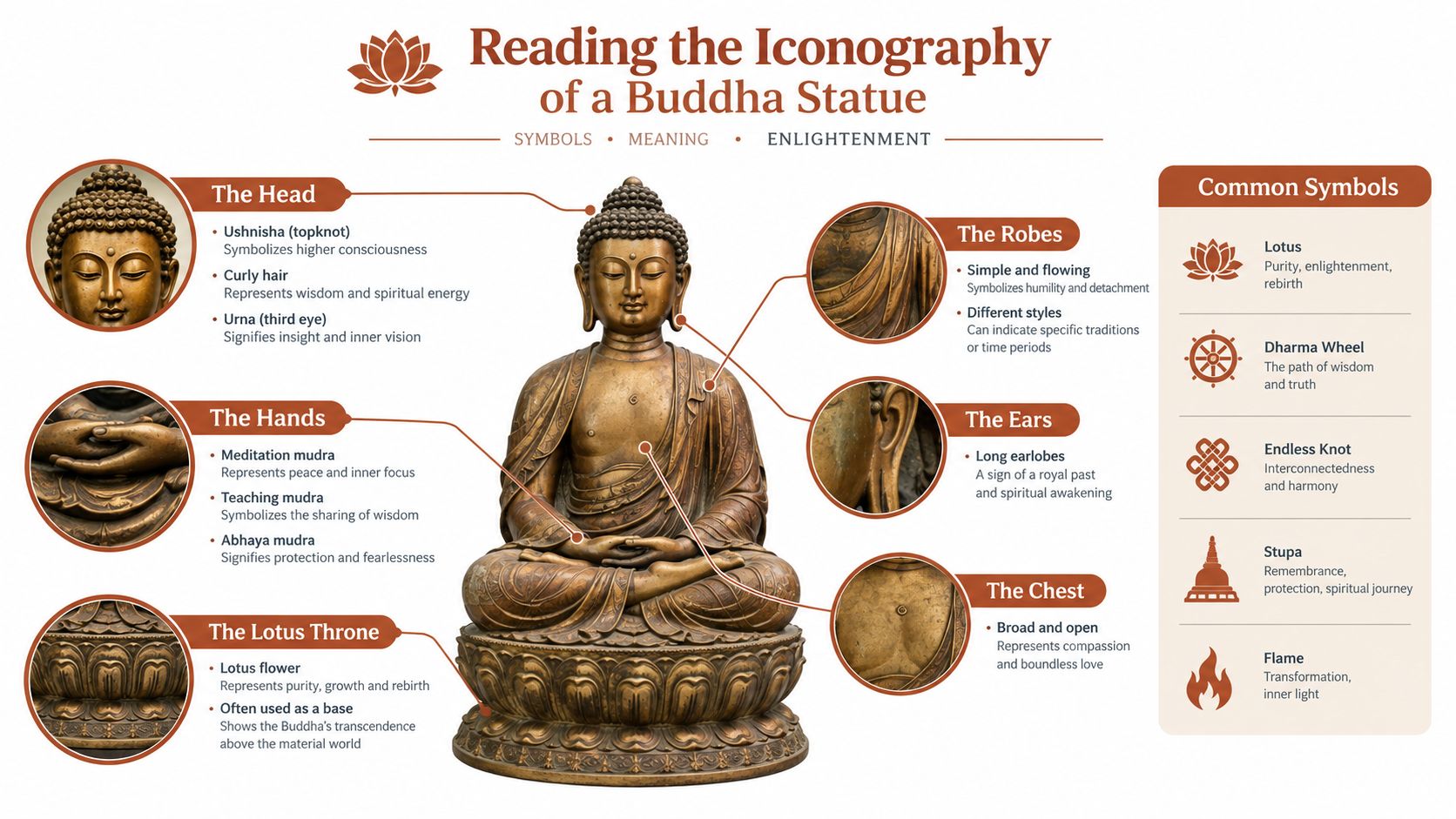
Start with the posture
Posture is the broadest message. You notice it before you notice anything else.
- Seated figures bring stillness, gravity, and inward focus. This is the safe choice for most homes.
- Earth-touching figures feel anchored and resolved. They work well where you want steadiness, especially near a meditation seat.
- Reclining figures suggest release, rest, and final peace. They need space and don't suit every interior.
- Standing figures feel watchful and present. They're strong in entrances and transitional spaces.
- Walking figures carry movement and grace. In a static British room, they can be excellent, but only if the surrounding styling stays restrained.
Then read the hands
Hand gestures tell you what kind of presence the statue brings into a room.
- Bhumisparsha. One hand reaches toward the earth. This is conviction and groundedness.
- Dhyana. Hands rest in meditation. This is calm and concentration.
- Abhaya. A raised palm says reassurance and protection.
- Varada. A lowered open hand suggests generosity and blessing.
- Dharmachakra. Hands near the chest indicate teaching and transmission.
- Vitarka. A more discursive teaching gesture, often excellent in a study or reading room.
If you want quiet, choose quiet iconography. Don't put a teaching gesture in the room if what you really want is a contemplative focus.
The details that separate one type from another
Look at the ushnisha, the cranial protuberance or topknot. Look at the elongated earlobes. Look at robe lines, lotus bases, and facial structure. Those details often tell you whether you're looking at the historical Buddha, a bodhisattva with more ornament, or a revered monk rendered in Buddhist style.
Choose one posture and one mudra that match your purpose before you even think about bronze, stone, or wood.
That single decision clears away most of the confusion in online listings.
Regional Styles and How They Look at Home
Most UK buyers don't need a lecture in art history. They need to know what a statue will look like against limewashed walls, oak floors, chimney breasts, and Ikea shelving. Regional style matters because each tradition carries a different visual weight.
What each style brings into a room
Burmese (Mandalay) pieces often have elegant height, smooth surfaces, and a composed, devotional character. Many lacquered or gilded examples want vertical space. Put one in a tall alcove, not a crowded sideboard.
Thai statues usually have sharper robe lines and a more tensile silhouette. Flame finials and gilt surfaces catch light well. They suit neutral schemes that need warmth.
Cambodian work tends to be symmetrical and commanding. It sits beautifully in pared-back rooms because it doesn't need much around it.
Chinese figures are often fuller and rounder in modelling. They pair well with traditional, eclectic, or layered interiors where a severe form would feel out of place.
The quieter styles for modern British rooms
Japanese examples often excel in flats and contemporary homes. Dark bronze, clean lines, and a restrained mood give them authority without visual noise.
Sri Lankan pieces often bring elongated features and deep bronze presence. They work well on darker timber or stone surfaces.
Indonesian, especially Java-influenced stone work, looks convincing in period houses, garden rooms, and spaces with natural plaster, brick, or aged wood.
| Region | Visual cues | Best room match | Interior style |
|---|---|---|---|
| Burmese | Elegant height, smooth serenity, lacquer or gilt | Alcove, mantel, altar shelf | Traditional, colonial, collected |
| Thai | Sharp drapery, refined silhouette, flame finial | Living room console, entrance | Neutral modern, warm minimal |
| Cambodian | Symmetry, calm face, balanced form | Minimal shelf, study, quiet corner | Minimalist, architectural |
| Chinese | Fuller modelling, rounded presence, glazed or decorative finish | Family room, eclectic sitting room | Traditional, eclectic |
| Japanese | Clean lines, darker bronze, quiet restraint | Modern flat, reading nook | Contemporary, Japandi, pared-back |
| Sri Lankan | Elongated face, deep bronze gravity | Library, formal sitting room | Classic, moody, textural |
| Indonesian | Stone texture, grounded mass, earthy presence | Garden room, hearth, period property | Rustic, natural, heritage |
If you want one blunt recommendation, here it is. For most British homes, Cambodian, Japanese, and restrained Thai forms are the easiest to live with. They don't ask for theatrical interiors to make sense.
Materials and Finishes That Work in British Homes
Material decides whether a statue matures gracefully or becomes a maintenance nuisance. In Britain, where homes swing between winter heating and summer damp, that matters a lot more than buyers expect.
What survives well indoors
For home Buddha statues made from stone, ceramic, metal, or glass, UK conservation guidance treats these materials as relatively light-insensitive with display illumination up to 300 lux, but it still advises stable conditions, with 40 to 65% relative humidity acceptable and levels above 65% increasing mould and pest risk according to Art UK's preventative conservation guidance. In plain English, don't place a statue in direct sun, beside a radiator, or in a damp pocket of the room and expect the finish to stay stable.
Bronze is still the benchmark. It has weight, presence, and a surface that usually improves with handling and time. On hearths, timber consoles, or stone ledges, it feels settled.
Stone is excellent if the shelf can support it. Marble looks formal. Volcanic stone feels earthier and less brittle in mood, even if it's physically substantial.
The materials that need more care
Wood gives warmth that metal can't. Carved teak or similar hardwoods suit living rooms beautifully, especially in older houses with softer interiors. But dry central heating and damp corners both work against wood.
Lacquered surfaces look sumptuous and can be marvellous, especially on Burmese work, but they dislike unstable environments. If your room fogs up in winter or bakes in direct afternoon sun, lacquer is asking for trouble.
Resin and reconstituted stone have their place. They make sense for renters, gifts, and upper shelves where weight is a risk. They do not age like bronze. They scratch more easily, and cheap resin can look tired quickly.
| Material | Weight & Feel | Durability | Best UK Setting | Renters? |
|---|---|---|---|---|
| Bronze | Heavy, cool, substantial | Excellent indoors | Living room, hearth, altar shelf | Sometimes, if shelf is strong |
| Stone | Heavy, grounded, tactile | Very good if stable | Period homes, garden rooms, solid furniture | Less ideal |
| Wood | Warm, organic, softer presence | Good with stable climate | Bedrooms, sitting rooms, studies | Yes |
| Lacquer | Smooth, rich, decorative | Moderate, needs care | Formal interiors, protected alcoves | Only with care |
| Resin | Light to mid-weight, easy to place | Fair | Flats, gifts, temporary setups | Yes |
| Ceramic | Crisp, clean, decorative | Fair, chips in transit | Dry rooms, careful households | Yes |
UK museum guidance for mixed collections generally favours about 40 to 60% relative humidity, with short-term fluctuation held to no more than about 10% in 24 hours, while also avoiding direct sunlight and controlling UV exposure where possible, as noted in North Yorkshire museum display guidance/201702090900/Agenda/42064.pdf). That's museum language, but the home lesson is simple. Keep your statue away from bathrooms, kitchens, uninsulated windows, and radiators.
For a more detailed breakdown of trade materials and what serious buyers usually avoid, this guide on Buddha statue materials explained is useful.
Scale, Placement and Room Choice
Scale is where most UK purchases fail. Not because buyers lack taste, but because they don't measure properly. A statue can be beautiful and still be wrong if it's too tall for the alcove, too small for the mantel, or too visually heavy for the entrance.
UK interest in wellness spaces has also changed where these statues go. Houzz searches for meditation rooms surged 330% in UK trend coverage, which fits the wider shift toward calming corners and multi-purpose wellness spaces in the home, as reported by Insight DIY on UK home design trends. That doesn't mean everyone has a dedicated retreat room. It usually means one shelf, one chair, one lamp, and one statue need to do the job properly.
Put the right form in the right room
Entrances want upright, frontal forms that welcome rather than glare. A standing figure can work well here if the hall isn't cramped.
Living rooms usually handle seated Buddhas best. Place the piece at a height that makes sense from the normal seated viewpoint. If you have to crane your neck or look down at the top of the head from the sofa, the placement is off.
Meditation corners need less size than people think. A smaller seated figure on a stable low plinth or floating shelf often works better than a large showpiece. The point is focus, not theatre.
Placement rules that prevent regret
- Measure the surface first. Width, depth, and safe load matter more than online photos.
- Check sight lines from the doorway. First view matters.
- Keep clear space around the statue. Crowding kills presence.
- Never put heavy pieces on thin glass shelves.
- Don't place statues directly above radiators or close to log burners.
A statue should feel settled when you enter the room. If it feels like it's shouting, it's either too large, too shiny, or too close to everything else.
Lighting finishes the job. Warm lighting generally flatters bronze and wood. Matte stone tolerates more diffuse light. Glossy resin and lacquer need more restraint or they look cheap.
If you want practical placement examples by pose, this guide to best placements for Buddha poses in your home is worth a look.
Authenticity, Provenance and Ethical Sourcing
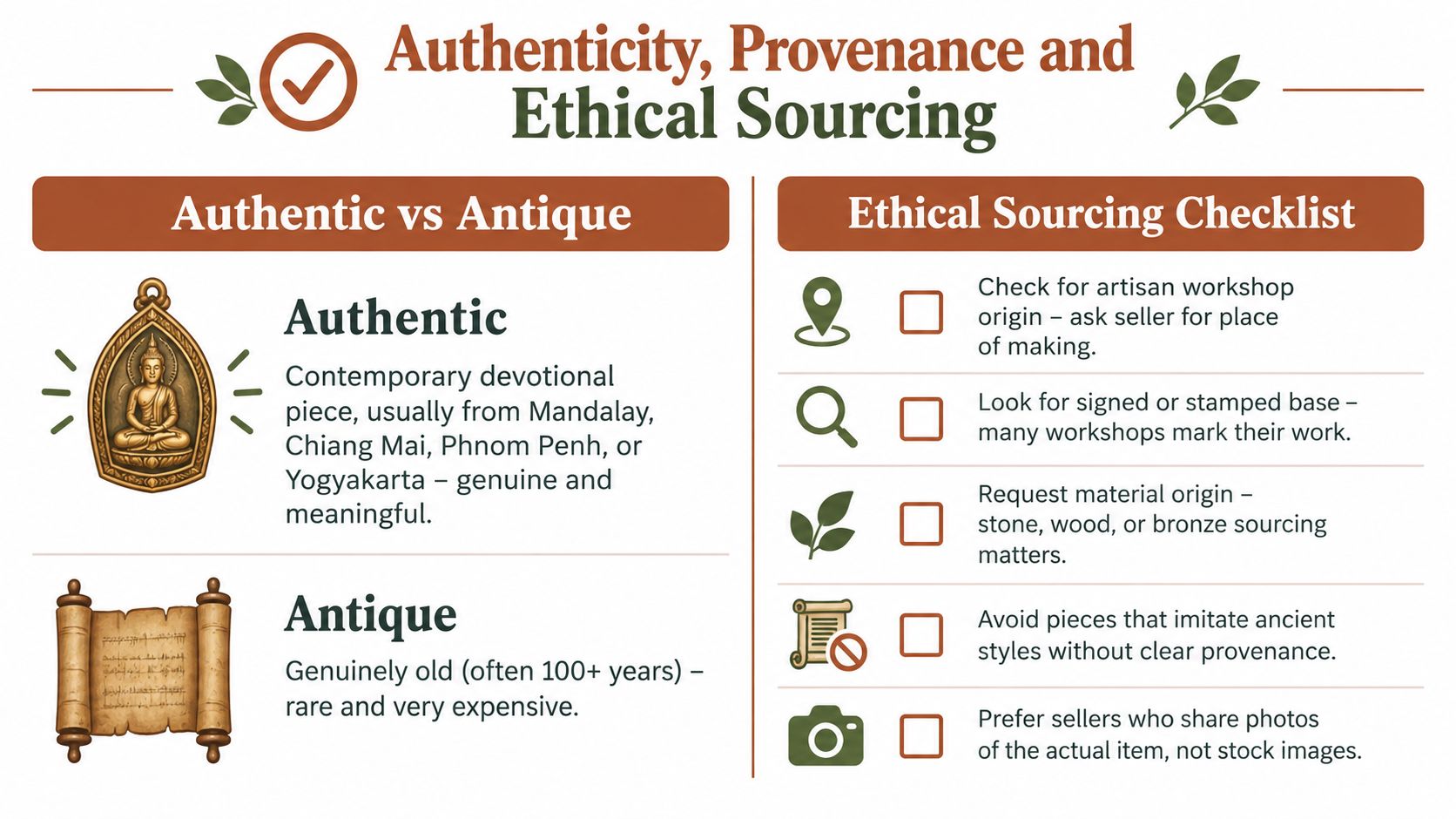
Authentic does not mean antique. Buyers confuse those words constantly, and dealers who benefit from that confusion rarely correct them.
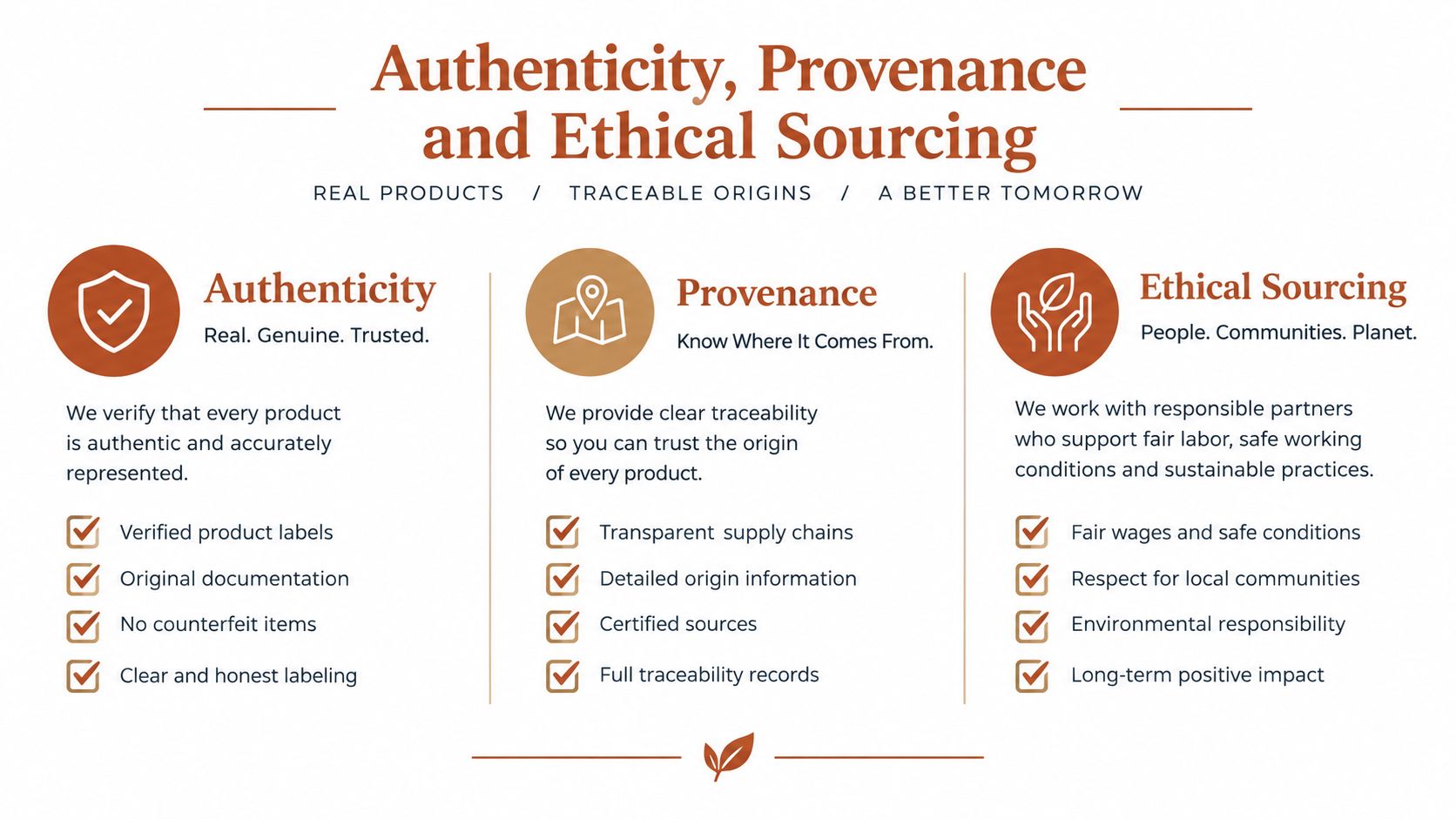
A contemporary devotional Buddha made by a living workshop in Mandalay, Chiang Mai, Phnom Penh, or Yogyakarta can be exactly the right purchase. It is still authentic. It has a real place of making, real craft decisions, and a real cultural lineage. What it isn't is old.
The questions a serious buyer asks
Ask the seller for the place of making, the casting or carving method, any inscriptions, and whether the piece is represented as contemporary, antiqued contemporary, or antique. If they become vague at this point, stop.
A proper invoice matters. A written condition report matters. Clear photographs of the actual item matter. Stock images are a bad sign, especially if the seller is also making age claims.
Buy the object, not the fantasy biography attached to it.
If you're styling a room with other statement pieces, provenance discipline matters there as well. The same buyer who checks the origin of a bronze Buddha should think carefully about companion works such as large canvas art for living room, because scale, authorship, and finish consistency affect whether the room looks collected or confused.
Ethical sourcing is not optional
Ethical sourcing includes fair workshop practice, honest material disclosure, and avoiding prohibited or dubious materials. Reject anything involving ivory, bone, endangered hardwoods, or suspect archaeological origin. If a seller can't tell you what the lacquer or timber is, treat that as a warning.
For legal and cultural context around responsible collecting, this article on ethical collecting of Buddha statues, laws, temple objects and cultural respect is a sensible reference.
One practical note for UK buyers. Census and trend evidence suggest the market includes meditators, decorators, gift buyers, and collectors, not just practising Buddhists, so respectful explanation matters when people are buying across cultural lines. The census-linked housing dataset summary helps show that nuance in the ONS religion by housing release.
Budget Tiers and What You Actually Get
Price changes material, finish, and honesty. That's what you're really paying for.
The market in plain English
| Price Band | Typical Materials | Best For | Trade-offs |
|---|---|---|---|
| Under £150 | Resin, cold-cast stone, small ceramic | Gifts, renters, first shelf | Lighter feel, less depth in finish, weaker longevity |
| £150 to £400 | Better resin, poly-stone, smaller hand-finished wood or metal pieces | Casual enthusiasts, thoughtful gifts | Improvement in finish, but still limited mass and detail |
| £400 to £1,500 | Cast bronze, lacquered wood, heavier stone | Serious home display, meditators, design-led buyers | Heavier, more shipping risk, fewer impulse returns |
| Above £1,500 | Signed work, documented antique or higher-end contemporary pieces | Collectors, focal interiors | Requires knowledge, documentation, and patience |
The under £150 bracket is where most gifting happens. That's fine, but don't pretend a cheap resin export piece and a carefully finished small workshop-made object offer the same experience. They don't. One is a decorative placeholder. The other may still become a long-term household piece.
The £150 to £400 range is where buyers often get the smartest value. You can find convincing finish quality, good form, and enough substance to avoid the mass-market look without entering collector pricing.
Where the real shift happens
The serious jump comes around £400 to £1,500. That's where bronze starts to feel like bronze, carving starts to read cleanly, and the object begins to hold a room rather than occupy a shelf.
Above that, you're in collector territory. Some buyers belong there. Many don't. If your home is a compact London flat and your brief is “a calm figure for the reading corner”, paying for rarity may be pointless.
Hidden costs are straightforward. Heavy statues cost more to ship safely. Imports can trigger extra charges. Altars, plinths, and decent consoles are often forgotten until the statue arrives.
Buying Checklist, Shipping and Common Questions
Before you check out, run through this list once. It prevents most expensive mistakes.

Pre-checkout checklist
- Confirm dimensions and weight. Not approximate. Exact.
- Check the base. It should sit flat on the intended surface.
- Ask for daylight photos. Artificial light hides poor finishes.
- Get provenance in writing if the seller makes provenance claims.
- Read the return terms carefully.
- Insure heavier or higher-value shipments.
UK buyers also have a useful legal safety net for most online purchases. Under distance selling rules, there's a 14-day cooling-off period starting the day after delivery, and sellers must refund within 14 days of receiving the goods back, as noted in the referenced discussion of UK consumer law for distance sales. For fragile sculpture, that matters.
Common questions
Can a non-Buddhist keep a Buddha statue at home?
Yes, if you're respectful and not treating it as a joke prop or careless filler décor.
Which direction should it face?
If direction matters to you spiritually, follow your tradition. If not, prioritise calm sight lines and a clean setting.
Is resin acceptable?
Yes, especially for renters and gifts. Just don't mistake it for bronze or expect it to age the same way.
How do I clean bronze?
Dust it gently with a soft dry cloth. Don't strip the patina unless you know exactly what you're doing.
What if it arrives damaged?
Photograph the packaging and the damage immediately, then contact the seller before discarding anything.
Can antiques be imported legally?
Sometimes, yes, but only with proper paperwork and lawful provenance. If the seller can't document that, walk away.
If you want a statue that suits your room, your purpose, and your level of knowledge, HD Asian Art offers region-specific Buddha sculptures, from contemporary devotional pieces to collector-grade works, along with practical guidance on materials, iconography, and placement.
If you're weighing Burmese against Thai, bronze against stone, or gift piece against long-term investment, it's a useful place to compare real options with a specialist eye.
