



Antique Buddhist Sculptures for Beginners
Antique Buddhist Sculptures for Beginners
Table of Contents
- Understanding Antique Buddhist Sculptures
- Types of Buddhist Sculptures for Meditation
- What Makes an Antique Buddhist Sculpture Authentic
- How to Display Buddhist Statues at Home
- Curating a Meditation Space with Art
- Legal and Ethical Considerations
- Building Your Collection: A Beginner's Roadmap
- Frequently Asked Questions
Understanding Antique Buddhist Sculptures
Antique Buddhist sculptures represent some of the world's most spiritually significant and artistically refined objects. These pieces, spanning centuries and multiple Asian cultures, embody both devotional purpose and sculptural mastery. At HD Asian Art, we understand that collecting these works requires knowledge of authenticity, cultural context, and proper stewardship.
Whether you're drawn to meditation practice or artistic appreciation, understanding what makes an antique Buddhist sculpture valuable, both spiritually and materially, is essential before you begin. Whether you're drawn to meditation practice or artistic appreciation, understanding what makes an antique Buddhist sculpture valuable, both spiritually and materially, is essential before you begin.
The term antique Buddhist sculptures refers to religious statuary created centuries ago across Southeast Asia, Tibet, China, and India. These works serve as focal points for spiritual practice and as windows into historical craftsmanship. Many collectors find that learning to distinguish authentic pieces from reproductions transforms how they approach collecting entirely.
Types of Buddhist Sculptures for Meditation
Different sculptural forms serve distinct spiritual purposes. Understanding these categories helps you select pieces that align with your practice or aesthetic vision.
Seated meditation figures represent Buddha in contemplative states. These typically show the figure in lotus position with hands in specific mudras (symbolic hand gestures). The calm, inward-focused expression makes them ideal for personal meditation spaces. Seated sculptures range from small tabletop pieces to life-sized altar installations.
Standing Buddha figures convey teaching or blessing postures. These pieces often feature more dynamic energy than seated forms, with one or both hands raised in mudras of protection or blessing. Standing sculptures work well in entryways or larger meditation rooms where their commanding presence anchors the space.
Bodhisattva sculptures depict enlightened beings who delay their own final liberation to help others. Avalokiteshvara (the bodhisattva of compassion) appears frequently in Southeast Asian collections. These figures often wear elaborate crowns and jewelry, reflecting their celestial status. Bodhisattva pieces appeal to collectors seeking both spiritual meaning and ornamental beauty.
Khmer and Southeast Asian forms show distinct regional characteristics. Thai Buddha sculptures often feature elongated earlobes and serene expressions. Cambodian Khmer pieces display more angular features and intricate architectural details. Vietnamese and Laotian works incorporate local artistic traditions while maintaining core Buddhist iconography. These regional variations help you understand the sculpture's origin and historical period.
What Makes an Antique Buddhist Sculpture Authentic
Authenticity separates meaningful investment from expensive disappointment. Three interconnected factors determine whether a sculpture is genuinely antique: provenance documentation, material analysis, and stylistic consistency.
Provenance and Documentation
Provenance, the documented ownership history of a piece, is your first line of defense against reproductions. Authentic antique Buddhist sculptures come with records showing where they've been, who owned them, and when they changed hands. These documents create an unbroken chain linking the piece to its origin.
Ask sellers for specific documentation: museum catalogs, auction house records, import permits, or expert authentication letters. Legitimate dealers maintain detailed records. A seller who cannot provide any ownership history raises immediate red flags. The stronger the provenance chain, the higher the piece's credibility and market value.
Documentation also matters legally. Many countries restrict the export and import of cultural artifacts. Pieces with clear provenance documentation and proper import permits protect you from legal complications. Without this paperwork, you risk acquiring stolen or illegally trafficked cultural property.
Materials and Sculptural Style
The materials used in antique Buddhist sculptures reveal age, origin, and authenticity. Bronze remains the most common material for serious antique pieces. Genuine bronze develops a patina, a surface oxidation layer, over centuries. This patina is difficult to artificially age convincingly. Experts examine patina color, texture, and depth to assess authenticity.
Stone sculptures, whether marble, granite, or limestone, show wear patterns consistent with age. Surface erosion, weathering marks, and the way stone has been worked all provide clues. Wood sculptures display characteristics like wood type, carving tool marks, and natural aging of the material.
Sculptural style anchors pieces to specific periods and regions. Dynasty styles changed predictably. A Buddha figure with characteristics from multiple historical periods simultaneously signals a reproduction. Expert collectors develop an intuitive sense for stylistic consistency, recognizing when proportions, iconography, and artistic details align with a genuine historical period.
Spotting Reproductions
Modern reproductions have become increasingly sophisticated. High-quality fakes use authentic materials and employ skilled artisans. However, several tell-tale signs distinguish reproductions from genuine antiques.
Examine the wear patterns carefully. Authentic antique sculptures show uneven aging, areas that received more handling display different patina than protected areas. Reproductions often show uniform aging across the entire surface. The base and underside of genuine pieces typically show more weathering than the front, reflecting centuries of placement on altars or in storage.
Tool marks reveal age. Modern carving tools leave different marks than historical implements.
How to Display Buddhist Statues at Home
Proper display honors the spiritual significance of antique Buddhist sculptures while protecting your investment. Placement, lighting, and environmental conditions all affect both the piece's preservation and its spiritual function.
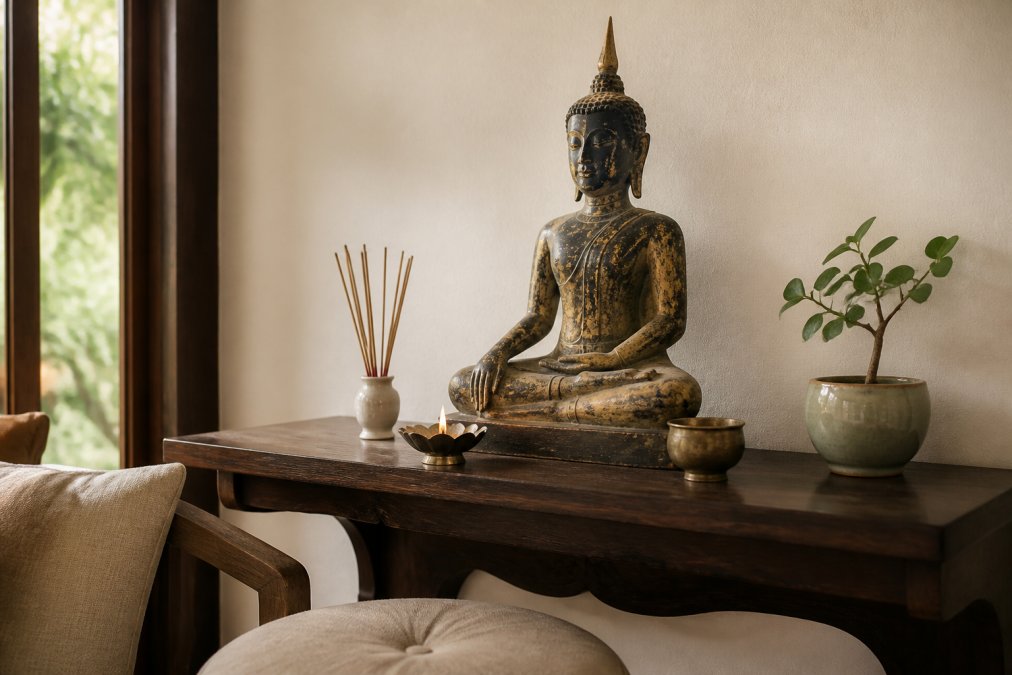
Curating a Meditation Space with Art
A meditation space anchored by an antique Buddhist sculpture becomes more than a room, it becomes a sanctuary. The sculpture serves as both visual focus and spiritual anchor for practice.
Legal and Ethical Considerations
Collecting antique Buddhist sculptures involves responsibilities beyond aesthetics or investment returns. Understanding the legal landscape protects you and respects the cultural heritage these pieces represent.
Building Your Collection: A Beginner's Roadmap
Starting a collection requires a structured approach. This roadmap guides you from initial research through your first acquisitions and beyond.
| Collection Phase | Timeline | Key Action | Expected Outcome |
|---|---|---|---|
| Research | Weeks 1-4 | Study museums, read books, join communities | Build foundational knowledge |
| Focus Definition | Weeks 4-5 | Choose region, period, or form | Clarify collecting direction |
| Budget Setting | Week 5 | Determine financial commitment | Establish spending limits |
| Source Research | Ongoing | Identify dealers and galleries | Access vetted pieces |
| Authentication | Per purchase | Examine provenance and materials | Verify authenticity |
| Documentation | Ongoing | Record details and photos | Protect investment and value |
Frequently Asked Questions
What defines an authentic antique Buddhist sculpture?
Authenticity rests on three pillars: provenance documentation showing ownership history, material analysis confirming period-appropriate casting or carving methods, and iconography consistent with the claimed dynasty and region. Genuine antique Buddhist sculptures display natural patina, wear patterns matching their age, and sculptural style aligned with historical records. Reproductions often show uniform aging, incorrect mudras, or anachronistic design elements. Request detailed provenance records and condition reports from reputable dealers.
How do I choose a Buddhist sculpture for my meditation space?
Select sculptures that resonate with your spiritual practice and fit your physical space. Consider the mudra (hand gesture) and posture, different iconography serves different meditative intentions. Measure your altar or shelf beforehand; oversized pieces can overwhelm small rooms. Evaluate the material's durability and maintenance needs. Choose pieces from trusted sources with transparent provenance. Your sculpture should inspire calm and focus, not distraction, so trust your intuition alongside practical considerations.
What are the legal risks of collecting antique Buddhist sculptures?
The primary legal concern is repatriation. Many antique Buddhist sculptures were removed from temples and cultural heritage sites, sometimes illegally. Verify that your purchase includes clear provenance documentation and confirmation that the piece was legally exported from its country of origin. The U.S. enforces the Cultural Property Implementation Act, which restricts import of certain artifacts. Buy from reputable dealers who provide complete ownership history and authentication certificates to protect yourself from legal liability.
How much should a beginner expect to invest in their first piece?
Investment levels vary widely depending on age, provenance, materials, and rarity. Contemporary pieces and reproductions cost significantly less than authenticated antiques. Beginners often start with single pieces rather than large collections. Rather than focusing on cost, prioritize purchasing from reputable sources that provide complete documentation and guarantee authenticity. Quality and provenance matter far more than price; a well-documented piece holds value and meaning, while an undocumented bargain carries risk.
What role does provenance play in valuation?
Provenance is the documented ownership history of a sculpture, and it directly impacts both authenticity assessment and market value. Pieces with clear, traceable provenance, especially those from respected collections or auction houses, command higher prices and carry lower legal risk. Sculptures lacking documentation are harder to verify as authentic and may face repatriation claims. Dealers should provide detailed provenance records including previous owners, acquisition dates, and any published references. Strong provenance transforms a sculpture from a decorative object into a collectible artifact.
How do I spot a reproduction versus an authentic antique?
Reproductions often display uniform aging, missing the natural wear patterns of genuine antiques. Examine patina closely, authentic bronze develops distinct green or brown patinas over centuries, while artificial aging looks uniform. Check iconography carefully; reproductions sometimes contain stylistic errors or incorrect mudras. Authentic pieces show casting seams and tool marks consistent with their claimed period and lost-wax casting method. Request material analysis and X-ray documentation. Reputable dealers provide detailed condition reports and authentication certificates that explain how authenticity was verified.
Why is cultural heritage and ethical collecting important?
Many antique Buddhist sculptures originate from temples and sacred sites where they held spiritual significance. Ethical collecting means supporting pieces with documented legal export and respecting their cultural context. Avoid sculptures with suspicious provenance or those likely looted from archaeological sites. Support dealers committed to repatriation efforts and transparent sourcing. Viewing these sculptures as cultural artifacts, not merely investments, honors the traditions they represent and ensures your collection reflects values beyond financial gain.
