



Advanced Anjali Mudra Variations: A Step-by-Step Guide
Advanced Anjali Mudra Variations: A Step-by-Step Guide
Table of Contents
- Understanding Anjali Mudra: Foundation and Meaning
- How to Do Anjali Mudra: Proper Technique
- Anjali Mudra Variations for Advanced Practice
- Easy Pose Prayer Hands Variation for Meditation
- Alignment Tips and Common Modifications
- Integrating Anjali Mudra Into Your Yoga Sequence
- Frequently Asked Questions
Understanding Anjali Mudra: Foundation and Meaning
Anjali mudra brings your palms together at chest center with fingers pointing upward, and anjali mudra variations offer deeper ways to explore this sacred gesture. This gesture appears throughout yoga and meditation, representing reverence, gratitude, and the meeting of mind and body. The Sanskrit name, "anjali" (offering) and "mudra" (seal), describes a hand position that honors the divine within yourself and others.
The Symbolism of Prayer Hands
In yoga, Anjali mudra symbolizes the unity of opposites, masculine and feminine energy, effort and surrender, action and stillness. Practitioners use it during meditation to anchor intention at the heart chakra and acknowledge the sacred in others through respect and honor.
Hand Position and Alignment Essentials
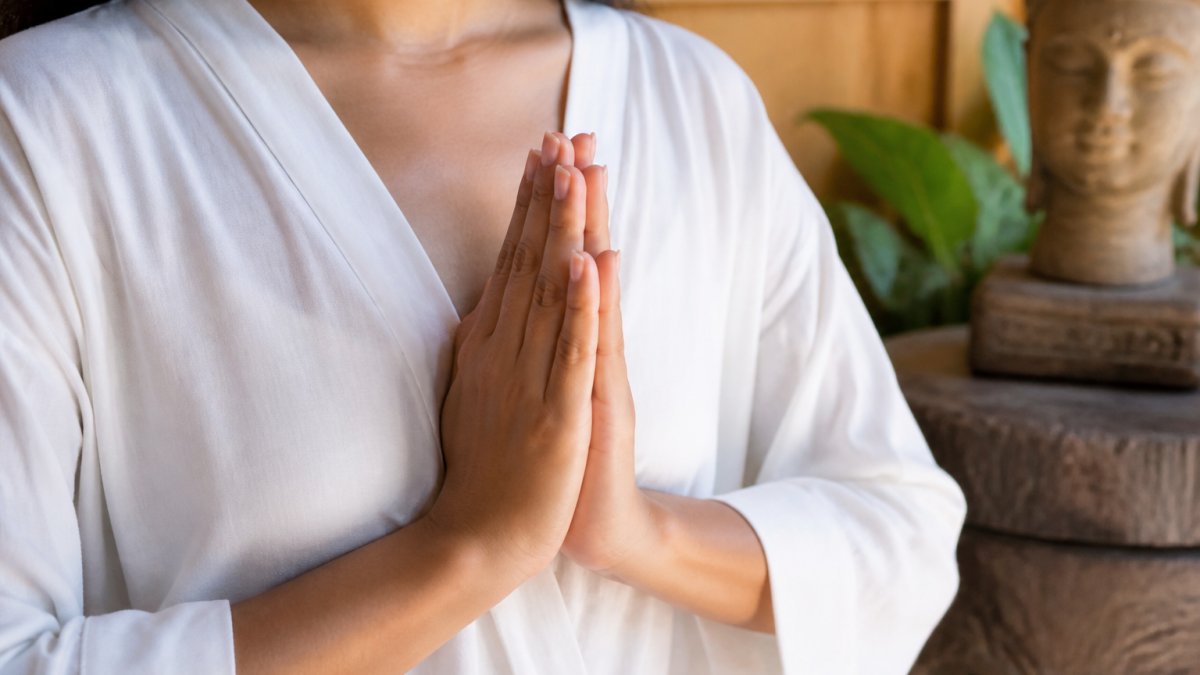
Press your palms evenly together from heel to fingertips, not just the fingertips, which creates wrist tension. Keep your elbows relaxed at your sides and thumbs at heart level on your breastbone. Your shoulders should remain relaxed and away from your ears.
How to Do Anjali Mudra: Proper Technique
Learning to do Anjali mudra correctly prevents injury and deepens your practice. The position looks simple, but alignment details matter.
Step-by-Step Hand Placement
Begin in a comfortable seated or standing position. Bring both hands to heart level and press palms together firmly, creating a straight line from wrists through fingertips pointing upward. Keep wrists neutral and press palms evenly throughout, not just at the fingertips, to engage hand muscles and create stability.
Breath and Intention During Practice
Breathe slowly and deeply through your nose. Set an intention, gratitude, peace, or compassion, to transform the physical gesture into spiritual practice. Synchronize your breath with the mudra, adjusting counts to match your natural pace.
Anjali Mudra Variations for Advanced Practice
Advanced variations deepen your practice by targeting different muscle groups and energy pathways. Each builds on foundational alignment and includes modifications for wrist, shoulder, or spine limitations.
Hands Above the Head Variation
Setup and Alignment: Begin in standing position with feet hip-width apart. Bring your hands to heart center, press palms together, and raise them overhead in one smooth motion. Keep shoulders relaxed, upper arms framing your head without pressing against it, elbows slightly bent, and wrists neutral.
Breath and Focus: Inhale as you raise your hands and hold for three to five breath cycles. With each exhale, press palms slightly firmer and imagine energy flowing upward through your arms.
Modifications:
- Limited shoulder mobility: Raise your hands only to shoulder height initially, keeping elbows bent at 90 degrees. Gradually work toward the full overhead position.
- Wrist sensitivity: Reduce pressure and allow palms to hover slightly apart while maintaining finger-pointing alignment.
- Balance challenges: Practice near a wall for stability.
Benefits and Energy Flow: This variation opens your chest, shoulders, and sides while energizing your body. Use it during sun salutations or when you need mental clarity.
Reverse Prayer Pose Yoga: Behind-the-Back Variation
Setup and Alignment: Stand or sit upright with good spinal alignment. Bring both hands behind your back at waist level, palms facing each other, then gradually walk them up your spine toward your shoulder blades with fingers pointing downward. Keep shoulders relaxed and spine lengthening upward.
Breath and Focus: Inhale as you bring your hands behind your back. With each exhale, gently press palms together and imagine opening your chest wider. Hold for five to ten breath cycles.
Modifications:
- Limited shoulder flexibility: Keep hands lower on your back with palms pressed together.
- Arthritis or shoulder injury: Rest hands at your lower back without pressing them together.
- Forward fold integration: Perform this variation in a forward fold to deepen the opening.
Benefits and Energy Flow: This variation is one of yoga's most effective chest openers, counteracting computer posture and building upper back strength.
Interlaced Fingers Variation
Setup and Alignment: Bring both hands to your heart center and interlace your fingers with index fingers pointing upward and palms facing inward. This creates more grounded, contained energy than basic Anjali mudra. Keep wrists neutral and elbows relaxed at your sides.
Breath and Focus: Breathe slowly and deeply, imagining energy flowing into your heart center with each inhale. This variation grounds practice and calms an overactive mind. Hold for five to fifteen minutes during meditation.
Variations on Hand Height:
- Heart center: The standard position, grounding and centering.
- Overhead: Raise your interlaced hands above your head while maintaining the finger interlock. This energizes the practice while retaining the grounding quality of the interlace.
- Lap position: Lower your interlaced hands to your lap while seated. This deepens the grounding effect and is useful for longer meditation sessions.
Modifications:
- Hand fatigue: Alternate which hand's index finger points upward every few minutes to distribute effort.
- Finger stiffness: Gently separate fingers slightly if full interlocking feels too tight.
Distinguishing from Related Gestures: The interlaced-fingers variation is sometimes called Kali mudra. Unlike basic Anjali mudra, the interlaced version creates more contained, inward-focused energy.
Anjali Mudra in Sun Salutations
Placement in the Sequence: Anjali mudra appears at three key points in a traditional sun salutation: at the beginning, at the transition between forward fold and upward dog, and at the end. At the opening, bring hands to heart center and set your intention for one to three breath cycles. At mid-sequence, bring hands briefly to heart center before upward dog to reset breath and focus. At closing, return to standing position with hands at heart center and bow slightly to honor your practice.
Easy Pose Prayer Hands Variation for Meditation
Easy Pose (Sukhasana) paired with Anjali mudra creates a stable, grounded foundation for seated meditation. Proper setup and modification strategies prevent strain and maintain focus.
Setting Up Easy Pose with Anjali Mudra
Foundational Alignment: Sit on the ground with legs crossed, lengthening your spine upward with shoulders stacked over hips. Bring hands to heart center in Anjali mudra, pressing palms together gently with elbows at your sides and thumbs at heart level. Sit on a cushion, blanket, or block to elevate your hips two to four inches higher than your knees to prevent lower back and hip strain. Keep your head neutral with gaze softly downward or eyes closed.
Distinguishing Anjali Mudra from Related Seated Hand Positions
Anjali Mudra vs. Namaste: Anjali mudra is an internal gesture of reverence for meditation or yoga practice. Namaste is a greeting that honors another person.
Anjali Mudra vs. Kali Mudra (Interlaced Fingers): Anjali mudra has palms pressed together with fingers pointing upward, creating open, expansive energy. Kali mudra interlaces fingers, creating contained, grounding energy.
Anjali Mudra vs. Dhyana Mudra (Hands in Lap): Dhyana mudra places hands in your lap, palms facing upward. It is more passive for very long meditation sessions, while Anjali mudra at the chest is more active and supportive of intention-setting.
Modifications for Different Body Types and Limitations
For Tight Hips or Limited Flexibility: Sit on a high cushion or meditation bench, or sit in a chair with feet flat on the ground.
For Lower Back Pain: Increase cushion height so hips are significantly higher than knees. You can also sit against a wall or place a rolled blanket behind your lower back for support.
For Shoulder or Wrist Sensitivity: Reduce pressure and let your palms hover slightly apart while maintaining finger-pointing alignment. Alternatively, rest your hands gently on your thighs with palms facing upward.
For Knee Pain: If your knees ache in Easy Pose despite cushion elevation, try a different seated position.
Deepening Your Meditation Practice
Breath Awareness: Observe your natural breath and count each inhale and exhale from one to ten, then return to one. This anchors your mind and prevents wandering thoughts.
Sensation Anchoring: Notice the sensation of your palms pressing together, the warmth, texture, and subtle movements of your breath.
Heart Center Focus: Direct your awareness to where your thumbs touch your chest. Imagine a light or warmth at your heart center, expanding slightly with each exhale.
Duration and Progression: Beginners should start with five to ten minutes of meditation.
Troubleshooting Common Challenges: If your legs fall asleep, increase cushion height to elevate hips higher than knees.
Alignment Tips and Common Modifications
Proper alignment prevents injury and maximizes the benefits of your practice. Small adjustments make a big difference in comfort and effectiveness.
Wrist Comfort and Joint Safety
If your wrists feel uncomfortable, check that they remain neutral and not bent backward. Reduce pressure between your palms, gentle contact still creates the energetic effect. Lower your hands slightly if they rest too high, or place them on a block or cushion to reduce strain, especially for arthritis or wrist injuries.
Finger Direction and Palm Alignment Adjustments
If pointing fingers straight up feels awkward, angle them slightly forward. If palms don't press evenly, consciously balance pressure on both sides to build strength in your weaker hand. If fingers splay outward, gently press them together. Patience and consistent practice improve alignment gradually.
Integrating Anjali Mudra Into Your Yoga Sequence
Anjali mudra works in many poses and sequences. Learning where to use it enhances your entire practice.
Using Anjali Mudra in Standing Balance Poses
Standing balance poses become more powerful with Anjali mudra at your heart center, anchoring awareness and improving stability. Try it in Tree Pose or Warrior III. The hand position shifts your center of gravity, challenging balance in new ways and creating a focal point for gaze and attention. Keep hands at heart level with elbows relaxed at your sides to prevent shoulder tension.
Transitioning Between Variations Safely
Move slowly when changing between variations, pausing briefly between each position to allow your body to adjust. Raise your hands gradually when moving to the overhead variation, stopping if you feel sharp pain (mild stretching is normal). Regular practice builds strength and flexibility, making transitions smooth and effortless.
Advanced variations of Anjali mudra transform your yoga and meditation practice. These hand positions ground your awareness, open your body, and deepen your spiritual connection. Start with the basic technique, then gradually explore variations that resonate with you. At HD Asian Art, we understand how sacred hand gestures support your meditation space.
Frequently Asked Questions
How do you perform Anjali Mudra correctly?
Begin by bringing your palms together at your chest center with fingers pointing upward. Press your palms evenly together, keeping your wrists straight and shoulders relaxed. Your thumbs should rest lightly against your sternum. Maintain this hand position while focusing on your breath and intention. The gesture represents offering and reverence. Practice this foundational position before exploring advanced Anjali Mudra variations to ensure proper alignment and energy flow.
What are some advanced variations of Anjali Mudra?
Advanced Anjali Mudra variations include raising your hands above the head while maintaining palm-to-palm contact, practicing the reverse prayer pose yoga position with palms together behind your back, interlacing your fingers in different configurations, and incorporating the mudra into dynamic sun salutations. Each variation offers distinct benefits for deepening your meditation practice and enhancing specific yoga poses. Progress gradually through variations, ensuring proper alignment before advancing.
Can I modify Anjali Mudra if my wrists feel uncomfortable?
Yes, several modifications support wrist comfort. You can reduce the pressure between your palms, angle your hands slightly forward instead of keeping them perfectly vertical, or position your hands lower at your belly rather than at your chest center. If wrists remain sensitive, practice the gesture with less finger pressure or use a shorter duration until your wrists strengthen. Always listen to your body and avoid forcing any position that causes pain.
When should I use Anjali Mudra during my yoga practice?
Anjali Mudra works well at the beginning of your practice to set intention, during sun salutations as a transitional gesture, in standing balance poses for focus, and at the end during meditation or closing. You can hold the mudra throughout Easy Pose for extended mindfulness practice. The hand gesture supports breath awareness and mind-body-spirit connection whenever you incorporate it intentionally into your yoga sequence.
