



Beste Buddha-Statue für den Schreibtisch Feng Shui
Beste Buddha-Statue für den Schreibtisch Feng Shui
Inhaltsverzeichnis
Warum eine Buddha-Statue auf Ihren Schreibtisch gehört
A Buddha-Statue für Ihren Schreibtisch dient als Brennpunkt für Absichten, als visuelle Erinnerung zum Innehalten inmitten des Arbeitschaos und als greifbarer Anker für die Prinzipien, die Ihr Arbeitsplatz verkörpern soll. Bei sorgfältiger Auswahl und zielgerichteter Platzierung wird die beste Buddha-Statue für Feng Shui am Schreibtisch zu einer Brücke zwischen beruflichen Ambitionen und innerer Ruhe.
In der Feng-Shui-Tradition geht man davon aus, dass bestimmte Statuen und Platzierungen den Energiefluss (Chi) im gesamten Raum beeinflussen. Über den spirituellen Glauben hinaus kann eine gut ausgewählte Buddha-Statue die Art und Weise, wie Sie an Ihren Arbeitstag herangehen, psychologisch verändern und Achtsamkeit in Momenten einladen, die sonst möglicherweise verschwimmen würden.
HD Asian Art ist auf die Kuratierung von Buddha-Statuen und südostasiatischen Skulpturen spezialisiert, die für elegante Wohn- und Büroeinrichtungen entworfen wurden. Ihre handverlesene Sammlung umfasst sowohl antike Schätze als auch zeitgenössische Stücke, die Ästhetik mit spiritueller Authentizität verbinden. Die Herausforderung für die meisten Menschen besteht nicht darin, eine Statue zu finden, sondern darin, die richtige für ihren spezifischen Schreibtisch, ihre Arbeitsplatzenergie und ihre persönliche Praxis zu finden. Auf die Größe kommt es an. Materielle Angelegenheiten. Platzierung ist wichtig. Wenn Sie diese Elemente richtig einsetzen, wird Ihre Buddha-Statue zu einem wirkungsvollen Werkzeug für die Harmonie am Arbeitsplatz.
Auswahl der richtigen Größe und des richtigen Typs einer Buddha-Statue
Die ideale Buddha-Statue für einen Schreibtisch ist normalerweise zwischen 10 und 30 cm hoch. Kleinere Statuen (4–6 Zoll) funktionieren gut auf kompakten Schreibtischen, während mittelgroße Statuen (8–10 Zoll) für Präsenz sorgen, ohne einen Standardarbeitsplatz zu überfordern. Das Verhältnis zwischen den Proportionen der Statue und den Abmessungen Ihres Schreibtisches ist gleichermaßen wichtig. Ziel ist eine visuelle Harmonie, ohne dass die Statue das Sichtfeld dominiert.
Traditionelle Buddha-Formen für Büroräume
Shakyamuni-Buddha steht für Erleuchtung und spirituelles Erwachen. Abgebildet im erdberührendes MudraShakyamuni hat eine tiefe symbolische Bedeutung und suggeriert Erdung und Stabilität, Eigenschaften, die in jedem beruflichen Umfeld wertvoll sind.
Amitabha Buddha verkörpert unendliches Licht und Mitgefühl. Amitabha wird mit innerem Frieden und spirituellem Segen in Verbindung gebracht und eignet sich gut, wenn sich Ihr Arbeitsplatz chaotisch anfühlt oder Sie mit Ängsten zu kämpfen haben.
Lachender Buddha (Budai/Hotei) steht für Zufriedenheit, Fülle und Freude. Im Gegensatz zum asketischen Shakyamuni verkörpert der lachende Buddha Glück und Wohlstand. Für Büros, in denen Sie Optimismus fördern und Glück anlocken möchten, ist der lachende Buddha die praktische Wahl.
Kwan Yin (Guan Yin) steht für Barmherzigkeit und unendliches Mitgefühl. Diese Bodhisattva-Figur funktioniert besonders gut im Gesundheitswesen, in der Beratung, im Bildungswesen und in der Kreativbranche, wo Mitgefühl Ihre Arbeit direkt unterstützt.
Weiße Tara symbolisiert heilende Energie und Reinheit. Diese Statuen sind normalerweise kleiner, etwa 8 x 6 Zentimeter, und eignen sich daher ideal für bescheidene Schreibtischplätze.
Materialien und Farben, die die Harmonie am Arbeitsplatz unterstützen
Das Material Ihrer Buddha-Statue beeinflusst sowohl deren Haltbarkeit als auch energetische Resonanz. Harzskulpturen sind erschwinglich und tragbar. Stein- und Keramikstatuen vermitteln Beständigkeit und erdende Energie. Bronze- und Kupferstücke strahlen Wärme und Raffinesse aus und altern mit der Zeit anmutig.
Farbe hat im Feng Shui und in der buddhistischen Tradition symbolische Bedeutung. Gold und vergoldete Oberflächen stehen für Wohlstand und göttliches Licht. Schwarze und dunkle Oberflächen suggerieren Erdung und Schutz. Natürliche Holztöne rufen Wärme und organisches Wachstum hervor. Die Farben Weiß und Creme symbolisieren Reinheit und Klarheit. In den meisten Büroumgebungen passen neutrale Erdtöne oder Goldakzente am besten zur professionellen Ästhetik und wahren gleichzeitig die spirituelle Integrität.
Optimale Platzierung für Büroschreibtische
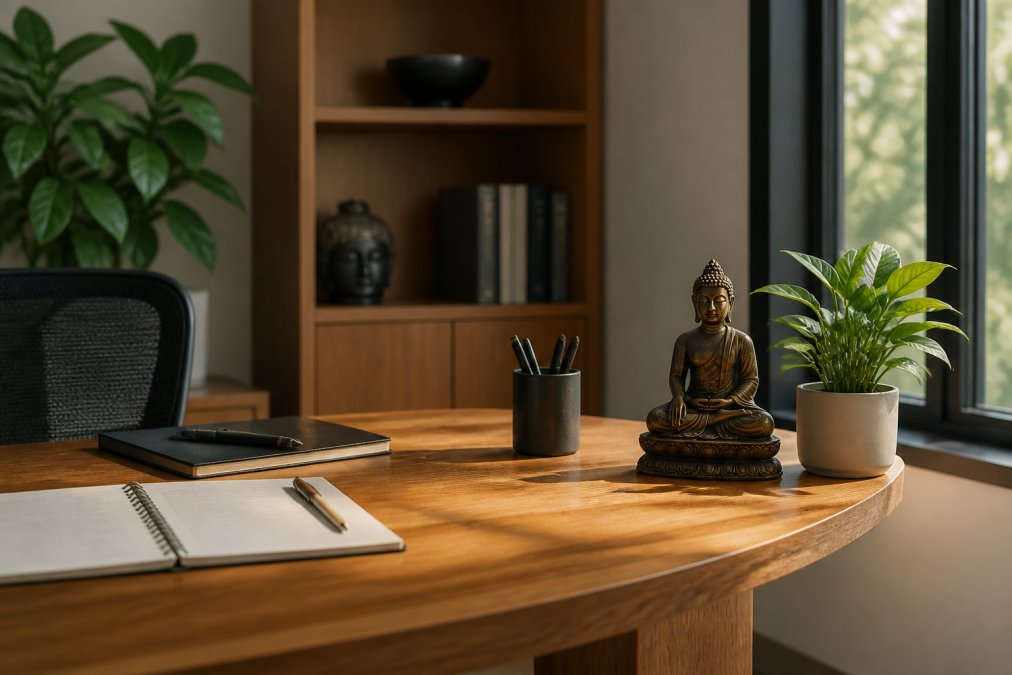
Wo Sie positionieren Deine Buddha-Statue ist genauso wichtig wie die Statue, die Sie wählen. Die Augenhöhe ist nicht verhandelbar. Ihre Statue sollte in einer Höhe stehen, in der Sie ihr während Ihres Arbeitstages normalerweise begegnen, normalerweise 12 bis 18 Zoll über Ihrer Schreibtischoberfläche (peer-reviewte Forschung).
Die südöstliche Ecke Ihres Schreibtisches repräsentiert den Vermögenssektor im Feng Shui. Es wird angenommen, dass die Platzierung Ihrer Buddha-Statue hier, insbesondere eines lachenden Buddhas oder Amitabha, Wohlstand und Überfluss aktiviert. Wenn Ihr Schreibtisch keine klare südöstliche Ecke hat, platzieren Sie die Statue in dem Bereich, der am weitesten vom Haupteingang Ihres Büros entfernt ist.
Vermeiden Sie es, Ihre Statue direkt zwischen Ihnen und der Tür zu platzieren, da dies zu einer visuellen und energetischen Behinderung führt. Positionieren Sie es an der Seite, wo es sichtbar bleibt, ohne Ihre Sichtlinie zum Eingang zu versperren. Abstand zu Unordnung ist wichtig. Ihre Buddha-Statue sollte einen freien, dafür vorgesehenen Platz einnehmen. Sogar eine kleine freie Zone um die Statue signalisiert Absicht und Respekt für ihre Anwesenheit.
Natürliches Licht verstärkt die visuelle und energetische Wirkung der Statue. Platzieren Sie es dort, wo Sonnenlicht oder Umgebungsbeleuchtung im Büro seine Funktionen beleuchten kann. Vermeiden Sie dunkle Ecken oder schattige Regale.
Lachender Buddha-Büroplatz für Wohlstand
Der lachende Buddha verdient besondere Aufmerksamkeit für Büroumgebungen. Im Gegensatz zu anderen Buddha-Formen, bei denen Meditation und Erleuchtung im Vordergrund stehen, lädt Budai aktiv Wohlstand, Zufriedenheit und Glück in Ihren Arbeitsbereich ein.
Bei der Büroplatzierung im Laughing Buddha sollte der Vermögenssektor, die südöstliche Ecke, Vorrang haben Ihres Schreibtisches oder Büroraum. Wenn Ihr Schreibtisch nicht für eine südöstliche Ausrichtung geeignet ist, positionieren Sie den lachenden Buddha in der äußersten linken Ecke Ihres Schreibtisches, was auch der Fülle in der Feng-Shui-Kartierung entspricht. Der runde Bauch sollte Ihnen zugewandt sein und Fülle in Ihre Richtung einladen.
Einige Praktizierende berühren oder reiben den Bauch des lachenden Buddhas als rituelle Geste und glauben, dass diese Handlung Wohlstand aktiviert. Während die Wirksamkeit von persönlichen Überzeugungen abhängt, hat die Geste selbst eine psychologische Funktion: Sie stellt eine fühlbare Verbindung zu Ihrer Absicht nach Fülle her.
Insbesondere für den lachenden Buddha ist die Körpergröße wichtig. Im Gegensatz zu Shakyamuni oder Amitabha kann der lachende Buddha etwas tiefer positioniert werden, etwa 10 bis 12 Zoll über der Schreibtischoberfläche, wodurch das Gesicht der Figur näher an Ihre natürliche Sichtlinie herankommt. Der fröhliche Ausdruck macht es besonders effektiv für Büros, in denen der Stress hoch ist. Der Blick in ein lächelndes Gesicht kann Ihren neurologischen Zustand verändern und die Stimmung und Entscheidungsfindung beeinflussen.
Feng Shui-Schreibtischlayout für Produktivität
Über die Buddha-Statue hinaus verstärkt die gesamte Feng-Shui-Anordnung Ihres Schreibtisches die Wirksamkeit der Statue. Die Kommandoposition ist die Grundlage der Feng-Shui-Schreibtischanordnung. Stellen Sie Ihren Schreibtisch so auf, dass Sie die Tür zu Ihrem Büro sehen können, ohne direkt davor zu sitzen. Deine Buddha-Statue sollte seitlich dieser Sichtlinie positioniert werden und diese nicht blockieren.
Die drei Zonen Ihres Schreibtisches, links, in der Mitte und rechts, haben jeweils eine unterschiedliche energetische Bedeutung. Die linke Seite steht für Wachstum und Neuanfänge. Die Mitte steht für Stabilität und Erdung. Die rechte Seite steht für Vollendung und Anerkennung. Idealerweise nimmt Ihre Buddha-Statue die rechte oder mittlere Zone ein und verankert so die Gesamtenergie des Schreibtisches, während die linke Seite für aktives Arbeiten offen bleibt.
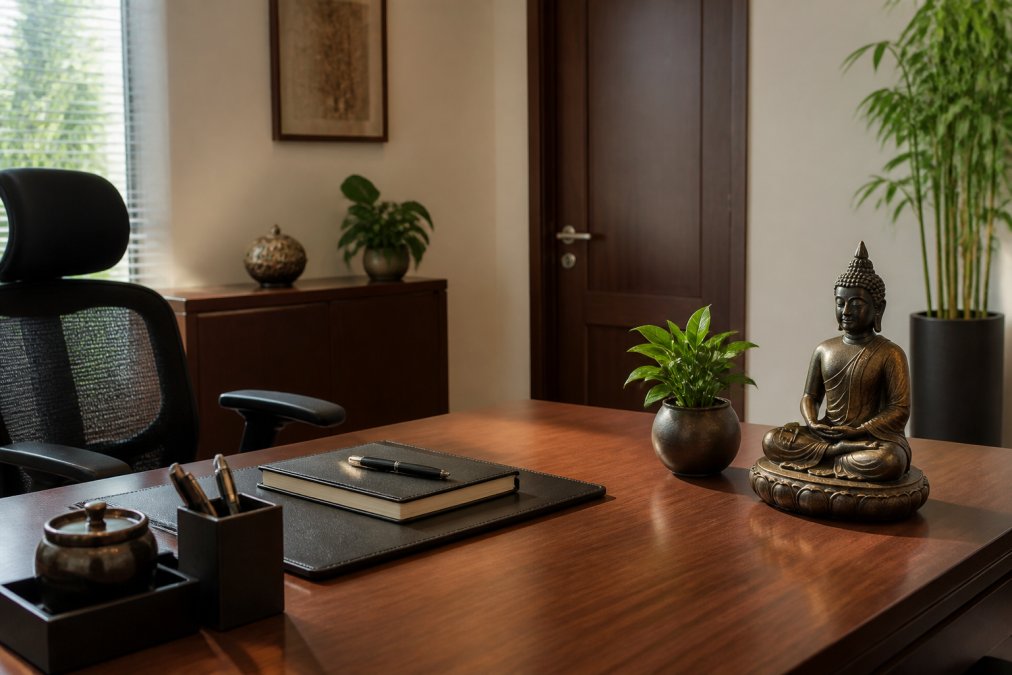
Minimieren Sie Unordnung rücksichtslos. Jeder Gegenstand auf Ihrem Schreibtisch sollte einem funktionalen oder spirituellen Zweck dienen. Ihre Buddha-Statue sollte das einzige rein kontemplative Objekt auf dem Schreibtisch sein. Integrieren Sie eine Pflanze oder ein natürliches Element, um Wachstumsenergie einzuführen und die Luftqualität zu verbessern. Eine kleine Topfpflanze im linken oder mittleren Bereich ergänzt die Präsenz des Buddha, ohne um Aufmerksamkeit zu konkurrieren.
Respektvolle Platzierung der Buddha-Statue und kulturelle Sensibilität
Die Platzierung einer Buddha-Statue in Ihrem Büro ist keine zufällige dekorative Entscheidung. Der Buddhismus hat für Milliarden von Menschen eine tiefe spirituelle und kulturelle Bedeutung. Ein respektvoller und bewusster Umgang mit dieser Praxis verhindert kulturelle Aneignung und würdigt die Traditionen, aus denen diese heiligen Formen stammen.
Verstehen Sie, dass Buddha-Statuen in der buddhistischen Tradition selbst keine Glücksbringer oder Feng-Shui-Requisiten sind. Sie sind Darstellungen der Erleuchtung und dienen als Hilfsmittel für Meditation und spirituelle Praxis. Wenn man eine Buddha-Statue nur als Dekoration betrachtet, läuft man Gefahr, einen heiligen Gegenstand zu einer Ware zu degradieren.
Vermeiden Sie es, Buddha-Statuen in Badezimmern, Schlafzimmern oder anderen Räumen aufzustellen, die mit Körperfunktionen oder intimen Aktivitäten verbunden sind. Diese Platzierungen gelten in buddhistischen und Feng-Shui-Traditionen als respektlos. Ihr Büroschreibtisch ist dafür geeignet, weil er ein Raum ist, der der konzentrierten Arbeit und Absicht gewidmet ist.
Platzieren Sie eine Buddha-Statue niemals so unterhalb Ihrer Augenhöhe, dass Sie aus einer überlegenen Position auf sie herabblicken müssen (peer-reviewte Forschung). Die Statue sollte sich auf Augenhöhe oder leicht erhöht befinden und als gleichberechtigter oder leitender Gegenstand und nicht als untergeordnetes Objekt positioniert werden.
Behandeln Sie Ihre Statue mit Absicht. Gehen Sie beim Bewegen oder Reinigen vorsichtig und nicht nachlässig vor. Beziehen Sie Ihre Statue bei seriösen Händlern Wer kann über seine Herkunft und Handwerkskunst sprechen? HD Asian ArtDie handverlesene Sammlung von umfasst sowohl antike als auch zeitgenössische Stücke mit nachweisbarer Herkunft.
Informieren Sie sich über die konkrete Form, die Sie wählen. Das Verstehen der Symbolik von Shakyamuni, Amitabha, Lachendem Buddha oder Kwan Yin vertieft Ihre Verbindung zum Objekt und verhindert, dass es als bloße Dekoration behandelt wird. Wenn Sie kein buddhistischer Praktizierender sind, geben Sie dies ehrlich zu. Sie können Buddha-Statuen ästhetisch schätzen und sie als Brennpunkte der Achtsamkeit nutzen, ohne Anspruch auf eine buddhistische Identität zu erheben.
Häufige Platzierungsfehler, die Sie vermeiden sollten
Selbst bei guten Absichten können mehrere Platzierungsfehler die Wirksamkeit Ihrer Buddha-Statue beeinträchtigen.
Platzieren Sie die Statue in einer dunklen Ecke. Eine im Schatten versteckte Buddha-Statue verliert ihre visuelle und psychologische Wirkung. Licht ist wichtig, entweder natürliches Tageslicht oder stimmungsvolle Bürobeleuchtung sollte die Statue klar beleuchten.
Die Statue mit Unordnung umgeben. Wenn Ihr Buddha inmitten von Stapeln von Papieren oder konkurrierenden Dekorationsgegenständen sitzt, verflüchtigt sich seine Erdungsenergie. Die Statue braucht Raum zum Atmen, eine klare Zone um sie herum, die ihre Bedeutung signalisiert.
Positionieren Sie es direkt über Ihrem Kopf. Dadurch kann ein Gefühl von Druck oder Schwere entstehen. Eine Platzierung auf Augenhöhe oder leicht erhöht ist angenehmer und energetisch ausgeglichener.
Platzieren Sie es zwischen Ihnen und der Tür. Dies blockiert Ihre energetische Sichtlinie und erzeugt ein Gefühl der Behinderung. Positionieren Sie die Statue seitlich Ihrer primären Sichtlinie, nicht in deren Mitte.
Verwenden Sie eine Statue, die Ihrer Absicht nicht entspricht. Wenn Sie sich für einen lachenden Buddha entscheiden, um Wohlstand zu erreichen, Ihr Arbeitsplatz aber der tiefgreifenden analytischen Arbeit gewidmet ist, liegt eine subtile Fehlausrichtung vor. Die Statue sollte sowohl die Funktion Ihres Arbeitsplatzes als auch Ihre wahre Absicht widerspiegeln.
Versäumnis, die Statue zu reinigen oder zu pflegen. Staubansammlungen signalisieren Vernachlässigung und stagnierende Energie. Regelmäßige sanfte Reinigung hält die Statue lebendig und erinnert Sie an ihre Anwesenheit.
Platzieren mehrerer Statuen auf einem einzigen Schreibtisch. Sofern Ihr Schreibtisch nicht außergewöhnlich groß ist, erzeugen mehrere Buddha-Statuen eher visuelle Verwirrung als gebündelte Energie. Eine absichtlich positionierte Statue ist weitaus mächtiger.
Ignorieren der Statue nach der Platzierung. Damit die Statue ihren Zweck erfüllt, müssen Sie sich mit ihr auseinandersetzen, sei es ein täglicher Blick, ein Moment der Meditation oder eine bewusste Pause. Ohne dieses Engagement wird es unsichtbar.
Eine Buddha-Statue für Ihren Schreibtisch ist ein Zeichen dafür, Achtsamkeit und Absicht in Ihr Berufsleben zu bringen. Die beste Wahl vereint Ästhetik, angemessene Größe, respektvolle Beschaffung und bewusste Platzierung.
HD Asian ArtDie sorgfältig kuratierte Sammlung von bietet eine Brücke zwischen diesen Elementen und bietet handverlesene antike und zeitgenössische Stücke, die Meditationsräume und raffinierte spirituelle Innenräume aufwerten.
Wenn Sie eine Statue auswählen, entscheiden Sie sich nicht nur für ein dekoratives Objekt; Sie wählen eine tägliche Erinnerung daran, dass Ihre Arbeit auf Frieden, Zielstrebigkeit und Klarheit basieren kann. Die Statue wird zu einem Ankerpunkt, der Sie dazu einlädt, innezuhalten, durchzuatmen und sich wieder auf das Wesentliche zu konzentrieren.
Häufig gestellte Fragen
F: Welcher Buddha eignet sich am besten für die Platzierung auf dem Schreibtisch?
A: Die beste Buddha-Statue für Ihren Schreibtisch hängt von Ihren Absichten ab. Shakyamuni Buddha steht für Erleuchtung und Klarheit, ideal für Entscheidungsrollen. Der lachende Buddha (Budai) bringt Zufriedenheit und Wohlstand, perfekt für den Verkauf oder die unternehmerische Arbeit. Amitabha Buddha unterstützt inneren Frieden und Konzentration. Wählen Sie basierend auf der Energie, die Sie in Ihrem Arbeitsbereich kultivieren möchten. Auch die Größe spielt eine Rolle: Eine 6–10 Zoll große Statue passt gut auf die meisten Schreibtische, ohne den Platz zu überfordern oder optische Unordnung zu erzeugen.
F: Ist es respektvoll, eine Buddha-Statue auf einem Schreibtisch stehen zu lassen?
A: Ja, wenn es mit achtsamer Absicht durchgeführt wird. Buddha-Statuen sind nicht in allen buddhistischen Traditionen Kultobjekte; Viele Praktizierende nutzen sie als Brennpunkte für Meditation und spirituelle Praxis. Um Respekt zu zeigen, platzieren Sie Ihre Statue auf oder über Augenhöhe, halten Sie die Umgebung sauber und frei von Unordnung und behandeln Sie sie nicht als bloße Dekoration. Platzieren Sie es niemals im Badezimmer oder unter anderen Gegenständen. Wenn Ihre Statue eine bestimmte buddhistische Abstammungslinie oder Gottheit darstellt, erforschen Sie ihre Bedeutung, um ihre kulturellen Ursprünge zu würdigen. Durch die gezielte Platzierung wird es vom Dekor zu einem bedeutungsvollen spirituellen Anker.
F: Welche Feng-Shui-Platzierung bringt den meisten Wohlstand auf einen Schreibtisch?
A: Im Feng Shui befindet sich der Vermögensbereich in der äußersten linken oder südöstlichen Ecke Ihres Schreibtisches oder Zimmers. Es wird angenommen, dass das Platzieren einer Buddha-Statue, insbesondere einer mit einem Goldbarren oder in einer wohlstandsassoziierten Pose, an diesem Ort glücksverheißende Energie und positives Chi anzieht. Stellen Sie sicher, dass sich die Statue auf Augenhöhe oder leicht darüber befindet und freie Sicht auf Ihren Haupteingang hat. Sorgen Sie dafür, dass der Raum darum herum bewusst und aufgeräumt ist. Stagnierende Energie blockiert den Wohlstand. Wenn Sie Ihre Buddha-Statue mit einer Pflanze oder einem kleinen Wasserspiel im selben Bereich kombinieren, kann dies den Effekt verstärken und einen Brennpunkt schaffen, der Sie den ganzen Arbeitstag über an Ihre Absichten erinnert.
F: Woher weiß ich, ob eine Buddha-Statue authentisch und hochwertig ist?
A: Authentische Buddha-Statuen zeigen sorgfältige Handwerkskunst in Bezug auf Gesichtszüge, Handmudras (symbolische Handpositionen) und Proportionen. Achten Sie auf eine gleichbleibende Materialqualität. Harz, Kupfer oder Stein sollten sich solide anfühlen und eine gleichmäßige Verarbeitung aufweisen. Suchen Sie nach Herkunftsinformationen: seriöse Quellen wie HD Asian Art Geben Sie Einzelheiten zur Herkunft der Statue, zum handwerklichen Hintergrund und zu den verwendeten Materialien an. Handgefertigte Stücke weisen in der Regel geringfügige Abweichungen auf, die auf echte Kunsthandwerksarbeit und nicht auf Massenproduktion hinweisen. Seien Sie vorsichtig bei verdächtig niedrigen Preisen oder vagen Angaben zur Bezugsquelle. Fordern Sie vor dem Kauf Fotos, Materialspezifikationen und Herstellerinformationen an. Hochwertige Statuen rechtfertigen ihren Preis durch Haltbarkeit, ästhetische Präsenz und spirituelle Integrität.
