



Antike vs. reproduzierte buddhistische Statuen: Ein Leitfaden für Sammler
Antike vs. reproduzierte buddhistische Statuen: Ein Leitfaden für Sammler
Inhaltsverzeichnis
Antike vs. reproduzierte buddhistische Statuen verstehen
Unterscheidung zwischen Antik und Reproduktion Buddhistische Statuen erfordert die Prüfung von Materialien, Handwerkskunst und Authentizität. Bei HD Asian Art, Wir helfen Sammlern, sich in dieser Landschaft zurechtzufinden, indem wir verstehen, was echte historische Stücke von zeitgenössischen Reproduktionen unterscheidet. Eine authentische antike Statue hat historische Bedeutung, einen kulturellen Wert und einen beträchtlichen Geldwert, während eine gut gemachte Reproduktion zu einem Bruchteil der Kosten ästhetischen und spirituellen Zwecken dient.
Antiquität und Reproduktion definieren
Ein antike buddhistische Statue wird im Allgemeinen als eine Skulptur definiert, die vor mindestens 100 Jahren geschaffen wurde und unter Verwendung zeitgemäßer Techniken und Materialien, die für ihre Region und Epoche spezifisch sind, handgefertigt wurde. Die Authentizität hängt von drei Elementen ab: den verwendeten Materialien, der Herstellungsmethode und der dokumentierten Herkunft, aus der die Besitzgeschichte hervorgeht.
A Reproduktion einer buddhistischen Statue ist eine zeitgenössische Kreation, die historischen Entwürfen nachempfunden ist und von Abgüssen in Museumsqualität bis hin zu massenproduzierten Kopien reicht. Diese Unterscheidung ist wichtig, weil antike Statuen einen kunsthistorischen Kontext und ein kulturelles Erbe tragen. Ein bronzener Buddha aus der Ming-Dynastie repräsentiert nicht nur künstlerisches Können, sondern auch das spirituelle und politische Umfeld des 15. Jahrhunderts China.
Warum Authentifizierung für Sammler wichtig ist
Die falsche Identifizierung eines Stücks kann dazu führen, dass man für eine Reproduktion zu viel bezahlt oder eine echte Antiquität unterbewertet. Für authentifizierte antike Stücke werden Prämien verlangt, die Reproduktionen nicht rechtfertigen können. Die Authentifizierung schützt Sie auch rechtlich, da einige Gerichtsbarkeiten den Import und Verkauf von Kulturgütern regeln. Versicherungsunternehmen verlangen eine dokumentierte Beglaubigung, bevor sie hochwertige Stücke versichern. Daher ist eine professionelle Bewertung für seriöse Sammlungen unerlässlich.
So identifizieren Sie authentische Buddha-Statuen: Physische Indikatoren
Der zuverlässigste Weg, eine authentische Antiquität zu erkennen, besteht darin, physische Beweise für Alter und Handwerkskunst zu untersuchen. Im Gegensatz zu Reproduktionen, die einheitliche Oberflächen und präzise Formen aufweisen, weisen echte Antiquitäten Unregelmäßigkeiten, Abnutzungsmuster und Materialveränderungen auf, die sich über Jahrhunderte angesammelt haben.
Patina und natürliche Alterungsmuster
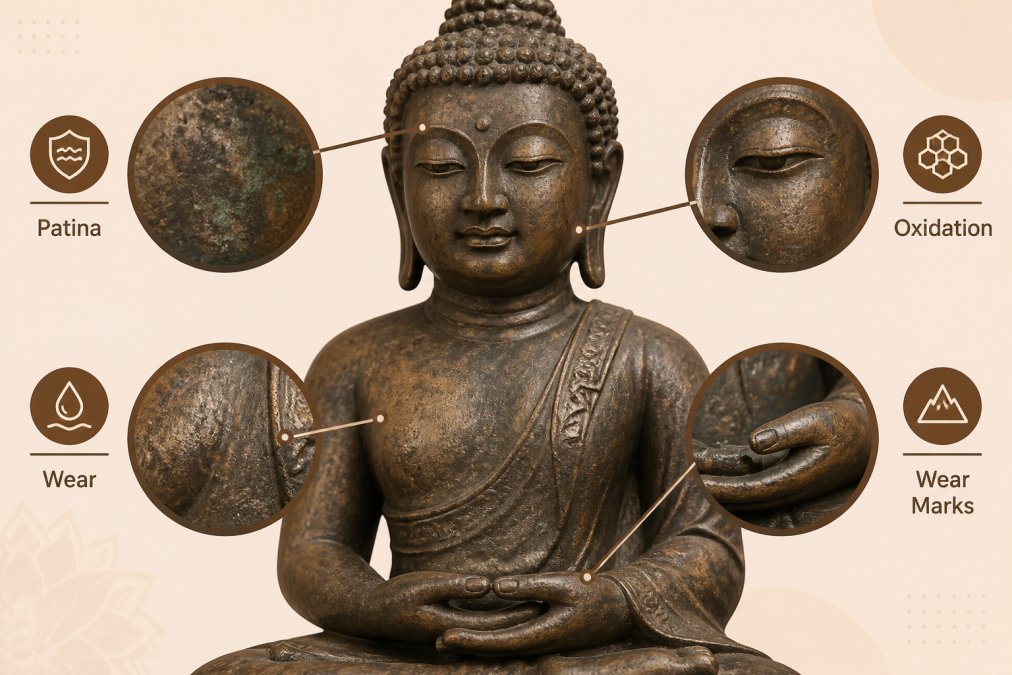
Patina ist die oxidierte Oberflächenschicht, die sich über Jahrzehnte und Jahrhunderte auf Bronze bildet. Auf authentischen Bronzestatuen erscheint Patina als fleckige, mehrfarbige Oberflächen in tiefen Grün-, Blau-, Braun- und Schwarztönen. Echte Patina ist nicht einheitlich; In Vertiefungen, in denen sich Feuchtigkeit ansammelt, ist es dicker und in erhabenen Bereichen leichter.
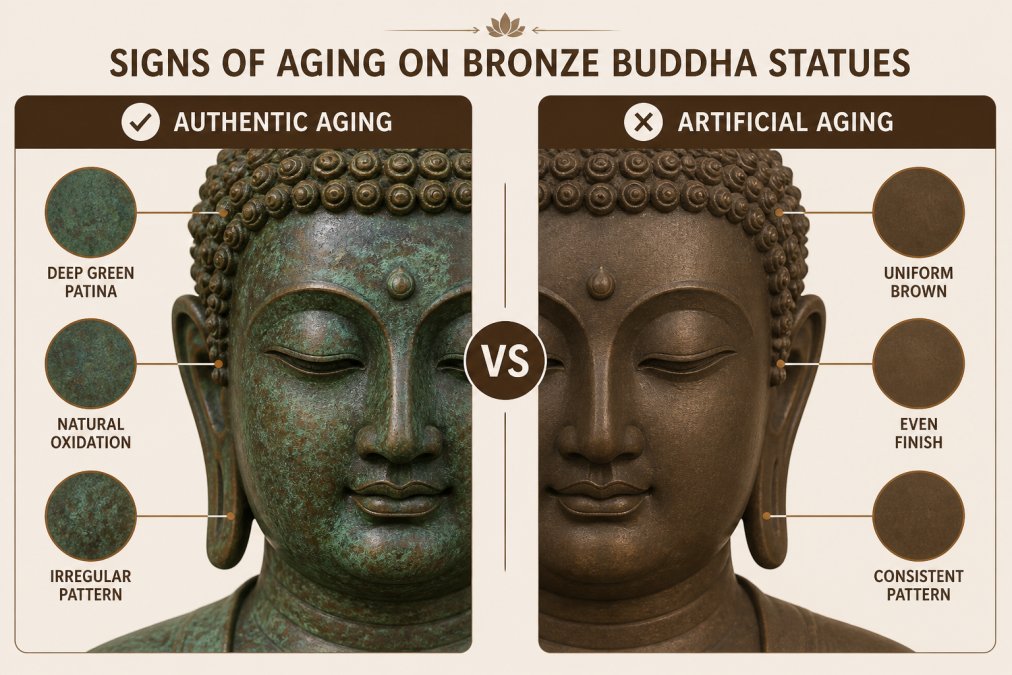
Künstliche Patina auf Reproduktionen neigt zur Gleichmäßigkeit und weist keine echte Oxidationstiefe auf. Es sitzt auf der Oberfläche und ist nicht fest mit dem Metall verbunden.
Tragemuster auf antiken Statuen zeugen von jahrhundertelanger Handhabung und Umweltbelastung. Echte Abnutzungserscheinungen treten an hohen Stellen auf, an denen Hände das Stück wiederholt berührt haben. Das Gesicht, die Hände und der Schoß des Buddha weisen durch den Kontakt eine subtile Glättung auf. Reproduktionen weisen in der Regel entweder keine Abnutzung oder eine gleichmäßige Abnutzung auf, die nicht den tatsächlichen Handhabungsmustern entspricht.
Handgegossene vs. geformte Konstruktion
Traditionell handgegossen oder cire perdue (Wachsausschmelzverfahren) war vor dem 20. Jahrhundert die wichtigste Methode zur Herstellung buddhistischer Statuen. Jedes handgegossene Stück ist von Natur aus einzigartig, da es während des Prozesses auf natürliche Weise zu Abweichungen kommt. Handgegossene Statuen weisen subtile Unvollkommenheiten auf: leichte Asymmetrien, Variationen in der Dicke und unregelmäßige Innenflächen.
Geformte Konstruktion, heute Standard für Reproduktionen, stellt identische Stücke aus derselben Form her. Auf geformten Statuen treten Formnähte auf, sichtbare Linien, an denen sich zwei Hälften treffen. Von Hand gegossene Antiquitäten weisen keine Nähte oder nur schwache Anzeichen dafür auf, dass der Künstler die Gussabschnitte sorgfältig vermischt hat.
Werkzeugspuren und Verschleißmuster
Authentische antike Bärenstatuen Werkzeugspuren von den Meißeln und Feilen des Künstlers, die als subtile Streifen auf der Oberfläche erscheinen, insbesondere auf Falten von Vorhängen und Gesichtszügen. Bei Reproduktionen fehlen diese Handbearbeitungsspuren. Echte Abnutzungsmuster an Händen, Füßen und im Gesicht zeugen von jahrhundertelanger Verehrung. Die Hände und Füße des Buddha zeigen eine subtile Glättung und Verdunkelung durch den Kontakt mit menschlichen Hautölen.
Alterserscheinungen an Buddha-Statuen aus Bronze
Die Transformation von Bronze im Laufe der Zeit liefert klare Hinweise zur Authentifizierung. Wenn Sie verstehen, wie Bronze chemisch und physikalisch altert, können Sie Stücke, die tatsächlich Jahrhunderte überstanden haben, von solchen unterscheiden, die künstlich gealtert wurden.
Oxidation und Oberflächentransformation
Bronze oxidiert, wenn es Sauerstoff und Feuchtigkeit ausgesetzt wird, und erzeugt eine charakteristische grüne oder blaue Patina. Dieser Prozess ist irreversibel und beschleunigt sich in den ersten 50–100 Jahren, um sich dann zu stabilisieren. Eine authentische antike Bronze weist Anzeichen einer ausgedehnten Oxidation auf: dicke, tief in die Oberfläche eingebettete Patina, oft geschichtet mit mehreren Farbschichten, die im Laufe der Zeit unterschiedliche Umgebungsbedingungen widerspiegeln.
Echte Oxidation erzeugt eine Patina, die sich nicht entfernen lässt. Kratzt man vorsichtig mit einem weichen Werkzeug an der Oberfläche, widersteht diese und die darunter liegende Bronze weist nur minimale Schäden auf. Künstlich aufgetragene Patina blättert oder kratzt oft leicht ab und bringt darunter helle Bronze zum Vorschein.
Die Farbverteilung auf authentischer Patina ist unregelmäßig und umweltverträglich. Bereiche, die mehr Feuchtigkeit ausgesetzt sind, entwickeln eine dickere, dunklere Patina. Reproduktionen weisen oft eine einheitliche Farbgebung auf, was darauf hindeutet, dass die Patina als Beschichtung aufgetragen und nicht durch Umwelteinflüsse entwickelt wurde.
Thermisch gealtert vs. künstlich verwittert
Bei einigen Reproduktionen wird versucht, die Alterung durch thermische Behandlung zu beschleunigen, indem die Bronze erhitzt wird, um eine jahrhundertelange Oxidation zu simulieren. Thermisch gealterte Stücke entwickeln schneller Patina als natürliche Alterung, die Ergebnisse unterscheiden sich jedoch von denen echter Antiquitäten. Bei der thermischen Alterung entsteht oft eine zu gleichmäßige Patina, der die komplexe, vielschichtige Farbvariation der natürlichen Oxidation fehlt.
Keine künstliche Alterungsmethode reproduziert die jahrhundertelange Exposition perfekt. Natürliche Patina entwickelt sich durch unzählige Zyklen der Feuchtigkeitsaufnahme, Temperaturschwankungen und chemischen Wechselwirkungen, die für die Umgebung jeder Statue spezifisch sind.
Materialanalyse: Bronze, Holz und Stein
Buddhistische Statuen wurden je nach regionaler Tradition, verfügbaren Ressourcen und Verwendungszweck aus unterschiedlichen Materialien gefertigt. Die Identifizierung des Materials und das Verständnis seiner Alterung helfen bei der Authentifizierung von Stücken und der Beurteilung ihrer kulturellen Herkunft.
Zusammensetzung und Gießmethoden der Bronzelegierung
Traditionelle Bronze, die für buddhistische Statuen verwendet wird, enthält typischerweise 85–90 % Kupfer, wobei Zinn und andere Metalle hinzugefügt werden, um die Gusseigenschaften und die Haltbarkeit zu verbessern. Moderne Bronzelegierungen enthalten manchmal Zink, Nickel oder andere Elemente, die das Oxidationsmuster verändern.
Antike Bronzen weisen in nicht oxidierten Bereichen im Vergleich zu modernen Legierungen oft eine sattere, tiefere Farbe auf. Die Patina auf traditionellen Bronzen entwickelt sich in charakteristischen Farbsequenzen: zunächst rote Kupferoxidation, dann braun, dann mit zunehmender Oxidation grün und blau.
Holz, Lack und Vergoldung in antiken Stücken
Buddha-Statuen aus Holz, insbesondere aus Südostasien, weisen natürliche Risse und Risse auf, wenn das Material über Jahrhunderte hinweg trocknet. Die Holzmaserung verdunkelt sich ungleichmäßig und die Oberfläche entwickelt durch Handhabung und Umwelteinflüsse eine Patina.
Lack, aufgetragen auf Holz und einige Steinstücke, entwickelt mit zunehmendem Alter ein charakteristisches Craquelé, ein Netzwerk feiner Risse. Diese Risse sind unregelmäßig und entstehen durch die Reaktion des Lacks auf Holzbewegungen und Änderungen der Umgebungsfeuchtigkeit. Reproduktionen zeigen oft keine Risse oder künstlich erzeugte Risse, die zu regelmäßig erscheinen.
Vergoldung (Blattgold oder Goldfarbe) auf antiken Stücken weisen altersbedingte Abnutzungserscheinungen auf. Blattgold kann abblättern oder sich ungleichmäßig abnutzen und das darunter liegende Material freilegen. Moderne Vergoldungstechniken sorgen für eine gleichmäßigere Deckung und einen langsameren Verfall, was eine gealterte Vergoldung zu einem zuverlässigen Indikator für die Authentifizierung macht.
Die Rolle von Provenienz und Dokumentation
Provenienz, die dokumentierte Besitzgeschichte eines Kunstwerks liefert den stärksten Authentifizierungsbeweis. Eine Statue mit eindeutiger Herkunft, die den Besitz von Museen, angesehenen Sammlern oder dokumentierten Verkäufen in etablierten Auktionshäusern zeigt, ist weitaus glaubwürdiger als ein Stück mit unbekannter Herkunft.
Verfolgung der Eigentumshistorie
Bei authentischen antiken Statuen gibt es oft Dokumentationen, die den Besitz über Jahrzehnte oder sogar Jahrhunderte zurückverfolgen. Dazu können Museumskataloge, Aufzeichnungen von Auktionshäusern, Sammlungsfotos oder Briefe von Vorbesitzern gehören. Seriöse Händler führen detaillierte Aufzeichnungen, da die Herkunft den Wert und die Authentizität erheblich beeinflusst.
Achten Sie bei der Beurteilung der Herkunft auf Spezifität. Ein Dokument mit der Aussage „1950 in Südostasien erworben“ ist weniger glaubwürdig als „1950 aus dem Nachlass von [benanntem Sammler] in Bangkok erworben, zuvor dokumentiert in [Museum oder Veröffentlichung]“.
Rote Fahnen Dazu gehören das plötzliche Auftauchen eines Stücks ohne vorherige Dokumentation, widersprüchliche Daten oder Beschreibungen zwischen Quellen oder Eigentumsansprüche ungenannter Privatsammler in Ländern mit Exportbeschränkungen für kulturelle Artefakte.
Kunsthistorischer Kontext und Stilperiode
Verständnis Stilperioden hilft dabei, Statuen zu datieren und ihre Echtheit zu überprüfen. Die buddhistischen Bildhauertraditionen entwickelten sich über Regionen und Jahrhunderte hinweg deutlich. Ein Gandhara-Buddha (2.–5. Jahrhundert n. Chr.) weist spezifische künstlerische Konventionen, griechisch beeinflusste Gewänder und idealisierte Gesichtsproportionen auf, die sich deutlich von chinesischen Bronzen aus der Ming-Dynastie oder burmesischen Holzskulpturen aus dem 18. Jahrhundert unterscheiden.
Ikonographie, die in der Statue dargestellten symbolischen Elemente, liefern ebenfalls Hinweise zur Authentifizierung. Das Mudra (Handgeste) des Buddha, der Stil der Gewänder, das Vorhandensein oder Fehlen eines Heiligenscheins und das Grunddesign haben alle spezifische Bedeutungen, die an bestimmte Traditionen und Epochen gebunden sind. Reproduktionen stellen diese Elemente manchmal falsch dar, vermischen ikonografische Traditionen oder schaffen hybride Stile, die historisch nie existierten.
Bewertungsdienste für Buddha-Statuen und professionelle Überprüfung
Wenn Sie vermuten, dass Sie eine wertvolle antike Statue besitzen, sorgt eine professionelle Schätzung für die endgültige Authentifizierung und Bewertung. Gutachter, die sich auf asiatische Kunst spezialisiert haben, bringen Fachwissen in Bezug auf Materialien, Techniken, Stilanalysen und Marktwerte mit, mit denen einzelne Sammler nicht mithalten können.
Wann Sie ein Expertengutachten einholen sollten
Eine professionelle Wertermittlung ist unerlässlich, wenn Sie über einen bedeutenden Kauf nachdenken, Versicherungsunterlagen benötigen, einen Verkauf planen oder eine endgültige Echtheitsbestätigung für ein Stück wünschen, das Sie besitzen. Dienstleistungen wie Meartos Buddha-Kunstbewertungsplattform Verbinden Sie Sammler mit Spezialisten, die Statuen untersuchen und schriftliche Bewertungen erstellen.
Was professionelle Gutachter prüfen
Professionelle Gutachter bewerten mehrere Dimensionen gleichzeitig. Sie untersuchen Materialzusammensetzung durch visuelle Inspektion und in einigen Fällen wissenschaftliche Tests. Sie beurteilen Bauweisen durch die Analyse von Gussnähten, Werkzeugspuren und der inneren Struktur. Sie bewerten Oberflächenalterung durch Untersuchung der Patinatiefe, Oxidationsmuster und Verschleißindikatoren.
Auch Gutachter recherchieren Herkunft durch Querverweise des Stückes mit Museumsdatenbanken, Auktionsaufzeichnungen und wissenschaftlichen Veröffentlichungen. Sie analysieren Stilelemente zur Bestimmung von Zeitraum und regionaler Herkunft. Der Gutachter erstellt einen schriftlichen Bericht, in dem er die Ergebnisse dokumentiert, ein Gutachten zur Authentifizierung abgibt und den fairen Marktwert schätzt.
Gängige Fälschungstechniken und massenproduzierte Nachbildungen
Wenn Sie verstehen, wie Reproduktionen erstellt werden, können Sie sie leichter identifizieren. Fälscher nutzen immer ausgefeiltere Techniken, um das Erscheinungsbild des Alters nachzubilden, doch jede Methode hinterlässt erkennbare Spuren.
Künstliche Alterung und Schimmelnähte
Moderne Fälscher nutzen mehrere Techniken, um Reproduktionen künstlich zu altern. Chemische Alterung Wendet patinaerzeugende Lösungen auf Bronze an und beschleunigt so die Oxidation. Thermische Alterung Erhitzt Bronze in kontrollierten Umgebungen, um schneller Patina zu entwickeln. Mechanische Beanspruchung verwendet Schleifmittel und Werkzeuge, um Verschleißmuster zu erzeugen. Jede Technik erzeugt erkennbare Artefakte, die sich von der echten Alterung unterscheiden.
Formnähte bleiben der offensichtlichste Indikator für geformte Konstruktionen. Auf Reproduktionen sind die Nähte oft deutlich entlang der Mittellinie der Statue zu erkennen, von der Basis bis zum Kopf. Echte handgegossene Stücke weisen keine Nähte oder nur schwache Anzeichen sorgfältig gemischter Gussabschnitte auf.
Identifizierung von Massenkopien
Massenreproduktionen werden aus identischen Formen hergestellt, was bedeutet, dass jede Kopie im Wesentlichen ein Duplikat ist. Wenn Sie auf zwei Statuen stoßen, die in jedem Detail verdächtig ähnlich sind, stammen sie wahrscheinlich aus derselben Form.
Einheitlichkeit ist das verräterische Zeichen der Massenproduktion. Echte antike Statuen weisen individuelle Variationen auf, selbst wenn sie vor Jahrhunderten aus derselben Originalform hergestellt wurden. Untersuchen Sie die Basis vorsichtig. Bei massenhaft hergestellten Stücken weist der Sockel häufig deutliche Gussspuren oder gleichmäßige Abnutzungserscheinungen auf, die nicht zur Statue selbst passen.
Regionale Stilnuancen: Gandhara, Ming und südostasiatische Traditionen
Die Traditionen der buddhistischen Bildhauerei haben sich regional deutlich entwickelt, und das Verständnis dieser regionalen Stile hilft, Stücke zu authentifizieren und ihren kulturellen Ursprung zu bestimmen.
Gandhara-Tradition (2.–5. Jahrhundert n. Chr.)
Die Gandhara In dieser Region (dem heutigen Pakistan und Afghanistan) entstanden einige der frühesten buddhistischen Skulpturen, die deutlich von griechischen Kunstkonventionen beeinflusst waren. Gandhara-Buddhas zeigen idealisierte Gesichtsproportionen, welliges Haar und Faltenwürfe, die an griechisch-römische Skulpturen erinnern. Authentische Gandhara-Stücke bestehen normalerweise eher aus Stein (Schiefer oder Kalkstein) als aus Bronze.
Bronzen aus der Ming-Dynastie (1368–1644 n. Chr.)
Bronzen aus der chinesischen Ming-Dynastie stellen einen Höhepunkt buddhistischer Bildhauerkunst dar. Diese Stücke zeichnen sich typischerweise durch raffinierte Gesichtszüge, elegante Proportionen und raffinierte Vergoldungen aus. Ming-Bronzen weisen häufig detaillierte Sockel mit Inschriften auf Die Gussqualität zeigt eine bemerkenswerte Präzision.
Südostasiatische Traditionen
Südostasiatische buddhistische Statuen, aus Thailand, Kambodscha, Laos, und Myanmar, ausgeprägte regionale Besonderheiten entwickelt. Thailändische Bronzen weisen häufig verlängerte Gesichtsproportionen und kunstvolle Kronen auf. Kambodschanische (Khmer-)Stücke weisen häufig angkorianische künstlerische Konventionen mit spezifischen ikonografischen Elementen auf. Burmesische Holzskulpturen weisen besondere Lackier- und Vergoldungstechniken auf, die für diese Tradition einzigartig sind.
Praktische Checkliste zur Authentifizierung
| Authentifizierungsfaktor | Worauf Sie achten sollten | Antiker Indikator | Reproduktionsindikator |
|---|---|---|---|
| Patina | Farbe und Tiefe der Oberflächenoxidation | Tiefgründig, vielschichtig, unregelmäßig | Gleichmäßig, oberflächennah, leicht kratzbar |
| Gießmethode | Nähte, innere Unregelmäßigkeiten | Handgegossen mit minimalen Nähten | Offensichtliche Formnähte, gleichmäßiger Innenraum |
| Werkzeugspuren | Endspuren auf der Oberfläche | Abwechslungsreiche, organische Streifen | Einheitlich oder künstlich hinzugefügt |
| Tragemuster | Glättung an hohen Stellen | Unregelmäßig, konzentriert auf Kontaktbereiche | Einheitlich oder abwesend |
| Materialzusammensetzung | Eigenschaften der Bronzelegierung | Zeitgemäße Legierung | Moderne Legierungszusammensetzung |
| Provenienz | Eigentumsdokumentation | Detaillierte, nachvollziehbare Historie | Unbekannte oder unklare Herkunft |
| Ikonographie | Stilelemente und Symbole | Konsistent mit Zeitraum/Region | Hybride oder anachronistische Elemente |
Professionelle Authentifizierung durch Dienste wie Mearto bietet eine dokumentierte Verifizierung, die für Versicherungen und bedeutende Einkäufe unerlässlich ist. Die Investition in ein professionelles Gutachten schützt Sie weitaus wirksamer als der alleinige Versuch einer Authentifizierung, insbesondere bei Stücken im Wert von mehr als ein paar hundert Dollar.
Um zu verstehen, wie man antike buddhistische Statuen von Reproduktionen unterscheiden kann, muss man auf physische Beweise achten. Die Patina, die Gussmethoden, Werkzeugspuren, Abnutzungsmuster und die Herkunft erzählen zusammen die Geschichte des Alters und der Authentizität einer Statue. Obwohl kein einzelner Indikator die Authentizität definitiv beweist, liefert das Zusammenspiel mehrerer Faktoren ein überzeugendes Argument.
Für seriöse Sammler professionelle Wertermittlung durch spezialisierte Authentifizierungsdienste für asiatische Kunst Bietet eine dokumentierte Überprüfung, die Ihre Investition schützt und klarstellt, was Sie besitzen. Ganz gleich, ob Sie eine Meditationssammlung aufbauen oder auf der Suche nach erstklassigen Stücken sind, die Hier beschriebene Authentifizierungsprinzipien Sie zu fundierten Entscheidungen führen.
Wenn Sie bereit sind, authentifizierte Stücke zu Ihrer Sammlung hinzuzufügen, HD Asian Art bietet sorgfältig kuratierte buddhistische und hinduistische Statuen mit Schwerpunkt auf Provenienz und künstlerischer Integrität. Stöbern Sie in der Auswahl handverlesener antiker und zeitgenössischer Stücke, die jeweils aufgrund ihrer spirituellen Bedeutung und raffinierten Handwerkskunst ausgewählt wurden. Mit kostenlosem Versand und der Verpflichtung, Ihre Meditationsräume mit von Tempeln inspiriertem Dekor aufzuwerten, HD Asian Art bringt authentische buddhistische Kunst in Ihr persönliches Heiligtum.
Häufig gestellte Fragen
Wie kann ich feststellen, ob meine buddhistische Statue wirklich antik oder nur eine hochwertige Reproduktion ist?
Authentische antike buddhistische Statuen weisen mehrere Altersindikatoren auf: natürliche Patina, die sich über Jahrzehnte entwickelt hat, spezifische Abnutzungsmuster in Bereichen mit häufiger Handhabung, handgegossene Konstruktion mit sichtbaren Formnähten und Gussfehlern sowie Werkzeugspuren, die mit historischen Herstellungstechniken übereinstimmen. Reproduktionen zeigen oft eine gleichmäßige künstliche Alterung, perfekte Symmetrie ohne Fehler und moderne Gussverfahren. Die Dokumentation der Provenienz, der kunsthistorische Kontext, der zur Stilperiode der Statue passt, und die fachmännische Begutachtung bieten die stärkste Authentifizierung. Wenn es sich um einen erheblichen Wert oder eine spirituelle Bedeutung handelt, wird eine professionelle Beurteilung durch einen Spezialisten für asiatische buddhistische Kunst empfohlen.
Worauf sollte ich bei der Untersuchung von Alterungserscheinungen an bronzenen Buddha-Statuen achten?
Authentische Bronzestatuen entwickeln eine natürliche Oxidation, die eine charakteristische Patina erzeugt, typischerweise grün, blaugrün oder braun, abhängig von der Umwelteinwirkung und der Zusammensetzung der Bronzelegierung. Diese Patina sollte uneben sein, in vertieften Bereichen dicker sein und Schichten aufweisen, die auf jahrhundertelange chemische Umwandlung hinweisen. Zu den echten Alterungserscheinungen zählen natürliche Abnutzungserscheinungen an Kontaktstellen wie Gesicht, Händen und Sockel sowie feine Risse in jeglicher Vergoldung oder Lackierung. Künstliche Verwitterung erscheint gleichmäßig, es fehlt ihnen die Tiefe einer echten Oxidation und sie weist Anzeichen einer chemischen Behandlung auf. Das darunter liegende Grundmetall sollte dem angeblichen Alter und der Herkunftsregion der Statue entsprechen.
Woher weiß ich, wann ich professionelle Dienste zur Bewertung von Buddha-Statuen in Anspruch nehmen muss?
Lassen Sie sich professionell schätzen, wenn Sie eine Statue besitzen, die Ihrer Meinung nach antik ist, diese versichern oder verkaufen möchten, die Echtheit vor einem größeren Kauf überprüfen möchten oder Unterlagen für Nachlass- oder Sammlungszwecke benötigen. Spezialisten wie Mearto bringen Sammler mit qualifizierten Gutachtern zusammen, die Erfahrung in der Authentifizierung buddhistischer und asiatischer Kunst haben. Professionelle Gutachter untersuchen Gussmethoden, Materialzusammensetzung, Herkunft, Ikonographie, stilistische Epochenindikatoren und Marktbewertung. Bei Online-Bewertungen erstellen sie in der Regel innerhalb von 48 Stunden eine Bewertung des fairen Marktwerts, obwohl bei komplexen Stücken möglicherweise eine persönliche Bewertung erforderlich ist. Dies ist besonders wichtig für Statuen, die ein bedeutendes kulturelles Erbe oder einen Investitionswert darstellen.
Was ist der Unterschied zwischen einer buddhistischen Vintage-Statue und einer echten Antiquität?
Antike buddhistische Statuen sind in der Regel über 100 Jahre alt und besitzen aufgrund ihrer Herkunft und ihrer Entstehungszeit eine historische, kulturelle und finanzielle Bedeutung. Sie zeigen authentische Alterungsmuster, traditionelle Herstellungstechniken und repräsentieren oft wichtige Stilepochen wie Gandhara, Ming-Dynastie oder regionale südostasiatische Traditionen. Vintage-Stücke sind neuer (im Allgemeinen 20–100 Jahre alt) und können Reproduktionen oder zeitgenössische Stücke sein, die mit älteren Techniken hergestellt wurden. Obwohl Vintage-Statuen einen ästhetischen und spirituellen Wert haben können, fehlt ihnen die historische Authentifizierung und Marktbewertung echter Antiquitäten. Das Verständnis dieser Unterscheidung hilft Sammlern, fundierte Kaufentscheidungen zu treffen und angemessene Erwartungen an Authentizität und Kosten zu setzen.
Dieser Artikel wurde mit geschrieben GrandRanker
