



Warum Steinbuddha-Gartendekorationen funktionieren: Erklärt
Warum Steinbuddha-Gartendekorationen funktionieren: Erklärt
Ein steinerner Buddha-Gartenaufsatz ist definiert als eine skulpturale Darstellung des Buddha, die als Hauptschwerpunkt eines Gartenbereichs im Freien platziert wird und aufgrund ihrer symbolischen Bedeutung, materiellen Beständigkeit und Fähigkeit, eine kontemplative Atmosphäre zu verankern, ausgewählt wurde. Die Bedeutung des Steinbuddha-Gartens geht weit über die Dekoration hinaus.
Diese Skulpturen tragen jahrhundertealte buddhistische Ikonographie in sich, wobei jede Pose, jede Handbewegung und jeder Gesichtsausdruck spezifische spirituelle Werte verkörpern. Gartenliebhaber und Innenarchitekten entscheiden sich zunehmend für steinerne Buddhastatuen nicht als religiöse Objekte, sondern als zentrale Anker, die das Design vereinen, zur Stille einladen und ihre Form über Jahrzehnte hinweg in jedem Klima behalten.
Warum steinerne Buddha-Gartenaufsätze gewählt werden: die wichtigste Erklärung
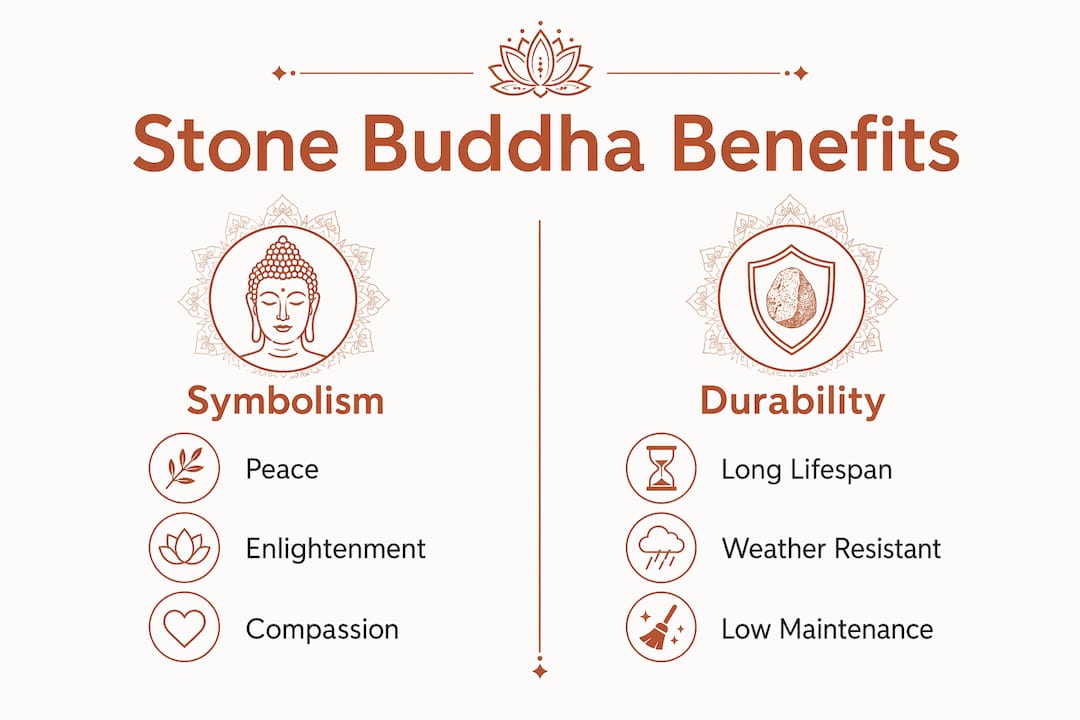
Der steinerne Buddha-Gartenaufsatz erfüllt zwei Funktionen gleichzeitig: Er fungiert als visueller und spiritueller Anker das die Blicke auf sich zieht und sowohl in öffentlichen als auch privaten Gartenräumen eine kontemplative Aura schafft und einen strukturell dauerhaften Blickfang bietet, der nahezu jedes alternative Material überdauert. Diese Doppelrolle erklärt, warum diese Skulpturen überall auftauchen, von minimalistischen, japanisch inspirierten Innenhöfen bis hin zu üppigen tropischen Gartengestaltungen. Kein anderes einzelnes Gartenobjekt vereint symbolische Tiefe mit materieller Haltbarkeit auf gleichem Niveau.
Die Vorteile eines Buddha-Gartens gehen über die Ästhetik hinaus. Buddha-Statuen dienen als didaktische Werkzeuge Sie erinnern den Betrachter an Qualitäten wie Mitgefühl und Weisheit und fungieren eher als Objekte persönlicher Reflexion als als Anbetung im westlichen Stil. Diese Unterscheidung ist für Dekorateure wichtig, die sinnvolle Gartenkunst wollen, ohne eine bestimmte religiöse Praxis zu übernehmen. Die Statue wird zu einer Aufforderung zur Achtsamkeit, nicht zu einem Schrein.
Der Werkstoff Stein verstärkt diese Beständigkeit. Granit, Sandstein und Kunststein haben jeweils ein optisches Gewicht und eine strukturelle Qualität, die Harz oder Metall nicht reproduzieren können. Die natürliche Alterung des Steins, einschließlich der allmählichen Entwicklung von Patina und Moos, integriert die Skulptur eher in den Garten als dass sie platziert oder temporär wirkt.
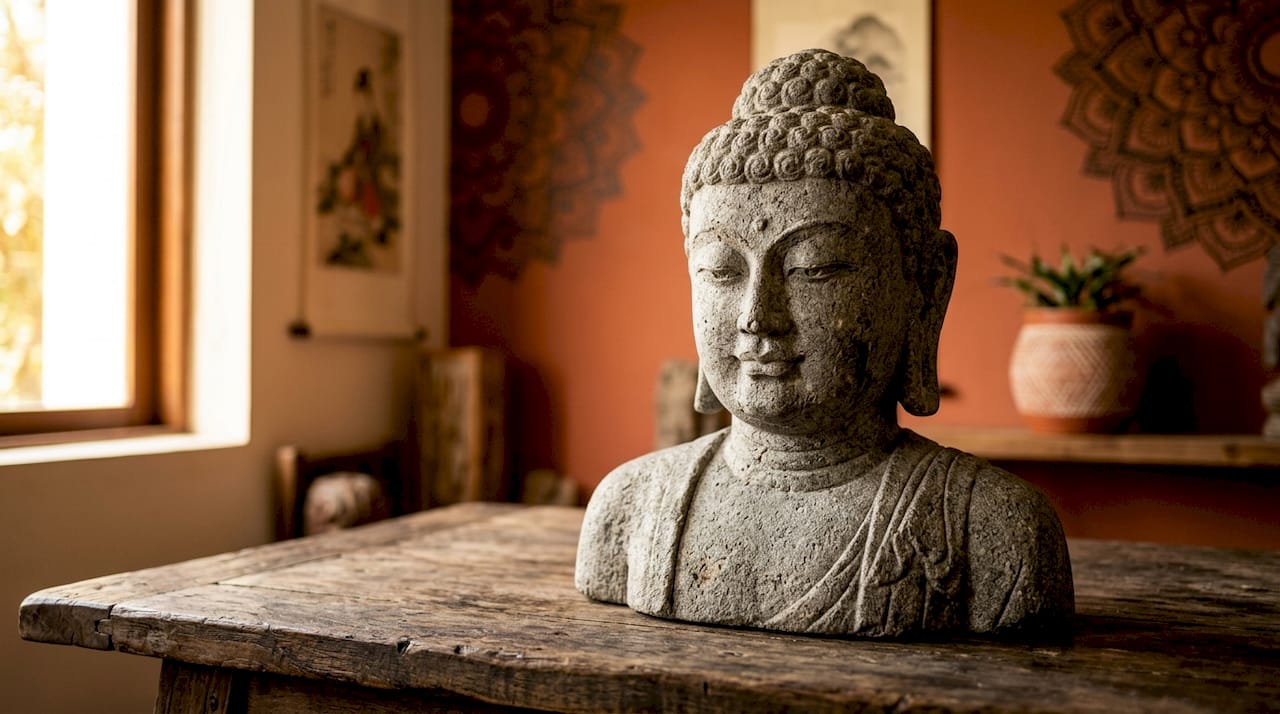
Welche symbolische Bedeutung haben steinerne Buddha-Gartenskulpturen?
Die Symbolik steinerner Buddhastatuen ist präzise und kodifiziert, nicht vage oder austauschbar. Mudras oder HandgestenSie repräsentieren bestimmte Tugenden und spirituelle Wahrheiten, was bedeutet, dass die Position der Hände auf Ihrer Gartenstatue eine eindeutige Botschaft vermittelt. Dies ist keine dekorative Variante. Es handelt sich um eine visuelle Sprache, die über mehr als zwei Jahrtausende hinweg in den Traditionen des Theravada-, Mahayana- und Vajrayana-Buddhismus entwickelt wurde.
Zu den häufigsten Posen und ihrer Bedeutung gehören:
- Sitzende Meditationshaltung (Dhyana Mudra): Beide Hände ruhen im Schoß, Handflächen nach oben. Steht für Ruhe, innere Konzentration und meditative Ausgeglichenheit. Die am häufigsten verwendete Pose für Gartendekorationen.
- Erdberührende Haltung (Bhumisparsha Mudra): Rechte Hand berührt den Boden, linke Hand im Schoß. Symbolisiert den Moment der Erleuchtung Buddhas und seinen Ruf als Zeuge auf die Erde.
- Stehend mit erhobener rechter Hand (Abhaya Mudra): Die nach außen gerichtete offene Handfläche signalisiert Furchtlosigkeit und Schutz. Stehende Statuen symbolisieren Schutz und werden für Garteneingänge oder Grenzpositionen empfohlen.
- Lachender Buddha (Budai): Eine vom historischen Buddha Shakyamuni getrennte Figur, die Fülle und Glück darstellt. In chinesischen Gartentraditionen häufig.
- Liegender Buddha: Stellt den endgültigen Übergang Buddhas in Parinirvana dar. In Gartenumgebungen weniger verbreitet, wird aber in größeren kontemplativen Räumen verwendet.
Die Gesichtsausdrücke in buddhistischen Statuen haben die gleiche Bedeutung. Die niedergeschlagenen Augen und das leichte Lächeln der meisten sitzenden Buddhas vermitteln innere Konzentration und Gleichmut, Eigenschaften, die sich direkt in der Atmosphäre eines Gartenraums niederschlagen. Die Dekoration mit Steinstatuen, die diese ikonografische Präzision tragen, fügt eine Bedeutungsebene hinzu, die rein ornamentale Skulpturen nicht bieten können.
Ein weit verbreitetes Missverständnis ist, dass das Platzieren einer Buddha-Statue in einem nicht-buddhistischen Garten eine Aneignung oder Respektlosigkeit darstellt. Die Statuen werden weltweit häufig in öffentlichen und privaten Räumen als Inspirationsobjekte verwendet. Der Hauptunterschied liegt in der Absicht: Die Verwendung der Statue als Mittelpunkt der Besinnung und Ruhe steht im Einklang mit dem ursprünglichen Zweck der Statue.
Warum ist Stein das bevorzugte Material für Buddha-Gartendekorationen?
Stein übertrifft jedes alternative Material für Buddha-Skulpturen im Freien in den Kriterien, die für Gartenliebhaber am wichtigsten sind: Langlebigkeit, Wetterbeständigkeit und visuelle Integration in die natürliche Umgebung.
| Material | Lebensdauer (im Freien) | Frost-Tau-Widerstand | Wartungsniveau | Visuelles Gewicht |
|---|---|---|---|---|
| Granit | 50+ Jahre | Hervorragend (sehr geringe Porosität) | Niedrig (gelegentliche Reinigung) | Hoch |
| Kunststein / Beton | 15-20 Jahre (versiegelt) | Mäßig (erfordert jährliche Versiegelung) | Mittel | Hoch |
| Harz / Glasfaser | 5-10 Jahre | Schlecht (UV-Abbau) | Anfangs niedrig, später hoch | Niedrig |
| Metall (Bronze, Eisen) | 20-40 Jahre | Gut | Medium (Oxidationsmanagement) | Mittel |
Granit ist nahezu immun Aufgrund der extrem geringen Porosität kann es zu Frost-Tau-Schäden kommen, was bedeutet, dass eine Buddha-Statue aus Granit, die in einem Garten in Minnesota oder Vermont aufgestellt wird, nur gelegentlich gereinigt werden muss, um ihre Form über Jahrzehnte hinweg beizubehalten. Dies ist das stärkste Argument für Granit gegenüber Kunststein oder Kunstharz in kalten Klimazonen.
Statuen aus Kunststein und Beton sind preislich günstiger, erfordern jedoch eine jährliche Versiegelung. Die mikroskopische Wasserausdehnung im Porenbeton während der Frost-Tau-Zyklen führt zu strukturellen Schäden, die innerhalb von 30 Zyklen auftreten können, wenn das Material unversiegelt bleibt. Dies führt in nördlichen Klimazonen innerhalb weniger Winter zu sichtbaren Abplatzungen und Rissen.
Profi-Tipp: Verwenden Sie beim Versiegeln von Buddha-Statuen aus Gussstein Silan-Siloxan-Versiegelungen anstelle von Oberflächenfilmprodukten. Silan-Siloxan-Versiegelungen verbinden sich chemisch in den Poren, ohne Feuchtigkeit einzuschließen, was Frost-Tau-Schäden wirksamer verhindert als jede Deckschichtversiegelung.
Harzstatuen sind die schwächste Wahl für dauerhafte Gartendekorationen. UV-Strahlung führt innerhalb von fünf bis zehn Jahren zum Verblassen der Farbe und zur Sprödigkeit der Oberfläche, und der leichten Konstruktion fehlt die visuelle Autorität, die einen steinernen Buddha zu einem wahren Blickfang im Garten macht. Gewicht ist nicht nur eine praktische Eigenschaft. Es ist eine ästhetische Angelegenheit. Eine schwere Steinskulptur wirkt dauerhaft und geerdet auf eine Art und Weise, wie dies bei einem hohlen Harzstück niemals der Fall ist.
Wie sollten Sie eine steinerne Buddha-Statue in Ihrer Gartengestaltung positionieren?
Die Platzierung bestimmt, ob ein steinerner Buddha als echtes Herzstück im Garten oder einfach nur als in einem Garten platziertes Objekt fungiert. Der Unterschied ist erheblich. Befolgen Sie diese Platzierungsprinzipien, um sowohl die symbolische Wirkung als auch die visuelle Wirkung zu maximieren:
- Passen Sie die Pose dem Ort an. Platzieren Sie einen sitzenden Buddha in einer ruhigen Ecke, einem Meditationsbereich oder am Ende eines Gartenwegs, wo das Auge ganz natürlich zur Ruhe kommt. Platzieren Sie einen stehenden Buddha mit dem Abhaya-Mudra in der Nähe eines Eingangs, eines Tors oder einer Gartengrenze, wo seine schützende Symbolik mit seiner physischen Rolle übereinstimmt.
- Passen Sie die Statue an ihren Hintergrund an. Ideale Blickfangstücke haben eine Höhe von einem Drittel bis der Hälfte der dominanten Hintergrundelemente wie Hecken, Mauern oder große Sträucher. Eine zu kleine Statue liest sich wie ein nachträglicher Einfall; Eine zu große Pflanze überfordert die umgebende Bepflanzung.
- Schaffen Sie eine klare Sichtlinie. Die Statue sollte vom Hauptsitzbereich oder vom Hauptgartenweg aus sichtbar sein. Vermeiden Sie es, es dort aufzustellen, wo es teilweise von konkurrierenden Pflanzen oder Strukturen verdeckt wird. Der Brennpunkt benötigt eine klare Sichtlinie, um als Anker zu fungieren.
- Wasser in der Nähe einbauen. Ein kleines Wasserspiel in der Nähe eines sitzenden Buddhas verstärkt die Symbolik von Ruhe und Besinnung. Das Geräusch des fließenden Wassers reduziert zudem Umgebungsgeräusche und verstärkt so die kontemplative Qualität des Raumes.
- Nutzen Sie die Bepflanzung als Rahmen, nicht als Konkurrenz. Niedrige Bodendecker, Ziergräser oder blühende Stauden rund um den Sockel der Statue integrieren sie in den Garten, ohne ihn zu verdecken. Vermeiden Sie hohe, buschige Pflanzen direkt hinter der Statue, die die visuelle Silhouette stören.
Für Gartenbegeisterte, die mit arbeiten Thailändischer oder kambodschanischer Buddha-StilAuch die regionalen ikonografischen Traditionen beeinflussen die Platzierung. Thailändische Buddha-Statuen in der „Walking Buddha“-Pose wirken beispielsweise besonders gut entlang von Gartenwegen, wo die Vorwärtsbewegung der Figur die Bewegungsrichtung widerspiegelt.
So pflegen und pflegen Sie Ihren steinernen Buddha-Gartenschmuck
Pflege einer Buddha-Gartenstatue behält sowohl seine visuelle Qualität als auch seine symbolische Funktion. Vernachlässigter Stein entwickelt starke Moos-, Algen- und Mineralablagerungen, die die Details der Skulptur verdecken und die Oberflächenerosion beschleunigen.
Für die routinemäßige Reinigung sind lediglich Wasser und eine Bürste mit weichen Borsten erforderlich. Vermeiden Sie Drahtbürsten, Hochdruckreiniger im Nahbereich oder säurehaltige Reinigungsmittel, da diese die Steinoberfläche angreifen und Patina entfernen, die zum Charakter der Statue beiträgt. Bei biologischem Bewuchs wie Moos oder Flechten wird der Bewuchs mit einer verdünnten Lösung aus weißem Essig, aufgetragen mit einer weichen Bürste, entfernt, ohne den Stein zu beschädigen.
Die Versiegelung ist die wichtigste Wartungsaufgabe für Statuen aus Kunststein und Beton in Klimazonen mit eiskalten Wintern. Tragen Sie jährlich im Spätherbst vor dem ersten Frost eine Silan-Siloxan-Versiegelung auf. Granitstatuen müssen nicht versiegelt werden, sollten jedoch jeden Frühling abgespült und leicht gereinigt werden, um Winterrückstände zu entfernen.
Profi-Tipp: Vermeiden Sie bei antiken Buddha-Skulpturen aus Stein mit erheblichem Alter oder erheblicher Herkunft jegliche chemische Behandlung, ohne einen Konservierungsspezialisten zu konsultieren. Die Patina eines wirklich alten Stücks ist Teil seines Wertes. Eine aggressive Reinigung kann sowohl den ästhetischen als auch den finanziellen Wert dauerhaft mindern.
In Klimazonen mit intensiver Sommersonne bleicht die UV-Einstrahlung mit der Zeit helleren Stein aus. Durch die Positionierung der Statue an einem Ort, an dem sie während der Hauptnachmittagsstunden Halbschatten erhält, wird die visuelle Qualität der Oberfläche verbessert, ohne die Gartengestaltung zu beeinträchtigen.
Wichtige Erkenntnisse
Ein steinerner Buddha-Gartenaufsatz funktioniert, weil er kodifizierte symbolische Bedeutung, überlegene Materialhaltbarkeit und präzise Platzierungsprinzipien in einem einzigen Garten-Brennpunkt vereint, den kein anderer Skulpturentyp nachahmt.
| Punkt | Einzelheiten |
|---|---|
| Symbolik ist spezifisch, nicht generisch | Jede Pose und jedes Mudra kodiert eine bestimmte spirituelle Bedeutung; Wählen Sie die Pose, die zur beabsichtigten Atmosphäre Ihres Gartens passt. |
| Granit übertrifft alle Alternativen | Die geringe Porosität von Granit macht ihn zum langlebigsten Outdoor-Material, das bei minimalem Wartungsaufwand über 50 Jahre hält. |
| Die Platzierung bestimmt die Funktion | Skalieren Sie die Statue auf ein Drittel bis die Hälfte der Höhe ihres Hintergrunds und stimmen Sie die Pose auf den Zweck des Ortes ab. |
| Bei Betonwerksteinen ist eine Versiegelung nicht verhandelbar | Tragen Sie jährlich eine Silan-Siloxan-Versiegelung auf, um Frost-Tau-Schäden in kalten Klimazonen zu verhindern. |
| Statuen regen zum Nachdenken an, nicht zur Anbetung | Buddha-Statuen fungieren als didaktische Anlaufstellen für Achtsamkeit und eignen sich für jeden Garten, unabhängig von der Überzeugung des Besitzers. |
Steinbuddhas und der Garten als kontemplativer Raum
Ich habe Jahre damit verbracht, buddhistische Skulpturen zu studieren Kambodscha, Thailand, und Sri Lanka, Und das Muster, das ich am konsequentesten sehe, ist dieses: Die Gartenliebhaber, die am meisten von einem steinernen Buddha-Mittelstück profitieren, betrachten die Platzierung als Designentscheidung und nicht als nachträglichen Gedanken. Sie verbringen Zeit im Garten, bevor sie sich für einen Platz entscheiden. Sie beobachten, wo das Licht einfällt, wo das Auge natürlich ruht und wo bereits Stille im Raum herrscht.
Die Statuen, die letztendlich am besten funktionieren, sind selten die größten oder reich verziertesten. Eine bescheidene Sitzfigur aus grauem Granit, die am Ende eines Kieswegs mit niedrigen Ziergräsern an der Basis positioniert ist, erzeugt durchweg eine kontemplativere Wirkung als ein übergroßes Harzstück, das mitten auf einen Rasen geworfen wird. Maßstab, Material und Sichtlinie sind wichtiger als die Größe.
Was die meisten Dekorateure überrascht, ist, wie schnell sich der Charakter des Gartens verändert, sobald ein gut platzierter Steinbuddha angebracht wird. Der Raum fühlt sich eher zweckorientiert als nur bepflanzt an. Das ist die zentrale Bedeutung Buddhas, die über die Ästhetik hinausgeht. Es gibt dem Garten sowohl optisch als auch atmosphärisch einen Schwerpunkt.
Ich möchte auch die Idee zurückweisen, dass diese Statuen einen buddhistischen Kontext benötigen, um sinnvoll zu sein. Die Eigenschaften, die die Statuen darstellen, einschließlich Stille, Mitgefühl und Klarheit, sind keiner Tradition vorbehalten. Ein Garten, der zur Entschleunigung und Aufmerksamkeit einlädt, tut genau das, was diese Skulpturen anregen sollen. Entdecken Sie die spirituelle Energie der asiatischen Skulptur um zu verstehen, warum dieser Effekt in allen Kulturen und Gartenstilen konsistent ist.
— James, HDAsianArt.com
Entdecken Sie authentische Buddha-Skulpturen aus Stein bei HDAsianArt
HDAsianArt ist eine Spezialgalerie, die antike und traditionelle buddhistische Steinskulpturen aus anbietet Kambodscha, Thailand, Sri Lanka, Indonesien, und Vietnam. Jedes Stück wird individuell von Experten recherchiert, fotografiert und beschrieben, mit weltweit versichertem DHL-Versand.

Für Gartenliebhaber und Heimdekorateure, die ein steinernes Buddha-Mittelstück mit echter Provenienz und musealer Handwerkskunst suchen, deckt die HDAsianArt-Kollektion eine breite Palette an Posen, regionalen Stilen und Steinarten ab. Zu jedem Stück gehört eine detaillierte Dokumentation seiner ikonografischen Bedeutung und Materialzusammensetzung. Durchsuchen Sie die vollständige Skulpturensammlung um ein Herzstück zu finden, das der Größe, dem Stil und der symbolischen Absicht Ihres Gartens entspricht.
FAQ
Was symbolisiert ein steinerner Buddha in einem Garten?
Eine steinerne Buddha-Gartenskulptur symbolisiert Frieden, Erleuchtung und Mitgefühl. Die konkrete Bedeutung hängt von der Pose ab: Sitzende Figuren stehen für Ruhe und Meditation, stehende Figuren mit erhobener Hand symbolisieren Schutz.
Ist es respektlos, eine Buddha-Statue als Gartendekoration zu verwenden?
Buddha-Statuen werden häufig in nicht-religiösen Gartenumgebungen als Objekte der persönlichen Reflexion und Achtsamkeit verwendet. Sie fungieren eher als didaktische Anlaufpunkte als als Kultobjekte und eignen sich daher für jeden Garten, wenn sie mit grundlegendem Respekt behandelt werden.
Wie lange hält eine steinerne Buddha-Gartenstatue im Freien?
Granit-Buddha-Statuen halten im Freien bei minimalem Wartungsaufwand 50 oder mehr Jahre. Versiegelter Kunststein hält in rauen Klimazonen 15 bis 20 Jahre, wenn er jährlich mit einem wasserabweisenden Silan-Siloxan-Mittel versiegelt wird.
Wo kann man eine Buddha-Statue am besten im Garten aufstellen?
Platzieren Sie einen sitzenden Buddha am Ende eines Gartenwegs, in einer ruhigen Ecke oder in einem speziellen Meditationsbereich. Platzieren Sie einen stehenden Buddha in der Nähe eines Eingangs oder einer Grenze. Skalieren Sie die Statue für eine visuelle Ausgewogenheit auf ein Drittel bis die Hälfte der Höhe des dominanten Hintergrundelements.
Was ist der Unterschied zwischen einem sitzenden und einem stehenden Buddha für den Garten?
Ein sitzender Buddha steht für Ruhe und Ausgeglichenheit und eignet sich daher ideal für besinnliche Gartenzonen. Ein stehender Buddha mit dem Abhaya-Mudra symbolisiert Furchtlosigkeit und Schutz und eignet sich für Garteneingänge oder Übergangsräume.
