



In asiatischen Skulpturen verwendete Steinarten: Ein Leitfaden für Sammler
In asiatischen Skulpturen verwendete Steinarten: Ein Leitfaden für Sammler
Die in asiatischen Skulpturen verwendeten Steinarten werden durch drei Kriterien definiert: physikalische Härte, regionale Verfügbarkeit und kulturelle Symbolik. Über Traditionen hinweg Indien, China, Kambodscha, und darüber hinaus wählten Bildhauer Materialien mit Präzision aus.
Jade, Sandstein, Schiefer, Marmor, Kalkstein, Granit und Basalt haben jeweils unterschiedliche künstlerische Ergebnisse hervorgebracht und haben für Sammler und Gelehrte heute unterschiedliche Bedeutungen. Das Verständnis dieser Materialien ist die Grundlage für fundiertes Sammeln und ernsthafte kunsthistorische Studien.
1. In asiatischen Skulpturen verwendete Steinarten: ein Überblick
Die Steinauswahl war in der asiatischen Bildhauertradition nie willkürlich. Künstler und Förderer wählten bestimmte Mineralien aufgrund ihrer Verarbeitbarkeit, spirituellen Resonanz und geografischen Zugänglichkeit aus. Das Ergebnis ist eine Materialaufzeichnung, aus der hervorgeht, wo eine Skulptur hergestellt wurde, wann sie hergestellt wurde und was sie bedeutete. Materialidentifikation ist eine der zuverlässigsten Methoden, mit denen Experten Skulpturen regionaler Schulen authentifizieren und unterscheiden. Diese einzelne Tatsache macht Steinkenntnisse für jeden ernsthaften Sammler unverzichtbar.
Zu den Hauptkategorien von Steinmaterialien in der asiatischen Kunst gehören Hartsteine (Jade, Achat, Lapislazuli), Sedimentsteine (Sandstein, Kalkstein), metamorphe Steine (Marmor, Schiefer) und magmatische Steine (Granit, Basalt). Jede Kategorie verfügt über unterschiedliche Schnitzeigenschaften und unterschiedliche Konservierungsprofile. Wenn Sie wissen, welcher Stein zu welcher Tradition gehört, erhalten Sie einen diagnostischen Rahmen, den keine Katalogbeschreibung ersetzen kann.
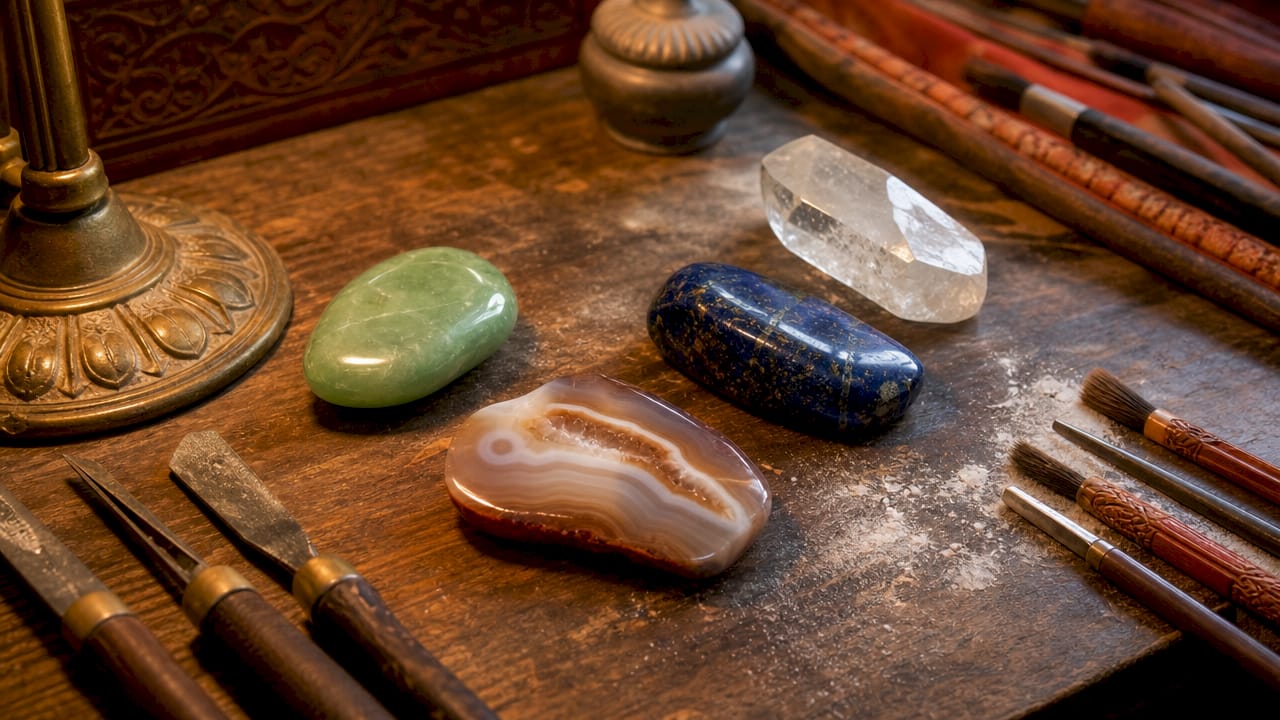
2. Jade und Hartsteine in der chinesischen und weiteren asiatischen Schnitzerei
Jade ist der kulturell am stärksten bedeutsame Stein in der chinesischen Kunstgeschichte. Traditionelle chinesische Jade ist hauptsächlich Nephrit, obwohl antike Artefakte manchmal aus weicheren Mineralien wie Talk oder Serpentin bestehen, ein Ersatz, der sich direkt auf die Echtheitsbewertung auswirkt. Nephrit liegt auf der Mohs-Härteskala zwischen 6 und 6,5, was es zäh macht, aber mit abrasiven Werkzeugen über lange Zeiträume bearbeitbar ist.
Die symbolische Bedeutung von Jade in der chinesischen Kultur wird von keinem anderen Steinmaterial erreicht. Es repräsentierte über alle Dynastien hinweg Tugend, Reinheit und Unsterblichkeit. Rituelle Bi-Scheiben, Bestattungsanzüge und Hofornamente wurden alle aus Nephrit oder seinem nahen Verwandten Jadeit geschnitzt. Sammler sollten auf Variationen in der Jadezusammensetzung und Inkonsistenzen bei der Schnitzerei achten, die auf mögliche Unechtheit antiker chinesischer Artefakte hinweisen.
Jenseits von Jade, Chinesische Hartsteinschnitzereien umfassen Achat, Malachit, Türkis, Quarz, Bernstein und Lapislazuli. Diese Steine werden wegen ihrer Härte und ihres Glanzes geschätzt und erscheinen seit der Song-Dynastie in aufwendigen figürlichen und dekorativen Schnitzereien. Die Vielfalt innerhalb dieser einzelnen Tradition spiegelt sich wider Chinas Zugang zu Handelsrouten, die exotische Mineralien aus Zentralasien und darüber hinaus brachten.
Wichtige Hartsteine in der chinesischen Schnitzerei und ihre Hauptverwendung:
- Nephrit-Jade: Ritualgegenstände, Grabbeigaben, Hofschmuck
- Achat: Dekorative Gefäße, Gelehrtengegenstände, kleine Figuren
- Malachit: Zierschnitzereien, Intarsienarbeiten
- Türkis: Schmuck, dekorative Plaketten
- Lapislazuli: Importierte Luxusschnitzereien, buddhistische Ikonographie
- Quarzkristall: Dekokugeln, kleine Devotionalien
Profi-Tipp: Wenn Sie ein als Jade beschriebenes Stück untersuchen, fordern Sie einen mineralogischen Bericht an. Nephrit und Jadeit haben unterschiedliche Dichten und Brechungsindizes. Serpentin- und Talkimitationen sind auf dem Markt weit verbreitet und können durch einfache Tests des spezifischen Gewichts identifiziert werden.
3. Marmor und Kalkstein für buddhistische und hinduistische Skulpturen
Marmor und Kalkstein sind in Süd- und Südostasien die bevorzugten Steine für detaillierte religiöse Skulpturen. Bei beiden handelt es sich um Calciumcarbonat-Mineralien. Marmor ist die metamorphe Form, dichter und gleichmäßiger in der Maserung. Kalkstein ist der Sedimentvorläufer, weicher und in der Textur variabler. Dieser Härteunterschied bestimmt direkt den Grad der Oberflächendetails, den ein Bildhauer erreichen kann.
| Eigentum | Marmor | Kalkstein |
|---|---|---|
| Härte (Mohs) | 3 bis 4 | 2 bis 4 |
| Korngröße | Fein, einheitlich | Variabel, gröber |
| Oberflächenbeschaffenheit | Hochglanz möglich | Matt bis schwach poliert |
| Schnitzdetail | Sehr gut | Mäßig bis gut |
| Witterungsbeständigkeit | Mäßig | Niedriger |
Die Amaravati-Schule der südindischen buddhistischen Bildhauerei, die etwa vom 2. Jahrhundert v. Chr. bis zum 3. Jahrhundert n. Chr. tätig war, stützte sich stark auf weißen Kalkstein. Die glatte, helle Oberfläche des Amaravati-Kalksteins ermöglichte es Bildhauern, komplexe narrative Reliefs mit außergewöhnlicher Klarheit darzustellen. Weißer Marmor diente ähnlichen Zwecken in der nordindischen Tempelskulptur, wo die Rajasthani-Steinbrüche in Makrana Material für jahrhundertelange hinduistische und jainistische Tempelbauten lieferten.
Profi-Tipp: Kalksteinskulpturen aus Tempelkontexten im Freien weisen häufig Oberflächenerosion auf, die bei Marmorstücken nicht der Fall ist. Überprüfen Sie bei der Beurteilung des Zustands die Schärfe der Gesichtszüge und der Gewandfalten. Eine deutliche Abschwächung der Details eines Kalksteinstücks ist normal und wird erwartet; Die gleiche Erweichung bei Marmor lässt entweder auf ein extremes Alter oder problematische Lagerbedingungen schließen.
4. Sandsteinsorten und Schiefer: regionale Grundpfeiler der asiatischen Steinskulptur
Sandstein ist der prägende Stein der nordindischen buddhistischen Skulptur. Zwei Sorten dominieren die historischen Aufzeichnungen. Der in Mathura abgebaute rotgefleckte Sandstein brachte die kühnen, sinnlichen Figuren der Mathura-Schule hervor, die ab dem 1. Jahrhundert n. Chr. aktiv war. Der cremefarbene Chunar-Sandstein aus Sarnath erzeugte die raffinierteren, polierten Oberflächen, die mit der Sarnath-Schule der Gupta-Zeit verbunden sind. Allein der Farbunterschied ist eine zuverlässige Erstdiagnose für die Zuordnung.
Indische Bildhauerschulen können durch spezifische Steinmedien unterschieden werden, wobei grauer Schiefer in Gandhara und rot gefleckter Sandstein in Mathura als primäre Diagnostik dienen. Das ist kein kleines Detail. Das bedeutet, dass die Steinart als geografischer Fingerabdruck fungiert. Ein Buddha aus grauem Schiefer mit hellenistischer Drapierung stammt mit ziemlicher Sicherheit aus der Region Gandhara im heutigen Pakistan und Afghanistan. Ein Torso aus rotem Sandstein mit breiten Schultern und dünnem Musselinvorhang weist direkt auf Mathura hin.
Merkmale der wichtigsten Sandstein- und Schiefertraditionen:
- Rotgefleckter Sandstein von Mathura: Warme rötlich-rosa Farbe, grobe Körnung, verwendet für monumentale Figuren und architektonische Elemente
- Cremefarbener Chunar-Sandstein: Hellbraune bis cremefarbene Farbe, feine Körnung, hochglanzpoliert, verbunden mit der Schirmherrschaft der kaiserlichen Gupta
- Gandhara-Grauschiefer: Dunkelgraues, feinkörniges metamorphes Gestein, ermöglicht klare lineare Details in Gewändern und Gesichtszügen
- Kambodschanischer Sandstein: Warme Grau- bis Poliertöne, die in Angkor Wat und Angkor Thom häufig für architektonische Reliefs und freistehende Skulpturen verwendet werden
Die Tradition des Gandhara-Grauschiefers verdient besondere Aufmerksamkeit von Sammlern. Schiefer ist ein blättriges metamorphes Gestein, das sich entlang natürlicher Ebenen spaltet, was bedeutet, dass Gandhara-Bildhauer mit einem Material arbeiteten, das eine gerichtete Maserung hatte. Erfahrene Schnitzer nutzten diese Eigenschaft zu ihrem Vorteil bei der Herstellung geschichteter Vorhänge. Stücke, die saubere, parallele Faltlinien im Vorhang aufweisen, nutzen oft die natürliche Spaltung des Schiefers selbst aus.
5. Granit, Basalt und kulturell einzigartige chinesische Steine
Granit und Basalt nehmen eine andere Funktionskategorie ein als die oben diskutierten Schnitzsteine. Beides sind magmatische Gesteine. Granit, Basalt und Vulkangestein sind dicht und witterungsbeständig im Freien, was sie zur Standardwahl für Gartenskulpturen und monumentale buddhistische Figuren im Freien in ganz Ost- und Südostasien macht. Ihre Dichte verleiht ihnen auch eine optische Schwerkraft, die weichere Steine nicht nachbilden können.
Basalt kommt insbesondere in frühen chinesischen buddhistischen Skulpturen und in den monumentalen Figuren der Longmen-Grotten in der Provinz Henan vor. Die Longmen-Grotten stellen einen Höhepunkt der chinesischen buddhistischen Steinschnitzerei dar, bei der Stein durch absichtliche ästhetische Transformation zum Vehikel heiligen Ausdrucks und imperialer Vision wurde. Die Kalksteinfelsen bei Longmen wurden direkt geschnitzt, aber kleinere tragbare Basaltfiguren aus derselben Zeit zeigen die gleiche Formensprache in einem dichteren, dunkleren Medium.
Über die funktionale Skulptur hinaus entwickelte die chinesische Kultur eine ganze ästhetische Tradition rund um natürlich geformte Steine:
- Taihu-Stein: Poröse Kalksteinformationen aus dem Tai-See in der Provinz Jiangsu, die für ihre perforierten, verwitterten Oberflächen geschätzt werden. Wird in Gelehrtengärten als vertikale Akzentstücke verwendet.
- Lingbi-Stein: Dichter, dunkler Kalkstein aus der Provinz Anhui, geschätzt für seine Resonanzqualität beim Anschlagen und seine natürlich abstrakten Formen.
- Ying-Stein: Rotbraune Steine aus der Provinz Guangdong, die wegen ihrer warmen Farbe und glatten, vom Wasser abgenutzten Oberfläche gesammelt wurden.
- Kunshan-Stein: Weiße, kristalline Steine aus Jiangsu, die wegen ihrer zarten, spitzenartigen Perforationen verwendet werden.
„Betrachtungssteine werden in der asiatischen Kultur nicht nur als Kunst gesammelt, sondern auch als Meditationsobjekte, die natürliche Form mit poetischer Wertschätzung verbinden.“ — Hilbert Museum, Stein und Szene
Die Vier berühmte Steine Chinesische Kunst, darunter Taihu- und Lingbi-Steine, werden wegen ihrer natürlichen Schönheit und kulturellen Bedeutung gesammelt und oft in Gelehrtenumgebungen ausgestellt. Diese Tradition von Suiseki und Gongshi (Gelehrtensteinen) stellt eine Kategorie der Wertschätzung von Steinen dar, die zwischen Skulptur und Naturgeschichte angesiedelt ist und bei Auktionen hohe Preise erzielt.
6. Wie der Steintyp Stil, Ikonographie und Erhaltung prägt
Der Zusammenhang zwischen Steinart und künstlerischem Ergebnis ist direkt und messbar. Bronze wurde bevorzugt für fließende, dynamische Skulpturen wie die Chola Shiva Nataraja, weil die Zugfestigkeit von Stein verlängerte Gliedmaßen strukturell angreifbar macht. Stein eignete sich gerade deshalb für die monumentale und architektonische Kunst, weil er Druckbelastungen standhalten konnte. Dieser materielle Zwang prägte ganze ikonografische Programme. Sitzende Buddhas und stehende Figuren mit nahe am Körper anliegenden Armen dominieren die Tradition der Steinskulptur, da diese Posen mit den physikalischen Eigenschaften des Steins arbeiten.
| Steinart | Schnitzdetail | Haltbarkeit im Freien | Typische Verwendung |
|---|---|---|---|
| Jade (Nephrit) | Sehr gut | Nur im Innenbereich | Ritualgegenstände, Hofkunst |
| Marmor | Sehr gut | Mäßig | Tempelskulptur, Reliefs |
| Sandstein | Gut bis mäßig | Mäßig | Monumentale Figuren, architektonisches Relief |
| Schiefer | Gut | Mäßig | Gandhara-buddhistische Figuren |
| Granit | Grob | Ausgezeichnet | Gartenskulptur, monumentale Außenarbeit |
| Basalt | Mäßig | Ausgezeichnet | Buddhas im Freien, architektonische Elemente |
| Kalkstein | Mäßig | Niedrig | Narrative Reliefs, Höhlentempelschnitzereien |
Die Konservierungsprofile variieren stark je nach Steinart. Sandstein ist porös und nimmt Feuchtigkeit auf, wodurch er in feuchten Klimazonen anfällig für Schäden durch Salzkristallisation ist. Marmor verwittert langsamer, ist aber in städtischen Umgebungen anfällig für sauren Regen. Granit und Basalt sind die langlebigsten Optionen für die Platzierung im Freien. Für Sammler, die Stücke drinnen lagern, ordnungsgemäße Lagerbedingungen unterscheiden sich deutlich zwischen porösem Sandstein und dichten magmatischen Steinen.
Alte buddhistische Steinskulpturen waren ursprünglich bunt mit Pigmenten bemalt, ein Detail, das oft mit der Zeit verloren ging. Das bedeutet, dass die Steinoberfläche, die Sie auf vielen Museumsstücken sehen, nie als endgültiges visuelles Erlebnis gedacht war. Spuren von roten, blauen und goldenen Pigmenten auf Steinoberflächen sind ein Authentifizierungssignal und kein Schaden. Sammler, die dies verstehen, lesen Oberflächenbeweise richtig, anstatt Farbspuren als Mängel zu behandeln.
Profi-Tipp: Wenn Sie bei einem potenziellen Erwerb die Vielfalt asiatischer Skulpturensteine beurteilen möchten, fotografieren Sie das Stück unter Streiflicht. Diese Technik deckt Werkzeugspuren, Oberflächenreparaturen und Pigmentspuren auf, die bei direkter Beleuchtung unsichtbar sind. Werkzeugmarkierungsmuster sind oft zeitspezifisch und können Zuschreibungsansprüche unterstützen oder untergraben.
Wichtige Erkenntnisse
Der Steintyp in der asiatischen Skulptur ist sowohl eine materielle Tatsache als auch ein kulturelles Dokument, und wenn man ihn richtig liest, unterscheidet man informierte Sammler von uninformierten.
| Punkt | Einzelheiten |
|---|---|
| Stein als Diagnosewerkzeug | Spezifische Steine kennzeichnen regionale Schulen: grauer Schiefer für Gandhara, roter Sandstein für Mathura, Kalkstein für Amaravati. |
| Jade-Authentizitätsrisiko | Alte Jadeartefakte enthalten manchmal weichere Ersatzstoffe wie Talk oder Serpentin; Für hochwertige Stücke ist eine mineralogische Prüfung erforderlich. |
| Material begrenzt die Ikonographie | Die Zugschwäche von Stone erklärt, warum dynamische Posen in Bronze und nicht in Stein erscheinen. Sitzende und stehende Figuren dominieren die Steintraditionen. |
| Die Haltbarkeit variiert je nach Stein | Granit und Basalt eignen sich für die Platzierung im Freien; Sandstein und Kalkstein erfordern Innen- oder geschützte Bedingungen, um eine Verschlechterung zu verhindern. |
| Lackierte Oberflächen sind wichtig | Ursprüngliche Pigmentspuren auf Steinskulpturen sind Authentifizierungssignale und sollten erhalten und nicht entfernt werden. |
Stein, Material und der Blick des Sammlers: meine Perspektive
Ich habe mich jahrelang mit asiatischen Steinskulpturen verschiedener Traditionen befasst und diese erforscht, und der häufigste Fehler, den ich bei neuen Sammlern sehe, besteht darin, die Art des Steins als zweitrangiges Detail zu behandeln. Das ist es nicht. Der Stein erzählt Ihnen die Geschichte, bevor es die Ikonographie tut.
Wenn ich mir einen Buddha aus Gandhara-Schiefer ansehe, sind die graue Farbe und die gerichtete Maserung des Steins das Erste, was ich lese. Sie bestätigen die geografische Lage, bevor ich auch nur ein einziges Gesichtsmerkmal untersucht habe. Wenn ich ein Stück behandle, das als Nephrit-Jade beschrieben wird, und das Gewicht sich falsch anfühlt, ist dieses physische Signal wichtiger als jedes Herkunftsdokument. Die spirituelle Energie Die Qualität eines echten Steinstücks hängt zum Teil vom Material selbst ab, von seiner Dichte, Temperatur und Oberflächenbeschaffenheit. Reproduktionen aus Kunstharz oder rekonstituiertem Stein haben diese Präsenz einfach nicht.
Meiner ehrlichen Meinung nach wird die chinesische Hartsteintradition im Vergleich zur indischen Sandsteinskulptur auf dem aktuellen Markt unterbewertet. Nephrit-Jade-Schnitzereien von echtem Alter und echter Qualität sind seltener, als der Markt vermuten lässt, und die jetzt durch mineralogische Analyse verfügbaren Authentifizierungswerkzeuge ermöglichen es, Materialansprüche mit echter Präzision zu überprüfen. Sammler, die lernen, Steintypen zu lesen, sind in der Lage, Anschaffungen zu tätigen, die ihren Wert behalten und steigern. Wer sich allein auf den visuellen Stil verlässt, arbeitet mit unvollständigen Informationen.
— James, HDAsianArt.com
Entdecken Sie authentische asiatische Steinskulpturen bei HDAsianArt
HDAsianArt bietet eine kuratierte Auswahl antiker und traditioneller asiatischer Steinskulpturen, individuell recherchiert und authentifiziert von Spezialisten mit fundierten Kenntnissen der regionalen Steintraditionen.
Jedes Stück in der HDAsianArt-Sammlung wird detailliert fotografiert und mit Materialidentifikation, regionaler Zuschreibung und Zeitkontext beschrieben. Ganz gleich, ob Sie eine Sammlung mit Schwerpunkt auf indischen Sandstein-Buddhas, chinesischen Hartsteinschnitzereien oder südostasiatischen Granit-Tempelfiguren aufbauen, der Katalog bietet die Materialspezifität, die ernsthafte Sammler benötigen. Weltweiter versicherter DHL-Versand und Dokumentation in Museumsqualität unterstützen jeden Erwerb.
FAQ
Welcher Stein wird am häufigsten in asiatischen buddhistischen Skulpturen verwendet?
Sandstein ist der am häufigsten verwendete Stein in den asiatischen buddhistischen Bildhauertraditionen und kommt in den Schulen Mathura, Sarnath, Gandhara und kambodschanisch Angkor vor. Kalkstein und Marmor sind ebenfalls weit verbreitet, insbesondere in südindischen und chinesischen Höhlentempelkontexten.
Wie kann ich Jade von Jadeimitationen in asiatischen Schnitzereien unterscheiden?
Echte Nephrit-Jade hat ein spezifisches Gewicht von etwa 2,95 und einen wachsartigen bis fettigen Glanz. Serpentin- und Talkimitate sind leichter und weicher. Ein mineralogischer Bericht oder ein spezifischer Gewichtstest ermöglichen eine endgültige Identifizierung, da eine visuelle Inspektion allein unzuverlässig ist.
Warum verwendeten Gandhara-Bildhauer grauen Schiefer anstelle von Sandstein?
Grauer Schiefer war der lokal verfügbare metamorphe Stein in der Region Gandhara im heutigen Pakistan und Afghanistan. Seine feine Maserung und die gerichtete Spaltung passten zum hellenistisch beeinflussten Drapierungsstil der Gandhara-buddhistischen Figuren und erzeugten klare, lineare Faltenmuster, die Sandstein nicht so sauber nachbilden konnte.
Was sind Gelehrtensteine und welche Steine werden verwendet?
Gelehrtensteine, auf Chinesisch Gongshi genannt, sind natürlich geformte Steine, die wegen ihrer ästhetischen und meditativen Eigenschaften gesammelt wurden. Die Haupttypen sind Taihu-Stein, Lingbi-Stein, Ying-Stein und Kunshan-Stein, die jeweils wegen ihrer unterschiedlichen Oberflächentexturen, Farben und Resonanzeigenschaften geschätzt werden.
Beeinflusst die Steinart den langfristigen Wert einer asiatischen Skulptur?
Die Art des Steins wirkt sich direkt auf die Erhaltung und Zuschreibung aus, die beiden Hauptfaktoren für den langfristigen Sammlerwert. Granit- und Basaltstücke überstehen die Bedingungen im Freien besser als Sandstein oder Kalkstein. Eine korrekt identifizierte Steinart bestätigt auch die regionale Herkunft, was die Herkunft und den Auktionswert unterstützt.
Empfohlen
- So bewahren Sie antike buddhistische Steinskulpturen sicher auf – HD Asian Art
- Warum asiatische Skulptur Ihrem Raum spirituelle Energie verleiht – HD Asian Art
- Warum Steinbuddha-Gartendekorationen funktionieren: Erklärt – HD Asian Art
- Thailändische Buddha-Stile erklärt: Ein Leitfaden für Sammler – HD Asian Art
