



Bedeutung der sitzenden vs. stehenden Buddha-Statue: Ein vollständiger Leitfaden
Bedeutung der sitzenden vs. stehenden Buddha-Statue: Ein vollständiger Leitfaden
Inhaltsverzeichnis
Das Verständnis der Bedeutung einer sitzenden oder stehenden Buddha-Statue ist für jeden, der authentische spirituelle Symbolik in sein Zuhause oder seine Meditationspraxis bringen möchte, von entscheidender Bedeutung. Bei HD Asian Art, Wir erkennen, dass diese beiden Haltungen grundlegend unterschiedliche spirituelle Prinzipien darstellen.
Egal, ob Sie ein ernsthafter Kunstsammler, ein spiritueller Praktizierender oder jemand sind, der sich für buddhistische Skulpturen interessiert, der Unterschied zwischen Sitzen und stehen Buddha Statuen prägen sowohl die visuelle Wirkung Ihres Raums als auch die spirituelle Energie, die Sie in ihn einladen.
Die Bedeutung der sitzenden vs. stehenden Buddha-Statue spiegelt Jahrhunderte buddhistischer Kunsttradition in ganz Asien wider. Untersuchungen aus der Sammlung buddhistischer Kunst des Metropolitan Museum of Art zeigen, dass diese Haltungen aus spezifischen spirituellen Lehren und regionalen Interpretationen hervorgegangen sind. In diesem Leitfaden werden die Hauptunterschiede, Mudras und Handgesten, Überlegungen zur Platzierung und die Auswahl der richtigen Statue für Ihr persönliches Heiligtum erläutert.
Sitzende vs. stehende Buddha-Statue Bedeutung: Kernunterschiede
Der sitzende Buddha verkörpert Meditation, innere Einkehr und den Weg zur Erleuchtung, während der stehende Buddha für aktives Mitgefühl, Präsenz und Engagement in der Welt steht.
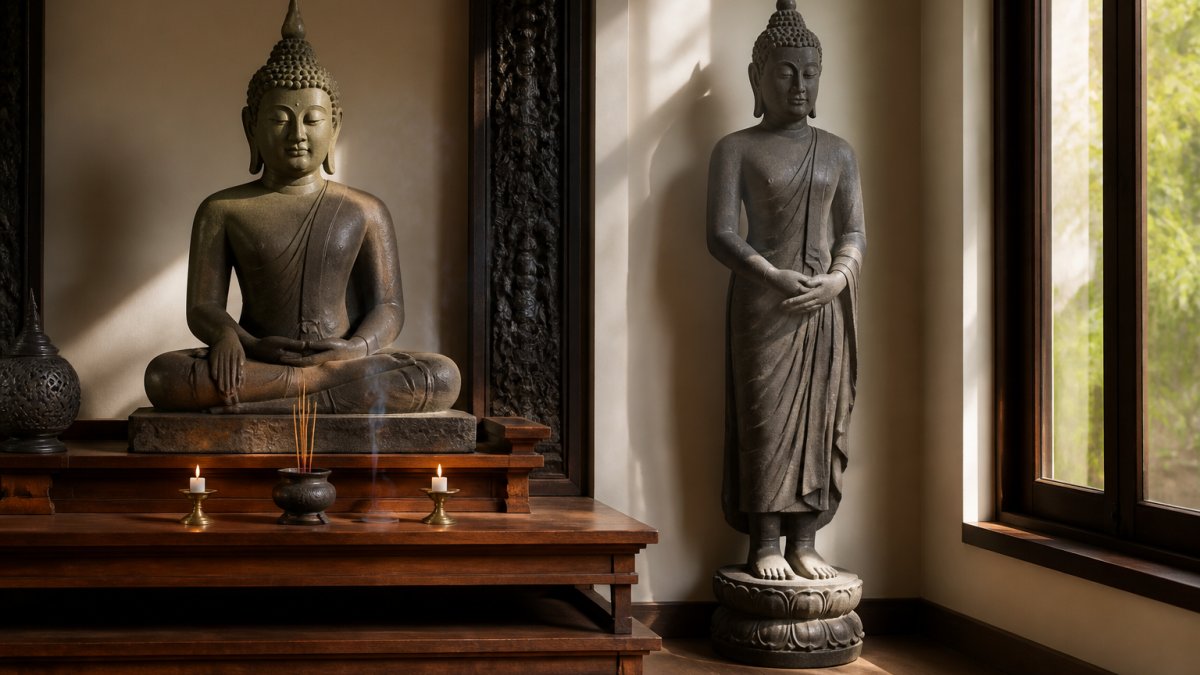
Die Sitzhaltung, die am bekanntesten in der Meditation Buddhas unter dem Bodhi-Baum dargestellt wird, symbolisiert die Reise nach innen. In perfekter Balance sitzend, oft im Lotussitz, suggeriert die Figur Stabilität und das Erreichen der Erleuchtung durch disziplinierte Meditation.
Der stehende Buddha verkörpert einen anderen Aspekt der buddhistischen Lehre. Stehende Haltungen vermitteln Bereitschaft, Bewegung und mitfühlende Aktivität in der Welt und spiegeln das Bodhisattva-Ideal wider, allen fühlenden Wesen zur Befreiung zu verhelfen.
Die Bedeutung der sitzenden vs. stehenden Buddha-Statue spiegelt auch unterschiedliche buddhistische Traditionen wider. Der in Südostasien vorherrschende Theravada-Buddhismus betont die Meditation und Erleuchtung des historischen Buddhas, weshalb sitzende Statuen hier besonders wichtig sind Thailand, Kambodscha, und Laos. Mahayana-Traditionen, die in Ostasien häufiger anzutreffen sind, feiern mehrere Buddhas und Bodhisattvas in verschiedenen Haltungen, einschließlich stehender, gehender und liegender Haltung.
Sitzende Buddhas verankern einen Raum mit Schwerkraft und Erdungsenergie. Stehende Buddhas erzeugen vertikale Linien, die den Blick nach oben lenken und Sehnsucht und Transzendenz hervorrufen.
Mudras und Handgesten der Buddha-Statue: Vertiefung der Symbolik
Handgesten, sogenannte MudrasFügen Sie sowohl sitzenden als auch stehenden Buddha-Statuen Bedeutungsebenen hinzu. Diese symbolischen Handpositionen vermitteln spezifische spirituelle Lehren und repräsentieren verschiedene Aspekte der Weisheit und des mitfühlenden Handelns Buddhas.
Gemeinsame Mudras in Sitzhaltungen
Bei der Dhyana-Mudra oder Meditationsgeste liegen beide Hände im Schoß, die Handflächen nach oben, wobei die rechte Hand auf der linken ruht. Dieses Mudra erscheint häufig bei sitzenden Buddhas und unterstützt direkt die kontemplative Praxis.
Das Bhumisparsha-Mudra, die Geste der Erdberührung, zeigt die rechte Hand des Buddha, die den Boden berührt, während die linke auf dem Schoß ruht. Dieses Mudra erinnert an den Moment der Erleuchtung, als Buddha die Erde dazu aufrief, Zeuge seiner spirituellen Errungenschaft zu werden.
Bei der Vitarka Mudra oder Lehrgeste bilden Daumen und Zeigefinger einen Kreis, während die anderen Finger ausgestreckt sind. Dieses Mudra stellt die Übermittlung buddhistischer Lehren dar und dient als visuelle Erinnerung an den Dharma, der allen zugänglich ist, die danach suchen.
Handgesten in der Ikonographie des stehenden Buddhas
Stehende Buddhas zeigen oft die Abhaya-Mudra, die Geste der Furchtlosigkeit und des Schutzes, mit einer oder beiden erhobenen Händen und der Handfläche nach außen. Dieses Mudra vermittelt allen Wesen den Segen und die Zusicherung des Buddha.
Das Varada-Mudra oder die Geste des Opferns zeigt eine nach unten ausgestreckte Hand mit geöffneter Handfläche. Dieses Mudra stellt die Bereitschaft Buddhas dar, Segen zu erteilen und Wünsche zu erfüllen.
Arten von Buddha-Statuen und ihre Bedeutung in verschiedenen Traditionen
Über die Sitz- und Stehformen hinaus umfasst die buddhistische Kunst mehrere andere Körperhaltungen, von denen jede eine eigene spirituelle Bedeutung hat.
Der liegende Buddha, der auf der Seite liegt und den Kopf auf die Hand stützt, stellt den Buddha dar, der ins Parinirvana eintritt, die endgültige Befreiung aus dem Kreislauf der Wiedergeburt. Der schreitende Buddha, dargestellt mit mittleren Schritten, verkörpert den Buddha, der sich zielstrebig und achtsam durch die Welt bewegt. Der lachende Buddha oder in der japanischen Tradition Hotei steht für Zufriedenheit, Fülle und Freude.
| Buddha-Haltung | Spirituelle Bedeutung | Am besten für | Platzierung |
|---|---|---|---|
| Sitzend (Lotus) | Meditation, innere Erleuchtung | Meditationsaltäre, persönliche Praxis | Mittelpunkt des Altars oder Meditationsraums |
| Stehend | Mitfühlende Aktivität, Präsenz | Wohnzimmer, Unterrichtsräume | Eingänge, markante Blickpunkte |
| Liegend | Parinirvana, Frieden, Vollendung | Schlafzimmer, Heilungsräume | Bereiche, die der Ruhe und Besinnung gewidmet sind |
| Gehen | Achtsamkeit im Handeln, Integration | Flure, Übergangsräume | Wege durch Ihr Zuhause |
| Lachen | Freude, Fülle, Zufriedenheit | Familienräume, Treffpunkte | Wohnzimmer, Essbereiche |
Regeln für die Platzierung von Buddha-Statuen für Hausaltäre und Meditationsräume
Die richtige Platzierung verstärkt die spirituelle Wirksamkeit Ihrer Statue und ehrt die Lehren Buddhas.
Überlegungen zur Platzierung von Sitzstatuen
Sitzende Buddhas sollten die höchste und ehrenvollste Position in Ihrem Meditationsraum einnehmen. Platzieren Sie Ihre Statue idealerweise auf Augenhöhe oder leicht darüber, wenn Sie meditieren. Stellen Sie sicher, dass Ihr sitzender Buddha in Ihren Meditationsraum zeigt und nicht in Richtung einer Wand.
Platzieren Sie es auf einem speziellen Altar, erhöht auf einem Regal oder Tisch, um es von Alltagsgegenständen abzuheben. Natürliches Licht verstärkt die Präsenz, ohne harte Schatten zu erzeugen. Halten Sie den Bereich um Ihren sitzenden Buddha frei von Unordnung und Staub.
Positionieren Sie stehende Buddha-Statuen in Ihrem Zuhause
Stehende Buddhas können überall in Ihrem Zuhause eine prominentere Position einnehmen, da ihre aufrechte Haltung auf natürliche Weise Aufmerksamkeit erregt. Ein stehender Buddha passt wunderbar in einen Eingangsbereich, begrüßt Besucher und strahlt mitfühlende Präsenz aus.
Wohnzimmer profitieren von stehenden Buddha-Statuen, die so positioniert sind, dass sie aus verschiedenen Blickwinkeln betrachtet werden können. Berücksichtigen Sie bei der Wahl der Platzierung das Mudra der Statue. Ein stehender Buddha mit der Abhaya-Mudra wirkt kraftvoll in Räumen, in denen Sie Mut und Selbstvertrauen kultivieren möchten.
Wählen Sie die richtige Buddha-Statue für Ihren Heimaltar und Ihre spirituelle Praxis
Bei der Auswahl einer Statue müssen Sie Ihre primäre spirituelle Absicht, die Ästhetik, die Materialien und die Handwerkskunst Ihres Zuhauses, die kulturelle Authentizität und die Art und Weise berücksichtigen, wie sich das Stück in Ihre bestehende Einrichtung integrieren lässt.
Material und Handwerkskunst: Wie diese Präsenz und Authentizität beeinflussen
Das Material, aus dem eine Buddha-Statue gefertigt ist, hat großen Einfluss auf ihre spirituelle Präsenz und Haltbarkeit. Bronzestatuen, traditionell mit alten Techniken gegossen, entwickeln mit der Zeit eine reiche Patina und strahlen Wärme und Stabilität aus. Holzstatuen, insbesondere solche aus Teakholz oder Sandelholz, bieten organische Schönheit und außergewöhnliche Details. Steinstatuen, darunter Kalkstein, Marmor und Granit, verkörpern Beständigkeit und Zeitlosigkeit.
HD Asian Art ist auf handverlesene Stücke spezialisiert, bei denen die Handwerkskunst die spirituelle Präsenz der Statue direkt beeinflusst. Der Unterschied zwischen einer massenproduzierten Statue und einem handgeschnitzten oder traditionell gegossenen Stück wird durch anhaltenden Kontakt deutlich.
Kulturelle und regionale Unterschiede im Design von Buddha-Statuen
Thailändische Buddha-Statuen zeichnen sich typischerweise durch längliche Ohrläppchen, heitere Gesichtsausdrücke und raffinierte Proportionen aus, die Jahrhunderte künstlerischer Raffinesse widerspiegeln. Kambodschanische Khmer-Statuen weisen charakteristische Merkmale auf, darunter breitere Gesichter, volle Lippen und oft eine monumentalere Qualität. Khmer-Buddhas aus der Angkor-Zeit gehören zu den schönsten buddhistischen Skulpturen der Welt.
Chinesische und japanische Buddha-Statuen weisen häufig Einflüsse aus Mahayana-Traditionen auf, mit vielfältigen Mudras und manchmal kunstvolleren dekorativen Elementen. Tibetisch-buddhistische Statuen beinhalten tantrische Symbolik und weisen oft eine aufwändigere Ikonographie auf.
Wenn Sie eine Statue wählen, die Ihrer spirituellen Tradition entspricht, entsteht eine Kohärenz zwischen der Ikonographie des Stücks und Ihrer Praxis.
Integration der Innenarchitektur: Verbindung spiritueller Symbolik mit Wohnästhetik
Eine Buddha-Statue sollte sowohl Ihre spirituelle Praxis als auch die visuelle Umgebung Ihres Zuhauses bereichern. Der Maßstab ist von entscheidender Bedeutung. Ein sitzender Buddha auf einem Hausaltar sollte mindestens 12 bis 18 Zoll hoch sein, während stehende Statuen je nach Raumgröße gut mit 18 bis 36 Zoll funktionieren.
Die farbliche Abstimmung mit dem umgebenden Dekor schafft visuelle Harmonie. Bronzestatuen ergänzen warme, erdige Farbtöne und harmonieren wunderbar mit Holzmöbeln. Steinstatuen passen zu minimalistischen, modernen Räumen.
Vermeiden Sie es, den Raum um Ihre Statue herum zu überladen. Der negative Raum ermöglicht ihm das Atmen und bewahrt seine spirituelle Präsenz. Das Lichtdesign unterstreicht die Präsenz der Statue. Warmtonige Beleuchtung (Farbtemperatur 2700 K) schafft eine intimere, spirituellere Atmosphäre als helles weißes Licht.
Historischer Kontext: Wie sich Buddha-Haltungen über Regionen hinweg entwickelten
Wenn Sie verstehen, wie sich die buddhistische Kunst in ganz Asien entwickelt hat, wird Ihre Wertschätzung für jede Statue, die Sie wählen, bereichert.
Die frühe buddhistische Kunst, insbesondere in der Region Gandhara (dem heutigen Pakistan), vereinte griechische und indische Kunsttraditionen. Als sich der Buddhismus entlang der Seidenstraße nach Zentralasien ausbreitete, China, und schließlich Japan, Es traten regionale Unterschiede auf. Laut Die buddhistische Skulpturensammlung des Asian Art MuseumDiese regionalen Unterschiede spiegeln wider, wie verschiedene Kulturen buddhistische Lehren in ihr eigenes künstlerisches Vokabular integriert haben.
Südostasiatische Traditionen, insbesondere in Thailand und Kambodscha, entwickelte unverwechselbare Stile, die einen ruhigen Ausdruck und raffinierte Proportionen betonten. Khmer-Bildhauer schufen einige der prächtigsten Buddha-Statuen der Welt, wobei Stücke aus der Angkor-Zeit den Höhepunkt buddhistischer künstlerischer Errungenschaften darstellen.
Stabilität vs. Präsenz: Ein spiritueller Vergleich sitzender und stehender Formen
Sitzende Buddhas erzeugen das, was Praktizierende oft als erdende, stabilisierende Energie beschreiben. Die zentrierte Haltung der Figur sorgt für visuelle und energetische Stabilität und macht sitzende Buddhas besonders effektiv für die Etablierung von Meditationspraktiken und die Kultivierung des inneren Friedens.
Stehende Buddhas strahlen Präsenz und dynamische Energie aus. Die aufrechte Körperhaltung erweckt den Eindruck von Wachsamkeit und Engagement, sodass sie effektiv zum Handeln anregen und die Praktizierenden daran erinnern, dass Erleuchtung auch in die tägliche Aktivität hineinreicht.
Viele Praktizierende behalten schließlich beide Formen bei, einen sitzenden Buddha für ihren Meditationsaltar und einen stehenden Buddha in einem gemeinsamen Wohnraum.
Häufige Fehler bei der Auswahl zwischen sitzenden und stehenden Buddha-Statuen
Eine Entscheidung, die ausschließlich auf der Ästhetik basiert und die spirituelle Funktion nicht berücksichtigt, führt zu Statuen, die schön aussehen, aber Ihre Praxis nicht unterstützen. Wenn Sie es versäumen, die Mudra und Ikonographie der Statue zu erforschen, führt dies dazu, dass Sie sich für ein Stück entscheiden, dessen spirituelle Botschaft nicht Ihren Bedürfnissen entspricht.
Der Kauf von Statuen, die zu klein oder schlecht verarbeitet sind, beeinträchtigt ihre Wirksamkeit. Das Aufstellen von Statuen an ungeeigneten Orten zeugt von Respektlosigkeit und widerspricht traditionellen buddhistischen Werten. Statuen als bloße Dekorationsobjekte und nicht als heilige Darstellungen zu behandeln, verringert ihre spirituelle Kraft.
Bei der Auswahl einer Buddha-Statue müssen spirituelle Absichten, ästhetische Vorlieben und praktische Überlegungen zu Ihrem Raum und Lebensstil in Einklang gebracht werden. Die Bedeutung der sitzenden vs. stehenden Buddha-Statue spiegelt Jahrhunderte buddhistischer Kunsttradition wider und bietet Orientierung für Praktizierende, die nach authentischen Stücken suchen, die ihren Weg zur Erleuchtung und mitfühlenden Präsenz unterstützen.
HD Asian ArtDie sorgfältig kuratierte Sammlung buddhistischer und hinduistischer Statuen, darunter handverlesene Khmer- und südostasiatische Skulpturen, bietet Zugang zu authentischen Stücken, die diese Traditionen ehren. Ganz gleich, ob Sie einen sitzenden Buddha für die Meditationspraxis oder einen stehenden Buddha wählen, um in Ihrem Zuhause mitfühlende Präsenz auszustrahlen, die Wahl eines Stücks mit feiner Handwerkskunst und spiritueller Authentizität schafft einen Mittelpunkt, der Ihre Praxis für die kommenden Jahre vertieft. Durchsuchen HD Asian ArtEntdecken Sie in unserer Sammlung die Statue, die zu Ihrem spirituellen Weg passt und Ihren persönlichen Zufluchtsort in einen Raum echten Friedens und Weisheit verwandelt.
Häufig gestellte Fragen
Was ist der Hauptunterschied in der Bedeutung zwischen einer sitzenden und einer stehenden Buddha-Statue?
Sitzende Buddha-Statuen symbolisieren Meditation, innere Klarheit und spirituelles Erwachen und stellen die Erleuchtung Buddhas unter dem Bodhi-Baum dar. Stehende Buddha-Statuen verkörpern mitfühlende Aktivität, Präsenz und Engagement für die Welt. Die sitzende Haltung lädt zum Nachdenken ein, während die stehende Haltung spirituelle Energie nach außen ausstrahlt. Beide sind in der buddhistischen Tradition heilig, dienen jedoch unterschiedlichen spirituellen Zwecken in Meditationsräumen und Hausaltären.
Wie verändern Mudras (Handgesten) die Bedeutung sitzender oder stehender Buddha-Statuen?
Mudras sind symbolische Handpositionen, die die spirituelle Bedeutung jeder Buddha-Haltung verändern. In sitzenden Statuen vertieft das Meditations-Mudra (Hände im Schoß) die Kontemplation, während das Lehr-Mudra (erhobene Hand) die Übertragung von Weisheit nahelegt. Stehende Buddhas zeigen oft das Segens-Mudra (Handfläche nach oben) oder das Schutz-Mudra (Handfläche nach vorne). Diese Handgesten arbeiten mit der Körperhaltung zusammen, um eine vielschichtige Ikonographie zu schaffen. Dieselbe Sitzposition mit unterschiedlichen Mudras vermittelt unterschiedliche Aspekte des buddhistischen Dharma und des spirituellen Erwachens.
Was sollte ich bei der Wahl zwischen einer sitzenden und einer stehenden Buddha-Statue für meinen Hausaltar beachten?
Berücksichtigen Sie Ihre primäre spirituelle Absicht: Wählen Sie einen sitzenden Buddha, wenn Ihr Fokus auf Meditation und innerem Gleichgewicht liegt, und einen stehenden Buddha, wenn Sie in Ihrem täglichen Leben mitfühlende Präsenz kultivieren möchten. Bewerten Sie Ihren Raum. Sitzende Statuen eignen sich gut für erhöhte Flächen wie Altäre, während stehende Statuen die Platzierung auf dem Boden bestimmen. Denken Sie an die Qualität des Materials und der Handwerkskunst, da diese Einfluss darauf haben, wie sich die spirituelle Präsenz der Statue persönlich anfühlt. Berücksichtigen Sie auch kulturelle Unterschiede; Südostasiatische und Khmer-Traditionen bieten unterschiedliche ästhetische und symbolische Ansätze für beide Formen.
Gibt es neben dem Sitzen und Stehen noch andere Buddha-Statuenhaltungen?
Ja. Der liegende Buddha stellt den Eintritt Buddhas in das endgültige Nirvana dar und symbolisiert Frieden und Vollendung. Der wandelnde Buddha stellt Bewegung und aktive Dharma-Praxis dar. Der lachende Buddha (Hotei in der japanischen Tradition) steht für Zufriedenheit und Fülle. Jede Haltung hat eine einzigartige ikonografische Bedeutung innerhalb der buddhistischen Kunst und Tradition. Während sitzende und stehende Formen in westlichen Meditationsräumen am häufigsten vorkommen, bieten diese alternativen Haltungen eine reiche symbolische Tiefe für Sammler und Praktizierende, die nach bestimmten spirituellen Schwerpunkten suchen.
Wie wirkt sich die Platzierung einer Buddha-Statue auf deren spirituelle Bedeutung und Wirksamkeit in meinem Zuhause aus?
Die Platzierung verstärkt die spirituelle Funktion einer Statue. Sitzende Buddhas sollten auf Augenhöhe oder leicht erhöht auf einem Altar positioniert werden, um Kontemplation und innere Konzentration zu fördern. Stehende Buddhas wirken am besten in offenen Räumen, wo sie Präsenz im ganzen Raum ausstrahlen können. Vermeiden Sie es, Buddha-Statuen in Badezimmern, Küchen oder unterhalb von Augenhöhe aufzustellen, da diese Platzierungen die Verehrung mindern. Berücksichtigen Sie das natürliche Licht, die Sichtlinien von Ihrem Meditationsbereich und die Beziehung der Statue zu anderen heiligen Objekten. Eine durchdachte Platzierung verwandelt ein wunderschönes Kunstwerk in einen aktiven spirituellen Anker für Achtsamkeit und Dharma-Praxis.
