



Symbolik der Shiva-Statue: Entschlüsselung der hinduistischen Ikonographie
Symbolik der Shiva-Statue: Entschlüsselung der hinduistischen Ikonographie
Die meisten Menschen, die einem begegnen Shiva-Statue Sehen Sie zum ersten Mal etwas verblüffend Komplexes: mehrere Arme, eine Mondsichel, eine gewundene Schlange, einen Fluss, der aus verfilztem Haar fließt, einen zum Tanz erhobenen Fuß und einen Feuerring, der alles umschließt. Der Instinkt geht davon aus, dass es sich um einen dekorativen Überschuss handelt. Es ist das Gegenteil. Jedes einzelne Element in Shivas Ikonographie trägt eine präzise theologische Bedeutung, die im Laufe der Jahrhunderte hinduistischer philosophischer und künstlerischer Tradition verfeinert wurde.
Das Verständnis dieser Grammatik verändert die Art und Weise, wie Sie jedes Stück hinduistischer Gottheitsstatuen lesen, egal ob Sie Sammler, spiritueller Praktiker oder jemand sind, der einen Hausaltar baut. Dieser Leitfaden entschlüsselt Shivas Ikonographie von seiner berühmtesten Form, dem Nataraja, bis hin zu den ruhigeren Symbolen, die in all seinen Darstellungen vorkommen.
Inhaltsverzeichnis
- Schnelle Imbissbuden
- Shiva in der hinduistischen Dreifaltigkeit: Die Rolle des Zerstörers
- Nataraja: Den kosmischen Tanz Hand für Hand lesen
- Die Attribute und Symbole, die sein Körper trug
- Die wichtigsten Formen von Shiva in der Skulptur
- Vergleich der drei Shiva-Kernformen in der Skulptur
- Auswahl einer Shiva-Statue: Was die Ikonographie über Platzierung und Zweck verrät
- Häufig gestellte Fragen
- Referenzen
Schnelle Imbissbuden
|
Wichtige Erkenntnisse |
Erklärung |
|---|---|
|
Der Feuerring des Nataraja ist der Kosmos selbst |
Der Flammenbogen (Prabhamandala) stellt das Universum in seinem Kreislauf aus Illusion, Leiden und Regeneration dar und ist nicht bloße Dekoration. |
|
Shivas Damaru-Trommel ist der erste Klang der Schöpfung |
Die Handtrommel, die er in der oberen rechten Hand hält, symbolisiert den Urklang, aus dem das Universum entstand, ähnlich der heiligen Silbe Om. |
|
Das dritte Auge zerstört, erleuchtet aber auch |
Das dritte Auge befindet sich auf seiner Stirn und repräsentiert sowohl die Macht, Unwissenheit durch spirituelle Einsicht zu zerstören, als auch die Fähigkeit, das zu vernichten, was enden muss. |
|
Die Trishula (Dreizack) bildet die Energiekanäle des Körpers ab |
Shivas dreizackiger Dreizack entspricht den drei grundlegenden Nadis oder Energiepfaden: Ida, Pingala und Sushumna. |
|
Apasmara unter seinem Fuß ist notwendig, nicht besiegt |
Der Zwergdämon Apasmara repräsentiert Unwissenheit. Shiva unterdrückt ihn, anstatt ihn vollständig zu zerstören, denn ohne ein gewisses Maß an Unwissenheit würde das Gleichgewicht zwischen Wissen und Illusion zusammenbrechen. |
|
Verfilztes Haar signalisiert bewusste Ablehnung gesellschaftlicher Konventionen |
Shivas Jata (verfilzte Locken) kennzeichnen ihn als einen großen Asketen, der der weltlichen Ordnung entsagt hat, ein Kontrapunkt zu seiner gleichzeitigen Rolle als Ehemann und Hausbesitzer. |
|
Ardhanarishvara ist eine philosophische Aussage, keine künstlerische Kuriosität |
Die halb männliche, halb weibliche Form von Shiva verkörpert die Untrennbarkeit der männlichen und weiblichen kosmischen Energien Shiva und Shakti als zwei Aspekte einer einzigen Realität. |
Shiva in der hinduistischen Dreifaltigkeit: Die Rolle des Zerstörers
Shiva nimmt neben Brahma, dem Schöpfer, und Vishnu, dem Bewahrer, eine der drei Hauptpositionen in der hinduistischen kosmischen Ordnung ein. Seine Funktion ist Zerstörung, aber das Wort trägt nichts von dem Nihilismus, den das Englische ihm verleiht. In der hinduistischen Kosmologie ist Zerstörung generativ. Shivas Aufgabe besteht darin, jeden Zyklus des Universums zu beenden, damit der nächste beginnen kann, wodurch er untrennbar mit der Schöpfung selbst verbunden ist.
Aus diesem Grund a Shiva-Statue ist nie einfach ein Denkmal für ein Ende. Es ist ein Denkmal der Transformation. Die Gottheit, die verbrennt, was verbrannt werden muss, schafft auch Raum für das, was als nächstes kommt. Diese doppelte Logik zieht sich durch jeden Aspekt seiner Ikonographie und erklärt, warum er in einer Hand das Feuer hält und mit der anderen die Geste des Schutzes ausführt.
Shiva ist unter den wichtigsten Hindu-Gottheiten auch einzigartig, da er gleichzeitig der ultimative Asket und ein hingebungsvoller Haushälter ist. Er meditiert in absoluter Stille auf dem Berg Kailash und ist außerdem der leidenschaftliche Ehemann von Parvati und Vater von Ganesha. Dieser scheinbare Widerspruch ist kein Fehler in der Mythologie. Es ist der theologische Punkt: Das Göttliche enthält und transzendiert Gegensätze.
Nataraja: Den kosmischen Tanz Hand für Hand lesen
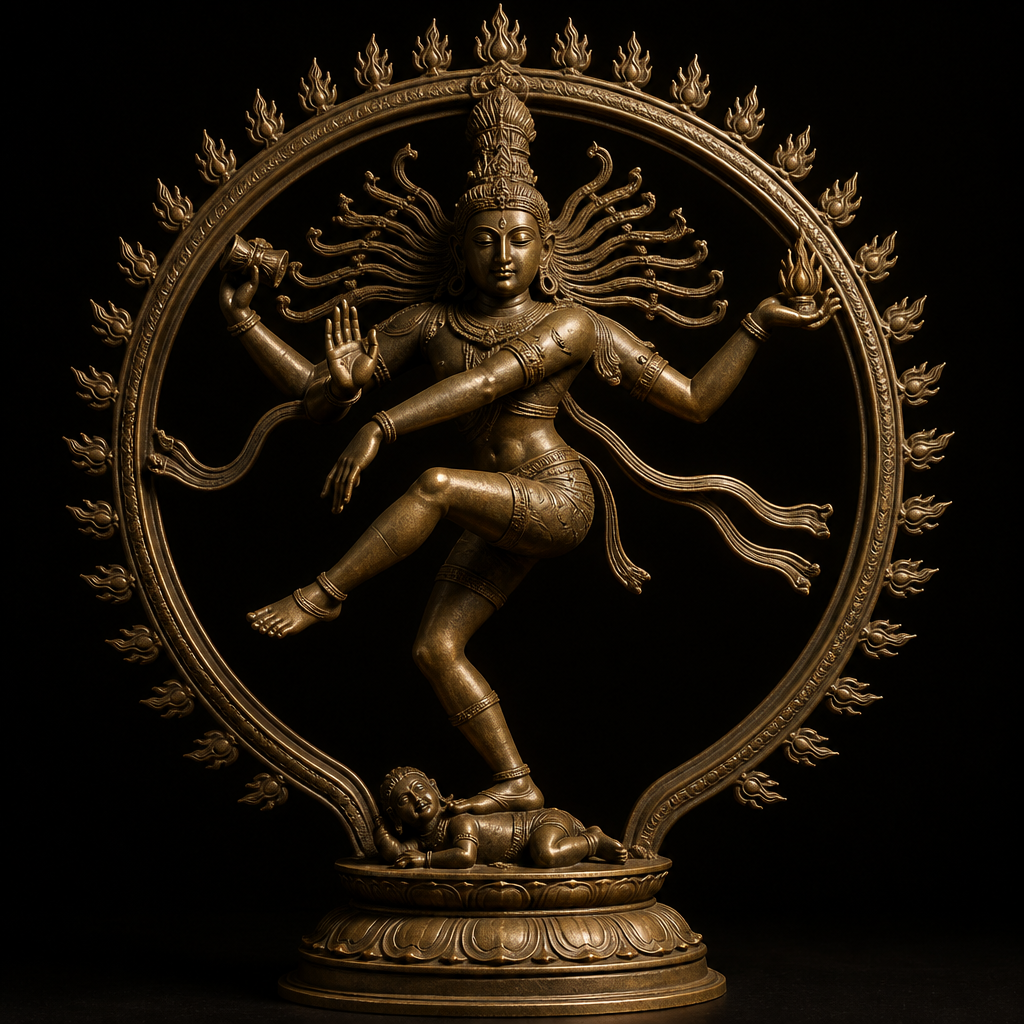
Der Nataraja oder Herr des Tanzes ist wohl das symbolisch dichteste Bild in der gesamten hinduistischen Ikonographie. Unter der Chola-Dynastie des Südens erreichte es seine kanonische, weltberühmte Form Indien, deren Bronzegusstradition Skulpturen von außergewöhnlicher Raffinesse hervorbrachte. Das Metropolitan Museum of Art beschreibt es deutlich: „Als Symbol ist Shiva Nataraja eine brillante Erfindung. Es vereint in einem einzigen Bild Shivas Rollen als Schöpfer, Bewahrer und Zerstörer des Universums und vermittelt die indische Vorstellung vom nie endenden Kreislauf der Zeit.“
Der Tanz selbst, Tandava genannt, soll im heiligen Hain von Tillai aufgeführt worden sein, dem Standort des heutigen Chidambaram-Tempels im Süden Indien. Der Überlieferung nach führte Shiva es aus, um eine Gruppe von Weisen herauszufordern, die rituelles Wissen mit wahrem spirituellen Verständnis verwechselt hatten.
Die fünf im Tanz verkörperten Akte
Jede Geste im Nataraja entspricht einer der fünf kosmischen Aktivitäten Shivas. Die obere rechte Hand hält die Damaru-Trommel und symbolisiert die Schöpfung. Die obere linke Hand trägt Agni, das Feuer der Zerstörung. Die untere rechte Hand bildet Abhayamudra, die Geste der Furchtlosigkeit und des Schutzes. Die untere linke Hand zeigt nach unten auf seinen erhobenen linken Fuß und bedeutet Zuflucht und Befreiung für diejenigen, die sie suchen. Sein rechter Fuß steht fest auf der Figur von Apasmara Purusha, der Verkörperung von Illusion und Unwissenheit.
Zusammengenommen beschreiben diese fünf Gesten – Schöpfung, Schutz, Zerstörung, Verkörperung und Befreiung – den gesamten Bogen der kosmischen Existenz in einem einzigen Bronzebild.
Der Ring des Feuers und was er enthält
Der flammende Bogen, der die tanzende Figur umgibt, ist das Prabhamandala oder die Aureole. Sein äußerer Rand ist Feuer; sein innerer Rand ist mit dem Wasser des Ozeans verbunden. Es stellt das Universum selbst in seinem gesamten Zyklus aus Illusion, Leiden und Erneuerung dar. Der gesamte Kosmos ist in dieser Lesart eine Art Bühne, auf der sich Shivas Tanz kontinuierlich entfaltet.
Profi-Tipp: Achten Sie bei der Bewertung einer Nataraja-Skulptur auf die Qualität des Flammenbogens. In einem fein gearbeiteten Stück sind die einzelnen Flammenzungen deutlich und dynamisch und verschwimmen nicht zu einem flachen Heiligenschein. Das Detail des Bogens ist einer der klarsten Indikatoren für das Können des Bildhauers und die Gesamtqualität des Stücks.
Die Attribute und Symbole, die sein Körper trug
Über die Nataraja-Form hinaus trägt Shiva in allen seinen Darstellungen eine Reihe konsistenter Attribute. Jede davon ist eine Lehre im Miniaturformat. Sammler und Praktiker, die diese Bildsprache erlernen, können jedes Stück davon lesen Statue einer hinduistischen Gottheit Darstellung von Shiva mit echtem Verständnis statt oberflächlicher Wertschätzung.
Das Dritte Auge
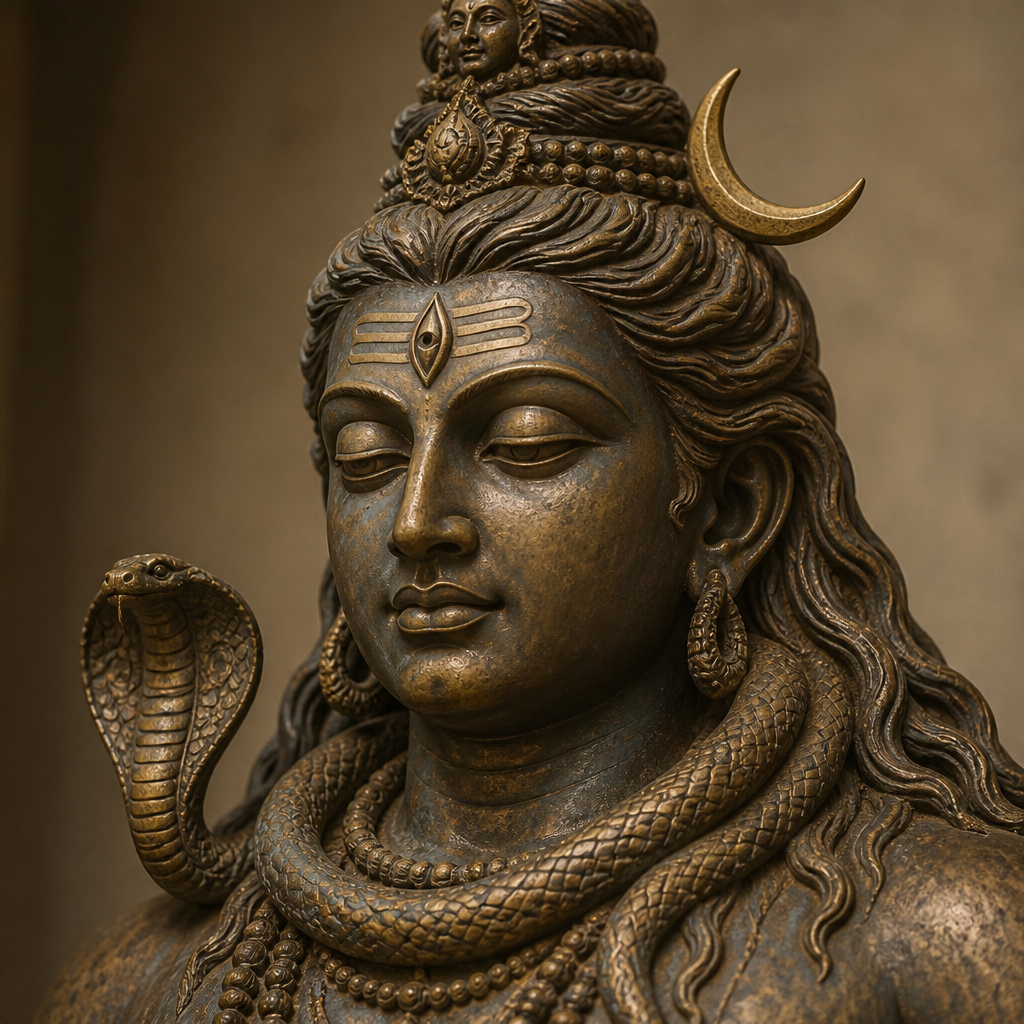
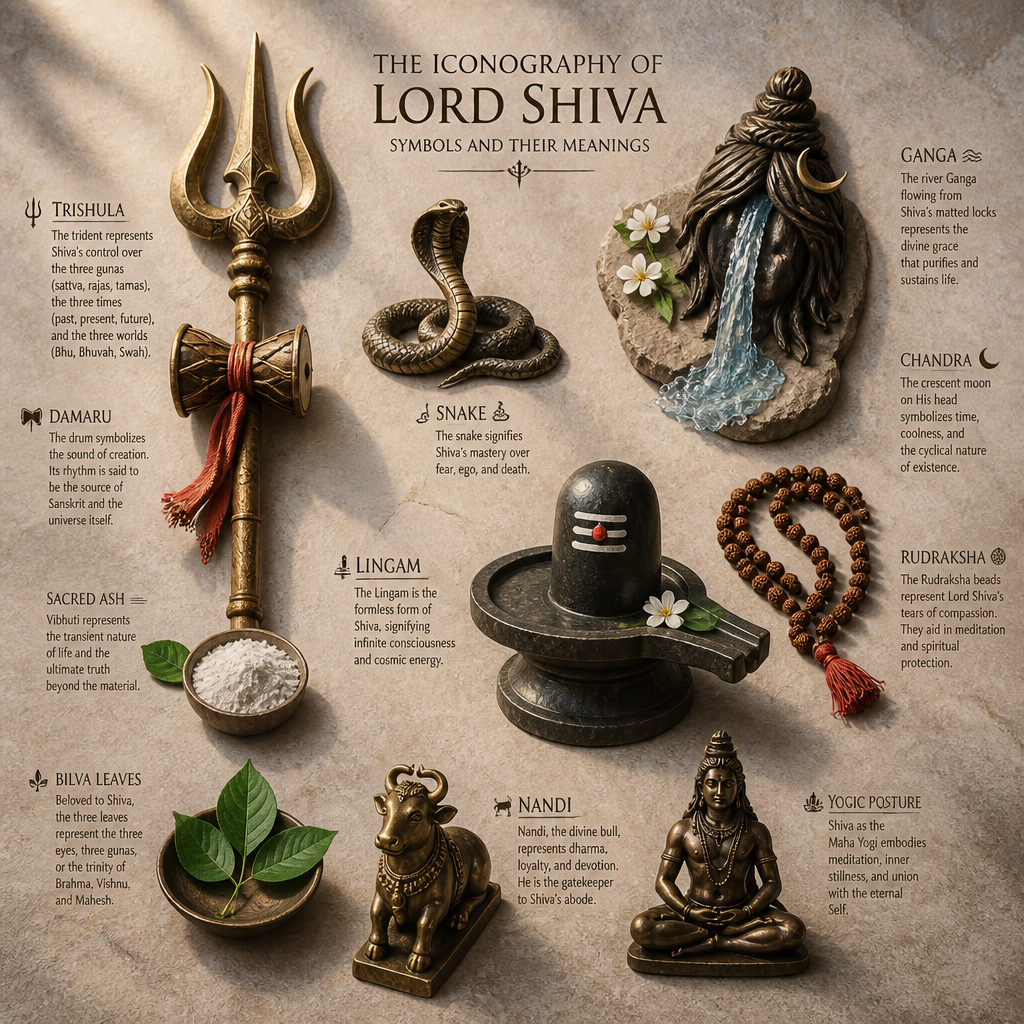
Shivas drittes Auge, das vertikal in der Mitte seiner Stirn positioniert ist, ist das Auge der spirituellen Einsicht. Es sieht, was die beiden physischen Augen nicht sehen können. In der Mythologie ist es auch das Instrument schrecklicher Zerstörung: Als es im Zorn geöffnet wurde, verbrannte es Kamadeva, den Gott der Begierde. Das dritte Auge trägt somit beide Bedeutungen gleichzeitig: Erleuchtung und Vernichtung. In ikonografischer Hinsicht ist es das Zeichen, das Shiva in all seinen Formen am zuverlässigsten identifiziert.
Der Halbmond
Shiva trägt eine Mondsichel (Chandrakala) in seinem verfilzten Haar. Der Mond ist im hinduistischen Denken mit der Zeit und mit Soma verbunden, einer Substanz, die mit Nahrung und Unsterblichkeit verbunden ist. Indem er den Halbmond trägt, demonstriert Shiva, dass er die Zeit selbst beherrscht. Das Zu- und Abnehmen des Mondes spiegelt auch die zyklische Natur der Existenz wider, über die Shiva herrscht.
Der Fluss Ganges
Der heilige Fluss Ganges fließt aus Shivas verfilzten Schleusen. Der hinduistischen Mythologie zufolge hätte der himmlische Fluss, als er vom Himmel herabstieg, mit seiner Kraft die Erde zerstört. Shiva fing es in seinen Haaren auf, zähmte seine Kraft und ließ es sanft auf die Erde fließen. Der Ganga in seinen Locken symbolisiert Reinigung, den Fluss göttlichen Wissens und Shivas Rolle als mitfühlender Beschützer der natürlichen Welt.
Die Trishula (Dreizack)
Shivas dreizackiger Dreizack repräsentiert die drei grundlegenden Dimensionen der Existenz. Diese entsprechen den drei primären Nadis oder Energiekanälen des Körpers: Ida (links), Pingala (rechts) und Sushumna (Mitte). Die Trishula bildet auch die drei Qualitäten der Materie in der hinduistischen Philosophie ab, Tamas, Rajas und Sattva, sowie die drei Dimensionen der Zeit: Vergangenheit, Gegenwart und Zukunft. Der Dreizack ist nie nur eine Waffe. Es ist ein Diagramm der Realität.
Die Schlange
Vasuki, der Schlangenkönig, windet sich um Shivas Hals. Schlangen stellen in der hinduistischen Ikonographie sowohl den Tod als auch die Regeneration dar und werfen ihre Haut in einer buchstäblichen Inszenierung der Transformation ab. Dass Shiva einen als Schmuck trägt, zeigt seine absolute Herrschaft über den Tod, eine Eigenschaft, die ihn als Mahakala, den Herrn der Zeit und des Todes, auszeichnet. Seine blaue Kehle, die er sich zugezogen hat, als er während der Aufwühlung des Ozeans das kosmische Gift Halahala verschluckte, unterstreicht denselben Punkt: Er absorbiert, was andere zerstören würde, und bleibt selbst unberührt.
Mattiertes Haar und Tigerhaut
Shivas Jata oder verfilztes, ungepflegtes Haar ist das visuelle Markenzeichen des großen Asketen, der außerhalb der gesellschaftlichen Ordnung steht. Es steht bewusst im Kontrast zu seiner Rolle als Hausbesitzer und Ehemann. Das Tigerfell, auf dem er sitzt oder steht, verstärkt dies: Der Tiger repräsentiert das Ego und das unkontrollierte Verlangen. Darauf zu sitzen bedeutet, beides überwunden zu haben.
Profi-Tipp: Wenn Sie eine Shiva-Statue für einen Meditationsaltar auswählen, ist die sitzende Shiva in tiefer Dhyana-Haltung (Meditationshaltung) die am besten geeignete Form. Es fängt den stillen, inneren Aspekt der Gottheit ein und nicht die kinetische Energie des Nataraja, wodurch es besser für Räume geeignet ist, die der kontemplativen Praxis gewidmet sind.
Die wichtigsten Formen von Shiva in der Skulptur
Shiva erscheint in einer größeren Vielfalt skulpturaler Formen als fast jede andere Gottheit im hinduistischen Pantheon. Jede Form bringt einen anderen Aspekt seiner Natur in den Vordergrund. Die Kenntnis der Primärformen hilft Sammlern und Praktikern, bei der Auswahl eines Stücks bewusste Entscheidungen zu treffen.
Nataraja
Der Nataraja ist der kosmische Tänzer, Shiva der Motor der universellen Transformation. Es ist die international am weitesten verbreitete Form und die reichste an vielschichtiger Symbolik. Der Maßstab für diese Form bleiben südindische Bronzegüsse nach der Chola-Tradition.
Ardhanarishvara
Diese Form stellt Shiva buchstäblich als halb männlich und halb weiblich dar, wobei die rechte Seite Shiva und die linke Seite seine Gemahlin Parvati (Shakti) darstellt. Das Ardhanarishvara ist keine Aussage über das Geschlecht, sondern über Metaphysik: Männliche und weibliche kosmische Energien sind keine gegensätzlichen Kräfte, sondern zwei Aspekte einer einzigen, unteilbaren Realität. Diese Form gehört zu den philosophisch bedeutsamsten in der gesamten hinduistischen Ikonographie.
Shiva Lingam
Der Lingam ist eine anikonische Form: eine abstrakte Säule, oft auf einem kreisförmigen Sockel (der Yoni) montiert, die Shivas göttliche Energie und schöpferische Kraft darstellt. Viele hinduistische Tempel verehren Shiva hauptsächlich in dieser Form und nicht in irgendeiner anthropomorphen Darstellung. Im häuslichen Umfeld signalisiert ein Lingam auf einem Altar die Hingabe an Shivas Wesen und nicht an einen bestimmten Aspekt seiner mythologischen Erzählung.
Bhairava und Mahakala
Bhairava repräsentiert Shivas wilden, furchteinflößenden Aspekt, die Gottheit als Zerstörer des Todes selbst. Mahakala, der sowohl in der hinduistischen als auch in der buddhistischen Tradition zutiefst verehrt wird, ist Shiva als der Herr der Zeit und der Sterblichkeit. Beide Formen sind ikonografisch auffällig und werden oft mit furchterregenden Gesichtsausdrücken, mehreren Armen und den Attributen der Zerstörung dargestellt. Sie kommen bei häuslichen Altären weniger häufig vor, sind aber sowohl im Tempelkontext als auch in der tantrischen Praxis von großer Bedeutung.
Dakshinamurthy
Dakshinamurthy ist Shiva als höchster Lehrer, der unter einem Banyanbaum sitzt, nach Süden blickt und Wissen durch Stille vermittelt. Dies ist das kontemplative, wohlwollende Gesicht der Gottheit, weshalb es sich besonders für Studien- und Meditationsräume eignet. Seine Geste ist typischerweise das Kinn-Mudra oder Jnana-Mudra, die Handgeste der Wissensvermittlung.
Vergleich der drei Shiva-Kernformen in der Skulptur
|
Formular |
Primäre Symbolik |
Am besten geeignet für |
|---|---|---|
|
Nataraja |
Kosmischer Tanz der Schöpfung, Erhaltung und Zerstörung; die fünf göttlichen Taten; Beherrschung von Zeit und Illusion |
Ausstellungsräume, Wohnbereiche, Altäre, in denen das volle Ausmaß der göttlichen Transformation gewürdigt werden soll |
|
Shiva in Dhyana (Meditation) |
Absolute Stille, innere Einkehr, der asketische Aspekt; Berg Kailash |
Meditationsräume, Lernräume, stille Hausheiligtümer, in denen eine beruhigende, zentrierte Präsenz die Absicht ist |
|
Ardhanarishvara |
Vereinigung von Shiva und Shakti; die Untrennbarkeit männlicher und weiblicher kosmischer Energien; Ganzheit und Nicht-Dualität |
Persönliche Altäre für Praktizierende, die die Shaiva-Shakta-Traditionen erforschen; Räume, in denen das Thema Gleichgewicht und Einheit im Mittelpunkt steht |
Auswahl einer Shiva-Statue: Was die Ikonographie über Platzierung und Zweck verrät
Das ikonografische Detail einer Shiva-Statue ist nicht nur eine Frage der ästhetischen Präferenz. Sie bestimmt, ob das Stück theologisch kohärent ist und ob es dem Zweck dient, für den Sie es erwerben. Ein häufiger Fehler unter Erstkäufern besteht darin, ein Stück aufgrund der visuellen Wirkung auszuwählen, ohne zu verstehen, was die spezifische Konfiguration der Attribute ausdrückt.
In der Praxis gibt es einige Grundsätze, die es wert sind, angewendet zu werden. Überprüfen Sie zunächst, ob die Ikonographie in sich konsistent ist: Bei einem Nataraja sollten alle vier Arme klar voneinander unterschieden sein, das Damaru oben rechts, das Feuer oben links, das Abhayamudra unten rechts und die untere linke Hand, die auf den erhobenen Fuß zeigt. Stücke, die diese Elemente vermischen oder weglassen, stammen entweder aus einer anderen regionalen Tradition (was möglicherweise zutrifft) oder sind einfach schlecht gemacht.
Zweitens ist das Material sowohl aus ästhetischen als auch aus traditionellen Gründen wichtig. Südindische Nataraja-Skulpturen werden am authentischsten in Bronze wiedergegeben und folgen einer Tradition, die bis in die Chola-Zeit zurückreicht. Steinskulpturen vom indischen Subkontinent, insbesondere Sandstein und schwarzer Basalt, tragen ihre eigene regionale und historische Resonanz. Die Shiva-Statuen bei HD Asian Art werden unter Berücksichtigung dieser klassischen Traditionen beschafft und hergestellt, was sie zu einer zuverlässigen Wahl für Sammler macht, die ikonografische Authentizität und nicht nur dekorativen Reiz wünschen.
Drittens überlegen Sie, welchen Aspekt von Shiva Sie in einen Raum bringen möchten. Der Nataraja ist dynamisch, ja überwältigend in seiner symbolischen Dichte. Der meditative Shiva ist still und innerlich. Das Ardhanarishvara ist intellektuell anspruchsvoll, ein Stück, das eher die Kontemplation als einen kurzen Blick belohnt. Keine davon ist „richtiger“ als die anderen. Sie dienen unterschiedlichen Absichten. Eine Sammlung von Statuen hinduistischer Gottheiten die mehr als eine Form von Shiva umfasst, zeigt eher eine ernsthafte Auseinandersetzung mit der Tradition als einen zufälligen Erwerb dekorativer Objekte.
Jedes Element in Shivas Ikonographie dient dazu, eine abstrakte philosophische Wahrheit sichtbar zu machen. Die Skulptur ist kein Abbild eines Gottes. Es ist eine Karte des Kosmos und ein Diagramm des Selbst.
Beim Vergleich von Quellen auf Museumsqualität Statuen hinduistischer GottheitenSchauen Sie über die Fotografie hinaus. Die Proportionen eines Nataraja, die Feinheit der Flammenzungen, die Details in Apasmaras Gesicht unter seinen Füßen, die Artikulation einzelner Finger in den Handgesten: Dies sind die Merkmale, die ein Stück, das einer langen Aufmerksamkeit aus der Nähe standhält, von einem unterscheiden, das aus der Ferne gut aussieht. HD Asian ArtDer Fokus von 's auf Beschaffung in Museumsqualität spiegelt genau diesen Standard wider und unterscheidet ihn von Einzelhändlern, die visuelles Spektakel über ikonografische Strenge stellen.
Häufig gestellte Fragen
Was stellt eine Shiva-Statue im hinduistischen Glauben dar?
Eine Shiva-Statue stellt eine der Hauptgottheiten des Hinduismus dar, die Gottheit, die vor allem mit Zerstörung und Transformation im kosmischen Zyklus in Verbindung gebracht wird. Aber „Zerstörung“ bedeutet in diesem Zusammenhang das Ende eines Zyklus, um die nächste Schöpfung zu ermöglichen, was Shiva ebenso zu einer Gottheit der Erneuerung wie des Endes macht. Seine Ikonographie fängt seine Rollen als Asket, kosmischer Tänzer, Ehemann, Vater, oberster Lehrer und Herr der Zeit gleichzeitig ein.
Was ist der Nataraja und warum ist er bedeutsam?
Der Nataraja, was „Herr des Tanzes“ bedeutet, ist die Form von Shiva, der in einem Feuerring dargestellt wird und den Tandava, den kosmischen Tanz, ausführt. Es ist bedeutsam, weil es Shivas fünf kosmische Aktivitäten: Schöpfung, Schutz, Zerstörung, Verkörperung und Befreiung, in einem einzigen visuellen Bild kodiert. Die Form wurde von Bronzebildhauern der Chola-Dynastie im Süden zu ihrem kanonischen Ausdruck verfeinert Indien und gilt heute weltweit als eine der höchsten Errungenschaften der hinduistischen religiösen Kunst.
Was symbolisiert der Feuerring um den Nataraja?
Der Feuerring, Prabhamandala oder Aureole genannt, repräsentiert das Universum in seiner Gesamtheit, einschließlich all seiner Illusionen, Leiden und Erneuerungszyklen. Es handelt sich nicht um einen dekorativen Rahmen. Es ist die kosmische Bühne, auf der Shivas Tanz stattfindet. Der äußere Rand des Rings ist Feuer und stellt Zerstörung dar, während der innere Rand mit dem Wasser des Ozeans verbunden ist.
Warum hat Shiva ein drittes Auge?
Das dritte Auge auf Shivas Stirn repräsentiert zwei Dinge gleichzeitig: spirituelle Einsicht, die wahrnimmt, was das gewöhnliche Auge nicht erkennen kann, und die Macht, durch konzentrierte göttliche Kraft zu zerstören. In der hinduistischen Mythologie verbrannte Shivas drittes Auge, als es im Zorn geöffnet wurde, den Gott der Begierde. Es ist das am häufigsten vorkommende Erkennungszeichen in allen vielen ikonografischen Formen Shivas.
Was ist Ardhanarishvara und was bedeutet es?
Ardhanarishvara ist eine Form von Shiva, die halb männlich und halb weiblich dargestellt wird, wobei die rechte Seite Shiva und die linke Seite seine Gemahlin Parvati oder Shakti darstellt. Es ist eine philosophische Aussage über die Natur der Realität: Männliche und weibliche kosmische Prinzipien sind keine getrennten, gegensätzlichen Kräfte, sondern zwei Aspekte einer einzigen, einheitlichen göttlichen Realität. Diese Form gehört zu den theologisch anspruchsvollsten in der gesamten hinduistischen Bildhauertradition.
Ist es angemessen, eine Shiva-Statue zu Hause auszustellen?
Ja. Shiva-Statuen werden in hinduistischen Häusern häufig als Objekte der Andacht, Meditation und kulturellen Bedeutung aufbewahrt. Die geeignete Form hängt von der Absicht ab. Ein meditativer Shiva oder Dakshinamurthy eignet sich gut für einen ruhigen Altar oder ein Arbeitszimmer. Ein Nataraja wirkt kraftvoll in einem prominenteren Ausstellungsraum. Die wichtigste Überlegung besteht darin, das Stück mit Respekt zu behandeln: Platzieren Sie es auf oder über Augenhöhe an einem sauberen Ort und nicht auf dem Boden oder in einem ungeordneten Bereich.
Woher weiß ich, ob eine Shiva-Statue ikonografisch korrekt ist?
Prüfen Sie, ob die Attribute dem konkreten Formular entsprechen. In einem Nataraja sollten die vier Arme die richtigen Gegenstände tragen: Damaru-Trommel (oben rechts), Feuer (oben links), die Abhayamudra-Geste des Schutzes (unten rechts) und eine Zeigegeste in Richtung des erhobenen Fußes (unten links). Der rechte Fuß sollte auf die Figur von Apasmara drücken. Regionale Traditionen variieren, daher weichen einige legitime Stücke vom kanonischen Standard der Chola ab. Was ein ikonographisch gesundes Stück von einem nachlässigen unterscheidet, ist die innere Konsistenz innerhalb seiner Tradition und nicht das starre Festhalten an einer einzigen Formel.
Haben Sie eine Shiva- oder Nataraja-Statue in Ihrem Haus oder Altarraum aufgestellt? Wir würden gerne erfahren, was Sie zu dieser speziellen Form geführt hat und wie Sie sie in der Praxis erleben.
Referenzen
-
Das Metropolitan Museum of Art: Shiva als Nataraja, Herr des Tanzes, Chola-Zeit
-
Memeraki: Die Ikonographie von Shiva und ihre Bedeutung in indischen Kunsttraditionen
-
Temple Purohit: Die Eigenschaften und Symbole von Lord Shiva erklärt
