



505 Buddhas: Lesen und Datieren buddhistischer Kunst in Indonesien für Studierende
505 Buddhas: Lesen und Datieren buddhistischer Kunst in Indonesien für Studierende
Der Buddhismus erreichte den indonesischen Archipel durch den Seehandel in den ersten Jahrhunderten n. Chr., fasste unter der Schirmherrschaft von Srivijaya und Sailendra Wurzeln und erreichte seinen künstlerischen Höhepunkt mit Borobudur zwischen etwa 780 und 850 n. Chr.
Die Geschichte und Ikonographie des Buddhismus in Indonesien ist vor allem eine visuelle Aufzeichnung, geschnitzt in Andesit und gegossen in Bronze, die die indische buddhistische Lehre mit lokalen Materialien, Symbolik und rituellen Formen verschmolz.
Hauptmerkmale:
- Die frühesten buddhistischen Bauwerke wie Batujaya verwenden Ziegelstupas und stammen aus dem 2. bis 12. Jahrhundert und sind damit um Jahrhunderte älter als Javas Steindenkmäler.
- Die indonesische buddhistische Ikonographie stützt sich in erster Linie auf Handgesten (Mudras) wie Dharmachakra und Bhumisparsha, um Buddha-Typen zu identifizieren, wobei bestimmte Platzierungen in Mandalas auf ihre Natur hinweisen.
- Der Buddhismus ging ab dem 15. Jahrhundert aufgrund des Aufstiegs islamischer Sultanate allmählich zurück, doch die Praktiken blieben durch synkretistische Traditionen wie Kejawen bestehen, die buddhistische und indigene Glaubensvorstellungen vermischten.
- Zu den Herausforderungen bei der Erhaltung gehören Schäden durch den Tourismus, vulkanische Aktivität, ungleiche Finanzierung und Wiederherstellungsrisiken. Moderne Bemühungen konzentrieren sich auf die Ausgewogenheit von Zugang und Erhaltung.
Inhaltsverzeichnis
- Die Geschichte des Buddhismus in Indonesien, Von der Ankunft zum Imperium
- Wo man Buddhisten sehen kann Indonesien: Wichtige Stätten und Denkmäler
- Wie man die indonesische buddhistische Ikonographie liest
- Welche Materialien verraten Ihnen etwas über Alter und Herkunft?
- Warum der Buddhismus unterging und wie er zurückkam
- Wie der Buddhismus die indonesische Kunst und Literatur über Statuen hinaus prägte
- Klostergemeinschaften: Die Institutionen hinter den Denkmälern
- Buddhismus und lokaler Glaube: Ein wechselseitiger Austausch
- Sanskrit, Pali und die Texte, die die buddhistische Lehre trugen
- Schutz von Borobudur und Indonesiens buddhistisches Erbe heute
- Was ich beim Katalogisieren indonesischer buddhistischer Skulpturen gelernt habe
- Wo man authentische buddhistische Skulpturen im indonesischen Stil findet
- Quellen
Die Geschichte des Buddhismus in Indonesien, Von der Ankunft zum Imperium
Der Buddhismus ist nicht angekommen Indonesien als einzelnes Ereignis. Es bewegte sich entlang der Seehandelsrouten, die den Golf von Bengalen mit dem Süden verbanden China Meer, getragen von Kaufleuten, Mönchen und diplomatischen Missionen über Generationen hinweg. Die frühesten physischen Spuren dieses Prozesses befinden sich in West-Java, in Batujaya, wo Ziegelstupas aus dem 2. bis 12. Jahrhundert zu den ältesten gehören archäologische Zeugnisse des Buddhismus in Indonesien. Diese Bauwerke sind Jahrhunderte älter als die berühmten javanischen Denkmäler und bestätigen, dass es auf dem Archipel buddhistische Ritualarchitektur gab, lange bevor Sailendras Ambitionen etwas wie Borobudur hervorbrachten.
Bis zum 7. Jahrhundert hatte das Srivijaya-Königreich im Südosten Sumatras den Seehandel in eine religiöse Infrastruktur umgewandelt. Srivijaya kontrollierte die Straße von Malakka, einen der verkehrsreichsten Schifffahrtskorridore der Antike, und nutzte diese Position, um ein echtes Zentrum buddhistischer Gelehrsamkeit zu werden und nicht nur ein Zwischenstopp für Pilger, die dorthin unterwegs waren Indien. Der chinesische buddhistische Mönch I-Tsing verbrachte im späten 7. Jahrhundert Jahre in Srivijaya und studierte Sanskrit-Grammatik und buddhistische Philosophie, bevor er nach Nalanda weiterreiste, der großen Klosteruniversität im Nordosten Indien. Er beschrieb eine Wohngemeinschaft von über tausend Mönchen in der Hauptstadt Srivijayans, ein Detail, das das Königreich als aktives intellektuelles Zentrum und nicht als passiven Empfänger indischer Ideen neu definiert.
Dieser wissenschaftliche Ruf blieb über Jahrhunderte bestehen. Der tibetische Lehrer Atisha Dipamkara, der später als einer der Begründer der Kadam-Linie verehrt wurde, studierte im 11. Jahrhundert in Srivijaya, bevor er zurückkehrte, um buddhistische Lehren im Himalaya zu verbreiten. Indonesien, Mit anderen Worten: Die Lehre wurde ebenso exportiert wie importiert.
Die politische und religiöse Autorität verlagerte sich im 8. und 9. Jahrhundert unter der Sailendra-Dynastie nach Java, deren Herrscher eine außergewöhnliche Baukampagne finanzierten. Die Sailendra-Könige und ihre Srivijaya-Verbündeten schufen die klassische Ära der javanischen buddhistischen Kunst und ließen Borobudur, den Sewu-Tempelkomplex und ein Netzwerk kleinerer Schreine in der Kedu-Ebene in Auftrag geben. Inschriftliche Zeugnisse verankern diesen Zeitraum mit ungewöhnlicher Präzision.
**Die Kalasan-Inschrift aus dem Jahr 778 n. Chr. dokumentiert den Bau eines dem Bodhisattva Tara gewidmeten Tempels, der auf Wunsch eines Sailendra-Herrschers in Auftrag gegeben wurde. Diese einzelne Steininschrift leistet drei Dinge, die Forscher selten allein aus der Archäologie lernen: Sie legt ein Datum fest, benennt einen Schutzpatron und identifiziert die Gottheit, die geehrt wird. Nur wenige Standorte in Südostasien bieten diese Kombination aus Text- und physischen Beweisen an einem Ort.
Der geografische Fußabdruck des Buddhismus erstreckte sich in dieser Zeit über zwei Hauptzonen:
- Süd-Sumatra, zentriert auf Srivijayas Häfen und Klostersiedlungen
- Zentral- und Ost-Java, wo unter der Schirmherrschaft von Sailendra und später des Königreichs Mataram die heute weltweit untersuchten Tempelkomplexe entstanden
Das Ausmaß der Ambitionen von Sailendra wird in einer einzigen Zahl deutlich: Allein in Borobudur gibt es über fünfhundert sitzende Buddha-Statuen, die auf seinen Terrassen und Stupas verteilt sind, eine Zahl, die vergleichbare buddhistische Denkmäler aus der gleichen Zeit anderswo in Asien in den Schatten stellt. Diese Dichte an Bildern spiegelt eine politische und religiöse Kultur wider, die Kunst im monumentalen Maßstab nutzte, um Autorität zu vermitteln, und nicht nur, um private Hingabe zu unterstützen.
Wo man Buddhisten sehen kann Indonesien: Wichtige Stätten und Denkmäler
Borobudur bleibt der Bezugspunkt, an dem jedes andere indonesische buddhistische Denkmal gemessen wird, und das aus gutem Grund. Das etwa zwischen 780 und 850 n. Chr. errichtete Bauwerk hat die Form eines dreidimensionalen Mandalas: ein quadratischer Sockel, der sich über fünf Terrassen mit Reliefgalerien erhebt und von drei kreisförmigen Plattformen mit glockenförmigen Stupas gekrönt wird, auf denen jeweils ein sitzender Buddha zu sehen ist, der durch das Gitterwerk sichtbar ist. Die Reliefzyklen erzählen nacheinander die buddhistische Kosmologie und Biographie und sollen als physische Pilgerreise durch die Lehre im Uhrzeigersinn begangen werden. Die 505 Buddha-Bilder auf dem Denkmal sind keine dekorative Wiederholung. Sie entsprechen bestimmten Mandala-Positionen, die an bestimmte Buddha-Typen und Richtungssymbole gebunden sind, ein Detail, das die gesamte Struktur in ein als Architektur getarntes Lehrmittel verwandelt.
Im Gegensatz dazu bietet Batujaya nichts von Borobudurs visueller Dramatik, sondern hat für die Datierung der frühesten Phase des indonesischen Buddhismus ein größeres Gewicht. Die Stupas bestehen aus ungebrannten Ziegeln und nicht aus Stein, eine Typologie, die sich von der vulkanischen Andesitkonstruktion unterscheidet, die Zentral-Java definiert. Die lange Nutzungsdauer der Stätte vom 2. bis zum 12. Jahrhundert macht sie weniger zu einem einzelnen Denkmal als vielmehr zu einer vielschichtigen Aufzeichnung kontinuierlicher buddhistischer Praxis in West-Java über ein Jahrtausend hinweg.
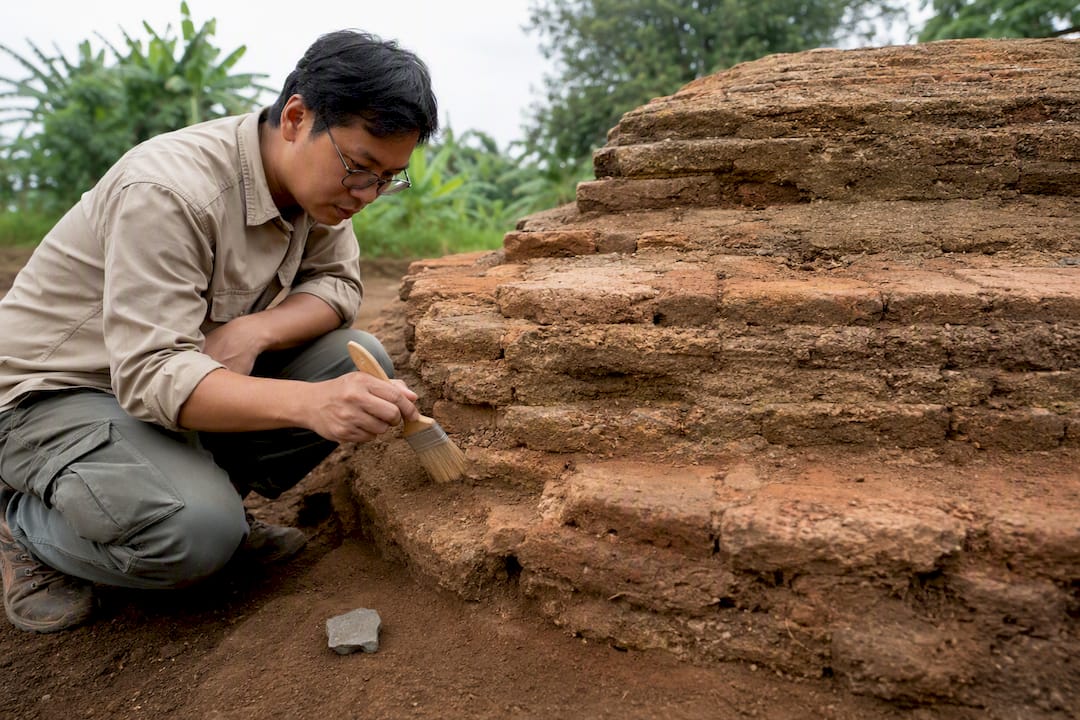
Sumatra bewahrt ein völlig anderes architektonisches Vokabular. Muaro Jambi, das sich über das Einzugsgebiet des Batanghari-Flusses erstreckt, enthält Dutzende Tempelhügel und Kanalsysteme, die eher auf eine Klosterstadt als auf einen einzelnen Schrein schließen lassen. Muara Takus, weiter nördlich in Riau, verwendet eine abgestufte Stupa-Form mit starken Ähnlichkeiten zu indischen und südostasiatischen Prototypen auf dem Festland, was auf direkte Übertragungswege hindeutet, die sich von der javanischen Entwicklungslinie unterscheiden.
Die sekundären Stätten in Zentral-Java runden das Bild mit einem schärferen ikonografischen Fokus ab:
- Sewu, was auf Javanisch „tausend Tempel“ bedeutet, bildet einen Mandala-Plan-Komplex in der Nähe von Prambanan, dessen Hauptschrein von Reihen kleinerer Perwara-Tempel flankiert wird
- Mendut, ein kompakter Einkammertempel, beherbergt einen monumentalen sitzenden Buddha, der von Bodhisattvas flankiert wird. Seine Reliefarbeiten im Inneren gelten als eines der schönsten erhaltenen Beispiele für Schnitzereien aus der Sailendra-Ära
- PlaosanDer etwas später erbaute Tempel verbindet zwei Haupttempel mit einer dichten Bodhisattva-Bilderwelt und zeigt eine für die gemischte Hofkultur dieser Zeit typische hinduistische und buddhistische Überschneidung des Mäzenatentums
| Website | Region | Ungefähres Datum | Besonderes Merkmal |
|---|---|---|---|
| Borobudur | Zentral-Java | c. 780–850 n. Chr | Mandala-Plan, 505 Buddha-Bilder |
| Batujaya | West-Java | 2.–12. Jahrhundert | Früheste Stupas aus Backstein |
| Muaro Jambi | Sumatra | 7.–13. Jahrhundert | Umfangreiche Klosteranlage |
| Muara Takus | Sumatra | Unsicher, mittelalterlich | Abgestufte Stupa-Architektur |
| Sewu | Zentral-Java | 8.–9. Jahrhundert | Mandala-Tempelgruppe |
| Mendut | Zentral-Java | 8.–9. Jahrhundert | Monumentaler sitzender Buddha |
| Plaosan | Zentral-Java | 9. Jahrhundert | Dichtes Bodhisattva-Programm |
Studien zur Analyse der Statuensymbolik in Borobudur, Mendut und Plaosan weisen auf eine konsistente visuelle Grammatik dieser Stätten hin: Buddha-Figuren, Stupas, Bodhisattvas und narrative Reliefs der Heiligen Schrift kommen alle wieder vor, aber jede Stätte betont je nach ihrer rituellen Funktion einen anderen Teil dieses Vokabulars.
Wie man die indonesische buddhistische Ikonographie liest
Die Identifizierung einer javanischen oder sumatra-buddhistischen Figur beginnt mit der Handbewegung, nicht mit dem Gesicht. Mudras haben das doktrinäre Gewicht, das Gesichtszüge nicht haben können, und indonesische Bildhauer folgten demselben symbolischen System, das in der gesamten Mahayana- und Vajrayana-Welt verwendet wird, angepasst an lokale Stein- und Bronzetraditionen.
Vier Buddha-Typen kommen an den wichtigsten Stätten immer wieder vor und sind jeweils an einer spezifischen Kombination aus Mudra und Körperhaltung zu erkennen:
- Vairocana erscheint mit dem Dharmachakra MudraDie Hände werden auf Brusthöhe gehalten und bilden die raddrehende Geste, die den kosmischen oder ursprünglichen Buddha im Zentrum vieler Mandala-Entwürfe darstellt.
- Shakyamuni, der historische Buddha, wird am häufigsten in gezeigt Bhumisparsha Mudra, die erdberührende Geste, die seine Erleuchtung markiert, oder in Dhyana Mudra zur Meditation.
- Amitabha wird normalerweise angezeigt Dhyana Mudra auch, aber seine Platzierung innerhalb eines Mandalas, normalerweise nach Westen gerichtet, unterscheidet ihn von Shakyamuni in derselben Pose.
- Akshobhya verwendet Bhumisparsha Mudra wie Shakyamuni, nimmt aber in Mandala-Arrangements die östliche Position ein, ein Platzierungshinweis, der wichtiger ist als jedes physische Merkmal.
Bodhisattva-Figuren stellen eine besondere Herausforderung bei der Identifizierung dar, da sie Ornamente tragen und sich nicht nur auf Mudra verlassen. Avalokiteshvara, der Bodhisattva des Mitgefühls, erscheint häufig in Skulpturen aus der Sailendra-Ära, die einen Lotusstiel halten oder mit einem kleinen sitzenden Buddha-Bild im Kopfschmuck dargestellt sind. Tara, sein weibliches Gegenstück und die Gottheit, die direkt in der Kalasan-Inschrift genannt wird, wird typischerweise sitzend mit einem Beinanhänger dargestellt, eine Haltung, die „…“ genannt wird lalitasana, einen Lotus halten oder ausstellen Varada Mudra, die Geste der Großzügigkeit. Manjushri trägt ein Schwert oder ein Buch und symbolisiert dabei das Durchbrechen der Unwissenheit durch Weisheit Prajnaparamita, die die Vollkommenheit der Weisheit selbst verkörpert, hält ein Manuskript in der Hand, das die buddhistischen Schriften darstellt, die sie verkörpert.
Ritualobjekte tauchen in der indonesischen tantrischen Skulptur ständig auf und tragen ihr eigenes Vokabular. Die Vajra- und Glockenpaarung in Vajrayana-Bildern aus der Sailendra-Ära stellt die Vereinigung von Methode und Weisheit dar, ein Kernkonzept der tantrischen Lehre, während das Dharmachakra, das achtspeichige Rad, die erste Lehre Buddhas in Sarnath signalisiert und sowohl auf Relieftafeln als auch auf freistehenden Skulpturen erscheint.
Wenn Sie nicht mit dem Objekt selbst, sondern mit Fotos arbeiten, hilft eine kurze Checkliste:
- Notieren Sie sich zuerst die Handposition, dann vergleichen Sie die Körperhaltung und alle gehaltenen Gegenstände
- Suchen Sie nach einer kleinen sitzenden Figur in der Krone oder dem Kopfschmuck, einem häufigen Bodhisattva-Marker
- Achten Sie auf eine richtungsweisende Platzierung innerhalb einer Gruppe, da die Position eines Mandalas die Identität oft schneller bestätigt als ikonografische Details allein
Borobudur bleibt das klarste Lehrbeispiel dafür, wie die Mandala-Organisation die Bilder eines ganzen Gebäudes strukturiert. Jede Terrasse entspricht einer Stufe des buddhistischen Pfades und in jeder Nische ändert sich das Mudra Buddhas gem Seine Himmelsrichtung verändert das gesamte Denkmal zu einem funktionalen kosmologischen Diagramm und nicht zu einer zufälligen Ansammlung von Statuen.
Welche Materialien verraten Ihnen etwas über Alter und Herkunft?
Die Materialwahl in der indonesischen buddhistischen Skulptur war selten willkürlich und ist bis heute eines der zuverlässigsten Instrumente zur Datierung und Zuschreibung. Die Tempelbauer in Zentral-Java bevorzugten Andesit, ein dichtes Vulkangestein, das aus nahegelegenen Bergen abgebaut wurde. Dies erklärt, warum Borobudur und seine benachbarten Stätten über ein Jahrtausend tropische Luftfeuchtigkeit überstanden haben und ihre Reliefdetails weitgehend intakt geblieben sind. Die Bauherren von Batujaya, die in West-Java arbeiteten und keinen einfachen Zugang zu Vulkangestein hatten, verwendeten stattdessen gebrannte und ungebrannte Ziegel, eine Wahl, die zu einem völlig anderen Erhaltungsprofil führte und erklärt, warum die Stätte trotz vergleichbarer religiöser Funktion so anders aussieht als ihre javanischen Gegenstücke.
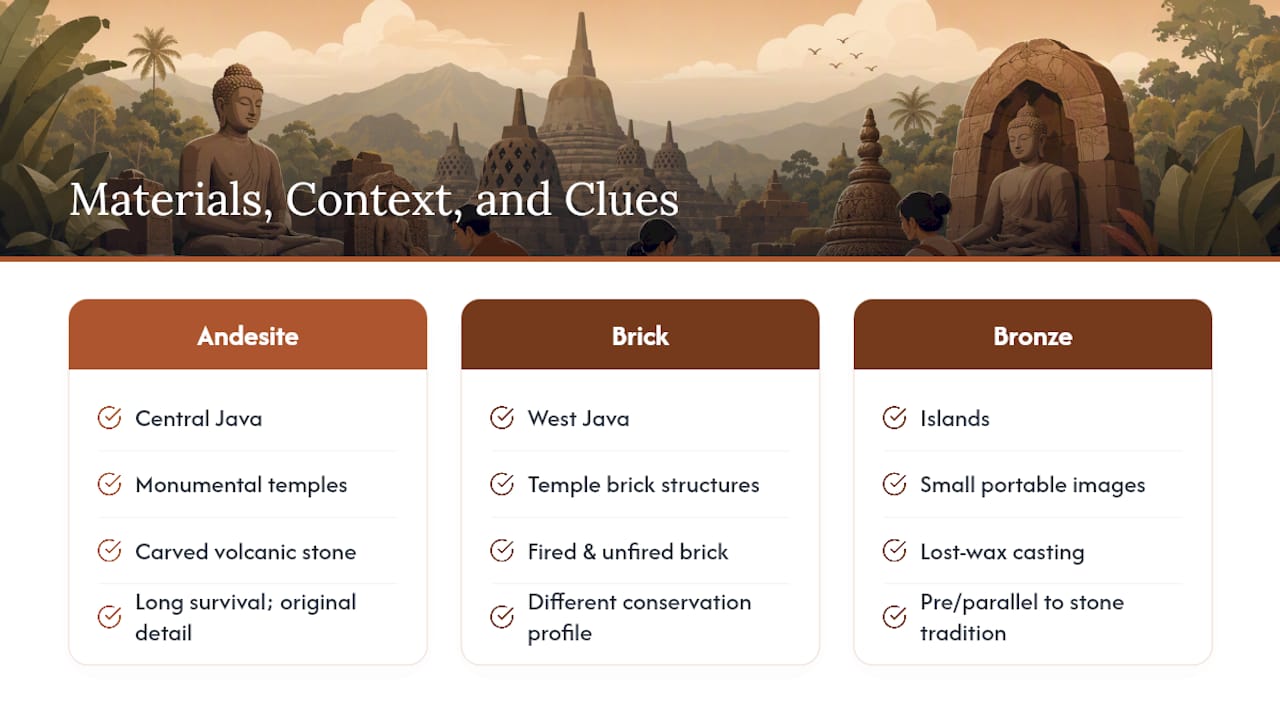
Der Bronzeguss folgte einer eigenen Tradition. Überall auf dem Archipel tauchen kleine tragbare Bilder auf, oft eher Andachtsbilder als monumentale Bronzefiguren aus Sulawesi und Ost-Borneo die älter sind als die javanische Steintradition oder parallel dazu verlaufen. Diese Stücke wurden im Wachsausschmelzverfahren gegossen, eine Technik, die erkennbare Nähte und Oberflächenmerkmale hinterlässt, die sich von geschnitzten Steinarbeiten unterscheiden, und ihr kleinerer Maßstab lässt eher auf eine private oder klösterliche Andachtsnutzung als auf staatliche Tempelaufträge schließen.
Stilistisch gesehen entwickelte die Sailendra-javanische Skulptur erkennbare Merkmale: heitere, niedergeschlagene Gesichtsausdrücke, im Vergleich zu späteren Werken der Majapahit-Ära aufwändiger, aber zurückhaltender Schmuck und Drapierungen in flachen, eng beieinander liegenden Falten, die das Licht je nach Tageszeit unterschiedlich einfangen, was zum Teil der Grund dafür ist, dass die fotografische Dokumentation für das Studium so wichtig ist.
Die Restaurierung erschwert all dies. Spätere Reparaturarbeiten führten manchmal Motive ein, die der ursprünglichen Bauzeit fremd waren. Borobudurs Reliefstoffe zeigen florale Muster mit chinesischem Stileinfluss die bei Restaurierungskampagnen lange nach dem 9. Jahrhundert entstanden sind, und jede genaue stilistische Analyse muss diese Schichten berücksichtigen, bevor sie Rückschlüsse auf die ursprüngliche Schnitzerei ziehen kann.
Warum der Buddhismus unterging und wie er zurückkam
Der institutionelle Niedergang des Buddhismus Indonesien Die Geschichte erstreckte sich allmählich über das 15. und 16. Jahrhundert und verfolgte den Zusammenbruch der Gerichtsherrschaft von Sailendra und später von Majapahit sowie die zunehmende politische Dominanz islamischer Sultanate in den Handelsnetzwerken des Archipels. Der Tempelbau verlangsamte sich und wurde schließlich eingestellt, und die formelle klösterliche Unterstützung verschwand weitgehend aus den historischen Aufzeichnungen.
Der Buddhismus verschwand nicht so sehr, sondern er löste sich im Synkretismus auf. Elemente des buddhistischen Rituals und der Kosmologie blieben in der javanischen Hofkultur, der Volkspraxis und in hinduistisch-buddhistischen Mischtraditionen wie Kejawen bestehen und überlebten jahrhundertelang im Untergrund und nicht durch organisierte Institutionen.
Die organisierte Wiederbelebung begann im frühen 20. Jahrhundert. Die Java Buddhist Association, gegründet 1929, markiert die Beginn des formellen institutionellen WiederaufbausIm Laufe der folgenden Jahrzehnte folgten weitere Sangha-Organisationen, die dem indonesischen Buddhismus einen modernen rechtlichen und religiösen Stellenwert verliehen. Öffentliche Vesak-Zeremonien in Borobudur wurden zu einem Kernstück dieser Wiederbelebung, indem sie ein archäologisches Denkmal wieder in einen aktiven Wallfahrtsort verwandelten und der Bewegung einen sichtbaren, symbolträchtigen Mittelpunkt verschafften.
Transnationale Verbindungen waren hier von enormer Bedeutung. Mönche und buddhistische Gesellschaften vom asiatischen Festland unterstützten die Wiederbelebung Indonesiens und stellten Lehrlinien, Texte und institutionelle Modelle bereit, die dem indonesischen Buddhismus dabei halfen, formale Strukturen weitgehend von Grund auf neu aufzubauen. Moderne Erweckungsbewegungen nutzten Stätten wie Borobudur häufig bewusst, um ein archäologisches Denkmal als lebendigen Ritualraum zurückzuerobern und die zeitgenössische Identität direkt mit der klassischen Ära zu verknüpfen.
Wie der Buddhismus die indonesische Kunst und Literatur über Statuen hinaus prägte
Der buddhistische Einfluss auf die indonesische Kultur reichte weit über die Tempelskulptur hinaus. Die alte javanische Literatur nahm die buddhistische Erzählstruktur direkt auf, am sichtbarsten in der Kakawin-Dichtung, die sich neben hinduistischem epischen Material auf buddhistische Kosmologie und moralische Rahmenbedingungen stützte und so eine wirklich gemischte literarische Tradition hervorbrachte und nicht zwei getrennte, parallel laufende Stränge.
Die Reliefschnitzerei selbst fungierte als narrative Literatur für ein Publikum, das weder Sanskrit noch altjavanische Manuskripte lesen konnte. Borobudurs Galeriewände übersetzen das Lalitavistara, eine Biographie des Buddha und die Jataka Geschichten in sequentielles visuelles Geschichtenerzählen umwandeln und Stein effektiv in eine öffentliche Bibliothek verwandeln. Dieselbe Erzähltechnik wurde auch in Wayang, der Schattenpuppentradition, übernommen, deren visuelle Konventionen und moralische Erzählstruktur deutliche Schulden gegenüber buddhistischen und hinduistischen Tempelrelieftraditionen erkennen lassen, die Jahrhunderte zuvor entwickelt wurden.
Batik-Textilmotive, Gamelan-Musikstrukturen, die an rituelle Zeitabläufe gebunden sind, und höfische Tanztraditionen tragen alle Spuren buddhistischen kosmologischen Denkens in sich, auch wenn der Zusammenhang für einen zufälligen Beobachter nicht offensichtlich ist. Allein das Lotusmotiv, das für die buddhistische Ikonographie so zentral ist, wanderte in Formen, die die formelle buddhistische institutionelle Präsenz lange überlebten, in die dekorativen Künste auf dem gesamten Archipel ein. In diesem Sinne blieb die indonesische buddhistische Kunst nie auf religiöse Statuen beschränkt. Dadurch entstand ein visuelles und erzählerisches Vokabular, das die indonesische Kultur noch lange nach dem Ende des Tempelbaus nutzte.
Klostergemeinschaften: Die Institutionen hinter den Denkmälern
Tempel wie Borobudur und Sewu konnten sich nicht behaupten. Klostergemeinschaften oder Sangha stellten die institutionelle Arbeit der rituellen Praxis, der Bewahrung von Texten und des Unterrichts bereit, die die buddhistische Lehre über Generationen hinweg am Leben hielten, und indonesische Beweise deuten darauf hin, dass diese Gemeinschaften in wirklich bedeutendem Umfang tätig waren.
Srivijayas Ruf als schulisches Zentrum beruhte insbesondere auf der ansässigen klösterlichen Bevölkerung, die groß genug war, um internationale Studenten anzuziehen. I-Tsings Bericht über über tausend Mönche in der Hauptstadt Srivijayans im späten 7. Jahrhundert beschreibt eine Institution, die in ihrer Größe mit den heutigen Klosteruniversitäten auf dem asiatischen Festland vergleichbar ist, und keinen Außenposten am Rande.
Javas klösterliche Infrastruktur nahm eine andere Form an und war um bestimmte Tempelkomplexe herum organisiert und nicht um eine einzige dominante Kapitalinstitution. Muaro Jambis weitläufiges Netzwerk aus Tempelhügeln und Kanälen auf Sumatra lässt auf eine verteilte Klosterstadt schließen, in der mehrere Gemeinschaften über ein weites Gebiet verteilt untergebracht sind, anstatt die Praxis an einem Ort zu konzentrieren. In diesen Institutionen ging es um weit mehr als nur Rituale. Sie bewahrten und kopierten Sanskrit-Texte, bildeten Mönche aus, die nach Nalanda weiterreisten, um dort zu studieren, und beherbergten Gastgelehrte aus ganz Asien. Sie fungierten als echter Knotenpunkt in einem breiteren buddhistischen intellektuellen Netzwerk und nicht als passiver Endpunkt indischen Einflusses.
Buddhismus und lokaler Glaube: Ein wechselseitiger Austausch
Der indonesische Buddhismus hat die indigenen Glaubenssysteme nie vollständig verdrängt. Es absorbierte sie und wurde wiederum von ihnen absorbiert, wodurch eine wirklich synkretistische Ritualkultur entstand, die noch lange nach dem Niedergang des formellen institutionellen Buddhismus fortbestand.
Die vorbuddhistischen indonesischen Traditionen konzentrierten sich stark auf die Ahnenverehrung und die Verehrung von Bergen oder Vulkanen und spiegelten einen Archipel wider, der buchstäblich durch vulkanische Geologie geformt wurde. Die Erbauer buddhistischer Tempel fügten diese bestehenden Strukturen in ihre eigene Kosmologie ein, anstatt sie auszulöschen. Borobudurs eigene Struktur, die sich terrassenförmig zu einem Gipfel erhebt, erinnert an die Architektur der einheimischen Bergverehrung, die Jahrhunderte älter ist als die Ankunft des Buddhismus.
Diese Mischung führte zu dauerhaften Praktiken. Die spirituelle Tradition der javanischen Kejawen enthält immer noch buddhistisches kosmologisches Vokabular, das über animistische und hinduistische Elemente geschichtet ist, eine Synthese, die so gründlich ist, dass die Trennung der Fäden echte historische Arbeit und keine zufällige Beobachtung erfordert. Rituelle Opfergaben, Reinigungspraktiken und kalendarische Bräuche, die an landwirtschaftliche Zyklen gebunden sind, nahmen buddhistische Symbolik auf, ohne jemals ausschließlich buddhistischen Charakter zu haben.
Dieses Zusammenspiel erklärt, warum der formelle institutionelle Niedergang des Buddhismus nach dem 15. und 16. Jahrhundert seinen Einfluss nicht auslöschte. Praktiken waren bereits in das breitere Ritualleben Javas und Sumatras eingewandert und so tief verankert, dass sie unabhängig von Tempelunterhaltung oder klösterlicher Unterstützung überlebten. Um die indonesische buddhistische Ikonographie in diesem Licht zu verstehen, muss man sie als eine Schicht innerhalb eines viel älteren und dauerhafteren lokalen religiösen Rahmens lesen und nicht als einen ausländischen Import, der einfach darüber lag.
Sanskrit, Pali und die Texte, die die buddhistische Lehre trugen
Sanskrit dominierte die formale Textüberlieferung des Buddhismus Indonesien, Ankunft durch Vajrayana- und Mahayana-Texte, die in Zentren wie Srivijaya studiert wurden. In Inschriften wie der in Kalasan wird Sanskrit genau aus dem Grund verwendet, den man erwarten würde: Es vermittelte Lehr- und Verwaltungsautorität in der gesamten buddhistischen Welt, und die Gerichte von Sailendra wollten, dass ihre religiösen Kommissionen in der Sprache der wissenschaftlichen Legitimität niedergeschrieben wurden.
Pali spielte in der klassischen buddhistischen Periode des Archipels eine geringere Rolle und war enger mit den Theravada-Traditionen weiter östlich auf dem südostasiatischen Festland verbunden. Im Gegensatz dazu orientierte sich der indonesische Buddhismus in seiner klassischen Phase stark an Mahayana und Vajrayana, was die Dominanz der Sanskrit-Texte in Inschriften, Klosterstudien und den Lehrinhalten erklärt, die Tempelhilfsprogrammen zugrunde liegen.
Das Altjavanische hat im Laufe jahrhundertelanger Kontakte sowohl das Sanskrit-Vokabular als auch buddhistische Konzeptrahmen übernommen und so eine wirklich hybride literarische Sprache geschaffen, die sowohl in der Kakawin-Dichtung als auch in religiösen Kommentaren verwendet wird. Manuskripte überstanden das tropische Klima nicht so zuverlässig wie Steininschriften, weshalb epigraphische Zeugnisse wie die Kalasan-Inschrift für Forscher von überragender Bedeutung sind. Stein überdauert Palmblattmanuskripte bei weitem in einem so feuchten Klima, und dieser Überlebensdrang bestimmt, womit moderne Gelehrte tatsächlich arbeiten müssen, wenn sie die Textgeschichte des indonesischen Buddhismus rekonstruieren.
Schutz von Borobudur und Indonesiens buddhistisches Erbe heute
Die moderne Erhaltung der indonesischen buddhistischen Kulturerbestätten steht vor Belastungen, mit denen sich mittelalterliche Bauherren nie auseinandersetzen mussten. Der Massentourismus in Borobudur bringt Fußgängerverkehr und Feuchtigkeitsschwankungen mit sich, die die Steinerosion beschleunigen und die Standortmanager dazu zwingen, den Zugang der Öffentlichkeit gegen den Naturschutz abzuwägen, eine Spannung, die der fortlaufende Managementrahmen der UNESCO für den Standort direkt durch Besucherobergrenzen und gestuften Zugang angeht.
Aufgrund der Geologie Zentral-Javas bleibt die vulkanische Aktivität eine allgegenwärtige Bedrohung. Durch die periodischen Ausbrüche des Mount Merapi hat sich in den letzten Jahrzehnten mehrfach Asche auf Borobudur abgelagert, was eine spezielle Reinigung erforderte, die bei unsachgemäßer Handhabung die Gefahr einer Beschädigung der geschnitzten Oberfläche des Andesits mit sich bringt.
Kleinere Standorte stehen vor einer ruhigeren Krise: der Finanzierung. Sumatra-Komplexe wie Muaro Jambi und Muara Takus erhalten trotz ihrer vergleichbaren archäologischen Bedeutung weit weniger internationale Aufmerksamkeit und Erhaltungsinvestitionen als Javas Hauptdenkmäler, so dass große Teile noch aktiv ausgegraben werden und nicht für eine langfristige Ausstellung stabilisiert werden.
Die Restaurierung selbst birgt Risiken, wenn sie ohne sorgfältige Dokumentation durchgeführt wird. Frühere Restaurierungskampagnen führten Stilelemente ein, wie die chinesisch beeinflussten Blumenmotive, die in einigen Reliefstoffen von Borobudur zu finden sind, die nun bei neuen Konservierungsarbeiten sorgfältig von den ursprünglichen Schnitzereien aus dem 9. Jahrhundert getrennt werden müssen. Die richtige Trennung hängt ausschließlich von detaillierten Foto- und Materialaufzeichnungen ab, der gleichen Art von Dokumentation, die eine wissenschaftliche Fernstudie dieser Stätten überhaupt möglich macht.
Was ich beim Katalogisieren indonesischer buddhistischer Skulpturen gelernt habe
Die Attributionsarbeit an indonesischen buddhistischen Skulpturen belohnt mehr Geduld als Fachwissen. Ein Stück, das sich zunächst als geradlinige Tara aus der Majapahit-Ära erwies, stellte sich bei näherer fotografischer Betrachtung heraus lalitasana Haltung und Schmuckdetails, um stilistische Merkmale näher an früheren Sailendra-Konventionen zu zeigen, eine Unterscheidung, die sowohl Datierung als auch Wert erheblich verändert.
Forscher, die mit Bildern und nicht mit dem Objekt selbst arbeiten, sollten immer mehrere Blickwinkel und Streiflichtaufnahmen anfordern, die Werkzeugspuren und Gussnähte sichtbar machen. Wenn Sie hochauflösende Fotos oder eine Zustandsdokumentation für ein bestimmtes Stück im indonesischen Stil benötigen, HDAsianArt hilft gerne weiter.
— James, HDAsianArt.com
Wo man authentische buddhistische Skulpturen im indonesischen Stil findet
Fachgalerien können Forschern direkten Zugang zu authentischen, individuell recherchierten buddhistischen Skulpturen im indonesischen Stil ermöglichen, die aus den Winkeln fotografiert wurden, die für die Stil- und Materialanalyse tatsächlich wichtig sind.
Von Spezialgalerien verkaufte Stücke sind häufig mit detaillierten Beschreibungen des Materials, der wahrscheinlichen regionalen Herkunft und stilistischen Datierungshinweisen versehen, den gleichen Beweiskategorien, die in diesem Artikel diskutiert werden. A javanischer Avalokiteshvara-Bodhisattva aus Bronze oder ein sitzender predigender Buddha aus Bronze im javanischen Stil bietet Studenten und Sammlern einen greifbaren Bezugspunkt für die Ausführung von Mudras und die Behandlung von Vorhängen, den Fotos von Tempelreliefs allein nicht vollständig vermitteln können. Jeder Verkauf wird durch den weltweiten versicherten DHL-Versand zurückerstattet, das Durchsuchen der Galerie zu Recherchezwecken ist jedoch nicht zum Kauf verpflichtet. Wenn ein bestimmtes Detail, wie etwa die Gusstechnik oder die Proportionen des Gesichts, zur Klärung einer in diesem Artikel aufgeworfenen Frage beitragen könnte, fordern Sie direkt über die Galerie zusätzliche Bilder oder einen Zustandsbericht an Auflistung der Tara-Statue oder eine Produktseite, die Ihre Aufmerksamkeit erregt, und beginnen Sie dort.
Quellen
Für tiefergehende Recherchen zu den hier behandelten Themen bieten diese Quellen eine primäre und wissenschaftliche Grundlage:
- Buddhismus in Indonesien (Wikipedia)
- Die Geburt buddhistischer Organisationen in der Moderne Indonesien, 1900–1959 (MDPI, 2022)
- Kunstressourcen aus dem Himalaya – Indonesische tantrische buddhistische Skulptur
