



Die vier himmlischen Könige: Buddhistische Wächter der Himmelsrichtungen
Die vier himmlischen Könige: Buddhistische Wächter der Himmelsrichtungen
Die vier himmlischen Könige sind die Schutzgottheiten Dhṛtarāṣṭra, Virūḍhaka, Virūpākṣa und Vaiśravaṇa, von denen jeder über eine Himmelsrichtung herrscht und den Dharma vor kosmischer und moralischer Unordnung verteidigt. In ostasiatischen Tempeln erscheinen sie normalerweise unter ihren chinesischen Namen Chígúo Tiānwáng, Zēngzhǎng Tiānwáng, Guǎngmù Tiānwáng und Duōwén Tiānwáng oder ihren japanischen Äquivalenten Jikokuten, Zōchōten, Kōmokuten und Tamonten. Jeder König bewacht eine Richtung: Osten, Süden, Westen und Norden, in dieser Reihenfolge.
Als Gruppe fungieren sie als Dharmapalas, Beschützerfiguren, die die buddhistische Lehre und ihre Anhänger verteidigen, anstatt im politischen Sinne über weltliches Territorium zu herrschen. Die buddhistische Kosmologie hat ihre Heimat im Cāturmahārājika-Himmel, der niedrigste der sechs Himmel des Wunschreichs, gelegen auf den Terrassen des Mount Sumeru. Von dort aus beaufsichtigen sie niedrigere Geisterklassen und berichten Śakra, dem Herrscher des Himmels über ihnen, über das menschliche Verhalten.
Für alle, die Tempelkunst kaufen oder studieren, hilft ein kurzer Identitätsleitfaden, bevor sie sich mit der Ikonographie befassen:
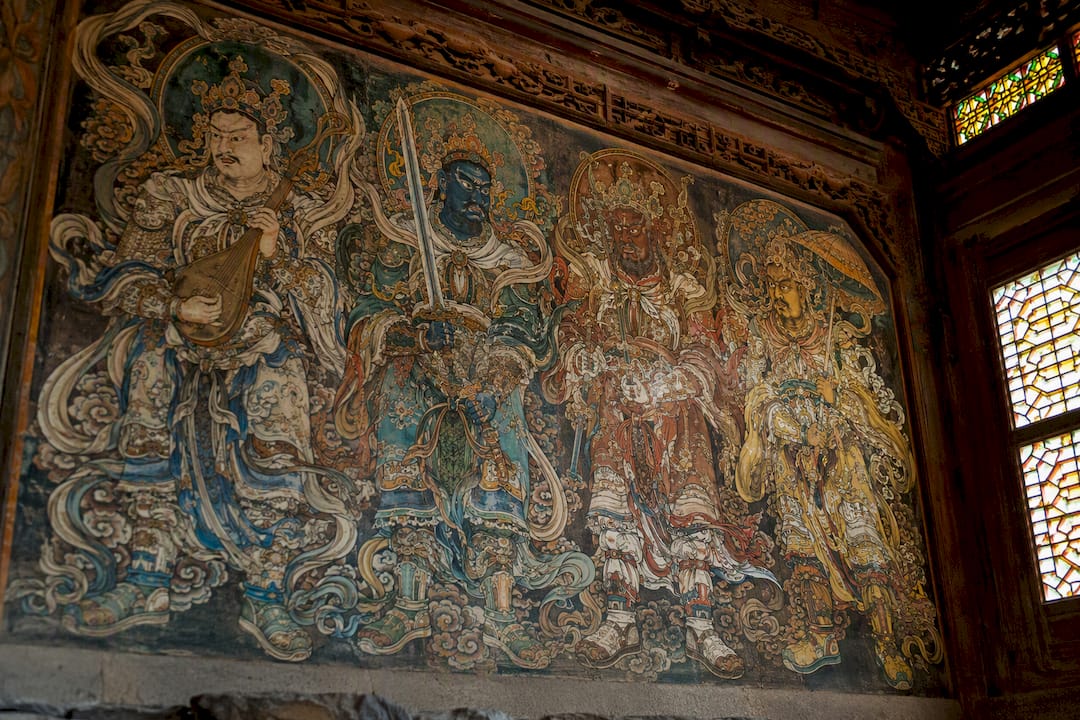
- Dhṛtarāṣṭra – Osten, trägt eine Pipa (Laute), führt die Gandharvas
- Virūḍhaka – nach Süden, trägt ein Schwert, führt die Kumbhāṇḍas an
- Virūpākṣa – Westen, hält eine Schlange oder Naga, führt die Nagas an
- Vaiśravaṇa – Norden, hält einen Sonnenschirm oder Stupa, führt die Yakṣas an, verbunden mit Reichtum
Hauptmerkmale
- Die vier himmlischen Könige bewachen jeweils eine Richtung: Osten, Süden, Westen und Norden, mit spezifischen Aufgaben und Führungsrollen, die mit ihrem Herrschaftsbereich verbunden sind.
- Ihre Ikonographie – Laute, Schwert, Schlange und Sonnenschirm – entwickelte sich nach und nach durch tantrischen Einfluss, nicht direkt aus frühen indischen Texten, und variiert regional.
- Sie wohnen im Cāturmahārājika-Himmel auf dem Berg Sumeru, sind Śakra unterstellt und fungieren als Beschützer des Dharma und der moralischen Ordnung.
- Das Goldene Licht-Sutra unterstreicht ihr Gelübde, Herrscher und Nationen zu schützen, und macht ihre Bilder zu Symbolen des Staats- und Tempelschutzes in ganz Ostasien.
- Authentische Figuren werden anhand von Materialien, regionalen Stilmerkmalen und spezifischen Attributen identifiziert, wobei sorgfältig dokumentierte Provenienz von Sammlern bevorzugt wird.
Inhaltsverzeichnis
Wer sind die vier himmlischen Könige im Einzelnen?
Jeder König trägt einen bestimmten Gegenstand, trägt in den meisten ostasiatischen Maltraditionen eine bestimmte Farbe und befehligt eine bestimmte Klasse von Geistwesen. Diese Details sind von enormer Bedeutung, wenn Sie versuchen, eine Skulptur, ein Tempelwandgemälde oder eine Torwächterfigur zu identifizieren, da die Attribute auf den meisten chinesischen und japanischen Darstellungen konsistent genug sind, um als zuverlässige Identifizierungsmerkmale zu dienen.
1. Dhṛtarāṣṭra, Hüter des Ostens
Dieser König ist auf Sanskrit als Dhṛtarāṣṭra und auf Pali als Dhataraṭṭha bekannt und erscheint in chinesischen Tempeln als Chígúo Tianwáng (持國天王) und in Japan als Jikokuten. Sein Name lässt sich grob mit „Bewahrer der Nation“ oder „Hüter des Reiches“ übersetzen. Er trägt eine Pipa, eine birnenförmige Laute, und die chinesische Tradition malt ihn typischerweise weiß oder gelegentlich blau. Er befehligt die Gandharvas, himmlische Musiker, die mit Duft und Klang verbunden sind, was das Musikinstrument erklärt. In mehreren regionalen Gemälden ist sein Gesichtsausdruck eher ruhig als wild, was ihn optisch von den eher kriegerischen Figuren neben ihm unterscheidet.
2. Virūḍhaka, Hüter des Südens
Virūḍhaka (Pali: Virūḷhaka) erscheint als Zēngzhǎng Tiānwáng (增長天王) in China und Zōchōten in Japan, ein Name, der „derjenige bedeutet, der Wachstum verursacht“. Er schwingt ein Schwert, das manchmal in Flammen gehüllt dargestellt wird und typischerweise in blauem oder grünem Pigment gehalten ist. Er leitet die Kumbhāṇḍas, eine Klasse von Geistern, die historisch mit zwergen- oder kürbisförmigen Körpern in Verbindung gebracht wurden, und in einigen späteren Traditionen leitet er auch Pretas oder hungrige Geister. Das Schwert ist in diesem Zusammenhang nicht einfach eine Waffe; es stellt die Beseitigung der Unwissenheit ebenso dar wie physische Verteidigung.
3. Virūpākṣa, Hüter des Westens
Virūpākṣa, was „der mit den großen Augen“ oder „der, der alles sieht“ bedeutet, beherrscht den Westen. Chinesische Tempel bezeichnen ihn Guǎngmù Tiānwáng (廣目天王) und in Japan er ist Komokuten. Sein charakteristisches Attribut ist eine Schlange oder ein kleiner Drache, der manchmal um seinen Arm geschlungen dargestellt wird, und in abweichenden Traditionen wird die Schlange durch ein Seil oder ein Lasso ersetzt. Er hat typischerweise ein rotes oder gelegentlich weißes Pigment und führt die Nagas an, Schlangengeister, die mit Wasser, Schätzen und der Unterwelt verbunden sind. Sein Beiname „großes Auge“ hängt direkt mit seiner Rolle als wachsamer Wächter zusammen, der bemerkt, was andere übersehen.
4. Vaiśravaṇa, Hüter des Nordens
Vaiśravaṇa (Pali: Vessavaṇa) ist wohl das optisch deutlichste und am unabhängigsten verehrte der vier. Chinesische Tempel nennen ihn Duōwén Tiānwáng (多聞天王) bedeutet „der, der viel hört“, und im japanischen Buddhismus ist er so bekannt Tamonten oder, in seiner eigenständigen Kriegerform, Bishamonten. Er hält einen Sonnenschirm oder einen Miniatur-Stupa, oft gepaart mit einem Mungo, der Juwelen spuckt, ein Detail, das der Assoziation mit Reichtum und der Unterdrückung giftiger Nagas entlehnt ist. Sein Hautton in der Malerei ist normalerweise gelb oder gold. Er führt die Yakṣas und Rākṣasas an und hat im Gegensatz zu den anderen drei Königen einen unabhängigen Kult als Gott des Glücks und der Kriegsführung in Zentralasien, Tibet und anderen Ländern Japan.
Statistikhinweis: Von den vier entwickelte nur Vaiśravaṇa eine substanzielle unabhängige Anbetungstradition außerhalb des Gruppenkontexts und trat allein in tibetischen Thangkas, japanischen Kriegerkultschreinen und als einer von ihnen auf JapanDie sieben glücklichen Götter unter dem Namen Bishamonten.
Wo leben die vier Könige in der buddhistischen Kosmologie?
Der Cāturmahārājika-Himmel liegt auf den unteren Terrassen des Mount Sumeru, dem kosmischen Berg im Zentrum der traditionellen buddhistischen Kosmologie. Diese Platzierung ist kein Zufall. Es positioniert die Könige als Vermittler, nah genug am menschlichen Reich, um es direkt zu überwachen, aber dennoch erhaben genug, um Śakra (Indra) zu antworten, der Trāyastriṃśa regiert, den Himmel der dreiunddreißig Götter direkt über ihnen.
Ihre institutionellen Aufgaben lesen sich fast wie ein bürokratischer Auftrag:
- Sie und ihr Gefolge kommen regelmäßig herab, um menschliches Verhalten und moralisches Verhalten zu beobachten.
- Sie berichten Śakra über ihre Erkenntnisse, der die Götter von Trāyastriṃśa zusammenruft, um den Zustand der menschlichen Welt zu überprüfen.
- Sie verteidigen die Praktizierenden des Dharma und erscheinen in der Schrift als geschworene Beschützer derjenigen, die die buddhistische Lehre vertreten.
- Sie schützen die vier Himmelsrichtungen vor Unordnung, eine Rolle, die schon vor ihrer buddhistischen Übernahme existierte und auf ältere vedische und volkstümliche Beschützergeister zurückgeht, die in die Tradition aufgenommen wurden.
Diese Inspektionsaufgabe erklärt, warum Tempelbauer ihre Bilder an den Eingängen und nicht tief in den Schreinhallen platzieren. Ein Besucher, der unter ihren Augen vorbeigeht, durchläuft symbolisch eine Inspektion, bevor er den heiligen Raum betritt, was die kosmologische Aufgabe der Könige widerspiegelt, über das Verhalten vor den Buddha- oder Bodhisattva-Bildern im Inneren zu wachen. Die Enzyklopädie des Buddhismus stellt dies klar dar: Die Könige fungieren als Beschützer des Dharma und der Lebewesen im Allgemeinen, nicht nur als territoriale Administratoren, die auf eine einzelne Region beschränkt sind.
Wie hat sich ihre Standardikonographie entwickelt?
Wenn Sie jemals einen Tempeltorwächter betrachtet und sich gefragt haben, warum eine Figur eine Laute hält, während eine andere eine Schlange hält, finden Sie die Antwort nicht in den frühen indischen buddhistischen Schriften. Es handelt sich um eine spätere kunsthistorische Entwicklung. Forschung zum Entstehung der Standardikonographie der vier himmlischen Könige in der chinesischen buddhistischen Kunst zeigt, dass das heute bekannte Set aus Laute, Schwert, Schlange und Sonnenschirm überhaupt nicht direkt aus frühen indischen Prototypen hervorgegangen ist. Es entstand durch tantrische Übertragung, gefiltert durch zentralasiatische Vermittler, wobei der Austausch in der Xi-Xia- und Yuan-Zeit eine entscheidende Rolle bei der Festlegung der Attribute spielte, die wir heute kennen.
Bilder von Dunhuang-Höhlenstandorten und Tempeln aus der Xi Vaiśravaṇas Stupa zum Beispiel erscheint in einigen frühen Darstellungen als einfaches Banner oder als Waffe, bevor er sich in die heute überall übliche Kombination aus Sonnenschirm und Stupa verwandelt China und Japan. Frühe indische Schnitzereien gaben den Königen oft generische Waffen und nicht die spezifischen symbolischen Objekte, die in der späteren ostasiatischen Kunst zu sehen waren, was zeigt, dass das Attributsystem nach und nach zusammengestellt wurde und nicht vollständig aus der Heiligen Schrift überliefert wurde.
Für jeden, der diese Stücke untersucht oder sammelt, ist die regionale Variation immer noch wichtig:
- Chinesische und japanische Tempelanlagen folgen in der späten Kaiserzeit fast immer dem Muster von Laute, Schwert, Schlange und Sonnenschirm.
- Tibetische Darstellungen, die sich auf eine etwas andere tantrische Abstammungslinie stützen, stellen Vaiśravaṇa (in tibetischen Kontexten Namtöse genannt) manchmal mit einem Mungo dar, der den Stupa ersetzt oder begleitet, und betonen so seine wohlstandspendende Funktion.
- Südostasiatische Traditionen in Kambodscha, Thailand, und Myanmar zeigen eher lokalisierte Wächterfiguren, die hinduistische Dvarapala-Konventionen (Türwächter) mit buddhistischer Beschützer-Ikonographie verbinden, so dass eine Figur eines „himmlischen Königs“ aus diesen Regionen möglicherweise einen Streitkolben oder eine Keule anstelle des ostasiatischen Attributsatzes trägt.
- Die Tibetisch-buddhistische Enzyklopädie stellt vergleichbare Gefolgsstrukturen über Traditionen hinweg fest, selbst wenn sich das spezifische gehaltene Objekt verschiebt.
Tempel in ganz Ostasien beherbergen typischerweise die vier Könige zusammen in einer speziellen Halle der himmlischen Könige, die sich direkt hinter dem Haupteingangstor befindet. Diese Platzierung spiegelt sich in der Diskussion über die Traditionen der himmlischen Könige und ihre Verbindung mit schützenden Devas, einschließlich der breiteren Gruppierung der Vierundzwanzig Devas, wider.
Profi-Tipp: Wenn Sie eine Skulptur untersuchen und versuchen herauszufinden, welchen König sie darstellt, überprüfen Sie zuerst das gehaltene Objekt und dann die Farbe. Das Pigment verblasst und wird im Laufe der Jahrhunderte unregelmäßig wiederhergestellt, aber das Attribut (Laute, Schwert, Schlange oder Stupa) bleibt selbst bei beschädigten oder abgenutzten Stücken meist intakt.
Welche Sutras und Rituale rufen die Vier Könige an?
Das Golden Light Sutra ist die zentrale Schriftquelle für den schützenden Ruf der Könige. Darin geloben die vier himmlischen Könige direkt, jeden Herrscher und jede Nation zu beschützen, in der das Sutra geehrt, rezitiert und hochgehalten wird. Dieses Versprechen machte aus dem Text mehr als nur Andachtsliteratur. Es wurde zu einem praktischen Instrument der Staatskunst in ganz Ostasien und wurde an königlichen Höfen und großen Tempeln vorgetragen, um den Schutz des Reiches zu erbitten.
Diese literarische Rolle taucht in mehreren wiederkehrenden rituellen Kontexten auf:
- Vom Gericht geförderte Rezitationen des Golden Light Sutra in Zeiten politischer Instabilität oder Invasionsgefahr, insbesondere im Mittelalter China und Japan.
- Tempelliturgie, die mit Anrufungen an die vier Könige als Wächter der Versammlung und des physischen Tempelgeländes beginnt oder endet.
- Saisonale oder jährliche Riten, die an Ernte und Wetter gebunden sind und bei denen die Könige mit Worten angesprochen werden, in denen sie sich „günstigen Wind und Regen“ wünschen, eine Verbindung, die die Tradition der himmlischen Könige in der chinesischen Tempelkultur bewahrt.
- Platzierungsrituale während des Tempelbaus, bei denen die Bilder der Könige am Tor geweiht werden, bevor die Haupthalle fertiggestellt ist, wodurch ihre Inspektionsfunktion architektonisch formalisiert wird.
Der japanische Buddhismus erweiterte diese staatliche Schutzfunktion noch weiter, indem historische Tempel speziell in Zeiten militärischer oder politischer Unruhen Vier-Himmlische-Könige-Sets in Auftrag gaben. Die Logik geht direkt auf das Versprechen des Sutra selbst zurück: Ehre die Lehre, und die Wächter werden ihrem Gelübde nachkommen, die ehrende Partei zu beschützen.
Was symbolisieren die Attribute der Könige eigentlich?
Entfernen Sie die historischen Schichten und jedes Attribut trägt eine ziemlich direkte symbolische Botschaft, wenn Sie erst einmal wissen, wie man es liest. Die Laute steht für Harmonie, die durch geschickte Mittel erreicht wird. Einige spätere Interpretationen deuten darauf hin, dass Dhṛtarāṣṭra die Saiten lockern oder spannen kann, um die Gefahr von Extremen zu verdeutlichen und die Zuhörer zu einer ausgewogenen Praxis durch Musik statt Gewalt zu bekehren. Das Schwert stellt aktiven Schutz gepaart mit Wachstum dar und durchbricht Hindernisse auf die Art und Weise, wie Virūḍhakas Name (der Verursacher des Wachstums) andeutet, dass er Raum für die Ausbreitung des Dharma schafft. Die Schlange oder Naga symbolisiert Autorität über Wassergeister und verborgenes Wissen und knüpft an Virūpākṣas Rolle als allsehender Beobachter an, der wahrnimmt, was verborgen ist. Der Sonnenschirm, der Stupa und der Mungo signalisieren zusammen Souveränität, heiligen Schutz und materielle Großzügigkeit, alles im Einklang mit Vaiśravaṇas Doppelrolle als Wächter und Reichtumsgottheit.
Die Könige versteht man am besten als Beschützer der Lehre selbst und nicht als Herrscher über physisches Land, eine Unterscheidung, die erklärt, warum sie scheinbar weltweit Tempelschwellen bewachen, anstatt territoriale Grenzen zu markieren. Ihre Funktion ist die geistliche Obhut, nicht der geopolitische Anspruch.
Diese Lesart, die aus der Behandlung der vier großen Könige in der Encyclopedia of Buddhism stammt, ist wichtig, weil sie neu beschreibt, was Sammler und Museumsbesucher tatsächlich sehen, wenn sie diesen Figuren begegnen. Eine Skulptur der vier himmlischen Könige ist kein Kriegsdenkmal oder Grenzmarkierung. Es handelt sich um ein Andachtsobjekt, das die Grenze zwischen gewöhnlichem und geweihtem Raum markiert und Wache hält, so wie die Könige selbst am Rande der Terrassen des Mount Sumeru Wache halten.
Statistikhinweis: Der wissenschaftliche Konsens, der sich in enzyklopädischen und kunsthistorischen Quellen widerspiegelt, behandelt alle vier Könige als Mitglieder einer einzigen funktionalen Kategorie, der Dharmapalas, obwohl jeder eine geografisch unterschiedliche Richtungszuweisung und ein separates symbolisches Attribut besitzt.
Traditionsübergreifende Lesarten verstärken dies. Tibetische liturgische Texte beschreiben dieselben vier Figuren mit leicht unterschiedlichen Namen und Betonungen, behalten aber die identische zugrunde liegende Funktion bei: Bewahrung der Lehre, nicht Eroberung von Land.
Wie kann man eine echte Skulptur der vier himmlischen Könige identifizieren?
Das Lesen eines Stücks „Vier himmlische Könige“ auf die Art und Weise, wie ein Kurator es tut, beginnt mit dem Material. Bronzegussteile, die in ganz Südostasien verbreitet sind China, weisen oft Patina und Gussnähte auf, die auf Alter und regionale Werkstattpraxis hinweisen. Holzschnitzereien, die häufig in japanischen und vietnamesischen Tempelanlagen zu sehen sind, weisen Werkzeugspuren und Tischlerstile auf, die sich je nach Epoche ändern. Steinbeispiele aus Kambodscha und Indonesien Abhängig von der lokalen Mineralzusammensetzung neigen sie dazu, auf unterschiedliche Weise zu verwittern, und Lackwarenstücke aus Myanmar weisen ihre eigenen geschichteten Oberflächeneigenschaften auf, die über Jahrzehnte ein spezifisches Krakeleemuster entwickeln.
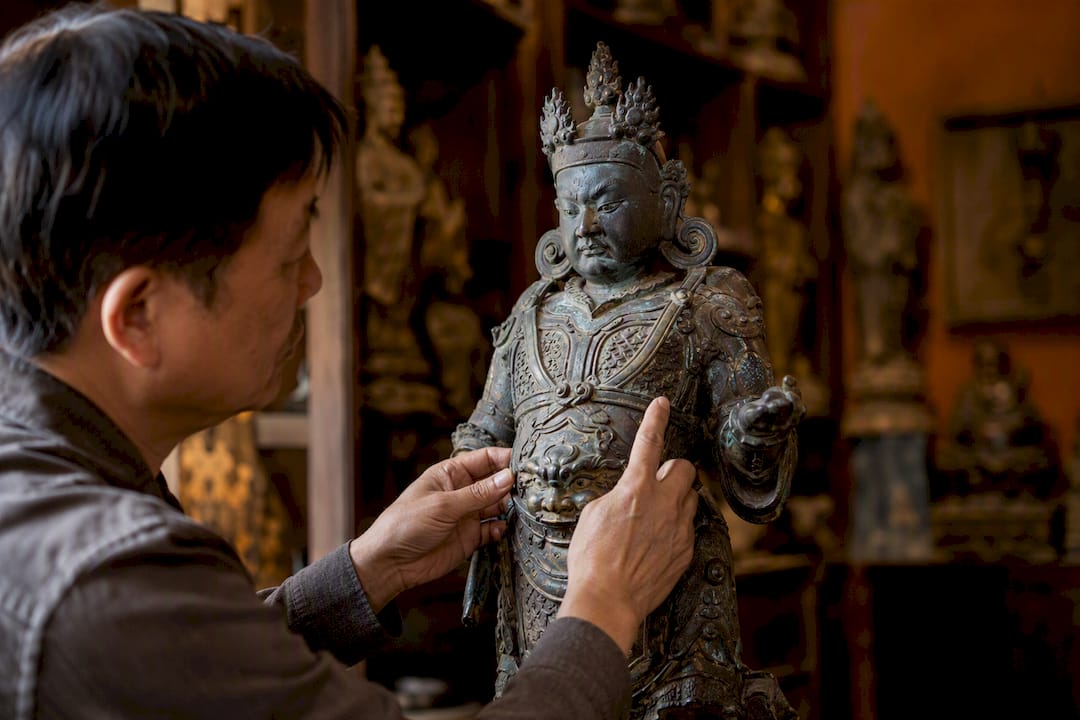
Stilistische Hinweise sind ebenso wichtig wie Material. Rüstungsdetails, die Behandlung von Schals und Vorhängen sowie die Gesichtsmodellierung verändern sich alle merklich je nach Region und Jahrhundert und spiegeln die breiteren Stilmuster wider, die man überall findet Theravada-buddhistische Skulptur Traditionen. Ein Stück mit stark stilisierter, fast geometrischer Panzerung weist oft auf eine spätere chinesische oder japanische Werkstatt hin, während naturalistischere Muskulatur und einfachere Drapierung häufig auf frühere südostasiatische Schnitztraditionen hinweisen.
Die Dokumentation unterscheidet eine ernsthafte Akquisition von einer Vermutung. Achten Sie auf klare Fotos aus mehreren Blickwinkeln, präzise Messungen und Angaben zu früheren Verkaufs- oder Ausstellungshistorien, die dem Stück beigefügt sind.
Profi-Tipp: Überprüfen Sie beim Lesen eines Museumsetiketts oder einer Galeriebeschreibung, ob das Stück durch sein gehaltenes Attribut (Laute, Schwert, Schlange oder Stupa) und nicht durch ein generisches „Tempelwächter“-Etikett beschrieben wird. Eine genaue Attributidentifizierung weist in der Regel auf eine sorgfältiger recherchierte Provenienzdatei hinter dem Objekt hin.
Woher stammen die vier Könige in frühen buddhistischen Texten?
Die vier himmlischen Könige waren ursprünglich keine buddhistischen Erfindungen. Sie gehen auf ältere kosmologische und volkstümliche Beschützerfiguren zurück, die in die Tradition aufgenommen wurden, als sie sich über Süd- und Zentralasien ausbreitete, ein Muster, das vielen buddhistischen Schutzgottheiten gemeinsam ist, die als regionale Geister begannen, bevor sie offiziell in die Heilige Schrift aufgenommen wurden. Frühe buddhistische Texte beschreiben sie als Devas des Kāmadhātu, des Wunschreichs, und ordnen sie der untersten Stufe der himmlischen Wesen zu, die der menschlichen Welt am nächsten stehen.
Ihre früheste textliche Rolle konzentrierte sich auf Inspektions- und Berichtspflichten im Zusammenhang mit dem Hof von Śakra, einem bürokratischen Rahmen, der Jahrhunderte später älter war als die aufwändigen ikonografischen Attribute, die mit ihnen verbunden wurden. Die heute von Sammlern anerkannten Attributsätze (Laute, Schwert, Schlange, Sonnenschirm) kamen, wie oben beschrieben, viel später, aber die zugrunde liegende mythologische Rolle, Vormundschaft gepaart mit moralischer Aufsicht, taucht bereits in den frühesten erhaltenen Beschreibungen auf. Diese Kontinuität über etwa zwei Jahrtausende hinweg textlicher und künstlerischer Entwicklung ist Teil dessen, was die vier Könige zu einem so stabilen Identifikationsobjekt macht, auch wenn sich ihre visuelle Form je nach Region und Epoche dramatisch veränderte.
Wie erscheinen die Vier Könige heute in der Populärkultur?
Die vier himmlischen Könige sind weit über die Tempelhallen hinaus in zeitgenössische Medien vorgedrungen, insbesondere im ostasiatischen Film, Fernsehen und Gaming, wo ihre Regieführung und ihre besonderen Eigenschaften sich auf natürliche Weise in der Charaktergestaltung niederschlagen. Fantasy- und historische Dramen, die in der Tang-, Song- oder Ming-Dynastie spielen China Häufig werden die Könige als übernatürliche Verbündete oder Antagonisten dargestellt, wobei sie sich zur sofortigen visuellen Erkennung direkt auf ihre Schwert-, Lauten-, Schlangen- und Sonnenschirm-Ikonographie stützen.
Videospiele mit ostasiatischen mythologischen Schauplätzen besetzen die vier oft als Boss-Charaktere oder Schutzgeister, die an die vier Himmelsrichtungen gebunden sind, eine strukturelle Wahl, die ihre ursprüngliche kosmologische Aufgabe fast genau widerspiegelt. Vor allem die japanische Populärkultur hält Bishamonten, die unabhängige Kriegerform von Vaiśravaṇa, als erkennbare Figur in Mangas, Animes und sogar mit Brandings in Verbindung mit kriegerischen oder schützenden Themen aktiv, eine Fortsetzung seiner historischen Stellung als eigenständige Gottheit des Glücks und des Krieges. Dieser Übergang in die Unterhaltungsbranche hat die religiöse Bedeutung der Originalfiguren nicht so sehr geschwächt, sondern vielmehr ihre Reichweite erweitert und dem Publikum die Bilder von Wächtern näher gebracht, denen es später in einem echten Andachts- oder kunsthistorischen Kontext begegnen könnte.
Warum diese Wächter immer noch Aufmerksamkeit erregen
Jedes Mal, wenn ich vor einer gut geschnitzten Figur des Himmlischen Königs stand, fällt mir nicht die Wildheit des Ausdrucks auf. Es ist die Besonderheit. Wer auch immer diese Laute oder diese gewundene Schlange geschnitzt hat, wusste genau, welchen König sie darstellten und welche Aufgabe dieser König in der Kosmologie erfüllte. Diese Art von Präzision ist in der Andachtskunst im Allgemeinen selten und ist einer der Gründe, warum diese Figuren Sammler, Museumskuratoren und Gelegenheitsbesucher gleichermaßen anziehen.
Die Recherche und das Fotografieren von Stücken für HDAsianArt hat etwas bestätigt, was ich vorher nicht ganz zu schätzen wusste: Die vier Könige belohnen genaues Hinsehen auf eine Art und Weise, wie es nur wenige andere Wächterfiguren tun. Unser Ansatz basiert auf der gemeinsamen Dokumentation von Material, Attributen und regionalem Stil, da durch die Trennung die Geschichte verloren geht, die das Objekt tatsächlich erzählt.
— James, HDAsianArt.com
Bringen Sie eine Wächterfigur in Ihre eigene Sammlung
Über die vier himmlischen Könige zu lesen ist eine Sache. Ein Stück zu besitzen, das von Kunsthandwerkern geschnitzt wurde, die diese Kosmologie aus erster Hand verstanden haben, ist eine ganz andere Erfahrung. HDAsianArt kuratiert authentifizierte Wächter- und buddhistische Figuren aus Bronze, Stein, Holz und Lack Kambodscha, Thailand, Indonesien, Sri Lanka, und Vietnam, jeweils einzeln recherchiert und fotografiert und nicht einem generischen Katalog entnommen.
Jede Auflistung enthält detaillierte Zustandshinweise und Herkunftskontexte, die gleiche Art von Dokumentation, die oben bei der Identifizierung echter historischer Stücke besprochen wurde. A sitzender javanischer predigender Buddha aus Bronze oder ein Avalokiteshvara-Bodhisattva-Figur im javanischen Stil zeigt den Grad der Material- und Stildetails, den unsere Beschreibungen abdecken, den genauen Rahmen, den Sie bei der Bewertung eines Four Heavenly Kings-Stücks anwenden würden. Jede Bestellung wird weltweit mit versicherter DHL-Lieferung versendet, unterstützt durch unseren Standard einer Kuratierung in Museumsqualität. Stöbern Sie in der aktuellen Galeriesammlung und fordern Sie einen Zustandsbericht zu jeder Wächterfigur an, die Ihnen ins Auge fällt.
Wichtige Erkenntnisse
Die vier himmlischen Könige bewachen als Dharmapalas die vier Himmelsrichtungen, und ihre Attribute, Namen und regionalen Formen zeichnen einen dokumentierten Weg von der frühen buddhistischen Kosmologie bis zur chinesischen Kunstgeschichte der Yuan-Ära nach.
| Punkt | Details |
|---|---|
| Vier verschiedene Wächter | Dhṛtarāṣṭra (Osten, Laute), Virūḍhaka (Süden, Schwert), Virūpākṣa (Westen, Schlange) und Vaiśravaṇa (Norden, Sonnenschirm/Stupa) schützen jeweils eine Richtung. |
| Kosmologische Residenz | Alle vier leben im Cāturmahārājika-Himmel auf den unteren Terrassen des Mount Sumeru und berichten Śakra über menschliches Verhalten. |
| Die Ikonographie entstand später | Die Attribute Laute, Schwert, Schlange und Sonnenschirm sind in standardisiert China durch die Yuan-Zeit durch tantrische und tibetische Überlieferung, nicht durch frühe indische Schriften. |
| Rolle des Schriftschutzes | Das Goldene Licht-Sutra verknüpft das Schutzgelübde der Könige mit Staats- und Tempelschutzritualen in ganz Ostasien. |
| Authentische Stücke sammeln | HDAsianArt kuratiert herkunftsdokumentierte Wächterfiguren aus Bronze, Holz und Stein mit weltweitem versichertem Versand für Sammler und Museen. |
Quellen
- Vier himmlische Könige – Wikipedia
- Laute, Schwert, Schlange und Sonnenschirm – Die Entstehung der Standardikonographie der vier himmlischen Könige in der chinesischen buddhistischen Kunst – MDPI (2023)
- Vier große Könige – Enzyklopädie des Buddhismus
