



Diwali Sculpture Gift Guide: Choosing Hindu or Buddhist Art
Diwali Sculpture Gift Guide: Choosing Hindu or Buddhist Art
Diwali is one of the few occasions when a gift is expected to carry a blessing, not just a thank you. Late October is when most people start hunting for something to give, and that is when mistakes happen. A mass-produced resin figure looks fine in a photo and then sits in a drawer, while a well-chosen sculpture can stand on a shelf or altar for decades. This guide explains how to choose a Diwali sculpture gift, a Hindu statue gift idea, or a Buddhist art gift that suits the person receiving it, without guessing and without overspending.
Table of Contents
- Quick Takeaways
- Why Diwali Gifts Carry Meaning
- Choosing a Deity or Buddha Figure
- Size, Material and Finish
- Museum Quality and What It Means
- Presenting the Gift Respectfully
- Caring for the Piece After Delivery
- Timing Your Order for Diwali
- Frequently Asked Questions
- References
Quick Takeaways
|
Key Insight |
Explanation |
|---|---|
|
Choose the figure by the recipient's practice |
Ask what they already worship or meditate with. A Ganesha figure for someone who prays to Ganesha means more than a generic Buddha head. |
|
Match the deity to the purpose |
Lakshmi is associated with prosperity, which fits Diwali directly. Saraswati suits students and writers, and Ganesha suits new beginnings. |
|
Size the piece to the spot |
Measure the shelf or altar before ordering. A crowded altar needs a small figure, while a sideboard can take a larger one. |
|
Judge material and finish in detail, not at thumbnail size |
Look for crisp detail on the face and hands, even casting, and a finish that will age well in the room it lives in. |
|
Treat "museum quality" as a claim to test |
Ask about origin, casting method, and how the figure's iconography is described. Vague answers tell you more than the label does. |
|
Work backwards from the festival date |
Diwali falls in October or November. Allow time for production, dispatch, and delivery before you commit to a piece. |
Why Diwali Gifts Carry Meaning
Diwali is a religious festival, and the gifts exchanged during it are understood as more than courtesy. The Diwali gift tradition described on diwalifestival.org treats sending a gift as a way of expressing prayers for the prosperity and wellbeing of the recipient. That changes what you are buying. You are not just finding something attractive for a sideboard.
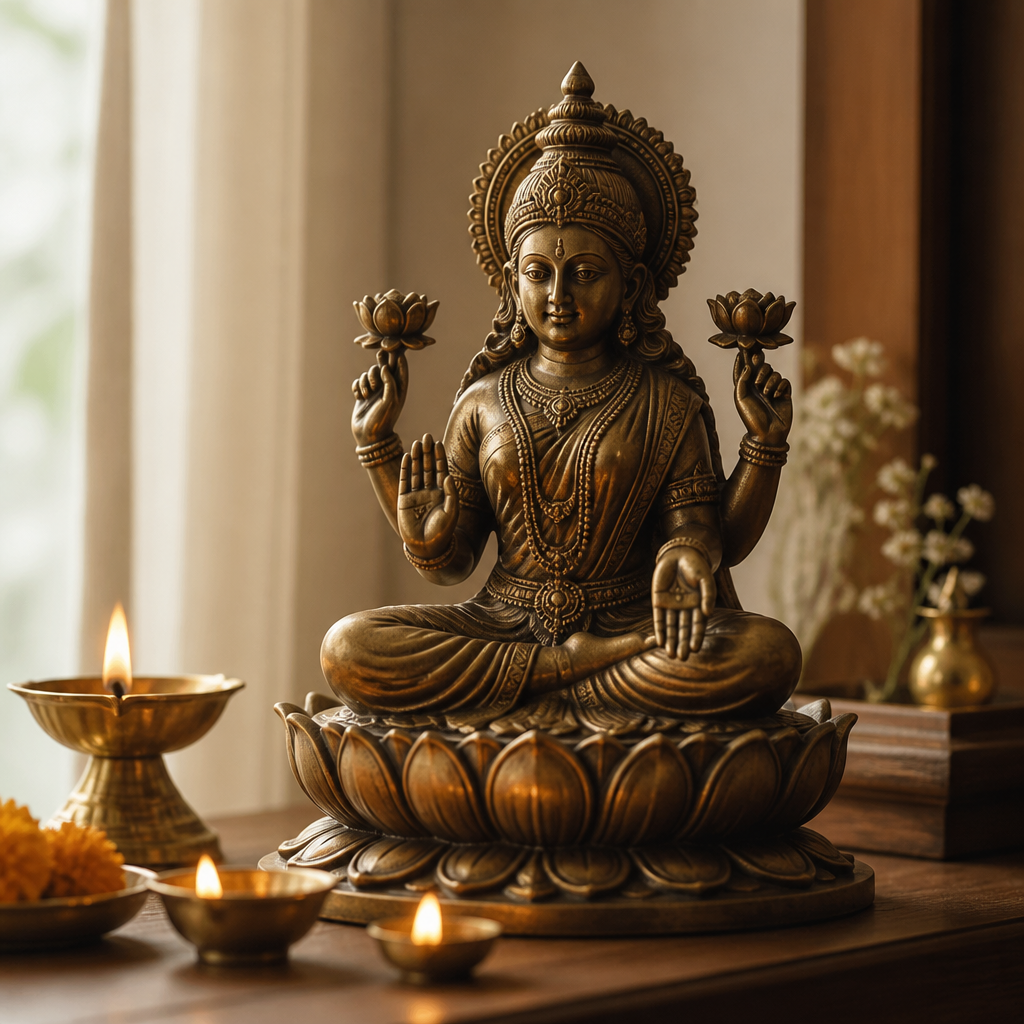
In practice, the gift should say something about the person's life and hopes. A figure of Lakshmi says, in effect, "may your home stay full." Ganesha is often chosen for someone starting a business, moving house, or beginning a course. A seated Buddha speaks to calm, practice, and restraint, which suits someone who meditates or simply needs a quieter room.
A common mistake is choosing by the giver's taste instead of the recipient's. If you love minimalist Buddha heads but your sister's altar is crowded with Hindu deities, the piece will be admired politely and then quietly moved to a cupboard. Start with what the person already keeps in their home, then choose a figure that fits that setting.
A sculpture given at Diwali works like a prayer that stays in the room. The recipient will see it every time they pass, which is why the choice matters more than the wrapping.
Choosing a Deity or Buddha Figure
Start with the recipient's existing practice
Ask a few plain questions before you shop. Do they have a home altar? Which figures are already on it? Do they chant or meditate, and within which tradition? The answers narrow the field faster than any catalogue filter, and they save you from buying a second figure of a deity the household already has.
If you cannot ask directly, look for clues. Diyas, incense holders, or a small brass lamp on a sideboard suggest a daily puja. A bare wall with one photograph suggests the recipient may prefer a single, understated figure.
Pro tip: If the recipient already has an altar, ask them which figures are there before you buy. Many people will be happy to tell you, and it is the simplest way to avoid duplicating a deity.
Figures that suit common Diwali gifts
Lakshmi is the obvious choice for prosperity, and most people will understand it immediately. Ganesha, the remover of obstacles, works well for someone starting something new. Saraswati, associated with learning and the arts, suits a student, teacher, or writer. The National Museum of Asian Art at the Smithsonian built an online Diwali exhibition around nine well-known goddesses drawn from its Hindu and Buddhist South Asian and Himalayan collections, which is a useful reminder of how much variety sits inside a single festival.
When a Buddhist figure is the better choice
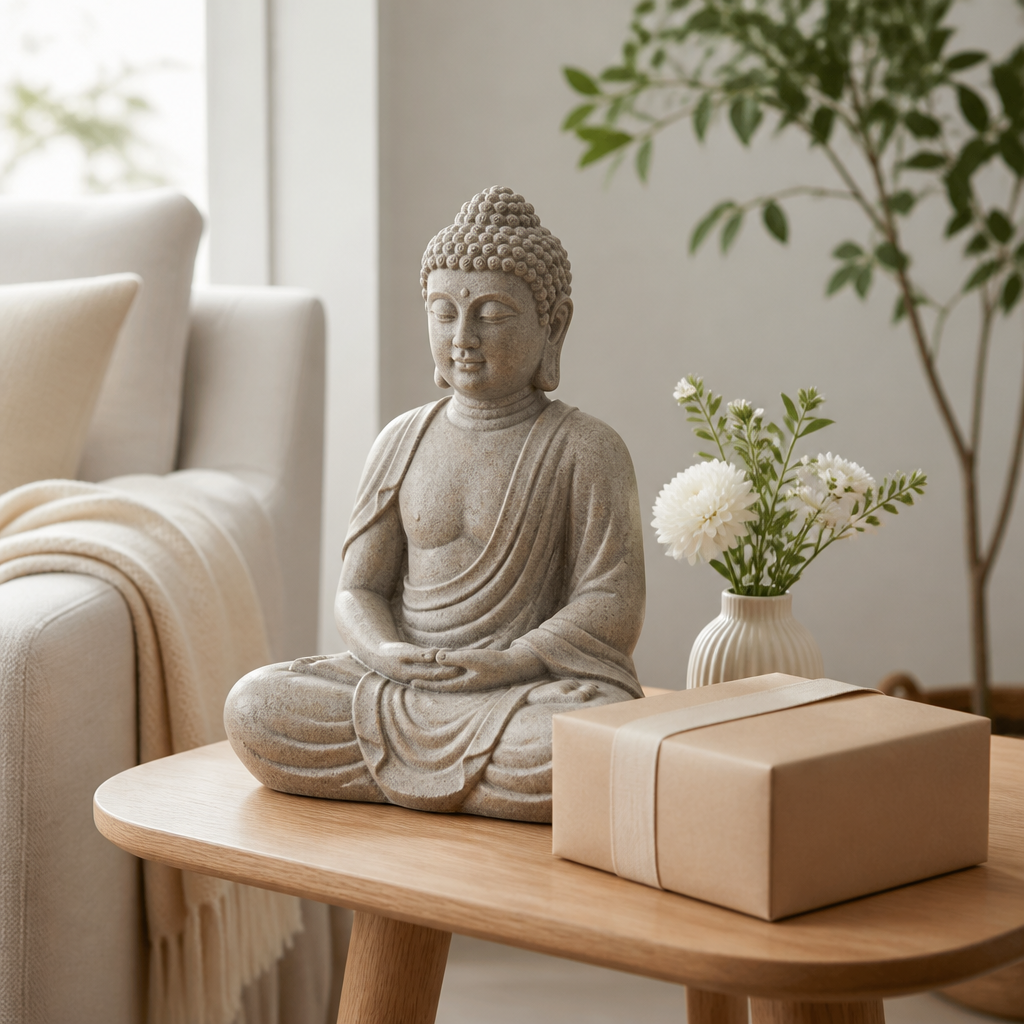
Buddhist sculpture fits a recipient who meditates, a friend recovering from a hard year, or someone who has asked for something quieter. Seated Buddha figures, with eyes lowered and hands resting in the lap, read as composure. A Buddha figure given to someone who is not interested in Buddhism can still work, but a short card explaining the posture turns a decorative object into a considered gift.
Be wary of treating any Buddha figure as a generic "zen" object. Its posture, hand positions, and expression carry specific meaning, and a seller who can describe those details is usually a better source than one who only describes the colour of the patina.
Size, Material and Finish
Measure the space before you order
Most disappointing gifts fail on dimensions, not on quality. A figure that looks modest in a product photo can overwhelm a narrow altar shelf. Measure the height and depth of the intended space, then leave a few centimetres clear around the base for offerings, a lamp, or a small bowl of flowers.
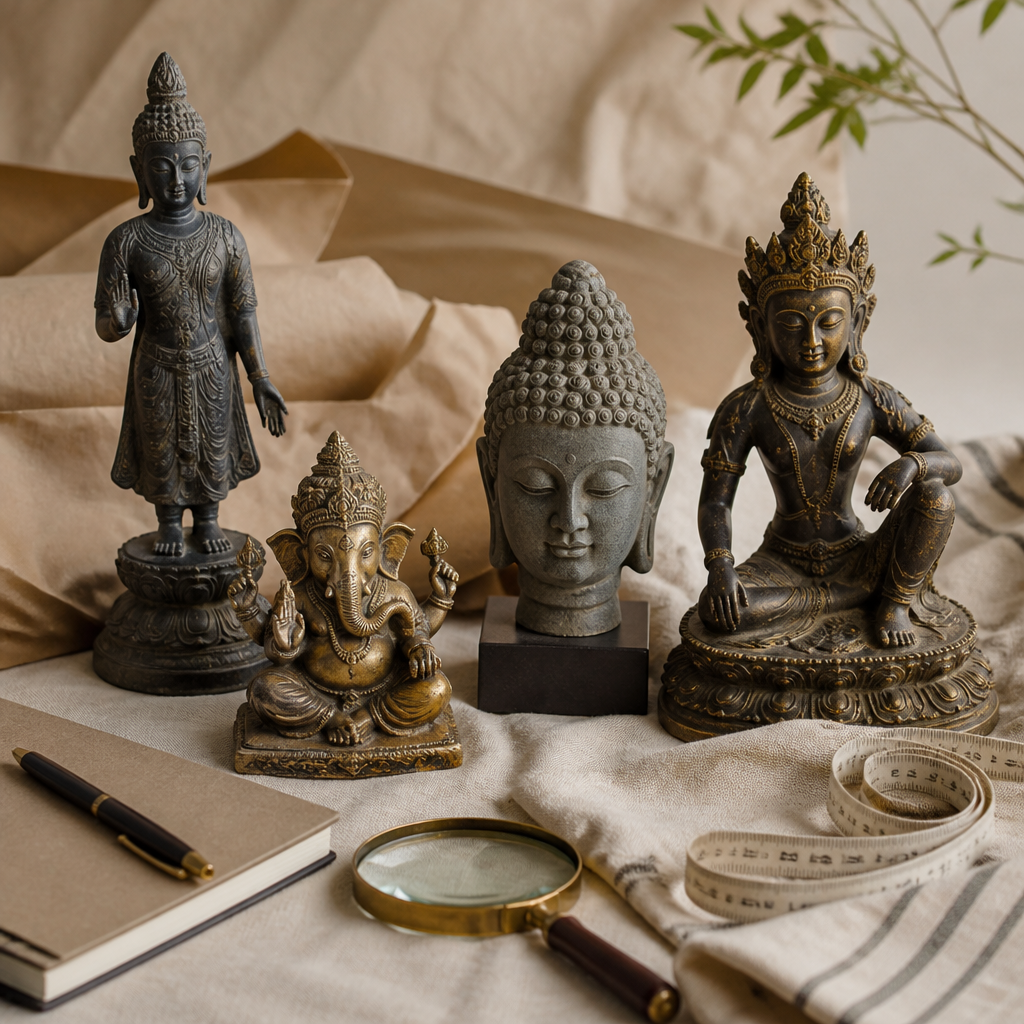
Remember that the figure will sit alongside other objects. A tall statue on a shelf already holding photographs, a clock, and a candle can feel cramped even if it fits. Standing it in place with a tape measure before you buy is a five-minute job that prevents a return.
Reading casting and surface detail
Crisp detail on the face, fingers, and jewellery usually reflects careful casting and finishing. Soft edges, blurred features, or uneven surfaces often mean the piece was rushed. Ask for close-up images of the face and the base, not just the hero shot, because the base shows how the piece was finished underneath.
Finish and patina
Metal figures age differently depending on their finish. A matt or antique finish hides handling marks and suits a traditional room. A polished finish shows fingerprints quickly but looks brighter in a modern interior. Choose the finish for the room the piece will live in, not for the moment of unwrapping.
Pro tip: Ask the seller how the piece should be cleaned. A finish that needs frequent polishing is a poor choice for a busy household, while a matt finish is more forgiving.
Museum Quality and What It Means
Three questions to ask a seller
"Museum quality" is a phrase almost every seller uses, so treat it as a claim to test rather than a guarantee. The Denver Art Museum's Arts of Asia collection, founded in 1915 and now more than 7,000 artworks strong, shows what the term looks like in an institution: careful documentation, real strength in sculpture and ceramics, and objects chosen for their craft. A gift does not need a museum budget to share some of that thinking.
Test the claim with three questions. Where was the piece sourced? How was it made? Can the seller describe its iconography accurately, including which deity or teaching it represents? Vague answers to any of these are a warning sign, and specific answers are worth paying for.
Comparing three common options
Not every gift needs the same level of craft. The table below compares the three types of sculpture most often considered for Diwali, so you can match the approach to the recipient rather than to the price tag.
|
Approach |
What the recipient gets |
Best for |
|---|---|---|
|
Antique-style or heritage-inspired sculpture |
Strong patina, traditional form, and a sense of age in the room |
Collectors and anyone who wants a piece that feels rooted in tradition |
|
Contemporary hand-finished statue |
Clean detail, a modern finish, and a wider range of sizes for home altars |
Daily worship and recipients who want a new piece that fits a smaller space |
|
Mass-produced resin décor |
A low price, a uniform look, and limited detail |
Decoration only, with no religious use intended |
In practice, the middle option serves most Diwali buyers well. It gives a strong result without the premium that comes with older pieces, and it is easier to match to a specific altar. The resin option has its place, but giving it as a religious gift to someone who worships daily is a mismatch that recipients usually notice.
Presenting the Gift Respectfully
Writing the card
Keep the card short and specific. Name what you hope the figure brings, such as "for a settled and prosperous year in your home." Avoid jokes about the deity, which can land badly even when they are meant kindly, and avoid long explanations that turn a gift into a lecture.
If you are giving a Buddhist figure, a sentence about its posture or meaning is enough. The recipient can then read the piece as intended rather than guessing at its significance.
Unwrapping and placing on the altar
Wrap the statue in soft tissue inside a sturdy box, not a loose gift bag that can scratch the surface or crush the base. Metal figures are heavy for their size, so a box with padding protects the corners during transit as well.
Many households prefer to clean the space before placing a new figure, and to set it at a height that feels respectful within the room. Suggest this kindly rather than prescribing it, because every home has its own customs.
Pro tip: Include a note about the figure's posture, symbolism, or recommended placement. It helps the recipient decide where it should sit and makes the gift feel considered.
Caring for the Piece After Delivery
Dusting and handling
Dust the figure with a soft, dry brush or a clean cloth rather than household cleaners. Strong cleaners can dull patina and damage finishes that took a long time to develop. Handle the figure by the body or base, not by thin projecting parts like hands, which are the most likely to chip.
Light, heat and humidity
Diyas and candles are part of Diwali, but a figure placed directly above a flame will darken and wear faster. Keep the piece a safe distance from open flames, heaters, and direct sunlight. A stable spot in a room with moderate humidity protects metal and stone alike.
Recipients who keep their figure for decades usually do the same few things: dust it gently, keep it away from heat, and avoid moving it constantly. Those habits matter more than any special product.
Timing Your Order for Diwali
Diwali falls in October or November, and this article is being published in late October 2026, so the window for a gift is already tight. Work backwards from the festival date rather than from the day you feel like shopping. Allow time for production, dispatch, and delivery, and check the seller's dispatch times at checkout instead of assuming they match the product page.
Working backwards from the festival date
Set a deadline a week before the date you want the gift to arrive. That gives room for a delayed parcel or a size exchange. If you are giving to someone overseas, add extra time, because customs checks can slow delivery without much warning.
Pairing a sculpture with a smaller gift
HD Asian Art offers free shipping on orders over £35, which makes it practical to pair a sculpture with a smaller companion item, such as a piece of traditional Burmese lacquerware, without paying extra for a second delivery. A paired gift also gives the recipient something to use every day alongside the figure on their altar.
Frequently Asked Questions
What is a good Diwali sculpture gift for someone new to Hindu or Buddhist art?
A medium-sized Ganesha or Lakshmi figure is a sensible starting point. Both are widely recognised, both fit a home altar or shelf, and both carry clear meaning for the festival. Add a short card explaining the figure's symbolism so the recipient can enjoy it as well as display it.
Is a Buddha statue appropriate as a Diwali gift for a Hindu family?
Many Hindu families appreciate Buddha figures as art or as part of a wider collection, but it is worth asking first if you are unsure. Choose a calm, well-made piece and explain why you picked it. Thoughtful intent usually matters more to the recipient than the category of the figure.
How big should a home altar figure be?
Measure the shelf or space first, then leave clear room around the base for offerings and a lamp. For most altars, a figure that is noticeably smaller than the surrounding frame looks more settled than one that fills the entire space.
What does "museum quality" actually mean when buying a statue?
The term has no single legal definition, so it should be tested rather than accepted. Ask where the piece was sourced, how it was cast or carved, and how accurately its iconography is described. Specific, confident answers are a better guide than the phrase on the product page.
How early should I order a Diwali gift?
Order as early as you can, and work backwards from the festival date. Allow time for production, dispatch, and delivery, and build in a buffer for any size exchange. Late orders are the most common reason people end up sending a generic card instead of the gift they planned.
Can I give a sculpture to someone who is not religious?
Yes, but the gift works best when it suits the person's taste and home. A figure chosen for its craft, with a note about its history or posture, can be enjoyed as art. Avoid giving a religious piece as a joke, since the recipient may read it as a comment on their beliefs.
Have you given or received a sculpture at Diwali, and how did the recipient respond? We would love to hear your experience in the comments below.
References
-
Diwali gift tradition and the religious meaning behind festival presents
-
National Museum of Asian Art online Diwali exhibition on nine goddesses
-
Asian Art Museum teaching resource on Diwali and threshold art
