



Altar Accessories for Buddhist and Hindu Shrines Guide
Altar Accessories for Buddhist and Hindu Shrines Guide
Most people who bring home a Buddhist or Hindu sculpture run into the same problem within a week. The statue sits alone on a shelf, and the space around it looks empty or accidental. Altar accessories solve that, but only when they are chosen for function as well as appearance. A water bowl, a bell, a lamp, and a cloth each have a job in practice, and the right small set turns a single sculpture into a working shrine. Below is how we advise customers to choose altar accessories for Buddhist and Hindu shrines, what to avoid, and how to arrange everything so the sculpture stays the focal point.
Table of Contents
- Quick Takeaways
- Start With the Sculpture's Role
- Offering Vessels: Water, Flowers, and Light
- Buddhist Altar Accessories That Work Well
- Hindu Shrine Accessories and Their Logic
- Mixing Buddhist and Hindu Pieces on One Shelf
- Placement, Height, and Spacing
- Comparing Three Accessory Approaches
- Caring for Altar Accessories Over Time
- Frequently Asked Questions
- References

Quick Takeaways
|
Key Insight |
Explanation |
|---|---|
|
Match the accessories to the tradition of the figure |
A seated Buddha in meditation and a standing Hindu murti receive different daily attention, so their altars should hold different objects. |
|
Offerings define the altar |
Water, light, flowers, and incense are the core. Add one item at a time and keep each one useful. |
|
Bells and lamps do the most work |
A bell marks the start and end of practice, and a lamp gives the altar a clear point of attention when chosen with safety in mind. |
|
Keep accessories lower and in front of the figure |
Objects should never crowd the face or hands of the sculpture, and the figure should sit at or above eye level when seated. |
|
Fewer, better pieces read as intentional |
Three or four well-chosen objects look composed. A dozen small trinkets look like clutter and make cleaning harder. |
|
Clean on a fixed schedule |
Water residue, dust, and wax damage finishes over time. A weekly dusting and a daily water change prevent most problems. |
Start With the Sculpture's Role
The first decision is not which accessory to buy but what the sculpture is doing on the shelf. A seated Buddha in meditation posture is a teaching image, so an altar built around it usually emphasizes quiet, offerings, and a clear space for sitting. A standing Hindu deity is often the recipient of daily worship, which means the altar needs to support rituals such as lighting a lamp, presenting flowers, and ringing a bell.
Deciding on the purpose first also prevents the most common mistake we see. A customer buys an attractive set of bowls, then realizes they do not suit the figure's scale or material. Settle the purpose of the altar before shopping for any single object.
A guide to Buddhist home shrines from Shambhala lists the central purpose of a shrine as the first of five components to consider, and that matches how we advise customers. Start with the question of what the shrine is for, then choose objects that answer it.
An altar works when every object on it has a reason to be there. If you cannot say what an item is for, it probably belongs in a cupboard.
Matching Materials to the Figure
Bronze and brass sculptures look best beside metal offering vessels, which share a similar weight and finish. Carved stone and wooden figures usually sit well with ceramic bowls, unglazed clay lamps, or natural fibre cloths. Mixing a heavy metal bowl with a delicate wooden figure can make the altar look top-heavy, even when each object is beautiful on its own.
Pro tip: Hold each accessory next to the sculpture in the room where it will live, not in a shop or on a product page. Lighting and background change how materials read, and this check takes less than a minute.
Offering Vessels: Water, Flowers, and Light
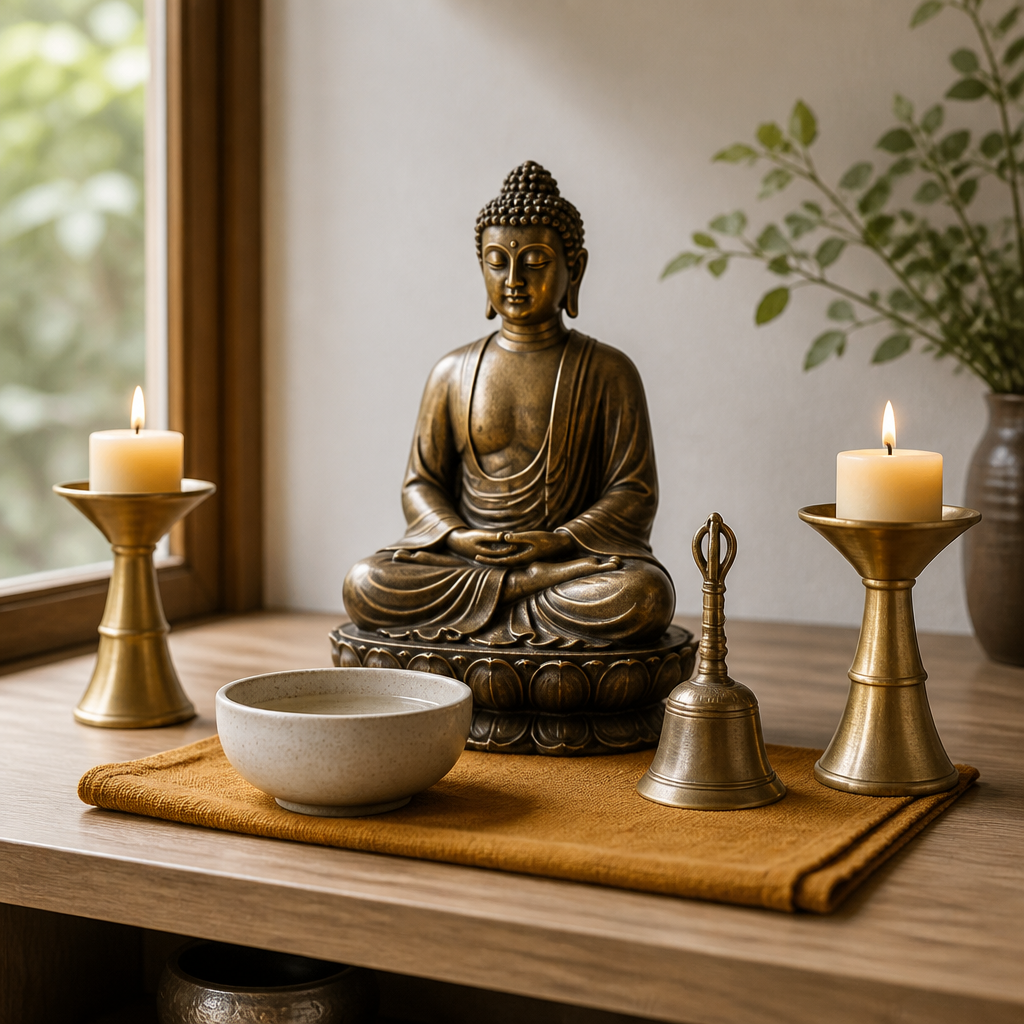
Offerings are the heart of most Buddhist altars and an important part of many Hindu home shrines. The traditional core is water, light, flowers, and incense. Each of these can be represented with a dedicated object, and each object should be easy to refill, clean, and replace.
Water Bowls That Stay Clean
Water bowls are usually the first accessory people buy. Choose a bowl wide enough to hold a steady surface but shallow enough to empty and dry quickly. Stainless steel, brass, and glazed ceramic all work well in practice. Avoid unglazed clay, which absorbs water and collects residue.
A row of small bowls, often seven in Tibetan practice, gives the altar a clear structure. A single bowl is equally valid and easier to maintain. Collections of Buddhist altar ideas on Pinterest regularly feature Tibetan water offering bowls, which reflects how often this object appears in home settings.
Lamps and Candles
A lamp signals that the altar is a place of attention. Traditional oil and butter lamps give warm light, but they need supervision. For a shelf that stays lit overnight, or a room with children or pets, we recommend electric LED lamps shaped like traditional butter lamps. They avoid smoke and heat, and they can be left on without anxiety.
If you do use a flame, keep it well away from silk, paper scriptures, and hanging cloths. Never leave an open flame unattended, and place the lamp on a non-flammable tray.
Pro tip: Fill a small glass jar with fresh water and place it beside the flowers. This keeps the stems hydrated, and the jar can be swapped out without disturbing the sculpture.
Buddhist Altar Accessories That Work Well
Beyond offerings, Buddhist altars often hold objects used during practice. These are the accessories we recommend first to someone starting with a single statue, because each one has a clear role and a modest footprint.
Bells and Vajra
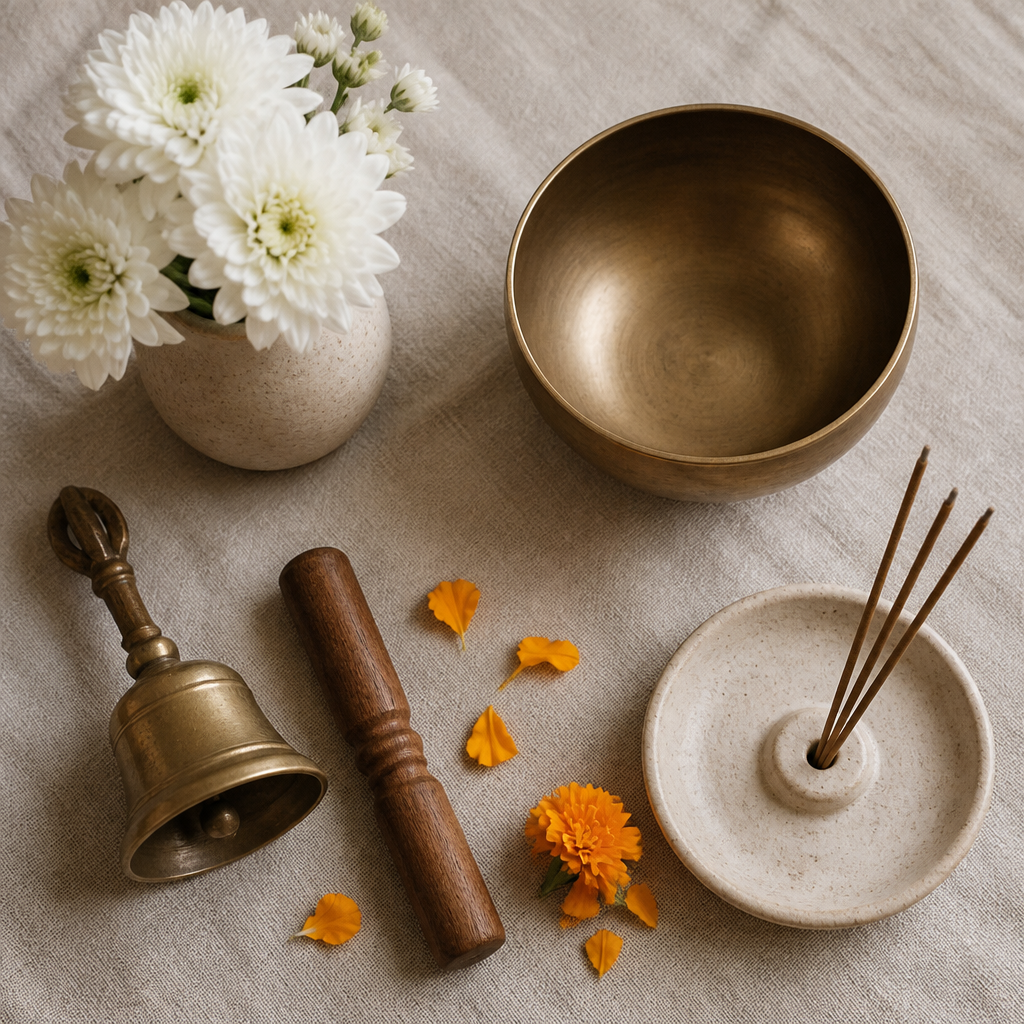
A small handbell, often paired with a vajra (dorje) in Vajrayana settings, is used to mark stages of practice. Choose a bell with a clear tone and a stable base so that it does not wobble when struck. Place it within easy reach of where you sit, not on a high shelf that requires standing to use.
Meditation bells appear frequently in altar collections online, and for good reason. A bell that is used daily becomes part of the routine, while one that is only displayed tends to gather dust.
Incense Holders
An incense holder needs a stable base and a tray that catches falling ash. Ceramic and metal trays are the most practical choices. A shallow bowl of sand also works well for upright sticks, because it keeps the ash contained and the stick steady.
Keep incense away from silk hangings, paper scriptures, and dried flowers. Ash and smoke stain fabric over time, and it is far easier to move the holder than to repair a cloth.
Mala Beads and Cushions
Mala beads are often left draped over a small stand or the edge of a cushion rather than displayed as decoration. Keep them where they can be touched daily, because handling them keeps the practice active and the beads in good condition.
A low meditation cushion or mat placed in front of the altar keeps the posture of practice and the display in one frame. This arrangement makes the altar feel like a place to sit, not just a place to look.
Hindu Shrine Accessories and Their Logic
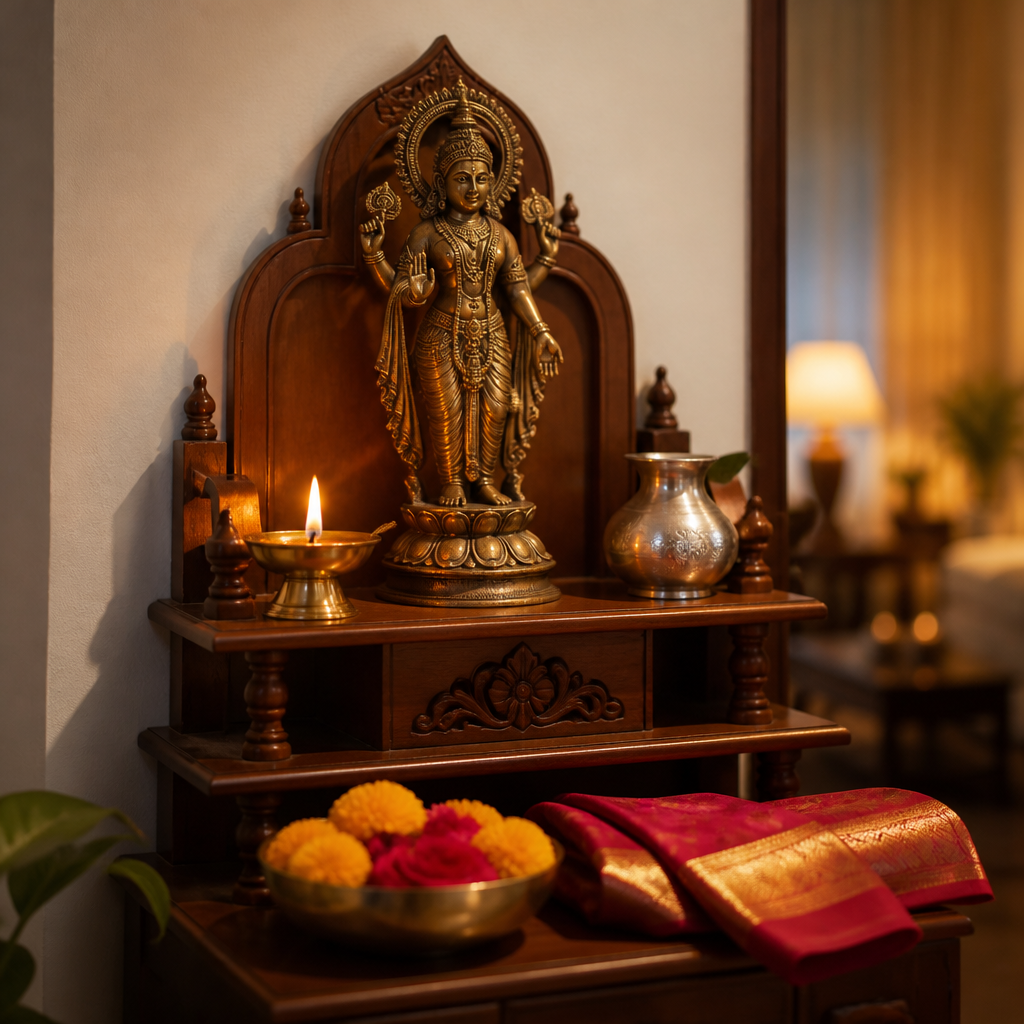
A Hindu home shrine, often called a puja space, is built around the murti and the daily rituals performed before it. Many accessories serve as working tools for those rituals, so practical use matters more than symmetry. A tidy shrine that works smoothly during worship is more useful than a perfectly balanced one that makes the ritual awkward.
Brass Lamps and Diyas
The diya, a small oil lamp, is the most common light in Hindu worship. Brass lamps are durable and easy to clean, while clay diyas are inexpensive but break more easily and need replacing. Use cotton wicks and a measured amount of ghee or oil, and refill the lamp before it runs dry rather than letting the flame sputter.
A larger lamp at the front of the shrine suits festival periods, when families often light more lamps than usual. Autumn festivals such as Diwali are a natural time to clean and polish brass lamps before they come into regular use.
Bells, Thalis, and the Kalash
A small bell, called a ghanti, is rung during worship to mark the presence of the deity. A thali, or offering plate, holds flowers, sweets, and the aarti lamp. Keep the thali close to the murti, so the offering does not need to be carried across the room during the ritual.
A kalash, a water pot often topped with coconut and mango leaves, is common in ceremonial settings. Many families bring one out only for festivals or special occasions, and store it empty and dry the rest of the year.
Textiles and Backdrops
A cloth beneath the murti defines the sacred area and protects the surface of the shelf. Choose washable natural fibres such as cotton or silk, in a colour that suits the deity and your room. Avoid placing the murti directly on bare wood or glass, because the base can scratch and the cloth catches small spills.
Mixing Buddhist and Hindu Pieces on One Shelf
Customers often ask whether a Buddha and a Hindu deity can share a shelf. In our experience the answer is yes for many households, provided the arrangement is deliberate and respectful. Separation is the simplest route, with each figure on its own tier or corner, with its own cloth and offering set.
Mixing works best when the intention behind each piece is clear. A shelf with two figures, two cloths, and one shared lamp reads as thoughtful. A shelf with six figures from different traditions, scattered without a plan, reads as a collection of souvenirs rather than a shrine.
Separate Tiers, Shared Accessories
If you want one shelf for both, give each figure its own zone with a separate cloth and offering area. Shared items such as a bowl of water or a simple lamp can sit between them. Avoid mixing ritual objects of one tradition, such as a Hindu bell or a Tibetan vajra, into the other's setup, because each object carries its own use.
Hierarchy and Placement
Place the figure you honour most at the centre and slightly higher than the rest. Avoid stacking statues so that one figure rests on or beneath another, since this is widely considered disrespectful in both traditions. Turn the faces of the figures toward the room, and keep their hands and seats unobstructed.
Pro tip: If you are unsure how a particular arrangement will sit with your household or community, ask a teacher or a family member who practises. A short conversation at the start often saves you from rearranging the shelf later.
Placement, Height, and Spacing
Placement decides whether an altar looks composed or cluttered. The sculpture should sit at or above eye level when seated, and accessories should be lower and in front so they do not hide the face or hands. A small change in height often does more for the altar than any new object.
The Sculpture as Focal Point
Leave a clear margin around the figure. A simple test is to step back to the doorway and see whether the sculpture is the first thing your eye reaches. If something else pulls your attention first, remove one accessory and check again.
Avoid placing bright or highly reflective objects directly beside the figure. A polished metal bowl next to a dark wooden sculpture can compete with it, even when the bowl is perfectly placed.
Spacing for Daily Use
Leave room to light a lamp, refill a bowl, and place flowers without moving the sculpture. Plan for at least a hand's width between objects, so that you can refill and clean without knocking anything over. If you need to lift the figure to reach a bowl, the layout is wrong and should be changed.
Light, Dust, and Humidity
Keep the altar out of direct sun, which fades silk and can crack painted finishes, and away from radiators and kitchen steam. Wooden altars in humid rooms can warp over time. Bronze and brass tarnish slowly, and many collectors consider that gentle patina part of the object's character.
Comparing Three Accessory Approaches
Most customers choose one of three approaches. The table below compares them so you can match the choice to your practice, your space, and the amount of care you can give the altar each week.
|
Approach |
Best for |
Trade-offs |
|---|---|---|
|
Minimal offering set (one bowl, one lamp, fresh flowers) |
Beginners, small rooms, and anyone with a single statue |
Needs daily refills, but it is quick to maintain and easy to change |
|
Traditional full altar (bell, incense holder, cloths, several bowls) |
Daily practitioners with a dedicated corner |
Takes more space and more cleaning time, but supports a fuller routine |
|
Display-led shelf (sculpture with one or two curated pieces) |
Collectors and home decorators who want a composed look |
Looks calm and considered, but offers less daily ritual function |
In our view, the minimal offering set is the strongest starting point for most people. It teaches you what the altar needs in practice, and you can add a bell or incense holder once the routine feels settled. Starting with the full altar often leads to an overcrowded shelf that gets dusted less often, which defeats the purpose.
Caring for Altar Accessories Over Time
Altar accessories need routine care because they are handled and used almost every day. A weekly dusting and a monthly check will prevent most problems, and the habit itself keeps the shrine feeling cared for.
Metal and Stone
Dust brass and bronze with a soft, dry cloth. Avoid harsh polishes on patinated surfaces, since they strip the finish that gives the piece its character. Stone and unglazed clay can be wiped with a barely damp cloth, then dried fully before being returned to the shelf.
Offerings and Water
Change the water every day or two, and rinse bowls to prevent film and residue from building up. Remove fresh flowers before they wilt, because decay attracts insects and can stain the bowl or the shelf beneath it.
Storing Seasonal Pieces
Fold textiles loosely in acid-free tissue and store them flat, so creases do not set. Keep spare lamps, bells, and kalash pots in a dry cupboard away from the kitchen, where grease and steam can cling to them.
Pro tip: Keep one cloth and one small tray for the altar only. Using a dedicated set for cleaning and handling prevents oils from kitchen cloths and dust from elsewhere in the house reaching the sculpture and its accessories.
Frequently Asked Questions
What are the essential altar accessories for a Buddhist shrine?
Most Buddhist shrines start with a water bowl, a light source, and fresh flowers. A bell, an incense holder, and a cushion are useful additions once the daily routine is established. Start with the offerings, then add objects that support practice.
Do I need a separate altar for a Hindu murti?
A separate altar is ideal, but it is not essential. A stable shelf or cabinet, set at a comfortable height and kept clean, can serve well. What matters most is that the murti sits on a clean cloth, with the lamp, bell, and offering plate within easy reach.
Are electric lamps acceptable on a shrine?
Many practitioners use electric lamps, particularly where open flames are not practical. LED lamps avoid smoke, heat, and the risk of an unattended fire. Traditional oil or ghee lamps remain the choice for many households during festivals and formal worship.
How often should I clean my altar?
Change the water daily or every other day and remove wilted flowers as soon as you notice them. Dust the sculpture and accessories weekly with a soft cloth. A deeper check every month will catch residue, loose parts, and early signs of tarnish or warping.
Can a Buddha statue and a Hindu deity share the same shelf?
Yes, in many households this works well, provided each figure has its own cloth and offering area. Avoid stacking one figure on another, and give the figure you honour most the central position. A clear, respectful arrangement matters more than the exact layout.
How much space does a basic altar need?
A basic altar needs one shelf or a small table with enough room for the sculpture, one bowl, and a lamp. Plan for a hand's width of clearance between objects, so that you can refill and clean without moving the figure.
Share your experience with us: which accessory made the biggest difference to your shrine, and what would you tell someone setting up their first altar?
References
