



Posizionamento della statua del Buddha nella camera da letto: linee guida
Posizionamento della statua del Buddha nella camera da letto: linee guida
Sommario
È appropriato posizionare una statua di Buddha in camera da letto?
Molti professionisti e proprietari di case si chiedono se posizionare a Statua del Budda nella camera da letto è in linea con le tradizioni buddiste e i principi spirituali. Una statua di Buddha in camera da letto è appropriata se esposta con un autentico scopo spirituale piuttosto che con un intento puramente decorativo.
Se stai cercando un punto focale per la meditazione, un ricordo degli insegnamenti buddisti o un simbolo di presenza pacifica durante il riposo, la camera da letto diventa un valido spazio sacro. Alcune tradizioni buddiste suggeriscono che determinati spazi meritino un'ulteriore considerazione riguardo a quali statue siano adatte e come siano posizionate.
La tradizione del posizionamento delle statue del Buddha non è rigida in tutte le scuole buddiste. Le tradizioni Theravada, Mahayana e tibetana hanno ciascuna prospettive diverse sugli altari domestici e sugli spazi spirituali personali.
Ciò che conta di più è avvicinarsi alla statua con rispetto, comprenderne il simbolismo e creare un ambiente che rifletta il tuo genuino impegno spirituale piuttosto che trattarla come un semplice decoro domestico.
Linee guida generali per il posizionamento delle statue di Buddha nelle camere da letto
Posizionare una statua di Buddha nella tua camera da letto richiede un'attenta considerazione di diversi principi fondamentali che onorano sia il significato spirituale dell'oggetto sia la realtà pratica del tuo spazio vitale.
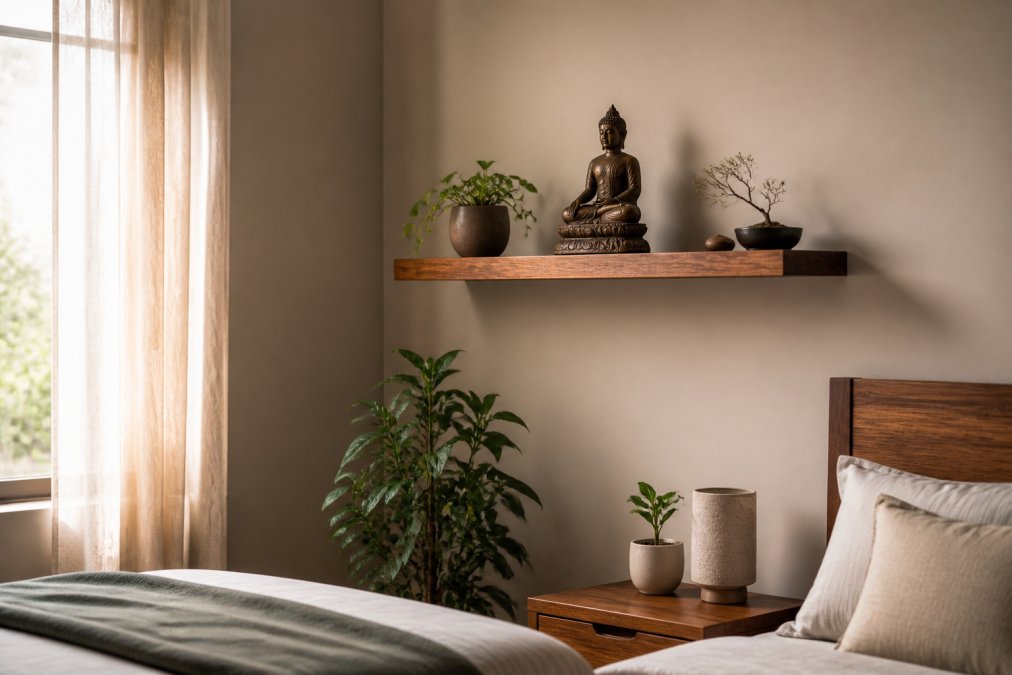
Il primo principio è l’intenzionalità. La tua statua di Buddha dovrebbe avere uno scopo oltre la decorazione. Sia che ancori la tua pratica di meditazione mattutina, ti ricordi di affrontare la giornata con consapevolezza o crei un'ancora visiva pacifica prima di dormire, la statua dovrebbe connettersi alla tua pratica spirituale effettiva.
Requisiti di livello degli occhi e altezza
Posiziona la statua del Buddha approssimativamente all'altezza degli occhi quando sei seduto o in piedi nello spazio in cui la vedrai più spesso (ricerca peer-reviewed). Questo crea una relazione naturale e rispettosa tra te e la statua. Il posizionamento all'altezza degli occhi in genere significa posizionare la statua su uno scaffale, una cassettiera o un tavolo d'altare tra 3 e 5 piedi dal pavimento.
La statua non dovrebbe mai essere posizionata direttamente sul pavimento, poiché questa posizione segnala tradizionalmente una mancanza di rispetto nella pratica buddista. Elevarlo su una superficie dedicata stabilisce un confine tra l'oggetto sacro e l'attività quotidiana del pavimento. Molte persone ritengono che le statue tra 8 e 18 pollici funzionino bene per gli spazi della camera da letto, creando presenza senza dominanza (l'Accademia Americana di Dermatologia).
Pulizia e spazio sacro
Mantieni l'area intorno alla statua del Buddha pulita e priva di polvere. Spolverare regolarmente e delicatamente con un panno morbido onora la statua e previene l'accumulo di detriti. Lo spazio circostante conta altrettanto. Una statua di Buddha posizionata in mezzo al disordine perde il suo potere di creare un ambiente pacifico. Mantieni l'area circostante la statua libera da oggetti non necessari, permettendole di essere l'ancora visiva e spirituale di quell'angolo.
L'importanza del rispetto e dell'intenzione
Prima di posizionare la statua del Buddha nella tua camera da letto, chiarisci la tua intenzione. Lo stai usando come punto focale della meditazione? Un promemoria dei principi buddisti? Un simbolo di pace interiore? Questa chiarezza trasforma la statua da un oggetto che possiedi in uno strumento al servizio della tua pratica spirituale.
Il rispetto si estende al modo in cui gestisci la statua. Evitare di collocarlo in posizioni in cui potrebbe essere accidentalmente rovesciato o trattato con noncuranza. Alcune tradizioni suggeriscono di non puntare i piedi verso una statua di Buddha mentre si riposa. Il principio sottostante, trattare la statua con cura consapevole, rafforza la tua relazione mentale con essa.
Principi del Feng Shui per la camera da letto della statua del Buddha
Il Feng Shui offre strutture pratiche per posizionare gli oggetti per ottimizzare il flusso energetico e creare spazi abitativi armoniosi. Quando applicati al posizionamento della statua del Buddha nella camera da letto, questi principi si concentrano su come la posizione della statua influisce sull'energia complessiva della stanza e sulla tua esperienza al suo interno.
Zone di flusso e posizionamento energetico
Nel Feng Shui, il campo energetico della camera da letto è diviso in zone, ciascuna associata a diversi aspetti della vita. Si ritiene che posizionare la statua del Buddha nell'angolo all'estrema sinistra inviti l'abbondanza pacifica e la ricchezza spirituale. L'area centrale dello schienale della camera da letto, allineata con la zona della conoscenza e dell'auto-coltivazione, crea un potente punto focale per la crescita personale e la meditazione.
Considera gli schemi di luce naturale quando selezioni la zona di posizionamento. Le statue posizionate dove ricevono una luce naturale morbida e diffusa appaiono più vibranti e creano uno spazio di meditazione più invitante. Evitare di posizionare la statua direttamente sotto una forte luce artificiale o in angoli bui dove si perde visivamente.
Evitare la vicinanza al pavimento e al letto
Non posizionare mai una statua di Buddha sul pavimento o sotto il livello del letto. Questo posizionamento contraddice sia i principi del Feng Shui che le tradizioni di rispetto buddista. Elevare la statua segnala il suo significato e crea un migliore flusso di energia attorno ad essa.
Altrettanto importante è mantenere una distanza adeguata dal letto stesso. Una collocazione ad almeno 3-4 piedi dal letto permette alla statua di mantenere la sua presenza spirituale rispettando il letto come spazio privato e personale (l'OMS). Uno scaffale angolare, un comò o altare dedicato il tavolo posizionato lontano dalla visuale diretta del letto crea una separazione ideale.
Posizionamento rispettoso delle statue di Buddha: sensibilità culturale
Avvicinarsi al posizionamento della statua del Buddha con consapevolezza culturale onora sia la tradizione buddista che la tua autenticità come praticante non buddista o occasionale. Comprendere i significati più profondi dietro le linee guida per il posizionamento ti aiuta a prendere decisioni che sembrano autentiche piuttosto che limitarti a seguire regole che non capisci.
Comprensione dei Mudra e dei loro significati
Le statue di Buddha mostrano varie posizioni delle mani chiamate mudra, ciascuno con un significato spirituale specifico. L'Abhaya mudra (mano alzata in segno di benedizione) rappresenta protezione e coraggio. Il Bhumisparsha mudra (mano che tocca la terra) simboleggia il radicamento e la testimonianza dell'illuminazione. Il Dhyana mudra (mani giunte in meditazione) incarna la contemplazione profonda.
Una statua che mostra il Dhyana mudra funziona particolarmente bene in un angolo di meditazione, rafforzando la propria pratica meditativa. L'Abhaya mudra crea una presenza protettiva e calmante adatta alle camere da letto dove cerchi pace e sicurezza. Comprendere queste distinzioni ti consente di scegliere una statua il cui simbolismo è in linea con i tuoi reali obiettivi spirituali. decorazioni per la casa basate sulla fede.
Manipolazione e visualizzazione per i non buddisti
Se non sei buddista ma apprezzi le statue di Buddha come arte spirituale e simboli di pace, avvicinati al posizionamento con intenzionalità che rispetti la tradizione. Evita di trattare la statua come puramente decorativa o di esporla accanto a oggetti che ne banalizzino il significato.
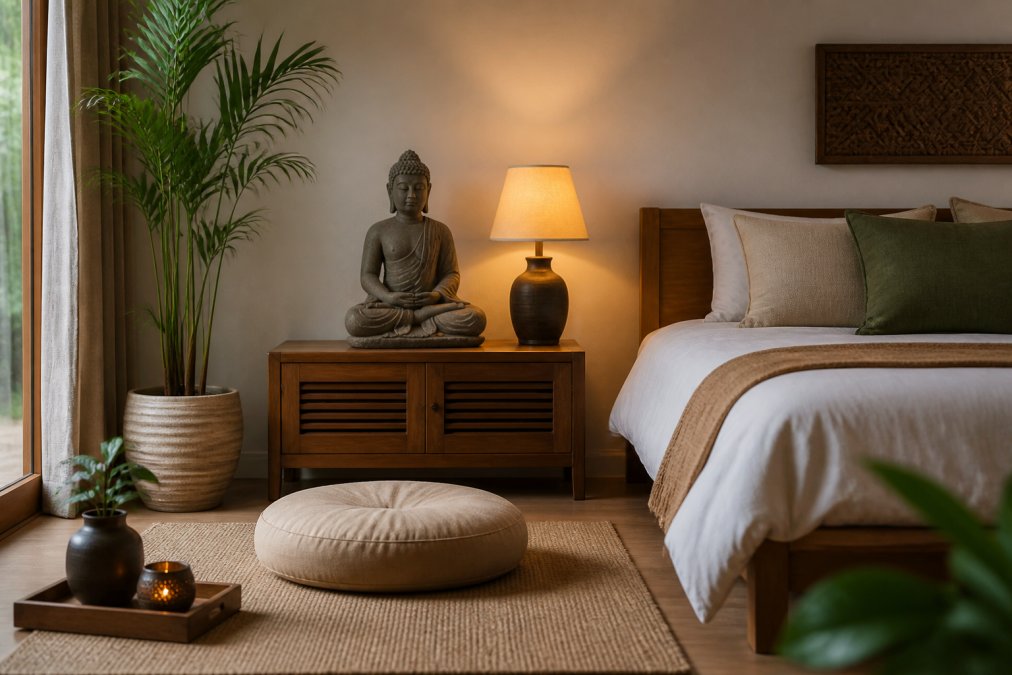
Molti praticanti non buddisti ritengono che la creazione di un piccolo spazio dedicato all'altare, anche solo uno scaffale d'angolo con la statua, un cuscino per la meditazione nelle vicinanze e forse una pianta, trasformi la loro relazione con l'oggetto. Questa modesta intenzionalità segnala rispetto pur rimanendo autentico verso il proprio percorso spirituale.
Miglior direzione per la statua del Buddha nelle camere da letto di casa
La direzione rivolta alla tua statua ha sia un significato Feng Shui che pratico per il modo in cui la statua funziona all'interno dello spazio della tua camera da letto.
Di fronte alla statua verso la stanza contro la porta
Posiziona la statua del Buddha in modo che sia rivolta verso la stanza anziché verso la porta o il muro. Questo orientamento permette alla presenza della statua di irradiarsi nello spazio in cui trascorri il tempo, creando un punto focale per la meditazione e consapevolezza. Quando la statua è rivolta verso la stanza, la incontri naturalmente mentre ti muovi nello spazio.
Rivolgere la statua verso la porta è talvolta consigliato nel Feng Shui come posizione protettiva. Tuttavia, questa posizione può sembrare conflittuale in una camera da letto. Un approccio intermedio posiziona la statua con una leggera angolazione, visibile dal letto e dal punto di ingresso principale senza rivolgersi direttamente a nessuno dei due in modo esclusivo.
Allineamento direzionale e posizionamento cardinale
Alcuni praticanti allineano le statue del Buddha con le direzioni cardinali basate sulla tradizione buddista o sulla pratica spirituale personale. Rivolta verso est collega la statua al rinnovamento e ai nuovi inizi. L'esposizione a sud crea radicamento e stabilità. Il posizionamento rivolto a ovest si collega al completamento e alla riflessione. Il posizionamento rivolto a nord rappresenta saggezza e introspezione.
In pratica, la disposizione della tua camera da letto spesso determina la direzione più fattibile. Piuttosto che forzare un posizionamento scomodo per raggiungere una specifica direzione cardinale, dai la priorità al posizionamento che sembra naturale all'interno dell'architettura della tua stanza. L’intenzione alla base del posizionamento conta più della rigorosa aderenza direzionale.
Impatto psicologico e integrazione del design degli interni
Al di là delle considerazioni spirituali e culturali, le statue di Buddha influenzano l'ambiente psicologico e l'aspetto estetico della tua camera da letto. Comprendere queste dimensioni ti aiuta a creare uno spazio che supporti veramente sia la tua pratica spirituale che il tuo benessere quotidiano.
Creare un ambiente di meditazione pacifico
Una statua di Buddha funge da ancoraggio visivo per la meditazione e la pratica della consapevolezza. Se posizionato come punto focale, attira naturalmente la tua attenzione durante la meditazione mattutina o la riflessione serale. L'espressione calma e la postura serena della statua influenzano inconsciamente il tuo stato mentale, incoraggiando il rilassamento e la consapevolezza centrata.
Circondare la tua statua di Buddha con elementi che rafforzano la pace, luci soffuse, materiali naturali, piante, ingombro visivo minimo, ne amplifica l'impatto psicologico. Molti praticanti ritengono che creare un piccolo angolo di meditazione con la statua, un cuscino e magari una pianta trasformi l'energia dell'intera camera da letto.
Considerazioni sulle dimensioni della statua e sulla scala della stanza
Le dimensioni della statua dovrebbero corrispondere alle proporzioni della tua camera da letto e ai mobili su cui verrà posizionata. Una statua enorme in una piccola camera da letto travolge lo spazio, mentre un piccolo pezzo in una grande stanza scompare visivamente. La dimensione ideale della statua crea una presenza senza dominanza, sufficientemente sostanziale da ancorare lo spazio e attirare l'attenzione naturale, ma proporzionata alla stanza stessa.
Considera i mobili in cui vivrà la statua. Il rapporto tra la statua e la sua superficie di appoggio è importante dal punto di vista psicologico; la statua dovrebbe sentirsi sostenuta e sicura, non precaria o messa in ombra dagli oggetti circostanti.
Posizionare una statua di Buddha nella tua camera da letto crea un santuario personale che supporta sia la pratica spirituale che il riposo pacifico. Le linee guida in giro Posizionamento della statua del Buddha negli spazi della camera da letto, rispettando l'altezza, mantenendo la pulizia, onorando il significato della statua e considerando l'allineamento direzionale, lavorano insieme per creare un ambiente in cui la statua serve veramente al tuo benessere piuttosto che fungere da mera decorazione.
Noi di HD Asian Art comprendiamo che la scelta della statua giusta implica qualcosa di più dell'estetica. La nostra collezione accuratamente curata di statue buddiste e indù comprende pezzi appositamente adatti per gli spazi di meditazione della camera da letto, con artigianato autentico e provenienza che onora le tradizioni che questi oggetti rappresentano. Che tu stia cercando un tesoro antico o un pezzo contemporaneo che integri l'estetica della tua camera da letto, il nostro arredamento ispirato ai templi è progettato per migliorare il tuo santuario personale. Sfoglia la nostra selezione per trovare una statua che risuoni con le tue intenzioni e trasformi la tua camera da letto in uno spazio di vera pace e radicamento spirituale.
Domande frequenti
Posso posizionare una statua di Buddha nella mia camera da letto?
Sì, puoi posizionare una statua di Buddha nella tua camera da letto se fatto con rispetto e intenzione. La chiave è posizionarlo con attenzione, elevato, pulito e in uno spazio dedicato alla calma e alla consapevolezza piuttosto che alle attività intime. Molti praticanti ritengono che le statue da camera da letto migliorino la meditazione e creino un santuario pacifico. Assicurati che la statua riceva il giusto rispetto come artefatto spirituale, non semplicemente come decorazione.
Qual è la direzione migliore per una statua di Buddha in una camera da letto?
Secondo i principi del Feng Shui, la posizione esposta a est o a nord è spesso considerata di buon auspicio per le statue di Buddha nelle camere da letto. L’est simboleggia nuovi inizi e crescita, mentre il nord rappresenta la carriera e il percorso di vita. La statua dovrebbe essere rivolta verso la stanza anziché verso il muro, consentendo alla sua energia di fluire attraverso lo spazio. Evitare di posizionarlo direttamente di fronte al letto o rivolto verso le zone intime.
Come posso mostrare rispetto verso una statua di Buddha nella mia camera da letto?
Un posizionamento rispettoso significa posizionare la statua all'altezza degli occhi o sopra, mai sul pavimento. Mantenere l'area pulita e priva di disordine. Evitare di posizionarlo vicino ai piedi del letto o in spazi associati ad attività intime. Se pratichi la meditazione o la consapevolezza, dedica del tempo intenzionalmente vicino alla statua. Maneggialo con cura e, se si tratta di un pezzo antico o ispirato a un tempio, ricerca il suo mudra e il suo simbolismo specifici per onorare il suo significato più profondo.
La dimensione di una statua di Buddha è importante per la collocazione in camera da letto?
Sì, le dimensioni contano sia per l'estetica che per il rispetto. Una statua dovrebbe essere proporzionata alla tua stanza, troppo grande può sembrare opprimente in uno spazio piccolo, mentre troppo piccola può mancare di presenza. Scegli una dimensione che permetta alla statua di essere un punto focale senza dominare la stanza. I pezzi più grandi funzionano bene in camere da letto spaziose o in angoli dedicati alla meditazione, mentre le statue più piccole si adattano ad appartamenti compatti o spazi condivisi. Assicurati che qualsiasi dimensione selezionata possa essere esposta all'altezza degli occhi su uno scaffale o un altare robusto.
