



Bronze Vishnu Statue: A Home Shrine Buying Guide
Bronze Vishnu Statue: A Home Shrine Buying Guide
Quick Summary
Choose a bronze Vishnu statue for a home shrine by matching the form to your space: a seated Vishnu suits compact pooja rooms and daily puja, while a standing Vishnu works best when the shrine is a room's focal point. Confirm the material in writing, since bronze finish describes a coating, not solid bronze.
- Measure usable height, width, and depth of your altar before shopping for any murti.
- Leave at least a hand's width above the crown so a standing figure is not pinned.
- A statue viewed from about three feet away reads best at eight to twelve inches tall.
- For a small cabinet shrine, a compact seated form at six to nine inches is usually right.
- Place the murti where you will actually sit with it, not in a high-traffic hallway.
Table of Contents
- Choosing a Bronze Vishnu Statue for a Home Shrine
- Standing Vishnu Statue: Presence, Height, and Shrine Fit
- Seated Vishnu Statue: Calm Focus for Daily Puja
- Which Vishnu Murti Is Best for a Home Shrine?
- Bronze, Brass, and Panchaloha: Matching Material to Your Practice
- Vishnu Statue Placement at Home: Altar, Pooja Room, and Vastu
- Sizes, Dimensions, and a Quick Comparison of Shrine Styles
- Browse the Bronze Vishnu Collection at HD Asian Art
- Frequently Asked Questions
Choosing a Bronze Vishnu Statue for a Home Shrine
A bronze Vishnu statue for home shrine use is a devotional focal point, not a shelf ornament, and the right one depends on three things: the form of Vishnu you want to live with daily, the material that suits your practice, and the space you actually have. At HD Asian Art, we help collectors and practitioners match a murti to the room it will bless. Below, we walk through each form, material, and placement question so you can choose with confidence.
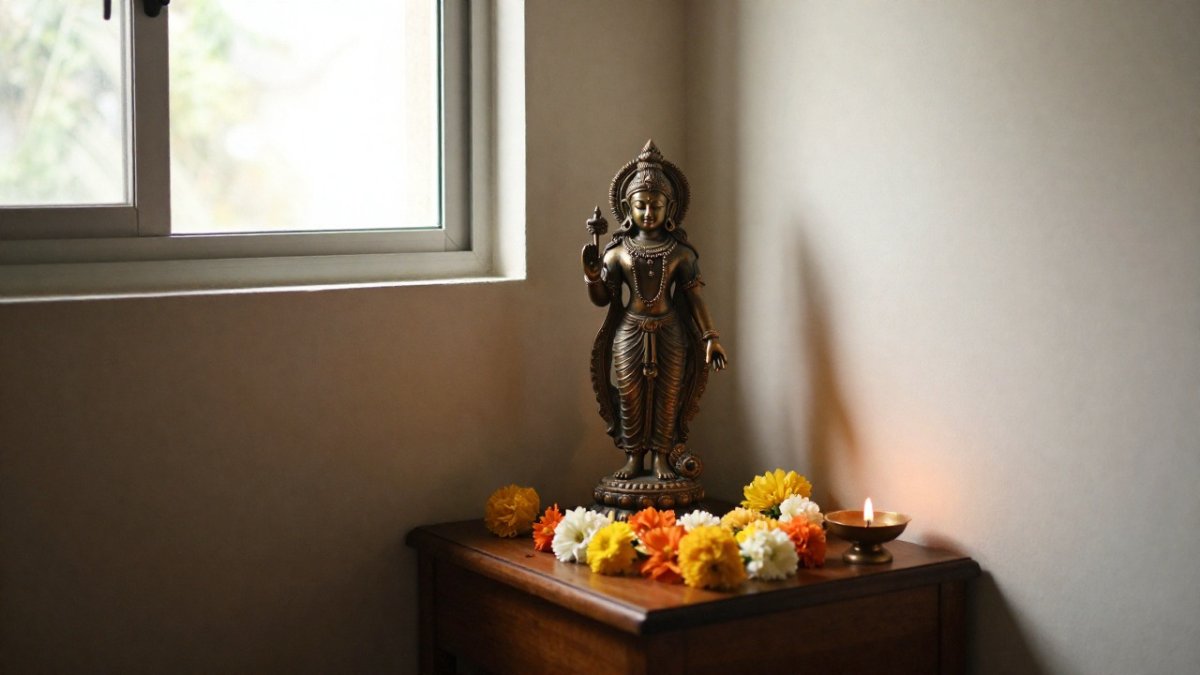
The first thing most guides get wrong is treating size as the starting point. It is not. A standing Vishnu in a cramped corner feels crowded no matter how beautiful the casting. A seated Vishnu in a grand hall can feel diminished. Get the form and material right, and the size usually resolves itself.
What Makes a Bronze Murti Worth the Investment
Bronze earns its place in a shrine for reasons that go beyond appearance. A murti is the consecrated form through which a deity is worshipped, and the material carries weight in that relationship. Bronze holds fine detail, ages with dignity, and feels substantial in the hand and on the altar. Readers weighing bronze can explore the benefits of bronze statues for spiritual grounding before committing.
The Metropolitan Museum of Art's guide to South Asian bronze sculpture documents how bronze casting traditions in South Asia have preserved iconographic precision for centuries, which is part of why a well-made bronze murti reads as authentic rather than decorative.
Standing Vishnu Statue: Presence, Height, and Shrine Fit
A standing Vishnu statue carries a sense of arrival and authority. Standing forms typically show Vishnu upright with the conch, chakra, mace, and lotus, often on a lotus pedestal. For a home shrine, this verticality draws the eye upward and works well against a wall or in a tall alcove.
Height is the practical question. A standing murti needs breathing room above the crown, ideally a hand's width or more, so the figure does not look pinned to the ceiling. If your altar sits low, a tall standing statue can dominate the space; if your altar is a tall cabinet, a standing form fills it beautifully.
Many standing Vishnu murtis hold a lotus, and understanding that flower's meaning deepens the choice. Our guide to the lotus flower meaning in Hindu statues explains why the lotus recurs in Vishnu iconography and what it signals about the deity's role.
Seated Vishnu Statue: Calm Focus for Daily Puja
A seated Vishnu statue sets a quieter tone. Seated forms, often in lalitasana or on Shesha Naga, invite contemplation rather than proclamation. For daily puja in a small pooja room, a seated murti is often the more livable choice because it occupies less vertical space and reads as settled.
The trade-off is presence. A seated figure at a modest size can feel understated on a large altar. If your shrine is the centerpiece of a room, a standing form may serve better.
Seated Vishnu statues frequently carry the conch, chakra, and lotus, and recognizing those attributes helps you confirm you are looking at the right deity. Our Hindu deity attributes and symbols list walks through Vishnu's iconography so you can read a seated murti at a glance.
Which Vishnu Murti Is Best for a Home Shrine?
There is no single best form, only the best fit for your space and practice. For most home shrines, we recommend a seated Vishnu for daily puja and a standing Vishnu when the shrine is a room's focal point. Compact shrines suit smaller seated forms; larger altars can carry a standing figure with full presence.
If you are still comparing Vishnu against other deities for your altar, our buyer's guide to Hindu statues for a home altar lays out the options side by side.
Bronze, Brass, and Panchaloha: Matching Material to Your Practice
Bronze, brass, and Panchaloha are the three materials you will encounter most, and each behaves differently in a shrine. Bronze is a copper-tin alloy prized for fine casting detail and a patina that deepens with age. Brass is copper-zinc, brighter and often less expensive, and it polishes to a high shine. Panchaloha is a traditional five-metal alloy used in South Indian temple sculpture, valued for its ritual significance.
How to Tell Solid Bronze from Bronze-Finish Resin and Other Alloys
Watch out: a seller who lists "bronze finish" or "bronze-tone" is describing a coating, not the metal, and photos alone cannot settle the question, confirm the material in writing before you buy.
Matching Each Material to Daily Practice
Our complete guide to Hindu statues, deities, materials, and care goes deeper on how each material ages and what it asks of you over the years.
Vishnu Statue Placement at Home: Altar, Pooja Room, and Vastu
Vishnu statue placement at home follows two threads: devotional tradition and Vastu guidance. Traditionally, the altar faces east or northeast and stays clear of bedrooms and bathrooms.
The practical rule we share with customers: place the murti where you will actually sit with it. A shrine in a high-traffic hallway gets ignored. A quiet corner you pass each morning becomes part of your day.
The Smithsonian's exhibition on Vishnu's cosmic ocean explores how Vishnu's iconography connects to cosmic order, which can inform how you frame the shrine's purpose in your home.
Sizes, Dimensions, and a Quick Comparison of Shrine Styles
Match the statue to your altar's width and height, and leave clearance above the crown and around the arms.
How to Measure Your Shrine Before You Choose a Size
Measure three things before you shop, and write them down. First, the usable height from the altar surface to the underside of the shelf or ceiling above, not the room height. Second, the usable width between any side walls, lamp stands, or framed images already on the altar. Third, the depth of the surface, front edge to back wall.
Then apply clearances. Leave at least a hand's width above the crown so a standing figure does not look pinned. Leave two to three inches on each side so the arms and attributes, conch, chakra, mace, lotus, are not crowded by neighboring objects. Leave enough depth that the base sits fully on the surface with an inch to spare at the back for a wall or backdrop.
Viewing distance matters as much as size. A statue viewed from about three feet away reads best at roughly eight to twelve inches tall; a statue viewed from across a room needs more height to hold its presence. If your shrine is a small cabinet you open and sit before, a compact seated form at six to nine inches is usually the right scale. If the shrine is a wall alcove seen from a doorway, a standing figure of a foot or more fills the space without looking lost.
Stability is the last check. A tall, narrow standing figure on a smooth shelf can tip if bumped. Confirm the base is wide enough to sit flat, consider a thin non-slip pad under the base, and keep the statue back from the front edge. For heavier bronze pieces, verify the shelf or cabinet can carry the weight before you place anything.
| Form | Typical Height Range | Best For | Material Notes | Watch Out For |
|---|---|---|---|---|
| Seated Vishnu | Small to medium | Compact pooja rooms, daily puja | Bronze or brass | Understated on large altars |
| Standing Vishnu | Medium to tall | Wall alcoves, focal shrines | Bronze, brass, or Panchaloha | Needs headroom above crown |
| Vishnu with Shesha Naga | Medium to large | Devotional centerpieces | Bronze preferred for detail | Requires wide altar surface |
| Four-armed standing | Medium to tall | Traditional home temples | Brass or bronze | Confirm arm count and attributes |
For dimensions, measure your altar first, then compare. A statue that fits the shelf but crowds the lamp defeats the purpose. If you are choosing between two sizes, size up only when you have measured clearance for it; otherwise the smaller figure will look better in place than the larger one will once it arrives.
Browse the Bronze Vishnu Collection at HD Asian Art
Choosing a bronze Vishnu statue for a home shrine comes down to form, material, and fit, and getting those three right is most of the work. The rest is living with the murti and letting the shrine become part of your daily rhythm.
At HD Asian Art, our collection of handpicked Buddhist and Hindu statues is built for exactly this: enhancing meditation spaces and refined spiritual home interiors. Our collection is carefully curated, with free shipping and temple-inspired decor that brings peace and artistry to your personal sanctuary.
A shrine deserves a murti you will still love in ten years. HD Asian Art curates bronze and brass Hindu statues with the craftsmanship and presence a home altar asks for, backed by free shipping and a collection built around temple-inspired decor. Browse the collection and find the Vishnu murti that fits your space and your practice.
Frequently Asked Questions
Which Vishnu murti is best for a home shrine?
There is no single answer that fits every home. A standing Vishnu suits a dedicated pooja room with vertical space, while a seated Vishnu can work well on a compact altar shelf. Families who worship Balaji often prefer a standing form with Garuda nearby. Match the murti to the size of your shrine, the forms your household already prays to, and the material you can maintain.
Where should a bronze Vishnu statue be placed in a home shrine?
Vishnu statue placement at home usually follows the northeast corner of the pooja room or living space, facing east or north so the deity looks toward the devotee. Keep the statue on a clean, raised platform rather than the floor, and avoid placing it in a bedroom, bathroom, or directly under a staircase. The altar should sit at eye level or slightly above when you stand or sit for puja. Leave clear space in front for offerings and a lamp.
Is a standing or seated Vishnu statue better for a home shrine?
A standing Vishnu statue reads as arrival, protection, and readiness to receive prayers, and it tends to suit taller shrines and temple-style altars. A seated Vishnu statue conveys steadiness and contemplation, which many practitioners prefer for a meditation corner or a small apartment shelf. Neither is more correct. Choose based on the height of your altar, the mood you want in the room, and whether the form matches the Vishnu iconography your family already worships.
How do I choose the right size Vishnu statue for a home altar?
Measure the height between your altar surface and the shelf or ceiling above it, then leave at least a few inches of clearance so the crown and halo are not cramped. Small murtis suit apartment corners, while larger pieces need a dedicated pooja room. Confirm the listed dimensions and weight before ordering, since base width matters as much as height.
What should I consider when choosing a bronze Vishnu statue?
Check the material claim first. Ask the seller which material the piece is made from, since bronze and bronze-finish resin can look similar. Then review the iconography: number of arms, whether Shesha Naga or Garuda is present, and the attributes in each hand. Confirm dimensions, weight, and finish, and ask how the piece is packed for transit.

