



Statue de Bouddha pour le bien-être : un guide complet
Statue de Bouddha pour le bien-être : un guide complet
Table des matières
Comment une statue de Bouddha favorise le bien-être
Une statue de Bouddha sert de point d’ancrage visuel aux pratiques de bien-être, orientant votre attention dans les moments de stress quotidien. La présence d'une statue soigneusement choisie crée un point focal qui vous rappelle de faire une pause, de respirer et de renouer avec le calme intérieur.
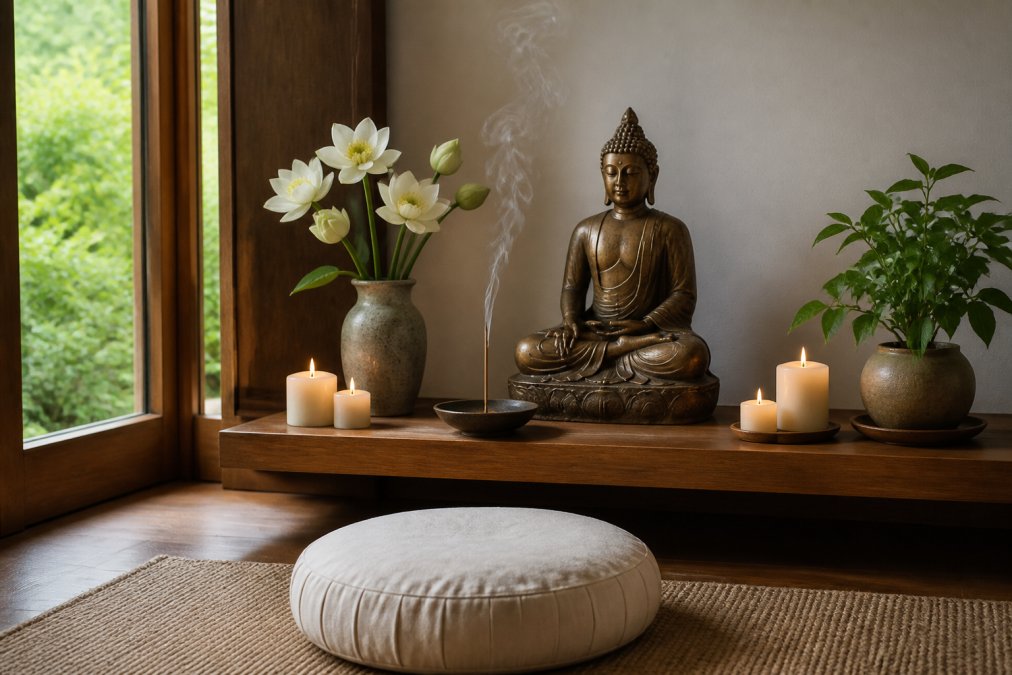
Lorsque vous placez un objet significatif dans votre espace, il devient partie intégrante de votre paysage psychologique. Chaque fois que vous le voyez, votre système nerveux reçoit un signal subtil : c'est un endroit où la paix compte. Ce signal s’aggrave avec le temps, entraînant votre esprit à associer l’espace physique à la tranquillité et à la pratique intentionnelle.
De nombreux praticiens trouvent qu’une statue devient plus qu’une décoration, elle devient un enseignant. Le L'expression, la posture et le symbolisme de Bouddha travaillez tranquillement dans votre vision périphérique, en offrant des rappels sur la pleine conscience, l'acceptation et la transformation intérieure. Avoir ce rappel visuel placé judicieusement dans votre maison crée ce que les chercheurs appellent un « ancrage environnemental », un signal qui aide à modifier votre état mental sans nécessiter d'effort conscient.
À HD Asian Art, nous comprenons que la bonne statue ne consiste pas seulement à trouver quelque chose de beau. Il s'agit de découvrir une pièce qui résonne avec votre parcours de bien-être spécifique, que vous soyez attiré par le Bouddha de la Médecine pour son énergie de guérison ou par une autre forme qui parle de votre pratique spirituelle.
Signification de la statue du Bouddha de médecine et énergie de guérison
Le Bouddha de la Médecine représente un archétype spécifique de guérison et de compassion au sein de la tradition bouddhiste. Contrairement aux autres formes de Bouddha, le Bouddha de la Médecine (Bhaisajyaguru) incarne le principe de transformer la souffrance en bien-être, abordant à la fois la maladie physique et les blessures spirituelles plus profondes qui accompagnent souvent la douleur.
L'iconographie porte une signification symbolique précise. Il est généralement représenté dans une posture de méditation assise, tenant une herbe médicinale dans une main et un bol médicinal dans l'autre. La couleur bleu profond ou lapis-lazuli de son corps représente le ciel du vide, l'espace où toute guérison devient possible. Son expression exprime à la fois une profonde compassion et une paix inébranlable, suggérant que le véritable bien-être naît non pas de la lutte contre la souffrance mais de sa compréhension.
Dans la philosophie bouddhiste, l'énergie de guérison du Bouddha s'étend au-delà des maux physiques pour s'attaquer aux afflictions intérieures, au désir, à la colère et à l'ignorance, que l'enseignement bouddhiste identifie comme les causes profondes de la souffrance. Lorsque vous placez un médicament Statue de Bouddha dans votre espace bien-être, vous invitez ce principe transformateur dans votre environnement. La statue devient une représentation visuelle de la possibilité que vos blessures les plus profondes, qu'elles soient émotionnelles ou physiques, puissent être guéries grâce à la conscience et à la compassion.
Meilleur emplacement pour la statue de Bouddha pour la paix et la pleine conscience
L’endroit où vous positionnez votre statue compte autant que la statue que vous choisissez. Le meilleur emplacement pour la statue de Bouddha pour la paix maximise à la fois l'impact visuel et l'intention énergétique. créer un espace où la statue attire naturellement votre attention.
La statue doit être surélevée, sur une étagère, une table d'autel ou une plateforme de méditation, plutôt qu'au niveau du sol. L'élévation crée une signification psychologique ; votre œil se déplace naturellement vers le haut, et ce regard vers le haut modifie subtilement votre état mental vers l’ouverture et la conscience. Placez-le là où vous faites naturellement une pause dans votre journée, près d'une fenêtre où la lumière du matin l'éclaire, sur une étagère devant laquelle vous passez en entrant dans une pièce, ou dans un coin dédié à la méditation.
L’éclairage affecte profondément le fonctionnement de la statue dans votre pratique de bien-être. La lumière naturelle est idéale. Une statue baignée par la douce lumière du soleil du matin ou placée là où la lumière du soir la capte prend des qualités que la lumière artificielle ne peut pas reproduire. Si la lumière naturelle n'est pas disponible, un éclairage aux tons chauds (3 000 K ou moins) fonctionne mieux que des ampoules lumineuses aux tons froids.
Le meilleur emplacement est un endroit où vous le rencontrez régulièrement sans le chercher. Si vous méditez dans un endroit spécifique, placez la statue à la hauteur des yeux lorsque vous êtes assis. Le principe est une visibilité sans obsession, la statue doit être suffisamment présente pour ancrer votre attention mais pas au point de devenir la seule chose que vous remarquez.
Créer un autel de méditation à domicile avec votre statue
Configurer votre espace sacré
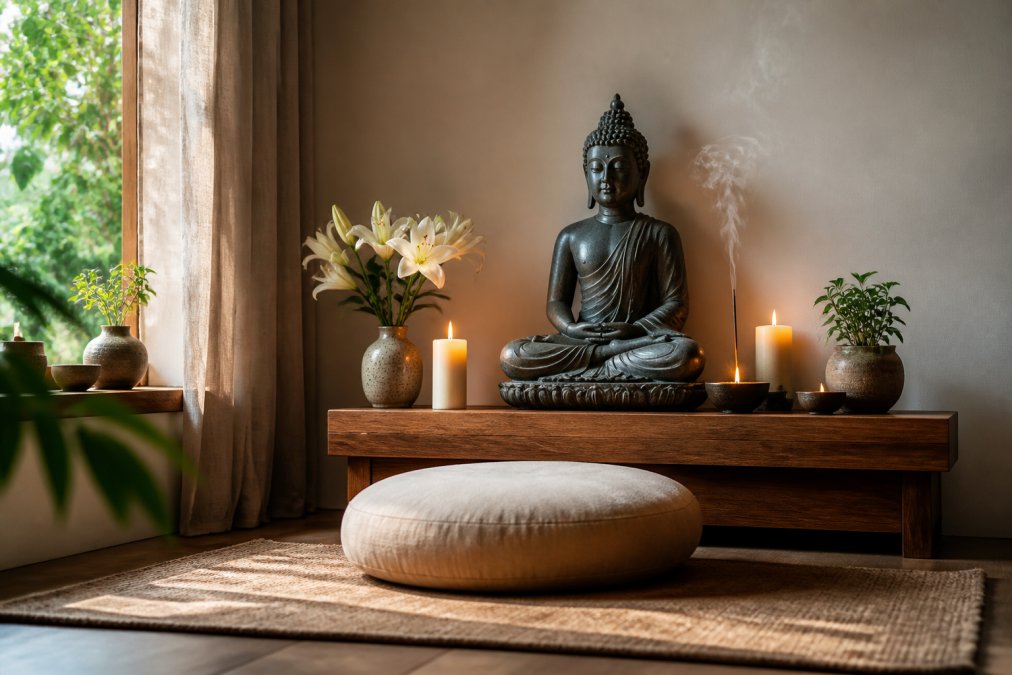
Un autel de méditation ancre votre pratique de bien-être en créant un espace dédié où l'intention rencontre le rituel. Votre autel n'a pas besoin d'être élaboré, il doit être intentionnel. La statue de Bouddha sert de pièce maîtresse, mais les éléments environnants la transforment d'un objet unique en un environnement complet pour la pratique.
Commencez par une base stable, une table basse, une étagère en bois ou un support d'autel dédié. Positionnez votre statue de Bouddha comme point focal, légèrement surélevée ou centrée pour qu'elle attire naturellement le regard. Ajoutez des éléments qui soutiennent votre intention de bien-être : les bougies créent de la chaleur et de la concentration ; les fleurs fraîches introduisent des cycles naturels et de l'impermanence ; l'encens ou les herbes séchées ajoutent une dimension olfactive.
Les éléments spécifiques que vous choisissez doivent refléter votre pratique personnelle. Certaines personnes ajoutent un coussin de méditation devant l'autel, un journal pour enregistrer des idées ou des pierres significatives collectées dans des endroits qui comptent pour vous. Chaque élément doit soit soutenir directement votre pratique de méditation, soit vous rappeler votre intention de bien-être.
Entretenir votre autel pour la pratique spirituelle
Un autel qui tombe en ruine perd son pouvoir. L'entretien fait partie de la pratique elle-même. Chaque fois que vous vous occupez de votre autel, vous renouvellez votre engagement envers le bien-être et la pleine conscience.
Époussetez régulièrement votre statue avec un chiffon doux. Rafraîchissez les fleurs chaque semaine, les fleurs fanées peuvent être déprimantes plutôt que ancrées. Changez les bougies au fur et à mesure qu’elles brûlent ; un talon fondu suggère une négligence. Pensez aux ajustements saisonniers : apportez de la verdure fraîche au printemps, des éléments plus chauds comme des herbes séchées en automne. Ce rythme saisonnier maintient votre autel connecté au monde naturel et l’empêche de devenir statique.
Pratiques quotidiennes : intégrer votre statue dans les routines de bien-être
Le véritable pouvoir d’une statue de Bouddha émerge lorsqu’elle s’intègre à votre rythme quotidien. L'intégration signifie intégrer la statue et son symbolisme dans des pratiques que vous pratiquez déjà, pour que le bien-être soit naturel plutôt que forcé.
Commencez par la présence matinale. Avant de vérifier votre téléphone, passez deux minutes face à votre statue. Il suffit de rester debout ou assis, de regarder la statue et de remarquer trois choses : l'expression du visage du Bouddha, la qualité de la lumière sur la statue et votre propre souffle. Cette pratique de deux minutes définit une intention pour la journée.
Créez des rituels de transition. Lorsque le stress augmente au cours de votre journée, faites une pause et regardez votre statue. Laissez-le vous rappeler de prendre trois respirations conscientes. Cela brise le cycle du stress et vous ramène au moment présent. Avec le temps, cela devient automatique.
Utilisez la statue comme point d'ancrage pour la réflexion du soir. Passez cinq minutes avant de vous coucher assis avec votre statue, révisant votre journée sans jugement. Cette pratique aide à traiter les expériences de la journée et prépare votre esprit à un sommeil réparateur.
De nombreux praticiens créent un rituel hebdomadaire, peut-être le dimanche soir, en passant quinze minutes en méditation plus profonde avec votre statue. Ce temps dédié renforce votre lien avec la pratique.
Le principe qui sous-tend toutes ces pratiques est la cohérence plutôt que l’intensité. Une pratique quotidienne de deux minutes génère un changement plus durable que des séances occasionnelles d’une heure. Votre système nerveux apprend par la répétition que cet espace et cet objet signalent la sécurité, l'intention et la paix.
Ancres visuelles et science des environnements conscients
La relation entre l’environnement visuel et l’état mental est neuroscientifique. Votre cerveau traite constamment les informations visuelles et des signaux visuels spécifiques déclenchent des changements mesurables dans l'attention, les émotions et l'activation du système nerveux.
Lorsque vous placez un objet significatif comme une statue de Bouddha dans votre environnement, vous créez une « ancre visuelle », un signal que votre cerveau apprend à associer à un état mental particulier. Chaque fois que vous voyez la statue, votre cerveau reçoit un signal : c'est un endroit où le calme est possible. Au fil du temps, cette association se renforce et votre système nerveux commence à se détendre simplement en voyant l'objet.
La couleur et la forme d’une statue de Bouddha comptent particulièrement. L'expression sereine et la posture équilibrée créent une harmonie visuelle, des qualités que votre cerveau reconnaît comme cohérentes et sûres. Contrairement aux images chaotiques ou agressives, qui déclenchent des réactions de stress, une statue paisible signale que l'environnement favorise la relaxation et la réflexion.
C’est pourquoi une pratique de bien-être avec une statue de Bouddha fonctionne avec différents systèmes de croyance. Vous n'avez pas besoin d'être bouddhiste pour que votre système nerveux réagisse aux signaux visuels fournis par une statue. Le simple fait d’avoir un ancrage visuel paisible dans votre espace influence votre niveau de stress de base, votre capacité d’attention et votre capacité de présence tout au long de la journée.
Soins et entretien pour des bienfaits de bien-être à long terme
Une statue qui se détériore perd sa capacité à supporter votre pratique de bien-être. La condition physique compte psychologiquement, une pièce bien entretenue communique soin et intention.
Différents matériaux nécessitent des approches différentes. Les statues en bois nécessitent un conditionnement occasionnel avec des huiles appropriées pour éviter les fissures. Les pièces en pierre bénéficient d'un nettoyage doux avec des brosses douces et d'une humidité minimale. Les statues en métal peuvent développer une patine avec le temps, ce que de nombreux praticiens apprécient comme un signe d'authenticité.
Les fluctuations d’humidité et de température constituent les principales menaces à la préservation des statues. Évitez de placer votre statue en plein soleil pendant de longues périodes, à proximité de bouches de chauffage ou dans des salles de bains humides. Un environnement stable et modéré préserve la pièce pendant des décennies.
Manipulez votre statue avec intention. Lorsque vous le déplacez, l’époussetez ou ajustez sa position, faites-le en toute conscience. Cela renforce son rôle dans votre pratique du bien-être. Si votre statue est une pièce antique ou particulièrement précieuse, envisagez un nettoyage ou une restauration professionnelle occasionnelle.
Une statue de Bouddha devient un véritable outil de bien-être lorsqu’on l’aborde avec intention et cohérence. La statue elle-même crée les fondations, mais le véritable travail se déroule grâce à un engagement quotidien : les moments de présence du matin, les réflexions du soir, les rappels visuels qui vous ramènent au calme lorsque le stress s'accumule.
Les meilleures statues pour le bien-être sont celles qui vous parlent personnellement. À HD Asian Art, notre collection soigneusement organisée comprend des pièces authentiques sélectionnées spécifiquement pour soutenir les espaces de méditation et les intérieurs spirituels. Que vous recherchiez un trésor antique avec une profonde origine historique ou une pièce contemporaine qui incarne le symbolisme traditionnel, la bonne statue devient un point d'ancrage durable pour votre voyage de bien-être. Parcourez notre collection pour trouver la pièce qui vous interpelle et commencez dès aujourd’hui à l’intégrer dans votre pratique quotidienne.
Foire aux questions
Quels sont les avantages pour le bien-être d’avoir une statue de Bouddha chez soi ?
Une statue de Bouddha sert de rappel visuel de la pleine conscience, de la paix et de la discipline intérieure. En placer un dans votre maison crée un point focal pour la méditation, aide à réduire le stress et l’anxiété et établit un espace sacré dédié au bien-être. La présence d'une statue soigneusement choisie encourage la pratique spirituelle quotidienne et favorise un environnement de tranquillité qui favorise la guérison mentale et émotionnelle.
Que signifie une statue de Bouddha de médecine pour la guérison et le bien-être ?
Le Bouddha de la Médecine représente l'énergie de guérison et la capacité de surmonter les afflictions intérieures telles que le désir, la colère et l'ignorance. Dans la tradition bouddhiste, cette figure symbolise le pouvoir de guérir à la fois les maladies physiques et les blessures spirituelles. Une statue de Bouddha de médecine dans votre espace rappelle le potentiel de guérison au sein de la conscience elle-même, soutenant votre intention de cultiver le bien-être et de traiter la souffrance à sa racine.
Comment entretenir et entretenir une statue de Bouddha pour préserver ses bienfaits bien-être ?
Manipulez votre statue avec respect et intentionnalité, époussetez-la doucement avec un chiffon doux, gardez-la à l'abri de la lumière directe du soleil et de l'humidité et placez-la sur une surface stable. Un entretien régulier honore la nature sacrée de la pièce et garantit qu'elle reste un point central dans votre espace. Traiter votre statue avec soin renforce votre engagement envers la pratique de bien-être qu'elle représente et maintient sa présence esthétique et spirituelle dans le temps.
Une statue de Bouddha peut-elle vraiment aider à réduire le stress et l’anxiété ?
Oui. Une statue de Bouddha fonctionne comme un point d’ancrage visuel qui redirige votre attention vers la pleine conscience et le calme. L’acte de méditer devant ou à proximité de votre statue, combiné au symbolisme paisible qu’elle véhicule, active un changement délibéré de conscience. Au fil du temps, cette discipline quotidienne consistant à faire une pause devant votre statue crée un modèle de réduction du stress et aide à établir la clarté mentale et la tranquillité associées à la pratique spirituelle.
