



Seis cheques que los coleccionistas utilizan para autenticar la escultura budista javanesa
Seis cheques que los coleccionistas utilizan para autenticar la escultura budista javanesa
La escultura budista javanesa se refiere a imágenes budistas de piedra y bronce producidas en la isla de Java aproximadamente desde el siglo VIII en adelante, y abarca desde relieves monumentales del templo de Borobudur hasta bronces portátiles de menos de 10 centímetros.
Coleccionistas y eruditos valoran estas obras por una mezcla distintiva de iconografía hindú y budista rara vez vista en otros lugares del Sudeste Asiático, y por su presencia constante en las colecciones de los museos y en el mercado de arte especializado.
Características clave:
- La procedencia, las inscripciones y las pruebas de fundición son cruciales para verificar la autenticidad de las esculturas budistas javanesas.
- Las figuras de mandalas suelen ser pequeñas y portátiles, mientras que los relieves y esculturas monumentales en andesita reflejan la evolución de los estilos regionales a lo largo de los siglos.
- Los coleccionistas deben tener en cuenta que muchos bronces pertenecían a grupos o escondites rituales, lo que hace que el contexto sea vital para una interpretación precisa.
- La documentación con calidad de museo prioriza la procedencia, la condición y la originalidad, lo que reduce los riesgos de comprar versiones modernas o falsificaciones.
- El cuidado adecuado y el envío asegurado son esenciales para mantener el valor y la integridad de estos raros artefactos budistas javaneses.
Tabla de contenidos
Períodos históricos y estilos regionales en Java
La escultura budista javanesa se desarrolló en tres grandes fases, cada una con su propia firma visual. El trabajo de Java Central, producido aproximadamente entre los siglos VIII y X, dio al mundo Borobudur y sus miles de paneles en relieve junto con lo que originalmente eran cientos de estatuas de Buda sentado, haciendo que el monumento el punto de referencia para el modelado naturalista y los rostros tranquilos y simétricos de la época.
La producción no se detuvo cuando los reinos de Java Central perdieron influencia. Los períodos Singasari y Majapahit, que transcurrieron entre los siglos XIII y XV, mantuvieron viva la imaginería budista junto con el arte de la corte hindú, a menudo dentro de los mismos complejos de templos. Violencia y serenidad, publicado por el Prensa de la Universidad de Hawaii, basa su argumento exactamente en este punto: la escultura budista de Java Oriental y Sumatra siguió evolucionando mucho después del siglo X, contradiciendo la antigua suposición de que el budismo desapareció temprano de Java.
Los cambios políticos impulsaron los cambios estilísticos. A medida que las cortes absorbieron la práctica tántrica y mezclaron los rituales hindúes y budistas, los escultores respondieron con:
- Figuras más nítidas y angulosas que reemplazan la suavidad de Java Central
- Aumento de imágenes tántricas y de múltiples brazos ligadas a rituales esotéricos
- Patrocinio real continuo que utilizó imágenes budistas para reforzar los reclamos de gobierno legítimo.
Los fondos del museo siguen de cerca este arco, con los primeros bronces de Java Central en contraste con los trabajos en piedra de Singasari posteriores en las mismas colecciones institucionales.
Materiales y técnicas detrás de las estatuas budistas javanesas
Los fundidores de bronce en Java trabajaron casi exclusivamente con el método de la cera perdida, produciendo las pequeñas figuras de mandalas que definen gran parte del corpus superviviente. La mayoría de estos bronces permanecen compactos y las figuras de mandala rara vez superan los 10 centímetros, o alrededor de 4 pulgadas, ya que fueron diseñados como objetos rituales portátiles en lugar de centros de mesa del templo.
Stone contó una historia completamente diferente. Los talladores que trabajaron en andesita produjeron paneles en relieve y figuras independientes a escala monumental, y algunas esculturas tipo Bereave alcanzaron un tamaño muy grande. También aparecen objetos de oro, aunque más raros, y el tipo de metal dicta las prioridades de conservación:
- El bronce desarrolla incrustaciones minerales y pátinas estables durante siglos de entierro
- La piedra muestra marcas de herramientas y patrones de erosión ligados a la estructura porosa de la andesita
- El oro resiste la corrosión pero es vulnerable a la abrasión y la deformación.
Consejo profesional: Las costuras de fundición y las marcas de lima cerca de la base de un bronce a menudo revelan más sobre la autenticidad que la pátina de la superficie. Una comprobación conservadora se une primero para detectar modificaciones modernas más rápido que una comprobación de color por sí sola.
Iconografía y sincretismo hindú-budista en el arte javanés
Los escultores javaneses no trataron los panteones budista e hindú como sistemas separados. Las deidades y sus atributos se cruzaron libremente entre los dos, produciendo un vocabulario iconográfico exclusivo de la isla.
- Prajñāparamitā, la personificación de la sabiduría trascendente, aparece sentada en meditación y quedó estrechamente vinculada a las estatuas conmemorativas reales.
- Amoghapaśa, una forma de Avalokiteshvara atada a un atributo de loto y una soga, muestra cómo elementos tántricos incorporados en imágenes javanesas posteriores.
- Mahabala, la figura del guardián de múltiples cabezas y brazos documentada en La colección del Met, conlleva asociaciones necropolitanas que vinculan el ritual protector con la práctica funeraria.
- Vairocana, el Buda cósmico, proporciona útiles contexto comparativo sobre cómo los artistas javaneses representaron imágenes del Buda central contra la iconografía hindú de Shiva de las mismas cortes.
Varias de estas figuras tenían un peso político más allá del uso ritual. Los reyes encargaron imágenes de Prajñāpāramitā y deidades relacionadas para anclar visualmente su derecho a gobernar en el orden cósmico, una práctica que aparece repetidamente en las estatuas conmemorativas del período Singasari.
Cómo los mandalas, los escondites y los templos dan forma a la interpretación
Los cambios de contexto significan más de lo que la mayoría de los coleccionistas esperan. Muchos bronces nunca debieron estar solos.
- Las figuras de bronce frecuentemente pertenecían a conjuntos de mandalas, y un bronce aislado puede carecer por completo de su agrupación ritual original, lo que afecta la forma en que los estudiosos interpretan su papel.
- Los escondites funerarios rituales explican por qué los arqueólogos a veces recuperan docenas de figuras relacionadas de un solo lugar de hallazgo en lugar de una a la vez.
- El propio programa de Borobudur, miles de relieves combinados con cientos de budas sentados, modela cómo un solo sitio puede transmitir una narrativa teológica completa a lo largo de su estructura.
- El contexto arqueológico, una vez perdido, no se puede recuperar sólo mediante el conocimiento. Tiene que estar documentado en el momento del descubrimiento o no estar documentado en absoluto.
Comprobación de autenticidad: un marco práctico para coleccionistas
La evaluación de una escultura budista javanesa premia un enfoque metódico por encima del instinto. Realice estas comprobaciones en orden:
- Traza la cadena de procedencia. Solicite registros de excavación, documentación de venta previa o trámites de baja del museo antes que nada.
- Lea las inscripciones, si están presentes. Guiones como Siddham pueden reducir una ventana de fecha con mucha más precisión que el estilo por sí solo, como estudio paleográfico del bronce del Rejoso demuestra para la fabricación de Java Central.
- Examinar la evidencia física del entierro. Las incrustaciones minerales y la pátina en capas se acumulan a lo largo de los siglos y son difíciles de falsificar de manera convincente.
- Busque pruebas de casting. Las costuras, las marcas de lima y los restos de cera confirman la producción de cera perdida correspondiente al período reclamado.
- Compare con ejemplos registrados en museos. El propio Met registros de objetos, que registra notas de material, dimensiones y procedencia, establece el estándar de lo que debe contener un archivo completo.
- Confirmar trámites de exportación y bienes culturales. La ley de patrimonio cultural de Indonesia restringe la exportación de ciertas categorías, por lo que las lagunas en la documentación aquí son una grave señal de alerta, no un tecnicismo.
Consejo profesional: Cuando un comerciante puede producir inscripciones, pruebas de fundición y documentos de procedencia coincidentes juntos, trátelo como una base, no como una bonificación. La coincidencia de una sola característica, como depender únicamente del estilo, es el camino menos confiable hacia la atribución.
Compra y cuidado de una escultura budista javanesa
Las galerías examinadas, los catálogos de subastas seleccionados y las bajas documentadas de museos siguen siendo las rutas de abastecimiento más seguras, ya que cada una de ellas deja un rastro en papel que resiste un escrutinio posterior. Solicite a cualquier vendedor documentos de procedencia, un informe de condición escrito y copias de la documentación de exportación o importación antes de comprometerse con una compra.
Una vez que posee una pieza, el cuidado básico es de gran ayuda. Los bronces toleran bien la humedad interior estable; Los objetos de piedra y oro necesitan más precaución en su manipulación y tránsito. Consulte a un conservador antes de intentar cualquier limpieza más allá de quitar el polvo ligeramente e insista en que el envío esté asegurado para cualquier mudanza transfronteriza.
- La rareza y la procedencia documentada impulsan el precio más que el tamaño o el material por sí solos.
- El estado, especialmente la pátina intacta y los detalles de fundición, afecta tanto la confianza en la autenticidad como el valor de reventa.
- La importancia académica, como las inscripciones o los vínculos con estudios publicados, añade capacidad de coleccionismo a largo plazo.
Consejo profesional: Solicite fotografías en alta resolución de la base y cualquier inscripción antes de comprar de forma remota. Los detalles básicos son donde viven tanto la evidencia de casting como el guión, y son las cosas más fáciles de omitir para un vendedor por accidente o intencionalmente.
El enfoque de HD Asian Art para la curación de esculturas budistas javanesas
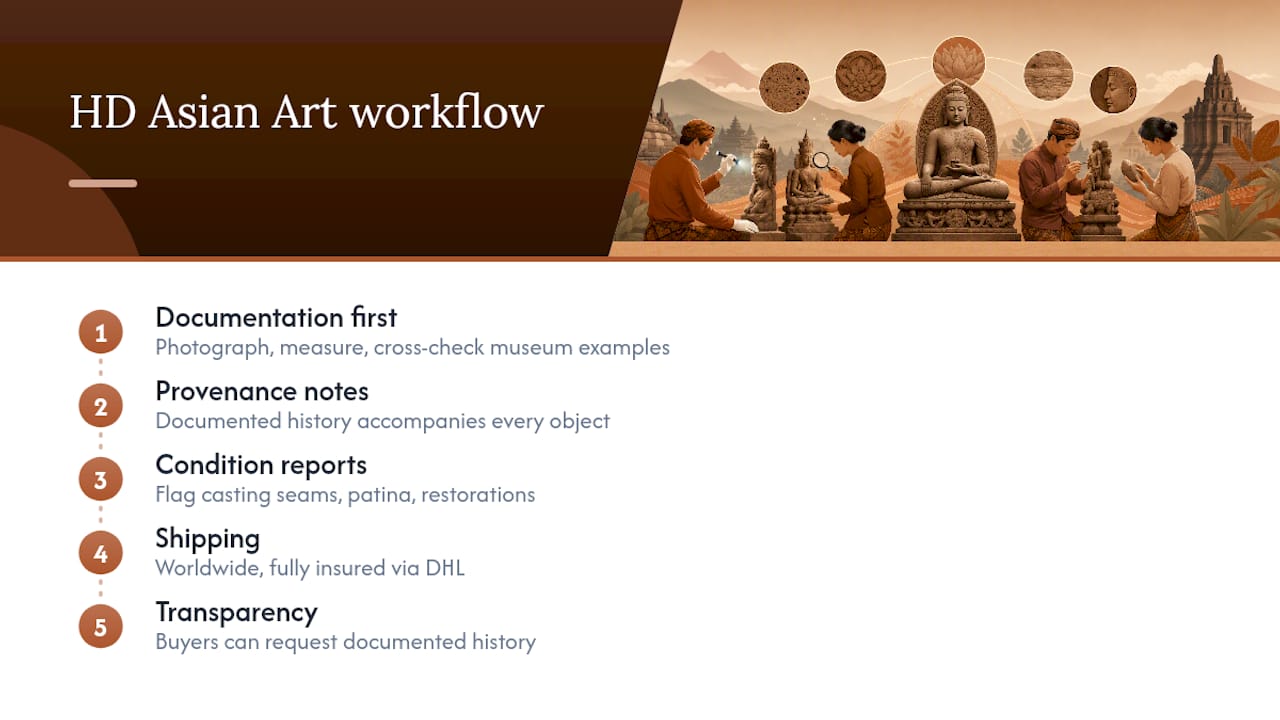
James, HDAsianArt.com y el equipo de investigación de la galería tratan cada escultura budista javanesa primero como un proyecto de documentación y luego como una venta. Cada pieza se fotografía, mide y coteja individualmente con ejemplos publicados en museos antes de que llegue a ser incluida en la lista.
Las notas de procedencia acompañan a cada objeto, junto con informes de estado que indican las uniones de fundición, la consistencia de la pátina y cualquier trabajo de restauración. El envío mundial se realiza totalmente asegurado a través de DHL y la galería agradece consultas directas sobre el historial documentado de una pieza antes de la compra. Esa transparencia es lo que separa un objeto de colección de un pasivo.
- James, HDAsianArt.com
Dónde encontrar esculturas budistas javanesas autenticadas
HD Asian Art ofrece bronces budistas javaneses autenticados con los mismos estándares de documentación que utilizan los museos, notas de procedencia, informes de estado y fotografías detalladas incluidas en cada listado. La colección actual incluye un Buda predicador de bronce sentado al estilo javanés y una estatua del bodhisattva Avalokiteshvara representada en proporciones clásicas javanesas, ambas adecuadas para coleccionistas que desean claridad de procedencia, no solo una bonita fotografía.
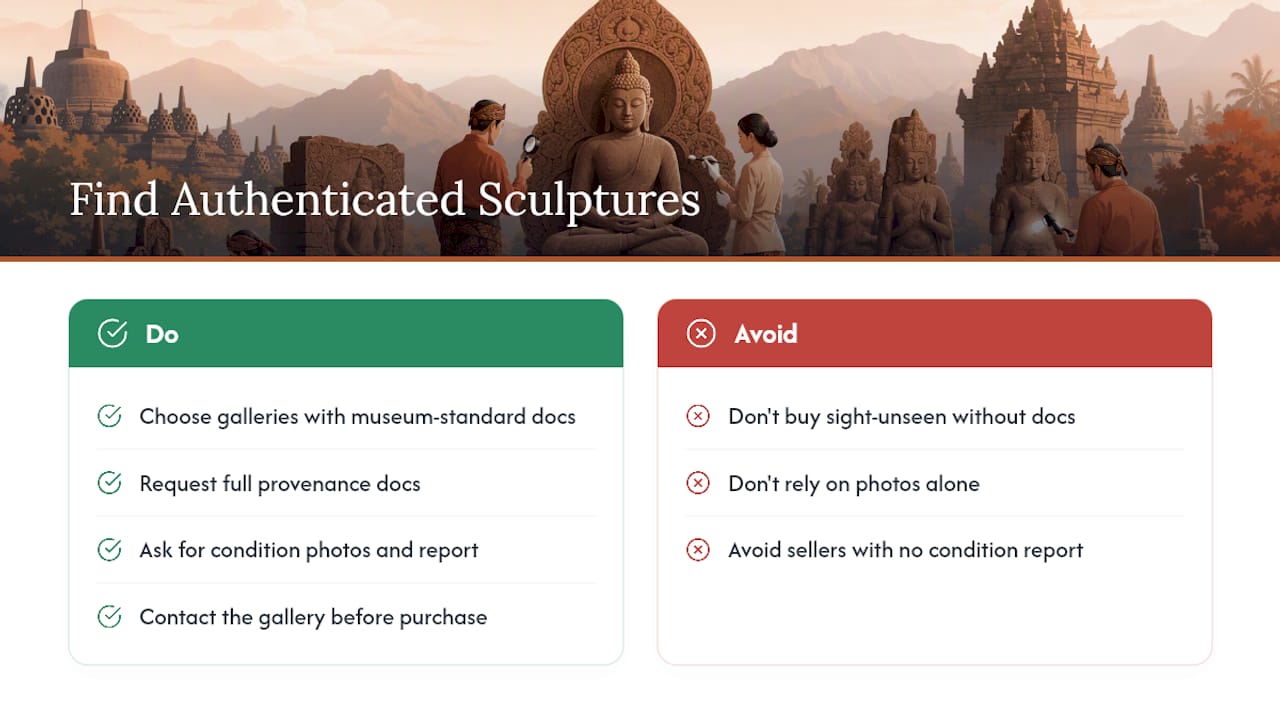
Para una visión más amplia de cómo la galería evalúa y documenta las piezas antes de incluirlas en la lista, el guía de la colección de arte budista recorre los mismos principios de la lista de verificación cubiertos anteriormente. Si una pieza te llama la atención, acércate a través del Galería de arte asiático HD directamente para solicitar la documentación completa de procedencia, fotografías del estado y detalles de envío y seguro antes de comprometerse. Esa conversación, más que cualquier otra cosa, es lo que separa una adquisición segura de una apuesta.
Fuentes
- Adelanto | Un mandala budista de bronce javanés | Institución Smithsonian
- Violencia y serenidad: escultura budista tardía de Indonesia – UH Press
- El guardián budista Mahabala - Museo Metropolitano de Arte
- Una escultura de bronce con inscripciones de un Buda en bhadrāsana en el Museo Ranggawarsita en Semarang - Persée
- Escultura del Buda — El Museo Metropolitano de Arte
